
Concrete Blankets: Insulated, Curing and Heated Blankets and How to Use Them
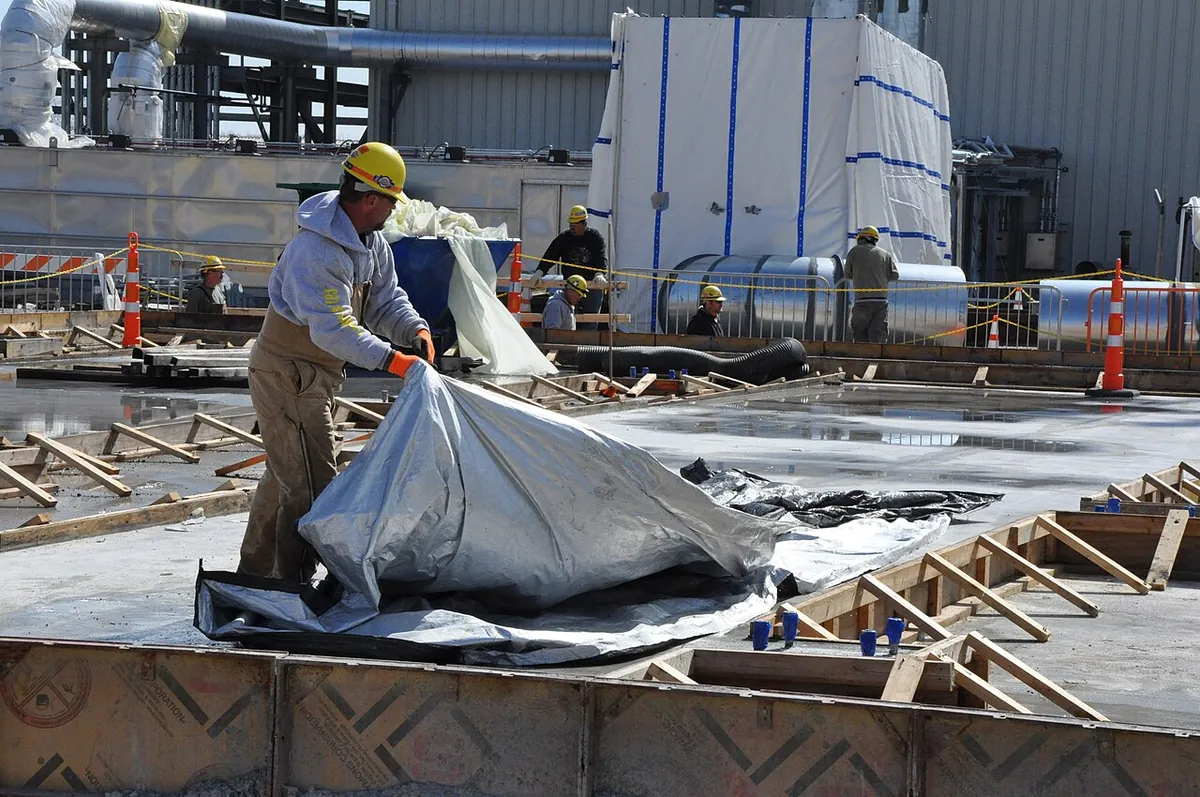
Photo: PEO ACWA, Wikimedia Commons, CC BY 2.0
Quick Answer
Concrete blankets are covers laid over fresh concrete to protect it while it cures. Insulated concrete blankets, made of closed-cell foam inside tough polyethylene shells, trap the heat that concrete gives off as it hardens and keep it from freezing in cold weather; they are also used to thaw frozen ground before a pour. Concrete curing blankets, such as burlap, burlene and absorbent curing mats, hold moisture against the surface for wet curing in mild or hot weather. Heated blankets add electric heat for deep cold. Lay insulated blankets right after finishing, overlap them, weigh down the edges and keep them on until the concrete reaches about 500 psi, often 2 to 3 days or longer. A typical 6 × 25-foot insulated blanket costs about $60 to $200.
Pouring concrete in cold weather is a race between hydration, the chemical reaction that makes concrete hard, and freezing. Concrete generates its own heat as it hardens, but without concrete blankets on a cold night that heat escapes quickly from a thin slab, and if the water in fresh concrete freezes before the concrete has gained enough strength, it can be permanently damaged. Concrete blankets keep that heat in. In warm weather, a different kind of concrete blanket keeps water in, so the surface does not dry out and crack. Either way, blankets are among the cheapest insurance on a concrete job.
This guide explains the types of concrete blankets, how insulated concrete blankets work, how to use them before and after a pour, how long to leave them on, curing blankets for moisture, heated blankets, sizes, R-values and costs.
Types of Concrete Blankets
- Insulated concrete blankets: one or more layers of closed-cell polyethylene foam bonded between woven polyethylene or vinyl shells. They insulate and resist water. Typical sizes are 6 × 25, 12 × 25 and similar.
- Concrete curing blankets for moisture: burlap, burlene (burlap bonded to plastic), cotton mats and absorbent geotextile mats with a plastic backing. They hold water against the surface for wet curing.
- Heated concrete blankets: insulated blankets with built-in electric heating elements, used to thaw ground, keep concrete warm in deep cold, or cure in winter without enclosures.
- Hydronic systems: hoses carrying heated fluid laid under insulated blankets, used on large slabs and for ground thawing.
- Tarps and plastic: not true blankets, but plastic sheeting is often laid under insulated blankets to hold moisture.
How Insulated Concrete Blankets Work
As cement reacts with water, it releases heat, especially in the first day or two, and concrete blankets are designed to hold that heat. A thick footing or wall can stay warm on its own, but a 4-inch slab or a thin wall loses heat to cold air quickly. Insulated concrete blankets slow that loss, so the concrete stays warm enough for the reaction to continue. The foam inside the blanket provides insulation, measured as an R-value; standard construction blankets range from roughly R-1 to about R-5 or more depending on foam thickness and layers, and doubling blankets roughly doubles the R-value. The outer shell keeps out rain and snow and survives being dragged across rough surfaces.
Insulated concrete blankets do not add heat on their own. On very cold days, or with thin sections and low cement contents, they may not keep the concrete warm enough by themselves, which is why they are often combined with heated concrete delivered from the plant, accelerators, or heated enclosures. See calcium chloride in concrete and pouring concrete in cold weather.
What Temperature Does Concrete Need?
The American Concrete Institute's cold-weather guide, ACI 306, says concrete should be protected from freezing until it reaches a compressive strength of about 500 psi, which it typically reaches within about two days at around 50°F. ACI also recommends minimum concrete temperatures during the protection period, higher for thin sections than for thick ones; for sections less than 12 inches thick, such as slabs and thin walls, about 55°F is commonly recommended. Longer protection is needed if the concrete must reach a higher strength before being loaded or exposed to freezing while saturated. Insulated concrete blankets are the most common way to meet these targets on residential and light commercial jobs.
How to Use Insulated Concrete Blankets
Before the pour: thaw the ground
Never pour concrete on frozen ground or against frozen forms; this is the first job for concrete blankets. Frozen soil thaws and settles later, and it pulls heat from the concrete. Lay insulated concrete blankets, or heated ground-thaw blankets, over the subgrade a day or more before the pour, depending on frost depth. Remove them just before placing concrete and check that the soil is thawed and firm. Clear snow and ice from forms and rebar.
After the pour: cover quickly
- Finish the concrete as usual, working efficiently in the cold.
- Lay plastic sheeting on the surface first if you want to hold moisture in and keep the blankets clean; this also helps curing.
- Lay the insulated blankets: concrete edges and corners first, since they lose heat fastest, then the field. Overlap blankets by at least 6 inches to a foot.
- Extend blankets past the edges of the slab, over the forms and onto the ground, ideally a few feet, because heat escapes sideways.
- Weigh down the edges with lumber, sandbags or tires so wind cannot lift them.
- Double up on thin areas, corners, exposed edges and windy sides, or in very cold weather.
- Monitor temperature with a thermometer under the blanket or with embedded sensors.
Walls and columns can be wrapped with insulated concrete blankets hung over the forms. Leaving insulated forms in place is another effective method; see how to build concrete forms.
How long to leave concrete blankets on
Keep insulated concrete blankets on until the concrete reaches the required strength, at least about 500 psi and often more for structural elements, typically 2 to 3 days for ordinary concrete in moderate cold, and longer in severe cold, with slow-gaining mixes, or before heavy loads. When removing blankets, do it gradually if the air is much colder than the concrete, because a sudden drop in surface temperature can cause thermal cracking; ACI recommends limiting the rate of temperature drop after protection ends. On a cold morning, remove blankets in stages or wait for the warmest part of the day.
Concrete Curing Blankets for Moisture
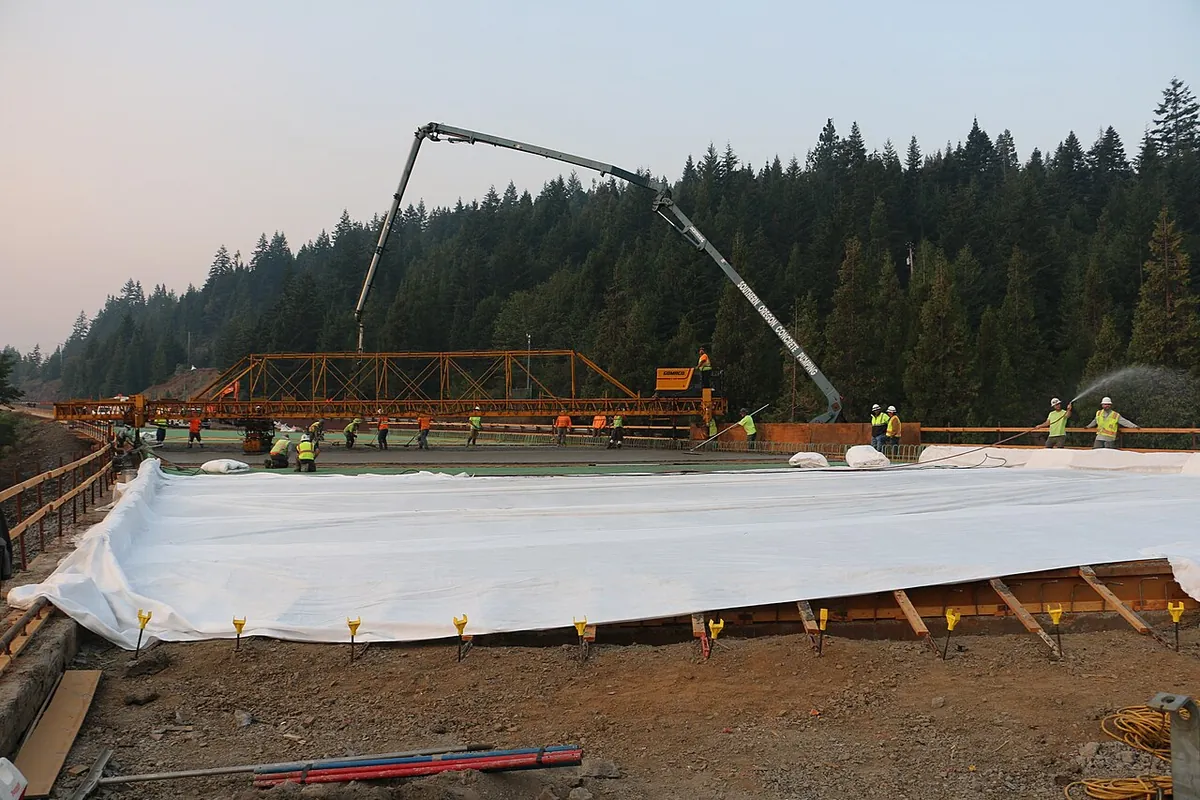
Photo: Oregon Department of Transportation, Wikimedia Commons, CC BY 2.0
In warm or hot weather, the risk is drying, not freezing. A concrete curing blanket designed for moisture, such as burlap, burlene or an absorbent curing mat, is soaked with water and laid on the concrete as soon as it can take it without marking, then kept wet for the curing period, often 7 days. Bridge decks, like the one in the photo, are commonly cured this way because the method gives even moisture and cools the surface. Absorbent mats with a plastic backing hold water longer and need less rewetting than plain burlap. Never let these blankets dry out on the concrete; dry burlap wicks water out of the surface. See concrete curing compound for other curing methods.
Heated Concrete Blankets
Electric heated concrete blankets combine insulation with heating elements, usually running on standard 120-volt power and drawing a few amps per blanket. They raise the temperature under the blanket well above ambient, which is useful for thawing deep frost before a pour, curing concrete in severe cold, curing repairs and patches in winter, and warming masonry and epoxy. They cost more to buy or rent than plain insulated blankets and need power on site, but can save days on a winter schedule. Hydronic systems, with a portable boiler circulating heated glycol through hoses under insulated blankets, do the same on larger areas.
Concrete Insulating Blankets vs Straw, Tarps and Enclosures
Before modern concrete insulating blankets, builders covered fresh concrete with straw, hay, sawdust or old canvas. Straw still works as insulation if it stays dry and is covered with a tarp, but it is messy, blows away, holds moisture when wet and can stain the surface. Plain tarps alone do little in cold weather, because they hold almost no heat. Purpose-made concrete blankets are cleaner, reusable, waterproof and much easier to handle, and they provide a known insulation value. For very large pours or severe cold, contractors build heated enclosures: frames covered with plastic or tarps, with propane or diesel heaters inside. Enclosures protect workers and allow finishing in bad weather but cost more and need careful ventilation, since unvented combustion heaters can cause carbon dioxide to react with fresh concrete and soften the surface. For most homes, garages and small commercial slabs, insulated concrete blankets with warm concrete from the plant are the practical choice.
Using Concrete Blankets on Home Projects
If you are pouring a patio, shed pad, footing or garage slab in late fall or winter, ask your contractor how they plan to protect the concrete; reputable crews will have insulated concrete blankets and a plan. If you are doing a small pour yourself, you can buy or rent a few blankets from equipment rental stores and concrete supply yards. Plan to thaw the ground the day before, order or mix the concrete with warm water, finish quickly, lay plastic and then the blankets, and weigh down the edges before nightfall. Lift and check under a corner early the next morning: the surface should be firm and slightly warm, with no ice crystals or frost patterns. Keep the blankets on for at least two to three days, longer if nights are well below freezing. For fence posts, a blanket or a bucket with straw over each hole works the same way on a smaller scale. See concrete fence posts.
Blankets for Footings, Walls and Masonry
Footings need concrete blankets too: they sit in the ground, which is warmer than the air in winter, but their tops and edges still need protection; lay blankets over the footing and forms and onto the surrounding soil. Walls can be wrapped with blankets draped over the forms and tied, or insulated forms can be used. Concrete masonry projects use concrete blankets too, both to protect fresh mortar and grout from freezing and to keep block warm. Columns and piers can be wrapped like a cylinder. In every case, focus on the top surface and edges, where heat escapes fastest, and check that blankets stay in place on windy days.
Ground Thaw Blankets in Detail
Frozen ground is one of the most common winter problems, and pouring on it is a serious mistake. Ground thaw blankets, either heavy insulated blankets or electric heated blankets, are laid over the area where footings or slabs will go. Insulated blankets alone use the ground's own stored heat and can thaw a few inches of frost over a day or two in moderate cold. Heated blankets thaw faster and deeper, often several inches per day depending on soil and power. Hydronic ground-thaw units circulate heated fluid through hoses under blankets and are used on large areas. Plan ahead: frost that has penetrated a foot or more can take days to remove. Once thawed, keep the ground covered until the pour, so it does not refreeze overnight.
Concrete Blankets in Hot Weather
In summer, insulated concrete blankets are rarely needed for warmth, but concrete curing blankets earn their keep, and a concrete curing blanket kept wet is one of the best ways to cure. Soaked burlap, burlene or absorbent curing mats keep the surface wet and cool, reducing plastic shrinkage cracking and helping strength gain. White or light-colored covers reflect sunlight. Keep them wet continuously, rewetting several times a day, and do not let them dry out on the concrete. Some contractors also use insulated blankets in hot climates on thick pours, such as mat foundations, to keep the surface from cooling much faster than the core at night, which can cause thermal cracking in mass concrete.
Caring for and Storing Concrete Blankets
Good concrete blankets last many seasons if they are cared for, whether insulated concrete blankets or concrete curing blankets. After each use, shake off loose debris and concrete, let them dry if wet, and store them rolled or folded in a dry place, off the ground and away from rodents. Patch small tears promptly with tape made for polyethylene so water does not soak into the foam. Avoid dragging blankets over sharp rebar or form ties, and keep them away from heaters, torches and hot exhaust, which can melt the shell. Keep heated blankets' cords and connections dry and inspect them before each use. A blanket that has absorbed water insulates poorly and can freeze stiff, so dry storage pays off.
Common Mistakes With Concrete Blankets
The most common mistakes are waiting too long to cover the concrete, so it loses heat before the blankets go on; leaving gaps between blankets or at edges, where heat escapes and the concrete freezes in strips; letting wind lift unweighted blankets overnight; pouring on frozen ground and expecting blankets to fix it; removing blankets too early, on the first sunny afternoon; removing them suddenly on a bitter morning, shocking the surface; and laying blankets on concrete that is still too soft, leaving imprints. Each of these can undo the protection blankets provide. A simple checklist at the end of the pour, covering edges, overlaps, weights and a thermometer, prevents most problems.
Choosing the Right Concrete Blanket
Choosing a concrete blanket comes down to the weather and the job. For cold-weather protection of slabs, footings and walls, choose insulated concrete blankets with a closed-cell foam core and a tough, waterproof shell, in a size that is easy to handle; 6 × 25-foot blankets are a common compromise between coverage and weight. For colder climates or thin sections, choose thicker, higher R-value blankets or plan to double them. For thawing ground or curing in deep cold, consider heated concrete blankets or hydronic systems. For moist curing in mild or hot weather, choose concrete curing blankets made of burlap, burlene or absorbent mats with a plastic backing. Look for reinforced grommets, sealed edges, bright or labeled shells that are easy to find on a snowy site, and foam that will not absorb water. If you only pour once or twice a winter, renting concrete blankets is usually cheaper than buying.
Cold-Weather Plans: Insulated Blankets, Concrete Temperature and Timing
On commercial projects, cold-weather plans spell out how concrete will be protected, and concrete blankets are almost always part of the plan. A typical plan lists the minimum concrete temperature at delivery, the type and number of insulated blankets, concrete edges and corners to be double-blanketed, how temperatures will be monitored, the protection period and the conditions for removing protection. Some plans use temperature sensors cast into the concrete that report to a phone, so the crew knows exactly when the concrete has reached the target strength. Even on a home job, writing a short plan, how many blankets, where they will go, who checks them and when they come off, keeps everyone on the same page and protects the concrete.
Concrete Blankets for Repairs and Patching
Winter repairs to steps, sidewalks and driveways are common because damage often shows up in cold weather. Patches are thin and lose heat even faster than slabs, so a concrete blanket over the repair, sometimes a heated one, can make the difference between a patch that bonds and gains strength and one that fails by spring. Use rapid-setting repair materials rated for cold, warm the old concrete with a heated concrete blanket before patching, and cover the patch right after finishing. See concrete patching compound and how to fix concrete steps.
How Concrete Blankets Affect Finishing and Appearance
Concrete blankets protect strength, but they can affect appearance if used carelessly. Laying a blanket on concrete that is still soft leaves imprints of the shell's weave or grommets. Blankets laid directly on colored or decorative concrete can leave darker or lighter patches where they touch and trap moisture unevenly, similar to plastic sheeting. To avoid this, wait until the surface is firm enough that a fingertip does not dent it, lay a smooth plastic sheet or a breathable curing cover first if appearance matters, and keep the layer under the blankets flat and wrinkle-free. On broom-finished gray slabs, minor marks usually fade within weeks. On stamped or colored concrete, ask your contractor how they will protect both the strength and the look.
What Happens If Concrete Freezes?
If fresh concrete freezes before it reaches about 500 psi, ice crystals form in the paste, expanding and breaking the young bonds between cement particles. The result can be a weak, flaky surface layer, lower strength through the whole section, and poor durability for the rest of the concrete's life. Signs include a surface that scales or dusts easily, frost patterns on the surface, and a hollow or soft sound when tapped. If concrete froze very early, the damaged layer may need to be ground off and resurfaced, or in severe cases the slab replaced. A few concrete blankets, laid promptly, cost far less than any of those repairs. Once concrete has reached about 500 psi and is no longer saturated, a single freeze does little harm, but it still needs protection before repeated freeze-thaw cycles and deicing salts. See does salt damage concrete.
Renting vs Buying Concrete Blankets
Equipment rental stores and concrete suppliers often rent insulated concrete blankets and heated concrete blankets by the day or week. Renting makes sense for one-off winter pours and for heated blankets, which are expensive to buy. Buying makes sense for contractors who pour every winter, and for homeowners in cold regions who expect to do several projects. When buying, consider the total area you need to cover with overlaps, plus spares for edges and corners, and choose a size you can lift and spread alone in the wind.
Safety Around Concrete Blankets
Concrete blankets are simple, but job sites in winter are slippery and dark. Weighted blanket edges, lumber and sandbags are tripping hazards, so mark the area and keep walkways clear. Wet insulated concrete blankets are heavy; lift them with a partner and bend your knees. Heated concrete blankets need grounded outlets or GFCI-protected cords, and cords should be kept out of standing water and away from traffic. Never run combustion heaters under blankets or in closed enclosures without ventilation; carbon monoxide is a deadly risk, and exhaust can also damage fresh concrete. Keep children and pets off covered slabs, since a blanket hides how soft the concrete underneath still is. Put up a simple sign or tape so delivery drivers and visitors do not walk or park on the covered concrete.
Sizes, R-Values and Cost
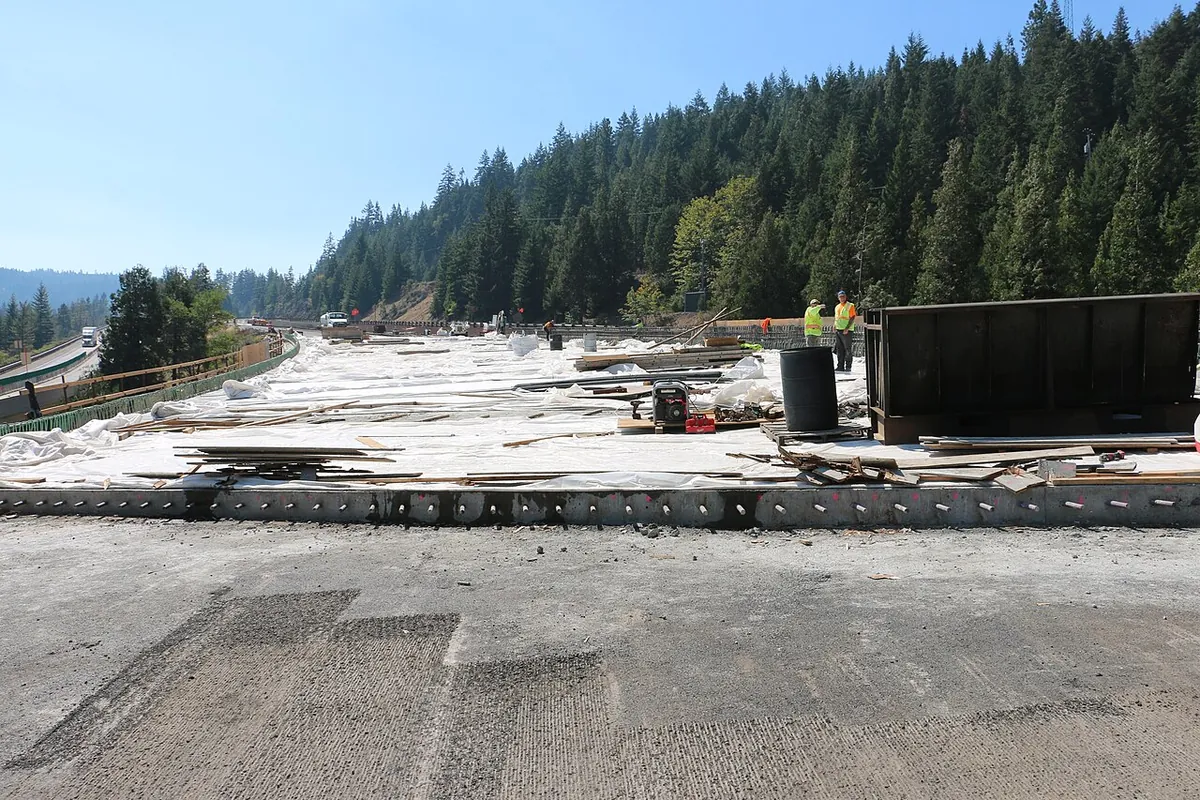
Photo: Oregon Department of Transportation, Wikimedia Commons, CC BY 2.0
- Common insulated blanket sizes: 6 × 25 feet, 12 × 25 feet, 6 × 12 feet, and custom sizes.
- Insulation: roughly R-1 to R-6 depending on foam thickness and number of layers.
- Insulated blanket price: about $60 to $200 each to buy, depending on size and R-value; rental is often a few dollars per blanket per day.
- Heated blankets: roughly $300 to $1,500 or more each to buy, less to rent.
- Burlap and curing mats: a few dollars to $20 per roll section, depending on size and type.
- Contractor winter fees: many contractors charge extra in winter for blankets, heated concrete and extra trips.
To estimate how many blankets you need, divide the slab area plus the extra coverage at the edges by the blanket area. A 24 × 24-foot garage slab with 3 feet extra all around is about 30 × 30 = 900 square feet, which is six 6 × 25-foot blankets with overlaps. See concrete slab cost.
Frequently Asked Questions
What are concrete blankets used for?
Insulated blankets keep fresh concrete warm and protect it from freezing; curing blankets keep it moist; heated blankets add heat and thaw ground.
How long should concrete blankets stay on?
Until the concrete reaches at least about 500 psi, typically 2 to 3 days in moderate cold, and longer in severe cold or before loading.
Do insulated concrete blankets work in freezing weather?
Yes, for most cold conditions when combined with warm concrete and covering quickly. In severe cold, add heat with heated blankets or enclosures.
Can I put concrete blankets directly on fresh concrete?
Yes, once the surface is finished and firm enough not to mark. A plastic sheet underneath helps hold moisture and keeps blankets clean.
Sources
- American Concrete Institute: ACI 306R guide to cold weather concreting
- American Concrete Institute: ACI 308R guide to external curing
- Portland Cement Association: cold weather concreting
- National Ready Mixed Concrete Association: Concrete in Practice, cold weather concreting
Related Guides
- Concrete curing compound — curing compounds vs water curing
- Temperature to pour concrete — ideal range, minimums and hot or cold precautions