
Calcium Chloride in Concrete: Dosage, Risks, Accelerators and Rapid Set Concrete
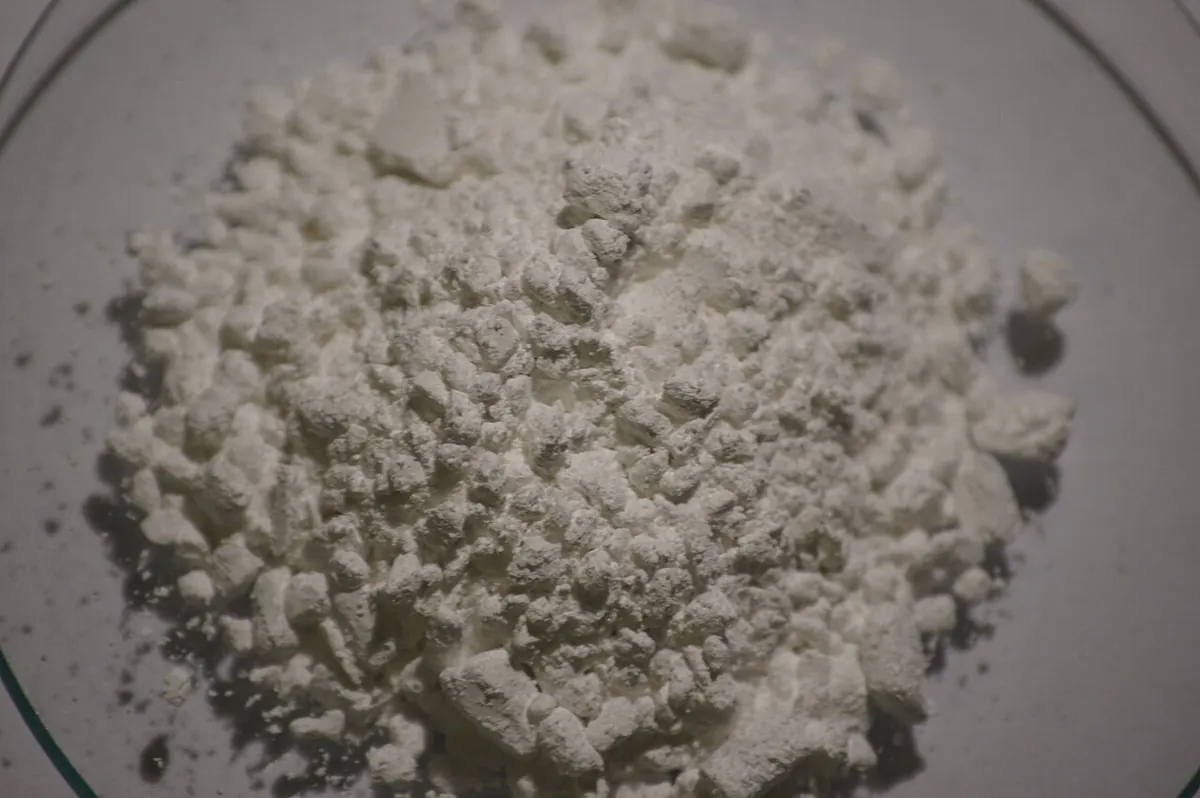
Photo: Aleksander Sobolewski, Wikimedia Commons, CC BY-SA 4.0
Quick Answer
Calcium chloride in concrete is the oldest and cheapest concrete accelerator. Added at 1 to 2 percent of the cement weight, it can roughly halve setting time in cool weather and boost early strength, which is why ready-mix plants offer "1 percent" or "2 percent" calcium in winter. Its big drawback is that chloride corrodes steel, so it should not be used in prestressed concrete and is limited or avoided in concrete with rebar, wire mesh or embedded metal. It also increases shrinkage and can darken the surface. Non-chloride accelerators are the safer choice for reinforced work. For quick repairs, rapid set concrete products based on special cements set in minutes, and a rapid set concrete leveler can take foot traffic within a few hours.
Concrete sets slowly when it is cold. At 50°F, ordinary concrete can take twice as long to set as it does at 70°F, and below 40°F the reaction slows so much that fresh concrete risks freezing before it gains strength. Finishers end up waiting for hours to trowel a slab, and builders lose days waiting to strip forms. For more than a century, the go-to fix has been calcium chloride, a common salt that speeds up the chemistry of cement. It works, but it comes with real trade-offs that every homeowner and contractor should understand.
This guide explains how calcium chloride and concrete interact, safe dosage, the risks to rebar and surfaces, when to use calcium chloride concrete and when not to, non-chloride alternatives, rapid set concrete for repairs, and rapid-setting levelers for floors.
How Calcium Chloride Speeds Up Concrete
To understand calcium chloride in concrete, start with the cement. Portland cement gains strength as its minerals react with water, a process called hydration. Calcium chloride speeds up the hydration of tricalcium silicate, the main strength-building compound in cement, so the concrete reaches initial set sooner and gains early strength faster. The effect is strongest in cool weather, where it matters most. As a rough guide, 1 percent calcium chloride by weight of cement can cut setting time by about a third to a half, and 2 percent by more, while 3-day strength can be noticeably higher than an unaccelerated mix. Over the long term, at 28 days and beyond, strength is about the same or slightly lower.
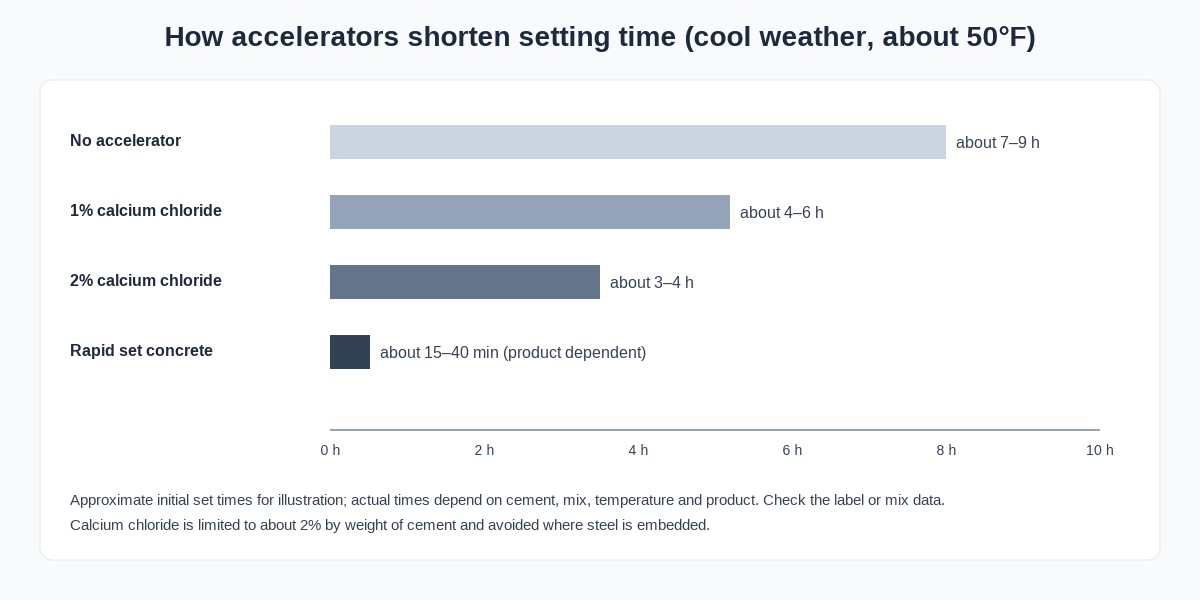
Calcium chloride does not lower the freezing point of concrete enough to act as antifreeze at normal doses. It works by helping the concrete gain strength before it freezes, so it must still be protected from the cold. That point is often misunderstood. For proper cold-weather practice, see pouring concrete in cold weather.
Safe Dosage of Calcium Chloride in Concrete
The American Concrete Institute and most specifications limit calcium chloride to a maximum of about 2 percent by weight of cement, measured as flake calcium chloride. In a cubic yard of concrete with 500 pounds of cement, 2 percent is about 10 pounds. Ready-mix plants usually offer 1 percent and 2 percent options, added as a liquid solution so it disperses evenly. Doses above 2 percent can cause flash setting, much more shrinkage and cracking, and greater corrosion risk without much extra benefit.
If calcium chloride is added on site, it should be dissolved in water first and added with the mix water, never thrown into the truck or mixer as dry flakes, which can leave undissolved lumps that cause pop-outs and dark spots. For bagged concrete, use a liquid accelerator made for concrete and follow its label rather than adding de-icing salt from the garage.
Calcium Chloride and Concrete With Steel: The Corrosion Problem
The main reason engineers are wary of calcium chloride and concrete together is corrosion. Steel in concrete is normally protected by the high alkalinity of the cement paste, which forms a passive film on the bar. Chloride ions break down that film, and once moisture and oxygen are present, the steel rusts. Rust occupies several times the volume of steel, so it cracks and spalls the concrete above it. That is the same process that damages bridges and parking garages exposed to road salt, but adding chloride to the mix puts it right next to the steel from the start. See concrete spalling and rust stains on concrete.
Because of this, ACI 318 limits the water-soluble chloride content of concrete, with the strictest limits for prestressed concrete, tighter limits for reinforced concrete exposed to moisture and outside chlorides, and higher limits only for reinforced concrete that stays dry. In practice, calcium chloride concrete is not used in prestressed or post-tensioned concrete, is usually avoided in reinforced concrete exposed to moisture or salt, and should not be used where aluminum, galvanized steel or other metals are embedded. See post tension concrete slab and concrete rebar.
Other Effects on Concrete
- More drying shrinkage, which means more cracking and curling in slabs.
- Darker, blotchy color, especially in steel-troweled or colored concrete, and efflorescence. See efflorescence on concrete.
- More scaling risk in freeze-thaw exposure if the concrete is not properly air-entrained and cured.
- Lower sulfate resistance and a possible increase in alkali-silica reaction risk with reactive aggregates.
- Faster finishing window, which can surprise crews: the slab may be ready for floating and troweling quickly and become hard to finish if they are not ready.
When Calcium Chloride Concrete Makes Sense
Despite the warnings, calcium chloride concrete still has a place. It is cheap and effective for plain, unreinforced concrete in cool weather: unreinforced footings in dry soil, fill, blocking, unreinforced residential flatwork in some regions, and small repairs without steel. Many ready-mix plants offer it on winter orders, and many experienced finishers like 1 percent calcium on cool fall days. The key is to ask whether the concrete contains rebar, wire mesh, fibers made of steel, or any embedded metal; whether it will be exposed to moisture or salt; and whether appearance matters. If any answer is yes, choose a non-chloride accelerator instead.
Non-Chloride Concrete Accelerators
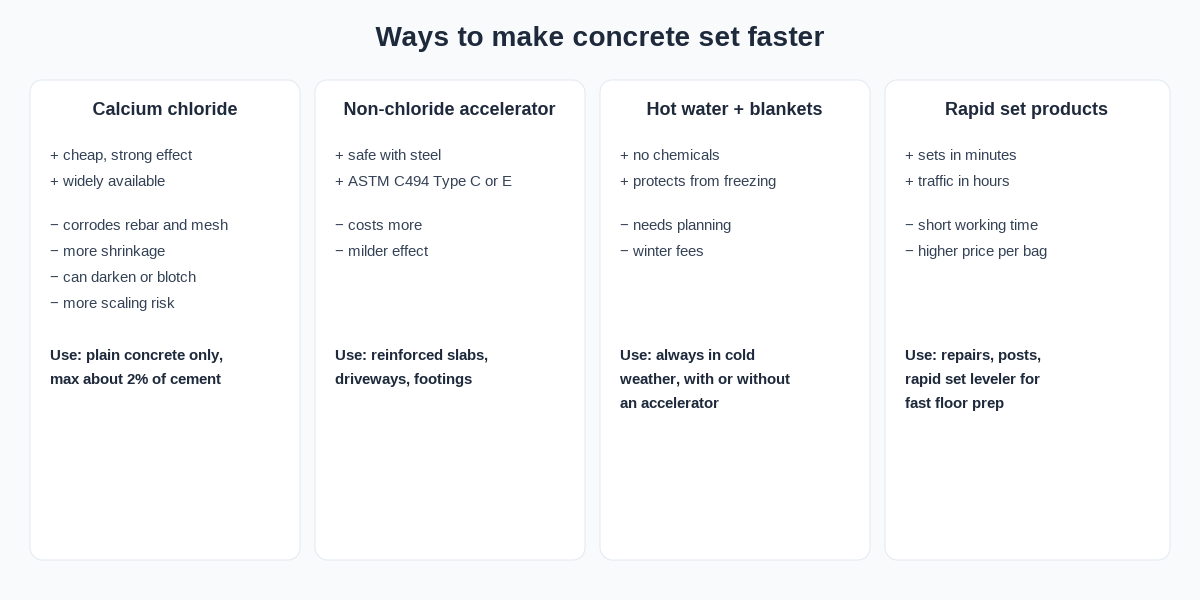
Non-chloride accelerators are chemical admixtures, classed under ASTM C494 as Type C (accelerating) or Type E (water-reducing and accelerating), based on compounds such as calcium nitrate, calcium nitrite, sodium thiocyanate and triethanolamine. They speed setting and early strength without adding chloride, so they are safe for reinforced and many prestressed applications. They cost more than calcium chloride, and their effect is usually a little milder, but they are the standard concrete accelerator for reinforced slabs, driveways, footings with rebar and structural work. Calcium nitrite products also act as corrosion inhibitors. Ask your ready-mix supplier for a "non-chloride accelerator" or "NCA" on winter orders. See concrete admixtures.
Rapid Set Concrete
Rapid set concrete is a different approach: instead of speeding up ordinary portland cement, these products use special fast-reacting cements, often based on calcium sulfoaluminate, sometimes blended with portland cement. Bagged rapid set concrete and repair mortars can set in 15 to 40 minutes and, depending on the product, reach structural strength in about an hour and carry traffic within a few hours. They are used for:
- Highway and airport pavement repairs that must reopen quickly.
- Setting posts, anchors and bolts.
- Patching driveways, steps and walks. See concrete patching compound.
- Repairs in cold weather, since many work at lower temperatures than ordinary mixes.
- Small structural repairs where downtime is expensive.
The catch is a very short working time: mix only what you can place in 10 to 15 minutes, have tools and forms ready, use cool water in hot weather, and clean tools immediately. Rapid set products cost more per bag than standard concrete but can save a lot of time on the right job.
Rapid Set Concrete Leveler
A rapid set concrete leveler, also called a rapid-setting self-leveling underlayment, is a pourable cement-based compound that flows out to create a flat, smooth surface over concrete floors before tile, vinyl, wood or carpet. Rapid-setting versions can typically take foot traffic in 2 to 4 hours and accept many floor coverings the same day or the next, compared with longer waits for standard levelers. For a concrete leveler, rapid set formulas are popular in renovations where floors must be back in use quickly. Success depends on preparation: clean, sound concrete, a primer, damming at edges and openings, mixing with the exact water amount, and pouring and spreading quickly before it sets. See self-leveling concrete and concrete leveling cost.
Mixing Concrete and Calcium Chloride Safely
If you decide that calcium chloride is right for a plain concrete job, handle it carefully. Mixing concrete and calcium chloride starts with the right product: flake or pellet calcium chloride meeting ASTM D98, or a liquid accelerator solution sold for concrete, not a bag of ice melt with unknown additives. Measure the dose against the cement weight, not the total bag weight of a premixed product; an 80-pound bag of concrete mix contains only about 10 to 13 pounds of cement, so a 2 percent dose is only about 3 to 4 ounces of flake per bag. Dissolve the calcium chloride completely in part of the mix water first, since dissolving releases heat, and add the solution to the mixer with the rest of the water. Do not add it to dry cement, and do not add it to a truck as dry flakes, even when the crew is in a hurry. Wear gloves and eye protection; the solution is irritating to skin and eyes. Finally, plan for a faster finishing schedule, because the slab will be ready sooner than you are used to.
A Winter Pour Checklist
A concrete accelerator is only one part of cold-weather concreting. A successful winter pour usually includes all of the following. First, never place concrete on frozen ground or against frozen forms; thaw the subgrade with blankets or heaters beforehand. Second, order heated concrete, with hot water from the plant, so it arrives warm. Third, use an accelerator suited to the job: calcium chloride for plain concrete, a non-chloride concrete accelerator where there is steel. Fourth, keep air entrainment for exterior work, because accelerated concrete still faces freeze-thaw later. Fifth, finish promptly and cover the concrete with insulated curing blankets right away. Sixth, keep it above freezing, and ideally above 50°F, until it reaches about 500 psi, which ACI treats as the strength at which concrete can survive a single freeze; that often takes two days or more in cold weather. Finally, avoid deicers on the new concrete for its first winter. See how long concrete takes to cure.
Accelerate or Wait?
Sometimes the best concrete accelerator is patience, not calcium chloride in concrete. If the job is not urgent and the forecast shows a warm spell, waiting a few days for better weather can avoid the cost of accelerators, heaters and blankets, and the risks of corrosion or discoloration. On the other hand, when a schedule matters, such as a garage floor that must be done before a move-in date, footings that need inspection before framing, or a repair that has to reopen to traffic, accelerating the concrete is often well worth the cost. Weigh the cost of a day's delay, including crew time, rental equipment and the risk of the weather turning colder, against the cost of the accelerator, and remember that no accelerator removes the need to protect fresh concrete from freezing.
A Short History of Calcium Chloride Concrete
Calcium chloride and concrete have been paired since the late 1800s, and by the early 20th century it was a standard winter additive for roads, sidewalks and buildings. Its cheapness and strong effect made it the default accelerator for decades. Problems surfaced as reinforced concrete structures aged: bridges, parking garages and buildings built with calcium chloride concrete, or exposed to chloride deicers, developed corrosion and spalling much sooner than expected. From the 1960s onward, codes added chloride limits, prestressed concrete banned calcium chloride outright, and chemical companies developed non-chloride accelerators. Today calcium chloride is still widely used, but mostly in plain concrete and where engineers have confirmed it is safe.
Using Rapid Set Concrete: Step by Step
For a post, a pothole in a walk, a broken step edge or an anchor bolt, rapid set concrete can turn a two-day job into an afternoon, without any calcium chloride in concrete at all. Prepare everything before you open the bag: clean and dampen the repair area, set forms or tape, and have water, a bucket, a drill paddle or trowel, and finishing tools within reach. Read the label for the water amount and working time, and mix only as much as you can place in about 10 to 15 minutes, usually a portion of a bag. Add the powder to the water, mix quickly for the time on the label, and place it immediately, pressing it firmly into the repair. Strike off and finish fast; once it stiffens, stop working it. Keep it damp for the curing time the maker suggests, and clean tools before the material hardens on them. In hot weather, use cold water and work in shade; in cold weather, warm the materials and protect the repair, even though many rapid set products tolerate lower temperatures than standard concrete.
Using a Rapid Set Concrete Leveler: Step by Step
To flatten a floor with a rapid set concrete leveler, start by grinding or scraping the old concrete clean of paint, adhesive, dust and laitance, and repairing cracks and holes. Vacuum thoroughly. Dam doorways, floor drains and gaps at walls with foam or tape so the liquid stays where you want it. Apply the primer the manufacturer specifies and let it dry; primer is what keeps the leveler from losing water into the slab and helps it bond. Measure the water exactly for each bag, mix with a heavy drill and paddle for the stated time, and pour in a continuous ribbon, working from the farthest corner toward the exit. Spread with a gauge rake or smoother, and run a spiked roller to release air if recommended. With two or three people, one mixing and one pouring, you can keep a wet edge and avoid lines between batches. Stay off it until the label's walk-on time, and check the maker's wait time before laying flooring. See self-leveling concrete.
Calcium Chloride Concrete vs Rapid Set Concrete vs Non-Chloride Accelerators
These three options are often confused because they all make concrete set faster, but they work differently and suit different jobs. Calcium chloride concrete is ordinary ready-mix or bagged concrete with a small dose of calcium chloride. It is cheap and effective, but because of chloride it belongs in plain concrete, not around rebar, mesh or embedded metal. A non-chloride concrete accelerator does a similar job in ordinary concrete without the corrosion risk, at a higher price, and is the right concrete accelerator for reinforced slabs, footings with rebar and structural concrete. Rapid set concrete is a different material altogether, made with special fast-setting cements; it sets in minutes rather than hours and is mostly used in bags for repairs, posts and small pours, or by specialty contractors for fast-track pavement work. A rapid set concrete leveler applies the same idea to floor underlayments.
A simple way to choose: for a full slab or footing in cool weather, order ready-mix with a non-chloride accelerator, or with calcium chloride only if the concrete is plain and appearance does not matter. For a small repair or post that must be finished today, use a rapid set concrete product. For a floor that has to be flat for new flooring tomorrow, use a rapid set concrete leveler over a properly primed slab. And for anything with steel in it, keep calcium chloride in concrete out of the plan.
Questions to Ask Your Ready-Mix Supplier in Winter
Before a winter pour, ask the plant a few questions. Does the winter mix include calcium chloride, a non-chloride accelerator or neither? If calcium chloride is standard, can you switch to a non-chloride accelerator for a slab with rebar or mesh, and what does it cost? Will the concrete be delivered with hot water, and what temperature should it arrive at? Is the exterior mix air-entrained? Are there winter surcharges for heated concrete or for blankets? Asking these questions turns the order from "concrete with calcium" into a mix designed for your project, the weather and the steel inside it.
Signs That Chloride Is Damaging Concrete
If an older slab or structure was built with an accelerator containing chloride, or has absorbed chloride from deicers for years, watch for a few warning signs. Rust-colored stains bleeding from cracks or the surface often mean steel is corroding inside. Cracks that run in straight lines above the reinforcement, rather than random shrinkage cracks, can mark the bars below. Hollow-sounding areas when tapped with a hammer, and pieces of concrete that pop off to expose rusty steel, mean corrosion has progressed to spalling. In basements and garages, white or brown deposits at cracks can indicate moisture moving through and carrying salts. Engineers can test chloride content by drilling powder samples and measuring the chloride level at the depth of the steel. Repairs range from patching spalls and sealing the surface to removing contaminated concrete around the bars, cleaning or replacing the steel, and applying corrosion-inhibiting treatments. Catching the problem early keeps the repair small and much cheaper.
Storing and Handling Accelerators
Calcium chloride absorbs moisture from the air and will turn into a wet slush if the bag is left open, so store it sealed in a dry place. Liquid accelerators should be kept from freezing unless the label says otherwise, and used before their expiry date. Bags of rapid set concrete and rapid set levelers have a limited shelf life, often six months to a year, because moisture slowly reacts with the cement; check the date and avoid bags that feel lumpy. Keep all of these out of reach of children and pets, and wash skin after contact. Label any leftover solution clearly, and never store it in food or drink containers.
Costs: Calcium Chloride, Accelerators and Rapid Set Products
Calcium chloride is the cheapest way to speed up concrete. Ready-mix plants often charge a few dollars per cubic yard for 1 percent and slightly more for 2 percent. A non-chloride concrete accelerator usually costs more, often several dollars to $10 or more per cubic yard, depending on dose. Winter service fees for hot water and plant heating are added on top in cold months. Bagged rapid set concrete typically costs two to three times as much per bag as standard concrete mix, and rapid set concrete leveler products cost more per bag than standard self-leveling underlayments, but both can pay for themselves when a floor, walkway or repair has to be back in use the same day. For pricing context, see concrete price per yard and how much a bag of concrete costs.
Calcium Chloride as a Deicer vs in the Mix
Calcium chloride is also sold as an ice melt, which can confuse things. As a deicer on the surface of concrete, calcium chloride melts ice at lower temperatures than rock salt, but concentrated chloride deicers, including calcium and magnesium chloride, can contribute to scaling and, over years, chemical damage to concrete paste, and they carry chloride toward the steel. That is a separate issue from adding a measured dose to the mix. Avoid all chloride deicers on concrete less than a year old, and use sand or a concrete-safe product when possible. See does salt damage concrete.
Frequently Asked Questions
How much calcium chloride do you add to concrete?
No more than about 2 percent by weight of cement, and 1 percent is common. Dissolve it in the mix water; never add dry flakes to the truck.
Is calcium chloride bad for concrete?
Not for plain concrete at proper doses, but it corrodes steel, increases shrinkage and can discolor surfaces. Avoid it in reinforced, prestressed and decorative concrete.
What is the best concrete accelerator for a driveway with rebar?
A non-chloride accelerator, combined with hot water, air entrainment and insulated blankets in cold weather.
How fast does rapid set concrete set?
Often in 15 to 40 minutes, with traffic possible in a few hours, depending on the product and temperature.
Does calcium chloride prevent concrete from freezing?
No. It speeds strength gain so concrete freezes less easily, but fresh concrete still needs protection from freezing.
Sources
- American Concrete Institute: ACI 306 cold weather concreting and ACI 318 chloride limits
- ASTM C494: Chemical Admixtures for Concrete
- ASTM D98: Calcium Chloride
- Portland Cement Association: accelerating admixtures and corrosion
Related Guides
- Concrete admixture guide — air entrained concrete, water reducers and more
- Concrete blankets — insulated and curing blankets
- Sugar in concrete — how sugar delays or stops setting
- Is calcium chloride safe for concrete? — choosing the best ice melt
- Temperature to pour concrete — ideal range, minimums and hot or cold precautions