
How Much Does a Concrete Block Weigh? Weights by Size, Type and Pallet
Quick Answer
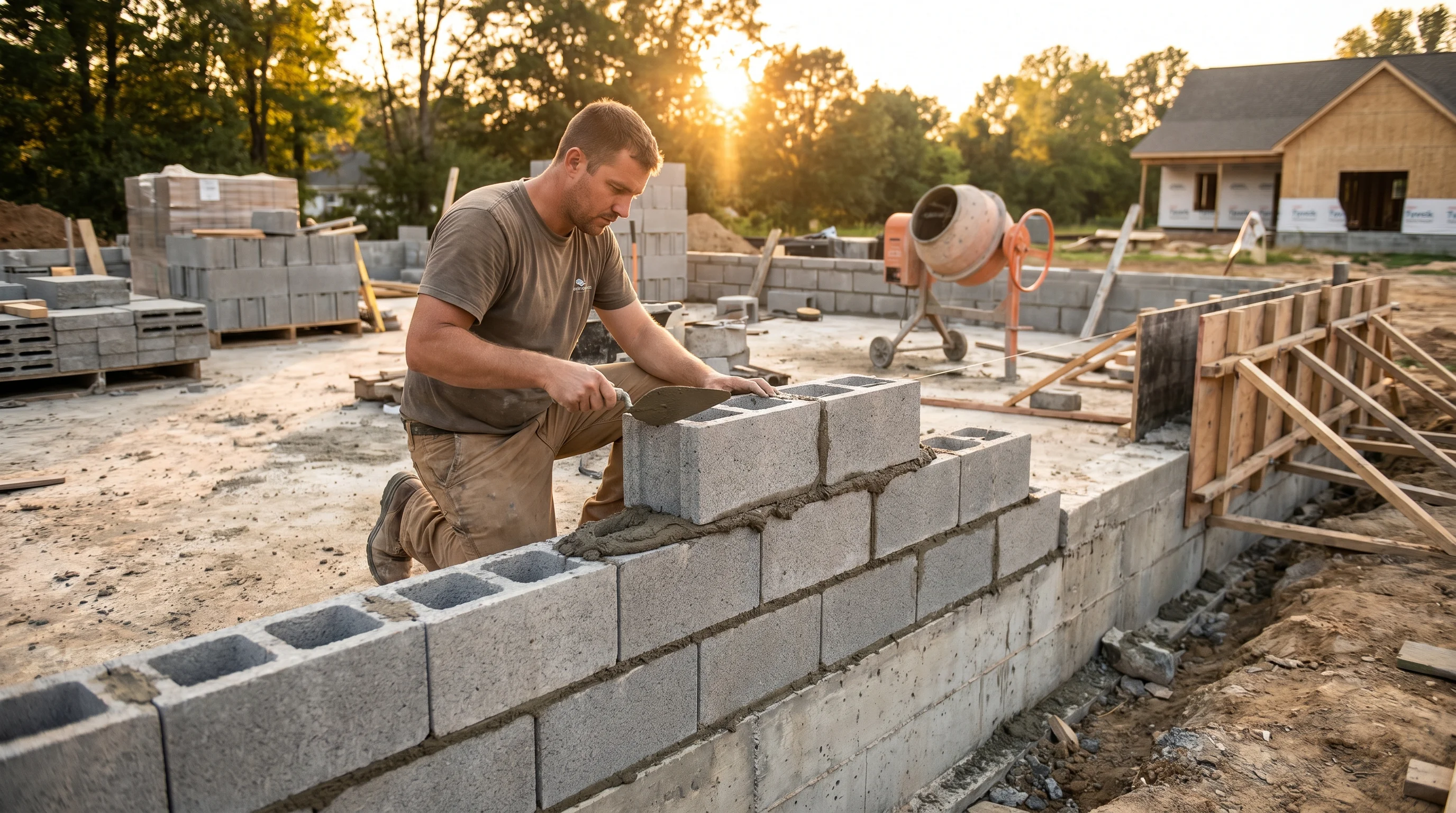
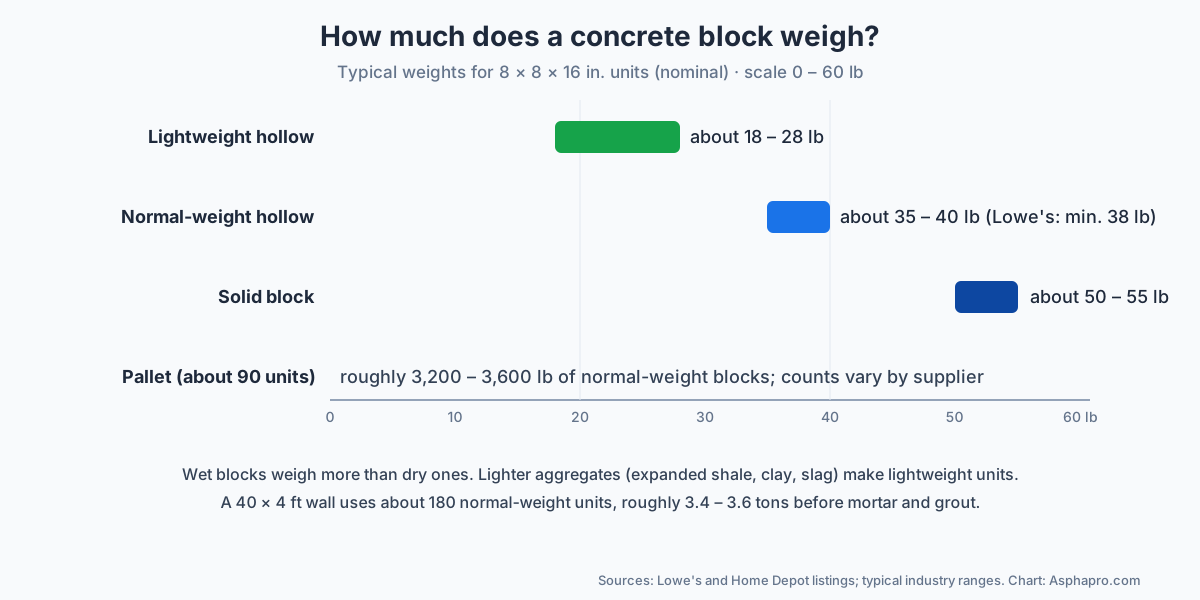
A standard 8 × 8 × 16 inch hollow concrete block (normal weight) weighs about 35 to 40 pounds. Lowe's lists a minimum of 38 pounds for its standard 8 × 8 × 16 block, and a Home Depot listing shows 37.5 pounds. Lightweight blocks of the same size weigh about 18 to 28 pounds, and solid blocks about 50 to 55 pounds. A typical pallet holds around 90 blocks of the 8 inch size, roughly 3,200 to 3,600 pounds, but counts vary by supplier.
Knowing how much a concrete block weighs helps with more than curiosity. It tells you whether your truck or trailer can carry a load, how many blocks a helper can move in a day, whether a floor or deck can hold a stack of blocks, and how heavy a finished wall will be on its footing. It also matters when you are buying blocks for weights, planters, garden beds or emergency uses like holding down tarps.
This guide covers concrete block weights for common sizes and types, why weights vary, how many concrete blocks are on a pallet, pallet weight, the weight of finished walls, and safe handling tips.
Concrete Block Weight at a Glance
How Much Does a Concrete Block Weigh? Quick Reference
If you only need a number, here is the short answer to how much does a concrete block weigh for the most common products:
- Standard 8 × 8 × 16 concrete block (normal weight): about 35 to 40 lb. This is the weight of a concrete block most people mean.
- Lightweight 8 × 8 × 16 concrete block: about 18 to 28 lb.
- Solid 8 × 8 × 16 concrete block: about 50 to 55 lb.
- Half block (8 × 8 × 8): roughly half of a full block's weight.
- Pallet of about 90 standard concrete blocks: about 3,200 to 3,600 lb.
The weight of a concrete block depends on the mix and moisture, so treat these as planning numbers and check the product listing for the blocks you actually buy.
Concrete Block Weight by Size
How much do concrete blocks weigh in other sizes? Weight scales roughly with the amount of concrete in the block, so wider and solid blocks weigh more. And how much does concrete block weigh when it is wet? A few pounds more than the dry weight, because block absorbs water.
Weights below are typical for normal-weight hollow units. Exact weights vary by manufacturer, aggregate and moisture, so check the product listing for the blocks you buy.
| Nominal size (W × H × L) | Typical normal-weight hollow block | Notes |
|---|---|---|
| 4 × 8 × 16 in. | roughly 25 – 32 lb | Often solid or near-solid; a Home Depot 4 in. unit is listed at 31.5 lb |
| 6 × 8 × 16 in. | roughly 28 – 35 lb | Light walls and partitions |
| 8 × 8 × 16 in. | about 35 – 40 lb | Lowe's lists 38 lb minimum; Home Depot 37.5 lb |
| 10 × 8 × 16 in. | roughly 40 – 50 lb | Heavier walls |
| 12 × 8 × 16 in. | roughly 50 – 60 lb | Basements, retaining walls |
| 8 × 8 × 8 in. (half block) | roughly half of a full unit | Ends of courses |
For 4, 6, 10 and 12 inch units, use these as rough planning numbers and confirm with your supplier.
Lightweight vs Normal-Weight vs Solid Blocks
Normal-weight hollow blocks
Made with sand and crushed stone, these are the standard gray units used in most walls. A normal-weight 8 × 8 × 16 block usually weighs about 35 to 40 pounds.
Lightweight blocks
Made with lighter aggregates such as expanded shale, clay, slate or slag, lightweight units of the same size commonly weigh about 18 to 28 pounds. They are easier to lift and insulate slightly better, and many still meet load-bearing standards. They often cost a little more.
Solid blocks
Solid or nearly solid units have no large cores. An 8 × 8 × 16 solid block can weigh about 50 to 55 pounds. They are used for caps, high-load spots and some special applications.
Why Concrete Block Weights Vary
- Aggregate: stone is heavy; expanded shale, clay or slag is light.
- Core size and number: two-core and three-core designs, and thicker face shells, change the amount of concrete.
- Moisture: blocks stored outside absorb water and can weigh noticeably more than dry ones.
- Manufacturer: each plant uses its own mix and molds.
- Decorative faces: split-face and ribbed units can carry more material.
How Many Concrete Blocks on a Pallet?
Pallet counts depend on the block size and the supplier. For the common 8 × 8 × 16 inch block, about 90 blocks per pallet is a widely cited count, which at 36 to 40 pounds each works out to roughly 3,200 to 3,600 pounds per pallet. Smaller 4 and 6 inch blocks fit more units per pallet, and 10 and 12 inch blocks fewer. Always ask your supplier for the pallet count and weight before arranging delivery or pickup.
| Item | Typical figure |
|---|---|
| 8 × 8 × 16 in. blocks per pallet | about 90 (varies by supplier) |
| Weight per pallet (normal weight) | about 3,200 – 3,600 lb |
| Wall face covered by one pallet of 8 × 8 × 16 | about 80 sq ft (90 ÷ 1.125) |
Because a pallet can weigh more than 1.5 tons, most suppliers deliver with a truck-mounted forklift or boom. Compare this with bagged concrete pallets in how many bags of concrete are on a pallet.
How Much Does a Block Wall Weigh?
A wall of 8 × 8 × 16 inch blocks uses about 1.125 blocks per square foot of wall face. At about 36 to 40 pounds per block, that is roughly 40 to 45 pounds of block per square foot of wall, before mortar and grout. Grout in reinforced cores adds a lot more: a fully grouted 8 inch wall can weigh considerably more than an ungrouted one.
| Wall | Blocks | Approx. block weight |
|---|---|---|
| 20 × 2 ft planter wall | 45 | about 1,600 – 1,800 lb |
| 40 × 4 ft garden wall | 180 | about 6,500 – 7,200 lb |
| 50 × 6 ft fence | 338 | about 12,200 – 13,500 lb |
This weight sits on the footing, which is why block walls need a proper concrete footing. See concrete footing cost and concrete block wall cost.
Weights of Other Concrete Block Products
"Concrete block" covers many products besides the standard wall unit. Weights vary widely by size and shape, so always check the label or listing, but here is what to expect in general:
- Cap blocks: solid, thinner units that finish the top of a wall; they are lighter than a full wall block of the same length but heavy for their size because they are solid.
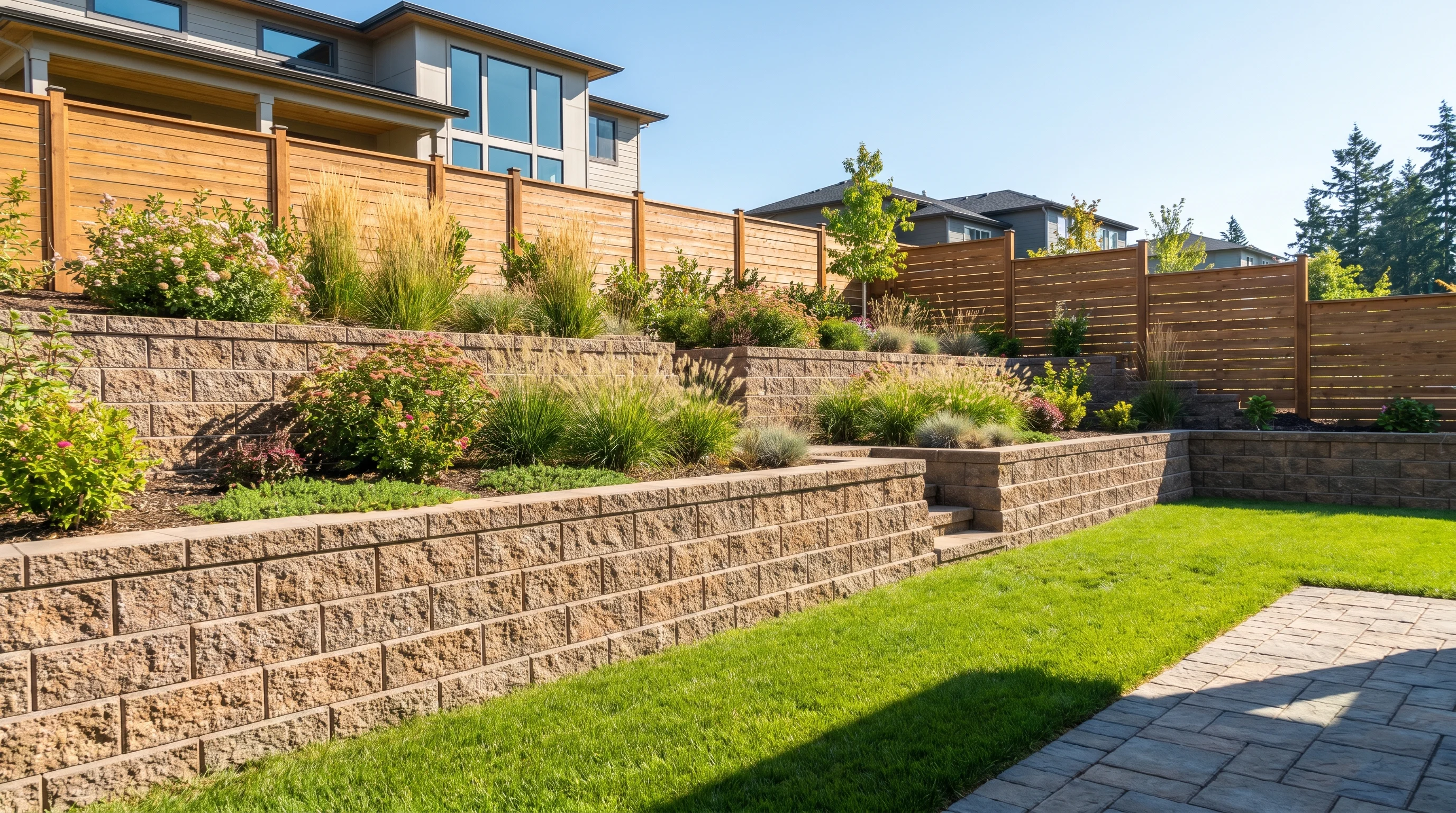
- Segmental retaining wall blocks: solid or partly hollow interlocking units; small garden-wall units can be light enough to carry one-handed, while large commercial units can weigh far more than a standard block.
- Patio blocks and pavers: thin, solid pieces; weight depends mostly on thickness and area.
- Deck blocks (pier blocks): precast pyramid-shaped footings for low decks; solid and heavy for their size.
- Screen or breeze blocks: decorative open patterns weigh less than a standard block of the same size because much of the face is open.
- Chimney and pilaster blocks: larger units with big cores; heavier than standard blocks.
If you are figuring loads for a delivery or a project, add up the weights from the product listings rather than assuming every unit weighs the same as a standard wall block.
Using Concrete Blocks as Weights
Because a standard block weighs about 35 to 40 pounds and costs little, people use blocks to weigh down canopies and tarps, anchor trampolines and sheds temporarily, add traction weight in truck beds in winter, and hold down temporary fencing. For canopies, tie the block securely to each leg so it cannot slide or tip, and never rely on blocks alone in strong winds. In truck beds, place blocks over the rear axle and secure them so they cannot slide forward in a sudden stop. Sandbags or purpose-made weights are often safer because they do not shatter or have sharp edges.
Storing Blocks on Floors, Decks and Garages
A pallet of blocks concentrates more than 1.5 tons on a small area. That is fine on a concrete slab or firm ground, but it can overload a wood deck, a porch, a suspended floor or soft soil. Never store a full pallet on a deck or upper floor. In a garage, set pallets on the slab rather than on a wood floor or raised platform. On lawns, the pallet can sink and leave ruts; place it on plywood or a gravel pad. Spread blocks into smaller stacks if a surface is in doubt.
Lightweight Blocks: Pros and Cons
Lightweight units weigh roughly a third to a half less than normal-weight blocks, which reduces fatigue and speeds up work when hundreds of units must be lifted by hand. They are easier to ship, put less weight on footings, and insulate slightly better. On the other hand, they usually cost a bit more, can absorb more water, and may be harder to find in some areas. Many lightweight units meet the same load-bearing standards as normal-weight ones, but always check the rating if the wall is structural. For DIY garden walls and projects where you are carrying blocks across a yard, lightweight blocks can be well worth the extra cost.
Mortar and Grout Add Weight Too
A finished block wall weighs more than the blocks alone. Mortar in every joint adds a few pounds per block, and grout in reinforced cores adds far more, since each filled core holds a column of concrete-like grout from top to bottom. A fully grouted 8 inch wall can weigh well over the weight of the blocks themselves. Engineers account for this when sizing footings; for planning a DIY wall, simply remember that the finished wall is heavier than the pile of blocks you bought. See how much a yard of concrete weighs for the weight of concrete and grout.
Block Weight for DIY Projects
Blocks are popular for quick DIY projects. Here is roughly how much weight common projects involve, using about 36 to 40 pounds per standard block:
- Raised garden bed, 4 × 8 ft, two courses high: about 26 blocks, roughly 950 to 1,050 lb.
- Fire pit ring, two courses: about 16 to 20 blocks, roughly 600 to 800 lb.
- Simple bench with two block stacks and a plank seat: about 8 to 12 blocks, roughly 300 to 480 lb.
- Grill stand or outdoor kitchen base: often 40 or more blocks, over 1,500 lb.
For fire pits, use blocks rated for high heat or line the inside with fire brick, since regular blocks can crack or spall when they get very hot. See can concrete burn.
Wet vs Dry Block Weight
Concrete blocks are porous, and units left in the rain or on wet ground absorb water. That can add a noticeable amount of weight per block, which matters when you are counting how many blocks fit in a truck or how much a helper can carry. Store blocks off the ground and covered if you want to keep them light and dry. Wet blocks can also slow mortar curing and cause efflorescence later, so masons often keep their blocks covered.
Estimating Total Weight for a Delivery
To estimate a delivery, multiply the number of blocks by the listed weight per block, then add the weight of any pallets, cap blocks, bags of mortar and other materials. For example, 180 normal-weight 8 inch blocks at 38 pounds each weigh 6,840 pounds, about 3.4 tons. Add 15 bags of 80 lb mortar mix (1,200 pounds) and two pallets, and the delivery is over 4 tons. Ask your supplier whether their truck can place the pallets where you need them.
How Much Does a Cinder Block Weigh?
Most blocks sold today as "cinder blocks" are really concrete blocks made with sand and stone, so a cinder block weighs the same as a normal-weight concrete block: about 35 to 40 pounds for the standard 8 × 8 × 16 size. True cinder blocks, made with coal cinders in older buildings, were lighter because the cinder aggregate is porous. If you are removing old walls, expect old cinder units to feel lighter and softer than new concrete blocks. See cinder block vs concrete block.
Concrete Blocks vs Bricks and Stone
A standard concrete block weighs much more than a single clay brick, but it also covers far more wall area. One 8 × 8 × 16 block covers about the same face area as several standard bricks, so per square foot of wall, block and brick weigh in a similar range, depending on the products. Natural stone veneer is usually heavier per square foot than hollow concrete blocks. Solid concrete is the heaviest at about 150 pounds per cubic foot, while hollow concrete blocks weigh less per square foot of wall because of their cores.
Concrete Block Weight per Linear Foot of Wall
For quick estimates, figure weight per linear foot of wall. An 8 inch high course uses 0.75 blocks per linear foot, so a wall 4 feet high (six courses) uses 4.5 concrete blocks per foot of length. At about 36 to 40 pounds each, that is roughly 160 to 180 pounds of block per linear foot, before mortar and grout. A 6 foot fence (nine courses) uses 6.75 blocks per foot, roughly 240 to 270 pounds per linear foot.
Block Weight and Footing Design
Engineers and inspectors care about block weight because every pound sits on the footing and the soil below. A 6 foot block fence can put a few hundred pounds per linear foot on its footing before wind loads are considered, and a basement wall carries the weight of the house as well. That is why block walls need continuous concrete footings sized for the wall and the soil, and why taller walls need wider footings. Using lightweight concrete blocks reduces the dead load somewhat, but the footing must still be designed for the full wall, grout and any loads above. See concrete footing cost.
Planning Labor Around Block Weight
Weight also decides how fast a wall goes up. Each standard concrete block weighs about as much as a full bag of dog food, and a mason may lift several hundred in a day. For DIY builders, fatigue is the real limit: moving and setting 100 normal-weight blocks means lifting about 2 tons, often more than once as you unload, stage and place them. Plan helpers, a cart, and short breaks. Stage blocks along the wall line before you start mixing mortar, so you are not carrying blocks long distances while the mortar starts to stiffen. If weight is a concern, ask about lightweight blocks, which can cut the load by a third or more for the same number of units.
Concrete Block Weight in Retaining and Garden Walls
In a retaining wall, block weight works in your favor: heavier units resist the push of soil better, which is one reason gravity retaining walls rely on heavy segmental blocks and why reinforced, grouted concrete block walls are so stable. Lightweight blocks are less common in retaining walls because extra mass helps. In garden and planter walls, weight matters mainly for handling and for the footing. A low two-course planter is light enough to build on a compacted gravel base in many cases, while taller walls need a concrete footing to carry the load without settling.
Common Questions When Buying Blocks
When you order, ask the supplier three things: the weight of each concrete block in the product you are buying, how many blocks are on their pallet, and how they deliver. Some suppliers sell by the piece, others by the pallet with a discount. Many charge a pallet deposit refunded when you return the wooden pallet. If you need only a few dozen blocks, picking them up yourself may work; for anything near a full pallet, delivery is usually safer for both your vehicle and your back.
How to Weigh Blocks Yourself
If you need an exact number, set a bathroom scale on a flat surface, weigh yourself, then weigh yourself holding one block, and subtract. Weigh a few blocks from different parts of the pallet and average them, since weights vary slightly. For a full load, a public scale at a landfill, recycling yard or truck stop can weigh your vehicle loaded and empty. Knowing the real concrete block weight helps you stay within your trailer and truck ratings.
Recycling and Reusing Old Blocks
Old concrete blocks can often be reused for garden beds, steps in a slope, or temporary walls if they are clean and sound. Broken blocks can go to concrete recycling yards, which crush them into aggregate, usually at lower cost than landfill disposal. Remove mortar and steel where the recycler requires it. Because each block weighs 35 to 40 pounds, a pile of demolition blocks adds up quickly; plan hauling based on weight, not volume. See concrete removal cost.
Hauling Concrete Blocks
Blocks add up fast. Twenty 8 inch blocks weigh about 720 to 800 pounds; fifty weigh about 1,800 to 2,000 pounds, which is at or above the payload of many half-ton pickups. Check your truck's payload rating on the door sticker, spread the load over the axle, and keep the blocks from shifting. For more than a few dozen, delivery is usually safer and often cheaper than several trips.
Safe Handling
- Wear gloves; block edges are rough and can cut.
- Lift with your legs, keep the block close to your body and avoid twisting.
- Use a two-wheel cart or wheelbarrow for moving more than a few.
- Stack blocks on firm, level ground, no more than a few courses high.
- Wear safety glasses and a dust mask when cutting.
Frequently Asked Questions
How much does a concrete block weigh?
A standard normal-weight 8 × 8 × 16 inch hollow block weighs about 35 to 40 pounds. Lightweight blocks weigh about 18 to 28 pounds, and solid blocks about 50 to 55.
How much does a cinder block weigh?
Most blocks sold as "cinder blocks" today are concrete blocks, so an 8 × 8 × 16 unit usually weighs about 35 to 40 pounds. True old cinder blocks were lighter.
How many concrete blocks are on a pallet?
About 90 of the standard 8 × 8 × 16 inch size is a commonly cited count, but it varies by supplier and block size.
How much does a pallet of concrete blocks weigh?
About 3,200 to 3,600 pounds for about 90 normal-weight 8 inch blocks.
How many blocks can a pickup carry?
It depends on the payload. At about 36 to 40 pounds each, 25 blocks weigh roughly 900 to 1,000 pounds; check your truck's rating.
How much does a 12 inch concrete block weigh?
A normal-weight 12 × 8 × 16 inch hollow concrete block often weighs roughly 50 to 60 pounds, depending on the manufacturer.
How much does a 4 inch concrete block weigh?
A 4 × 8 × 16 inch unit commonly weighs roughly 25 to 32 pounds; a Home Depot listing shows a 4 inch block at 31.5 pounds.
How much does a lightweight concrete block weigh?
A lightweight 8 × 8 × 16 block usually weighs about 18 to 28 pounds, compared with about 35 to 40 for normal weight.
How much do 100 concrete blocks weigh?
At about 36 to 40 pounds each, 100 standard concrete blocks weigh roughly 3,600 to 4,000 pounds, about 2 tons.
How much does a concrete block weigh when wet?
More than when dry, sometimes by a noticeable amount. Blocks left in rain or on wet ground absorb water and can gain several pounds each. Store them covered and off the ground, on pallets or boards, until you are ready to lay them in the wall.
How many concrete blocks can I carry in a small trailer?
Check the trailer's rated capacity. A trailer rated for 1,500 pounds of cargo can carry only about 37 to 42 normal-weight blocks, so plan several trips or ask the supplier to deliver the pallet to your site.
How much does a concrete block weigh in kilograms?
A standard 8 × 8 × 16 inch normal-weight block weighs about 16 to 18 kg. Lightweight blocks weigh about 8 to 13 kg.
Are concrete blocks heavier than cinder blocks?
Compared with true old cinder blocks made with coal ash, yes. Today's "cinder blocks" are usually concrete blocks and weigh the same.
What is the weight of a concrete block wall per square foot?
About 40 to 45 pounds of block per square foot for an 8 inch wall, plus mortar and any grout in the cores.
Why do my blocks weigh more than the listing?
Blocks stored outside absorb water, which adds weight. Different manufacturers' mixes also vary.
Sources
- Lowe's, 8 in. × 8 in. × 16 in. standard cored concrete block listing (minimum weight, actual size). lowes.com
- The Home Depot, 8 in. × 16 in. × 8 in. concrete block (37.5 lb) listing. homedepot.com
- The Home Depot, 8 in. × 16 in. × 4 in. concrete block (31.5 lb) listing. homedepot.com
- Engineer Fix, "How much does a concrete block weigh?" (lightweight, solid and pallet ranges). engineerfix.com
- Image credits: images and chart by Asphapro.com.
Weights vary by manufacturer and moisture. Checked November 2026.
Related Guides
- Insulated concrete forms cost — ICF wall prices
- Types of concrete anchors — plugs, screws, wedge and epoxy
- Mortar vs concrete — differences and which to use