
Concrete Wall Crack Repair: How to Fix Cracks in Concrete Walls
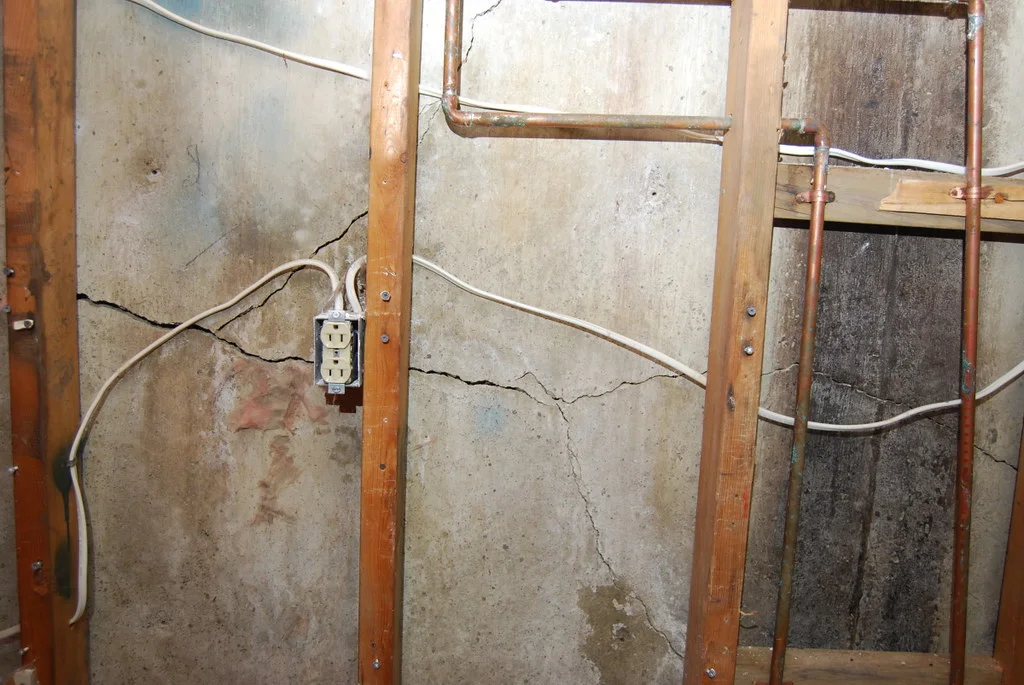
Photo: Napolean_70, Flickr, CC BY 2.0
Quick Answer
Concrete wall crack repair depends on the type of crack. Thin vertical or diagonal cracks that leak are best sealed by polyurethane or epoxy injection, which fills the crack through the full wall thickness; DIY kits cost about $50 to $150, and professional injection about $300 to $1,000 per crack. Small dry cracks can be sealed with a flexible concrete crack sealant. Hydraulic cement stops active leaks quickly but is a surface patch. Horizontal cracks, cracks wider than about 1/4 inch, bowing walls or cracks that keep growing suggest structural movement and need an engineer and stabilization such as carbon fiber straps, wall anchors or steel braces, typically $4,000 to $15,000 or more per wall.
Almost every poured concrete wall cracks at some point. Concrete shrinks as it cures, foundations settle slightly, and soil pushes on basement and retaining walls. Most concrete wall cracks are cosmetic or only let in a little water. A few signal real structural problems. The basement wall above shows both kinds of warning signs, a long horizontal crack and diagonal branches, behind framing and wiring that would make a later repair harder.
This guide explains how to read concrete wall cracks, what causes them, when to worry, how to repair cracks in concrete walls with injection, sealants and hydraulic cement, exterior and structural repair options, block and retaining walls, costs, and mistakes to avoid.
Types of Concrete Wall Cracks
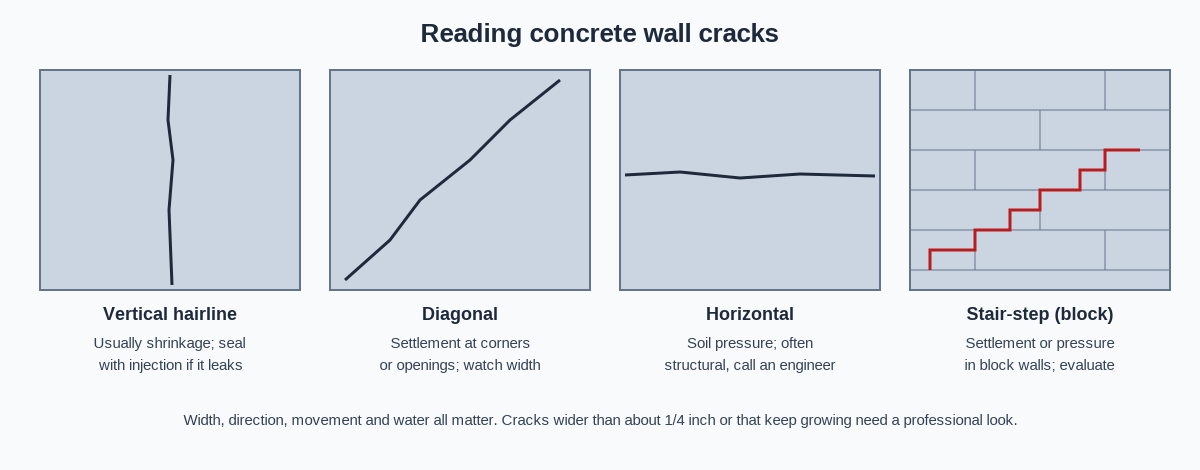
The direction, width and behavior of a crack tell you a lot about its cause and the right concrete wall crack repair:
Vertical hairline cracks. Thin, roughly vertical cracks, often near the middle of a wall or under windows, are usually caused by drying shrinkage in the first year. They rarely affect strength but can leak.
Diagonal cracks. Cracks running at an angle from corners of windows and doors or from wall corners often come from minor settlement or stress concentrations. If they are narrow and stable, they are usually sealed like shrinkage cracks; if they widen or one side is offset, they suggest ongoing settlement.
Horizontal cracks. Cracks running along the length of a basement or retaining wall, often a few feet below the top of the soil outside, usually mean the soil is pushing the wall inward. Combined with bowing, they are the most serious type of concrete wall crack.
Stair-step cracks. In concrete block walls, cracks follow the mortar joints in a stair-step pattern, from settlement or lateral pressure.
Map or pattern cracking. A network of fine surface cracks can come from surface drying, freeze-thaw damage or chemical reactions in the concrete, and needs a different approach than individual cracks.
What Causes Cracks in Concrete Walls?
Shrinkage. Concrete loses water and shrinks as it cures. Walls are restrained by footings and floors, so they crack to relieve the stress.
Settlement. Footings on soft, poorly compacted or eroded soil settle unevenly, cracking the walls above.
Soil pressure. Wet, clay-rich or frozen soil pushes on basement and retaining walls. Hydrostatic pressure from water-saturated soil and frost pressure can bow and crack walls.
Expansive soils. Clays that swell when wet and shrink when dry move walls and footings seasonally.
Construction issues. Too little reinforcement, cold joints between pours, early backfilling before walls are braced, and poor drainage all contribute to cracks in concrete walls.
Corrosion and freeze-thaw. Rusting reinforcement expands and cracks the concrete over it; water freezing in cracks widens them over time. See why concrete cracks and concrete spalling.
When to Worry About Concrete Wall Cracks
Call a structural engineer before choosing a repair if you see any of these:
Horizontal cracks in basement or retaining walls, especially with any inward bowing.
Cracks wider than about 1/4 inch, or cracks that are wider at one end than the other.
Offset cracks, where one side of the crack has moved in or out relative to the other.
Cracks that keep growing. Mark the ends of cracks with a pencil and date, and measure the width with a crack gauge or ruler every few months.
Related signs such as sticking doors, sloping floors, gaps at windows and cracks in drywall upstairs.
An engineer's evaluation typically costs a few hundred dollars and gives an unbiased opinion, separate from contractors who sell repairs. See concrete foundation.
How to Repair Cracks in Concrete Walls: Methods
Polyurethane injection. Flexible polyurethane foam or resin is injected into the crack through small ports. It reacts with water, expands and fills the crack through the wall, making a flexible, waterproof seal. It is the most common method for leaking non-structural cracks in basement walls, because it tolerates small future movement.
Epoxy injection. Low-viscosity epoxy is injected into a dry crack and cures into a rigid material stronger than the concrete, structurally bonding the two sides. It is used where restoring strength matters and movement has stopped. Epoxy does not handle further movement well; if the crack moves, a new crack forms beside it. See epoxy concrete crack repair.
Hydraulic cement. A fast-setting cement that expands slightly as it sets, used to plug actively leaking cracks and holes in minutes. It is a quick fix for running water but only seals the surface and often needs follow-up injection. See hydraulic cement.
Flexible sealants and crack fillers. Polyurethane caulks and self-leveling sealants seal the surface of narrow, dry cracks against moisture and insects, but they do not fill the crack through the wall.
Routing and sealing. Widening the crack into a V or U groove at the surface and filling it with sealant or repair mortar gives a durable surface seal on exposed walls.
Exterior excavation and waterproofing. For persistent leaks, the soil outside is dug away, the crack is repaired and a waterproofing membrane and drain are installed.
Structural stabilization. Carbon fiber straps, steel I-beam braces, wall anchors or helical tiebacks stop bowing walls; underpinning stabilizes settling footings.
Step by Step: DIY Concrete Wall Crack Repair with Injection
Homeowners can repair non-structural concrete wall cracks with a polyurethane or epoxy injection kit. The general process:
1. Check the crack. Make sure it is not structural, as described above. Injection seals a crack; it does not fix a wall that is moving.
2. Clean the surface. Wire brush about 1 inch on each side of the crack to remove paint, efflorescence, dirt and loose concrete. For epoxy, the crack must be dry; polyurethane can handle damp cracks.
3. Set injection ports. Attach surface ports along the crack, usually every 8 to 12 inches, with the paste provided in the kit, starting near the bottom.
4. Seal the surface. Spread the surface sealing paste over the crack between the ports, about 1/8 inch thick and an inch wide, so the injected material cannot escape. Let it cure as directed.
5. Inject. Starting at the lowest port, inject the material slowly with the kit's gun or cartridges until it appears at the next port up. Cap the first port and move up, repeating to the top.
6. Cure and finish. Let the material cure for the time on the label, then cut or knock off the ports and grind the surface paste if you want a smoother finish.
Injection works best on poured concrete walls with cracks up to about 1/4 inch wide. Very wide cracks, block walls and cracks with active water flow often need professional equipment.
Exterior Concrete Wall Crack Repair
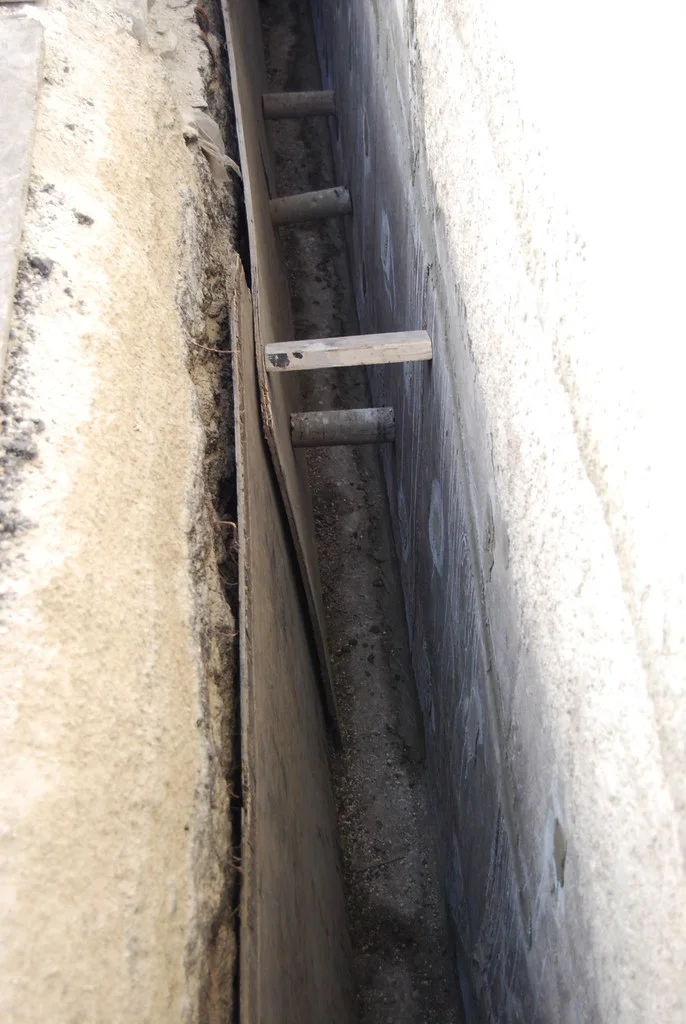
Photo: Napolean_70, Flickr, CC BY 2.0
When interior injection is not enough or the wall leaks in many places, concrete wall crack repair moves outside. The photo above shows a basement wall exposed by excavation, with the cracks patched and the wall coated before backfilling. Exterior repair lets the contractor seal cracks from the side where water enters, apply a waterproofing membrane over the whole wall, add drainage board and install or replace the perimeter drain at the footing. It is more expensive, often $100 to $300 or more per linear foot of wall, because of digging and restoring landscaping, steps and walks, but it addresses the water source rather than just the crack. See is concrete waterproof.
Stabilizing Cracked and Bowing Walls
When concrete wall cracks come from soil pressure, sealing them alone does not stop the movement. Common stabilization methods include:
Carbon fiber straps. High-strength carbon fiber strips bonded to the inside of the wall with epoxy, usually every 4 to 6 feet, stop further inward movement on walls with modest bowing. They are low-profile and quick to install.
Steel braces. Vertical steel I-beams bolted to the floor and the floor framing support the wall from the inside.
Wall anchors. Steel plates inside the wall connected by rods to anchors buried in stable soil outside; they can be tightened over time to straighten the wall gradually.
Excavation and rebuilding. For severe bowing or crumbling walls, the soil is dug out and the wall straightened or rebuilt.
Drainage improvements, such as regrading, gutters, downspout extensions and perimeter drains, reduce the soil pressure that caused the problem. See concrete retaining wall.
Cracks in Concrete Block Walls
Concrete block walls crack differently from poured walls, usually along mortar joints in stair-step or horizontal patterns. Injection is less effective because the hollow cores swallow the material. Typical repairs include tuckpointing cracked mortar joints, filling cores with grout and rebar, applying carbon fiber or steel reinforcement, and exterior waterproofing. Horizontal cracks in block basement walls are a common sign of soil pressure and deserve an engineer's evaluation. See concrete block wall cost.
Painted and Finished Walls
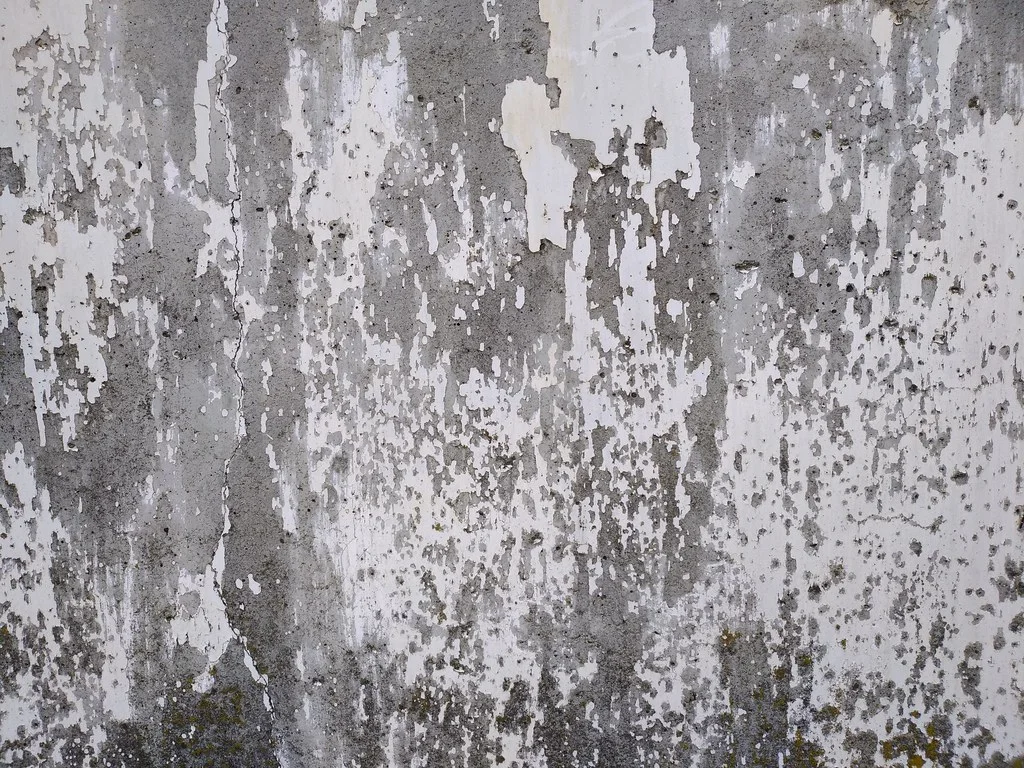
Photo: TexturePalace, Flickr, CC BY 2.0
Paint and coatings can hide cracks or, as in the wall above, peel away around them as moisture moves through. Before any concrete wall crack repair on a painted wall, remove loose paint along the crack so the repair material bonds to bare concrete. On finished basements, drywall and framing hide cracks completely; look for water stains on the bottom plate, musty smells and efflorescence at the floor line, and consider leaving an access panel at known cracks. See efflorescence on concrete.
Monitoring Concrete Wall Cracks Before Repair
Before deciding on a concrete wall crack repair, it helps to know whether the crack is still moving. Simple monitoring tools make this easy. Draw a fine pencil line across each crack and at each end, write the date, and photograph it next to a ruler. Measure the width at the same spots every month or two with a plastic crack-width card, sold for a few dollars, or a feeler gauge. Tell-tale crack monitors, two overlapping plastic plates with a grid, can be glued across a crack to show movement in both directions to a fraction of a millimeter. Cracks that stay the same through a full year of seasons are usually stable and can be sealed. Cracks that widen, lengthen or show offset need an engineer's evaluation before repair, because the cause has to be solved first.
Retaining Wall Crack Repair
Concrete retaining walls face the same forces as basement walls, without a floor to brace the top. Small vertical cracks in retaining walls are common and are usually sealed to keep water and soil from washing through. Horizontal cracks, leaning or bulging sections, and cracks near the base of tall walls are warning signs of overstress or poor drainage. Many retaining wall problems come from clogged or missing weep holes and drains, which allow water pressure to build behind the wall. Concrete wall crack repair on retaining walls often includes clearing or adding weep holes, installing a drain behind the wall, and in serious cases adding tiebacks or rebuilding the wall. Walls over about 4 feet tall, or walls that support driveways or buildings, should be evaluated by an engineer. See concrete retaining wall.
Cold Joints vs. Cracks
Not every line in a concrete wall is a crack. Cold joints form where one load of concrete was placed against another that had already begun to set, and they often run horizontally or diagonally across a wall at the same height all the way around. Form tie holes, small round patches in a regular grid, can also leak. Cold joints are usually not structural, but they are common leak paths, and they are repaired with the same injection methods used for concrete wall cracks. See cold joints in concrete.
Cracks in New Homes and Warranties
Shrinkage cracks often appear in the first year or two after a house is built, and many builders' warranties cover leaking foundation cracks during that period. If you see concrete wall cracks in a new home, photograph and measure them, report them to the builder in writing and keep copies. Some builders handle concrete wall crack repair with injection at no cost to the owner; others exclude cracks below a certain width. Read the warranty terms on foundation cracks, water leaks and structural defects, which often have different coverage periods. Structural warranties are commonly longer, sometimes ten years, but cover only serious structural failures.
Choosing a Concrete Wall Crack Repair Contractor
Basement waterproofing and foundation repair companies range from careful specialists to high-pressure sales operations. To find a good one, get at least three opinions, and for anything structural, start with an independent engineer whose report contractors must follow. Ask what method each contractor proposes, why, and what the warranty covers; lifetime transferable warranties on injection are common for leaks. Be cautious of companies that recommend whole-house systems for a single small crack, or that insist a stable shrinkage crack needs expensive stabilization. A good contractor explains the cause of the concrete wall cracks, offers options at different price points and puts the scope and warranty in writing.
Preventing Concrete Wall Cracks
Some cracking is unavoidable, but good design and maintenance reduce it:
Manage water. Keep gutters clean, extend downspouts 4 to 6 feet from the house, and grade soil to slope away from walls. Water is the main driver of soil pressure, leaks and freeze damage.
Build it right. New walls should have adequate reinforcement, good concrete and proper curing, with vertical control joints in long walls so shrinkage cracks form where planned and can be sealed.
Brace before backfill. Basement walls should not be backfilled until the floor framing is installed or the walls are braced, and heavy equipment should stay back from fresh walls.
Watch the trees. Large trees near foundations can dry and shrink clay soils during droughts, contributing to settlement cracks.
Seal early. Small cracks repaired early with injection or sealant are cheaper to fix than cracks that have let water, roots and frost widen them for years.
Concrete Wall Crack Repair Materials Compared
Polyurethane injection resin. Best for leaking, non-structural concrete wall cracks. Flexible, reacts with water, fills the crack through the wall. Does not restore strength. Typical life: many years to decades.
Epoxy injection resin. Best for dry, stable concrete wall cracks where restoring strength matters. Rigid and very strong. Not suitable if the wall is still moving or the crack is actively wet.
Hydraulic cement. Best for stopping active leaks fast and plugging holes. Sets in minutes. Surface plug only; can crack or pop out with movement.
Polyurethane sealant or caulk. Best for sealing the surface of narrow, dry cracks against moisture, radon and insects. Flexible, easy to apply. Does not fill the crack through the wall.
Repair mortar. Best for spalled edges, chipped areas and wide surface defects around cracks. Restores the surface; not a crack sealant on its own.
Carbon fiber and steel reinforcement. Best for structural concrete wall crack repair where walls bow or move. Stabilizes the wall; usually combined with injection to seal the crack itself.
Choosing the right material for each crack, rather than one product for everything, is what makes a concrete wall crack repair last.
How Long a Concrete Wall Crack Repair Lasts
A properly done injection repair on a stable crack often lasts as long as the wall itself, which is why many contractors offer long or lifetime warranties on injected cracks. Surface patches with hydraulic cement or caulk last much less, sometimes only a season or two, especially if water pressure behind the wall is high. Repairs on walls that are still moving fail when the movement continues, which is why identifying and fixing the cause, whether drainage, soil pressure or settlement, matters as much as the repair material. Check repaired concrete wall cracks once or twice a year, especially after heavy rains and spring thaws, and touch up surface sealants as needed.
Cracks in Garage, Above-Grade and Exterior Walls
Cracks in above-grade concrete walls, such as garage walls, exposed foundation walls and concrete fences, face weather rather than soil pressure. Water entering these cracks can freeze, expand and widen them, and can rust reinforcing steel near the surface. For these walls, a routed and sealed crack, filled with a flexible exterior-grade sealant, keeps water out while allowing small movement. Where the concrete around the crack has spalled, patch with a polymer-modified repair mortar first. For decorative or exposed walls, color-matched sealants and mortars help the concrete wall crack repair blend in. A breathable penetrating sealer on the whole wall can then reduce water absorption. See concrete patching compound.
Concrete Wall Crack Repair Costs
DIY injection kit: about $50 to $150 per kit, enough for one crack up to about 10 feet long.
Professional injection: about $300 to $1,000 per crack, depending on length and access.
Hydraulic cement and sealants: $10 to $40 for materials.
Exterior excavation and waterproofing: about $100 to $300 or more per linear foot.
Carbon fiber straps: about $500 to $1,000 per strap installed, often $4,000 to $10,000 per wall.
Wall anchors or steel braces: commonly $5,000 to $15,000 or more per wall.
Engineer's evaluation: typically $300 to $800.
See concrete repair cost.
Concrete Wall Cracks and Radon
Cracks in basement walls and floors are one of the ways radon, a radioactive soil gas, enters homes. The US Environmental Protection Agency recommends testing every home for radon, and sealing cracks and openings is a standard part of radon reduction, although sealing alone is usually not enough and is combined with a sub-slab ventilation system. If you are planning concrete wall crack repair in a basement, it is a good time to test for radon, and to seal cracks with materials that remain flexible and airtight. Radon test kits cost about $15 to $40 and take a few days.
Does Insurance Cover Concrete Wall Crack Repair?
Standard homeowners policies usually exclude cracks caused by settlement, shrinkage, wear and gradual water seepage, so most concrete wall crack repair is paid by the owner. Coverage may apply when cracking results from a sudden covered event, such as a vehicle hitting the house or, with the right endorsement, an earthquake. Check your policy and talk to your agent before filing a claim, and keep photos, measurements and repair invoices, which help with future claims and when you sell the house.
Common Mistakes
Patching the surface only. Smearing caulk or patching compound over a leaking crack usually fails within months because water still travels through the wall.
Using epoxy on a moving crack. Rigid epoxy cracks again beside the repair if the wall is still moving.
Ignoring horizontal cracks. Sealing a horizontal crack without addressing soil pressure leaves the wall at risk of further bowing.
Skipping drainage. Most leaking concrete wall cracks are worsened by water piling up against the wall from gutters and grading. Fixing the water source often costs less than the repair itself and makes every concrete wall crack repair last longer.
Finishing over unrepaired cracks. Framing and drywall over a leaking wall trap moisture and mold, and make any future repair far more expensive because the finished wall has to be opened up first.
Frequently Asked Questions
What is the best concrete wall crack repair for a leaking basement?
Polyurethane injection for most leaking non-structural cracks, plus exterior drainage improvements.
How do you repair cracks in concrete walls yourself?
Clean the crack, set injection ports, seal the surface, then inject polyurethane or epoxy from the bottom up using a DIY kit.
Are vertical cracks in concrete walls normal?
Thin vertical shrinkage cracks are common and usually not structural, but they can leak.
Are horizontal cracks in basement walls serious?
Often yes. They usually indicate soil pressure and should be evaluated by a structural engineer.
Does hydraulic cement permanently fix wall cracks?
It stops active leaks quickly but is a surface plug; injection or exterior repair is more durable.
Sources
- American Concrete Institute: ACI 224.1R, causes, evaluation and repair of cracks in concrete structures
- Portland Cement Association: cracks in basement walls
- International Concrete Repair Institute: crack repair guidelines
- International Residential Code: foundation walls and dampproofing
Related Guides
- Concrete board — backer board for shower walls and tile floors, installation and waterproofing
- Hydraulic concrete — hydraulic cement for leaks and concrete for dams, canals and tanks