
Efflorescence in Concrete: What the White Powder Is and How to Get Rid of It
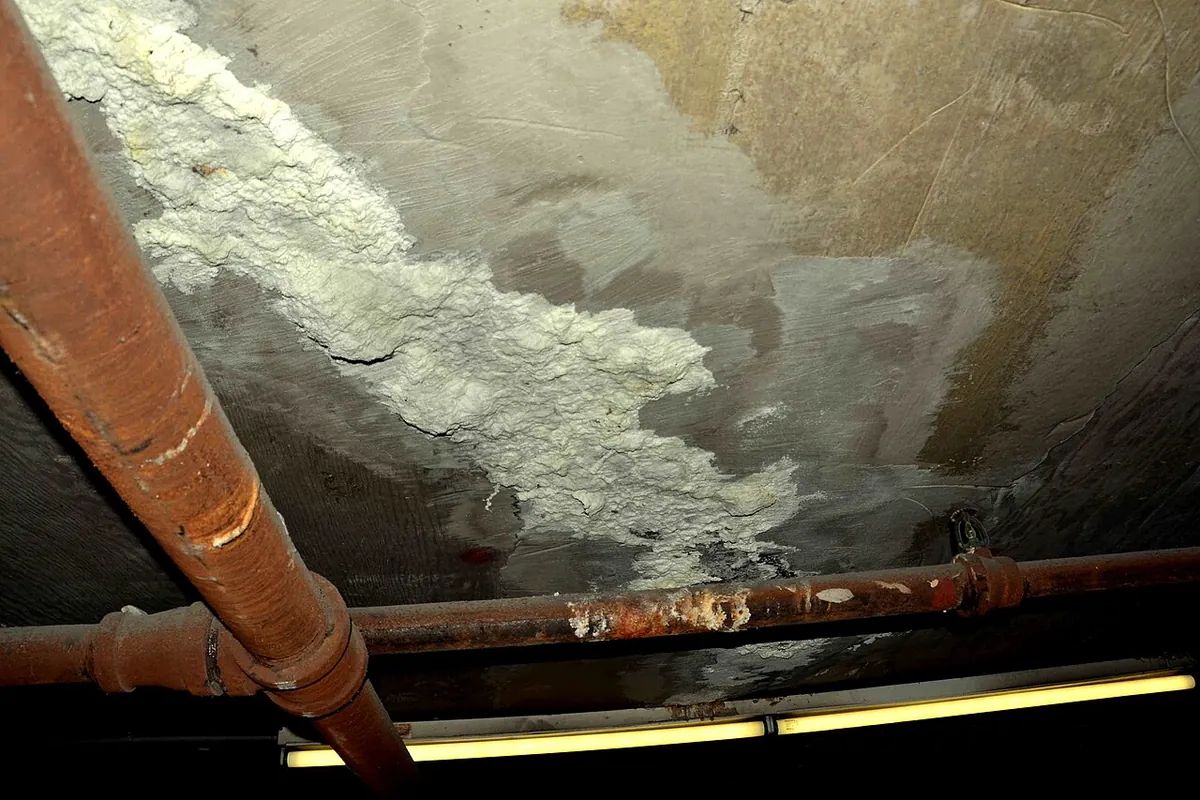
Photo: Achim Hering, Secondary efflorescence, Wikimedia Commons, CC BY 3.0.
Quick Answer
Efflorescence in concrete is the white, powdery or crusty deposit that appears on concrete, block, brick and pavers. It forms when water dissolves salts inside the concrete, carries them to the surface, and evaporates, leaving the salts behind. It needs three things: soluble salts, water, and a path for that water to reach the surface. Light concrete efflorescence is usually cosmetic and can be removed by dry brushing, then scrubbing with water, then, if needed, a product made for efflorescence or a diluted acid as a last resort. To keep it from coming back, you have to stop the water: fix drainage, leaks and grading, let the concrete dry, and use a breathable sealer. Heavy, crusty efflorescence on walls or ceilings can be a sign of ongoing water movement that should be investigated.
You pour a new patio, build a block wall, or finish a basement, and a few weeks later white streaks and patches start to appear. Or an older garage floor or retaining wall slowly turns chalky white along the bottom. Most of the time, that white material is efflorescence. It looks alarming, but in most cases it is a surface stain made of harmless salts, not damage to the concrete itself.
This guide explains what efflorescence concrete deposits are made of, why they form, how to tell efflorescence from mold and other white stains, how to remove it safely, when it means something more serious, and how to prevent it on new and existing concrete.
What Is Efflorescence in Concrete?
The word efflorescence comes from French and Latin words meaning "to flower out," which describes how the white deposit seems to bloom on the surface. Concrete, mortar, block, brick and stone all contain small amounts of salts that can dissolve in water. Cement in particular produces calcium hydroxide when it hydrates. When water moves through the material and evaporates at the surface, the dissolved salts are left behind as a white powder or crust.
Concrete efflorescence is usually made mostly of calcium carbonate, which forms when calcium hydroxide carried to the surface reacts with carbon dioxide in the air, plus smaller amounts of sulfates and other salts. Fresh deposits are often fluffy and powdery; older ones can harden into a crust that is harder to remove.
How Efflorescence Forms
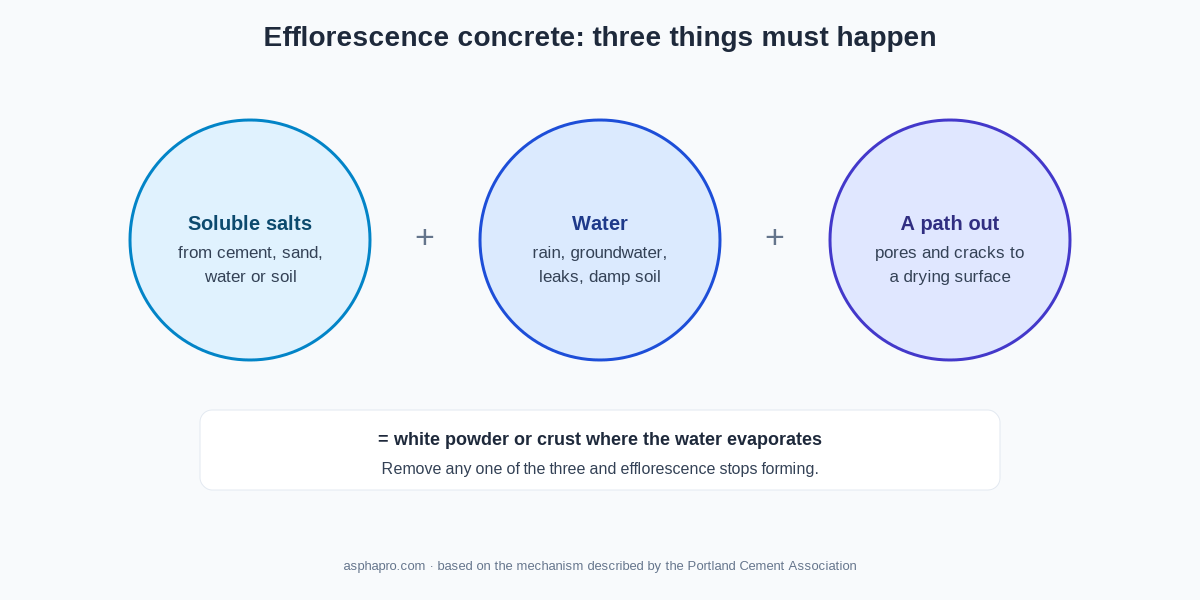
The Portland Cement Association describes efflorescence in concrete as needing three conditions at the same time:
- Soluble salts. They can come from the cement, the sand and stone, the mixing water, admixtures, the soil next to the concrete, or deicing salt.
- Water. Rain, groundwater, wet soil, condensation, leaks, sprinklers or water used during construction dissolve the salts.
- A path to an evaporating surface. Pores, cracks and capillaries let the salty water move to the surface, where it evaporates.
Take away any one of the three and efflorescence in concrete cannot form. That is the key to preventing it: you usually cannot remove all the salts from concrete, but you can control water.
Primary vs secondary efflorescence
Engineers sometimes separate two types:
- Primary efflorescence appears soon after construction, as mixing water and curing water leave the new concrete or mortar carrying salts with them. It often fades on its own within the first year or two as the material dries out and the easily dissolved salts are used up.
- Secondary efflorescence appears later, when outside water keeps moving through the concrete, for example through a leaking wall, a wet slab or a crack. It keeps coming back until the water source is fixed, and heavy secondary efflorescence can slowly leach material out of the concrete.
Where Concrete Efflorescence Shows Up
- Basement walls and floors, especially near the bottom of walls and along cracks, where groundwater moves through.
- Block and brick walls, along mortar joints and below caps and windows where water gets in.
- Retaining walls, where water from the soil behind the wall moves through to the face.
- New patios, driveways and pavers, as construction water dries out.
- Garage floors, where melted snow and deicing salt sit on the slab.
- Colored and stamped concrete, where white deposits stand out strongly against darker colors.
- Ceilings and undersides of slabs, such as parking garages and bridges, where water leaks through from above.
Is Efflorescence in Concrete a Problem?
Most efflorescence in concrete is cosmetic. The salts themselves usually do not weaken good concrete, and light deposits often wash or weather away. However, efflorescence is a symptom: it tells you water is moving through the concrete. That matters because:
- In basements, the same water can cause damp walls, musty smells and mold on nearby materials. See mold on concrete.
- In reinforced concrete, water that carries chlorides can reach the steel and cause rust and spalling over time.
- In masonry, salts that crystallize inside the surface rather than on it can push off the face of bricks and blocks (subflorescence).
- Heavy secondary efflorescence that keeps building up can mean the concrete is slowly losing material to water moving through it.
So clean it, but also find out where the water is coming from, especially if the concrete efflorescence is heavy, keeps returning, or is spreading.
Efflorescence in Concrete vs Subflorescence
When salty water evaporates at the surface, the salts end up on the outside as efflorescence. On concrete, that is the familiar white powder. When it evaporates just below the surface, the salts crystallize inside the pores instead. That hidden version is called subflorescence, or cryptoflorescence. It is more harmful, because growing salt crystals inside the pores can push off the surface layer, causing flaking and spalling on brick, block, stone and weak concrete. Subflorescence is more likely when a surface has been sealed with a coating that does not let vapor pass, or when evaporation is very fast. That is one reason breathable sealers are recommended for masonry and concrete that may get wet: they let water vapor and salts leave at the surface rather than trapping them just underneath.
Efflorescence on Brick, Block and Stone Next to Concrete
Concrete efflorescence often shows up where concrete meets other masonry, such as a brick veneer on a concrete foundation, block walls on a concrete footing, or stone steps set on a slab. Water can wick from wet concrete into the brick or block and leave efflorescence on them, or salts from mortar can stain the concrete below. The cleaning methods are similar, but brick and natural stone can be more sensitive to acids than concrete. The National Park Service's guidance on cleaning masonry recommends always starting with the gentlest method that works and testing any cleaner in a small area. For block walls, our guide to cinder block vs concrete block explains the materials involved.
Efflorescence vs Mold vs Other White Stains
| Stain | Looks like | Quick test |
|---|---|---|
| Efflorescence | White, powdery or crystalline, often in streaks or along joints and cracks | Crumbles to powder between fingers; dissolves in water; does not smear like fuzz |
| Mold or mildew | Fuzzy, often gray, green or black, sometimes white; may smell musty | Smears; often grows on dust, wood or paper near the concrete; bleach lightens it |
| Lime run or calcite | Hard white drips, sometimes forming small stalactites under slabs | Very hard; does not dissolve in water; fizzes in acid |
| Sealer blush | Cloudy white haze in a sealed surface | In the sealer film, not on top; often fixed with solvent re-wetting |
| Paint or plaster residue | Flat white patches | Scrapes off as a film |
A simple test: put a few drops of water on the white deposit. Efflorescence will usually darken and partly dissolve; mold will not. If you are not sure, a small amount of diluted vinegar will fizz on efflorescence and lime deposits.
How to Remove Efflorescence From Concrete
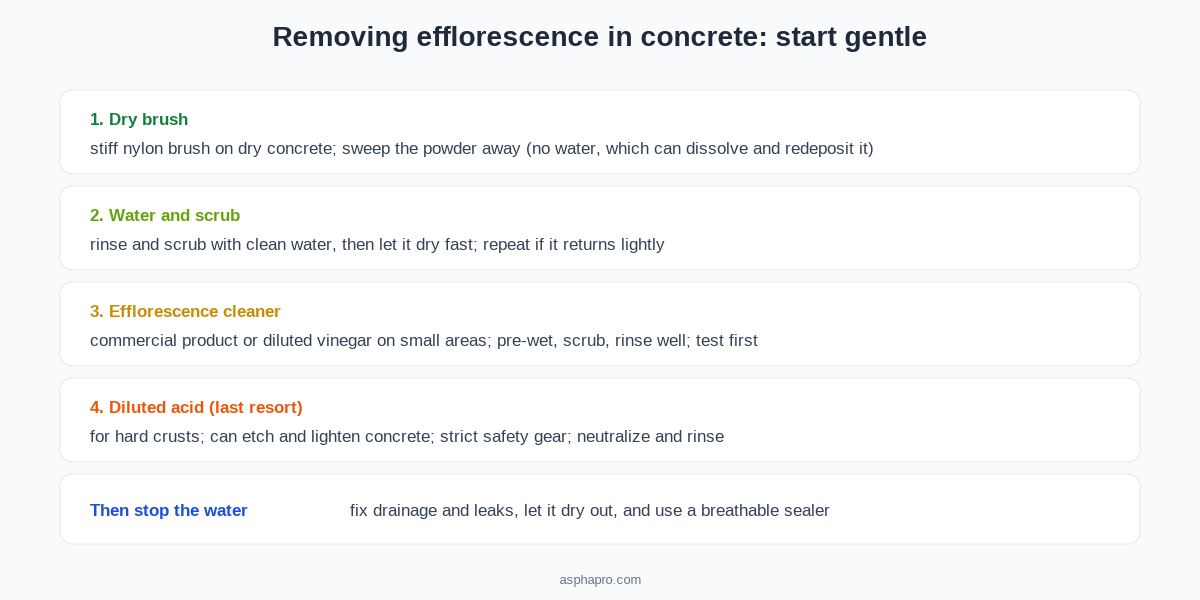
Always start with the gentlest method and work up. Stronger methods remove more, but they also risk damaging or discoloring the concrete.
1. Dry brushing
On dry concrete, scrub the white powder off with a stiff nylon brush and sweep or vacuum it away. This is the first step for any light, fluffy efflorescence. Doing it dry matters: wetting it first can dissolve the salts and carry them back into the surface, where they reappear when it dries.
2. Water and a stiff brush
If dry brushing leaves a haze, scrub with clean water and a stiff brush, then rinse and help the surface dry quickly with good ventilation or sun. The General Services Administration's preservation guidance notes that efflorescence originating from within the concrete is usually soluble and may be removed with water and scrubbing, or high-pressure water rinsing. Do not overdo pressure washing: very high pressure can open the surface and invite more water in.
3. Efflorescence cleaners
Commercial efflorescence removers, often based on mild acids or buffered acid blends, are made for concrete and masonry. Pre-wet the surface so the cleaner stays on top, apply it as directed, scrub, and rinse thoroughly. Some people use diluted white vinegar on small areas. Test any cleaner on an inconspicuous spot first, especially on colored, stained or stamped concrete, because acids can lighten color and change texture.
4. Diluted acid (last resort)
Hard, crusty concrete efflorescence that has turned to calcium carbonate may need a diluted acid such as muriatic acid. This is a last resort because acid etches the cement paste, can lighten or blotch the concrete, and is dangerous to handle. If you use it: wear acid-resistant gloves, goggles and protective clothing, ventilate well, always add acid to water (never water to acid), pre-wet the concrete, apply the weakest solution that works, scrub, and then neutralize and rinse thoroughly. Many professionals use specialized masonry cleaners instead. See our guide to how to clean concrete for safer methods.
5. Mechanical removal
Light grinding or sanding can remove stubborn deposits on floors that will be coated or polished. Sandblasting removes concrete efflorescence but can roughen and damage the surface, so it is rarely the best choice on decorative concrete.
How to Stop Efflorescence From Coming Back
Cleaning removes what you see, but efflorescence in concrete returns as long as water keeps moving through the concrete. To stop it:
- Fix outside drainage. Slope soil away from the house, extend downspouts, clean gutters and keep sprinklers off walls and slabs.
- Fix leaks. Repair leaking pipes, window wells, cracked foundation walls and failed joints. See how to repair concrete cracks.
- Waterproof below-grade walls on the outside where possible, and add drainage behind retaining walls.
- Let new concrete dry out. Primary efflorescence often stops on its own once the concrete has dried; clean it a few times during the first year.
- Seal with a breathable sealer. A penetrating silane or siloxane sealer reduces water absorption while letting vapor escape. Avoid sealing over active concrete efflorescence or very wet concrete, which can trap salts and moisture under the sealer and cause it to haze.
- Control deicers. Rinse salty slush off garage floors and driveways, and avoid piling salty snow against walls and foundations, where the meltwater soaks in. See does salt damage concrete.
Preventing Efflorescence on New Concrete
For new slabs, walls and pavers, a few steps reduce efflorescence in concrete from the start:
- Use a mix with a low water-cement ratio, which makes denser concrete with fewer paths for water, and do not add extra water at the site.
- Use clean, washed aggregates and clean mixing water, which bring fewer soluble salts into the mix.
- Cure properly so the surface is dense and well hydrated, with fewer open pores for salty water to travel through.
- Install a vapor retarder under interior slabs so groundwater moisture does not rise through the floor and carry salts up to flooring and coatings.
- Provide drainage and dampproofing on foundation and retaining walls.
- Keep new block, brick and pavers covered and off wet ground during construction, so they do not soak up water and salts before they are even installed.
- Wait the recommended time before sealing new concrete, then use a breathable sealer.
Efflorescence in Specific Situations
Basement walls and floors
Efflorescence in concrete basements is a sign of moisture moving through the wall or floor. Clean it off, then look outside for the source: downspouts dumping water near the foundation, soil sloping toward the house, or window wells collecting water. Interior coatings sold for basement walls can reduce dampness, but they often fail if water pressure from outside is high. For persistent problems, exterior waterproofing and drainage are the long-term fix.
Efflorescence on pavers and stamped concrete
Efflorescence on new pavers and stamped concrete is very common in the first season. It usually fades with weather and cleaning. Use cleaners made for pavers and colored concrete; strong acids can damage the color. After the concrete efflorescence has stopped, sealing helps keep the color rich. See stamped concrete vs pavers.
Concrete efflorescence on garage floors and driveways
White deposits on garage floors near the door are often a mix of efflorescence and dried road salt brought in by cars. Rinse regularly in winter, then seal or coat the floor. See concrete garage floor repair.
Efflorescence in concrete block and retaining walls
Retaining walls without drainage behind them push groundwater through the wall, leaving efflorescence along joints. Adding drainage gravel, filter fabric and a drain pipe behind the wall, or weep holes, reduces it.
Step by Step: Cleaning Efflorescence Off a Basement Wall
- Protect yourself. Wear gloves, eye protection and a dust mask; efflorescence dust and old basement dust can irritate.
- Dry brush first. Brush the concrete efflorescence off the dry wall with a stiff nylon brush, working top to bottom, and vacuum it up with a shop vac.
- Check what is left. If a thin haze remains, scrub with a little clean water and a brush, then run a fan or dehumidifier so the wall dries quickly.
- Use a cleaner only if needed. For stubborn concrete efflorescence, apply a masonry efflorescence cleaner to a pre-wetted wall, scrub, and rinse well. Ventilate the basement.
- Find the water. Note exactly where the concrete efflorescence was heaviest: along a crack, at the bottom of the wall, under a window. That points to the water path.
- Fix the cause. Address gutters, downspouts, grading, window wells or cracks before applying any coating.
- Watch it. Check the wall over the next few months. Less efflorescence means the water problem is improving.
Efflorescence in Concrete Through the Seasons
Efflorescence in concrete often follows the weather. It tends to show up after wet periods followed by drying weather, such as a dry spell after spring rains, when water that soaked in carries salts out to the surface as it evaporates. In cold climates, concrete efflorescence often appears in late winter and spring, after snowmelt and deicing salts have soaked into slabs and walls. On new concrete, efflorescence can appear within weeks of the pour as construction water dries out. If you clean it during a wet season, expect some to return as the concrete dries; cleaning again later in a dry season usually gives a longer-lasting result.
Efflorescence on Colored and Decorative Concrete
Concrete efflorescence is most noticeable on dark colored, stained and stamped concrete, where white deposits stand out sharply. These surfaces need gentle care:
- Start with dry brushing and plain water; many light deposits disappear with time and weather.
- Use cleaners labeled safe for colored concrete and pavers, and test them first.
- Avoid strong acids, which can lighten color and leave blotches.
- After cleaning and drying, a sealer that enhances color can restore the look and reduce future efflorescence.
- If efflorescence appears under the sealer, the sealer may need stripping and reapplying once the concrete has dried.
Myths About Efflorescence in Concrete
- "Efflorescence means the concrete is falling apart." Usually not. Most efflorescence is a surface deposit of salts. It is a sign of moisture, not necessarily of damage.
- "Sealing will stop it." Only if the concrete is dry and the water source is controlled. Sealing over wet concrete can trap moisture and make things worse.
- "Pressure washing is the best fix." Pressure washing can remove deposits, but it also pushes water into the concrete, which can bring more concrete efflorescence back.
- "It is mold." White mold exists, but efflorescence is mineral and crumbles to powder. A water test tells them apart.
- "New concrete was poured wrong." Some efflorescence on new concrete is normal as construction water dries out, even on well-built slabs and walls.
When to Call a Professional
Call a waterproofing contractor, mason or engineer when:
- Efflorescence in concrete keeps returning in the same places despite cleaning.
- It comes with standing water, active leaks, or musty odors in a basement.
- It appears along cracks in foundation walls, especially cracks that are growing.
- It is heavy and crusty on the underside of slabs, balconies or parking decks, which suggests water moving through structural concrete.
- Brick or block faces are flaking off along with the white deposits.
On structural concrete, water that leaves efflorescence can also carry chlorides to the reinforcement. Our guide to spalling concrete explains what happens when steel rusts.
Efflorescence on New Construction
Efflorescence on a new patio, wall or pavers is usually primary efflorescence and is generally treated as a normal part of new concrete drying out, not a defect. Many contractors and manufacturers advise waiting through a season and cleaning with a product made for efflorescence. If it persists beyond the first year or keeps getting heavier, talk to the installer; it may point to a drainage issue, such as water flowing toward or under the new concrete.
Concrete Efflorescence and Sealers
Sealers can both help and hurt. A good breathable sealer, applied to clean, dry concrete, reduces water absorption and future efflorescence. A film-forming sealer applied over damp concrete or active efflorescence can trap moisture and salts and turn cloudy white, which looks similar to efflorescence but is a sealer problem. Always remove concrete efflorescence and let the concrete dry before sealing, and choose a sealer suited to the location. See how to reseal concrete.
Efflorescence in Concrete: Quick Reference
| Situation | Likely cause of the efflorescence | What to do |
|---|---|---|
| New patio or pavers, first season | Construction water drying out (primary efflorescence) | Dry brush, wait, use a paver efflorescence cleaner if needed |
| Basement wall, bottom 2 feet | Groundwater and wet soil outside | Clean; fix grading, gutters and drainage |
| Along a crack in a wall | Water traveling through the crack | Clean; seal or inject the crack; fix outside water |
| Retaining wall face | Water pushing through from the soil behind | Add drainage behind the wall or weep holes |
| Garage floor near the door | Melted snow and road salt | Rinse in winter; seal or coat the floor |
| Under a sealed surface | Moisture trapped under sealer | Let dry; strip and reseal with a breathable sealer |
| Underside of slabs or balconies | Water leaking through from above | Find and fix the leak; have structural concrete checked |
What Fixing Efflorescence Costs
Cleaning efflorescence in concrete is cheap: a stiff brush, water and a bottle of efflorescence cleaner often cost under $50 for a typical wall or patio. The real cost is in fixing the water source. Extending downspouts and regrading soil can be a small DIY job. Sealing cracks costs little, while professional crack injection typically runs a few hundred to over a thousand dollars per crack. Exterior foundation waterproofing and drainage are major projects priced per job. Our guides to concrete repair cost and epoxy concrete repair cover crack repairs; for heavy concrete efflorescence in a basement, get a waterproofing contractor's assessment before spending money on interior coatings.
Frequently Asked Questions
What is efflorescence in concrete?
It is a white deposit of salts left on the surface when water moves through concrete, dissolves salts and evaporates.
Is concrete efflorescence harmful?
Usually it is cosmetic, but it shows that water is moving through the concrete. Heavy or recurring efflorescence in concrete on walls and basements should be investigated for leaks or drainage problems.
Will efflorescence go away on its own?
Primary efflorescence on new concrete often fades within the first year or two as the concrete dries. Secondary efflorescence keeps coming back until the water source is fixed.
Does vinegar remove efflorescence?
Diluted vinegar can remove light concrete efflorescence on small areas. Pre-wet the surface, scrub, and rinse well, and test first on colored concrete.
Can you seal over efflorescence?
No. Remove it and let the concrete dry first; sealing over it can trap moisture and salts and cause a white haze in the sealer.
How do you tell efflorescence from mold?
Efflorescence is crystalline and crumbles into powder that dissolves in water; mold is fuzzy, smears and usually grows on organic dust or materials near the concrete.
Sources
- Portland Cement Association: Efflorescence: Causes, Prevention, Repair (IS239)
- U.S. General Services Administration: Removing Efflorescence From Concrete
- Quikrete: What Is Efflorescence?
- National Park Service: Preservation Brief 1, Cleaning and Water-Repellent Treatments for Historic Masonry
Related Guides
- Tiny red bugs on concrete — clover mites and how to keep them away
- Concrete dissolver guide — remove hardened concrete from tools and mixers
- Concrete moisture barrier guide — vapour barriers under slabs and on floors
- Calcium chloride in concrete — accelerators, risks and rapid set options
- Concrete dye and pigment — how to color concrete, white to black
- Is concrete waterproof? — porosity, waterproof concrete and sealants
- Concrete etching — acid washing and etching safely
- How to wash cement floor — best way to clean concrete floors
- How to clean moss from concrete — removing moss and stopping regrowth
- Concrete splash blocks — downspout splash blocks and drainage
- Concrete masonry unit (CMU) — dimensions, sizes and block walls
- Concrete pool coping — poured and precast coping, joints and repair
- How to paint cinder blocks — block filler, paint and prep
- Concrete fountain — tiered fountains, pumps and care
- Bleach on concrete — mix ratios for mold, mildew and algae
- Concrete wall crack repair — injection, sealants and when cracks are structural