
Cost of Semi Inground Pool: What a Partly Buried Pool Costs to Install
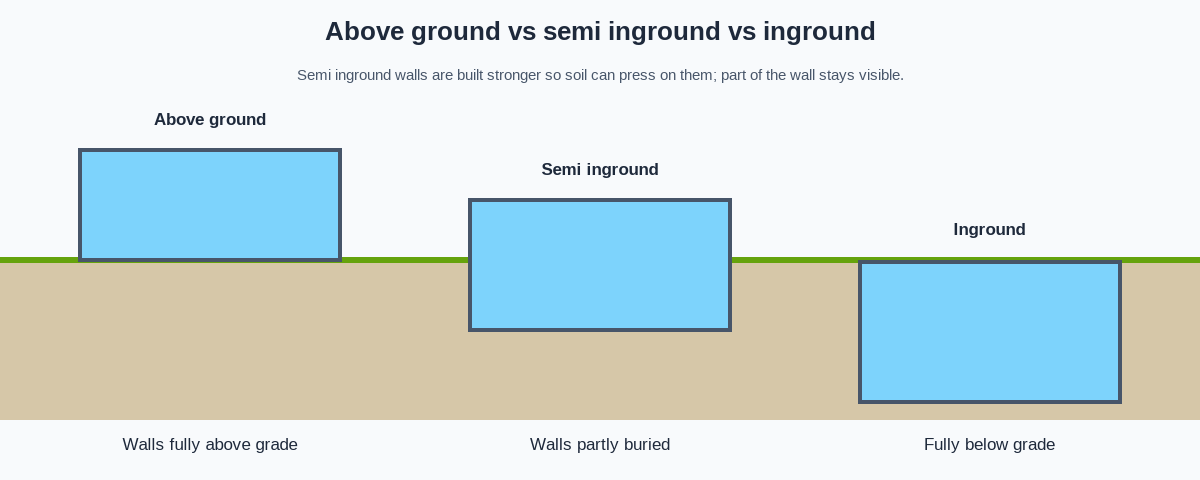
Diagram: Asphapro.com
Quick Answer
The cost of semi inground pool projects usually falls between an above ground pool and an inground pool. The semi inground pool kit (reinforced wall, frame, liner, pump and filter) typically costs about $5,000 to $15,000, and a complete semi inground pool installed with excavation, backfill, electrical and a basic surround usually costs about $10,000 to $35,000 or more. Adding a full deck or patio, a heater or an automatic cover can push the total to $40,000 or above. A comparable inground pool typically costs $40,000 to $120,000, while an above ground pool costs about $2,500 to $10,000. Semi inground pools are popular on sloped yards and for owners who want a built-in look without full inground pricing.
A semi inground pool is a pool built partly into the ground, with the rest of the wall above grade. The walls are stronger than a regular above ground pool so they can resist soil pressure, and many models allow a deeper center. The result looks more permanent than an above ground pool, fits sloped yards well, and costs far less than a true inground pool. These pools are also called semi in ground pools or semi-inground pools, and some manufacturers call them hybrid or on-ground pools.
This guide explains the cost of a semi inground pool in detail: kit and installation prices, cost by size and shape, excavation and slope work, decks and extras, comparisons with other pool types, permits, lifespan, maintenance and design ideas. For the full range of pool prices, see how much does a pool cost.
What Is a Semi Inground Pool?
A semi inground pool sits partly below ground level. Depending on the model and the site, anywhere from a few inches to roughly half or more of the wall height is buried, and some designs can be fully buried. The walls, usually made of heavy-gauge steel, aluminum or resin with strong bracing, are designed to handle soil pushing against them. Like above ground pools, most semi inground pools use a vinyl liner, a skimmer, a return, a pump and a filter. Unlike most above ground pools, they often allow an expandable liner with a deep end of 6 to 8 feet in the middle.
Cost of Semi Inground Pool at a Glance
| Item | Typical cost |
|---|---|
| Semi inground pool kit | $5,000 – $15,000 |
| Excavation and soil removal | $1,000 – $5,000+ |
| Installation labor | $3,000 – $10,000 |
| Backfill (gravel or stone) | $500 – $3,000 |
| Electrical and bonding | $500 – $2,500 |
| Concrete pad or paver surround | $1,500 – $8,000 |
| Deck (wood or composite) | $5,000 – $25,000+ |
| Permits | $100 – $1,500 |
| Typical installed total | $10,000 – $35,000+ |
These planning ranges come from national cost guides and typical installer pricing. The semi inground pool installation cost varies with soil, slope, access, pool size, burial depth and finishing work around the pool.
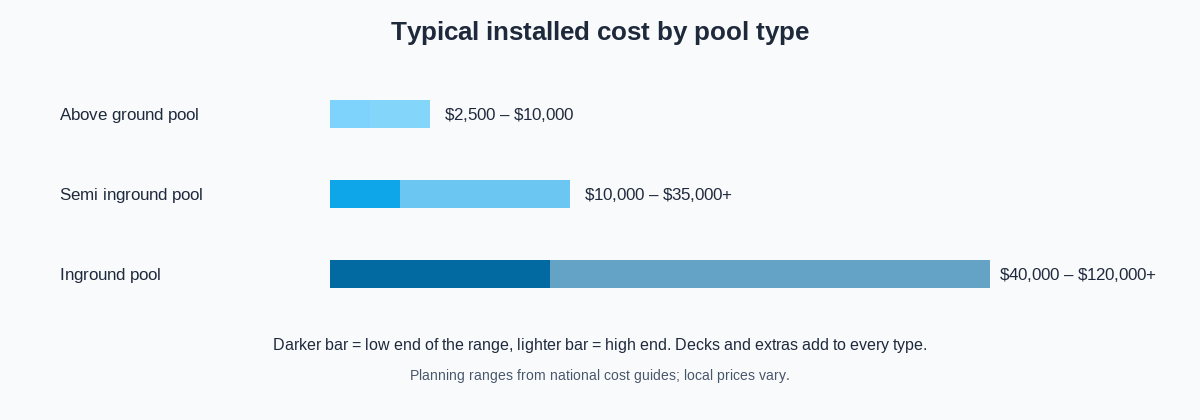
Chart: Asphapro.com
Semi Inground Pool Cost by Size and Shape
| Size and shape | Kit price (approx.) | Installed price (approx.) |
|---|---|---|
| 15 – 18 ft round | $5,000 – $8,000 | $10,000 – $18,000 |
| 21 – 24 ft round | $6,000 – $10,000 | $12,000 – $22,000 |
| 12 x 24 ft oval | $6,500 – $11,000 | $13,000 – $24,000 |
| 15 x 30 ft oval | $8,000 – $13,000 | $16,000 – $30,000 |
| 16 x 32 ft or larger, rectangular | $10,000 – $15,000+ | $20,000 – $40,000+ |
Rectangular and large oval semi inground pools cost more because they need stronger bracing and more excavation. A deep-end option adds digging and a larger liner. Prices rise further with premium resin walls, built-in steps and larger filtration systems.
What Semi Inground Pool Installation Involves
- Design and permit. The installer confirms the model, burial depth and placement, and applies for permits.
- Excavation. The site is dug to the planned depth, often with a sloped or hopper-shaped center for a deep end.
- Base. A compacted base and floor material such as sand-cement or vermiculite mix creates a smooth floor.
- Wall and frame assembly. The reinforced wall and bracing are assembled and leveled.
- Liner. A standard or expandable liner is installed and filled while the walls are backfilled.
- Backfill. Gravel or stone is placed around the buried portion of the wall in layers.
- Plumbing and electrical. The pump and filter are connected and bonded, and a GFCI-protected circuit is installed.
- Finishing. Coping, a concrete collar, pavers or a deck are added around the exposed wall.
Installation usually takes about one to three weeks of work, depending on excavation, weather and the deck. Ask the installer for a written schedule that shows when excavation, backfill, electrical work and the surround will happen, so you know when the yard will be torn up and when the pool will be ready to fill and use for the first time.
Installing a Semi Inground Pool on a Slope
Sloped yards are where semi inground pools shine. Instead of building up the low side or digging the whole pool deep into the high side, the pool can be set partly into the slope. The uphill side is mostly buried, while the downhill side shows more wall and can be finished with a deck or stone wall. This often costs less than building a retaining wall for a flat above ground pool, and much less than a full inground pool on a slope. A semi inground pool on a slope still needs careful drainage so water does not pool against the wall. Ask the installer how the model handles uneven burial depth; some require the same depth all the way around, while others allow variation.
Photo: Kgbo, Wikimedia Commons, CC BY-SA 4.0
Semi Inground vs Above Ground vs Inground
| Factor | Above ground | Semi inground | Inground |
|---|---|---|---|
| Typical installed cost | $2,500 – $10,000 | $10,000 – $35,000+ | $40,000 – $120,000+ |
| Look | Freestanding | Built-in look with deck or wall | Fully built-in |
| Depth | About 4 ft | About 4 ft, deep end often possible | Any depth |
| Sloped yards | Needs leveling or wall | Well suited | Costly retaining work |
| Installation time | 1 – 3 days | 1 – 3 weeks | 2 – 12 weeks |
| Lifespan | 10 – 20 years | 15 – 25+ years | Decades |
Semi inground pools give much of the built-in look and usability of an inground pool for a fraction of the price. See above ground pool installation cost and vinyl inground pool cost for the neighboring options.
Decks and Surrounds for Semi Inground Pools
Because part of the wall stays above ground, most owners finish semi inground pools with a deck, a paver patio built up to the coping, or a stone or block wall. Options and typical costs:
- Concrete collar and paver patio around a fully or mostly buried pool: $1,500 to $8,000.
- Partial deck on the exposed side: $5,000 to $12,000.
- Full wraparound deck: $12,000 to $25,000 or more.
- Stone or block veneer on the exposed wall: a few thousand dollars.
See above ground swimming pool deck ideas and pool deck ideas.
Semi Above Ground Pool Ideas
- Half-buried with a raised deck: the deck sits at coping height on one side and steps down to the yard.
- Built into a slope with a stone wall: the exposed wall is faced with stone for a natural look.
- Pool and patio combo: pavers built up to the coping make the pool look fully inground.
- Raised seating wall: the exposed wall becomes a seat for sitting with feet in the water.
- Plantings and lighting around the exposed wall soften the look.
Semi Inground Pool Cost: Three Example Projects
| Project | What is included | Estimated cost |
|---|---|---|
| Simple round | 21 ft round semi inground pool, buried about 2 ft, sand filter, gravel backfill, paver collar | $12,000 – $18,000 |
| Oval on a slope | 15 x 30 ft oval set into a hillside, deep center, stone veneer on the exposed side, partial deck | $22,000 – $35,000 |
| Fully finished | 16 x 32 ft rectangle, fully buried, concrete patio, heat pump, automatic cover, LED lights | $35,000 – $50,000+ |
These examples show that the semi inground pool cost depends as much on the finishing work and features as on the pool itself.
Semi Inground Pool Price vs Value
The semi inground pool price sits in a sweet spot for many families. You get a more permanent-looking pool than an above ground model, often a deeper center for jumping and play, and a design that blends into decks and patios, while paying roughly a quarter to half the cost of a comparable inground pool. Running costs are similar to a large above ground pool. The trade-offs are size limits compared with custom concrete pools, a vinyl liner that needs periodic replacement, and less impact on home value than an inground pool in some markets.
Cost to Install a Semi Inground Pool Yourself
Some semi inground pool kits are sold for DIY installation, and handy owners can save several thousand dollars in labor. The cost to install a semi inground pool yourself is mainly excavator rental or a hired excavator ($500 to $3,000), gravel backfill, base materials, an electrician, and many days of work. DIY is realistic only if you can excavate accurately, follow the manufacturer's burial and backfill instructions exactly, and handle a large liner installation. Mistakes in backfill or leveling can bow walls or wrinkle the liner and may void the warranty. Many owners hire pros for excavation and backfill and handle the finishing work themselves.
Semi Inground Pool Installation Cost Factors
- Burial depth: deeper burial means more digging, more backfill and stronger walls.
- Soil and rock: rocky or clay soils raise excavation costs.
- Slope: moderate slopes can save money compared with leveling; steep slopes add wall and drainage work.
- Access: machines must reach the site; tight access adds hand labor.
- Deep end: an expandable liner and hopper excavation add cost.
- Finishing: decks, patios and stone veneer often equal or exceed the pool cost.
- Region and season: busy spring schedules and high-cost areas raise prices.
Materials: Steel, Aluminum and Resin Walls
Steel walls are the most common and least expensive, but must be well coated and rated for burial. Aluminum walls resist corrosion and are lighter, often at a higher price. Resin components resist rust and handle salt water well. Many semi inground pools combine a strong steel or aluminum wall with resin rails and uprights. Ask whether the model is approved for saltwater systems and how deep it can be buried; these details affect both the semi inground pool price and how long it lasts.
Heating and Covering a Semi Inground Pool
Because part of the wall is buried, a semi inground pool loses a little less heat through the walls than a fully exposed above ground pool. A solar cover, heat pump or small gas heater extends the season. Automatic safety covers are available for many rectangular semi inground models and add safety and lower heating costs, though they are a significant expense. See swimming pool heater cost and automatic pool cover cost.
Permits and Rules
Semi inground pools usually need building and electrical permits, and pool barrier rules apply just as they do for inground pools. Some towns treat the exposed wall as part of the barrier if it is tall enough; others require a fence. Setbacks from property lines, septic systems and easements also apply. Call 811 before digging so utility lines are marked.
Safety Around a Semi Inground Pool
Because a semi inground pool may sit lower than an above ground pool, children can reach the water more easily, especially from a deck or patio built up to the coping. Treat it like an inground pool for safety: install a barrier that meets local code, with self-closing, self-latching gates; keep ladders and steps secured when the pool is not in use; add door or pool alarms; and never leave children unsupervised near the water. The pool is not designed for diving, even with a deep end, so post a no-diving rule. Keep the electrical equipment on GFCI-protected circuits and check them monthly. A safety cover adds another layer of protection, especially for families with young children or pets. The U.S. Consumer Product Safety Commission's Pool Safely program lists these layers of protection for home pools.
Plan the safety features at the same time as the pool and deck, so fences, gates and cover tracks fit the design and are included in the budget rather than added later at a higher price.
Lifespan and Maintenance
A well-installed semi inground pool often lasts 15 to 25 years or more. The vinyl liner usually needs replacing every 7 to 12 years; see pool liner replacement cost. Maintenance is similar to an above ground pool: skimming, brushing, vacuuming, filter cleaning and water testing, with chemical and power costs that are usually lower than a larger inground pool. See cost to maintain a pool.
Choosing a Semi Inground Pool Installer
Semi inground installation is more involved than an above ground pool and closer to building a small inground pool, so the installer's experience matters. When collecting quotes:
- Ask how many semi inground pools they have installed and request photos and references.
- Confirm they follow the manufacturer's burial, bracing and backfill instructions, which protect the warranty.
- Ask what backfill material they use; many manufacturers require gravel or stone rather than native soil.
- Ask whether excavation, soil removal, backfill, electrical, permits and the surround are included.
- Ask how they handle rock, groundwater or a slope.
- Get the schedule in writing, including when the pool can be filled and used.
Common Mistakes With Semi Inground Pools
- Burying a pool not rated for it. Standard above ground walls can collapse under soil pressure.
- Using the wrong backfill. Clay or wet soil holds water against the wall and can push it in.
- Poor drainage. Water collecting around the buried wall speeds corrosion and causes settling.
- Skipping permits and barrier rules.
- Draining the pool. Like any vinyl pool, a semi inground pool should not be drained except for liner replacement, and only with care.
- Underbudgeting the surround. The deck or patio often costs as much as the pool.
What Is a Semi Inground Pool Best For?
Semi inground pools are a strong choice when you have a sloped yard, want a built-in look on a moderate budget, need a deeper area than an above ground pool offers, or want a pool that installs in weeks rather than months. They are less suited to very large pools, custom free-form shapes, diving, or homeowners who want the highest resale value in markets where buyers expect concrete or fiberglass inground pools. Comparing the full semi inground pool cost, including the surround, with an inground quote is the best way to decide.
Semi Inground Pool Ownership Costs Over 10 Years
Over ten years, owners usually spend money on chemicals, electricity, opening and closing in cold climates, a liner replacement around year 8 to 12, and perhaps a new pump or filter. A rough ten-year total for running and maintaining a mid-size semi inground pool is often $8,000 to $20,000, depending on climate, heating and how much work you do yourself. Adding that to the installed price gives a realistic picture of what the pool costs to own, which is still far below a typical inground pool over the same period.
Semi Inground Pool Cost by Region
Semi inground pools are most common in the Northeast, Midwest and other areas with many vinyl pool dealers, where installers are experienced and prices are competitive. In regions dominated by concrete and fiberglass pools, fewer companies install semi inground models, so prices can be higher or options more limited. Excavation costs also vary: rocky ground in New England or clay soils in parts of the Midwest raise the semi inground pool installation cost, while sandy soils are easier to dig. Spring is the busiest season; ordering in fall or winter can bring better pricing and a guaranteed install date.
Above Ground Pool vs Semi Inground Pool: Which Should You Choose?
If your yard is flat, your budget is tight and you are happy with a freestanding look, a standard above ground pool is the most economical choice. If your yard slopes, you want a deeper center, or you want the pool to look built into a deck or patio, a semi inground pool is usually worth the extra cost. Many owners also choose semi inground because they plan to stay in the home for years and want a pool that feels permanent without paying for a full inground build. Look at the total cost, including the surround, and how each option fits the way your family will use the pool.
Ways to Save on a Semi Inground Pool
- Choose a round model; ovals and rectangles cost more.
- Bury the pool partly rather than fully to reduce excavation and backfill.
- Start with a paver or concrete surround and add a deck later.
- Buy in the off-season and schedule installation early.
- Get several quotes with the same model, burial depth and finishing work.
Semi Inground Pool Features and Upgrades
| Upgrade | Typical added cost | Why choose it |
|---|---|---|
| Expandable liner with deep end | $1,000 – $4,000 (liner and digging) | Room to jump and play in deeper water |
| Built-in or drop-in steps | $300 – $2,000 | Easier, safer entry than a ladder |
| Salt chlorine generator | $500 – $1,500 | Steady chlorine, softer-feeling water |
| Variable-speed pump | $600 – $1,500 | Lower electric bills |
| LED light | $100 – $600 | Night swimming and safety |
| Heat pump | $2,000 – $5,000 | Longer swim season |
| Automatic or safety cover | $2,000 – $12,000+ | Safety, cleaner water, less heat loss |
Not every upgrade is needed on day one. Many owners start with steps and a good filter, then add lighting, heating or a cover in later seasons as the budget allows.
How Deep Can a Semi Inground Pool Be?
Wall heights are usually 48 to 54 inches, so the shallow areas are about 4 feet deep. With an expandable liner, the center of many semi inground pools can be dug out to create a deep end of about 6 to 8 feet, depending on the pool size and the manufacturer's limits. A deeper pool costs more in excavation and liner, and it is still not designed for diving boards. Check the manufacturer's maximum depth and follow it exactly.
Semi Inground Pool Cost: Key Points
- Kits cost about $5,000 to $15,000; installed projects usually cost $10,000 to $35,000 or more.
- The surround, such as a deck or patio, is often the biggest extra.
- Semi inground pools are ideal for sloped yards and a built-in look on a moderate budget.
- Only pools rated for partial burial should be installed this way.
- Expect liner replacements every 7 to 12 years and modest running costs.
Frequently Asked Questions
How much does a semi inground pool cost?
Kits cost about $5,000 to $15,000, and most installed projects cost about $10,000 to $35,000 or more, depending on size, excavation and finishing.
What is the difference between above ground and semi inground pools?
Semi inground pools have stronger walls rated for partial burial, often allow a deep end, and look more built-in. Standard above ground pools sit on the ground and cannot be buried.
Can you bury an above ground pool?
Not a standard one; soil pressure can collapse walls not designed for it. Use a model rated for semi inground installation and follow its burial limits.
How long does a semi inground pool last?
Often 15 to 25 years or more for the structure, with liner replacements every 7 to 12 years. Good drainage around the buried wall and balanced water help it last longer.
Can a semi inground pool be fully buried?
Some models can, if the manufacturer rates the walls for full burial and the backfill and drainage are done correctly. Many are designed for partial burial only.
Do semi inground pools add home value?
They may add some value and appeal, especially with an attractive deck or patio, but usually less than a full inground pool in markets where inground pools are common.
How long does it take to install a semi inground pool?
Usually one to three weeks of work, plus time for permits, weather and finishing the deck or patio. Spring installs may wait longer because pool installers are usually busiest at that time.
Is a semi inground pool worth it?
For sloped yards or owners who want a built-in look at a moderate price, yes. It costs far less than an inground pool, installs faster, and still offers a deeper center and a permanent feel.
Sources
- HomeGuide: Above ground and semi inground pool cost
- HomeAdvisor: Above ground pool installation cost
- U.S. CPSC: Safety Barrier Guidelines for Residential Pools
- 811: Call before you dig