
Green Concrete: Eco-Friendly Low-Carbon Mixes and Fresh Green Concrete
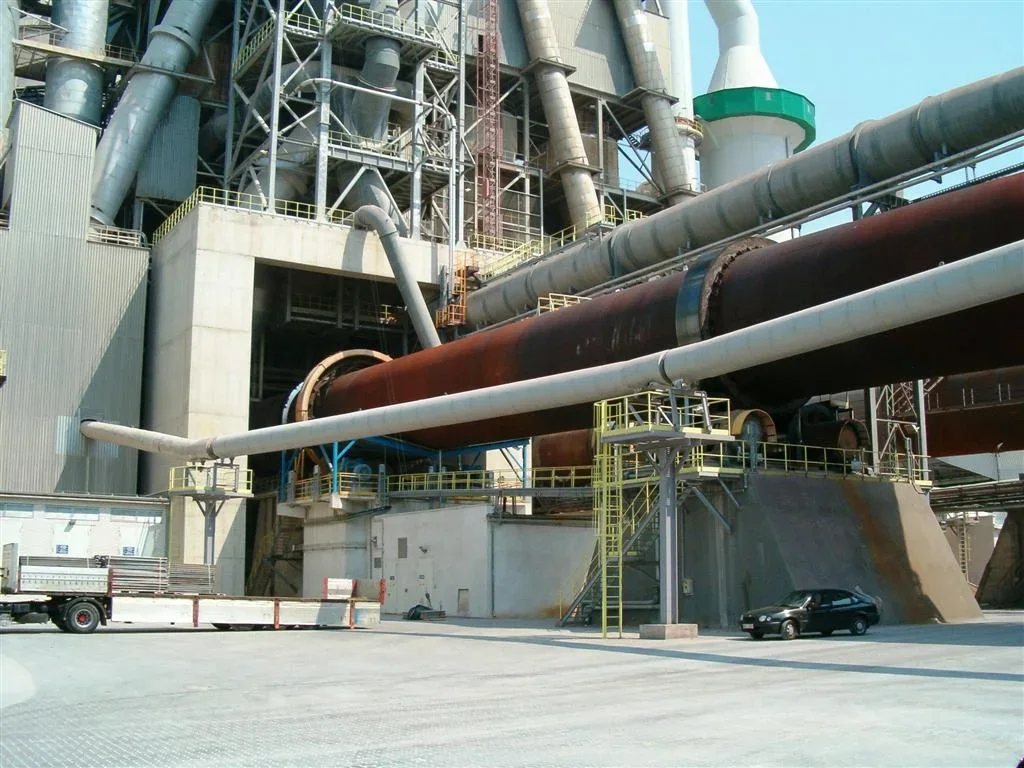
Photo: Jb957, Wikimedia Commons, CC0
Quick Answer
Green concrete has two meanings. Most often it means eco-friendly, low-carbon concrete: concrete made with less Portland cement, by replacing part of it with fly ash, slag cement or calcined clay, using Portland-limestone cement (Type IL), recycled aggregate, geopolymer binders or injected CO2. Because cement manufacturing produces roughly 8 percent of global CO2 emissions, these mixes can cut a concrete's carbon footprint by about 20 to 60 percent with similar strength. In construction, green concrete also means fresh concrete that has set but not yet gained much strength, usually within the first one to three days. Green concrete in this sense is easy to damage and needs protection and curing, but it is also the right stage for early saw cutting and some form stripping.
Concrete is the most widely used construction material in the world, and its key ingredient, Portland cement, is made by heating limestone and clay to about 1,450 degrees Celsius in huge rotary kilns like the one in the photo above. That process releases carbon dioxide both from burning fuel and from the chemical breakdown of limestone itself. Green concrete is the industry's answer: concrete designed to do the same job with less cement and lower emissions.
At the same time, anyone who works with concrete on site hears the phrase green concrete used another way, for young concrete that is hard to the touch but still weak. This guide covers both meanings so you can tell which one someone means, starting with eco-friendly green concrete and then the fresh green stage. For the basics of the material, see cement vs concrete.
Part 1: Green Concrete as Eco-Friendly Concrete
Why Concrete Has a Carbon Problem
Before looking at green concrete, it helps to know where the carbon comes from. Concrete itself is not especially carbon intensive per ton; aggregate and water have small footprints. The problem is cement. Producing one ton of Portland cement clinker releases roughly 0.8 to 0.9 tons of CO2, about 60 percent from the calcination of limestone and the rest mostly from fuel. Because the world uses over 4 billion tons of cement a year, cement production accounts for an estimated 7 to 8 percent of global CO2 emissions. A typical cubic yard of ready-mix concrete contains 450 to 650 pounds of cementitious material, so the cement content drives nearly all of its embodied carbon. Green concrete strategies therefore focus on using less clinker for the same performance.
How Green Concrete Is Made
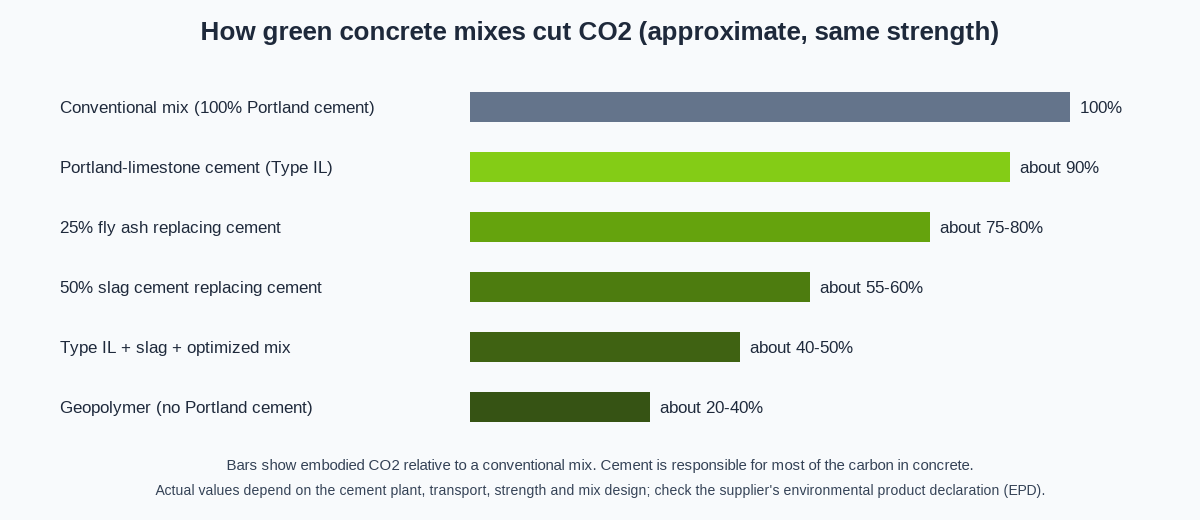
The chart above shows approximate reductions for common green concrete approaches. The main methods used to make green concrete are:
Supplementary cementitious materials (SCMs). Fly ash from coal power plants, slag cement from iron blast furnaces, silica fume and natural pozzolans react with the byproducts of cement hydration to form additional binder. Fly ash commonly replaces 15 to 35 percent of cement, and slag cement 25 to 50 percent or more. SCMs are the most widely used green concrete tool and often improve durability and long-term strength. Their trade-off is slower early strength gain, especially in cold weather.
Portland-limestone cement (Type IL). A blended cement with up to 15 percent finely ground limestone in place of clinker, covered by ASTM C595 and AASHTO M 240. It cuts CO2 by about 10 percent with performance similar to ordinary Portland cement, and it has become the standard cement in much of the United States.
Calcined clay cements. Limestone calcined clay cement (LC3) uses heated clay and limestone to replace up to half of the clinker, with reductions of up to about 40 percent.
Optimized mix design. Better aggregate grading, water reducers and performance-based specifications that allow less cement while still meeting strength and durability. Allowing strength to be measured at 56 or 90 days instead of 28, where the structure does not need early strength, lets green concrete mixes use more SCMs.
Recycled aggregate. Crushed old concrete used in place of some virgin gravel and stone, which saves quarrying and landfill space. See crushed concrete.
Geopolymer and alkali-activated concrete. Binders made from fly ash, slag or metakaolin activated by alkaline solutions, with no Portland cement at all. They can cut emissions dramatically but need specialized handling and are mostly used in precast and niche applications.
CO2 mineralization. Technologies that inject captured CO2 into fresh concrete, where it becomes calcium carbonate, slightly improving strength so a little less cement is needed, or that cure precast products in CO2.
Lower-carbon cement plants. Plants that burn alternative fuels, improve kiln efficiency or capture CO2 reduce the footprint of every bag of cement they make.
Fly Ash vs Slag Cement in Green Concrete
The two most common ingredients in eco-friendly green concrete behave a little differently:
Fly ash is a fine powder captured from coal power plant exhaust. Class F fly ash, from bituminous coal, is pozzolanic and especially good at reducing alkali-silica reaction and sulfate attack. Class C fly ash, from sub-bituminous coal, has some cementing ability of its own. Fly ash makes green concrete more workable and pumpable, reduces water demand, and lowers heat, but slows early strength. Typical replacement is 15 to 25 percent, up to 35 percent or more in mass concrete.
Slag cement, or ground granulated blast-furnace slag, is a byproduct of iron production. It is itself a hydraulic binder, so green concrete can use more of it, commonly 25 to 50 percent and up to 70 percent or more in mass foundations and marine structures. Slag gives a lighter color, very low permeability and good resistance to chlorides and sulfates.
Many green concrete mixes combine both, along with Type IL cement, in so-called ternary blends that balance early strength, workability, durability and carbon.
Green Concrete Strength and Durability
Well-designed green concrete meets the same strength classes as conventional concrete, from 3,000 psi sidewalks to high-strength structural mixes. The main differences are in timing and behavior:
Slower early strength. Mixes with high fly ash or slag gain strength more slowly at first, which can delay form stripping, saw cutting and finishing in cold weather. Accelerators, heated water or a lower replacement rate in winter solve this.
Better long-term durability. SCMs reduce permeability, improve resistance to chloride penetration and sulfate attack, and help control alkali-silica reaction, so green concrete often lasts longer in harsh environments.
Lower heat. Reduced cement content lowers the heat of hydration, which is an advantage in thick foundations and mass concrete where temperature cracking is a risk.
Finishing. Some high-SCM mixes bleed more slowly and feel different to finishers, so crews may need to adjust timing.
Curing matters more. Green concrete mixes rich in SCMs depend on moisture over a longer period to develop their properties, so proper curing is essential. See how long does concrete take to cure.
Green Concrete Cost
Green concrete does not have to cost more than conventional concrete. Fly ash and slag cement are often priced below Portland cement, so moderate replacement can be cost-neutral or slightly cheaper, and Type IL cement is priced similarly to ordinary cement. Costs rise when a project requires very high replacement rates, specialty binders, geopolymers, carbon injection or extra testing, or when SCM supplies are tight in a region. Typical premiums for low-carbon ready-mix range from nothing to about 5 to 15 percent per cubic yard. Over the life of a structure, the durability benefits of green concrete can offset any upfront premium. See our concrete cost guide for general pricing.
Environmental Product Declarations and Standards
To prove a green concrete mix is actually lower carbon, suppliers publish environmental product declarations (EPDs), third-party verified reports of a mix's life-cycle impacts, especially its global warming potential in kilograms of CO2 equivalent per cubic meter or cubic yard. Industry groups such as the National Ready Mixed Concrete Association publish regional benchmark values, so specifiers can require mixes below a set percentage of the benchmark. Some public buyers, such as California under its Buy Clean program and several U.S. federal agencies, set limits on the embodied carbon of concrete for their projects. Green building programs like LEED award points for using products with EPDs and for reducing embodied carbon.
Pros and Cons of Green Concrete
Advantages of green concrete:
Lower embodied carbon. The main reason to choose green concrete. Reductions of 20 to 60 percent are common with available materials, and more with emerging binders.
Uses industrial byproducts. Fly ash and slag that would otherwise be landfilled become valuable ingredients in green concrete.
Durability. Lower permeability and better resistance to chlorides, sulfates and alkali-silica reaction mean green concrete can outlast conventional mixes in harsh conditions.
Lower heat in mass pours. Less temperature cracking in thick foundations and walls.
Often cost-neutral. Many green concrete mixes cost about the same as conventional ones.
Disadvantages of green concrete:
Slower early strength. High-SCM green concrete can delay schedules, especially in cold weather.
Supply limits. Fly ash supply is shrinking in some regions as coal plants close, and slag is limited by steel production.
Learning curve. Finishers and contractors may need to adjust finishing and curing practices for green concrete mixes.
Specification hurdles. Older prescriptive specifications sometimes cap SCM content or require minimum cement contents, which block green concrete unless updated.
Newer technologies cost more. Geopolymers and some carbon-capture products carry premiums and have less field history.
Green Concrete for Homeowners
Homeowners can use green concrete for driveways, patios, sidewalks, foundations and slabs without special equipment. When ordering ready-mix for a home project, ask the supplier whether they use Type IL cement and whether they offer a mix with fly ash or slag cement for your strength and exposure. For exterior flatwork in freeze-thaw climates, ask for an air-entrained green concrete mix with moderate SCM content, since very high replacement can make surfaces more vulnerable to scaling from deicing salts if curing is poor. Plan to cure the new green concrete carefully, with water or a curing compound, for at least the first week, because SCM-rich mixes depend on moisture to reach their full strength and durability. Many bagged concrete and mortar products also now use Type IL cement, so even small projects can use greener materials. For flatwork pricing, see concrete sidewalk cost.
How to Specify Green Concrete on a Project
For builders, designers and owners, getting green concrete onto a project is mostly a matter of specification:
1. Use performance specifications. Specify required strength, durability and exposure class rather than minimum cement content, so suppliers can optimize green concrete mixes.
2. Allow later strength ages. Where early strength is not needed, accept 56-day strength for foundations and mass elements so green concrete can use more SCMs.
3. Set a carbon limit. Require each mix to stay below a global warming potential limit, often a percentage below a regional benchmark, verified by product-specific EPDs.
4. Permit Type IL and blended cements. Make sure the specification allows ASTM C595 blended cements.
5. Plan for curing and schedule. Build curing time into the schedule and require proper curing for green concrete mixes.
6. Talk to suppliers early. Local availability of slag, fly ash and calcined clay determines which green concrete options are practical in each market.
Where Green Concrete Is Used
Green concrete is already common in many types of work. Highway agencies have used fly ash and slag in paving and bridge concrete for decades because it improves durability. High-rise buildings and large foundations use high-SCM green concrete to control heat and cracking in thick elements. Precast plants use CO2 curing and alkali-activated binders for blocks, pavers and panels. Marine structures and wastewater plants rely on slag-rich green concrete to resist chlorides and sulfates. Commercial buildings increasingly specify low-carbon green concrete to meet corporate climate goals and public procurement rules. See commercial concrete for how large projects specify mixes.
The Future of Green Concrete
The cement and concrete industry has set targets to reach carbon neutrality by 2050, and green concrete is central to every roadmap. Expected developments include wider use of calcined clay cements, carbon capture and storage at cement plants, new low-clinker and clinker-free binders, more use of recycled concrete fines as a supplementary material, and digital tools that let suppliers design each green concrete mix for the lowest carbon at the required performance. As carbon limits spread through building codes and public purchasing, green concrete is likely to become simply the normal way concrete is made. For contractors and suppliers, that means learning to design, place, finish and cure green concrete mixes now, while the specifications are still changing and early experience is a real advantage when bidding work.
Other Forms of Green Concrete
The term green concrete is sometimes used more broadly for concrete products that are environmentally beneficial in use:
Pervious concrete. A green concrete in the broad sense: concrete with open voids that lets stormwater soak into the ground, reducing runoff. See pervious concrete.
Cool pavements. Light-colored concrete that reflects sunlight and reduces urban heat.
Insulated concrete construction. Insulated concrete forms and thermal mass designs that reduce building energy use.
Durable design. Concrete structures that last 75 to 100 years or more avoid the emissions of rebuilding.
Part 2: Green Concrete as Fresh, Young Concrete
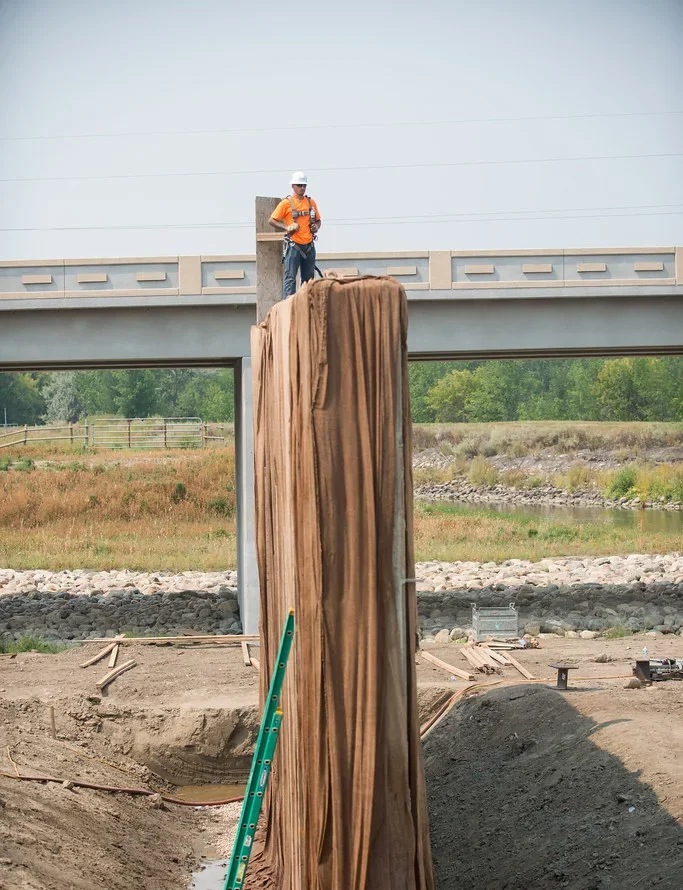
Photo: NDDOT Photos, Flickr, Public Domain Mark (cropped)
On a job site, green concrete usually means concrete that has set, so it holds its shape and can bear light pressure, but has not yet hardened or gained significant strength. The photo above shows a freshly cast bridge pier wrapped in wet burlap: the concrete is still green, and the wet covering keeps it moist while it gains strength. The green stage typically lasts from final set, a few hours after placement, to roughly one to three days, depending on mix, temperature and cement type.
Green Concrete Timeline: The First 72 Hours
Here is what typically happens to a normal slab or wall at moderate temperatures, around 70 degrees Fahrenheit, as it moves from plastic concrete to green concrete and then to hardened concrete. Cold weather stretches every stage; hot weather shortens them.
0 to 2 hours: plastic. The concrete is placed, consolidated, screeded and floated. It can still be reshaped.
2 to 6 hours: initial to final set. Bleed water disappears, the surface stiffens, and finishers trowel the surface. By final set the concrete holds a thumbprint only lightly and is becoming green concrete.
4 to 12 hours: early green concrete. The surface can bear the weight of a light early-entry saw, and control joints are cut. Curing compound or wet covering should already be on.
12 to 48 hours: green concrete. Side forms on walls and footings can usually come off. The concrete is hard to the touch and may have reached 500 to 1,500 psi, but it can still be chipped, gouged or cracked by impact or loads. Foot traffic is generally fine after about 24 hours.
2 to 7 days: early hardened concrete. The concrete leaves the green concrete stage, gaining strength steadily. Wet curing continues, ideally for 7 days. Cars can typically drive on a driveway after about 7 days.
28 days: specified strength. The concrete reaches its design strength, though green concrete mixes rich in fly ash or slag may be specified at 56 days.
What You Can Do with Green Concrete
Early saw cutting. Control joints are cut while the concrete is green, often within 1 to 4 hours with lightweight early-entry saws or within 4 to 12 hours with conventional saws, before shrinkage cracks form on their own. Cutting too early causes raveling of the edges; too late lets random cracks appear. See control joints in concrete and concrete cutter.
Green cutting of joints. On large pours, crews blast the surface of green concrete at construction joints with water or air to remove weak paste and expose aggregate, giving a rough surface for the next pour to bond to.
Stripping some forms. Side forms for walls, footings and columns, which carry no load, can often be removed when the concrete is green, typically after 12 to 48 hours in moderate temperatures. Forms supporting slabs and beams must stay until the concrete reaches the strength the engineer specifies.
Applying finishes. Some exposed-aggregate and textured finishes are created by washing or brushing the surface of green concrete.
Protecting Green Concrete
Green concrete is vulnerable. In the first days it has low tensile strength, so it is easily damaged:
Traffic and loads. Keep foot traffic off green concrete for about 24 hours and vehicles off for about 7 days on driveways, longer for heavy trucks.
Freezing. Green concrete must not freeze before it reaches about 500 psi, usually within the first 24 to 48 hours with protection. Freezing water inside green concrete can permanently weaken it.
Drying. Rapid drying of green concrete from sun and wind causes plastic shrinkage cracks and weak surfaces. Cure with water, wet coverings, plastic sheeting or curing compound. See concrete curing compound.
Impact and vibration. Avoid bumping forms, backfilling against walls, or driving heavy equipment nearby until the concrete has gained strength.
Rain. Heavy rain on very fresh concrete can wash out the surface; once the concrete is green, rain is less of a problem.
Common Mistakes with Fresh Green Concrete
Back on the job site, most problems with fresh green concrete come from a few avoidable errors:
Saw cutting too late. Waiting until the next day on a hot day lets the green concrete crack before the joints are cut.
Stripping forms too early. Removing forms from green concrete before it can support itself can cause sagging, edge damage or collapse of supported elements.
Skipping curing. Letting green concrete dry out in sun and wind weakens the surface permanently.
Loading too soon. Parking a car, stacking materials or backfilling against green concrete before it has gained strength causes cracks.
Ignoring cold. Leaving green concrete unprotected on a freezing night can ruin a pour, so keep insulated blankets on site whenever frost is forecast.
Green Concrete vs Cured Concrete
All concrete, green concrete included, gains strength over weeks. Typical normal concrete reaches about 40 to 50 percent of its 28-day strength in 3 days, about 65 to 70 percent in 7 days, and its specified strength at 28 days, continuing to gain slowly after that. Mixes with more fly ash or slag, which are green concrete in the eco-friendly sense, gain strength more slowly, so they remain in the vulnerable green stage a bit longer. This is the one place the two meanings of green concrete meet: low-carbon mixes stay young longer, so protection and curing matter even more.
Frequently Asked Questions
What is green concrete?
Either eco-friendly concrete made with less cement and lower carbon emissions, or fresh concrete that has set but not hardened. The context tells you which.
Is green concrete as strong as regular concrete?
Yes. Low-carbon green concrete mixes are designed to meet the same strength classes, though some gain strength more slowly at first.
Does green concrete cost more?
Often not. Moderate fly ash, slag or Type IL mixes cost about the same as conventional concrete. Specialty mixes can cost more.
Can you walk on green concrete?
Light foot traffic is usually fine on green concrete after about 24 hours in warm weather. Avoid dragging tools, wheelbarrows or heavy loads across it.
What is the most eco-friendly concrete?
Green concrete with high slag or calcined clay content, Type IL cement, recycled aggregate and an EPD showing low global warming potential. Geopolymer concrete can be lower still for suitable uses.
Is Type IL cement green concrete?
Concrete made with Type IL Portland-limestone cement is a modest form of green concrete, with about 10 percent less CO2 than ordinary Portland cement mixes. Combining it with fly ash or slag cuts carbon further.
When can you cut green concrete joints?
Usually within 4 to 12 hours of finishing with a conventional saw, or 1 to 4 hours with an early-entry saw, as soon as the green concrete is firm enough that the saw does not ravel the edges.
Can green concrete be used for a house foundation?
Yes. Foundations are one of the best places for low-carbon green concrete, because they rarely need high early strength and benefit from the lower heat and better durability of fly ash and slag mixes.
How long is concrete green?
Usually from a few hours after placement until about one to three days later, depending on temperature and mix.
Sources
- Chatham House: Making Concrete Change, innovation in low-carbon cement and concrete
- National Ready Mixed Concrete Association: sustainability, EPDs and benchmarks
- Portland Cement Association: Portland-limestone cement
- American Concrete Institute: ACI 308 curing and ACI 306 cold weather concreting
- California Department of General Services: Buy Clean California Act
Related Guides
- Wet concrete — how liquid concrete works, workability, setting times and safety
- Hydraulic concrete — hydraulic cement for leaks and concrete for dams, canals and tanks
- Concrete canoe — how a concrete boat floats and the ASCE competition