
Cement vs Concrete: The Difference Between Cement and Concrete Explained
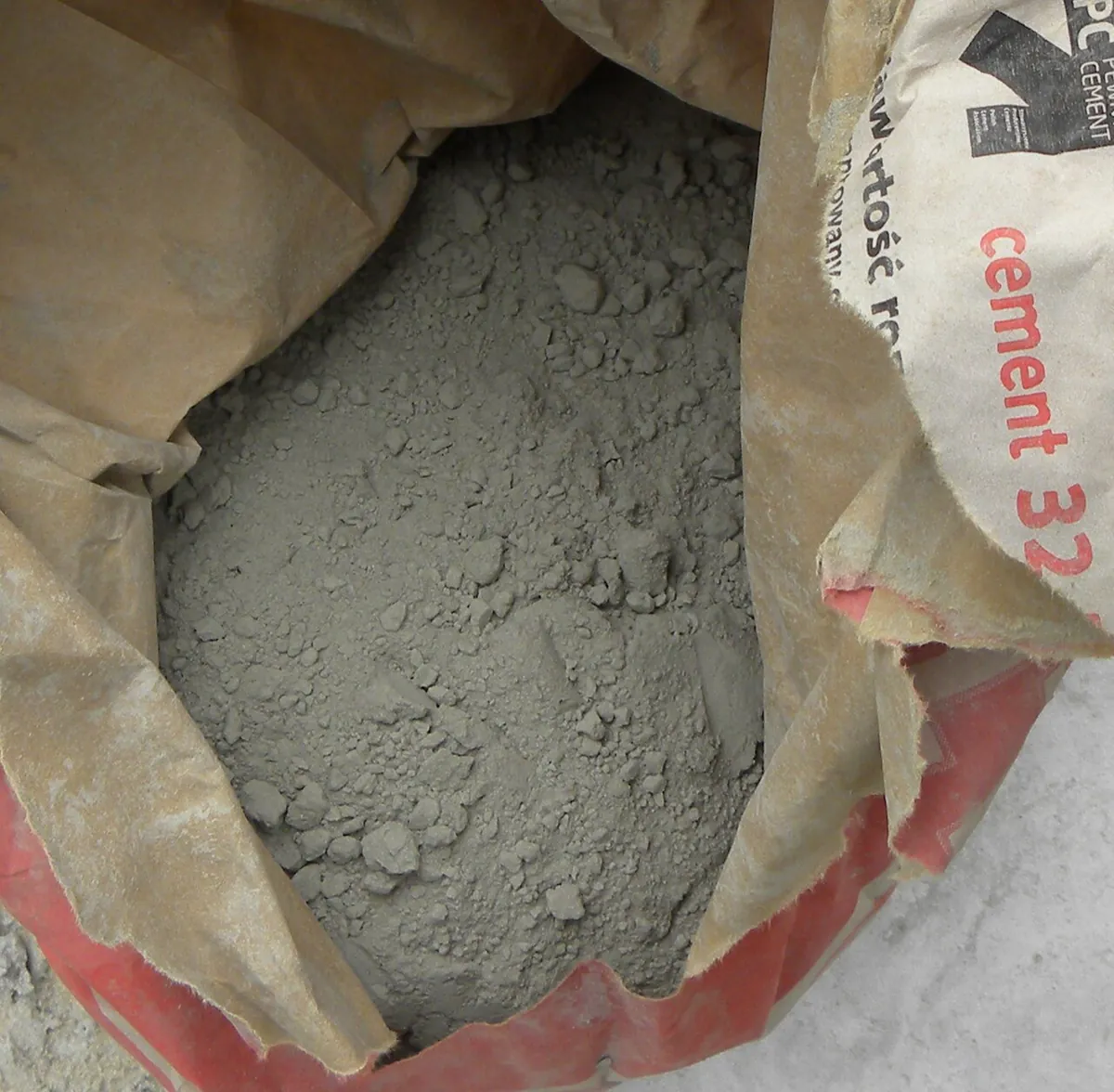
Photo: Szlomo Lejb, Wikimedia Commons, CC BY-SA 4.0
Quick Answer
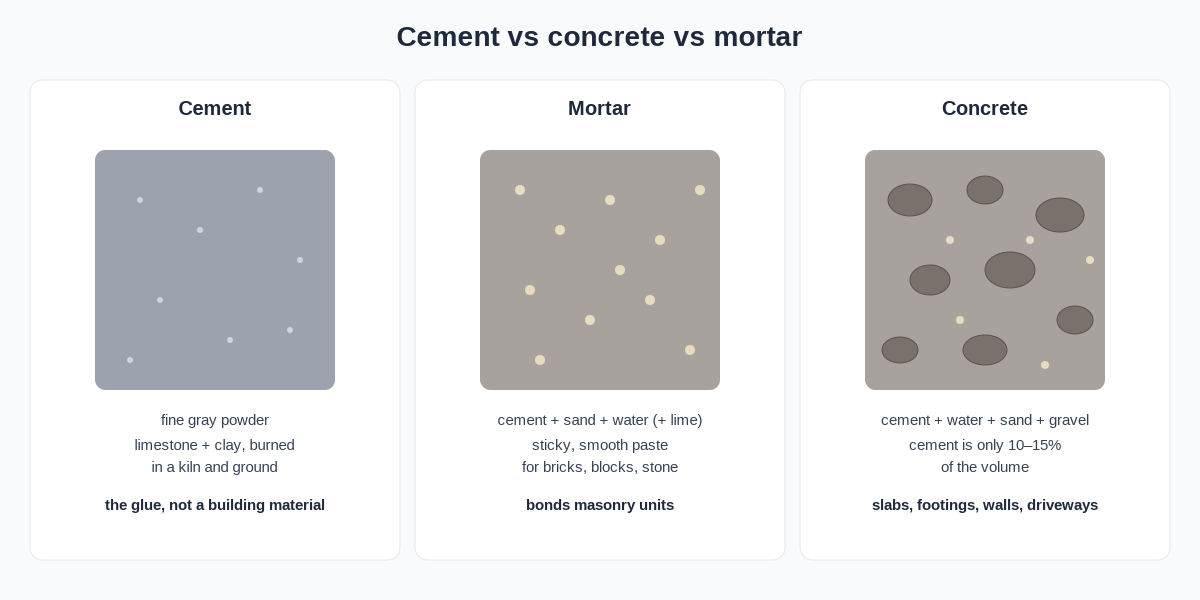
In the cement vs concrete question, cement is an ingredient and concrete is the finished material. Cement, usually portland cement, is a fine gray powder made by heating limestone and clay in a kiln and grinding the result. Mixed with water, it hardens and acts as glue. Concrete is cement plus water, sand and gravel or crushed stone; the cement paste coats and binds the stones into a rock-hard mass. Cement makes up only about 10 to 15 percent of concrete by volume. So sidewalks, driveways and foundations are concrete, not cement, and a "cement truck" is really a concrete truck. Mortar is a third material: cement, sand and water, without gravel, used to bond bricks and blocks.
People use the words cement and concrete as if they mean the same thing. We talk about cement sidewalks, cement trucks and cement floors. Builders and suppliers wince, because the difference between cement and concrete is the difference between flour and bread. One is a powder that goes into the mix; the other is the hard, strong material that comes out. Knowing the difference helps you buy the right bag at the store, mix the right material for a job, and understand quotes and specifications.
This guide explains what cement is, what concrete is, the difference between concrete and cement in ingredients, strength, uses and cost, where mortar, grout and stucco fit in, and which bag to buy for common projects.
What Is Cement?
To understand the difference between cement and concrete, start with cement. Cement is a binder: a material that sets and hardens and holds other materials together. The cement used in construction today is almost always portland cement, patented in England in 1824 and named after the color of Portland stone.
How cement is made
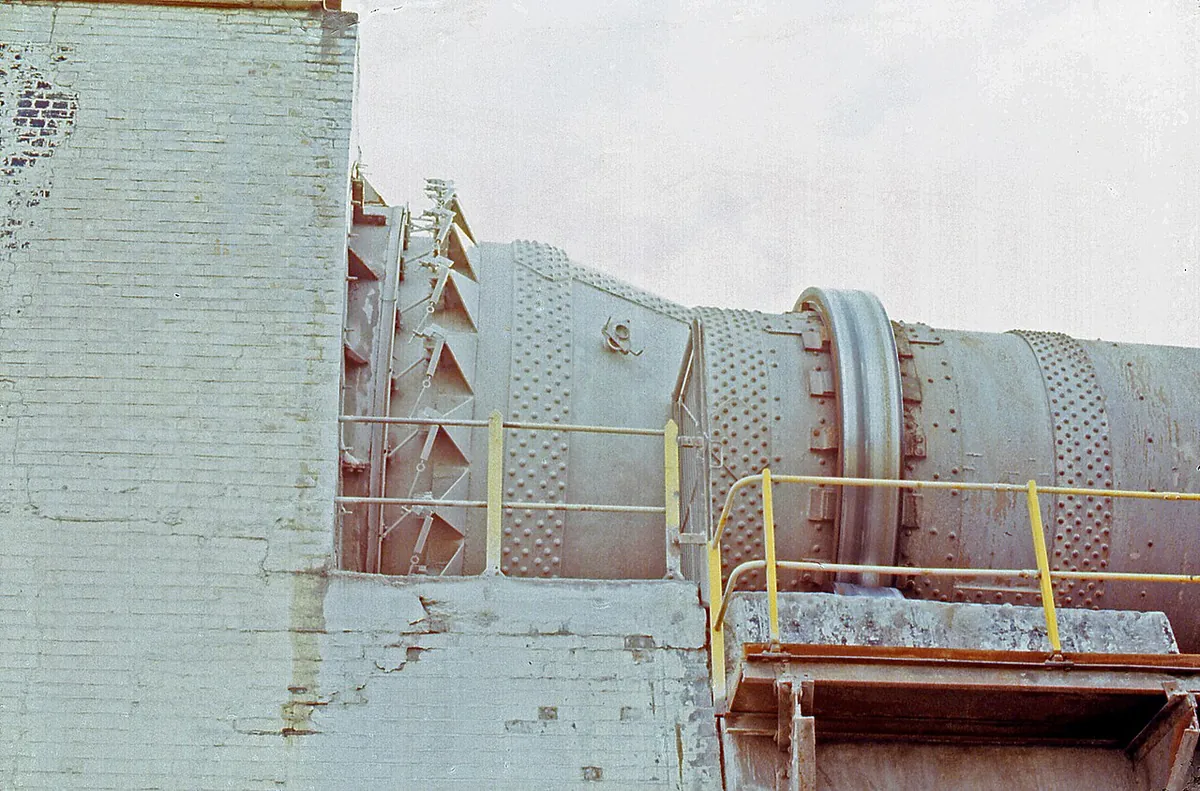
Photo: Dylan Moore, Wikimedia Commons, CC BY-SA 2.0
- Quarry: limestone (for calcium) and clay or shale (for silica, alumina and iron) are mined and crushed.
- Blend and grind: the raw materials are proportioned and ground into a fine raw meal.
- Burn: the raw meal is fed into a huge rotary kiln and heated to about 1,450°C (2,640°F). Chemical reactions turn it into hard, marble-sized nodules called clinker.
- Grind again: the clinker is cooled and ground with a little gypsum, about 3 to 5 percent, which controls setting time.
- Ship: the finished powder is shipped in bulk to ready-mix plants and in bags to stores.
How cement hardens
Cement does not dry to harden; it reacts with water in a chemical process called hydration. The main product, calcium silicate hydrate, forms tiny interlocking crystals that bind everything around them. That is why concrete keeps getting stronger for weeks and why it must stay moist while curing. It also explains why cement is called hydraulic: it sets and hardens even underwater.
Types of cement
- Portland cement Types I to V under ASTM C150: general use (I), moderate sulfate resistance (II), high early strength (III), low heat (IV) and high sulfate resistance (V). Many bags are labeled Type I/II.
- Blended cements (ASTM C595 and C1157), containing slag, fly ash, limestone or other materials.
- Masonry cement and mortar cement, made for mortar.
- White portland cement for decorative and colored work.
- Hydraulic cement and rapid-setting cements for plugging leaks and quick repairs.
What Is Concrete?
The other half of the cement vs concrete comparison is concrete itself, a composite material made of four basic ingredients:
- Cement: the binder, about 10 to 15 percent of the volume.
- Water: about 15 to 20 percent, which reacts with the cement.
- Aggregates: sand (fine aggregate) and gravel or crushed stone (coarse aggregate), about 60 to 75 percent.
- Air: a few percent, more in air-entrained concrete for freeze-thaw durability.
Admixtures such as water reducers, accelerators, retarders and air-entraining agents fine-tune the mix. The cement and water form a paste that coats every grain of sand and every stone, filling the gaps and gluing them together as it hardens. The stones do most of the work of carrying load and reduce shrinkage; the paste holds them in place. For the full list, see what concrete is made of.
Cement vs Concrete: Side-by-Side
| Feature | Cement | Concrete |
|---|---|---|
| What it is | Powder binder (an ingredient) | Finished building material |
| Made of | Limestone, clay, gypsum, burned and ground | Cement, water, sand, gravel, admixtures |
| Share of the mix | 10–15% of concrete by volume | 100% (the whole mix) |
| Used alone? | No; shrinks and cracks | Yes; slabs, walls, footings, roads |
| Typical strength | Not used as a structural material by itself | 2,500–5,000 psi for most home work |
| Common bag | 94 lb portland cement (U.S.) | 40, 60 or 80 lb concrete mix |
| Bag price | About $15–$20 | About $4–$8 for 80 lb |
The short version of the concrete vs cement comparison: you can make concrete with cement, but you cannot make cement with concrete. Every concrete driveway contains cement; no driveway is made of cement alone.
Why Not Use Cement by Itself?
A common question in the concrete vs cement debate is why builders do not just use cement. Cement paste on its own, cement and water, would be a poor and expensive building material:
- It shrinks a lot as it hardens and dries, so a slab of pure cement paste would crack badly.
- It gives off heat while hydrating; thick pours of rich paste can crack from the temperature difference.
- It costs more: cement is the most expensive ingredient in concrete, per pound, and the most energy-intensive.
- It is not as tough. The stones in concrete stop cracks from running straight through and carry much of the load.
Sand and gravel are cheap, strong and stable. Using cement only as glue between them gives a stronger, more durable and much cheaper material. That is the whole reason concrete exists.
The Difference Between Concrete and Cement in Plain Terms
The easiest way to remember the difference between concrete and cement is to think of baking. Cement is like flour: an essential ingredient, but you would never serve a bowl of it. Concrete is like the finished cake: flour, eggs, sugar and other ingredients mixed and baked into something useful. In the same way, cement on its own is a powder in a bag, while concrete is what you pour, shape and walk on. The biggest difference: concrete and cement are not two choices for the same job. One goes into the other.
Another comparison that helps is glue and wood. Cement paste is the glue; sand and gravel are the pieces being glued. A cubic yard of concrete weighs about 4,000 pounds, and only about 500 to 600 pounds of that is cement. The rest is sand, stone and water. That is why the cement vs concrete question matters when you buy materials: a bag labeled "portland cement" will not set into a usable slab unless you add the sand and gravel yourself, while a bag labeled "concrete mix" already contains everything except water.
Concrete or Cement? Difference in How They Are Sold
Concrete or cement? Difference number one at the store is the bag. Portland cement in the U.S. comes in 94-pound bags, the traditional "sack" that equals one cubic foot of loose cement. Concrete mix comes in 40-, 60- and 80-pound bags that make 0.3, 0.45 and 0.6 cubic feet of finished concrete. Mortar mix, sand mix and fast-setting post mix sit on the same pallet aisle and look similar, so read the label.
For larger jobs, both materials travel by truck, but very different trucks. Cement leaves the plant in sealed bulk tanker trucks or rail cars and goes to ready-mix plants, block plants and precast plants. Concrete leaves the ready-mix plant in rotating drum trucks, already mixed with water, and must be placed within about 90 minutes. When someone says the "cement truck" is coming to pour a driveway, they mean a concrete truck. See how many yards of concrete are in a truck.
Concrete and Cement Difference in Setting and Curing
The concrete and cement difference also shows up in how they behave over time. Cement starts to react the moment water touches it, which is why bags that get damp turn into lumps and should be thrown away. Concrete takes on the setting behavior of its cement: it stiffens in a few hours, can be walked on in a day or two, and reaches most of its design strength in 28 days, continuing to gain strength slowly for months. Admixtures can speed this up or slow it down. Cement paste alone sets on roughly the same schedule but shrinks far more as it dries, which is one more reason it is never used alone for slabs. For curing times, see how long concrete takes to cure.
A Short History of Cement and Concrete
The Romans built with concrete two thousand years ago, using a cement made from lime and volcanic ash called pozzolana. Their concrete still stands in the Pantheon dome, which remains the largest unreinforced concrete dome in the world, and in harbor walls that have survived seawater for centuries. After Rome fell, the knowledge faded, and much of Europe built with stone, brick and lime mortar for over a thousand years. In the 1700s and 1800s, engineers experimented with natural cements, and in 1824 Joseph Aspdin patented portland cement in England. Improved kilns in the late 1800s made strong, consistent portland cement widely available, and reinforced concrete followed, combining concrete with steel bars. Thomas Edison even tried to build cast concrete houses in one pour. By the early 1900s, concrete roads, bridges and buildings were common, and today concrete is the most widely used building material in the world, while cement is one of the most produced materials on Earth.
Cement or Concrete: Difference for Common DIY Jobs
Whether a job needs cement or concrete, difference in results is easy to see once you try both. Fill a fence post hole with a mix of cement and water and it may crack and crumble within a season; fill it with concrete mix and it will hold the post for decades. Patch a deep hole in a driveway with straight cement and it will shrink away from the edges; use a patching concrete or repair mortar instead. Mix sand and cement for a thin topping on old concrete and it may work, but only with a proper bonding agent and the right thickness. The rule of thumb for DIY: if the job is more than about 2 inches thick, use concrete with gravel; if it is thinner, use a sand mix or repair mortar; buy straight portland cement only when you are mixing your own concrete or mortar from separate ingredients. See concrete patching compound for repair products.
Cement / Concrete Difference in Plans and Quotes
On plans, specifications and quotes, the cement / concrete difference matters because the two words describe different things. A specification such as "4,000 psi concrete, maximum water-cement ratio 0.45, 5 to 7 percent air" describes concrete performance. "Cement content," "sacks per yard" or "Type I/II cement" describes the binder inside it. A five-and-a-half-sack mix, for example, has about 517 pounds of cement in each cubic yard of concrete. If a contractor's quote says "cement driveway," it is almost certainly a concrete driveway; ask for the concrete strength, thickness and reinforcement in writing so you know what you are paying for. See concrete driveway cost.
What Is the Difference Between Concrete and Cement on a Job Site?
What is the difference between concrete and cement once you are actually building something? On a job site, crews handle concrete almost all the time: it arrives in a truck or is mixed from bags, it is poured into forms, screeded, floated and finished. Cement is mostly invisible, already blended into the ready-mix or the bagged mix. The exceptions are masons, who mix bags of masonry cement or portland cement with sand to make mortar; finishers, who sometimes sprinkle a little dry cement on a wet surface to stiffen it (a practice many experts discourage because it weakens the surface); and repair crews, who use specialty cements to plug leaks or set anchors. If you see a crew mixing gravel into a mixer, they are making concrete. If they are mixing only sand, they are making mortar or a topping.
What Is the Difference Between Cement and Concrete in Cost?
What is the difference between cement and concrete when you pay for them? Per pound, cement costs far more: roughly 16 to 21 cents per pound for a 94-pound bag of portland cement, compared with about 5 to 10 cents per pound for an 80-pound bag of concrete mix. That seems backward until you remember that concrete mix is mostly sand and gravel, which are cheap. Per cubic yard of finished material, ready-mix concrete delivered by truck commonly runs about $125 to $200, and the cement in that yard accounts for a large share of the material cost. Using bagged concrete mix costs more per yard than ready-mix but saves the delivery minimum on small jobs. For a full comparison, see concrete price per yard.
Cement vs Concrete in Other Languages and Countries
Part of the confusion comes from how people talk around the world. In many places, everyday speech uses one word for both. In parts of South Asia, engineers use the phrase "cement concrete," as in plain cement concrete (PCC) and reinforced cement concrete (RCC), to describe ordinary concrete. In Spanish, "cemento" is often used for concrete in casual speech, while "hormigón" or "concreto" is the technical word. In the U.S., "cement" for "concrete" is common slang. None of that changes the materials: in every country, cement is the binder and concrete is the finished mix of binder, water and aggregates.
Cement vs Concrete vs Mortar vs Grout
- Cement: the powder binder.
- Concrete: cement + water + sand + gravel. Structural and flatwork: slabs, footings, walls, driveways, steps.
- Mortar: cement + sand + water, often with lime. Sticky and workable, used to bond bricks, blocks and stone. Not strong enough or thick enough for slabs. See mortar vs concrete.
- Grout: cement + water + fine sand, often with small gravel, mixed fluid to fill block cores, gaps under base plates and tile joints.
- Stucco: cement + sand + lime + water, troweled onto walls.
- Sand mix / topping mix: a bagged mortar-like mix for thin layers under 2 inches, where gravel would not fit.
Which Bag Should You Buy?
| Project | Buy |
|---|---|
| Fence and mailbox posts | Fast-setting concrete mix; see concrete fence posts |
| Small slab, pad, steps, footings | Concrete mix (or high-strength concrete mix) |
| Thin patches and toppings under 2 in. | Sand mix or a patching compound |
| Laying bricks or blocks | Mortar mix (Type N or S) |
| Mixing your own concrete or mortar from scratch | Portland cement plus sand and gravel |
| Plugging an active water leak | Hydraulic cement |
| Large slabs and driveways | Ready-mix concrete delivered by truck |
If you are pricing a project, see how much a bag of concrete costs and concrete price per yard.
Mixing Concrete From Cement, Sand and Gravel
If you buy portland cement and aggregates separately, a common general-purpose ratio by volume is 1 part cement, 2 parts sand and 3 parts gravel, with just enough water to make a workable mix, roughly half the weight of the cement. Stronger mixes use more cement, such as 1:1.5:3. Measure with the same bucket for each part, mix the dry materials first, then add water gradually. For details and other ratios, see our guide to concrete mix ratios and how many bags of concrete in a yard.
Strength and Durability
Strength is where the difference between concrete and cement is clearest. Concrete strength is measured as compressive strength in psi after 28 days of curing. Most home slabs, driveways and footings use 2,500 to 4,000 psi concrete; structural and commercial concrete is often 4,000 to 6,000 psi or more. The cement content and the water-cement ratio control most of that strength: more water means weaker, more porous concrete. That is why adding water at the truck to make concrete easier to place is one of the most common mistakes in home concrete work.
Concrete is very strong in compression and weak in tension, so it is reinforced with steel or fibers where it bends or must hold cracks tight. See concrete rebar and fiber concrete.
Cement, Concrete and the Environment
In the cement vs concrete discussion, the environmental impact sits mostly with cement. Cement production is energy-intensive and releases carbon dioxide both from burning fuel and from the chemical breakdown of limestone in the kiln. Cement manufacturing accounts for roughly 7 to 8 percent of global CO2 emissions. Because cement is only a small part of concrete, the industry reduces emissions by using less cement per cubic yard, replacing part of it with fly ash, slag or limestone, and using blended cements. On the other hand, concrete lasts for decades, needs little maintenance and absorbs a little CO2 back over its life.
Cement vs Concrete: Which Do You Need?
For nearly every homeowner project, the answer to cement vs concrete is concrete. If you are setting posts, pouring a pad, building steps, filling forms for a footing or patching a deep hole, you want a concrete mix, either from bags or a truck. You need cement only if you are making your own concrete or mortar from separate sand and gravel, or for specialty uses like plugging a leak with hydraulic cement. If you are laying bricks or blocks, you need mortar, which is made from cement and sand. Keeping the difference between concrete and cement in mind at the store saves wasted trips, wasted money and a failed project. When in doubt about cement vs concrete, read the bag: "concrete mix" means sand and gravel are already in it; "portland cement" means you supply them.
If you are still unsure, ask the counter staff at a building supply yard. Tell them what you are building, how big it is and how thick it will be; they will point you to the right concrete mix, mortar or cement, and often to a cheaper bulk option for bigger jobs.
Safety When Handling Cement and Concrete
Whatever the cement vs concrete choice, both are caustic. Wet cement paste is strongly alkaline, with a pH around 12 to 13, and it can cause chemical burns on skin that stays in contact with it, especially inside boots and gloves. Dry cement powder and concrete dust can irritate eyes and lungs, and cutting or grinding hardened concrete releases crystalline silica dust, which is a serious lung hazard. Wear long sleeves, waterproof gloves and boots when working with wet concrete, eye protection when mixing, and a dust mask or respirator when handling dry bags or cutting. Rinse any concrete off your skin with clean water right away, and wash work clothes separately. If wet concrete gets into your eyes, flush them with water for at least 15 minutes and get medical help. The difference between concrete and cement does not matter much here: treat both with the same care.
Common Misnomers
- "Cement truck": a ready-mix concrete truck. Bulk cement tankers that deliver powder to plants are the real cement trucks.
- "Cement sidewalk" or "cement driveway": concrete. See concrete driveway cost.
- "Cement mixer": a concrete mixer. See concrete cement mixers.
- "Cement blocks": concrete masonry units. See cinder block vs concrete block.
Frequently Asked Questions
What is the difference between cement and concrete?
The difference between cement and concrete is that cement is a powder that acts as glue, while concrete is the hard material made by mixing cement with water, sand and gravel. Cement is an ingredient of concrete.
Is concrete stronger than cement?
Yes, for building. Cement paste alone shrinks and cracks; concrete uses sand and gravel bound by cement to make a strong, stable material.
Can you use cement instead of concrete?
Not by itself. You need to mix cement with sand and gravel, or buy a premixed concrete mix, for slabs, posts and footings.
Is a sidewalk cement or concrete?
Concrete. The cement is only one ingredient in it.
What is the difference between concrete and cement in price?
A 94-pound bag of portland cement costs about $15 to $20; an 80-pound bag of ready-to-use concrete mix costs about $4 to $8, because most of its weight is cheap sand and gravel.
Sources
- Portland Cement Association: cement and concrete basics
- ASTM C150: Standard Specification for Portland Cement
- U.S. Geological Survey: cement statistics and information
- International Energy Agency: cement industry emissions
Related Guides
- Concrete fence posts — concrete per post, best mix and cold weather
- Concrete sand guide — sand for concrete, pavers and sanding concrete
- Concrete aggregate guide — sizes, grading and types of stone
- Concrete mixing ratio — 1:2:3 mix, water ratio and calculator formula
- How to make concrete — mixing in a bucket, wheelbarrow or mixer
- Concrete slump test — what slump means and how to test it
- Dry pour concrete — when pouring dry mix works and when it fails
- Concrete batching plant — how ready-mix is made
- Density of concrete — unit weight and modulus of elasticity
- Roof cement and concrete roofs — flashing repairs, concrete tiles and tile replacement
- Sakrete concrete mix — High Strength, 5000 Plus and Fast Setting compared
- Concrete board — backer board for shower walls and tile floors, installation and waterproofing
- Green concrete — low-carbon mixes with fly ash, slag and Type IL, plus fresh green concrete
- Wet concrete — how liquid concrete works, workability, setting times and safety
- Hydraulic concrete — hydraulic cement for leaks and concrete for dams, canals and tanks