
How Much Does It Cost to Heat a Pool? Install and Running Costs
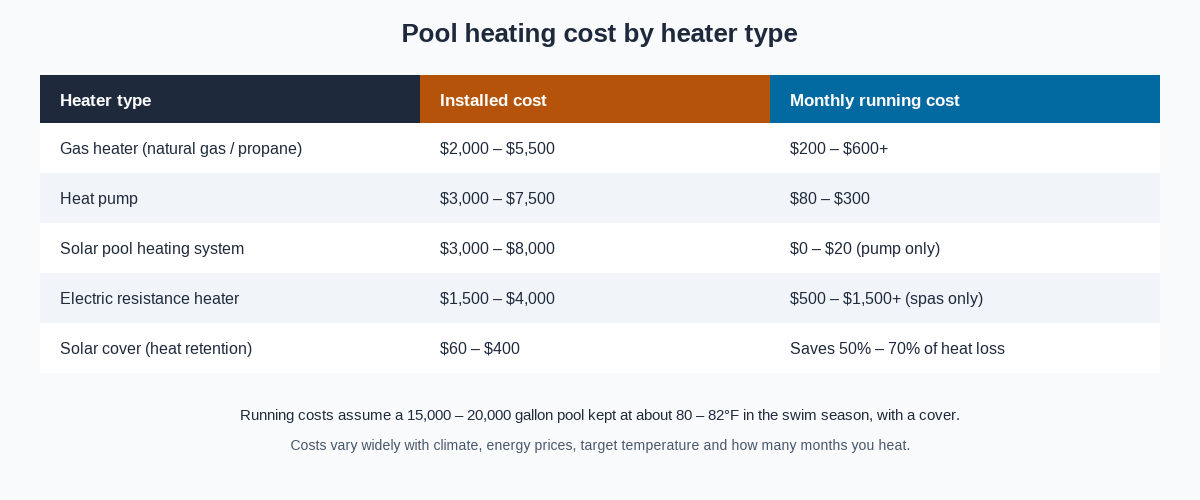
Chart: Asphapro.com
Quick Answer
How much does it cost to heat a pool? For a typical 15,000 to 20,000 gallon inground pool kept around 80 to 82°F during the swim season, expect about $200 to $600+ a month with a gas heater, $80 to $300 a month with a heat pump, and almost nothing beyond pump power with solar heating. Installing a heater costs about $2,000 to $5,500 for gas, $3,000 to $7,500 for a heat pump and $3,000 to $8,000 for a solar pool heating system. Using a pool cover can cut heating costs by 50% to 70%. Over a full season, the cost to heat a pool often runs from a few hundred dollars to $3,000 or more, depending on climate and how warm you keep the water.
A heated pool is a different experience: comfortable swims in spring and fall, warm water for children and older swimmers, and evening swims that do not end in shivers. But heating a large body of water outdoors is not cheap, and costs vary hugely with the type of heater, local energy prices, the weather and whether you cover the pool.
This guide explains how much does it cost to heat a pool, from installation to monthly bills, and how to keep those costs down. For the pros and cons of each heating method, see our guide on how to heat a pool, and for a build-it-yourself option, our DIY solar pool heater guide.
Cost to Heat a Pool: Installation
Gas heaters. Natural gas and propane heaters cost about $1,500 to $3,500 for the unit and $2,000 to $5,500 installed, including plumbing, venting and gas line work. If a new gas line must run a long way from the meter, or propane tanks must be installed, add $500 to $2,500 or more.
Heat pumps. Heat pumps cost about $2,500 to $5,500 for the unit and $3,000 to $7,500 installed, including a concrete pad and a dedicated electrical circuit. Larger units for big pools and cool climates cost more.
Solar pool heating systems. Solar systems use panels on a roof or rack to warm pool water as the pump circulates it. Professionally installed solar pool heating system cost runs about $3,000 to $8,000 for a typical pool, depending on panel area and roof complexity. DIY kits cost $500 to $2,500.
Electric resistance heaters. These are mainly used for spas and small pools, costing about $1,500 to $4,000 installed, but they are very expensive to run on large pools.
Monthly Cost to Heat a Pool
Running costs depend on how much heat the pool loses. Outdoor pools lose most of their heat through evaporation at the surface, plus radiation to the night sky. That means weather, wind and whether you use a cover matter more than almost anything else.
As a rough guide, keeping a 15,000 to 20,000 gallon pool at 80 to 82°F through the swim season costs about $200 to $600 or more a month with a natural gas heater, more with propane, which is usually more expensive per unit of heat. A heat pump typically costs $80 to $300 a month for the same pool, because it moves heat from the air rather than creating it, using about one unit of electricity to deliver five or more units of heat in warm weather. Solar heating costs little to run, since the pool pump does the work, though it may need a longer pump run time.
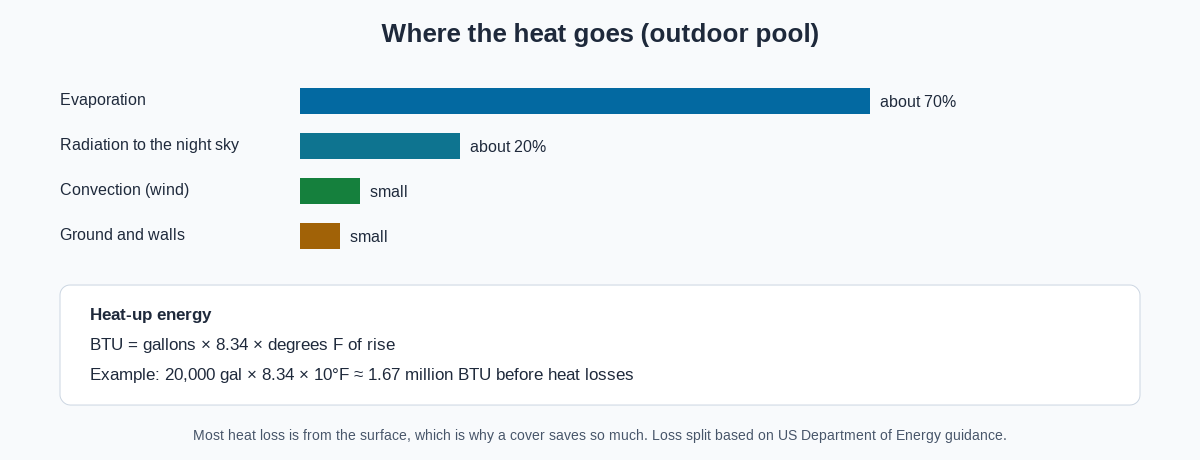
Chart: Asphapro.com
Swimming Pool Heating Cost Calculator
This swimming pool heating cost calculator estimates the energy cost to raise your pool's temperature once, before any heat losses. Enter your pool volume, how many degrees you want to raise the water, and your local gas and electricity prices. Real costs will be higher because the pool keeps losing heat, especially without a cover, but this shows how heater types compare.
For example, raising a 20,000-gallon pool by 10°F takes about 1.67 million BTU. With natural gas at $1.50 a therm and an 84% efficient heater, that is about $30. With a heat pump at a coefficient of performance (COP) of 5 and electricity at 17 cents per kWh, about $17. With an electric resistance heater, about $83. The real cost each month depends on how much heat the pool loses and how often you heat it.
How Much Does a Heated Pool Cost Per Year?
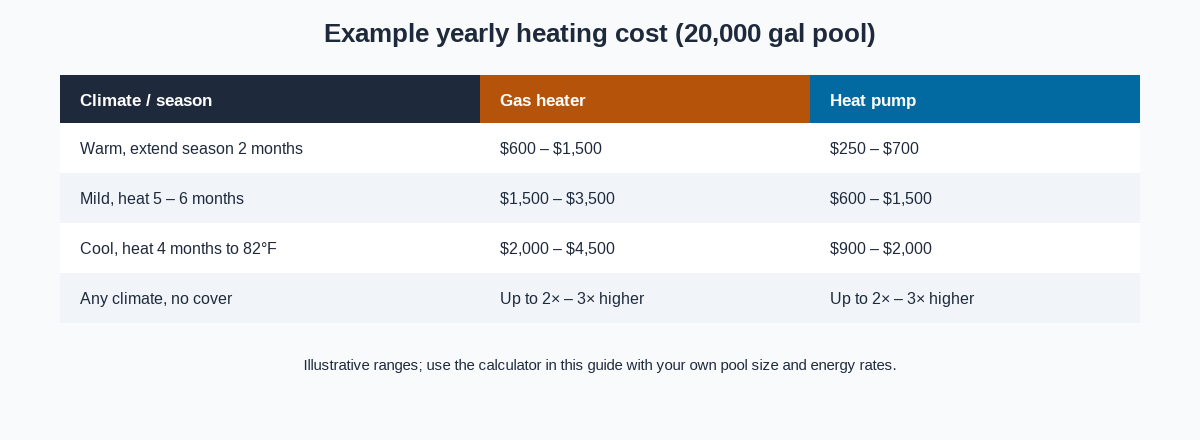
Chart: Asphapro.com
How much does a heated pool cost per year? It depends on how long you heat and how warm you keep the water. In warm climates where you only extend the season by a couple of months, yearly heating might cost $600 to $1,500 with gas or $250 to $700 with a heat pump. In mild climates heating for five or six months, expect $1,500 to $3,500 with gas or $600 to $1,500 with a heat pump. In cooler climates where you heat through the short summer to keep water at 82°F, costs can reach $2,000 to $4,500 with gas. Without a cover, any of these numbers can be two to three times higher.
Inground Heated Pool Cost
The inground heated pool cost includes both the pool and the heating system. A typical inground pool costs $35,000 to $85,000 or more, and adding a heater adds $2,000 to $8,000 depending on the type. Many builders recommend planning the heater when the pool is built, so gas lines, electrical circuits and plumbing are sized correctly and the equipment pad has room. Combined with a cover and efficient pump, an inground heated pool can be used for many more months a year, which some owners value more than the extra cost. See our guide to vinyl inground pool cost for build prices.
Indoor Heated Pool Cost
Indoor heated pool cost is higher than outdoor, but heating the water itself is often cheaper because there is no wind, sun loss or night sky radiation. The big costs are heating and dehumidifying the air in the room, since evaporation from warm water fills the room with moisture. A dedicated dehumidification system can cost $10,000 to $40,000 or more to install, and running costs for air heating, dehumidifying and water heating can run $300 to $1,000 or more a month depending on size and climate. An indoor pool cover cuts evaporation and energy use dramatically. See our guide to indoor pool cost.
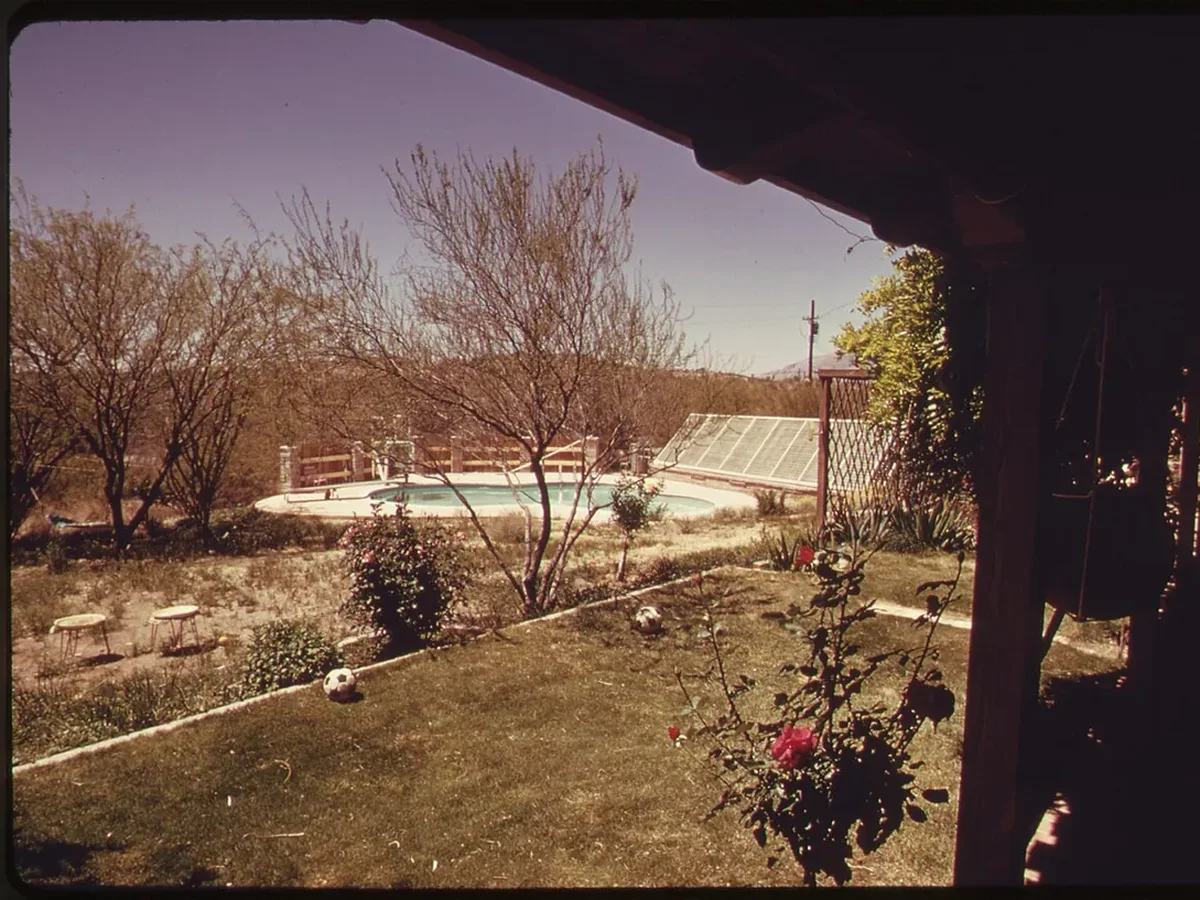
Photo: Boyd Norton, Wikimedia Commons, public domain
Solar Pool Heating System Cost in Detail
Solar pool heating system cost depends mainly on the collector area, which is usually 50% to 100% of the pool's surface area. A 16 x 32 foot pool (512 square feet) may need 300 to 500 square feet of collectors. Installed prices typically run $3,000 to $8,000. The system uses the existing pool pump to push water through the panels, with a valve that sends water to the roof only when the panels are warmer than the pool. Running cost is close to zero, though the pump may need to run longer during sunny hours. Solar works best in sunny climates and for extending the season rather than keeping a pool very warm in cold weather. Systems often last 15 to 20 years.
What Affects How Much It Costs to Heat a Pool
Climate. Air temperature, wind and humidity drive heat loss. Windy, dry, cool nights cost the most.
Target temperature. Each degree higher costs roughly 10% to 30% more in heating, depending on climate. Keeping a pool at 78°F instead of 84°F can cut costs significantly.
Pool size and surface area. Larger surfaces lose more heat. A long lap pool loses more than a compact pool of the same volume.
Cover use. A cover is the single biggest factor you control.
Energy prices. Natural gas, propane and electricity prices vary widely by region and season. Propane is usually the most expensive heat source per BTU.
Shelter and shade. Fences, hedges and walls that block wind reduce heat loss; shade over the water reduces solar gain.
Heater size and efficiency. An undersized heater runs constantly; an oversized one heats faster but costs more up front. High-efficiency gas heaters and high-COP heat pumps cost less to run.
How to Lower the Cost to Heat a Pool
Use a cover every single night and whenever the pool is not in use; the Department of Energy says covers can save 50% to 70% on pool heating. Lower the target temperature by a few degrees. Heat only during the months and days you swim. Shelter the pool from wind with fences or plantings. Run a heat pump during the warmest part of the day, when it is most efficient. Combine solar heating with a heat pump or gas heater as a backup. Keep the heater serviced and the filter clean so water flows freely. Consider a variable-speed pump to reduce pump energy.
Sizing a Pool Heater
Heater size affects both the install price and how quickly the pool warms. Gas heaters are rated in BTU per hour, often 200,000 to 400,000 BTU for residential pools. A 400,000 BTU heater can raise a 20,000-gallon pool about 2°F per hour in ideal conditions. Heat pumps are rated in BTU per hour too, often 50,000 to 140,000 BTU, and heat more slowly, so they are usually left running to maintain temperature rather than heating on demand. Solar collectors are sized by area. A pro will size the heater based on pool surface area, desired temperature rise, climate and whether you use a cover. Undersized heaters run constantly and may never reach the target in cool weather.
Gas vs Heat Pump vs Solar: Which Costs Less?
For most owners who swim regularly through a long season, a heat pump costs least to run and pays back its higher purchase price within a few years. Gas heaters cost less to buy and heat fast, so they suit owners who heat occasionally, such as for weekends or parties, and pools in climates where air temperatures drop below about 50°F, when heat pumps lose efficiency. Solar costs the most to install but almost nothing to run, making it the cheapest over a system's lifetime in sunny climates. Many owners combine solar with a heat pump or gas backup, using the sun for most heating and the heater on cloudy or cool days.
How Much Does It Cost to Heat a Swimming Pool Above Ground?
How much does it cost to heat a swimming pool that sits above ground? Above ground pools are smaller, often 5,000 to 15,000 gallons, so heating costs less, but their walls lose more heat than an inground pool's. Small heat pumps for above ground pools cost about $1,500 to $3,500 installed, and gas heaters $1,500 to $3,500. Monthly running costs typically range from $50 to $200 with a heat pump and $100 to $400 with gas. Solar panel kits and solar covers are popular budget options, often under $500. A solar cover alone can raise water temperature by several degrees.
Cost to Heat a Hot Tub or Spa
Spas hold far less water, often 300 to 800 gallons, but are kept much hotter, around 100 to 104°F. A well-insulated portable hot tub costs about $20 to $60 a month to keep hot. An inground spa attached to a pool costs more, especially if kept hot all the time, but many owners heat it only before use, often raising it from pool temperature to 102°F in under an hour with a gas heater. See our guide to inground hot tub cost.
Worked Examples
Example 1: heat pump in a mild climate. A 20,000-gallon pool in North Carolina is kept at 82°F from April through October with a cover at night. The heat pump runs mostly in spring and fall. Annual electricity for heating is about 6,000 kWh at 15 cents, about $900 a year, or roughly $130 a month across the season.
Example 2: gas heater for weekends. A 16,000-gallon pool in Ohio is heated only on summer weekends, from about 72°F to 82°F each Friday. Each heat-up uses about 16 therms plus losses, roughly 25 to 35 therms at $1.40, or $35 to $50 per weekend, about $400 to $600 a summer.
Example 3: solar in Arizona. A 15,000-gallon pool with 400 square feet of solar collectors stays at 80 to 85°F from March to November with little extra cost beyond running the pump a few more hours a day. The system cost $5,500 installed and has no fuel bills.
Heater Lifespan and Maintenance Costs
Include upkeep in the long-term cost to heat a pool. Gas heaters last about 6 to 12 years and need annual checks of burners, venting and heat exchangers, with repairs typically $150 to $700. Heat pumps last about 10 to 15 years and need clean coils and occasional refrigerant or fan service. Solar systems last 15 to 20 years, with occasional panel or valve repairs. Poor water chemistry, especially low pH, corrodes heat exchangers and shortens heater life, so keep the water balanced. A home warranty pool add-on may cover some heater repairs; see our guide to home warranty pool coverage.
Propane vs Natural Gas
Homes without natural gas often heat pools with propane. Propane heaters work the same way but propane usually costs two to three times more than natural gas per unit of heat, so running costs are much higher. A large propane tank, often 250 to 500 gallons, must be installed and refilled. If you rely on propane, a heat pump or solar system can save a great deal over time, with propane kept as a backup for quick heating.
Is Heating a Pool Worth the Cost?
For many families, heating doubles the number of months the pool is used, especially in spring and fall, which makes the pool a much better value per swim. It also makes the water comfortable for young children and older adults. If you only swim on the hottest summer days, a cover and perhaps a small solar system may be enough. Before deciding, estimate your heating months, target temperature and energy prices, and use the calculator above to compare options.
Electrical and Gas Requirements
Heaters need the right utility connections, which can add to the cost. Heat pumps usually need a dedicated 240-volt circuit of 40 to 60 amps, and some homes need a panel upgrade to support one, which can add $1,000 to $3,000. Gas heaters need a gas line sized for the heater's BTU rating; a long or undersized line may need replacing. Both require permits and inspections in most areas. Ask your pool builder or a licensed electrician to check your service carefully before choosing a heater, since these hidden costs can change which option is cheapest for your home.
Heating Costs Through the Season
Heating costs change month by month. In spring, the water starts cold and nights are cool, so the first heat-up and maintaining temperature cost the most. In midsummer, many pools need little or no heating, especially with a cover. In fall, costs rise again as nights cool. Owners who want to know how much does it cost to heat a pool for their own season should look at their local monthly temperatures: the colder the nights, the higher the bill. Many owners decide to heat only from late spring to early fall, letting the water cool naturally in the coldest months of the year.
Smart Controls and Automation
Automation systems and smart heater controls can cut costs by heating only when needed. You can schedule a heat pump to run only during the warmest hours of the day, raise the temperature a few hours before a party, or let solar panels take priority when the sun is out. Some systems connect to phones, so you can turn the heater on as you drive home. Pairing automation with a variable-speed pump and a good cover gives the lowest running costs for most heated pools.
Common Mistakes That Raise Heating Bills
The most common mistakes are heating an uncovered pool, setting the temperature higher than needed, choosing an undersized heat pump for a cool climate, running a gas heater around the clock instead of on a schedule, and ignoring wind exposure. Low pH and poor maintenance also damage heaters and cut efficiency. Avoiding these mistakes makes a bigger difference to how much does it cost to heat a pool than almost any equipment choice.
Planning a Heating Budget
To plan a heating budget, start with the install cost of your chosen heater, including any gas line, electrical or panel work. Then estimate monthly running costs from the ranges above, your local energy prices and the number of months you plan to heat. Add a cover, which pays for itself quickly, and a yearly service visit for the heater. Set aside money for an eventual heater replacement in about 8 to 15 years. Comparing these totals across gas, heat pump and solar options over 10 years often shows that the option with the higher upfront price, such as a heat pump or solar, costs less overall.
Getting Quotes
Ask at least two or three pool contractors for heater quotes. Ask which heater type and size they recommend for your pool, climate and use, the installed price including utility work, expected monthly running costs, and the warranty on the unit and labor. Ask whether they can add solar, a cover or automation to lower running costs. Comparing several quotes side by side helps you choose a system that keeps the water warm at a cost that fits your budget, both now and over the years ahead.
Heating a New Pool vs an Existing Pool
Adding a heater when the pool is built is usually cheapest, since gas and electrical lines, plumbing and the equipment pad are planned together. Adding a heater to an existing pool means running new lines, cutting into the plumbing and sometimes enlarging the pad, which can add $500 to $3,000 to the install. If you are building now and are unsure about heating, ask your builder to run the gas line or a heavy electrical circuit and leave space and plumbing connections for a future heater. That small step can save a lot of money and disruption later on.
How Much Does It Cost to Heat a Pool: Key Points
- Gas heaters: $2,000 to $5,500 installed; $200 to $600+ a month.
- Heat pumps: $3,000 to $7,500 installed; $80 to $300 a month.
- Solar systems: $3,000 to $8,000 installed; little running cost.
- A cover cuts heating costs by 50% to 70%.
Frequently Asked Questions
What is the cheapest way to heat a pool?
A solar cover, then a solar pool heating system. Heat pumps are the cheapest heaters to run when you need steady heat through a long season in warm or mild weather.
Is it expensive to heat a pool?
It can be. Costs range from almost nothing with solar to several hundred dollars a month with gas, depending on climate, target temperature, cover use and how many months you heat.
How much does it cost to heat a swimming pool in winter?
Heating an outdoor pool through winter in a cold climate can cost several hundred to over a thousand dollars a month and is rarely worth it. In mild climates, a covered pool with a heat pump can be kept usable at a lower cost.
How much does it cost to heat a pool to 85 degrees?
Each degree higher raises costs. Keeping a pool at 85°F instead of 80°F can raise heating bills by 30% to 50% or more, depending on climate.
Does a solar cover really save money?
Yes. Covers block evaporation, the largest source of heat loss, and can cut heating costs by 50% to 70%, often paying for themselves in one season.
Which costs less to run, gas or a heat pump?
A heat pump usually costs much less to run in warm and mild weather. Gas is better for fast heating, occasional use and cold weather, when heat pumps lose efficiency.
Sources
- US Department of Energy: Heating your swimming pool
- US Department of Energy: Swimming pool covers
- US Energy Information Administration: Energy prices
- HomeGuide: Pool heater cost