
How to Heat a Pool: Every Method Compared
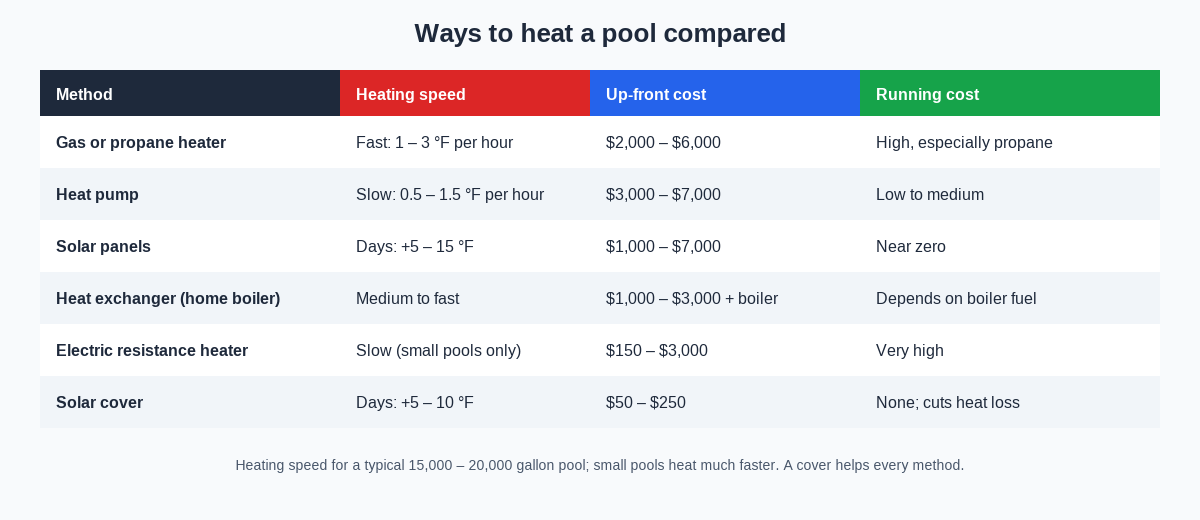
Chart: Asphapro.com
Quick Answer
How to heat a pool: the main options are a gas or propane heater (fastest, about 1 to 3 °F per hour, but the highest running cost), a heat pump (slower, about 0.5 to 1.5 °F per hour, but much cheaper to run in warm weather), solar pool heating (near-free heat, adding about 5 to 15 °F over sunny days), a heat exchanger linked to a home boiler, and small electric heaters for Intex and above ground pools. Whatever you choose, use a pool cover: covers can cut heat loss by half or more, and a solar cover alone can warm a pool 5 to 10 °F. Heating a 20,000 gallon pool by 10 °F takes about 1.7 million BTU, roughly 4 to 6 hours with a gas heater or 15 to 25 hours with a heat pump.
A warm pool gets used far more, so learning how to heat a swimming pool pays off. Water at 78 to 84 °F feels comfortable to most swimmers, but unheated pools in many climates stay in the low 70s or below for much of the year. Heating a pool can add months to the swim season, make early-morning laps pleasant, and let children swim longer without getting cold.
There is no single best way to heat a swimming pool. The right choice depends on your climate, how fast you want heat, fuel and electricity prices in your area, the size of the pool and your budget. This guide explains how to heat a pool with every common method, how long it takes to heat a pool, how to heat an above ground pool or an Intex pool, what each option costs, and how to keep heat in. For heater prices in detail, see swimming pool heater cost.
How Long Does It Take to Heat a Pool? Calculator
Use this calculator to estimate how long it takes to heat a pool with a given heater. Enter your pool volume, the temperature rise you want and your heater's BTU rating.
The math: heating one gallon of water by 1 °F takes about 8.34 BTU. A 20,000 gallon pool needs about 166,800 BTU per degree. A heater's BTU rating is its output; uncovered pools lose heat to the air at the same time, so real heating takes longer, especially on cool, windy nights. Use the heater's output rating (not input) where the maker lists it, and treat the result as an estimate.
Ways to Heat a Pool
How do you heat a pool? There are six main pool heating options. Each pool heating system has strengths and weaknesses, and many owners combine two.
Gas and propane pool heaters
Gas heaters burn natural gas or propane to heat water passing through a heat exchanger. They are the fastest way to heat a pool, typically raising a 20,000 gallon pool 1 to 3 °F per hour depending on size (common sizes are 200,000 to 400,000 BTU). They work in any weather, which makes them good for heating a pool on demand for a weekend or for spa use. The downside is running cost. Natural gas is moderate in many areas; propane is often two to three times more expensive per unit of heat. If you want to propane heat pool water, budget for a large tank and frequent deliveries in cool weather.
Heat pumps
A pool heat pump works like an air conditioner in reverse, pulling heat from the outdoor air and moving it into the water. Because it moves heat rather than making it, a heat pump delivers about 4 to 6 units of heat for each unit of electricity when air is above about 60 °F. Heat pumps heat slowly, so they are best for keeping a pool at a set temperature through the season rather than heating it quickly. They become less effective in cold air and usually are not used below about 45 to 50 °F.
Solar pool heating
Solar pool heating sends pool water through dark panels on a roof or rack, where the sun warms it. Once installed, the heat is nearly free. A well-sized system adds about 5 to 15 °F and extends the season by one to three months in sunny climates. Heating a swimming pool with solar works best with collector area of 50% to 100% of the pool surface area and a cover at night. For a do it yourself pool heating option, see DIY solar pool heater.
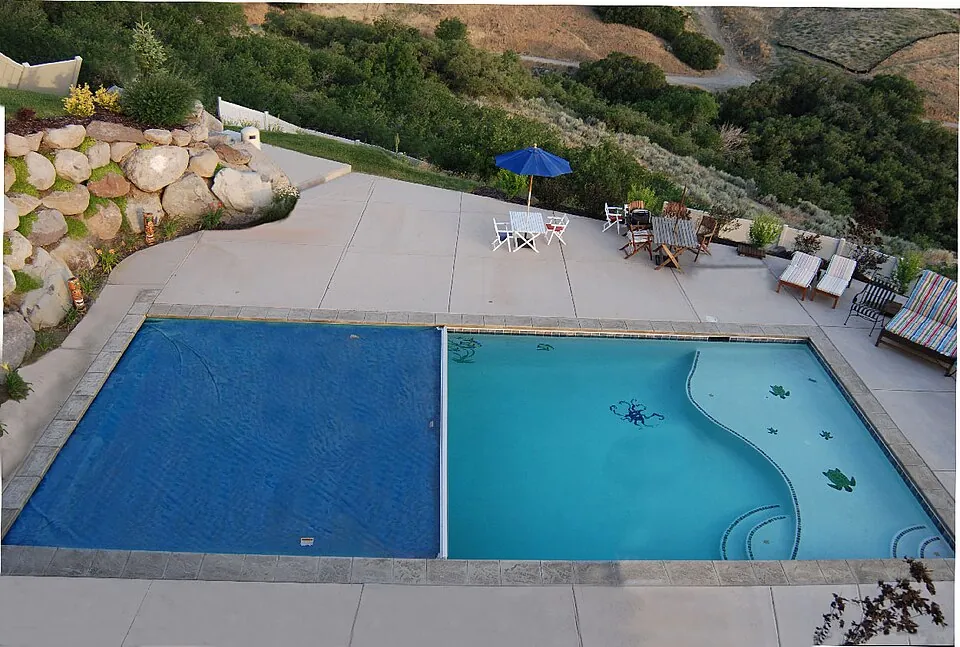
Photo: Slivenbg, Wikimedia Commons, public domain
Pool heat exchangers
A pool heat exchanger uses hot water from a home boiler, a wood boiler, a ground-source heat pump or a solar thermal system to heat the pool water through a sealed coil or plate. The pool water and boiler water never mix. A swimming pool heat exchanger is a good option if you already have a large, efficient boiler with spare capacity, or a renewable heat source. Units cost about $500 to $2,000, plus plumbing and controls.
Electric resistance heaters
Electric resistance heaters heat water with elements, like a kettle. They are simple and cheap to buy in small sizes, which is why they are common for small above ground and Intex pools and spas. For larger pools they are expensive to run, because each unit of electricity makes only one unit of heat.
Solar covers and liquid covers
A solar cover (bubble cover) floats on the pool, traps sunlight and stops evaporation, which is where most heat is lost. It can warm a pool 5 to 10 °F on its own and holds heat overnight. Liquid solar covers form a thin film on the surface and reduce evaporation a little, though less than a real cover.
How to Heat an Above Ground Pool
Can you heat an above ground pool? Yes. An above ground heated pool is common, and how to heat an above ground swimming pool follows the same rules with a few extra tips. Above ground pools lose heat through their walls as well as the surface, so they cool faster than inground pools. Good ways to heat an above ground pool:
- Solar cover: the first step for any heated above ground pool. Cut it to fit and use it every night.
- Solar panels or solar domes connected to the return hose. Several panels sized at half the pool surface area or more give the best results.
- Small heat pump (50,000 to 100,000 BTU) for steady heat through the season.
- Small gas or propane heater for fast heat on demand.
- Wall insulation: some owners wrap the outside of the wall with foam or insulate under the liner when installing it.
- Windbreaks: fences or hedges that block wind reduce heat loss.
How to Heat an Intex Pool
Heating a Intex pool, or any frame pool, is mostly about small, efficient heat sources. Intex and other frame or inflatable pools are small, usually 1,000 to 10,000 gallons, and run on small pumps. Ways to heat an Intex pool:
- Plug-in electric heater made for small pools (often 2 to 3 kW). It works but is slow and can cost a lot to run; a 3 kW heater adds roughly 0.5 °F per hour to a 2,000 gallon pool.
- Small solar panels or solar "pillow" heaters that connect to the pump hoses.
- Small heat pumps sized for frame pools, more efficient than resistance heaters.
- Solar cover or solar rings, which make the biggest difference for the money.
- Place the pool in full sun and out of the wind.
Check the pump flow rating against any heater's minimum flow. Many small filter pumps move too little water for larger heaters.
Heating Water in Pool Systems: Costs Compared
| Method | Equipment and install | Typical monthly running cost (20,000 gal, warm season) |
|---|---|---|
| Natural gas heater | $2,000 – $6,000 | $200 – $500+ |
| Propane heater | $2,500 – $7,000 (with tank) | $300 – $700+ |
| Heat pump | $3,000 – $7,000 | $50 – $250 |
| Solar panels | $1,000 – $7,000 | $0 – $30 (extra pump time) |
| Heat exchanger | $1,000 – $3,000 + boiler | Depends on fuel |
| Solar cover | $50 – $250 | $0 |
Running costs vary widely with climate, how warm you keep the water, whether you use a cover and local energy prices. Keeping a pool at 82 °F instead of 78 °F can raise heating costs by 30% or more.
How to Keep Heat in a Pool
Most pool heat is lost through evaporation at the surface. Keeping heat in is often cheaper than putting more heat in:
- Cover the pool whenever it is not in use, especially at night. The US Department of Energy notes that pool covers can cut heating costs by 50% to 70%.
- Block wind with fences, hedges or screens.
- Turn off waterfalls and fountains while heating; they increase evaporation.
- Lower the set temperature a few degrees when you will not swim for a few days.
- Enclose the pool with a screen, telescoping enclosure or glasshouse to trap warmth.
- Run heaters during the warmest part of the day for heat pumps, when they are most efficient.
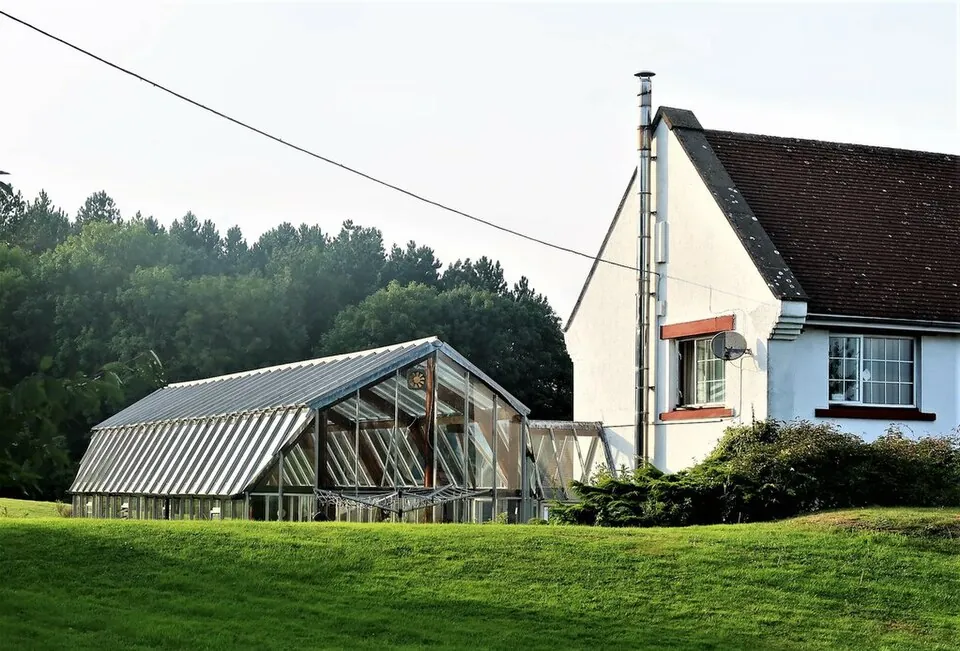
Photo: Patrick Roper, Wikimedia Commons, CC BY-SA 2.0
For enclosure options and prices, see pool enclosure cost.
Which Pool Heating Method Is Best for You?
- Sunny, warm climate, season-long swimming: solar panels plus a cover; add a heat pump for cloudy spells.
- Mild climate, want steady warm water: heat pump with a cover.
- Cool climate or occasional use: gas heater for fast heat when needed.
- Attached spa: gas heater for quick spa heating, often combined with a heat pump for the pool.
- Small above ground or Intex pool: solar cover and small solar panels or a small heat pump.
- Existing efficient boiler or renewable heat: heat exchanger.
Solar Heating a Swimming Pool
Solar heating a swimming pool is the lowest-cost way to heat a pool over its life. Pool solar heating systems use unglazed polypropylene or rubber collectors, usually on a south-facing roof. The pool pump pushes water up through the collectors, the sun warms it, and it flows back to the pool. A sensor and motorized valve can send water to the panels only when they are warmer than the pool.
To get good results from swimming pool solar heating:
- Size it right: collector area equal to 50% to 100% of the pool surface. Undersized systems disappoint.
- Face south (in the Northern Hemisphere) with little shade from 9 a.m. to 4 p.m.
- Use a cover at night; otherwise much of the day's heat is lost.
- Run the pump during sunny hours.
- Add a backup heater if you want guaranteed warmth on cloudy days.
Heating swimming pool with solar costs about $3,000 to $7,000 installed for an average pool, or $1,000 to $3,500 as a DIY kit. Pool heating with solar can pay for itself in a few seasons compared with gas. If you want to build your own, our guide on DIY solar pool heater covers diy solar heating pool systems, from hose coils to panel kits, and solar for swimming pool heating sizing.
Pool Heating Covers
A pool heating cover does two jobs: it stops evaporation, which is the biggest source of heat loss, and in the case of solar covers it adds heat from the sun. Types of heated pool cover options:
- Solar (bubble) cover: blue or clear plastic with air bubbles. Clear covers let more sunlight warm the water; blue covers hold heat well and shade the water a little. Cost: $50 to $250 for most pools; lasts 2 to 5 years.
- Insulated foam cover: thicker and better at holding heat overnight, but heavier.
- Automatic safety cover: a motorized cover that rolls out at the push of a button. It cuts heat loss, keeps debris out and adds safety. Cost: $8,000 to $20,000.
- Liquid solar cover: a thin surface film that reduces evaporation somewhat; useful where a physical cover is not practical.
A pool cover heat saving can be large: keeping a heated pool covered at night often cuts heating bills in half. A cover reel makes it easy to put on and take off, which means you will actually use it.
How to Heat a Small Pool Cheaply
Small pools are easy to warm. To heat small pool water without big bills:
- Put the pool in full sun, sheltered from wind.
- Use a solar cover every night and on cloudy days.
- Add solar rings or a solar pillow heater for extra warmth.
- Use a small heat pump rather than an electric resistance heater if you need more heat.
- Set up a windbreak with a fence or screen.
- Run the pump during the day so warm surface water mixes down.
Heating small pool volumes this way can keep a stock tank, plunge pool or frame pool comfortable for most of the summer, and it is the cheapest way to heat pool water anywhere.
Heated Pool Temperature Guide
| Use | Comfortable heated pool temperature |
|---|---|
| Lap swimming and fitness | 77 – 80 °F |
| General family use | 80 – 84 °F |
| Young children, older adults, therapy | 84 – 88 °F |
| Spa or hot tub | 100 – 104 °F (max 104 °F) |
Each degree of extra heated pool temp raises heating costs, often by 10% to 30% per degree depending on climate. Pick the lowest heating pool temperature that is comfortable for your family.
Heat Exchanger for Pool Heating: How It Works
A heat exchanger for pool use has two separate water circuits. Hot water from a boiler, solar thermal panels or a ground-source heat pump flows through one side; pool water flows through the other. Heat passes through metal plates or a coil without the two waters mixing. Titanium heat exchangers resist chlorine and salt best. A pool heat exchanger makes sense when you already have a large, efficient heat source, such as a modern condensing boiler, a wood boiler or a geothermal system, and it gives fast, controllable heat. Sizing must match both the boiler's spare capacity and the pool's flow rate, so have a heating professional design it.
Warming a Swimming Pool in Spring
Warming a swimming pool after winter takes the most energy, because the water may start in the 50s or low 60s. To speed it up and save money: open the pool early so the sun has time to help, keep a solar cover on as much as possible, run solar panels or a heat pump during the warmest hours, and avoid heating at night without a cover. A gas heater can bring a cold pool up quickly for an early swim, but expect a large first bill. Plan the first 10 to 20 degrees of rise over several days.
How to Heat a Pool Without a Heater
If you do not want to buy a heater, you can still warm the water several degrees:
- Solar cover: the most effective single step; often adds 5 to 10 °F.
- Solar rings: floating discs that cover part of the surface and are easy to remove.
- Black hose coil: a simple homemade solar heater on a sunny slope or roof.
- Windbreak: wind strips heat from the water surface; a fence or hedge helps.
- Dark pool finish: darker plaster or liners absorb more sunlight.
- Liquid solar cover: reduces evaporation when a cover is not practical.
- Pool enclosure: traps warm air and blocks wind.
These steps are also how to heat pool cheaply even if you do have a heater, because every degree you gain for free is a degree the heater does not have to make.
Heated Pool in Winter
Keeping a heated pool in winter is possible, but costs rise sharply in cold climates. Gas heaters can keep water warm in any weather, but a large outdoor pool can lose heat faster than many heaters can replace it on freezing, windy nights. An automatic cover, an enclosure, or limiting winter use to an attached spa makes winter swimming more practical. For year-round swimming in cold climates, an indoor heated pool is often the better plan; see indoor pool cost.
Pool Heating Safety Tips
- Have gas lines, propane tanks and heater venting installed by licensed pros.
- Keep heaters clear of plants, leaves and flammable items.
- Make sure the pump is running with full flow before a gas heater fires.
- Never run a heater with the pool water level low or the filter clogged.
- Keep spa water at or below 104 °F.
- Have gas heaters serviced yearly to check burners and the heat exchanger.
Sizing a Pool Heater
A heater that is too small never catches up on cool days; one that is too big costs more than needed. As a rough guide, gas heaters for residential pools range from about 150,000 to 400,000 BTU, and heat pumps from about 50,000 to 140,000 BTU. Sizing depends on:
- Pool surface area, which drives heat loss more than volume does.
- The temperature rise you want over the average air temperature of the coolest month you plan to swim.
- Wind exposure and whether you will use a cover.
- How fast you want to heat up after the pool has cooled.
Many installers size heat pumps for the pool surface area and the desired temperature rise, then add margin for wind. The US Department of Energy publishes simple sizing guides for gas, heat pump and solar pool heaters, and a reputable installer should do a heat-loss calculation for your pool before recommending a size.
How to Warm Pool Water Faster
If you need to know how to warm pool water quickly for a party or an early swim, combine methods: run a gas heater at full output with the cover on, turn off waterfalls, run the pump continuously so heat spreads evenly, and keep the cover on until people arrive. A heat pump or solar alone will not raise the temperature quickly, so plan ahead and start a day or two early when using them.
How to Heat a Pool: Key Points
- Gas and propane heat fastest; heat pumps cost less to run; solar is nearly free to run.
- Heating 1 gallon by 1 °F takes 8.34 BTU; a 20,000 gallon pool needs about 167,000 BTU per degree.
- Covers cut heat loss by half or more and help every method.
- Small and above ground pools can use electric or small solar heaters.
Frequently Asked Questions
What is the cheapest way to heat a pool?
A solar cover, then solar panels. A heat pump is usually the cheapest powered heater to run in warm climates.
How long does it take to heat a pool?
A gas heater warms a typical 20,000 gallon pool about 1 to 3 °F per hour; a heat pump about 0.5 to 1.5 °F per hour; solar several degrees over a few sunny days.
How can you heat a pool without a heater?
Use a solar cover, solar rings, black hose coils or solar panels, block wind, and place above ground pools in full sun.
How long does it take to heat pool water with a heat pump?
Usually 24 to 72 hours to raise a 15,000 to 20,000 gallon pool by 10 to 20 °F, depending on air temperature, heater size and whether the pool is covered.
How do I heat my swimming pool for less?
Cover it every night, block wind, lower the set temperature a little, and add solar heat before running a powered heater.
Is propane a good way to heat a pool?
Propane heats quickly and works where natural gas is not available, but it is usually the most expensive fuel. It suits occasional heating better than all-season use.
What temperature should a heated pool be?
Most families like 78 to 84 °F. Lap swimmers often prefer 77 to 80 °F; young children and older swimmers often prefer 84 to 86 °F.
Should I run the pool heater at night or day?
Run heat pumps during the warmest hours. Gas heaters can run anytime, but cover the pool at night to keep the heat.
Does a black pool liner heat the water?
A little. Dark finishes absorb more sunlight and can raise water temperature a few degrees on sunny days.
Can I heat a pool in winter?
Yes, with a gas heater or an enclosure, but it is costly in cold climates. Heat pumps struggle below about 50 °F.
Does a heated pool need more chemicals?
Warm water uses chlorine faster and grows algae more easily, so test more often and adjust doses.
Sources
- US Department of Energy: Gas swimming pool heaters
- US Department of Energy: Heat pump pool heaters
- US Department of Energy: Solar pool heaters
- US Department of Energy: Pool covers