
Stock Tank Pool Ideas: Backyard Setups, Sizes, Costs and Care
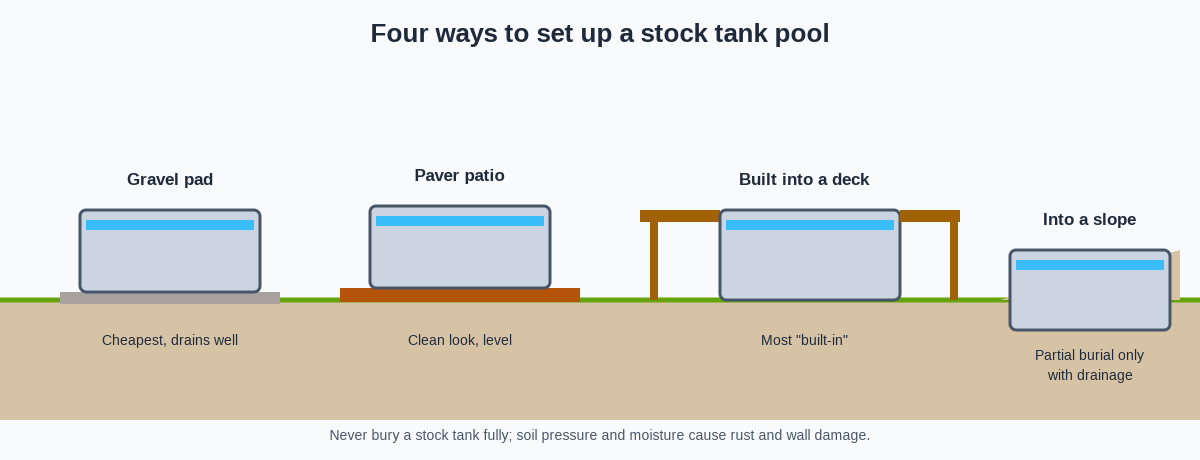
Diagram: Asphapro.com
Quick Answer
The best stock tank pool ideas start with a galvanized round tank, usually 8 to 10 feet across and 2 feet deep, set on a level gravel or paver pad. Add a small pump and filter, then dress it up with a wood deck or step platform, potted plants, a shade sail or umbrella, and string or solar lights. For more depth, choose a deep stock tank pool of 3 to 4 feet. A basic setup costs about $800 to $3,000; with a deck and extras, $2,500 to $10,000. Keep water balanced, use low chlorine levels, and add a liner or coating if you want to slow rust.
A stock tank pool is a galvanized steel livestock watering tank used as a small backyard pool. Ranchers have cooled off in them for generations. In recent years, they have become a popular, low-cost alternative to above ground pools and plunge pools for small yards, patios and even rooftops. They are sturdy, quick to set up and have a rustic, farmhouse look that fits many gardens.
This guide covers practical stock tank pool ideas: how pool stock tanks work, which sizes to choose, 20 backyard stock tank pool ideas for setting up and styling the tank, filtration, rust prevention, heating, costs and safety. For other compact options, see swimming pool ideas for small backyard spaces and what is a plunge pool.
What Is a Stock Tank Swimming Pool?
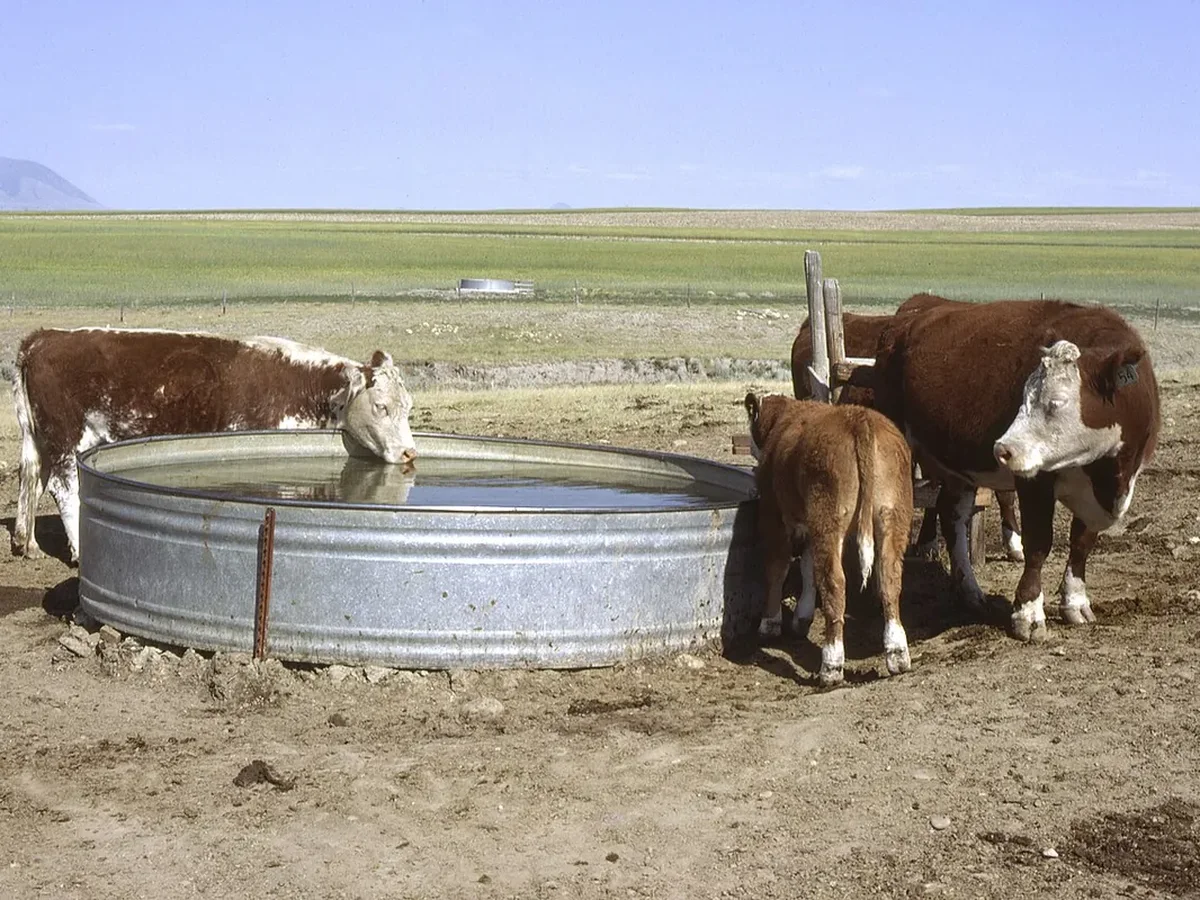
Photo: USDA NRCS Montana, Wikimedia Commons, public domain
A stock tank swimming pool is simply a farm water trough filled with clean water and fitted with a small pump and filter. The tanks are made of corrugated galvanized steel with a rolled top edge and a welded or crimped bottom. They are designed to hold water outdoors for years, so they are strong and stable. Most have a drain plug near the bottom, which makes draining and cleaning easy. Some makers also sell poly (plastic) stock tanks, which do not rust but look less classic and can bulge when full.
Stock tank pools are best for cooling off, soaking and relaxing, not for swimming laps. They suit adults and older children who want a dip on hot days, and they work well as a cold plunge or, with a heater, as a simple hot tub.
Stock Tank Pool Sizes and a Deep Stock Tank Pool
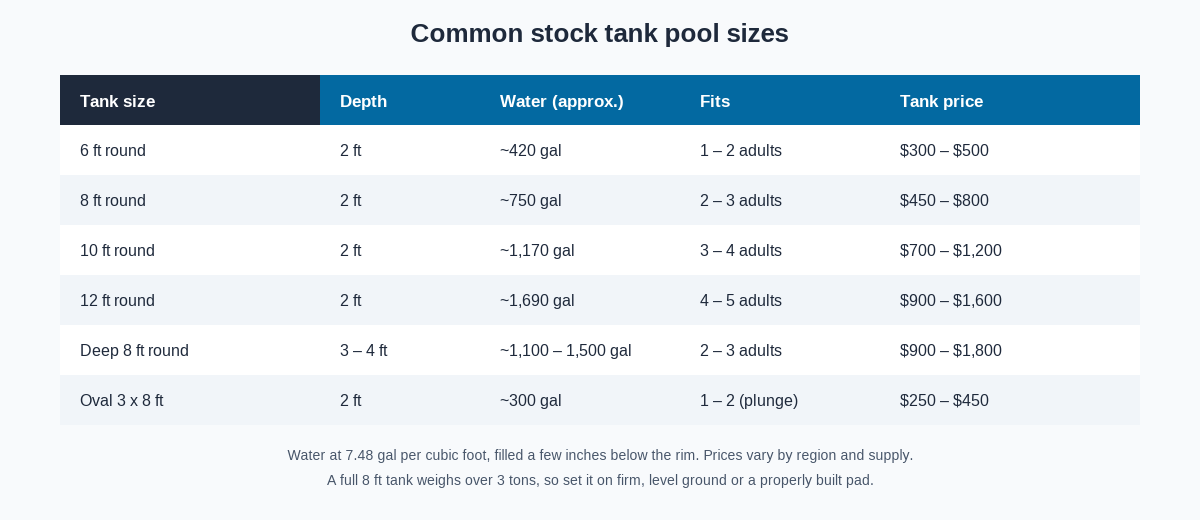
Chart: Asphapro.com
The most popular pool stock tanks are 8 and 10 foot round tanks, 2 feet deep. An 8 foot tank fits two or three adults sitting, and a 10 foot tank fits three or four. Six foot rounds work as a one- or two-person soaking tub or cold plunge. Twelve foot rounds give more room but need a larger, stronger base. Oval tanks fit narrow spaces and make good plunge tubs.
A deep stock tank pool, 3 to 4 feet deep, gives more room to sit with water up to your shoulders. Deep tanks are harder to find, cost more and weigh much more when full, but many owners prefer them for adult use. A deep stock tank pool should be set on a very solid, level base, since a 3 foot deep 8 foot tank holds well over 1,000 gallons, or more than 4 tons of water.
20 Backyard Stock Tank Pool Ideas
Base and Placement Ideas
1. Gravel pad. The simplest of all stock tank pool ideas: dig out the sod, level the ground and spread 3 to 4 inches of compacted pea gravel or crushed stone. Gravel drains well and lets the bottom of the tank dry out, which helps prevent rust.
2. Paver or flagstone patio. Set the tank on pavers laid over a compacted base for a neat, level surface that is easy to sweep. Extend the paving around the tank for chairs.
3. Concrete pad. A small concrete slab gives the most solid base for a deep stock tank pool. Slope it slightly so water drains away. See our guide on concrete pads.
4. Partly set into a slope. On a sloped yard, dig one side into the hill and support the soil with a small retaining wall a few inches from the tank, so the tank does not sit against wet soil.
Deck and Surround Ideas
5. Wraparound deck. Build a low wood deck around the tank, level with or a little below the rim. This is one of the most popular backyard stock tank pool ideas because it hides the steel and makes the pool feel built in.
6. Half deck. Build a deck on one side only, with steps up to the rim and space for loungers, leaving the other side open to the garden.
7. Step platform. A simple two-step wooden platform makes getting in and out easier without the cost of a full deck.
8. Wood cladding. Wrap the outside of the tank with vertical cedar boards held by straps for a hot-tub look.
9. Stone or brick surround. Build a low stone or brick wall around the tank for a garden feature look.
Shade and Comfort Ideas
10. Shade sail. A triangular shade sail over the tank keeps the water cooler and protects swimmers from the sun.
11. Pergola. A small pergola with climbing plants gives filtered shade and a sense of enclosure. See pool pergola ideas.
12. Patio umbrella. An offset cantilever umbrella is the quickest shade fix.
13. Outdoor shower. A simple garden shower next to the tank lets people rinse off before getting in, keeping the water cleaner.
Planting and Styling Ideas
14. Potted plants. Group large pots of grasses, palms or herbs around the tank. Pots are easy to move and do not drop soil into the water.
15. Privacy screen. A slatted wood screen, bamboo panels or a row of tall grasses gives privacy in small yards.
16. Farmhouse style. Pair the galvanized tank with Adirondack chairs, a vintage wash bucket for towels and lavender in tins.
17. Modern style. Use black steel planters, clean pavers and a simple teak bench for a sleek look.
Lighting and Extras
18. String lights. Hang string lights on posts or a pergola for evening soaks.
19. Floating or solar lights. Small floating solar lights add a soft glow on the water.
20. Hot tub conversion. Add an outdoor-rated heater and a cover to turn the tank into a simple hot tub in cool months, with all wiring or gas work done to code.
Filtration and Water Care for Pool Stock Tanks
Without filtration, stock tank water turns green within days in warm weather. Most owners use a small above ground pool pump and cartridge filter rated for 300 to 1,000 gallons per hour. Drill holes for the inlet and outlet, or hang the hoses over the side. Run the pump for several hours a day. Keep a low level of chlorine, about 1 to 3 ppm, using liquid chlorine, a small floating dispenser or a salt system made for small pools, and keep pH at 7.2 to 7.8. Skim debris daily and use a cover when the tank is not in use. Some owners prefer frequent water changes instead of chemicals, but draining and refilling a large tank every few days wastes water and is less hygienic. See how much chlorine to add to pool water.
Preventing Rust in a Stock Pool Tank
Galvanized steel is coated with zinc, which protects the steel underneath. Chlorine and low pH speed up the loss of this coating, especially at seams and the bottom. To make your stock pool tank last longer, keep chlorine low and steady rather than shocking heavily, keep pH in range, and do not let salt levels build up. Some owners paint the inside with a pool-safe epoxy or elastomeric coating, or add a fitted vinyl liner. Keep the bottom dry by setting the tank on gravel or pavers, not directly on soil or grass. Check the seams each year and touch up any rust spots before they spread.
Backyard Stock Tank Pool Ideas: Costs
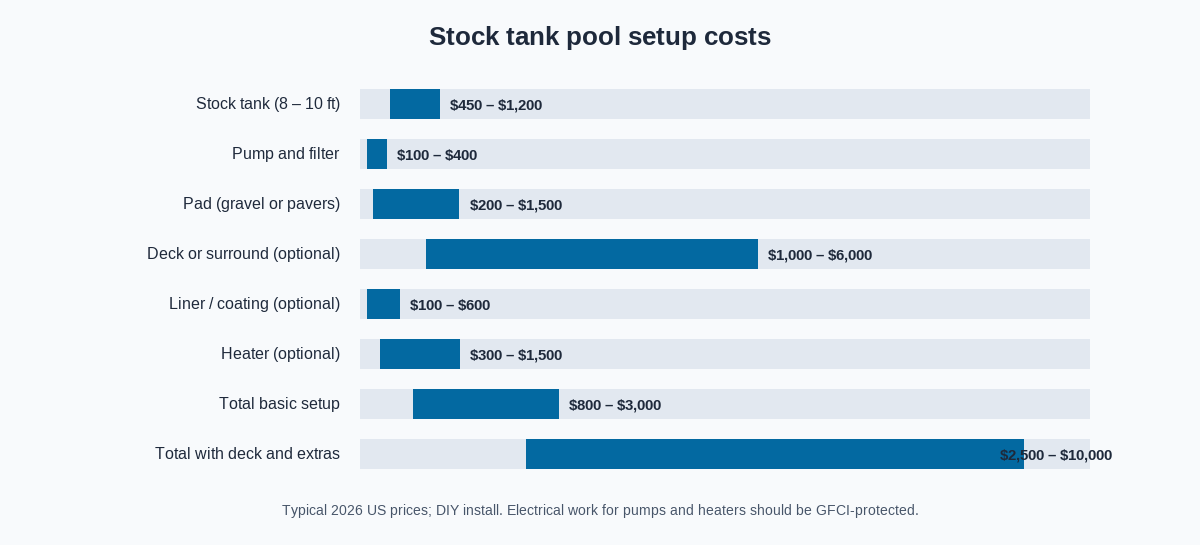
Chart: Asphapro.com
An 8 to 10 foot stock tank costs about $450 to $1,200, depending on supply and region. A pump and filter cost $100 to $400. A gravel or paver pad costs $200 to $1,500. A basic setup, done yourself, comes to about $800 to $3,000. Adding a deck, liner, heater and landscaping can bring the total to $2,500 to $10,000. That is still far less than most above ground pools with decks and much less than any inground pool. See above ground pool installation cost for comparison.
Stock Tank Swimming Pool Safety
Even though stock tanks are shallow, a child can drown in a few inches of water. Treat a stock tank swimming pool like any other pool: never leave children alone near it, keep it covered or fenced when not in use, and check local codes, since many require a barrier for any water deeper than 18 to 24 inches. Plug pumps and heaters into GFCI-protected outlets, keep cords away from the water, and have an electrician install any permanent wiring. The rolled edge of the tank can be slippery when wet, so add a non-slip step.
Stock Tank Swimming Pool Ideas for Small Spaces
One reason stock tank swimming pool ideas are so popular is that a tank fits where a regular pool never could. In a small courtyard, an 8 foot round tank set on pavers, with a bench on one side and tall planters on the other, makes a private soaking spot. On a side yard only 10 feet wide, an oval tank or a 6 foot round can sit along the fence with a narrow deck. On a patio, set the tank at one corner on its own reinforced pad, leaving the rest of the patio for dining. Some owners even place tanks on rooftops and balconies, but only after a structural engineer confirms the roof can carry several tons; most residential roofs and decks cannot without reinforcement.
In tight spaces, plan access for filling, draining and pump service. Keep the drain plug reachable or fit a hose adapter so you can drain to a garden bed or drain. Leave a clear path around at least part of the tank for cleaning. The best stock tank swimming pool ideas for small spaces combine a simple base, a step or bench, a bit of shade and a few plants, rather than trying to fit a full deck.
Stock Pool Ideas for Families
Families with young children often look for stock pool ideas that are safe and fun. A 2 foot deep tank is a good depth for older kids to splash and for adults to sit, but it still needs close supervision for toddlers. Choose a tank with a sturdy, non-slip step, keep the cover on when not in use, and set rules about climbing on the rim. Add a shade sail so kids can play longer without sunburn. Floating toys, a small slide into the tank or a sprinkler nearby add fun. For families with teenagers, a larger 10 or 12 foot tank gives room for several people at once. Many families use their tank as a "cool-off station" on hot afternoons, rather than a place to swim.
Using a Stock Tank as a Cold Plunge or Hot Tub
Stock tanks are popular for cold plunges because they are deep enough to sit with water to the chest and cheap compared with dedicated cold plunge tubs. In cool climates, a covered stock tank in shade often stays cold for much of the year without a chiller. In hot climates, some owners add a small water chiller. Keep the water clean with a filter and a sanitizer, and cover the tank to keep out debris.
For a hot tub, owners add an outdoor-rated electric heater or a propane water heater, insulate the tank's outside with foam board and wood cladding, and use an insulated cover. Gas heaters must be vented and installed to code, and electric heaters need a GFCI-protected circuit. Water temperature should not exceed 104 °F. A heated stock tank costs far less than a hot tub but loses more heat, so running costs can be higher in cold weather. See how much does a hot tub cost per month.
How to Set Up a Stock Tank Swimming Pool
Choose the spot. Pick a level area with some shade, away from trees that drop leaves, close to a GFCI outlet and a hose bib, and where you can drain water safely.
Prepare the base. Remove sod and roots, level the ground, and add 3 to 4 inches of compacted gravel, or build a paver or concrete pad. Check level in several directions; even a small slope shows when the tank is full.
Fit the pump. Drill holes for the inlet and return fittings, or hang the hoses over the edge. Seal any drilled holes with bulkhead fittings and marine sealant, and treat bare steel edges with a cold galvanizing spray.
Set the tank and fill. Place the tank, connect the pump and filter, and fill with a garden hose. Most tanks take a few hours to fill.
Balance the water. Test pH and chlorine, add a small amount of chlorine, and run the pump. Check the water daily for the first week.
Add the finishing touches. Build a step or deck, add shade, plants and lights, and get a cover.
Choosing Pool Stock Tanks: Galvanized vs Poly
Galvanized steel pool stock tanks are the classic choice. They are strong, hold their shape and develop a soft gray patina over time. Their main weakness is rust, especially in chlorinated water. Poly stock tanks, made of thick plastic, do not rust and can handle chlorine and salt better, but they can bulge or flex when full, especially in heat, and some people find them less attractive. Poly tanks are also lighter to move. A third option is a galvanized tank with a fitted vinyl liner or a professionally applied coating, which protects the steel while keeping the look. Whichever you choose, check that the tank has no dents, sharp edges or leaks before you buy, and ask the seller whether it is suitable for chlorinated water.
Winter Care for a Stock Tank Pool
In cold climates, drain the tank before hard freezes or leave it partly full with the pump removed. Ice expanding in a full tank can split seams. Remove the pump, filter and hoses, drain them and store them indoors. Clean and dry the tank, and cover it to keep out snow and debris. Some owners turn the empty tank into a planter or storage over winter. In mild climates, you can keep the tank running year-round with a cover, or convert it into a heated soaking tub for winter.
Stock Tank Swimming Pool Maintenance Schedule
Daily: skim leaves and bugs, and keep the cover on when not in use. Two or three times a week: test chlorine and pH and adjust. Weekly: rinse the filter cartridge, wipe the waterline and check the pump. Monthly: replace or deep clean the filter cartridge and inspect the tank for rust spots. Every few months: drain, clean and refill if the water gets hard to balance. Yearly: touch up rust, check seams and the drain plug, and replace worn hoses. Following this schedule keeps your stock tank pool ideas looking good for many summers.
Common Mistakes With Stock Tank Pool Ideas
The most common mistake with backyard stock tank pool ideas is setting the tank on soft, uneven ground, which lets it tilt and stresses the seams. Another is shocking the water with large doses of chlorine, which strips the zinc coating and causes rust. Some owners skip the filter and end up with green water within days. Others place the tank in full sun all day, where the water gets too warm and algae grows quickly. Running extension cords to the pump across wet ground is a serious safety risk; use a properly installed GFCI outlet. And many people underestimate the weight; never place a full tank on an ordinary deck or balcony without an engineer's approval.
Backyard Stock Tank Pool Ideas: Worked Examples
Example 1: budget setup. An owner buys an 8 foot tank for $650, a pump and filter for $150, and gravel for $200, and builds a two-step wooden platform for $100. Total: about $1,100.
Example 2: decked stock tank pool. A couple sets a 10 foot tank on a paver pad ($900), adds a pump and filter ($250), builds a half deck with steps ($3,500), hangs a shade sail ($300) and adds lighting ($200). Tank: $1,000. Total: about $6,150.
Example 3: deep stock tank pool as a cold plunge. An athlete buys a 6 foot round deep tank for $700, sets it on a concrete pad ($600), adds a small chiller ($900) and a cover ($150). Total: about $2,350.
Stock Tank Pool vs Above Ground Pool
A stock tank pool costs less, takes up less space and sets up faster than most above ground pools, and it looks good with simple styling. It is not a swimming pool, though; you can sit, soak and splash, but not swim. An above ground pool gives room to swim and play and holds more people, but costs more, needs a larger level area and has more parts to maintain. For many small yards, stock tank pool ideas give the best value for cooling off in summer.
Seasonal Stock Pool Ideas
Stock pool ideas do not have to stop when summer ends. In spring, plant pots of herbs and flowers around the tank and give it a fresh clean before filling. In summer, add shade, floats and string lights for evening dips. In fall, a heated stock tank swimming pool makes a cozy soaking tub on cool nights, with a fire pit nearby. In winter, in mild climates, keep the tank covered and running or turn it into a cold plunge; in cold climates, drain it and use the empty tank as a raised planter for winter greens or as storage for cushions. Changing your stock tank pool ideas with the seasons keeps the tank useful all year and makes the most of a low-cost purchase.
Deep Stock Tank Pool vs Standard Tank
Choosing between a standard 2 foot tank and a deep stock tank pool depends on how you will use it. A standard tank is cheaper, lighter, easier to find and fills faster. It is ideal for sitting, splashing and cooling off, and children can touch the bottom easily. A deep stock tank pool, 3 to 4 feet deep, lets adults sit with water up to the shoulders and works better as a cold plunge or soaking tub. It costs more, weighs much more when full and needs a stronger base and a taller step or deck to climb in. For most backyards, a 2 foot deep 8 or 10 foot tank is the best balance; for adults who want a true soak, the deep tank is worth the extra cost.
Stock Tank Pool Ideas: Key Points
- 8 and 10 foot round tanks, 2 feet deep, are the most popular sizes.
- Set the tank on level gravel, pavers or concrete, never bare soil.
- Use a small pump and filter and low, steady chlorine levels.
- A basic setup costs $800 to $3,000; decks and extras add more.
Frequently Asked Questions
How long do stock tank pools last?
Often 5 to 10 years or more, depending on water care and rust prevention. Low, steady chlorine, balanced pH, a dry base and a liner or coating all help a galvanized tank last longer.
Can you put a stock tank pool on a deck?
Only if the deck is engineered to carry the weight; a full 8 foot tank weighs over 3 tons.
Do stock tank pools need a filter?
Yes, unless you change the water very often. A small pump and cartridge filter, run several hours a day, keeps water clear and saves water compared with frequent refills.
Can you use chlorine in a stock tank pool?
Yes, at low levels of about 1 to 3 ppm. Keep pH in range to protect the zinc coating, and avoid dropping tablets or granular shock directly onto the steel.
How deep is a stock tank pool?
Usually 2 feet; deep stock tank pools are 3 to 4 feet and suit adults who want a full soak.
Can you heat a stock tank pool?
Yes, with an outdoor-rated electric or propane heater installed safely and to code. Insulate the outside of the tank and use a cover to hold the heat.
Sources
- CPSC: Pool and spa safety
- CDC: Pool chemistry and testing
- American Galvanizers Association: Galvanized steel in water
- OSHA: Electrical safety