
What Is a Cowboy Pool? Stock Tank Swimming Pools Explained
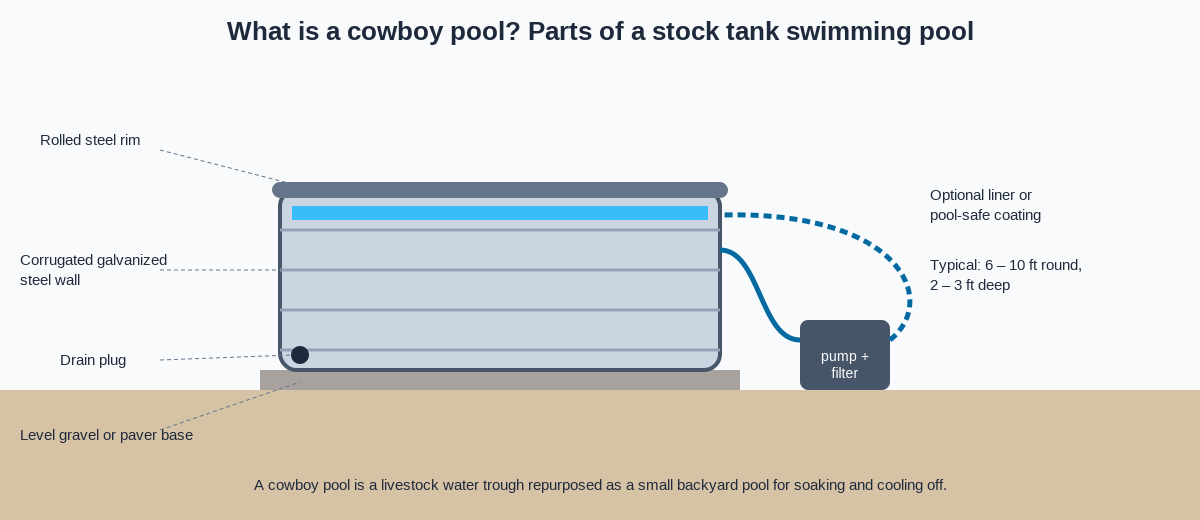
Diagram: Asphapro.com
Quick Answer
A cowboy pool is a small backyard pool made from a galvanized steel stock tank, the round metal water trough used for cattle and horses on ranches. Most are 6 to 10 feet across and 2 to 3 feet deep, enough to sit, soak and cool off but not to swim laps. A small pump and filter keeps the water clean, and many owners add a deck, steps, shade and lighting. A DIY cowboy pool costs about $800 to $3,000; prefab cowboy swimming pools with liners, deeper tanks and built-in equipment cost $5,000 to $15,000 or more. They are cheap, quick to set up and stylish, but they rust if not cared for and must sit on a very firm base.
The name comes from the American West, where ranch hands are said to have cooled off in livestock water tanks on hot days. Today, cowboy pools are popular in small backyards, on patios and at cabins, where a full swimming pool would be too big, too slow to build or too expensive. They have a rustic, farmhouse look that suits many gardens, and they can double as a cold plunge or, with a heater, a simple hot tub. A cowboy swimming pool is also easy to drain, move and store, which makes it popular with renters and cabin owners.
This guide answers what is a cowboy pool in detail, covers sizes, costs, water care and rust prevention, and shows how to build a cowboy pool with deck step by step. For more setup ideas, see our guide on stock tank pool ideas.
What Is a Cowboy Pool Made Of?
Most cowboy pools are galvanized steel stock tanks. Galvanized steel is coated with a layer of zinc to protect it from rust. The tanks have corrugated walls for strength, a rolled rim at the top, and a threaded drain plug near the bottom. Some cowboy swimming pools use heavy polyethylene stock tanks, which do not rust but look less traditional and can flex when full on a hot day. Prefab cowboy pools often add a vinyl liner or a protective coating inside the steel, a built-in pump and filter, a skimmer, and sometimes a heater and insulated cover.
Cowboy Swimming Pool Sizes and Depths
Common sizes for a cowboy swimming pool are 6, 8 and 10 foot round tanks, 2 feet deep. A 6 foot tank fits one or two adults, an 8 foot tank two or three, and a 10 foot tank three or four. Some makers sell deeper tanks, 3 to 4 feet, which let adults sit with water up to the shoulders. Oval tanks fit narrow side yards, patios and other tight spaces well. A full 8 foot, 2 foot deep tank holds about 750 gallons and weighs over 3 tons with water, so the base must be strong and level. Larger and deeper tanks weigh much more, which matters for any cowboy pool with deck plans.
Cowboy Swimming Pool vs Other Small Pools
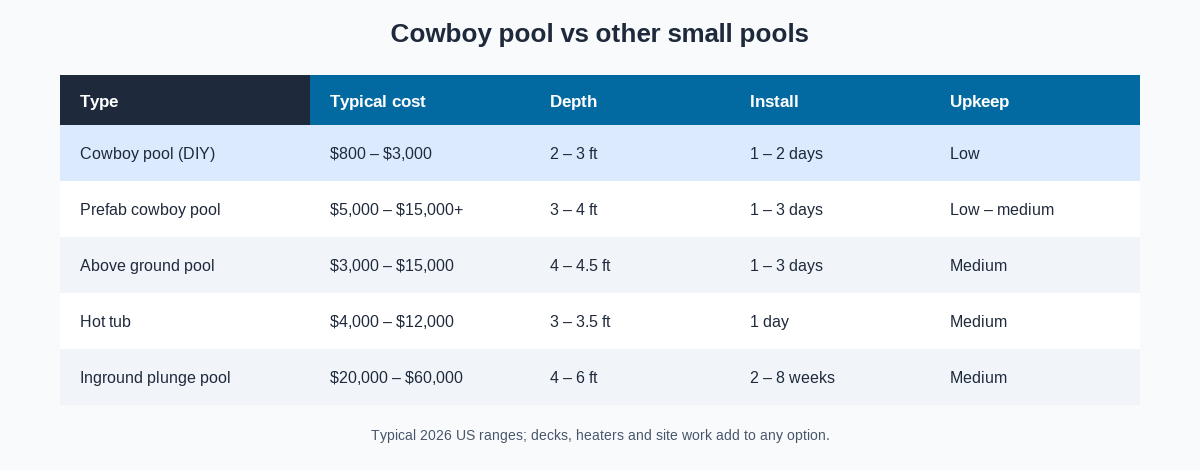
Chart: Asphapro.com
A cowboy pool is the cheapest way to get a small pool for soaking. It costs less than most above ground pools, hot tubs and plunge pools, installs in a day or two, and needs little upkeep. It is not a swimming pool; you can sit, splash and cool off, but not swim. A hot tub gives hot water and powerful jets, an above ground pool gives room to swim, and a plunge pool gives a permanent, built-in look. See what is a plunge pool.
How to Set Up a Cowboy Swimming Pool
Choose the spot. Pick a level area with some shade, near a GFCI outlet and a hose bib, away from trees that drop leaves, and where you can drain the water without flooding a neighbor's yard.
Build a firm, level base. Remove the sod and lay 3 to 4 inches of compacted gravel, or a paver or concrete pad. Never set the tank on bare soil or grass, which holds moisture, lets the tank settle unevenly and causes rust on the bottom.
Add a pump and filter. Small above ground pool pumps with cartridge filters work well. Run hoses over the edge or drill holes and fit sealed bulkhead fittings, then treat any cut steel edges against rust.
Fill and treat. Fill with a garden hose, which takes a few hours, and add a low level of chlorine, 1 to 3 ppm, keeping pH at 7.2 to 7.8.
Add steps, a deck and shade. A step or platform makes getting in easier, a non-slip mat on the rim adds grip, and shade keeps the water cooler on hot afternoons.
Cowboy Pool With Deck
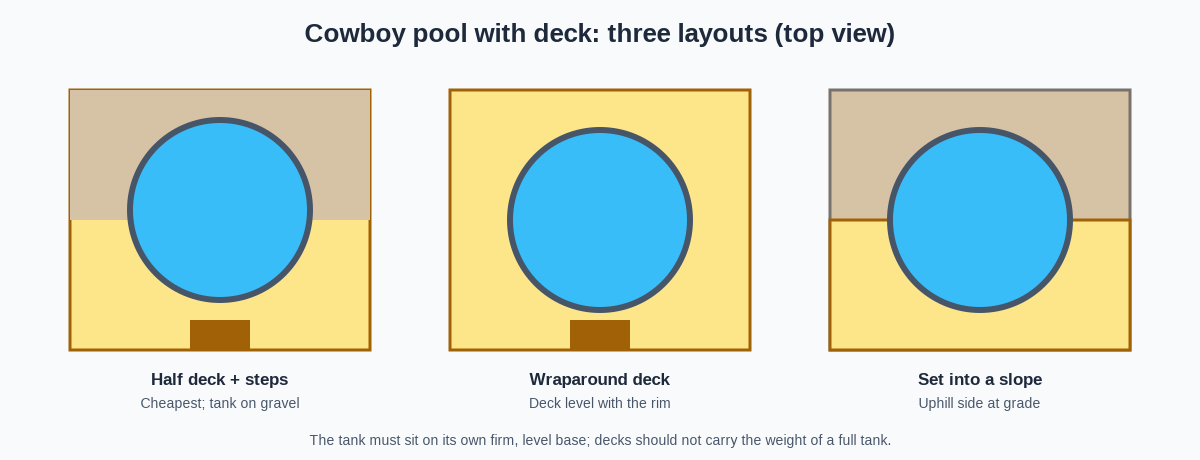
Diagram: Asphapro.com
A cowboy pool with deck looks more finished and is easier to use. A half deck on one side with steps up to the rim is the simplest. A wraparound deck built level with the rim hides the steel and makes the tank look built in. On a slope, a tank can be set partly into the hill with a deck on the low side. In every case, the tank must rest on its own firm base, not on the deck, since a full tank weighs several tons. Leave a small gap between the deck and the tank wall so air can circulate and the steel can dry after rain and splashing.
DIY vs Prefab Cowboy Swimming Pool
There are two ways to get a cowboy swimming pool. The DIY route means buying a stock tank from a farm supply store, adding a small above ground pool pump and filter, and building your own base and steps. It is cheap and fast, and many owners enjoy the project. The downside is that a bare galvanized tank can rust within a few seasons, especially with chlorine, and DIY plumbing through the tank wall needs careful sealing.
A prefab cowboy swimming pool comes from companies that build stock-tank-style pools for swimming. These often use thicker steel, deeper tanks, factory-installed liners or coatings, built-in skimmers and returns, and matching pumps, filters and heaters. Some offer insulated walls and covers for year-round use. Prefab models cost more but last longer and look more finished. When comparing quotes, ask about the steel gauge, the liner or coating, warranty terms and what equipment is included.
Cowboy Swimming Pool Costs in Detail
For a DIY cowboy swimming pool, expect to pay about $450 to $1,200 for an 8 to 10 foot stock tank, $100 to $400 for a pump and filter, $200 to $1,500 for a gravel or paver base, $50 to $200 for steps or a platform, and $100 to $600 for a liner or coating if you add one. A basic setup totals about $800 to $3,000. Adding a heater costs $300 to $1,500, and a cowboy pool with deck can add $1,000 to $8,000 depending on size and materials. Prefab cowboy pools typically cost $5,000 to $15,000 or more for the pool and equipment, plus delivery, base and decking.
Water Care for a Cowboy Swimming Pool
A cowboy swimming pool needs simple but regular care. Run the pump and filter several hours a day. Keep free chlorine at 1 to 3 ppm and pH at 7.2 to 7.8; low, steady chlorine protects both swimmers and the zinc coating. Avoid big shock doses directly into a bare steel tank, which strip the zinc and speed rust. Skim leaves and bugs daily, cover the tank when not in use, and rinse the filter cartridge weekly. Some owners use a small salt system or mineral system made for small pools. Drain and refill every few months if the water gets hard to balance. See how much chlorine to add to pool water.
Preventing Rust in a Cowboy Swimming Pool
Rust is the main weakness of a galvanized cowboy pool. Chlorine, low pH and standing water against the outside of the tank all speed corrosion, especially at seams and the bottom edge. To prevent it, keep chlorine low and steady, keep pH in range, and never let the tank sit on wet soil or grass. A gravel base or pavers let the bottom dry out. Many owners add a fitted vinyl liner or apply a pool-safe epoxy or elastomeric coating inside the tank before filling. Check the tank each season and touch up small rust spots right away with a cold galvanizing compound on the outside.
Heating a Cowboy Swimming Pool
A cowboy swimming pool can double as a hot tub with an outdoor-rated electric heater or a propane water heater. Electric heaters need a dedicated GFCI circuit. Propane heaters must be vented and installed to code. Insulating the outside of the tank with foam board and wood cladding, and using an insulated cover, makes heating far more efficient. Keep water temperature at or below 104 °F. A heated cowboy pool costs less to buy than a hot tub but often costs more to heat in cold weather because steel loses heat quickly. See how much does a hot tub cost per month.
Using a Cowboy Swimming Pool as a Cold Plunge
Cowboy pools are also popular as cold plunges. A deep tank in the shade, covered when not in use, stays cool for much of the year in many climates. In hot climates, a small chiller can keep the water cold. Because cold plunges are used for short dips, a smaller 6 foot tank is often enough. Keep the water filtered and sanitized, since cold water does not prevent germs.
Building a Cowboy Pool With Deck: Step by Step
Step 1: Plan the layout. Decide whether you want a half deck, a wraparound deck, or a tank set into a slope. Mark the tank position and deck outline.
Step 2: Build the tank base first. Prepare a compacted gravel or concrete pad for the tank, level in all directions. This base carries the full weight of the tank and water.
Step 3: Set the tank. Place the tank on the base before building the deck, so you can adjust its position and connect plumbing.
Step 4: Build the deck around it. Set deck posts on proper footings, frame the deck around the tank, and leave a gap of about half an inch to an inch between the deck boards and the tank wall. The deck should not touch or rest on the tank.
Step 5: Add steps and finish. Build steps up to the deck, add railings where needed, and finish with a stain or sealer, or use composite boards for less upkeep.
A cowboy pool with deck built this way looks like a custom spa and makes getting in and out much easier. See above ground swimming pool deck ideas.
Cowboy Pool With Deck: Material Choices
For a cowboy pool with deck, pressure-treated pine is the cheapest decking, cedar and redwood look warmer and resist rot naturally, and composite or PVC boards cost more but need little maintenance and do not splinter under bare feet. Hidden fasteners give a cleaner, smoother look. Light-colored boards stay much cooler in direct sun. Around the tank, a stone or gravel strip helps water drain away. Avoid dark composite boards in very hot climates, since they can get too hot for bare feet.
Cowboy Swimming Pool Safety and Rules
Even shallow pools can be dangerous for young children. Never leave children alone near a cowboy pool, keep it covered when not in use, and check local codes; many require a barrier or fence for water deeper than 18 to 24 inches. Plug pumps and heaters into GFCI-protected outlets and keep cords away from water. The rolled rim can be slippery, so add a non-slip step. Some homeowners associations restrict above ground water features, so check before you buy.
Pros and Cons of a Cowboy Swimming Pool
Pros: low cost, quick setup, small footprint, rustic style, easy to drain and clean, can be moved to a new home, and doubles as a hot tub or cold plunge.
Cons: not big enough to swim, can rust, gets warm in summer sun without shade, very heavy when full, may need a permit or barrier, and needs a filter and chemicals like any pool.
Cowboy Pool With Deck and Other Worked Examples
Example 1: budget cowboy pool. A couple buys an 8 foot tank for $600, a pump and filter for $150 and gravel for $200, and builds two wooden steps. Total: about $1,000.
Example 2: cowboy pool with deck. A family sets a 10 foot tank on a concrete pad ($800) and builds a cedar half deck with steps ($3,500). With the tank ($1,000), pump and filter ($250) and a liner ($400), the total is about $5,950.
Example 3: prefab heated cowboy pool. A homeowner buys a prefab 8 foot, 4 foot deep cowboy swimming pool with a liner, insulated walls, heater and cover for $11,000, plus $1,500 for delivery and electrical work.
Cowboy Swimming Pool Style Ideas
A cowboy swimming pool already has character, and a few touches make it a focal point. Farmhouse style: pair the galvanized tank with a cedar deck, Adirondack chairs, string lights and lavender in metal buckets. Modern style: set the tank into a deck of dark composite boards with a black steel planter and clean lines. Desert style: surround the tank with decomposed granite, agave and boulders, with a shade sail overhead. Cottage style: plant climbing roses or jasmine on a trellis nearby and add a small potting bench. Rustic cabin: wrap the tank in reclaimed wood and add a propane heater for evening soaks. Whatever the look, keep plants that drop leaves or flowers away from the water.
Cowboy Pool With Deck on a Patio or Rooftop
Some owners want a cowboy pool with deck on an existing patio or even a rooftop terrace. A concrete patio can usually support a small tank if the slab is sound, but check for cracks and make sure water drains away. A rooftop or raised wooden deck is a different matter: a full 8 foot tank can weigh over 6,000 pounds, far more than most residential decks and roofs are built for. Before placing any cowboy swimming pool on a raised structure, have a structural engineer check the load and design any reinforcement. In most cases, a ground-level pad is the safer and cheaper choice.
Winterizing a Cowboy Pool
In freezing climates, drain the cowboy pool before hard freezes or keep it partly full with the pump removed. Ice in a full steel tank can split seams. Remove the pump, filter and hoses, drain them and store them indoors. Clean and dry the tank and cover it to keep out snow and leaves. In mild climates, you can keep a covered, heated cowboy swimming pool running all winter as a hot tub. Either way, check the tank for rust and touch up spots before spring.
How Long Does a Cowboy Pool Last?
A bare galvanized cowboy pool used with chlorine often lasts 5 to 10 years before rust becomes a problem, depending on water care and the base. Tanks with a liner or a good coating can last longer, and prefab cowboy swimming pools built for pool use often come with multi-year warranties. Poly stock tanks do not rust but can crack or bulge over time in strong sun. Keeping the base dry, chlorine low and pH balanced is the best way to extend life.
Is a Cowboy Pool Right for You?
So, what is a cowboy pool best for? It is ideal if you want a low-cost place to cool off in a small yard, enjoy a rustic look, and do not need room to swim. It also suits renters who want something they can take with them, cabin owners who want a summer soaking spot, and anyone who wants a cold plunge or a simple hot tub. It is not ideal if you want to swim laps, have very young children and no way to fence or cover it, or live in an HOA that bans above ground water features. Thinking through how you will use it is the best way to decide.
Questions to Ask Before Buying
Before buying a cowboy swimming pool, ask: What size and depth do I need for the people who will use it? Will I set it on gravel, pavers or concrete? Do I want a liner or coating to prevent rust? What pump and filter will I use, and where will I plug them in? Do I want to heat it? Will I build a cowboy pool with deck, and if so, which layout? What do local codes require for barriers? Having answers ready helps you choose the right tank and avoid surprises.
Choosing the Right Pump and Filter
The pump and filter are what turn a stock tank into a usable cowboy swimming pool. For an 8 to 10 foot tank holding 750 to 1,200 gallons, a small above ground pool pump with a cartridge filter rated for about 500 to 1,500 gallons per hour is usually enough. Run it long enough to pass all the water through the filter at least once or twice a day, typically 4 to 8 hours. Sand filters work too but are bulkier. Saltwater systems made for small pools and spas can replace hand-dosed chlorine. Place the pump on a raised, level surface beside the tank, protect it from rain, and plug it into a GFCI outlet. Bulkhead fittings through the tank wall look neater than hoses over the rim, but they must be sealed carefully and the cut steel edges protected from rust.
Shade, Covers and Comfort
A cowboy pool in full summer sun can warm up quickly, because steel absorbs heat and the water volume is small. That is pleasant in spring and fall but can make the water too warm in July. A shade sail, umbrella or pergola keeps it cooler and protects swimmers from sunburn. A cover keeps out leaves, bugs and animals, reduces evaporation and keeps the water cleaner, which means less work for the filter and fewer chemicals. Simple vinyl or mesh covers made for round tanks are inexpensive; insulated hard covers are worth it if you heat the tank.
Living With a Cowboy Pool
Most owners find a cowboy pool easy to live with. A few minutes of skimming, a quick water test two or three times a week, and a weekly filter rinse keep it fresh. In return, you get a cool place to sit on hot afternoons, a fun spot for kids to splash under supervision, and a striking feature for the garden. Whether you build a simple DIY setup or a cowboy pool with deck and heater, it is one of the most affordable ways to bring water into a small backyard.
What Is a Cowboy Pool: Key Points
- A cowboy pool is a galvanized stock tank used as a small backyard pool.
- Common sizes are 6 to 10 feet across and 2 to 3 feet deep.
- DIY setups cost $800 to $3,000; prefab versions $5,000 to $15,000+.
- Use a firm base, a small filter, low chlorine and rust prevention.
Frequently Asked Questions
What is a cowboy pool?
A cowboy pool is a small backyard pool made from a galvanized livestock water tank, fitted with a pump and filter and used for soaking and cooling off rather than swimming laps.
How much does a cowboy pool cost?
About $800 to $3,000 for a DIY setup with a stock tank, pump, filter and base, and $5,000 to $15,000 or more for a prefab cowboy swimming pool with a liner and built-in equipment. A cowboy pool with deck adds $1,000 to $8,000.
How deep is a cowboy pool?
Usually 2 feet deep; deeper models are 3 to 4 feet and let adults sit with water up to the shoulders.
Do cowboy pools rust?
They can, especially with high chlorine, low pH or a damp base. Keep chlorine low and steady, keep pH in range, set the tank on gravel or pavers, and consider a liner or coating.
Can you heat a cowboy pool?
Yes, with an outdoor-rated electric or propane heater installed to code. Insulating the tank and using a cover makes heating much more efficient.
Do you need a permit for a cowboy pool?
Sometimes. Many areas treat water over 18 to 24 inches deep as a pool that needs a barrier, and electrical work for pumps and heaters may need a permit. Check with your local building office and HOA.
Sources
- CPSC: Pool and spa safety
- CDC: Pool chemistry and testing
- American Galvanizers Association: Galvanized steel in water
- OSHA: Electrical safety