
Concrete Dissolver: How Concrete Remover Products Work and How to Use Them
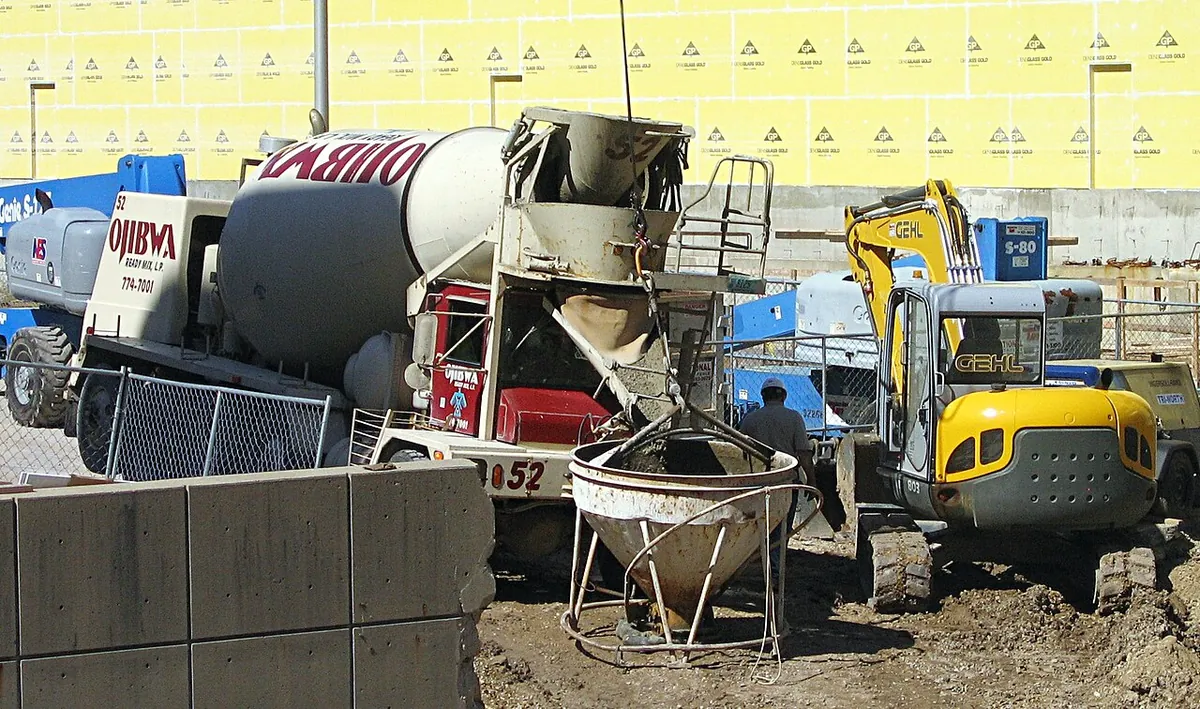
Photo: Michael Pereckas, Cement mixer, Wikimedia Commons, CC BY-SA 2.0.
Quick Answer
A concrete dissolver is a liquid that softens or breaks down hardened cement paste so concrete, mortar and grout can be scrubbed or rinsed off tools, mixers, trucks, forms, glass, brick and other surfaces. Most consumer products are either sugar- or carbohydrate-based (gentler on metal, paint and skin) or based on organic acids; traditional muriatic acid also dissolves cement but is harsh and dangerous. A concrete dissolver works best on thin layers and splatter: it eats away the cement paste a little at a time, so thick lumps need to be chipped down first and treated in several rounds. It does not make sense for removing a slab, footing or driveway; for that you need a concrete remover of the mechanical kind: hammers, breakers and saws.
Anyone who has mixed concrete knows how quickly it sets on everything it touches: the mixer drum, wheelbarrow, trowels, shovels, boots, truck chutes, house siding, windows and car paint. Once it hardens, scraping it off can scratch or damage the surface underneath. That is where a concrete dissolver comes in. These products are designed to soften the cement that holds hardened concrete together, so you can remove it without grinding or chiseling.
This guide explains how a concrete dissolver works, the different types of concrete remover products, what they can and cannot do, step-by-step instructions for tools, mixers and splatter on surfaces, safety, and alternatives.
How Does a Concrete Dissolver Work?
Concrete is made of sand and stone glued together by hardened cement paste. The paste is alkaline and is made mainly of calcium compounds. A concrete dissolver attacks that paste:
- Acids, including muriatic (hydrochloric) acid and organic acids such as glycolic acid, react with the calcium compounds and dissolve them. The sand and stone are left without glue and wash off.
- Sugar and carbohydrate-based concrete dissolvers work more gently, softening and breaking down the cement paste so it can be scraped and rinsed. Sugar is well known in the concrete trade as something that interferes with cement hydration, which is the idea behind these products.
Because the concrete dissolver works from the surface inward, it removes concrete layer by layer. That is why it is great for thin splatter and buildup, but slow on thick chunks.
Types of Concrete Remover Products
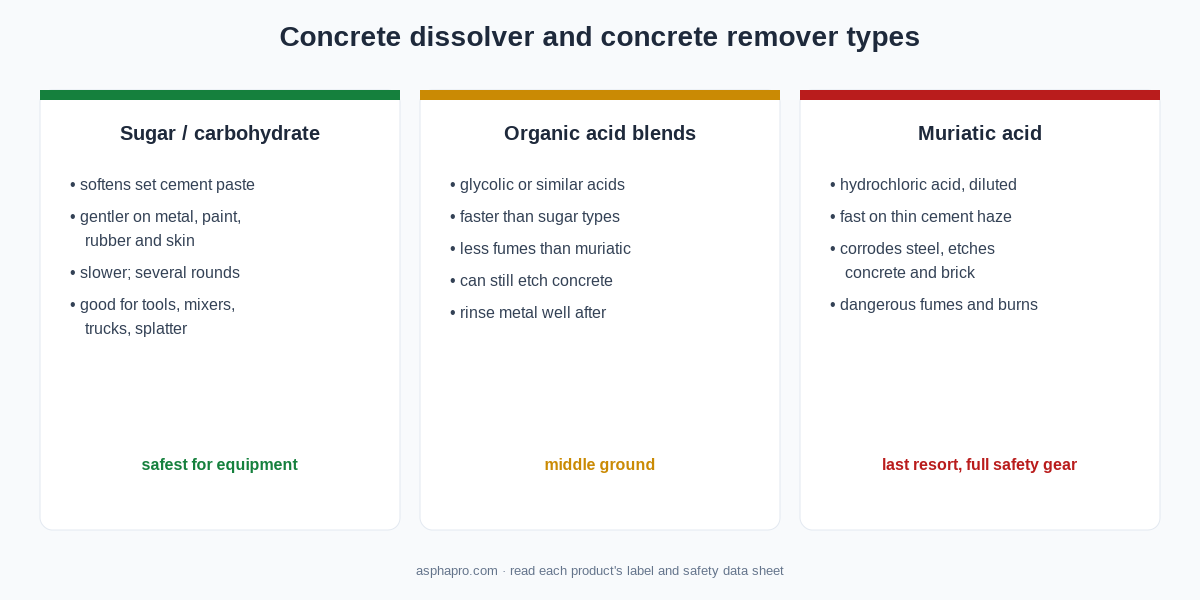
Sugar or carbohydrate-based concrete dissolver
Many consumer and contractor products marketed as concrete dissolvers use sugars or similar carbohydrates, sometimes with surfactants. They are typically biodegradable, less corrosive and safer on skin, metal, rubber, paint and plastics than acids. Some manufacturers describe their products as acid-free and non-corrosive. They are slower and may need several applications, but they are the best choice for expensive tools, mixers and vehicles.
Organic acid concrete removers
Some products use organic acids such as glycolic acid, which can dissolve hardened cement faster than sugar-based products, with less fuming and corrosion than muriatic acid. Chemical suppliers describe glycolic acid as dissolving hardened cement from drums, chutes and hoppers. They can still etch concrete, stone and some metals, so rinse thoroughly.
Muriatic acid
Diluted muriatic (hydrochloric) acid has long been used to clean cement haze off brick and to etch concrete. It dissolves cement quickly but gives off irritating fumes, causes severe burns, corrodes steel and can etch or discolor concrete, brick and stone. It is a last resort for most homeowners. If you use it, follow every safety step on the label: dilute by adding acid to water, wear acid-resistant gloves, goggles and protective clothing, ventilate, and neutralize and rinse thoroughly.
Mechanical concrete removers
When people search for a concrete remover, they sometimes mean a tool for removing concrete itself: chisels, hammer drills, demolition hammers, jackhammers, saws and grinders. For slabs, steps and footings, those are the right tools. See our guides to how to remove concrete and how to cut concrete.
What a Concrete Dissolver Can and Cannot Do
| Job | Concrete dissolver? | Notes |
|---|---|---|
| Concrete buildup in a mixer drum | Yes | Chip off thick buildup first; several rounds may be needed |
| Hardened concrete on trowels, shovels, floats | Yes | Soak tools in a bucket of concrete dissolver |
| Splatter on truck paint, chutes, equipment | Yes | Use a product rated safe for paint; test first |
| Mortar and concrete splatter on brick or stone | Often | Test first; some stones are acid-sensitive. See removing concrete from brick |
| Cement haze on windows and glass | Yes | Gentle products and plastic scrapers avoid scratches |
| Concrete stuck in a fence post hole | No | Too much volume; dig or break it out |
| Removing a slab, patio or footing | No | Use breakers, saws or a contractor |
| Thin concrete on another concrete surface | Partly | The concrete dissolver attacks both layers; grinding is usually better |
How to Use a Concrete Dissolver
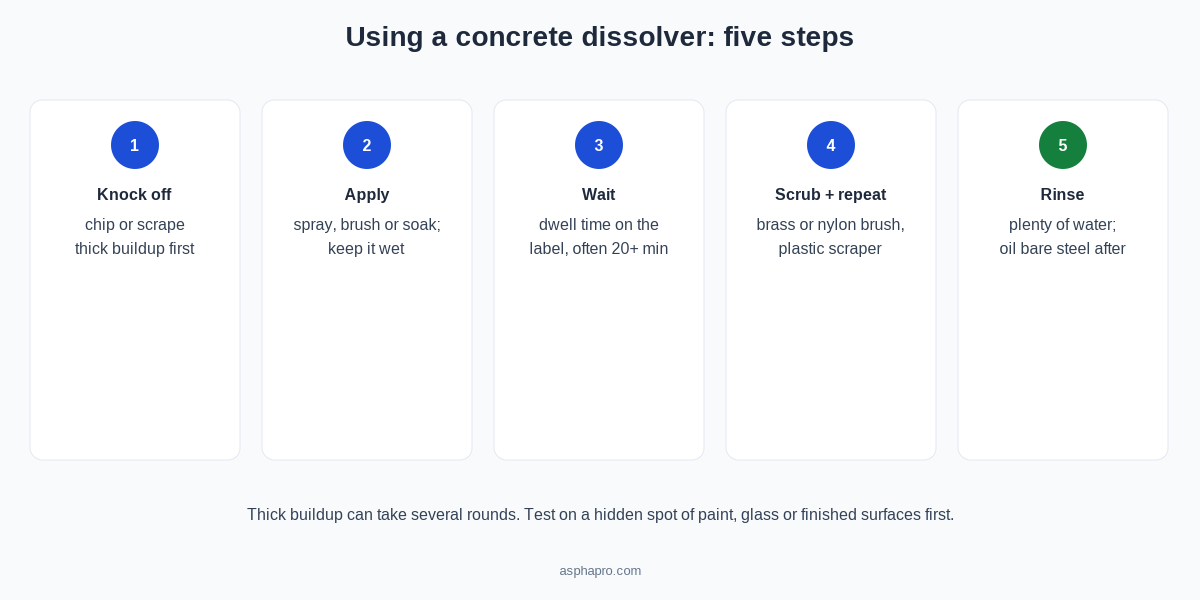
Step 1: Knock off what you can
Chip, tap or scrape off as much hardened concrete as you safely can first, using plastic or wooden scrapers on painted or delicate surfaces and a hammer and chisel on heavy steel. The less concrete left, the less concrete dissolver you need and the faster it works.
Step 2: Apply the concrete dissolver
Follow the label. Common methods are:
- Soak small tools in a bucket of concrete dissolver.
- Spray it on with a pump sprayer for mixers, trucks and splatter.
- Brush it on vertical surfaces and keep them wet.
Many products work best on dry concrete, so let wet surfaces dry first if the instructions say so.
Step 3: Give it time
Let the concrete dissolver sit for the dwell time on the label, often 20 to 45 minutes or longer, keeping the surface wet. A white or gray crust or foam often forms as it works.
Step 4: Scrub, scrape and repeat
Scrub with a stiff brush, brass brush or plastic scraper to remove the softened layer. Then reapply to the next layer. Thick buildup may take several cycles.
Step 5: Rinse thoroughly
Rinse with plenty of clean water. On steel tools, dry them and wipe with oil to prevent rust. On painted surfaces, wash with car soap afterward.
Cleaning a Concrete Mixer With Dissolver
Portable and drum mixers collect hardened concrete inside the drum, on the paddles and on the lip. To clean one:
- Unplug or shut off the mixer and lock it out.
- Knock off loose chunks with a rubber mallet or hammer, carefully, so you do not dent the drum.
- Spray or pour the concrete dissolver onto the buildup, or fill the bottom of the drum with dissolver, and let it sit.
- Rotate the drum occasionally if the label allows, so the concrete dissolver reaches all sides.
- Scrub and scrape, then repeat until clean.
- Rinse with water and let the drum dry.
The easiest way to avoid this job is to rinse the mixer with water and a few shovels of gravel between batches and at the end of each day, before concrete sets. See our guide to concrete cement mixers for care tips.
Removing Concrete Splatter From Cars, Windows and Siding
Concrete splatter on a car or truck is common near job sites and after driving through fresh road work. Act quickly:
- Fresh splatter: rinse it off with water before it sets.
- Hardened splatter: use a concrete dissolver rated safe for automotive paint, apply it to the spots, let it soften, and wipe or rinse it off. Never scrape hardened concrete off paint with metal tools.
- Windows: soften with concrete dissolver and remove with a plastic scraper or new razor blade held flat, keeping the glass wet.
- Vinyl and painted siding: test the concrete dissolver in a hidden spot first, then use a soft brush.
Safety With a Concrete Remover or Concrete Dissolver
- Read the label and the safety data sheet before use, and follow any first-aid instructions it gives.
- Wear gloves and eye protection, even with gentler products.
- With acids, add full protective gear, ventilation and a water supply for rinsing skin and eyes.
- Never mix different chemicals, and never put acids in metal containers.
- Protect plants, grass, metal fixtures and nearby surfaces from runoff, and dispose of rinse water as the product directs.
- Keep products away from children and pets, in their original labeled containers, and store them where they will not freeze.
Remember that wet concrete itself is caustic and can burn skin; wear gloves and boots while mixing and cleaning up. Keep a jug of clean water nearby for rinsing splashes from eyes or skin, whether the splash is fresh concrete or a concrete remover.
Does Vinegar Dissolve Concrete?
Household vinegar is a weak acid, usually around 5 percent acetic acid. It can slowly attack thin cement haze and very light splatter, but it is too weak to dissolve real concrete buildup in a reasonable time. Chemical suppliers note that consumer vinegar is too weak for hardened cement. It is fine for light cleaning; for real buildup, use a product made as a concrete dissolver.
Concrete Dissolver vs Other Ways to Remove Hardened Concrete
| Method | Good for | Drawbacks |
|---|---|---|
| Concrete dissolver (sugar-based) | Tools, mixers, vehicles, glass, painted surfaces | Slow on thick buildup; several rounds |
| Organic acid concrete remover | Mixers, chutes, masonry splatter | Can etch stone and concrete; rinse well |
| Muriatic acid | Cement haze on brick, etching | Dangerous fumes and burns; corrodes steel |
| Hammer and chisel | Thick lumps on steel tools and mixers | Can dent or scratch; not for paint or glass |
| Wire wheel or grinder | Steel tools, bare metal | Removes metal and coatings too |
| Pressure washer | Fresh or soft splatter | Little effect on fully hardened concrete |
| Vinegar | Very light haze | Too weak for real buildup |
For most homeowners, the best concrete remover approach combines methods: knock off what you safely can, then use a concrete dissolver to soften and clean the rest without damaging the surface underneath.
What a Concrete Dissolver Costs
Retail concrete dissolvers are usually sold in quart, gallon and larger containers, ready to use or as concentrates. Prices vary by brand and size, but a gallon of a consumer concrete remover often costs somewhere around $20 to $50 at home centers and supply stores, with contractor-size drums costing less per gallon. Concentrates that are diluted with water go further. How much you need depends on the thickness of the buildup; a few small tools may take a quart, while a heavily caked mixer drum can take a gallon or more across several applications. Compared with replacing a $100 to $500 tool or a damaged paint job, a concrete dissolver is usually worth it.
Using a Concrete Dissolver on Brick, Stone and Pavers
Mortar smears and concrete splash on brick, stone and pavers are common after masonry and patio work. Concrete dissolvers can help, but masonry needs care:
- Test first on a hidden area, especially on colored pavers, limestone, marble and other calcium-based stones, which acids can etch or discolor.
- Pre-wet the masonry if the product calls for it, so the concrete dissolver stays on the surface instead of soaking deep into the brick.
- Use the mildest product that works, and soft brushes rather than wire brushes on soft brick.
- Rinse well afterward to remove all residue.
Our guide to getting concrete splash off bricks covers masonry cleaning in more detail, and the National Park Service's masonry cleaning brief recommends always starting with the gentlest method.
Concrete Remover for Contractors: Trucks, Chutes and Pumps
Ready-mix trucks, pump trucks, buggies and finishing tools collect concrete every day. Contractors use concrete dissolvers to keep chutes, hoppers, fins, boom pipes and truck bodies clean, often spraying them at the end of each day. Regular use prevents heavy buildup, which adds weight to trucks and can affect how the drum mixes and discharges concrete. Many contractor-grade products are designed to be safe on truck paint and aluminum, and some are concentrated for dilution in large sprayers. As with any chemical, follow the label and local rules on washout and runoff; concrete washout water is strongly alkaline and should not go into storm drains.
Concrete Dissolver on Forms and Molds
Reusable steel and plastic forms, stepping stone molds and planter molds gradually collect a film of cement. A concrete dissolver can clean them without scratching the surface that gives your next casting its finish. Clean forms right after stripping, while the residue is thin, and apply a release agent before the next pour so concrete does not stick in the first place. Our guides to making concrete stepping stones and building concrete forms cover release agents and form care.
Removing Mortar and Thinset From Tile and Floors
Cement-based grout haze, thinset smears and mortar drips on tile are another common job for a concrete remover. Grout haze removers are milder products made specifically for tile. For thicker thinset on the back or edges of tiles being reused, soaking in a concrete dissolver can soften it. On concrete floors, scraping and grinding usually remove old thinset faster than any liquid, because the concrete dissolver would attack the floor too.
Disposal and the Environment
Even "eco-friendly" concrete dissolvers carry dissolved cement, which is alkaline, and sometimes acids or surfactants. Keep rinse water out of storm drains, streams and gardens. Many products recommend rinsing onto gravel or soil away from plants, or collecting the runoff. Follow local rules for washout water. Never pour leftover acids down drains without neutralizing them as the label directs.
How to Avoid Needing a Concrete Dissolver
- Rinse as you go. Wash tools, mixers and wheelbarrows with water before concrete sets, ideally between batches.
- Use release agents on forms, molds and some tools.
- Protect nearby surfaces with plastic sheeting and painter's tape on windows, siding and cars.
- Keep a bucket of water and a brush on site for quick cleanup of splatter.
- Park vehicles away from mixing and pouring areas, and upwind of any spraying or cutting.
- Clean at the end of every day on multi-day jobs; one day of buildup is far easier to remove than a week of layers.
- Store tools clean and dry so the next job starts with a smooth surface that concrete does not grab as easily.
Homemade Concrete Dissolver?
Some people try sugar water, cola or vinegar as a homemade concrete dissolver. Sugar does interfere with fresh cement setting, which is why it has long been used to delay hardening, and sugar water can soften very thin fresh residue, but it is unreliable on fully hardened concrete. Cola and vinegar are weak acids that only work on light haze. Homemade remedies may save a few dollars on a small job, but commercial concrete dissolvers are formulated to work faster and more predictably.
Choosing a Concrete Dissolver: What to Look For
- Surface safety: look for labels that say safe on metal, paint, glass, rubber and plastic if you are cleaning vehicles or equipment.
- Chemistry: sugar-based for gentle cleaning; organic acid blends for faster work on durable surfaces.
- Form: ready-to-use for small jobs; concentrate for big jobs and contractors.
- Gel or liquid: gels cling to vertical surfaces; liquids are better for soaking and spraying.
- Safety data: check the safety data sheet for protective equipment and disposal guidance.
Cleaning Hand Tools With a Concrete Dissolver
Trowels, floats, edgers, groovers, shovels and rakes are the tools most often ruined by hardened concrete. To bring them back:
- Tap off loose concrete over a tarp, and scrape the flat faces with a plastic scraper.
- Fill a plastic bucket or tub with enough concrete dissolver to cover the crusted parts.
- Soak the tools for the time on the label, often 20 to 45 minutes.
- Scrub with a stiff nylon or brass brush; brass is softer than steel and less likely to scratch polished trowels.
- Repeat soaking and scrubbing until the steel is clean.
- Rinse, dry completely, and wipe metal parts with a light oil to stop rust.
Wooden handles and magnesium floats can be damaged by long soaking in some products, so check the label and keep handles out of the liquid where possible.
Concrete on Boots, Clothes and Skin
Concrete on boots and work clothes is best washed off before it hardens. For hardened concrete on rubber boots, a concrete dissolver that is safe for rubber can help, followed by a scrub and rinse. On fabric, hardened concrete is hard to remove completely; soaking and brushing can loosen it, but stained work clothes are common. On skin, never use a concrete dissolver or acid. Wet concrete is caustic and can cause chemical burns, so wash it off skin right away with clean water and use gloves next time. See our guide to can concrete burn for more on concrete burns.
Concrete Splatter on an Existing Driveway or Patio
When new concrete is poured next to an old driveway, patio or walk, splatter and cement haze often land on the old surface. Because a concrete dissolver attacks cement paste, it will also attack the surface of the old concrete if left too long, which can leave light or etched spots. Better options are:
- Rinse splatter off immediately during the pour.
- Scrape hardened spots with a plastic scraper, then pressure-wash.
- For a thin haze, scrub with water and a stiff brush, or use a mild cleaner made for concrete.
- For thick drips, chip them off carefully with a chisel held low, then clean the area.
If you do use a concrete dissolver on concrete, test a small spot and rinse quickly. Our guide to how to clean concrete has gentler cleaning methods.
Common Mistakes With Concrete Removers
- Expecting it to work instantly on thick lumps. A concrete dissolver works layer by layer; chip first.
- Letting it dry out. Most products stop working when they dry; keep the surface wet during the dwell time.
- Using acid on painted or polished surfaces. It can dull paint, etch metal and damage glass coatings.
- Skipping the test spot. Colored concrete, stone, pavers and coated surfaces can react differently.
- Not rinsing well. Residue can keep working or leave a film.
- Mixing chemicals. Never combine different cleaners or acids.
A Worked Example: Rescuing a Caked Wheelbarrow and Mixer
After a weekend of pouring fence post footings, a homeowner finds a wheelbarrow with a 1/4-inch crust of concrete in the tub and a portable mixer with hardened buildup on the paddles and drum lip.
- Tap the outside of the wheelbarrow tub with a rubber mallet to crack the crust, and pry up loose pieces with a plastic putty knife.
- Knock thick buildup off the mixer paddles with a hammer, gently, holding the paddle steady.
- Spray concrete dissolver on the remaining crust in both, keeping it wet for the dwell time.
- Scrub with a brass brush and scrape the softened layer away.
- Repeat two or three times until the surfaces are clean.
- Rinse everything well and let it dry; oil any bare steel.
A gallon of concrete dissolver and an afternoon saves buying a new wheelbarrow and mixer, and rinsing them right after use next time avoids the whole job.
Concrete Remover vs Concrete Dissolver: Same Thing?
On store shelves, concrete remover and concrete dissolver usually mean the same kind of product: a liquid that breaks down hardened cement so it can be rinsed or scrubbed away. Some brands call it a concrete remover, others a concrete dissolver, and some say "concrete and mortar dissolver." The chemistry inside varies more than the name: some are sugar-based, some use organic acids, and some are acid blends. Read the label for what it is safe on and how long it needs to work. The phrase concrete remover can also mean equipment for removing concrete slabs, so if you are searching for a concrete remover to take out a patio or sidewalk, you want breakers and saws, not a liquid.
Frequently Asked Questions
Does concrete dissolver really work?
Yes, on thin layers and splatter. It softens cement paste so concrete can be scrubbed off tools, mixers and surfaces. Thick chunks need chipping first and several applications.
Will concrete dissolver damage metal or paint?
Sugar-based products are generally designed to be safe on metal, rubber and paint, while acids can corrode steel and etch finishes. Check the label and test first.
Can concrete remover dissolve a concrete slab?
No. Dissolvers work on thin layers. Slabs, steps and footings are removed mechanically with breakers, saws and hammers.
How long does a concrete dissolver take?
Often 20 to 45 minutes or more per application, depending on the product and thickness, with several rounds for heavy buildup.
Is muriatic acid a good concrete remover?
It works fast on cement but is dangerous, corrosive and can damage surfaces. Use safer concrete dissolvers first and acid only as a last resort with full safety gear.
Sources
- Sakrete (Sika): Concrete and Mortar Dissolver product data sheet
- MudMixer: How to Dissolve Hardened Concrete
- ChemPoint: Glycolic Acid for Concrete Cleaners and Removers
- National Park Service: Preservation Brief 1, Cleaning Historic Masonry
Related Guides
- How to make concrete — mixing in a bucket, wheelbarrow or mixer
- Concrete washout — handling rinse water from trucks and tools
- Sugar in concrete — how sugar delays or stops setting