
Concrete Washout: What It Is, the Rules, and How to Set Up a Washout Area
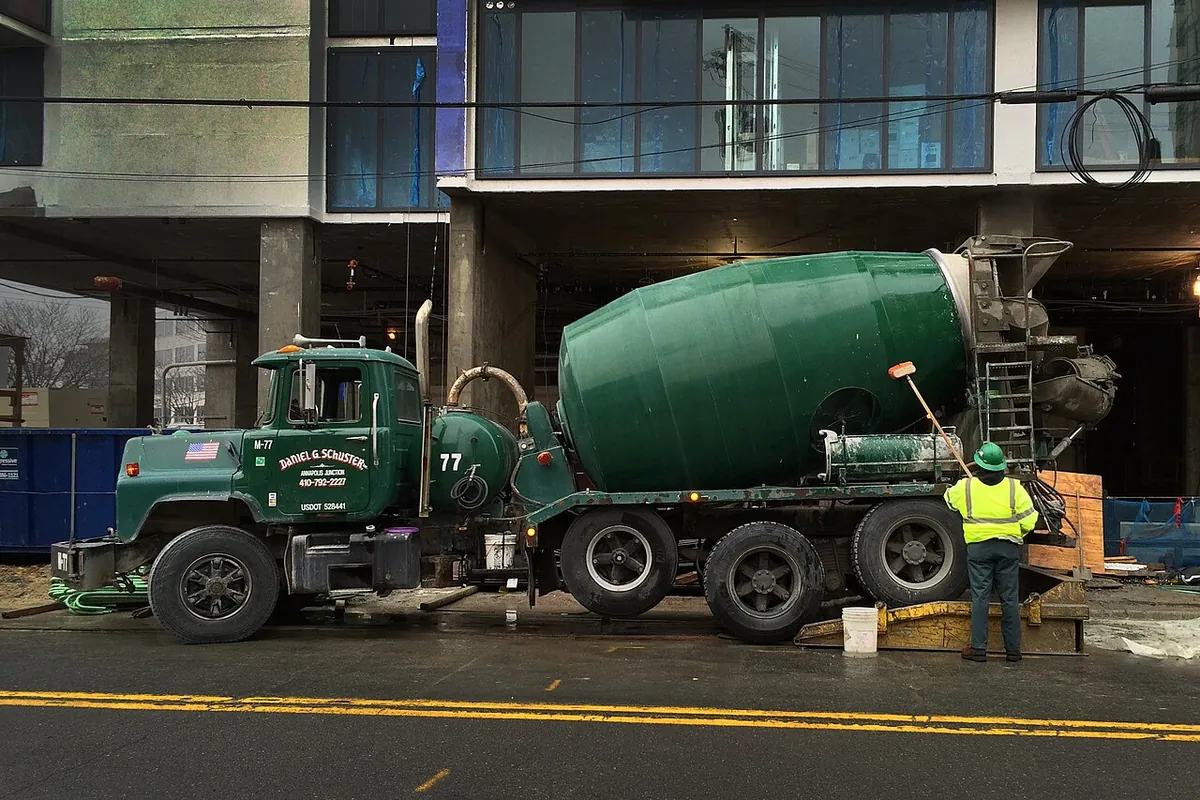
Photo: woodleywonderworks, Wikimedia Commons, CC BY 2.0
Quick Answer
What is concrete washout? It is the leftover concrete, slurry and water produced when ready-mix truck chutes, pump hoses, mixers, wheelbarrows and tools are rinsed after a pour, and also the area or container where that rinsing is done. Concrete washout water is strongly alkaline, typically around pH 12, and carries cement fines and metals, so it is toxic to fish and plants and can clog storm drains. On construction sites covered by stormwater permits, it must go into a lined pit or leak-proof washout container set well away from drains and water, often at least 50 feet. The water evaporates or is pumped out for treatment, and the hardened concrete is broken up and recycled.
After every concrete pour there is cleanup. The truck driver has to rinse the chute before driving away, the pump operator has to flush the hopper and hose, and the crew has to wash wheelbarrows, rakes, screeds and floats. That rinse water, the concrete washout, is not clean water. It is a gray slurry of cement, sand and fine particles with a very high pH, and where it ends up matters. Dumped on the ground or into a storm drain, concrete washout can harm streams, kill plants and lead to fines. Handled properly, it is easy and cheap to manage.
This guide explains what concrete washout is, why regulators care about it, the rules that apply on construction sites, how to build a concrete washout pit, the prefab washout containers and bags you can rent or buy, how to size and maintain a washout area, and how small home projects should handle rinse water.
What Is Concrete Washout?
The term has two related meanings. The first is the material itself: the mixture of water, unused concrete, cement paste and fine aggregate that comes off equipment when it is rinsed. The second is the place where rinsing is done: a concrete washout area, pit, bin or container that captures the material so it does not reach soil, drains or water.
Concrete washout comes from several sources on a typical job:
- Ready-mix truck chutes: the driver rinses the chute and hopper after unloading so concrete does not harden on them.
- Concrete pumps: the hopper, boom line and hoses are flushed at the end of the pour.
- Small mixers: drum mixers and mortar mixers are rinsed after each batch or at the end of the day.
- Hand tools: wheelbarrows, shovels, rakes, screeds, floats, trowels and edgers.
- Leftover concrete: small amounts left in a truck or wheelbarrow that are not used in the pour.
Most drivers wash out the drum itself back at the batch plant, where the water is recycled, so on site the concrete washout is usually limited to chutes, pumps and tools. Even so, a single truck chute rinse can produce several to tens of gallons of slurry, and a busy site produces much more.
Why Concrete Washout Is Harmful
Concrete washout water is caustic. Fresh cement reacts with water to form calcium hydroxide, which pushes the pH to around 12 or higher, similar to household ammonia or stronger. That is high enough to burn skin and eyes and to kill fish, insects and plants in a stream. The U.S. Environmental Protection Agency notes that washout water can also carry metals such as chromium and that the fine particles cloud water and smother stream beds.
In storm drains, concrete washout slurry settles and hardens, narrowing pipes and catch basins. Storm drains in most cities run straight to creeks and rivers without treatment, so anything poured into them goes directly into the water. On soil, concrete washout raises the pH, kills vegetation and can seep toward groundwater. That is why the rules focus on keeping concrete washout contained.
Concrete Washout Rules
In the United States, construction sites that disturb one acre or more, or that are part of a larger development of that size, need coverage under a stormwater permit under the Clean Water Act. The EPA Construction General Permit and most state permits require that washout from concrete be directed into a leak-proof container or a leak-proof, lined pit designed so that no overflows can occur, and that the concrete washout facility be located away from storm drains, open ditches and water bodies. The permit's stormwater pollution prevention plan (SWPPP) must show where the concrete washout area is and how it is maintained.
Many cities also ban discharging concrete washout to streets and storm drains on any job, whatever its size, through local stormwater ordinances. Fines for a single illegal discharge can be significant. Ready-mix suppliers also have their own rules: many drivers will not rinse out unless the site has a designated concrete washout area.
Rules outside the United States follow the same idea. Environmental agencies in Canada, the United Kingdom, Australia and elsewhere publish guidance that treats concrete washout as a pollutant, requires it to be contained in an impermeable area or container away from drains and watercourses, and makes the site operator responsible for its disposal. Some countries require washwater to be collected and treated before any discharge to sewer, and only with consent from the sewer operator. If you work across borders, read the local guidance, but the practical setup of a concrete washout, a lined and signed area that is kept from overflowing, is the same nearly everywhere.
Who is responsible? On permitted sites, the permit holder, usually the general contractor or developer, is responsible for the concrete washout even if a subcontractor or ready-mix driver causes a spill. Contracts often pass the duty to the concrete subcontractor, so agree before the job who builds, maintains and empties the concrete washout, and who pays for it.
How to Build a Concrete Washout Pit
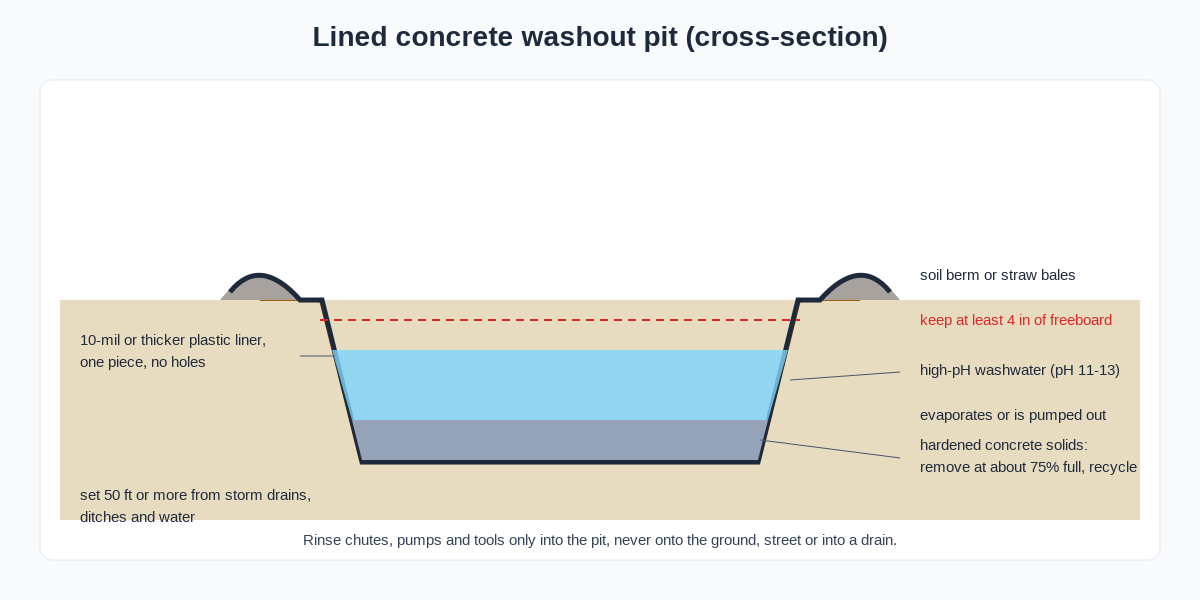
A lined pit is the most common site-built concrete washout. Typical guidance from the EPA and state transportation departments looks like this:
- Location: put the concrete washout at least 50 feet from storm drain inlets, ditches, streams and wetlands, on level ground, and easy for trucks to reach.
- Size: large enough for all the concrete washout expected between cleanouts, plus rainwater. A common size for a few trucks a day is about 10 by 10 feet and 2 to 3 feet deep.
- Construction: dig a pit, or build an above-grade pit with straw bales, sandbags or a wood frame.
- Liner: one piece of 10-mil or thicker plastic sheeting with no holes or seams, extending over the edges and held down with sandbags or stakes.
- Signage: a sign marking the concrete washout so drivers find it.
Before the first truck arrives, inspect the liner for tears and make sure the pit is not sitting where runoff from the rest of the site will flow into it. A concrete washout pit that fills with rainwater has less room for concrete washout and is more likely to overflow. Some crews cover the pit with a tarp when rain is forecast and no pours are planned.
Using and Maintaining a Concrete Washout Pit
A concrete washout area only works if it is used and kept in shape. Tell every ready-mix driver and pump operator where it is before they arrive, and have a crew member direct trucks to it. Check the pit daily during pours and after heavy rain. Most guidance says to keep at least 4 inches of freeboard, the space between the liquid level and the top of the liner, and to clean the pit out when it reaches about 75 percent of its capacity. Replace a torn liner right away; a torn liner turns a concrete washout pit into an unlined hole, which most permits do not allow.
When the pit needs cleaning, let the water evaporate if the weather allows, or pump it out into a container for proper disposal or treatment. Then let the solids harden, break them up and haul them away. Clean hardened concrete washout is just concrete, so many recyclers take it with other concrete rubble to make crushed concrete. Put a new liner in before the next pour.
Concrete Washout Containers and Bags
On many jobs a prefabricated concrete washout container is easier than digging a pit. Several kinds are available to rent or buy.
Roll-off washout containers: watertight steel boxes, often 10 to 20 cubic yards, delivered by a roll-off truck and placed on site. Trucks discharge concrete washout directly into them, and the service company hauls the whole container away when full, recycles the solids and handles the water. This is the standard choice on large commercial sites.
Portable concrete washout bins and pans: smaller plastic or steel pans and bins for jobs with only a few trucks, or for pump hoppers and tools. Some have a ramp so a truck chute can reach the bin directly.
Lined concrete washout frame kits: collapsible frames with a heavy-duty liner, set up on the ground like an above-grade pit and removed after the job.
Chute concrete washout bags: heavy bags that hang on the end of a ready-mix truck's chute. The driver rinses the chute into the bag, which filters out solids and lets water drain off, or holds the whole slurry; the bag is then tied off and disposed of. These work well for residential pours where there is no space for a pit.
Truck-mounted washout systems: some ready-mix and pump trucks carry systems that collect the chute rinse and pump it back into the drum, so the driver takes the concrete washout back to the plant. Ask your supplier whether their trucks have them; it can solve the problem on tight urban sites.
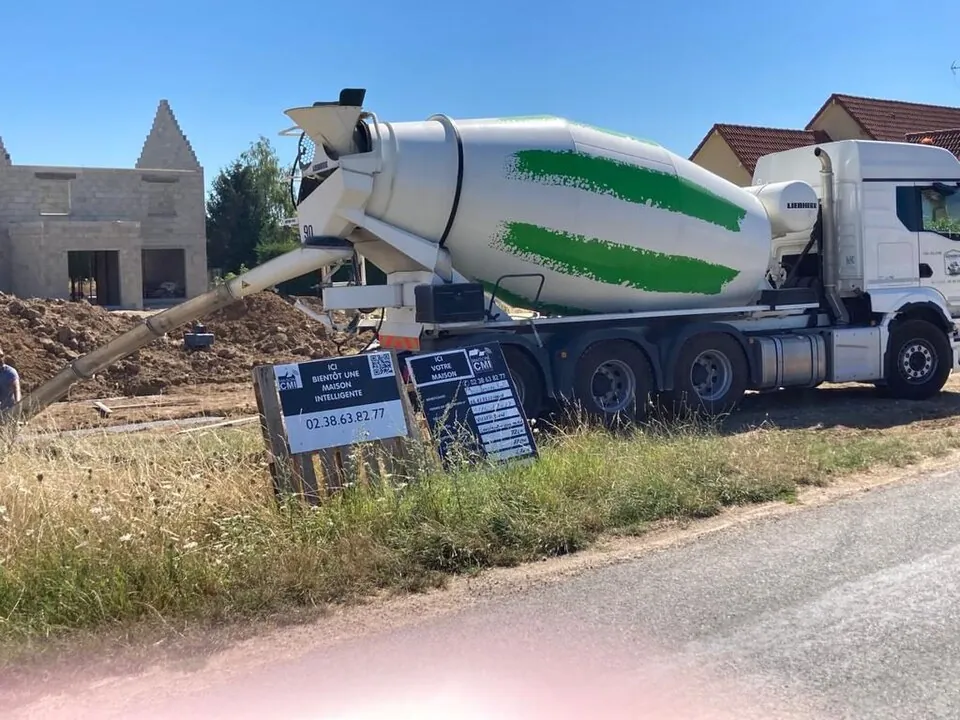
Photo: MAISON CMI, Wikimedia Commons, CC BY-SA 4.0
How Much Concrete Washout Capacity Do You Need?
The size of the concrete washout area depends on how many trucks and pumps you expect between cleanouts. As a rough planning figure, a chute rinse produces something like 7 to 10 gallons of slurry per truck if the driver is careful, and much more if not; a pump flush produces more, often 50 gallons or more. Add space for rain if the area is uncovered. For example, a day with 10 trucks and one pump might produce 100 to 150 gallons from chutes and 50 to 100 gallons from the pump, or about 30 to 35 cubic feet in total, plus rain. A pit of 10 by 10 feet with 6 inches of usable depth holds 50 cubic feet, so it would handle that day with room to spare, but it would need to be cleaned out after a few such days.
Concrete washout container rental companies size their units from the same numbers, so tell them how many yards of concrete and how many trucks you expect. See how many yards of concrete are in a truck to estimate truck counts from your pour volume.
What Concrete Washout Costs
A site-built concrete washout pit costs little in materials: plastic sheeting, sandbags or straw bales, stakes and a sign, plus the labor and machine time to dig it and later clean it out. On a small job this may be a few hundred dollars in total. Prefab services cost more but include hauling and disposal. Prices vary widely by area, but portable washout bins and roll-off containers are typically priced per delivery and per haul, with a monthly rental, and a commercial site may spend from several hundred to a few thousand dollars over a project. Chute concrete washout bags are sold individually or in packs at a modest price each. Compare those costs with the fines and cleanup bills that can follow an illegal discharge; the concrete washout is almost always the cheaper option.
Disposing of Concrete Washout
Concrete washout has two parts, and each is handled differently.
The water: for concrete washout water in dry weather, leaving it to evaporate in the lined pit is the simplest method. Otherwise it can be pumped out and hauled to a facility that accepts it, reused in some cases for more washing, or treated on site to lower the pH and settle out solids before discharge, where local rules and permits allow it. Treatment usually means settling tanks plus pH adjustment with carbon dioxide or a weak acid, and it should only be done under the permit and with testing. Never pump untreated concrete washout water to a storm drain, sanitary sewer or the ground unless your local authority has specifically approved it.
The solids: once hardened, the concrete washout solids are ordinary concrete waste. Break them into pieces, then recycle them with other concrete or dispose of them as construction debris. Some sites crush them for use as fill. See concrete removal cost for disposal and recycling prices.
Concrete Washout and Pump Trucks
Concrete pumps create the biggest concrete washout load on most jobs. At the end of a pour, the operator empties the hopper, then pushes a cleanout ball or sponge through the boom line with water or air to clear the concrete from the pipe. What comes out is a large volume of concrete and slurry at once, often more than a chute rinse by several times. Plan the concrete washout location so the pump can reach it, or so the operator can discharge into a dedicated bin set next to the pump. Many pumping companies bring their own washout bin or bag for this reason; ask when you book the pump so the concrete washout plan matches the equipment.
Leftover concrete in the hopper or line should go somewhere useful if possible, such as a form for a small pad, blocks, or a spot that needs fill, rather than into the concrete washout. Every yard of concrete that is used instead of washed out saves disposal cost and space in the pit.
A Simple Concrete Washout Plan for Pour Day
For a smooth pour, set up the concrete washout the day before. Pick the spot, dig or set up the pit or container, line it, mark it with a sign, and make sure there is a clear path for trucks. When you order concrete, tell the dispatcher where the concrete washout is and whether drivers should use it or bring a chute bag. On the day, assign one person to direct trucks and pumps to the concrete washout after each discharge and to watch the level. At the end of the day, check for spills around the area, scrape up any splashed concrete before it hardens, and cover the pit if rain is coming.
Write down what you did. On permitted sites, inspectors and the stormwater plan expect records of inspections of the concrete washout and of when it was cleaned out. Even on small jobs, a photo of the setup is useful if a neighbor or city inspector asks how washwater was handled.
Concrete Washout in Wet and Cold Weather
Rain is the main threat to a concrete washout pit. An uncovered pit collects rain from its own area and any runoff that reaches it, which fills it faster and can cause overflows of high-pH water. Size the concrete washout with rainfall in mind, keep it on slightly raised ground or behind a berm so site runoff flows around it, and cover it between pours. If heavy rain is forecast and the pit is close to full, pump it down first.
In freezing weather, the water in a concrete washout can freeze and crack the liner as it expands, and evaporation slows to almost nothing. Plan to pump the water out more often in winter, check the liner after freeze-thaw cycles, and keep the washout away from areas where trucks will drive over ice. For more on winter work, see pouring concrete in cold weather.
Concrete Washout and Decorative Concrete
Decorative work adds its own concrete washout. Exposed aggregate finishes involve washing the surface paste away with water and brushes, which produces a slurry similar to chute washout. Stamped and colored concrete adds release agents and color hardeners to the rinse water. Treat all of it as concrete washout: contain it with plastic or a berm around the work area, vacuum or squeegee the slurry into a container, and keep it out of gutters and drains. The same goes for the slurry from saw cutting, grinding and polishing, which is fine cement and aggregate in water; see how to cut concrete for slurry control when sawing.
What Inspectors Look For
When a stormwater inspector visits a site, the concrete washout is one of the first things they check. They look for a washout that exists and is clearly signed, that sits away from drains and water, that has an intact liner or a sound container, that has not overflowed, and that is not over 75 percent full. They also look for signs of washout anywhere else: gray stains on the ground, hardened concrete around storm inlets, or slurry trails along the curb. Each of these can be written up as a violation. A tidy, well-kept concrete washout area is one of the easiest items on the checklist to get right.
Concrete Washout on Small and Home Projects
Homeowners and small contractors often pour a patio, a set of steps or a few fence posts with a short load from a truck, or with bags mixed in a wheelbarrow. The same idea applies on a smaller scale. When a ready-mix truck is coming, ask the supplier how the driver handles concrete washout; many carry a chute bag or a small bin, and some will rinse into a pit you prepare. A shallow hole lined with heavy plastic, or a large plastic tub, works for a single truck.
For bagged concrete, mix close to the pour and keep cleanup water to a minimum. Scrape as much concrete as possible out of the wheelbarrow and mixer before rinsing, and use any small leftover to fill a stepping-stone mold or a low spot rather than washing it out. Rinse tools and catch the concrete washout in a bucket or a lined hole in an out-of-the-way spot on your property, never on the driveway where it runs to the street, and never into a drain. Let the water evaporate or soak away slowly, away from gardens and wells, and throw out or recycle the hardened residue. For more on mixing small batches, see how to mix concrete and concrete cement mixers.
Concrete washout water is also hard on skin and eyes. Wear gloves and eye protection when rinsing equipment, and wash any splashes off skin quickly. The OSHA silica rules also apply when the hardened residue is broken up dry, so wet it down or wear a respirator.
Other Meanings of Washout in Concrete Work
You may also hear "washout" used in two other ways. In some regions, an exposed aggregate finish is called a washout or wash-off finish, because the surface paste is washed away to reveal the stones; see types of concrete finishes. And a washout can mean erosion, as when water washes soil out from under a slab, a sidewalk or a culvert, leaving a void that leads to cracking; see why concrete cracks. In stormwater and site work, though, concrete washout almost always means the rinse slurry and the area that contains it.
Common Concrete Washout Mistakes
The most frequent mistakes are not having a washout area at all when the first truck arrives, putting it too close to a storm drain or ditch, using thin or torn plastic, letting the pit overflow, and allowing drivers to rinse wherever is convenient. Others include pouring leftover concrete onto the ground at the edge of the site, washing tools in the street, and pumping washout water to a drain. A clearly marked, well-placed concrete washout area that is checked every day avoids all of these, and inspectors look for exactly that.
Frequently Asked Questions
What is concrete washout?
It is the slurry of water, cement and fines from rinsing concrete trucks, pumps and tools, and the lined pit or container where that rinsing is done.
Can I wash out concrete on the ground?
Not on regulated construction sites, and many cities ban it everywhere. Use a lined pit, container or bag set away from drains and water.
How far from a storm drain should a concrete washout be?
Common guidance is at least 50 feet from storm drain inlets, ditches and water bodies. Check your permit and local rules.
What happens to the water in a concrete washout?
It evaporates, or it is pumped out and taken to a facility or treated on site under permit. The hardened solids are broken up and recycled.
Sources
- U.S. EPA: National menu of stormwater BMPs, concrete washout fact sheet
- U.S. EPA: 2022 Construction General Permit
- Caltrans: construction site stormwater BMPs, concrete waste management
- OSHA: crystalline silica hazards
Related Guides
- Concrete tools — pouring and finishing tools in order of use
- Concrete pump truck cost — boom and line pump prices
- Concrete batching plant — how ready-mix is made
- Concrete barriers — jersey barriers, bollards and interlocking blocks
- Concrete culvert — concrete pipe and box culverts
- Concrete catch basin — storm inlets, sizes and install
- Concrete cloth — rolled concrete for ditches and slopes
- Concrete slurry — bonding slurry, flowable fill and cutting slurry