
Does Sugar Stop Concrete Setting? What Sugar in Concrete Really Does
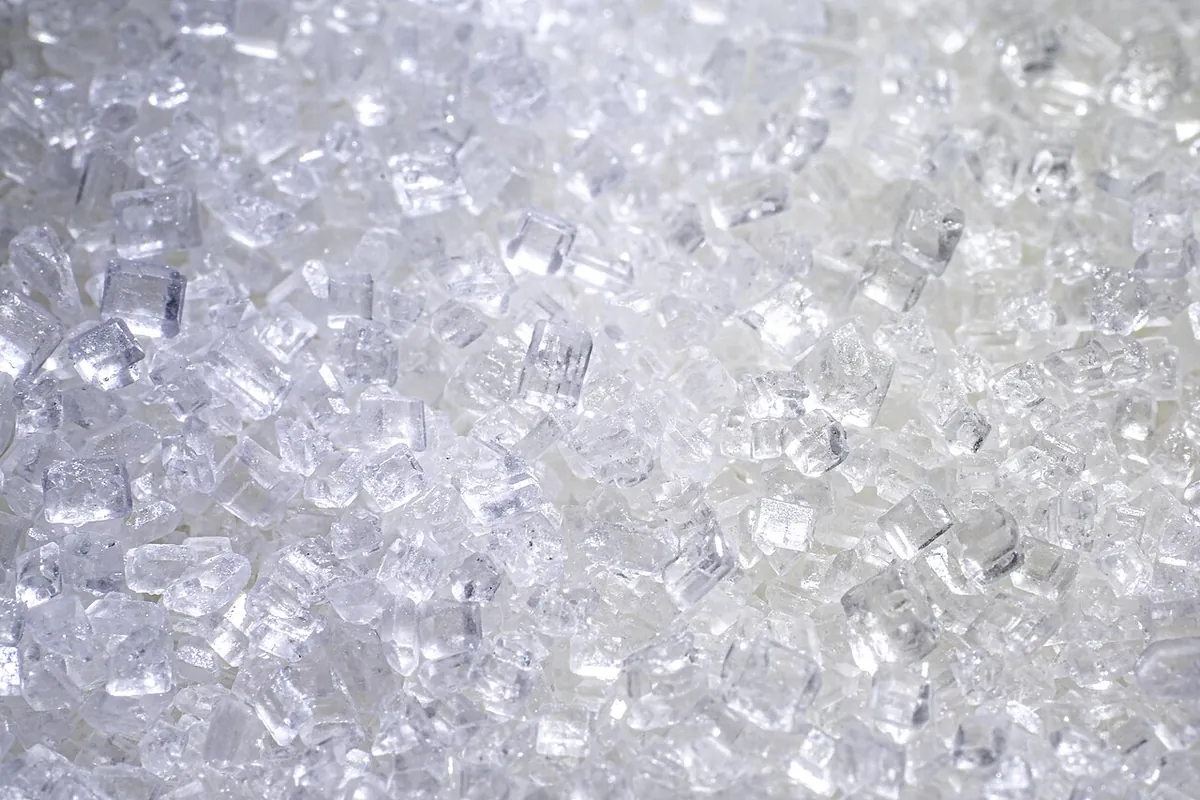
Photo: Tobias Erbsland, Wikimedia Commons, CC BY-SA 4.0
Quick Answer
Yes. Sugar in concrete is one of the strongest set retarders known. A very small amount, around 0.05 percent of the cement weight (about a spoonful or two per bag of cement), can delay setting by several hours, and larger amounts, a few tenths of a percent, can keep concrete from setting properly for days and permanently reduce its strength. Sugar works by coating cement particles and blocking the hydration reactions. That is why contaminated aggregates or bags can ruin a pour, why some truck drivers keep a bag of sugar for breakdowns, and why sugar on concrete surfaces is an old trick for exposed aggregate finishes. Sugar and concrete that has already cured do not react quickly, but sugar solutions slowly attack concrete over time.
The idea of sugar in concrete sounds like a myth, but it is well known to concrete technologists. A spoonful of table sugar can keep a batch of mortar soft overnight, and pours have failed because of sugar contamination in bags, water or aggregate. At the same time, the chemistry of sugar and cement is the basis of many commercial set retarders, so the effect is also put to good use.
This guide explains why sugar in concrete delays setting, how much it takes, what happens to strength, the real-world situations where sugar matters, how to use sugar on concrete for an exposed aggregate finish, what to do if sugar gets into a mix, and how sugar spills affect hardened slabs.
Why Sugar in Concrete Stops It Setting
Concrete hardens through hydration: the minerals in portland cement react with water to form calcium silicate hydrate, the glue that holds concrete together, along with calcium hydroxide and other compounds. In the first hours, the reactions slow down in what is called the dormant period, then speed up as the hydrates start to grow, which is when the concrete sets.
With sugar in concrete, the molecules, especially sucrose (table sugar), interfere with this process. They adsorb onto the surfaces of cement grains and onto the first tiny hydration products, and they bind with calcium in the mix water. This blocks the sites where new crystals would grow, so the dormant period stretches out. Instead of setting in a few hours, sugar and concrete together can stay plastic far longer. The effect depends on the type of sugar: sucrose and some other sugars are very powerful retarders, while glucose and others are weaker. See what concrete is made of for more on cement chemistry.
How Much Sugar Does It Take?
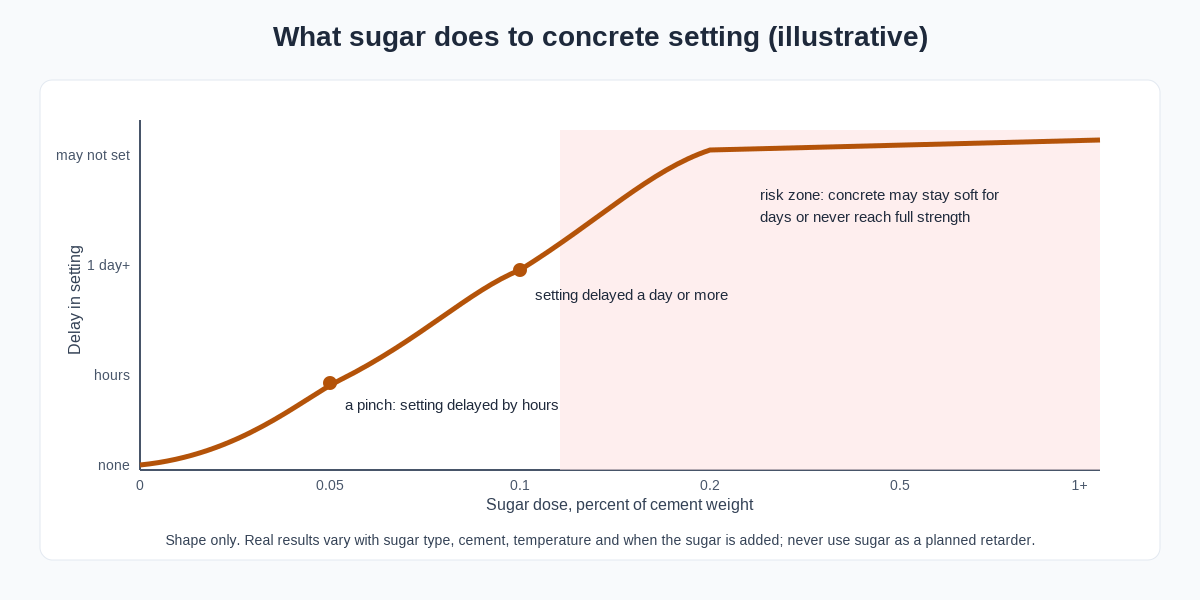
Very little sugar in concrete is needed. Concrete textbooks, including A.M. Neville's Properties of Concrete, describe sugar as an effective retarder at dosages of a few hundredths of a percent of the cement weight. Roughly:
- About 0.03 to 0.05 percent of cement weight: setting delayed by a few hours. For a 94 pound bag of portland cement, 0.05 percent is under an ounce, a couple of tablespoons.
- About 0.1 percent: setting can be delayed by a day or more, especially in cool weather.
- A few tenths of a percent and above: concrete may stay soft for days, set erratically, and end up with much lower strength. At these levels sugar in concrete is a serious contamination problem.
Results for sugar in concrete vary a lot with the type of sugar, the cement chemistry, temperature, and when the sugar is added. Sugar in concrete added a few minutes after mixing, once the first reactions have begun, often has a different effect than sugar mixed into the water at the start. That is one reason sugar is not used directly as a planned retarder on real jobs: the effect is too strong and too unpredictable.
What Sugar Does to Concrete Strength
A small dose of sugar in concrete that only delays setting by a few hours does not necessarily ruin the concrete. Retarded concrete often gains strength more slowly at first, but its later strength can be similar to, or even a little higher than, untreated concrete, because slower early hydration can produce a finer, denser structure. That is the same reason commercial retarders are allowed in structural concrete.
The problem starts at higher doses. When sugar and concrete are mixed in amounts that keep the paste from setting for a day or more, the hydration process is disturbed so much that the concrete may set unevenly, crumble at the surface, stay weak for weeks, and never reach its design strength. Concrete in that state usually has to be removed and replaced. Because the line between a useful delay and a ruined pour is so thin, accidental sugar in concrete is treated as contamination, not as a free retarder.
Where Sugar Gets Into Concrete by Accident
Real cases of sugar in concrete usually come from contamination rather than anyone adding it on purpose. Common sources of sugar in concrete include:
- Reused bags and containers: sacks, drums or totes that once held sugar, molasses, syrup or soft drink concentrate, reused to carry cement, sand or water.
- Contaminated water: mixing water from a tank, hose or pond near food processing, or water that has run through sugar-cane fields or a sugar mill site.
- Contaminated aggregate: sand or gravel stored near molasses, animal feed or food waste, or loaded with equipment that handled those materials.
- Food and drink on site: a dropped soft drink or sweet tea in a small batch of mortar or patching mix can be enough to slow it noticeably.
- Organic matter: some natural organic compounds in poorly washed sand behave like sugars and also retard setting, which is why aggregate standards limit organic impurities.
If a batch with possible sugar in concrete or mortar stays soft much longer than expected in normal weather, contamination by sugar or organic matter is one of the first things to check. See concrete sand and concrete aggregate for how sand and stone are tested for impurities.
Why Some Truck Drivers Carry Sugar
There is a long-standing practice in the ready-mix trade: if a truck breaks down or gets stuck with a full drum, the concrete can harden inside within a few hours, and chipping out a hardened drum is slow, expensive work. Some drivers and plants have used a bag of sugar dumped into the drum as an emergency measure to keep the load from setting until the truck can be emptied. Sugar in concrete in that amount ruins the load for structural use, but it can save the drum. Today, many plants use commercial hydration-stabilizing admixtures for the same purpose, because they give a more controlled result and the concrete can sometimes still be used.
The same logic is behind a common question about concrete sugar and cleanup: can sugar keep concrete from sticking to tools and mixers? A sugary wash will slow down any thin film left behind, but it is not a substitute for rinsing equipment properly right after use. See concrete washout for how rinse water should be handled.
Sugar-Based Retarders in Commercial Concrete
The chemistry of sugar and concrete is put to work every day in commercial set retarders. ASTM C494 lists Type B retarding admixtures and Type D water-reducing and retarding admixtures. Many of these are based on sugars or sugar-related compounds: sodium gluconate and other hydroxycarboxylic acid salts, corn syrup solids, sucrose derivatives and lignosulfonates from wood pulp, which often contain residual sugars. Unlike raw kitchen sugar, these products are made to a consistent strength and come with dosage charts tested with typical cements, so a concrete producer can choose a precise delay.
Sugar-based retarders are used to keep concrete workable during hot weather, on long hauls from the plant, for large pours where each layer must stay soft until the next one is placed to avoid cold joints, and for decorative finishes. See concrete admixtures and cold joints in concrete. The opposite effect, faster setting, comes from accelerators such as calcium chloride in concrete.
Using Sugar on Concrete for Exposed Aggregate
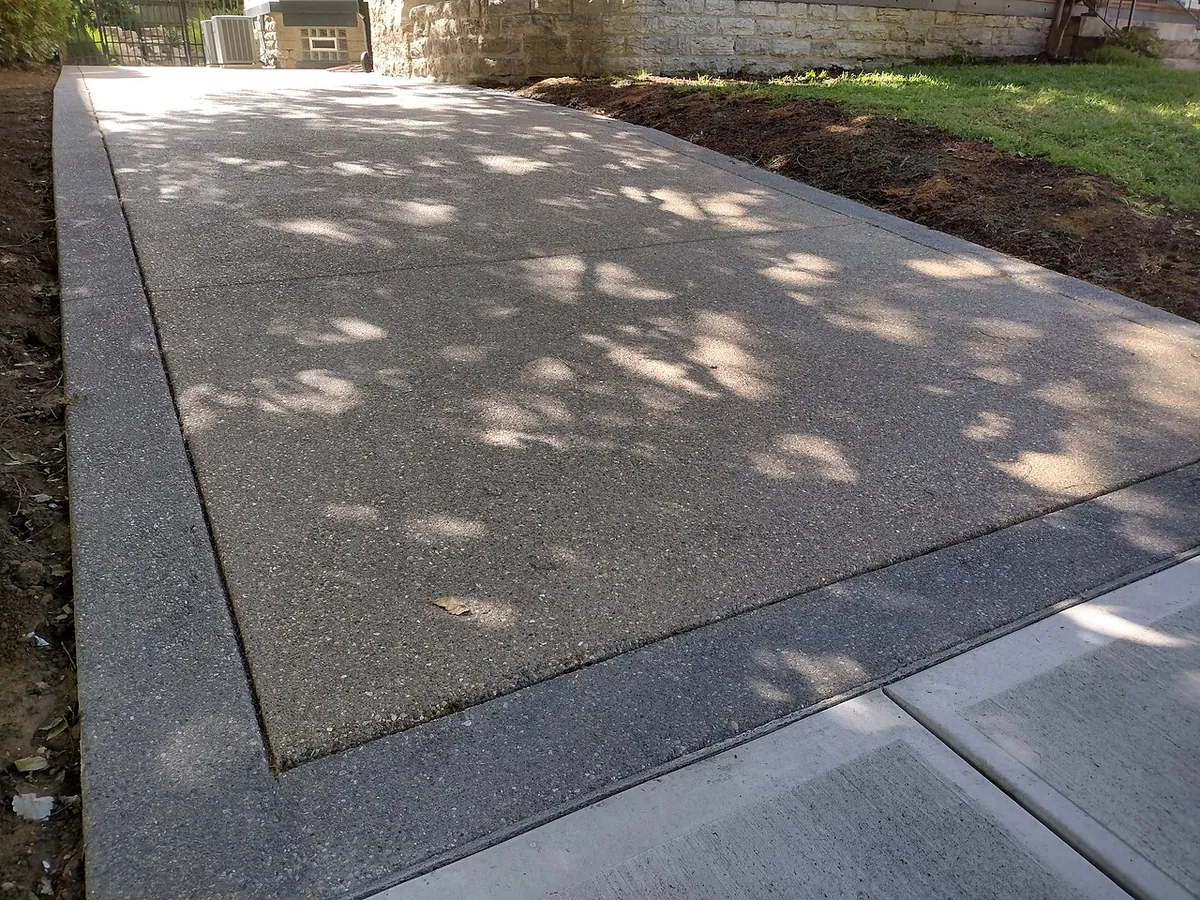
Photo: Chris Gentrup, Wikimedia Commons, CC BY-SA 4.0
An exposed aggregate finish shows the stones in the concrete instead of a smooth paste surface. To make it, the thin top layer of cement paste is kept from hardening while the rest of the slab sets, and then washed or brushed off to reveal the stones. Professionals use a surface retarder, a refined concrete sugar compound or similar chemical made for the job, sprayed or rolled onto the fresh surface. Some DIYers and small contractors use sugar on concrete instead, sprinkling a thin, even layer of granulated sugar or spraying sugar water over the finished surface, then washing the paste off the next day with a hose and stiff broom.
Sugar on concrete can work for small projects such as stepping stones, a garden path or a small patio, but the results are less predictable than with a commercial product. Too little sugar on concrete gives a patchy reveal; too much can soften the surface deeper than intended and loosen the stones. Heat and wind change the timing. If you want to try it, test on a sample block first, apply the sugar evenly right after the final float, cover the surface with plastic, and start washing when the slab is firm enough to walk on but the surface paste still brushes off. See types of concrete finishes and how to make concrete stepping stones.
Sugar on concrete for this purpose should only touch the surface. Never add it to the mix itself for an exposed finish; that would retard the whole slab.
What to Do If Sugar Gets Into Your Mix
If you know or suspect sugar in concrete you have just mixed, do not place it where strength matters, such as footings, posts, steps or a driveway. Small batches are best thrown out while still plastic. If it has already been placed, protect it, keep it moist, and give it time; slightly retarded concrete will usually set within a day or two and may reach acceptable strength. Check by pressing the surface after a day: if it still dents easily after 48 hours in mild weather, it is likely badly affected. For anything structural, a contractor or engineer may test cores or use a rebound hammer before deciding whether to remove it. Heavily contaminated sugar and concrete mixes that stay soft for days should be removed and replaced. See how long concrete takes to cure for normal timing.
Signs of Sugar in Concrete After the Pour
How do you know if sugar in concrete is the reason a slab or patch is misbehaving? The clearest sign is setting time far longer than normal for the weather: a slab that is still soft enough to dent with a thumb the next afternoon on a warm day. Other signs are a surface that stays dark and damp, powders or scales when brushed after it finally hardens, or sets in patches, with some areas firm and others soft. Bleed water may sit on the surface for hours. None of these proves sugar and concrete contamination on its own, since cold weather, too much water and some admixture overdoses cause similar symptoms, but together with a possible source they point clearly to it.
Lab tests can confirm it. A testing laboratory can check samples of the mixing water, aggregate or hardened concrete for organic contamination, and cores can show whether strength is acceptable. On commercial jobs, the ready-mix supplier's records of batch water and admixtures are usually checked first.
Preventing Sugar Contamination on Site
Prevention is simple. Use clean water from a tap or a clean tank, never from containers that held food, syrup or drink concentrate. Store sand and gravel away from food waste, feed and molasses, and on a clean surface. Mix in clean buckets and wheelbarrows. Keep drinks and snacks away from mixing areas, especially when working with mortar, grout and small patch mixes where a little sugar in concrete-type material has a big effect. On farms and food plants, wash down any mixing equipment that has handled sugary materials before using it for concrete. These steps cost nothing and avoid the most common sources of sugar on concrete jobs.
Sugar on Hardened Concrete
Once concrete has cured, sugar on concrete does not affect it the same way. A soda or syrup spill on a driveway or garage floor will not soften the slab. It will leave a sticky stain that attracts dirt and insects, and it can feed mold if left in a damp spot. Clean it with warm water and a mild detergent and a stiff brush; for dark stains from colas or juices, a concrete cleaner or a mild oxygen bleach helps. See how to clean concrete and mold on concrete.
Long-term exposure to sugar and concrete contact is different. The Portland Cement Association's guide to the effects of substances on concrete lists sugar solutions among the substances that attack concrete slowly. Sugar on concrete reacts with the calcium hydroxide in hardened concrete and can gradually weaken the surface, which matters in sugar refineries, candy and beverage plants, bakeries and farm silos holding molasses or sweet feed. Floors and tanks in those places are often protected with sealers, epoxy coatings or acid-resistant linings. For a home, occasional sugar on concrete from spills is harmless if cleaned up.
Sugar and Concrete in Traditional Building and Research
The connection between sugar and concrete is not new. Traditional lime mortars in parts of South and Southeast Asia sometimes included jaggery, an unrefined cane sugar, along with other organic additives, and builders believed it improved workability and durability. In those lime-based mortars the chemistry is different from portland cement, and research on historic mortars has found that sugars can influence how lime carbonates and crystallizes.
Modern research on sugar and concrete also looks at waste from the sugar industry. Sugarcane bagasse ash, left after burning the fibrous waste from cane, can act as a pozzolan when properly processed and partly replace cement. Molasses has been studied as a low-cost retarding admixture in some regions. These are specialized uses of sugar in concrete, tested in the lab, and different from tipping kitchen sugar into a mix.
A Simple Test of Sugar in Concrete
You can see the effect yourself with a small kitchen-table test. Mix two small cups of the same bagged mortar or concrete with the same amount of water. Stir a pinch of sugar, about a quarter teaspoon for a cup of dry mix, into the water for one cup before mixing, and leave the other plain. Label both and leave them side by side. Press each with a fingertip every hour. The plain cup will usually stiffen within a few hours and be hard by the next morning. The cup with sugar in concrete will stay soft much longer, often until the next day or beyond, and may stay crumbly at the surface even after it hardens.
Try a third cup with more sugar, a teaspoon or so, and it may still be soft after two days. This simple test shows how small amounts of sugar and concrete interact, and why a contaminated water bucket on a job site can cause so much trouble. Dispose of the test cups with household trash once they harden; do not rinse soft mix down a drain.
Sugar in Concrete Compared With Commercial Retarders
Why not just use sugar in concrete as a cheap retarder? The main reasons are control and consistency. Commercial retarders are made to a fixed strength, tested with a wide range of cements, and sold with dosage charts that show how many minutes or hours of delay to expect at each temperature. Ready-mix plants can meter them precisely, a few ounces per hundred pounds of cement, and their effect on strength is documented under ASTM C494.
Kitchen sugar is cheap but erratic. A small change in dose, cement brand or temperature can change the delay from a couple of hours to a day. Sugar is also hard to dose accurately in the field, since the amounts are so small, and the effect of sugar in concrete is very sensitive to when it is added. For a contractor, an unexpected overnight delay means finishers waiting, a slab that cannot be cut or covered on time, and a risk of weak surfaces. That is why engineers and specifications generally do not allow raw sugar in structural concrete.
When a Set Retarder Helps
There are good reasons to slow concrete down, and they explain why the chemistry of sugar and concrete is used in commercial products. In hot weather, concrete can stiffen before it is placed and finished, causing cold joints, poor finishes and plastic shrinkage cracks; a retarder buys time. On long hauls from the plant, a retarder keeps the load workable until it arrives. In large pours, such as foundations, bridge decks and mat slabs, each layer must stay soft until the next is placed. In decorative work, surface retarders control how deep an exposed aggregate finish goes. See concrete slump for how workability is measured on site.
Sugar in Mortar, Grout and Small Patches
Because mortar, grout and patching mixes are used in small batches, a little sugar in concrete-type mixes like these has a large effect. A sweet drink spilled into a bucket of tile grout or a can of anchoring cement can stop it from setting properly. Keep food and drinks away from mixing areas, use clean buckets that have never held food products, and use clean tap water. If a patch or grout joint stays soft much longer than the label says in normal weather, remove it and redo it rather than waiting. See concrete patching compound and mortar vs concrete.
Can You Use Sugar to Buy Time on a DIY Pour?
It is tempting: if you are worried about finishing a patio before the concrete sets, why not add a little sugar? The answer is that it is too risky. A dose that gives you an extra hour on a cool day might give you an extra day on a cold one, or leave a weak, dusty surface. The safer ways to get more working time are to pour early in the morning, keep the concrete and tools in the shade, dampen the base before the pour, have enough helpers, order a mix with a retarder from the ready-mix plant if needed, and use an evaporation retarder spray on hot, windy days. Leave sugar in concrete to the lab tests and the stepping-stone experiments.
Sugar Sand Is Something Else
You may hear the phrase sugar sand in landscaping and construction. It does not mean sand mixed with sugar; it describes very fine, white, uniformly sized sand, common in parts of Florida and the southeastern United States, that looks like granulated sugar. Sugar sand is poor for structural concrete because its fine, uniform grains need more cement paste and water and pack poorly. Well-graded concrete sand is the right choice. So when someone mentions sugar and concrete together, check whether they mean the sweetener or the sand.
Myths About Concrete and Sugar
"A cup of sugar will dissolve hardened concrete." No. Sugar only affects setting; it does not break down cured concrete in the short term. To remove hardened concrete from tools, use mechanical methods or a concrete dissolver; see concrete dissolver.
"Any amount of sugar in concrete ruins it." Not quite. Tiny amounts mainly delay setting. The risk rises quickly with dose, which is why contamination is taken seriously.
"Sugar makes concrete stronger." Controlled retarding can give slightly higher later strength, but raw sugar is unpredictable, and at higher doses it lowers strength sharply.
The bottom line on sugar in concrete is simple. A trace of sugar in concrete delays setting, more ruins it, and sugar on concrete surfaces can be used carefully for exposed aggregate. Keep sugar and concrete apart on real projects unless you are using a tested commercial retarder.
Frequently Asked Questions
Does sugar stop concrete from setting?
Yes. Even 0.05 percent of the cement weight delays setting by hours, and larger amounts can stop concrete setting for days and reduce strength.
How much sugar stops concrete?
A few tablespoons per 94 pound bag of cement delays the set noticeably; around a tenth of a percent or more can delay it a day or more.
Can you put sugar on concrete for exposed aggregate?
Yes, sprinkling sugar on concrete surfaces is an old DIY trick, but commercial surface retarders give more even results.
Does sugar damage cured concrete?
Spills do not, if cleaned. Long, repeated exposure to sugar solutions slowly attacks concrete, so food plants protect floors with coatings.
Sources
- Portland Cement Association: Design and Control of Concrete Mixtures, chapter on chemical admixtures; Effects of Substances on Concrete
- American Concrete Institute: ACI 212.3R chemical admixtures (retarders)
- ASTM C494: standard specification for chemical admixtures for concrete
- A.M. Neville, Properties of Concrete, Pearson, section on set-retarding admixtures and sugar