
How to Make Concrete: Mixing Concrete in a Bucket, Wheelbarrow or Mixer
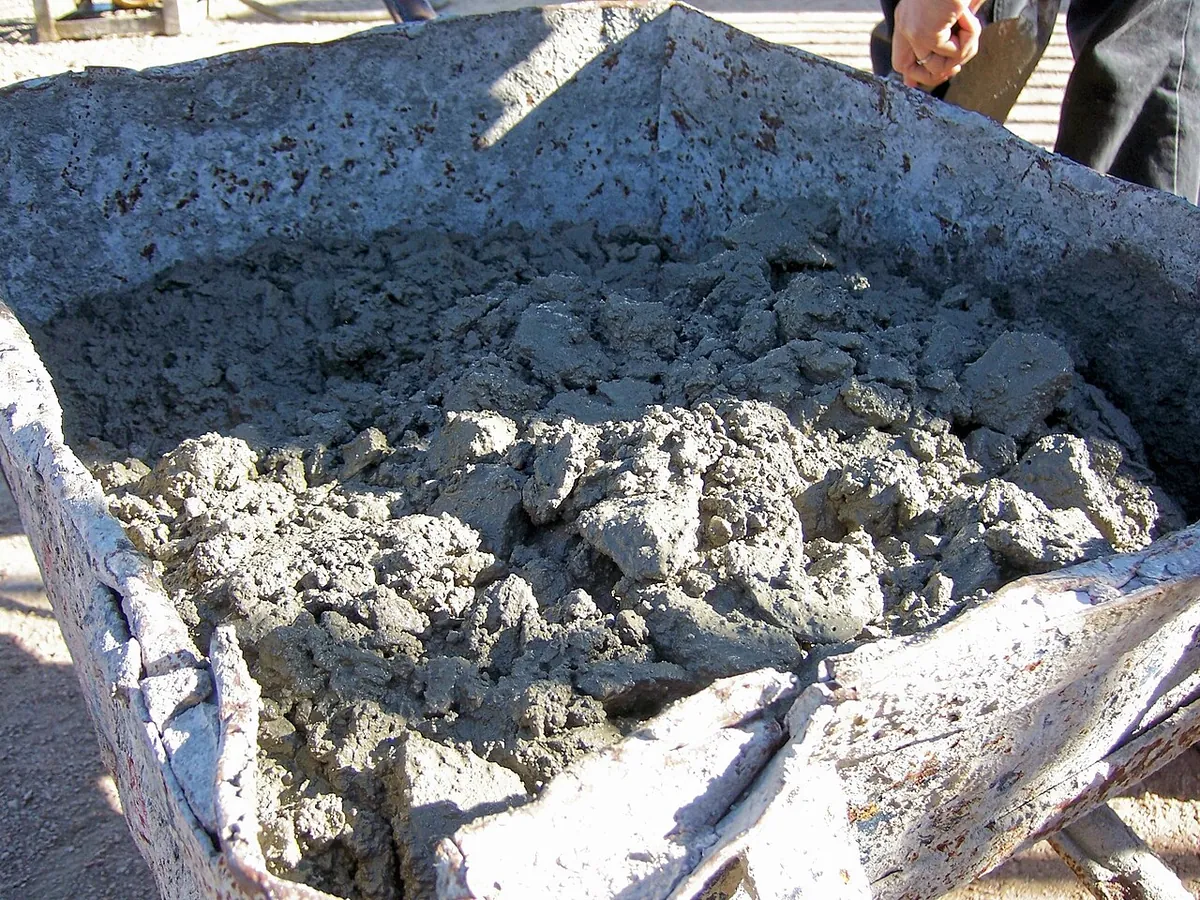
Photo: Tano4595, Wikimedia Commons, CC BY-SA 2.5
Quick Answer
How to make concrete: combine portland cement, sand, gravel and water, or simply add water to a bag of premixed concrete mix. For small jobs, pour one or two 80-pound bags into a wheelbarrow or mixing tub, make a crater, add about 3 quarts of water per bag (check the label) a little at a time, and fold it in with a hoe until the concrete is like thick oatmeal with no dry pockets. For a bucket, mix no more than about half a bag at a time with a drill and paddle. Mixing your own from scratch, use about 1 part cement, 2 parts sand and 3 parts gravel. Use the concrete within 30 to 60 minutes and never add water to a batch that is stiffening.
Making concrete is one of the most useful skills a homeowner can learn. A few bags and a wheelbarrow let you set fence posts, pour a small pad for a grill or AC unit, build steps, anchor a mailbox or patch a hole in a walk. You do not need a cement mixer or a truck for most of these jobs. What you do need is the right material, the right amount of water, and a method that gets every bit of dry mix wet without drowning it.
This guide explains how to make concrete from bagged mix and from separate ingredients, mixing concrete in a wheelbarrow, mixing concrete in a bucket, using a drum mixer, how much water to use, how to tell when the mix is right, and the mistakes that weaken concrete.
What You Need to Make Concrete
For most home jobs, the easiest way is bagged concrete mix, which already contains cement, sand and gravel in the right proportions. You only add water. Bags come in 40, 60 and 80 pounds, yielding about 0.3, 0.45 and 0.6 cubic feet of concrete. If you need a lot of concrete, or you are far from a store, you can buy portland cement, concrete sand and gravel separately and mix them in a set ratio. Either way, you will want:
- A mixing container: a contractor wheelbarrow (6 cubic feet), a plastic mixing tub, or a heavy 5-gallon bucket for small amounts.
- Mixing tools: a mortar hoe (with holes in the blade) or square shovel; for buckets, a heavy drill with a mixing paddle.
- Clean water: a hose with a shut-off nozzle and a bucket marked in quarts or gallons.
- Safety gear: waterproof gloves, eye protection, long sleeves and a dust mask; wet cement is caustic.
- For bigger batches: a rented or bought drum mixer. See concrete cement mixers.
How Much Concrete Do You Need?
Before you mix, figure how much you need. Multiply length × width × depth in feet to get cubic feet, then divide by the yield of your bag: 0.6 cubic feet for an 80-pound bag. A 2 × 3 foot pad 4 inches thick is 2 cubic feet, or about 4 bags of 80-pound mix. A fence post hole may take 1.5 to 3 bags. Add 10 percent for spillage. For larger jobs, divide cubic feet by 27 for cubic yards and consider ready-mix delivery. See how to calculate yards of concrete and how many bags of concrete in a yard.
Mixing Concrete in a Wheelbarrow
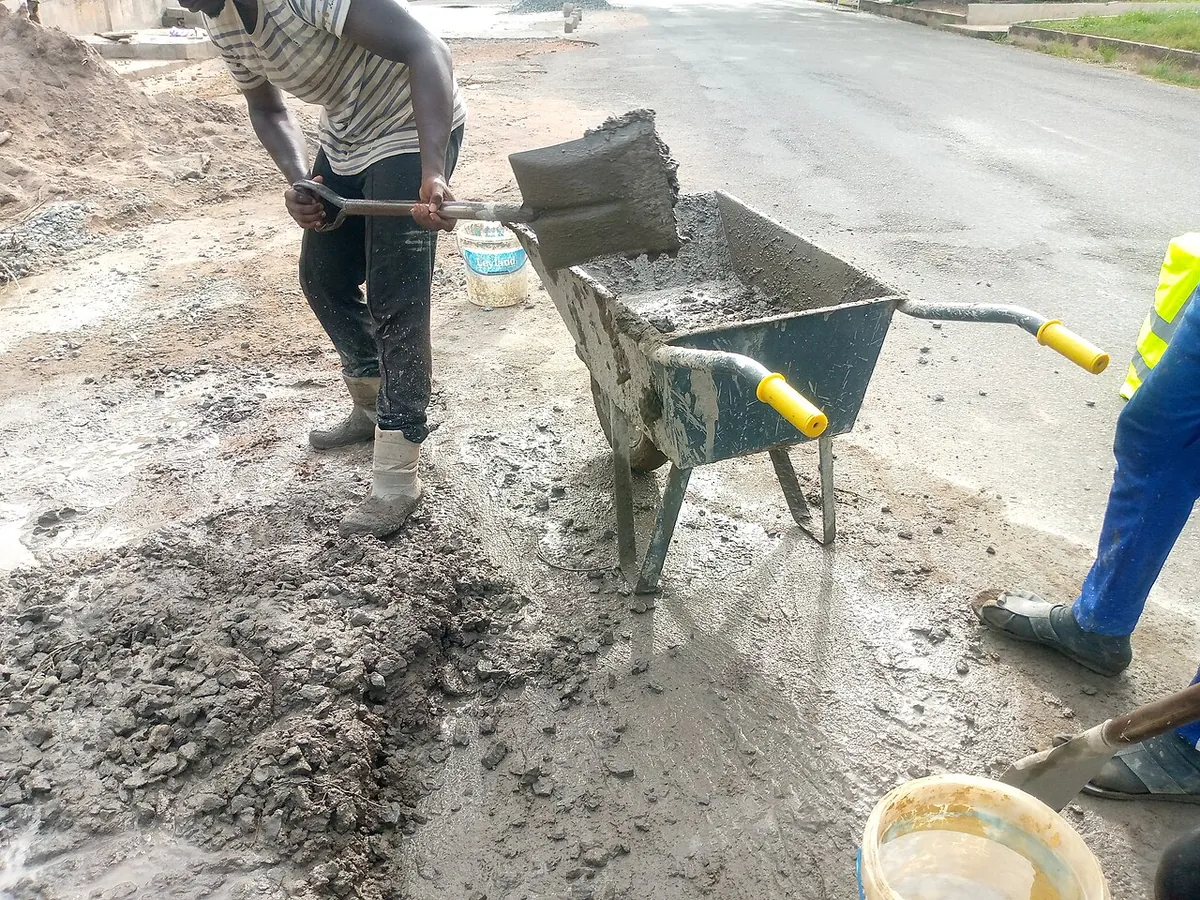
Photo: Azorbli, Wikimedia Commons, CC BY-SA 4.0
Mixing concrete in a wheelbarrow is the classic DIY method, and a good contractor wheelbarrow comfortably handles one or two 80-pound bags at a time. A steel tray with a single wheel is the most common wheelbarrow for mixing concrete; a two-wheel model is steadier when loaded. Here is the method:
- Set up near the work. Park the wheelbarrow on level ground as close to the pour as possible. Wet the inside lightly so concrete does not stick.
- Empty the bag. Cut the bag and pour the dry mix into the wheelbarrow, keeping your face away from the dust.
- Make a crater in the middle of the dry mix with the hoe.
- Add about three quarters of the water the bag calls for into the crater. For an 80-pound bag that is roughly 2 to 2.5 quarts of the usual 3 quarts.
- Pull dry mix into the water with the hoe, working from the edges into the middle, then chop and push back and forth until everything is wet.
- Add the remaining water a little at a time, mixing well between additions, until the concrete is the right consistency (see below).
- Scrape the corners and bottom. Dry pockets in the corners are the most common problem with mixing concrete in a wheelbarrow.
- Place it right away, wheeling the load to the forms and dumping or shoveling it in.
A dedicated concrete mixing wheelbarrow, kept just for concrete and cleaned after each use, lasts years. Rinse it immediately after the last batch; hardened concrete in the tray is very hard to remove.
Mixing Concrete in a Bucket
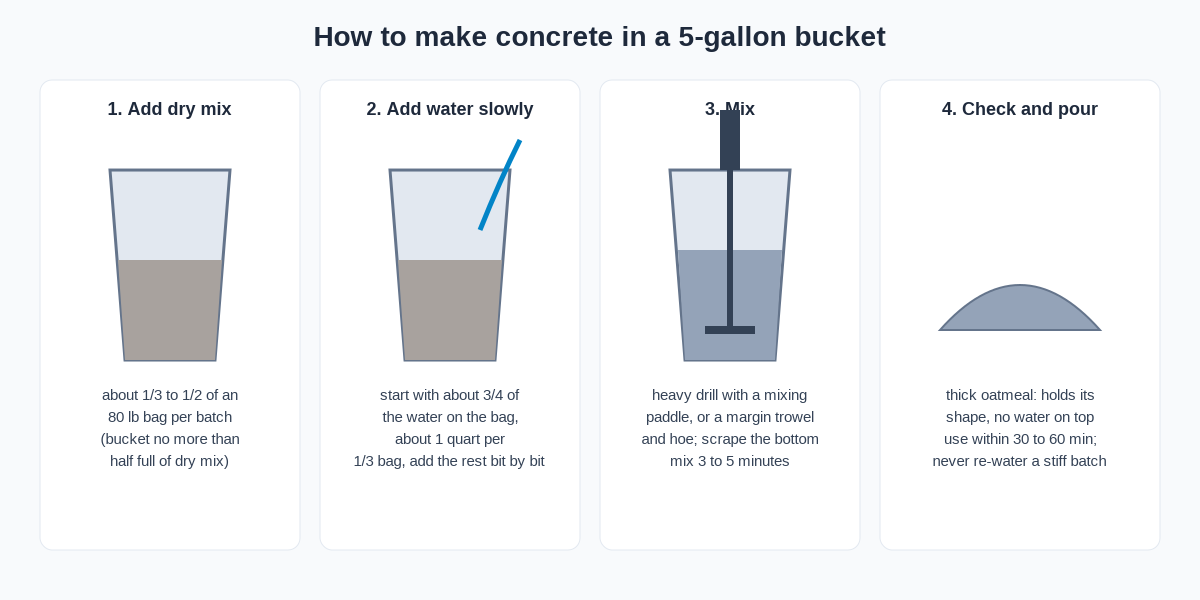
For very small jobs, such as setting a mailbox post, filling a few holes, anchoring a bolt or casting a stepping stone, mixing concrete in a bucket saves hauling out a wheelbarrow. A heavy-duty 5-gallon concrete mixing bucket holds enough for about a third to half of an 80-pound bag at a time. Overfilling the bucket makes it impossible to mix the bottom.
- Add the dry mix, no more than about half the bucket, or about 25 to 40 pounds.
- Add water slowly, starting with about 1 quart per 25 pounds of mix, then a little more as needed.
- Mix with a drill and paddle at low speed, moving the paddle up and down and around the walls, for about 3 to 5 minutes. Without a drill, use a margin trowel or small hoe and stir hard, scraping the bottom.
- Check consistency, then pour or scoop into place.
That is how to mix concrete in a bucket with almost no cleanup: rinse the bucket and paddle right away. Many people keep a few concrete buckets just for mixing and carrying concrete, since cement residue builds up quickly.
Using a Concrete Mixer
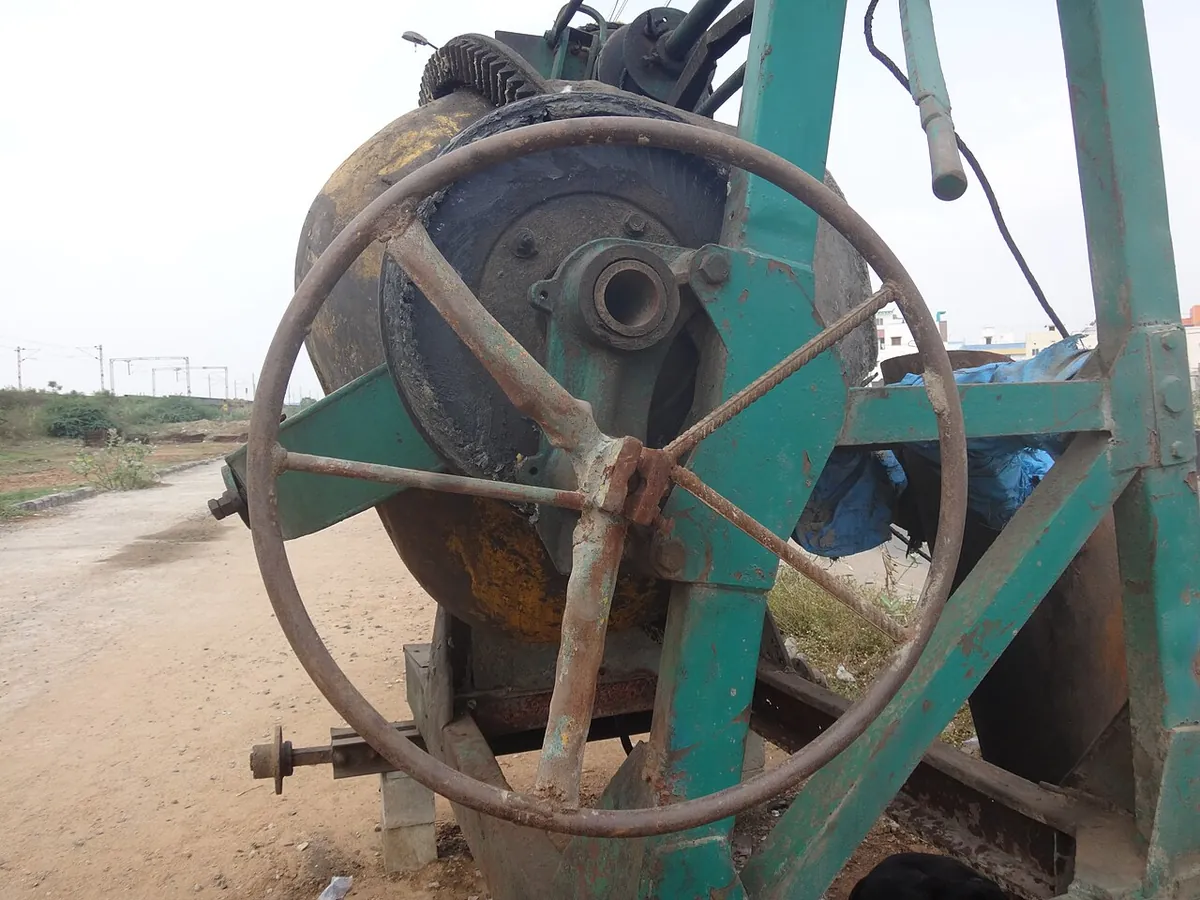
Photo: Gausanchennai, Wikimedia Commons, CC BY-SA 4.0
For more than about 10 bags, a drum mixer is worth renting. A typical 3- to 6-cubic-foot electric mixer handles one or two 80-pound bags per batch. Load order matters:
- With the drum turning, add about half the water.
- Add the dry mix (or gravel, then cement, then sand if mixing from scratch).
- Add the remaining water gradually until the mix tumbles smoothly and folds over itself.
- Mix for about 3 to 5 minutes, then tip into the wheelbarrow.
- Keep the drum turning between batches, and wash it out at the end of the day with water and a few shovels of gravel.
How to Make Concrete From Cement, Sand and Gravel
If you buy materials separately, use a 1:2:3 ratio by volume for general work: 1 bucket of portland cement, 2 buckets of concrete sand and 3 buckets of gravel or crushed stone. Mix the dry materials until the color is even, then add water. A 94-pound bag of portland cement typically needs about 5 to 6 gallons of water at this ratio, less if the sand is wet. For stronger concrete for driveways and steps, use 1:1.5:3. See concrete mixing ratio, concrete sand and concrete aggregate for details.
Tips for Mixing Concrete in Wheelbarrow-Size Batches
When mixing concrete in wheelbarrow-size batches, rhythm matters more than strength. Two people work best: one mixes while the other places and spreads the last load. Keep the bags, water and wheelbarrow in a tight triangle so nobody carries 80-pound bags farther than a few steps. Mix one bag at a time until you have a feel for the water, then move to two bags per load. Tip the wheelbarrow slightly toward you while chopping with the hoe, which brings dry mix from the far corner into the wet center. If your back is sore after three bags, stop and rent a mixer; mixing more than about 10 to 15 bags by hand is hard work, and tired mixing leads to dry pockets and inconsistent water. Always place each batch against the last one while it is still workable, so the slab or footing bonds into one piece instead of separate layers.
Concrete Buckets: Choosing and Using Them
Plastic buckets are useful for carrying water, measuring materials and mixing small amounts. A heavy-duty concrete bucket with thick walls and a strong handle survives being dropped full and scraped with a trowel; thin paint buckets crack. Mark the inside at 1, 2 and 3 gallons and at the half-full line so you can measure water and dry mix quickly. A 5-gallon bucket holds about 0.67 cubic feet, so per bucket, concrete yield from a full bucket of mixed concrete is about the same as one 80-pound bag. When batching from separate materials, use one bucket for cement, sand and gravel so the ratio stays exact, and a second, clean bucket only for water.
On larger construction sites, "concrete bucket" also means the big steel bucket hung from a crane, which carries a yard or more of concrete to a wall or column and releases it through a gate at the bottom. The idea is the same at any scale: move the concrete as little as possible and place it quickly before it stiffens, because every extra minute and every extra transfer makes it harder to place and finish.
Hand Mixing on the Ground or a Mixing Board
In many parts of the world, concrete is mixed by hand on a clean, hard surface rather than in a wheelbarrow, as in the photo above. To do it well, mix on a sheet of plywood, an old slab or a steel plate, never on bare soil, which mixes dirt into the concrete and soaks up water. Spread the gravel in a ring, add sand and cement, and turn the dry pile over with a shovel at least three times until the color is uniform. Make a crater, add water gradually and turn the pile from the outside in until everything is evenly wet. This method handles more concrete per batch than a wheelbarrow but takes more effort, and it is easy to end up with dry pockets at the bottom of the pile. Keep turning until every shovelful looks the same.
Mixing Small Amounts for Repairs and Projects
The hardest part of small projects is often just knowing how; once you know how, make concrete in small, measured batches and it becomes routine. For stepping stones, planters, setting a bolt or filling a pothole in a walk, mix only what you can place in 15 to 20 minutes. A third of a bag in a bucket is usually plenty. For thin layers under 2 inches, use sand mix instead of concrete mix, since gravel will not fit. For anchoring bolts, posts and railings in holes, fast-setting mixes or anchoring cement give a strong hold quickly. For crafts and stepping stones, a sand mix or a fine concrete mix gives smoother surfaces. See how to make concrete stepping stones and how to make concrete planters.
Mixing in Hot and Cold Weather
Concrete sets faster in heat and slower in cold, so adjust your batch size and timing to the weather. On hot days, keep bags in the shade, use cool water, mix smaller batches, wet the forms and the ground before placing, and work early in the morning. Do not add extra water just because the concrete stiffens faster; place it sooner instead. On cold days, below about 40°F, store bags indoors, use warm water, avoid placing concrete on frozen ground, and cover the finished work with blankets so it does not freeze in the first day or two. See how long concrete takes to cure.
Cleaning Up
Clean tools as soon as the last batch is placed. Wet concrete washes off easily with a hose; hardened concrete has to be chipped off. Rinse the wheelbarrow, hoe, buckets, paddle and mixer drum, but do not wash concrete residue into storm drains, gardens or septic systems; rinse onto a gravel area or into a hole you can fill later, or into a tub to let solids settle. Dried splatter on tools can be removed with a concrete dissolver; see concrete dissolver. Store opened bags in a sealed plastic tote off the floor, since cement absorbs moisture from the air and lumps. Throw out any bag that has hardened lumps you cannot crush between your fingers.
Common Mistakes When Making Concrete
The biggest mistake is adding too much water. It makes the concrete easy to pour but leaves it weak, porous and prone to cracking and dusting. The second is not mixing long enough, leaving dry pockets and uneven strength. Others include using old cement that has gone lumpy, mixing on dirt, using play sand or dirty sand when mixing from scratch, mixing more than you can place before it stiffens, adding water to a batch that has started to set, and letting fresh concrete dry out in the sun and wind instead of curing it. Every one of these mistakes is easy to avoid with a little planning, and avoiding them makes a bigger difference to the finished concrete than the brand of mix you buy.
How to Make Concrete Stronger
If you want to know how to make concrete stronger, the answer is mostly about water and curing, not about adding more cement. Use the least water that still lets you place and finish the mix. Choose a high-strength bagged mix (often rated 5,000 psi) instead of standard mix for steps, driveways and heavy-use slabs. Mix thoroughly so every grain of cement is wet. Consolidate the concrete in the forms by rodding or tapping so there are no air pockets. Then keep it moist for at least a week. A properly cured standard mix often ends up stronger than a high-strength mix that dried out in the sun. For reinforcement, add rebar, wire mesh or fibers where the concrete will bend or carry loads; see concrete rebar and fiber concrete.
How to Make Concrete Smooth
For a smooth surface, how to make concrete look good depends on the mix and the finishing. Use a mix that is workable but not soupy; a mix with too much water bleeds and leaves a weak, dusty skin. After placing, screed the surface flat with a straight board, then float it with a magnesium or wood float to bring a little paste to the top. Wait until the surface water disappears and the concrete holds a thumbprint, then trowel it with a steel trowel for a smooth finish, or drag a broom across it for a slip-resistant texture outdoors. For cast pieces like countertops or planters, tap and vibrate the forms well to remove bubbles. See types of concrete finishes.
How to Make Concrete Set Faster
Sometimes you need concrete to set quickly, for a post you want to hang a gate on, a repair that must open to traffic, or a cold day. Fast-setting concrete mixes set in 20 to 40 minutes and reach walkable strength in hours. Using warm water and working in warm weather also speeds setting. Ready-mix plants add accelerating admixtures, and some use calcium chloride, which speeds setting but can corrode steel reinforcement, so non-chloride accelerators are preferred for reinforced work. Do not try to speed things up by using less water than the mix needs or by heating concrete with open flames.
How to Make Concrete Last Outdoors
Outdoor concrete faces rain, sun, freezing, thawing and often deicing salt. To make it last, start with a good base of compacted gravel and good drainage, use air-entrained concrete in cold climates if you are ordering ready-mix, keep the water low, cut control joints at the right spacing, cure the slab properly, and seal it after about a month. Avoid rock salt the first winter, and use sand or a concrete-safe deicer instead. See control joints in concrete, how to seal concrete and does salt damage concrete.
How to Make Concrete Without a Mixer
You do not need a machine to learn how to make concrete. A wheelbarrow, a hoe and a bucket handle most small jobs, and many experienced builders still hand-mix a few bags rather than set up and clean a mixer. The keys are mixing one or two bags at a time, adding water gradually, chopping and turning the mix until there are no dry streaks, and placing each batch quickly. If you need more than about a dozen bags in one go, mixing concrete in a wheelbarrow becomes slow and tiring, and a rented mixer or a small ready-mix load starts to make more sense.
How to Make Concrete for Molds and Crafts
For garden ornaments, planters, coasters and stepping stones, how to make concrete that captures detail comes down to a finer mix and good release. Use a sand mix or a bagged mix with small aggregate, add a little less water than for a slab, and tap or vibrate the mold for a minute to bring air bubbles out. Coat plastic or silicone molds with a release agent or cooking spray. Keep the casting wrapped in plastic for two or three days before demolding, and let it cure for a week before using it outdoors. The same steps of how to mix concrete apply, just in a bucket and in smaller amounts.
Bucket or Wheelbarrow: Which Is Better?
Mixing concrete in a bucket is best for tiny jobs: a post, a few holes, a bolt, a craft project. It is quick, needs little cleanup and fits in a car trunk. Mixing concrete in a wheelbarrow is better for anything from one to about a dozen bags, because it holds more and lets you wheel the concrete straight to the forms. Beyond that, a mixer saves time and gives more even batches, and beyond about a cubic yard, ready-mix delivery is usually the best value. Knowing how to mix concrete by each method means you can pick the right tool for every job instead of forcing one method to do everything.
How Much Water and the Right Consistency
Water is the most important and most abused ingredient. Too little and the concrete is crumbly and will not consolidate; too much and it is soupy, weak and prone to cracking and dusting. For most 80-pound bags of concrete mix, the label calls for about 3 quarts of water, sometimes up to about 3.5 quarts. Fast-setting mixes may call for more and are often poured dry into post holes.
Good concrete for slabs, footings and posts looks like thick oatmeal or stiff brownie batter. It should slide slowly off a shovel held at an angle rather than pour off like soup or sit there like a dry lump. When you cut a groove in it with the hoe, the sides should hold their shape and slump only slightly. There should be no water pooling on top and no dry streaks. If you squeeze a handful (with a glove), it should hold together without water running out between your fingers. When in doubt, mix a little drier and add water a cup at a time; you can always add water, but you cannot take it out.
Frequently Asked Questions
How can I make concrete at home?
Buy bags of concrete mix, pour them into a wheelbarrow or tub, add about 3 quarts of water per 80-pound bag gradually, and mix with a hoe until it is like thick oatmeal.
How do we make concrete from scratch?
Mix 1 part portland cement, 2 parts sand and 3 parts gravel by volume, then add water gradually, about 5 to 6 gallons per 94-pound bag of cement.
Can you mix concrete in a bucket?
Yes, for small amounts. Mix no more than half a bucket of dry mix at a time with a drill and paddle or a trowel, scraping the bottom well.
How many bags of concrete can you mix in a wheelbarrow?
One or two 80-pound bags in a 6-cubic-foot contractor wheelbarrow. More than that is hard to mix evenly.
How long do you have to use mixed concrete?
About 30 to 60 minutes for regular mix, less in hot weather, and only minutes for fast-setting mixes.
Sources
- Portland Cement Association: concrete basics and mixing
- American Concrete Institute: concrete fundamentals
- OSHA: crystalline silica and cement safety
- NIOSH: skin hazards of wet cement
Related Guides
- Concrete slump test — what slump means and how to test it
- Concrete curing compound — curing compounds vs water curing
- Dry pour concrete — when pouring dry mix works and when it fails
- Concrete washout — handling rinse water from trucks and tools
- Sugar in concrete — how sugar delays or stops setting
- Concrete dust — silica risks, safe exposure and dusting slabs
- Concrete tools — pouring and finishing tools in order of use
- Concrete mixer rental cost — mixer and buggy rental prices
- How to pour a concrete patio — DIY steps, calculator and cost
- 80 lb bags of concrete — yield, price and how many bags you need
- Sakrete concrete mix — High Strength, 5000 Plus and Fast Setting compared
- Temperature to pour concrete — ideal range, minimums and hot or cold precautions
- Wet concrete — how liquid concrete works, workability, setting times and safety