
Concrete Flower Pots and Extra Large Concrete Planters for Outside
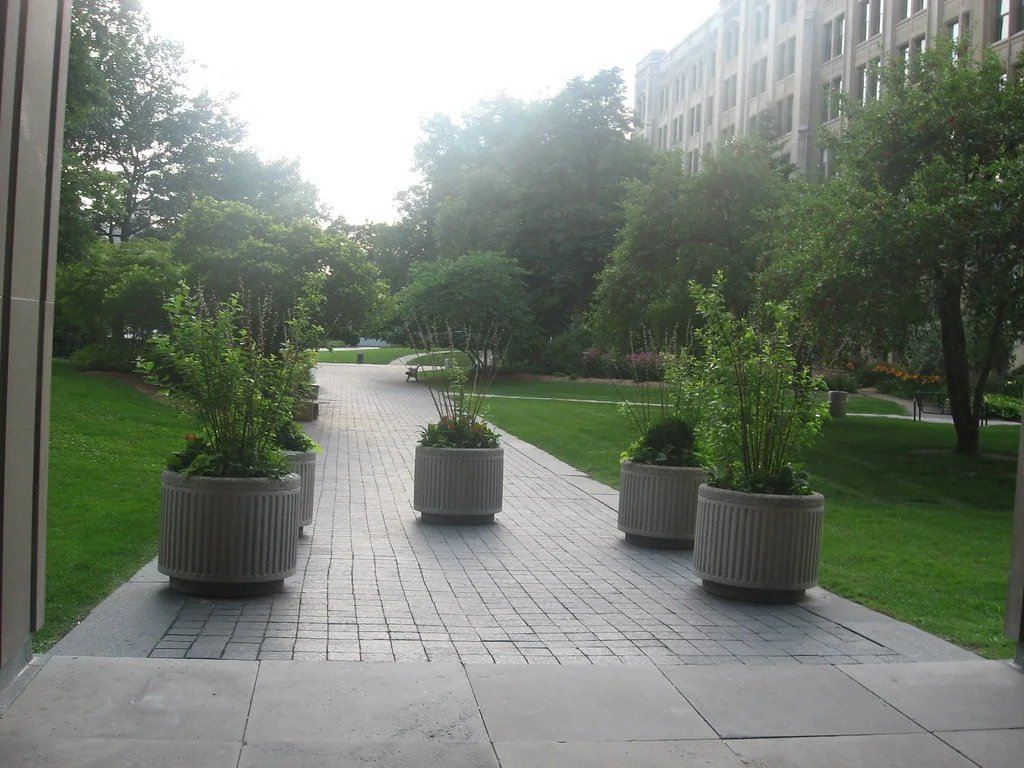
Photo: PinkMoose, Flickr, CC BY 2.0
Quick Answer
Concrete flower pots are heavy, durable planters cast from concrete, glass-fiber reinforced concrete (GFRC) or lightweight hypertufa. They stay put in wind, last for decades outdoors, and suit modern and classic gardens alike. Small concrete flower pots cost about $15 to $60, medium 16 to 24 inch planters about $80 to $300, and extra large concrete planters for outside, 30 to 48 inches or more, about $300 to $2,000+. Solid concrete is heavy: a 36 inch planter can weigh 300 to 800 pounds empty, and much more once filled with wet soil, so place large pots before filling. For healthy plants, make sure every concrete flower pot has a drainage hole, rinse or seal new pots to reduce lime leaching, and raise pots on feet in freezing climates so water drains and the concrete does not crack.
Concrete has become one of the most popular materials for garden containers, from a single concrete flower pot on a windowsill to rows of extra large concrete planters for outside along a plaza, as in the photo above. Concrete flower pots are heavy enough not to blow over, tough enough for decades of weather, and have a natural, stone-like look that suits almost any plant. They also have quirks: weight, lime, drainage and frost all need attention.
This guide covers the types of concrete flower pots, sizes, weights and prices, how to choose and place extra large concrete planters for outside, plant care in concrete, winter protection, sealing and aging, and moving heavy planters. If you want to cast your own, see how to make concrete planters.
Types of Concrete Flower Pots
Solid cast concrete. Traditional concrete flower pots are cast from a sand-and-cement mix, sometimes with fine gravel, in rubber, plastic or steel molds. They are very durable and heavy, with walls often 1 to 3 inches thick. Many classic urns, fluted bowls and square planters are made this way.
Glass-fiber reinforced concrete (GFRC). GFRC planters use a cement-rich mix reinforced with alkali-resistant glass fibers, which allows walls only about 1/2 to 3/4 inch thick. GFRC concrete flower pots weigh much less than solid concrete pots of the same size and resist cracking, which makes them popular for extra large concrete planters for outside on decks, balconies and rooftops.
Fiber-cement and lightweight concrete. Some planters use cement with cellulose or synthetic fibers, or lightweight aggregate, to cut weight. They look like concrete but are easier to lift.
Hypertufa. A mix of Portland cement, peat moss and perlite or vermiculite, hypertufa makes rough, stone-like, porous concrete flower pots that weigh a fraction of solid concrete. They are ideal for alpine plants and succulents but are less durable over many winters.
Concrete-look resin and fiberglass. Many lightweight planters sold as concrete-look are actually plastic, resin or fiberglass with a cement-colored finish. They are light and inexpensive but lack the weight, feel and longevity of real concrete flower pots.
Concrete Flower Pot Sizes and Weights
Weight is the defining feature of concrete flower pots. Approximate empty weights for solid cast concrete, which vary with wall thickness and design:
Small concrete flower pot, 6 to 10 inches: about 3 to 15 pounds.
Medium, 12 to 18 inches: about 25 to 90 pounds.
Large, 20 to 28 inches: about 100 to 300 pounds.
Extra large, 30 to 48 inches: about 250 to 1,000 pounds or more.
GFRC versions of the same sizes often weigh one third to one half as much. Soil adds a lot more: moist potting mix weighs roughly 50 to 80 pounds per cubic foot, so a 36 inch round planter holding 10 cubic feet of mix carries another 500 to 800 pounds when wet. A planted extra large concrete planter for outside can easily weigh more than half a ton.
Extra Large Concrete Planters for Outside
Extra large concrete planters for outside are used to frame entrances, line walkways and plazas, hold small trees and shrubs, create privacy screens, and define outdoor rooms on patios and rooftops. Because of their size and weight, planning matters:
Placement first. Decide the exact spot before delivery. Large concrete flower pots are placed empty, leveled, and only then filled.
Solid footing. Set extra large planters on a concrete patio, pavers over compacted base, or a gravel pad. On soft soil they will settle and tilt. See gravel base for concrete.
Decks, balconies and rooftops. Residential decks are commonly designed for about 40 pounds per square foot of live load. A filled extra large concrete planter can concentrate many times that on a small area, so choose GFRC or lightweight planters, place them over beams or posts, or have an engineer check the structure.
Drainage. Large planters need large drainage holes and a way for water to escape from under the pot, such as pot feet or a gravel bed. Water draining onto a patio can stain the surface.
Plant choice. The bigger the planter, the more soil, moisture and root room, so extra large concrete planters for outside can host small trees such as Japanese maple, olive, dwarf fruit trees, ornamental grasses and evergreen shrubs.
Delivery. Most suppliers deliver extra large planters on a pallet by liftgate truck. Ask whether they will place it, since moving it from the curb to the back yard is the hard part.
Concrete Flower Pot Prices
Small concrete flower pots: about $15 to $60 each at garden centers.
Medium, 14 to 24 inch: about $80 to $300.
Large, 24 to 30 inch: about $200 to $700.
Extra large concrete planters for outside, 30 to 48+ inch: about $300 to $2,000 or more, with designer GFRC planters and custom sizes higher.
Commercial precast planters: roughly $500 to $3,000 each for municipal and commercial models, more for crash-rated security planters.
Delivery for heavy planters can add $50 to $300 or more. Local precast yards that make concrete flower pots, urns and statues often sell at lower prices than designer brands and may offer custom colors. See concrete statues for similar garden pieces.
Plant Care in Concrete Flower Pots
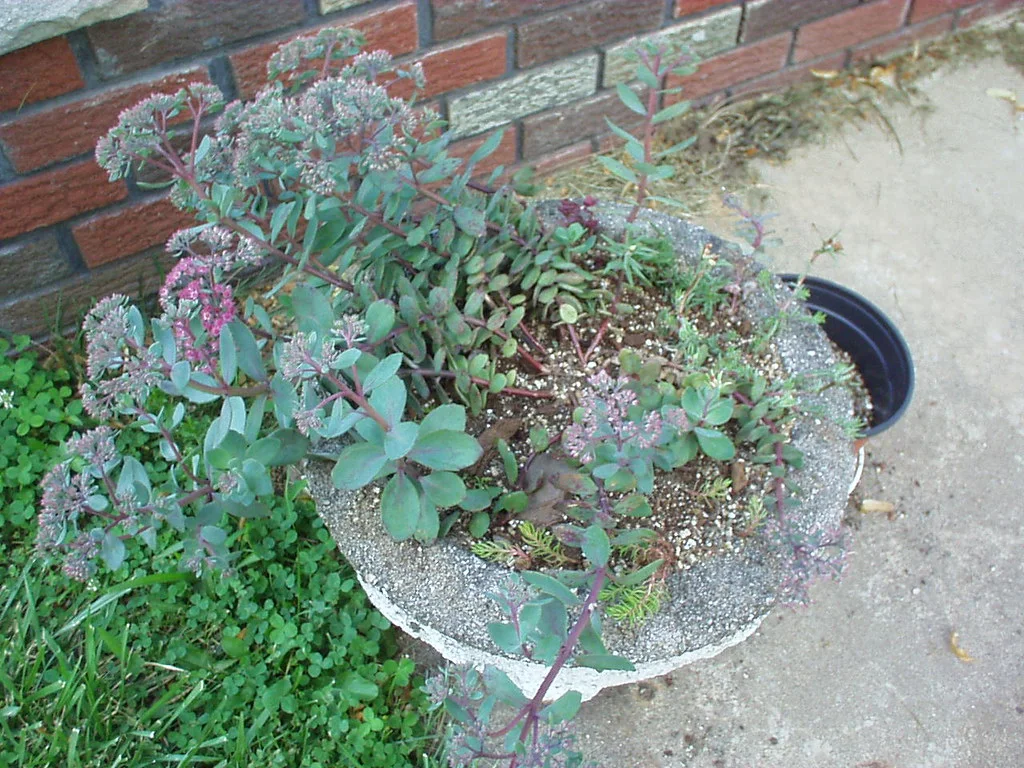
Photo: fviau, Flickr, CC BY 2.0
The shallow concrete bowl above, planted with sedum and succulents, shows a perfect match of plant and pot: drought-tolerant plants in a container that drains freely. A few things to know about growing in concrete flower pots:
Drainage holes. Every concrete flower pot used outdoors needs at least one drainage hole. Without it, rain fills the pot, roots rot, and in winter trapped water freezes and can crack the concrete. If a decorative pot has no hole, drill one with a masonry or diamond core bit, or use the concrete pot as a cachepot around a plastic nursery pot. See how to drill into concrete.
Lime and pH. New concrete is alkaline, and fresh concrete flower pots can leach lime into the soil, raising pH. Most plants tolerate it, but acid-loving plants such as azaleas, camellias, blueberries and rhododendrons may struggle. Soak a new pot in water for a few days, changing the water, or seal the inside, before planting acid lovers. Older pots leach very little.
Potting mix. Use a quality outdoor potting mix, not garden soil, which compacts and drains poorly in containers. For succulents, use a gritty cactus mix.
Watering. Unsealed concrete is porous and draws some water from the soil, so plants in concrete flower pots may need water a little more often than in glazed or plastic pots. The thick walls also buffer root temperatures in heat.
Best plants. Succulents, sedum, herbs, lavender, ornamental grasses, boxwood, dwarf conifers, geraniums, and, in extra large planters, small trees and shrubs.
Winter Care and Frost Protection
Concrete flower pots handle cold well when they drain. Problems come from water trapped in the soil or in the concrete itself, which expands when it freezes. To protect concrete flower pots in freezing climates:
Raise them on pot feet so water drains freely from the bottom hole.
Keep drainage holes clear and avoid saucers that hold water in winter.
Empty or cover small pots, or move them into a shed or garage, if they will sit wet through hard freezes.
Leave large planters planted with hardy perennials or evergreens; their soil mass and well-drained mix protect them.
Seal the concrete with a breathable penetrating sealer to reduce water absorption.
Thin hypertufa and cheaper, weaker concrete flower pots are most vulnerable. High-quality solid or GFRC concrete pots typically survive decades of winters.
Sealing, Cleaning and Aging Concrete Flower Pots
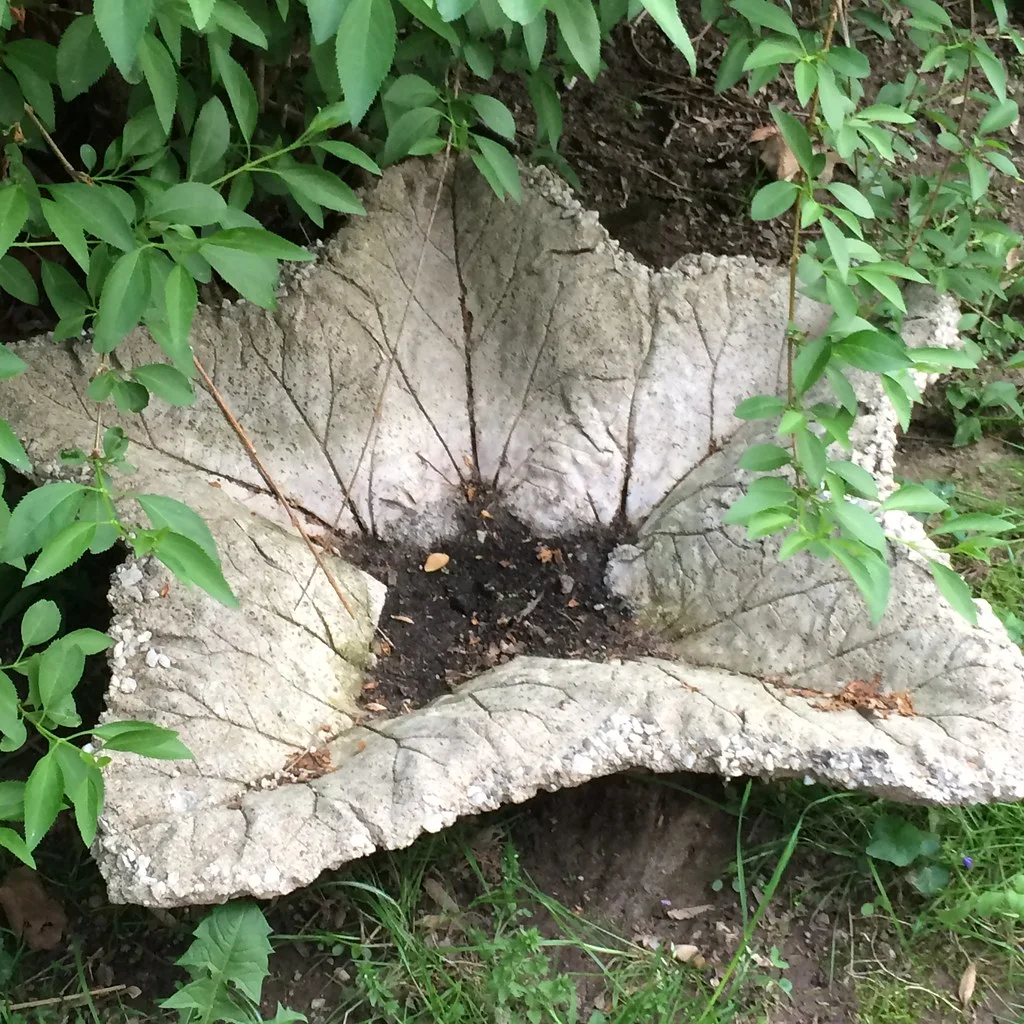
Photo: bptakoma, Flickr, CC BY 2.0
The leaf-shaped planter above, cast from a real leaf, shows how concrete flower pots weather and blend into a garden over time. You can encourage or prevent that aging:
Sealing. A penetrating silane or siloxane sealer on the outside reduces water absorption, staining and efflorescence while keeping the natural look. A water-based sealer on the inside reduces lime leaching. Avoid glossy film-forming sealers on the inside, which can trap moisture. See concrete sealer.
Cleaning. Scrub with water and a stiff brush. For white efflorescence, use a diluted vinegar solution or a masonry cleaner, rinse well, and let dry. Avoid pressure washing old or thin pots at close range.
Aging. To encourage moss and lichen, keep the pot in shade and moisture, or brush on a slurry of buttermilk or yogurt with moss. A weathered concrete flower pot looks like antique stone within a season or two.
Painting and staining. Masonry paint and concrete stain can color concrete flower pots. See concrete staining.
Styles and Shapes of Concrete Flower Pots
Modern and minimalist. Smooth cylinders, cubes, low bowls and tall rectangular troughs in plain gray, white or charcoal concrete. These suit contemporary homes, rooftop terraces and restaurant patios.
Classic urns. Pedestal urns with rolled rims, fluting and garlands, inspired by European gardens. They are often sold with matching bases and look best in pairs flanking a door or gate.
Fluted and ribbed planters. Vertical ribs, as on the walkway planters in the photo at the top of this page, add texture and hide weathering.
Troughs. Long rectangular concrete planters for herbs, alpines and window-box style displays along walls and railings.
Organic and novelty shapes. Leaf castings, bowls shaped like hands or faces, animal planters and rough hypertufa troughs.
Tall planters. Tall square or tapered concrete flower pots raise plants to eye level and make strong vertical accents by an entry.
Choosing the Right Size Concrete Flower Pot
Bigger is usually better for plants. Larger pots hold more soil and moisture, need watering less often, and protect roots from heat and cold. As a guide:
Herbs, succulents and annual bedding plants: 8 to 14 inch concrete flower pots, or shallow bowls 4 to 6 inches deep for succulents.
Mixed displays of annuals and perennials: 16 to 24 inch pots.
Shrubs, ornamental grasses and small evergreens: 24 to 30 inch pots, at least 18 inches deep.
Small trees: extra large concrete planters for outside, 30 to 48 inches wide and deep, holding 10 to 30 cubic feet of soil.
For visual balance, a planter at a front door usually looks right at about one third the height of the door, and pairs of matching concrete flower pots on either side give a formal, finished look.
Moving Heavy Concrete Planters
Heavy concrete flower pots cause more back injuries than any other garden container. To move them safely:
Move them empty. Always position large pots before adding soil, and empty them before moving later.
Use a hand truck or appliance dolly with straps for medium pots up to about 200 pounds.
Use a pallet jack, furniture dolly or planter caddy for extra large planters on hard surfaces.
Walk them. Rock a round pot from side to side and roll it on its bottom edge a few inches at a time, with a helper.
Use boards and pipes. Roll very heavy concrete planters over plywood on short lengths of pipe, the way stone was moved for centuries.
Hire help. For planters over about 500 pounds, ask the supplier or a landscaper with a skid steer or forklift to set them.
Planter caddies with casters under a medium concrete flower pot make it easy to roll it for cleaning or to follow the sun, but they raise the pot and can look out of place.
Concrete Planters vs Other Materials
Concrete vs terracotta. Terracotta is lighter and cheaper but cracks and flakes in freezing weather. Concrete flower pots are heavier and far more frost-resistant.
Concrete vs glazed ceramic. Glazed pots offer color and hold moisture well but can crack in frost and chip easily. Concrete is tougher and more natural looking.
Concrete vs plastic and resin. Plastic is light and cheap but fades, becomes brittle in sun, and blows over. Concrete flower pots stay put and last much longer.
Concrete vs wood. Wood planters rot over time unless lined; concrete does not.
Concrete vs metal. Metal planters can overheat roots in sun and rust or corrode. Concrete keeps roots cooler.
Concrete's main drawbacks are weight and initial lime leaching. Where weight matters, GFRC gives most of the benefits at a fraction of the weight.
Commercial and Security Planters
Extra large concrete planters for outside are widely used by cities, campuses and businesses. Beyond decoration, they serve practical purposes: guiding pedestrians, blocking vehicle access to plazas and sidewalks, closing streets for outdoor dining, and creating shared zones. Large precast concrete planters weighing several tons act as barriers against vehicles. Some are engineered and crash-tested as anti-ram security planters, with steel reinforcement and footings. For ordinary landscaping, commercial concrete planters are often cast with steel reinforcement, drainage systems and lifting inserts so they can be placed by forklift or crane.
Design Ideas for Concrete Flower Pots
Group in odd numbers. Three concrete flower pots of different heights look more natural than two of the same.
Repeat a shape. A row of identical cubes or cylinders along a walkway or wall creates rhythm and order.
Contrast textures. Pair smooth concrete with soft grasses, trailing plants and bold foliage.
Match the hardscape. Gray concrete flower pots tie in with concrete patios, steps and walls; see concrete patio ideas.
Use them as structure. Large planters can define the edge of a patio or screen a view without building a wall.
Light them. Uplights in or beside extra large planters make dramatic evening displays.
Repairing a Cracked Concrete Flower Pot
Even the best concrete gets knocked by a mower or dropped during a move now and then. Hairline cracks in a concrete flower pot are mostly cosmetic. Clean them, let the pot dry, and fill with a concrete crack filler or a thin epoxy, then seal. A pot broken into pieces can be glued with a two-part epoxy for masonry, clamped with straps until cured, and the seams filled with a cement-based patch and colored to match. Keep repaired pots well drained so freezing water does not reopen the crack. See epoxy concrete crack repair.
Buying Tips for Concrete Flower Pots
Check the drainage. Make sure the pot has a hole, or that you can drill one, before buying.
Inspect the surface. Small bug holes are normal in cast concrete, but avoid pots with cracks, crumbling edges or soft, sandy surfaces that rub off on your hand, which signal a weak mix.
Ask about reinforcement. Quality extra large concrete planters for outside contain steel mesh, rebar or glass fibers.
Know the real material. Lift it or check the listed weight. A large pot that weighs 20 pounds is resin or fiberglass with a concrete finish, not real concrete.
Compare delivery terms. Curbside delivery leaves you moving a heavy pallet; placement service costs more but saves effort.
Buy local when you can. Precast yards that make concrete statues, bird baths and fountains usually also make concrete flower pots at lower prices, and you avoid freight on heavy items. See concrete bird bath and concrete fountain.
Liners and Self-Watering Inserts
Many gardeners use plastic nursery pots or liners inside decorative concrete flower pots. A liner makes it easy to change seasonal displays, protects acid-loving plants from lime, and reduces the weight you need to fill. Self-watering inserts, with a water reservoir below the soil, keep plants evenly moist and reduce watering in hot, sunny spots, which is helpful because porous concrete draws some moisture from the soil. In extra large concrete planters for outside, gardeners often fill the bottom third with lightweight material, such as upside-down plastic pots or packing material wrapped in landscape fabric, when growing shallow-rooted plants, to save soil and weight. Do not do this for trees and shrubs, which need the full soil depth.
Concrete Flower Pots Indoors
Small concrete flower pots are popular indoors for succulents, cacti, snake plants and other houseplants. Indoors, protect furniture and floors from water and scratches with a saucer and felt pads, since water seeping through unsealed concrete can stain wood. Seal the inside of indoor concrete pots with a water-based sealer if you want to reduce moisture passing through the walls. Because the pots are heavy for their size, they work well for top-heavy plants that tip over in plastic pots.
Seasonal Planting Ideas for Concrete Pots
Spring: tulips, daffodils and pansies in concrete flower pots by the front door, followed by herbs and early annuals.
Summer: geraniums, petunias, coleus and sweet potato vine in mixed containers, or lavender and rosemary in sunny spots.
Fall: mums, ornamental kale, heuchera and grasses, with small pumpkins around the base.
Winter: dwarf evergreens, boxwood and winter-interest twigs and branches in extra large concrete planters for outside, which hold up to frost far better than terracotta.
How Long Concrete Flower Pots Last
A well-made solid concrete flower pot can last 50 years or more outdoors, which is why antique concrete urns still stand in old gardens and cemeteries. GFRC planters typically last decades as well, though their thin walls show impact damage more easily. Hypertufa pots usually last 10 to 20 years before frost and roots wear them down. The factors that shorten a pot's life are the same everywhere: water trapped in freezing weather, poor-quality mixes with too much water or too little cement, impacts from mowers and carts, and tree roots that outgrow the pot and press on the walls. Repotting trees every few years, keeping drainage open and setting pots on feet will keep concrete flower pots looking good for generations, and the slow patina they gain is part of their appeal.
Frequently Asked Questions
How do I drill a drainage hole in a concrete flower pot?
Turn the pot upside down on a soft surface, mark the center, and drill with a masonry bit in a hammer drill or a diamond core bit, keeping the bit wet. Start small and step up to about 1/2 to 1 inch.
Do concrete flower pots need to be sealed?
Not necessarily, but sealing reduces staining, efflorescence, lime leaching and water absorption in freezing climates.
What are the best extra large concrete planters for outside?
Reinforced solid concrete for ground-level sites where weight is an advantage, and GFRC for decks, balconies and rooftops where weight must be limited.
Why is my concrete flower pot turning white?
That white crust is efflorescence, salts carried to the surface by water moving through the concrete. Brush it off dry, wash with diluted vinegar if needed, and seal the pot to reduce it. It is harmless to plants and usually fades as the pot ages.
Can concrete flower pots stay outside all year?
Yes. Good concrete flower pots with drainage holes, raised on feet, can stay outside year-round in most climates. Move small, thin or hypertufa pots under cover in very cold regions.
Are concrete flower pots good for plants?
Yes, as long as they drain. Concrete flower pots keep roots cooler, resist tipping and last for decades. Rinse or seal new pots for acid-loving plants.
How heavy is a large concrete flower pot?
A 24 inch solid concrete pot often weighs 100 to 200 pounds empty; extra large concrete planters for outside can weigh 300 to 1,000 pounds or more.
Will concrete flower pots crack in winter?
Good-quality pots that drain freely rarely crack. Trapped water that freezes is the main cause.
Can I put concrete flower pots on a deck?
Small and medium ones, yes. For extra large planters, choose lightweight GFRC and place them over beams, or have the deck checked. Raise every pot on feet so water drains and the deck boards underneath can dry out instead of rotting.
Sources
- University of Minnesota Extension: container gardening
- Portland Cement Association: concrete properties and freeze-thaw resistance
- International Glassfibre Reinforced Concrete Association
- International Residential Code: deck live loads
Related Guides
- Concrete slide — hillside and playground slides, plus concrete sliders (knee boards)