
Decorative Concrete Guide: Types, Finishes, Durability, Maintenance and Costs
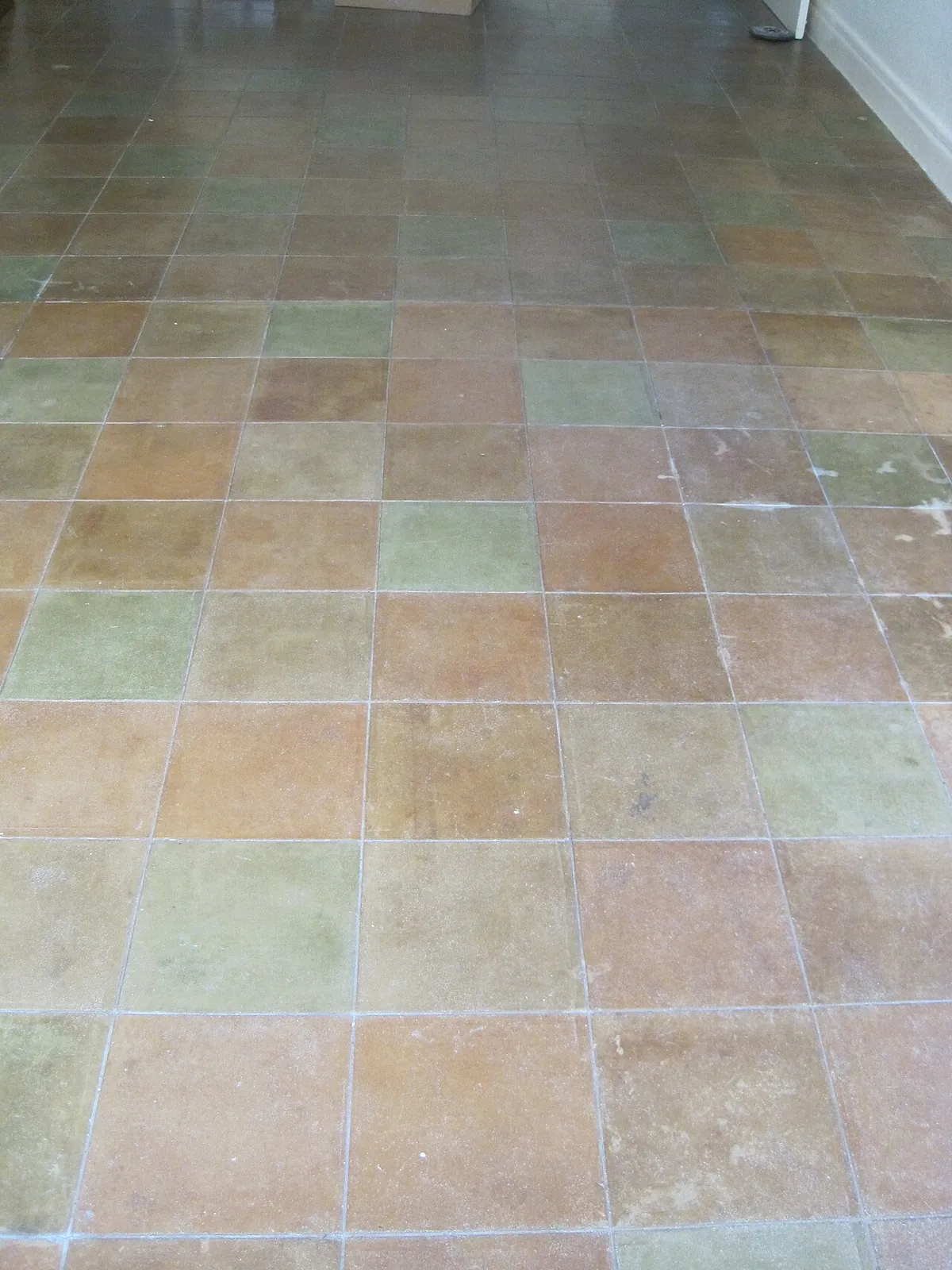
Photo: Joel Bradshaw, Wikimedia Commons, public domain
Quick Answer
Decorative concrete is any concrete that is colored, textured, patterned or polished to look attractive as well as work structurally. The main types are stamped concrete (patterns pressed into fresh concrete), stained concrete (acid or water-based stains on cured concrete), integral color, polished concrete, exposed aggregate, stenciled and engraved concrete, and overlays such as microcement that resurface old slabs. Costs range from about $3 to $8 per square foot for stains and simple color, $8 to $20 for stamped and polished finishes, and more for custom work. Most decorative concrete needs sealing and occasional resealing, but lasts decades and costs less than many natural stone or tile alternatives.
Concrete used to be the plain gray stuff under everything else. Today, decorative concrete is a major part of the construction industry, turning patios, driveways, pool decks, floors, countertops and walls into finished surfaces in their own right. The floor in the photo above, in the basement of a historic Honolulu house, shows how long decorative concrete has been around: the slab was scored into squares and stained in mottled browns and greens decades ago, giving a tile-like look with the toughness of concrete.
This guide explains the main types of decorative concrete, how each is made, where each works best indoors and outdoors, how long it lasts, how to maintain it, what it costs, and how to choose a contractor. Each finish has its own detailed guide linked along the way.
What Makes Concrete Decorative?
Any concrete can become decorative concrete through color, texture, pattern or finish. Color can be mixed into the concrete (integral color), troweled onto the surface (color hardener), soaked in (stains and dyes), or applied as coatings. Texture can be pressed in with stamps and rollers, brushed, exposed by washing or blasting away the surface to reveal stones, or ground and polished smooth. Patterns can be stamped, stenciled, saw-cut, engraved or created with joints. Shape comes from forms and molds, as in precast architectural concrete and cast concrete furniture. Most decorative concrete combines several techniques: for example, integral color plus stamping plus a release agent plus sealer on a stamped patio. Some techniques are applied to new concrete as it is placed, while others transform existing slabs. See types of concrete finishes.
Stamped Concrete
Stamped concrete is the most popular form of decorative concrete outdoors. While the concrete is still plastic, installers color it with integral color or color hardener, apply a release agent, and press large rubber stamping mats into the surface to imprint patterns that imitate stone, slate, brick, cobblestone, tile or wood planks. After curing, the release is washed off, leaving darker tones in the low spots for an antique look, and the surface is sealed. Stamped concrete gives the look of natural stone or pavers at lower cost, without weeds growing between joints. It is used on patios, pool decks, driveways, walkways and entries. Its drawbacks are that it can be slippery when sealed if no grit is added, it needs resealing every two to three years, and cracks are harder to hide than in pavers. See stamped concrete patterns, stamped concrete patio, stamped concrete driveway and stamped concrete vs pavers.
Stained and Dyed Concrete
Stains add color to cured concrete. Acid stains are solutions of metallic salts in mild acid that react chemically with the lime in concrete, producing translucent, variegated colors in earthy browns, tans, rusts, greens and blue-greens, like the mottled floor at the top of this page. No two acid-stained floors look the same, which many owners love. Water-based stains and dyes penetrate the surface and offer a much wider range of colors, including black, gray, blue, red and white, with more uniform results. Both need a clean, porous surface and a sealer on top. Stains work on new and old slabs, indoors and out, and are among the least expensive decorative concrete options. They do not hide cracks, patches or stains in the slab; they enhance whatever is there. See concrete staining and how to color concrete.
Integral Color and Color Hardener
Integral color is pigment mixed into the concrete at the plant or on site, coloring the entire thickness of the slab. If the surface chips or wears, the same color shows underneath. It is often used with broom finish, stamped and exposed aggregate concrete. Colors are usually soft earth tones, grays and charcoals, since strong colors need a lot of pigment. Color hardener is a dry shake of cement, pigment and hard aggregate broadcast onto fresh concrete and troweled in, giving brighter colors and a harder, more wear-resistant surface in the top layer. Both are best for new concrete; existing slabs are colored with stains, dyes, coatings or overlays.
Polished Concrete
Polished concrete is made by grinding a concrete slab with progressively finer diamond tools, densifying it with a chemical hardener, and polishing it to a matte, satin or high-gloss sheen. Depending on how deep the grinding goes, the result shows just the cement paste (cream finish), fine sand (salt and pepper), or larger stones (exposed aggregate polish). Dyes can be added for color. Polished concrete is extremely durable, easy to clean and has no coating to peel, which is why it is common in retail stores, warehouses, offices, schools and modern homes. It works best on interior slabs. It is hard and can be cold underfoot, and it shows cracks and patches in the slab. See polished concrete cost, concrete grinding and concrete densifier.
Exposed Aggregate
Exposed aggregate concrete reveals the stones in the mix at the surface. Installers place concrete, sometimes with decorative pebbles or special aggregate seeded into the surface, then use a surface retarder and wash away the top layer of cement paste with water and brushes, leaving the rounded stones exposed. The finish is very slip-resistant, durable and hides dirt well, making it popular for driveways, pool decks, walkways and patios, especially in Australia and the western United States. Polished exposed aggregate and terrazzo-like finishes are also used indoors. See exposed aggregate concrete and concrete aggregate.
Stenciled, Engraved and Saw-Cut Concrete
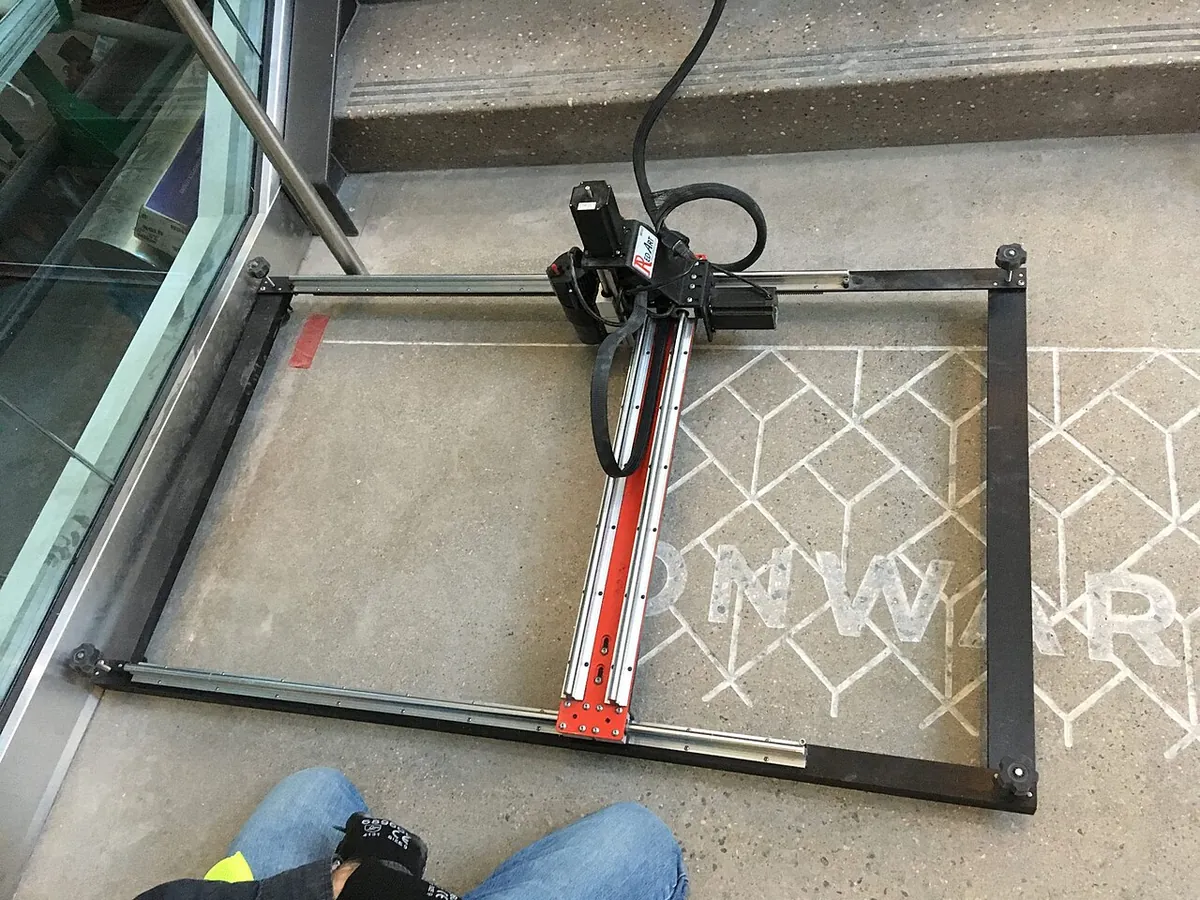
Photo: Ahburner, Wikimedia Commons, CC BY-SA 4.0
Stenciled concrete uses paper or plastic stencils laid on fresh concrete or on a thin overlay, with color hardener and texture applied over them, then removed to reveal grout lines in patterns like brick, tile or stone. Engraved concrete cuts patterns, borders, logos or lettering into existing concrete with saws, grinders or routers, often followed by stains to color the shapes. Modern engraving uses portable CNC machines like the one above, which cut precise designs and text into a floor from a computer file. Saw-cut patterns, such as grids, diamonds or tile layouts scored into a slab, are a simple, low-cost way to add pattern, especially when combined with stains, as in the scored and stained floor at the top of this page. These techniques are good for existing slabs that are structurally sound but plain. See stenciled concrete and concrete saw.
Overlays and Microcement
Decorative overlays are thin cement-based layers applied over existing concrete to give it a new surface. They range from skim coats and spray textures, often used on pool decks, to stampable overlays about 1/4 to 3/4 inch thick that accept stamp patterns, to self-leveling overlays that can be stained or polished, to microcement, a very thin troweled finish only a few millimeters thick used on floors, walls, showers and furniture. Overlays hide stains, minor cracks and worn surfaces, and allow decorative concrete without tearing out an old slab. They depend on good preparation and a sound base; overlays over cracked or moving slabs will crack too. See microcement, concrete overlay cost and how to resurface concrete.
Precast and Architectural Decorative Concrete
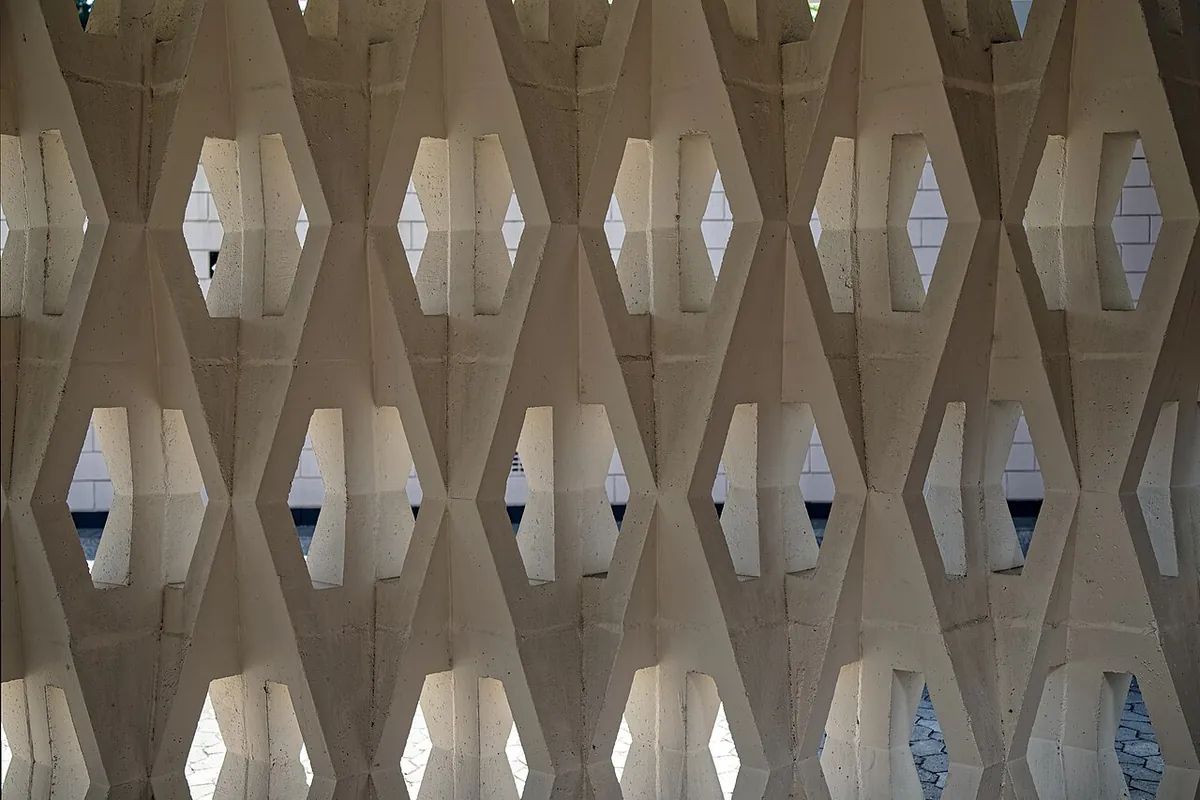
Photo: Acabashi, Wikimedia Commons, CC BY-SA 4.0
Decorative concrete is not only about flat surfaces. Precast architectural concrete includes facade panels, screen walls, columns, cornices, balustrades, planters, benches, fountains and countertops, cast in detailed molds with colored and textured finishes. The precast screen wall above, made of repeated diamond-pattern units at a London crematorium, shows how a simple module can create a striking architectural surface that lets light and air through. Glass-fiber reinforced concrete allows thin, lightweight decorative panels and furniture. Board-formed concrete, cast against rough-sawn timber, leaves a wood grain pattern on walls. Form liners create patterns of stone, brick and abstract designs on retaining walls and bridges. See precast concrete, glass fiber reinforced concrete and concrete countertops.
Where Decorative Concrete Works Best
Outdoors, stamped concrete, exposed aggregate, broom finishes with integral color, and stained and sealed concrete are the most common choices. Stamped finishes give the most visual impact on patios and pool decks; exposed aggregate gives the best grip and wear on driveways and walkways; sprayed textures and cool-colored coatings keep pool decks comfortable underfoot. Indoors, polished concrete, stained and sealed slabs, microcement and engraved floors are popular in basements, kitchens, living areas, shops and offices. Walls, fireplaces, showers and countertops use microcement, cast concrete and GFRC. Choose finishes that suit the traffic, climate and maintenance you can handle: glossy sealed finishes look rich but can be slippery and need resealing; textured and exposed aggregate finishes are more forgiving. See concrete patio ideas and concrete floors in homes.
Decorative Concrete for Patios
Patios are the most common place homeowners use decorative concrete. A plain gray slab can become an outdoor room with the right finish. Stamped concrete in a slate, flagstone or ashlar pattern gives the look of natural stone at a lower price and with fewer joints for weeds. A broom finish with integral color in a warm tan or charcoal is a simpler, slip-resistant choice. Exposed aggregate gives a natural, pebbly texture that hides dirt and leaves. Borders add a finished look: a band of contrasting color, a stamped border around a broom-finished field, or a saw-cut grid that frames the space. For existing patios, stains, stencils and overlays update the look without tearing out the slab. Plan the decorative concrete patio with the house and landscape in mind, matching colors to roofing, siding and stone, and thinking about where furniture, grills, fire pits and planters will sit. Light colors stay cooler in sun, which matters for bare feet and outdoor dining. See how to pour a concrete patio and how to cover an old concrete patio.
Decorative Concrete Driveways
Driveways take heavy loads, turning tires, oil drips, freeze-thaw cycles and deicing salts, so decorative finishes must be durable. Exposed aggregate is one of the best choices for driveways: it is slip-resistant, hides tire marks and oil stains well, and does not depend on a surface coating. Stamped concrete driveways look impressive and add curb appeal, but the sealer needs regular renewal and the textured surface should not be too deep, so it stays comfortable to walk on and easy to shovel. Colored broom finishes with decorative borders offer a middle ground. Stains and coatings on driveways wear faster than on patios because of tire traffic. Whatever the finish, a decorative concrete driveway needs proper thickness, reinforcement, base and joints, just like a plain one; decoration does not replace good structure. See concrete driveway cost, how thick a concrete driveway should be and stamped concrete driveway.
Decorative Concrete Floors Indoors
Indoor decorative concrete floors range from simple sealed slabs to polished, stained, dyed and engraved surfaces. In new homes built on slabs, the slab can become the finished floor, saving the cost of tile or wood. Builders protect the slab during construction, then grind, stain or dye, and polish or seal it at the end. In existing homes, old carpet, vinyl or tile can be removed to reveal the slab underneath, which can then be cleaned, repaired and finished; old adhesives must be removed first, and patches and cracks become part of the look. Basements often get stained and sealed floors or epoxy coatings. Lofts, studios and commercial spaces favor polished concrete for its durability and industrial character. Radiant floor heating works well with concrete floors and makes them comfortable in cold climates. Rugs soften acoustics and add warmth, and felt pads under furniture protect the finish from scratches. See heated concrete floor and epoxy for concrete.
Decorative Concrete Walls and Vertical Surfaces
Decorative concrete is not limited to flat surfaces. Vertical stamping and carving uses a stiff, sticky mortar troweled onto walls and shaped to imitate stone, brick or wood, then stained, which is popular for retaining walls, fireplaces, outdoor kitchens and themed environments. Board-formed concrete walls show the grain of the wood forms. Form liners imprint patterns onto poured walls and are common on highway retaining walls and bridges. Microcement and plaster finishes create smooth, seamless walls and showers. Precast panels and screen blocks add texture and pattern to facades and garden walls. For retaining walls and outdoor kitchens, decorative finishes can turn plain block or poured walls into features. See concrete retaining walls and cinder block outdoor kitchen.
Combining Decorative Techniques
Many of the best decorative concrete projects combine several techniques. A patio might use integral color throughout, a stamped field in an ashlar slate pattern, a smooth troweled border in a contrasting color, and a release agent to add depth, all sealed with a slip-resistant sealer. A living room floor might combine light grinding to show fine aggregate, a water-based dye for color, saw-cut joints laid out like large tiles, and a polished finish. A pool deck might use a spray-texture overlay in a cool color over the existing slab, with stamped coping and a saw-cut border. Combining techniques gives depth and character, but more steps mean more cost and more places for mistakes, so work with an experienced contractor and approve samples before the work starts.
Slip Resistance and Safety
Safety is an important part of decorative concrete design, especially outdoors and around pools. Smooth, sealed surfaces can be slippery when wet. Options to improve slip resistance include using textured stamps rather than smooth ones, broom or exposed aggregate finishes in high-traffic areas, mixing fine anti-slip grit into the final sealer coat, choosing matte penetrating sealers instead of high-gloss film sealers, and keeping polished floors clean and dry, since dust and spills reduce traction. Ramps, steps, entries and pool decks need the most attention, because that is where wet feet and quick steps meet. Commercial projects often must meet slip-resistance standards measured by dynamic coefficient of friction tests. Discuss slip resistance with the contractor before choosing the finish, not after the first fall. See concrete pool deck repair and concrete ramp.
Common Problems With Decorative Concrete
The most common problems with decorative concrete are color variation, sealer failure, cracking and wear. Color can vary between pours and batches because of changes in the cement, water content, weather and finishing; using the same supplier and mix and pouring in large sections reduces this. Sealers can turn white and cloudy, called blushing, from moisture trapped under them, or peel if applied too thick or over a damp surface. Cracks happen in all concrete; good joint layout, reinforcement and base preparation control them, and decorative patterns can be designed to hide joints in grout lines. High-traffic paths wear color hardeners and sealers faster. Efflorescence, a white powder, can appear on colored concrete as moisture brings salts to the surface. Most of these problems can be fixed by cleaning, stripping and resealing, or by recoloring with stains, but prevention through good design and workmanship is far easier. See efflorescence on concrete and why concrete cracks.
How Long Does Decorative Concrete Last?
The concrete itself lasts 30 to 50 years or more when properly placed and cured. The decorative surface depends on the finish and care. Integral color and exposed aggregate last as long as the slab. Stamped concrete keeps its pattern for decades but needs resealing every two to three years to keep color and protect from freeze-thaw and stains. Stains are permanent in the concrete but the sealer over them wears and needs renewing. Polished concrete lasts many years with occasional re-polishing in high-traffic areas. Overlays last 10 to 20 years or more if the base is sound and the overlay is maintained. Coatings like epoxy last 5 to 20 years depending on use. See how long concrete lasts.
Maintaining Decorative Concrete
Most decorative concrete needs regular cleaning and periodic resealing. Sweep often and wash with mild, pH-neutral cleaners; avoid acids and harsh chemicals that can etch or dull the surface. Clean oil and food spills quickly. Reseal outdoor stamped and stained concrete every two to three years, or when water no longer beads, using a sealer compatible with the original. Indoors, polished concrete is maintained with dust mopping, auto-scrubbing with neutral cleaners and occasional burnishing. Avoid deicing salts on decorative concrete outdoors; use sand for traction instead. Fill cracks with flexible, color-matched fillers. A well-maintained decorative concrete surface keeps its look for decades. See concrete sealer, how to seal concrete and how to clean concrete.
Decorative Concrete Trends
Tastes in decorative concrete change like any design trend. Over the past decade, natural-looking finishes have grown in popularity: soft grays and warm neutrals rather than bright colors, large-format saw-cut patterns that look like big tiles, honed and lightly polished floors that show fine aggregate, and exposed aggregate with local stones. Wood-plank stamps and board-formed walls bring warmth to modern designs. Microcement walls and floors give seamless, spa-like bathrooms. Outdoors, cool-toned pool decks, large stamped slate patterns and simple broom finishes with crisp borders are common. Sustainable choices, such as using recycled aggregate, supplementary cementitious materials and polished slabs instead of extra flooring, also influence decisions. Classic looks, like ashlar stone patterns and acid-stained floors, remain popular because they age well.
When choosing a look, think long-term. Strong trend colors can date a house quickly, while neutral, natural tones tend to last. Because decorative concrete is permanent and difficult to change, it is wise to pick a finish you will still like in 15 or 20 years, and to add bolder color through furniture, planting and accessories instead.
Decorative Concrete Costs
Costs vary by finish, region, project size and complexity. Typical installed prices per square foot: broom finish with integral color, about $7 to $12 including the slab; stained existing concrete, about $3 to $8; stained and polished, about $4 to $10; polished concrete, about $5 to $15; exposed aggregate, about $8 to $16 including the slab; stamped concrete, about $10 to $20 including the slab, more for multiple colors and intricate patterns; stenciled concrete, about $8 to $18; engraved concrete, about $5 to $15 for engraving and staining existing slabs; overlays, about $6 to $15; microcement, about $10 to $25. Resealing costs about $1 to $3 per square foot. Decorative concrete is often cheaper than natural stone and comparable to or cheaper than pavers and tile for similar looks. See concrete cost per square foot and concrete coating cost.
Choosing a Decorative Concrete Contractor
Decorative concrete is part craft, part chemistry, so choose a contractor carefully. Look at a portfolio of completed projects, ideally including jobs several years old, and visit a few if possible. Ask which techniques they specialize in; a great stamped concrete crew may not do polished floors. Ask how they handle cracks, joints, sealing and slip resistance, and request samples in the colors and finishes you are considering, made with the actual materials. Get a written contract that specifies the mix, thickness, reinforcement, joints, colors, patterns, sealers and maintenance recommendations. Ask for references from customers whose projects are at least three years old, and ask how the contractor handled any problems that came up. Industry organizations such as the American Society of Concrete Contractors' Decorative Concrete Council offer training and certification, which is a good sign of a committed contractor.
Frequently Asked Questions
What is decorative concrete?
Concrete that is colored, textured, patterned or polished for appearance, such as stamped, stained, polished or exposed aggregate concrete.
What is the cheapest type of decorative concrete?
Staining or dyeing an existing slab, or adding integral color to a new broom-finished slab, are usually the least expensive options.
Is decorative concrete slippery?
Glossy sealed finishes can be slippery when wet. Anti-slip additives in the sealer, textured stamps and exposed aggregate improve grip.
Can you make old concrete decorative?
Yes. Stains, dyes, engraving, grinding and polishing, overlays and microcement can transform sound existing slabs.
How often should decorative concrete be sealed?
Outdoor decorative concrete usually needs resealing every two to three years.
Sources
- American Society of Concrete Contractors: Decorative Concrete Council
- Portland Cement Association: decorative concrete finishes
- American Concrete Institute: guide to decorative concrete (ACI 310)
- Concrete Network: decorative concrete techniques
Related Guides
- Exposed aggregate concrete — how it's made, sealing and cost
- Pool deck concrete — installation, finishes and cost
- Concrete house construction — ICF, block, poured and prefab homes
- Concrete tub — concrete bathtubs and bathrooms
- Brushed concrete — broom finish and concrete brushes
- Concrete fence — panel, poured and block fences
- Concrete fountain — tiered fountains, pumps and care
- Concrete sink — vessel, integral and kitchen sinks
- Concrete stair treads — precast and poured treads
- Concrete release agents — form oil and reactive release for forms and molds
- Rock salt finish concrete — pitted decorative finish for pool decks and patios
- World of Concrete — the industry's annual trade show in Las Vegas
- Concrete polisher — planetary grinders, hand polishers, pads and rental prices
- Stamped concrete floors — indoor patterns, overlays vs new slabs, sealers and cost
- Concrete flower pots — sizes, weights, prices and extra large planters for outside
- Concrete slide — hillside and playground slides, plus concrete sliders (knee boards)