
Drill Concrete With Hammer Drill: How to Drill Into Concrete Step by Step
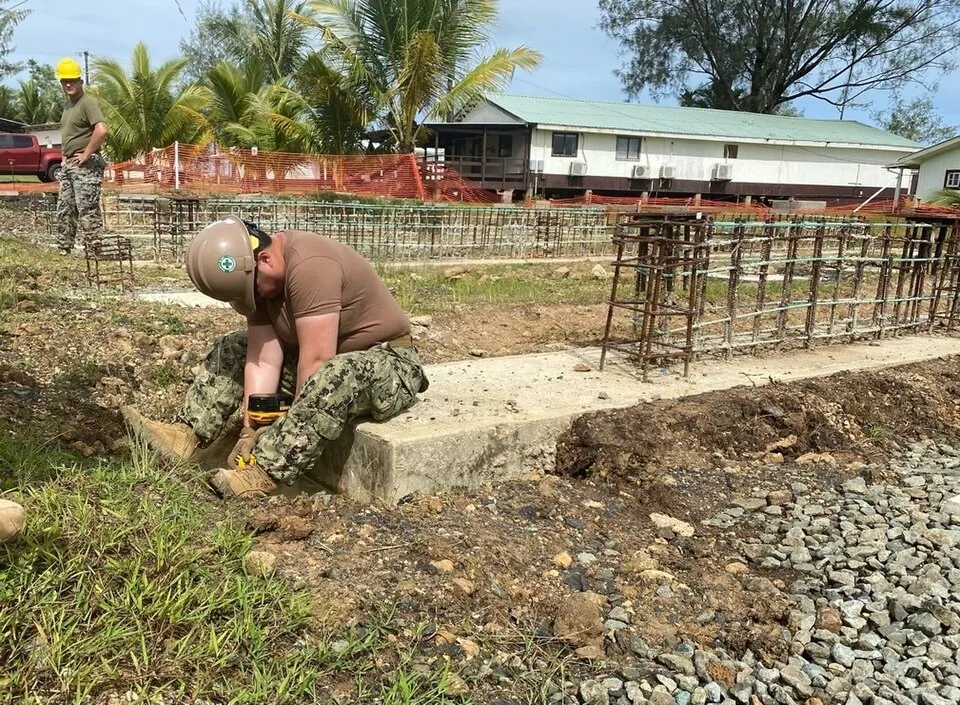
Photo: U.S. Navy, Petty Officer 2nd Class Amanda Hartjes, Wikimedia Commons, public domain
Quick Answer
How to drill into concrete: use a hammer drill or, for bigger holes, a rotary hammer, with a carbide-tipped masonry or SDS bit the size your anchor calls for. Mark the spot, set the depth stop, start slowly without hammer action to make a small dimple, then switch on hammer mode and drill at full speed with firm, steady pressure, keeping the drill straight. Pull the bit out every inch or so to clear dust, and blow or vacuum the hole clean at the end. Can you drill into concrete with a regular drill? Only very small, shallow holes, slowly; a hammer drill is far faster. To drill through concrete walls or slabs, use a long bit, drill from both sides if possible, and scan first for rebar, cables and pipes. Always control the dust, which contains crystalline silica.
Sooner or later every homeowner needs to drill into concrete: to hang a shelf on a basement wall, anchor a post base, fix a handrail to steps, mount a TV on a block wall, run a cable or pipe through a foundation, or bolt down a shed. With the right drill and bit it is a quick job. With the wrong ones it is slow, the bit overheats and dulls, the hole wanders, and you can end up with a crumbled surface and an anchor that will not hold.
This guide explains what tools you need, the difference between a regular drill, a hammer drill and a rotary hammer, how to choose bits, how to drill concrete with hammer drill step by step, how to drill deep holes and drill through concrete walls and slabs, what to do when you hit rebar, how to control dust, and how to fix common problems.
Can You Drill Into Concrete With a Regular Drill?
Can you drill into concrete with an ordinary drill/driver? Technically yes, for a few small, shallow holes, using a masonry bit at low speed with lots of pressure and patience. But a regular drill only spins the bit, and concrete is much harder than the bit's ability to scrape it away. Progress is slow, the bit gets very hot, and drilling more than a couple of holes ruins the bit and strains the drill. For anything more than a few small holes in soft block or mortar, use a hammer drill or rotary hammer.
Hammer Drill vs Rotary Hammer
A hammer drill spins the bit and, in hammer mode, also drives it forward and back in very fast, small blows, thousands of times per minute. The hammering comes from two ridged discs, or clutch plates, that ride over each other inside the drill. Each blow chips a little concrete in front of the bit, and the rotation and spiral flutes carry the dust out. A hammer drill on concrete drills holes several times faster than a regular drill and is ideal for holes up to about 1/2 inch in diameter and a few inches deep, which covers most anchors, screws and plugs. Hammer drills use ordinary round or hex-shank masonry bits in a keyed or keyless chuck, and most can switch off the hammer to drill wood and metal.
A rotary hammer is a heavier tool that uses an electro-pneumatic piston to drive a striker against the back of the bit, delivering much harder blows at a lower rate. Rotary hammers use SDS-plus or SDS-max bits that slide in the chuck so the bit can move with each blow. A rotary hammer is the right hammer drill for drilling into concrete when holes are larger than about 1/2 inch, deeper than a few inches, or numerous, such as anchoring a sill plate, installing many wedge anchors, or drilling through a foundation wall. Many rotary hammers also have a chisel-only mode for chipping. If you drill concrete often, a rotary hammer is worth having; for occasional small holes, a hammer drill is enough.
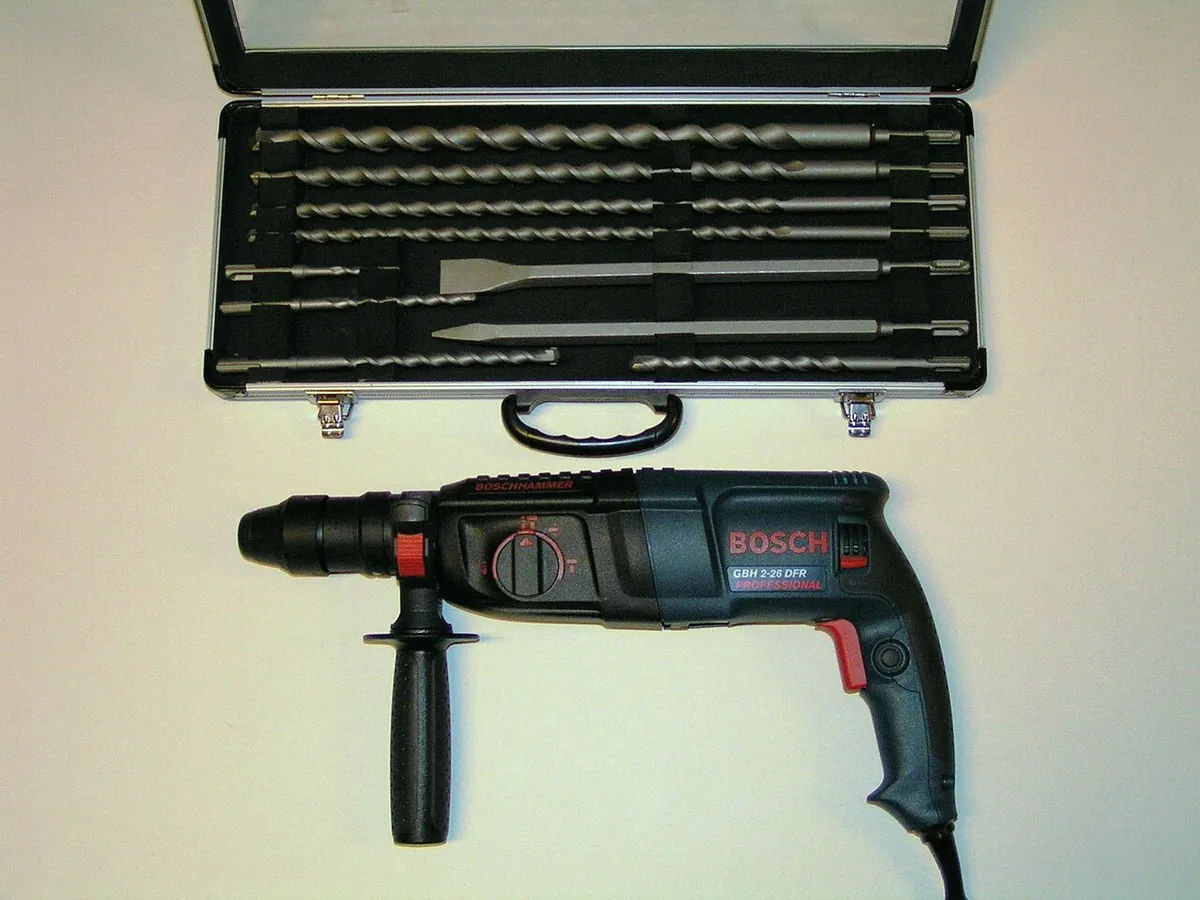
Photo: CBX, Wikimedia Commons, CC BY-SA 3.0
Choosing a Bit for Concrete Drilling
For concrete drilling, use a carbide-tipped masonry bit. The carbide tip is brazed to a steel shank with spiral flutes that carry dust out of the hole. For hammer drills, choose bits labeled for percussion or hammer use with a round or hex shank. For rotary hammers, use SDS-plus bits (up to roughly 1 1/8 inch) or SDS-max bits for larger holes. Four-cutter bits drill rounder holes and handle rebar contact better than two-cutter bits. Size the bit exactly to the anchor maker's instructions: an anchor in an oversized hole will not hold. See concrete drill bit for bit types in detail, and types of concrete anchors and concrete screws for the hole sizes each needs.
How to Drill Concrete With Hammer Drill, Step by Step
Here is how to drill concrete for an anchor or screw, which is the most common job.
First, check what is behind or inside the concrete. In walls and slabs, there may be rebar, post-tension cables, electrical conduit, water pipes or radiant heating tubing. Look for clues such as outlets, switches and pipes nearby, check drawings if you have them, and for anything more than a shallow anchor in a home slab, consider a scan with a stud finder made for concrete or a professional scanning service. Never drill into a post-tensioned slab without professional scanning; cutting a tendon is dangerous. See post-tensioned concrete slab.
Second, gather your gear: hammer drill or rotary hammer, the correct bit, a depth stop or tape on the bit, a pencil or marker, safety glasses, hearing protection, a dust mask or respirator, and a vacuum or dust extraction attachment.
Third, mark the hole and set the depth. Mark the center with a pencil. Set the depth rod on the drill, or wrap tape around the bit, at the anchor's embedment depth plus about 1/4 to 1/2 inch so dust has somewhere to go.
Fourth, start the hole. Hold the drill square to the surface with both hands, using the side handle. With hammer mode off, or at low speed, drill a shallow dimple so the bit does not wander across the surface. On tile or a finished surface, a piece of masking tape helps the bit grip.
Fifth, drill. Switch hammer mode on and increase to full speed. Apply firm, steady pressure in line with the bit; let the hammer action do the work rather than leaning your whole weight on it, which can actually slow the drill. Keep the drill straight. When drilling concrete, hammer drill speed and steady pressure matter more than force.
Sixth, clear the dust. Every inch or so, pull the bit partway out while it is still spinning to clear dust from the flutes, then continue. This keeps the bit cool and cutting. If the bit gets very hot, stop and let it cool; do not dip a hot carbide bit in water, which can crack the tip.
Seventh, clean the hole. When you reach the depth stop, pull the bit out and clean the hole with a blow-out bulb, a brush and a vacuum. A clean hole is essential for anchors to reach their rated strength, especially adhesive anchors.
That is the basic method for drilling into concrete with hammer drill tools. For a single hole for a plastic plug and screw, it takes less than a minute.
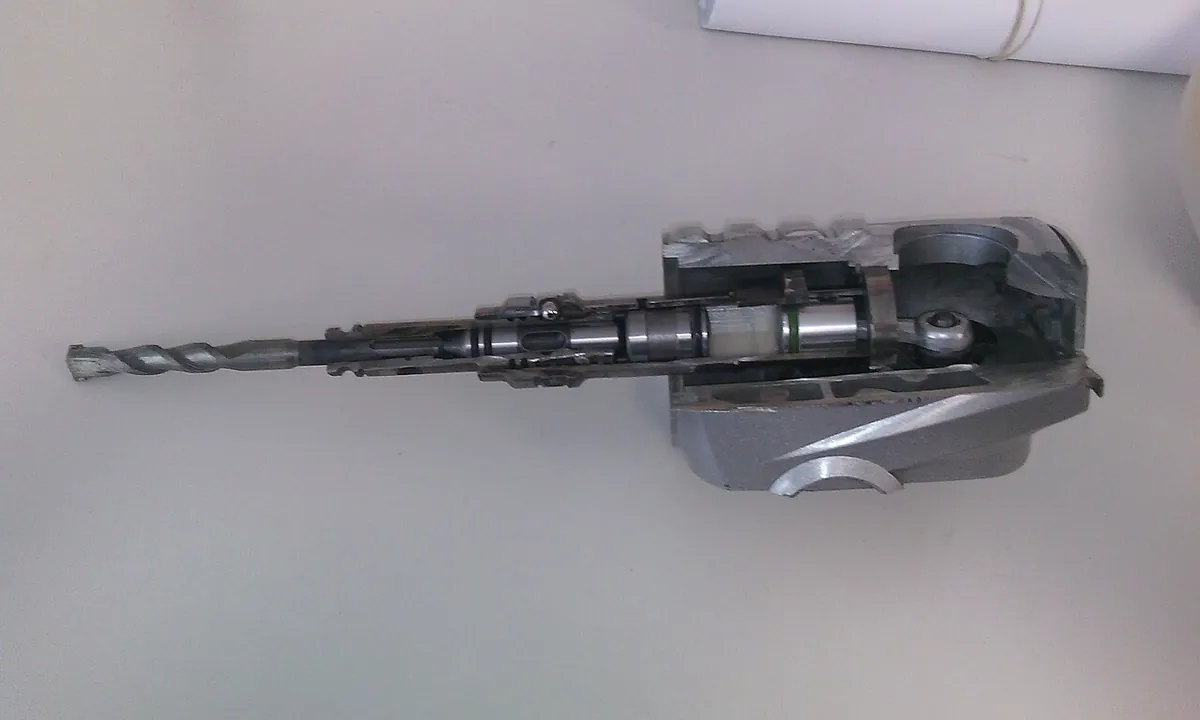
Photo: Hoëlig, Wikimedia Commons, CC BY-SA 3.0
How to Drill Through Concrete Walls and Slabs
To drill through concrete for a pipe, cable or vent, the process is similar but the stakes are higher. Holes up to about 1 inch can be drilled with a long SDS bit in a rotary hammer. For larger holes, such as 2 to 6 inches for plumbing or dryer vents, a diamond core drill is the right tool, used wet or with dust extraction; see concrete core drilling.
When drilling right through a wall, the back face tends to blow out in a ragged cone as the bit breaks through. To avoid that, drill a small pilot hole all the way through first, then drill from each side to meet in the middle with the full-size bit. Ease off the pressure as the bit approaches the far side. Check where the bit will exit: outside a foundation wall it may come out below grade in soil, and inside a slab it may hit a pipe or heating tube. Seal the finished hole around the pipe or cable to keep water, insects and radon out.
How to drill through concrete foundation walls safely also means respecting the structure. Small holes for pipes and cables are normally fine. Large openings, cuts through beams or columns, and many holes close together can weaken the structure and should be checked by an engineer.
What to Do When You Hit Rebar
Sometimes the bit stops advancing and you hear and feel a metallic grinding; that is usually rebar or mesh. Do not keep forcing the hammer drill on concrete steel: you will dull or break the bit. Options are to move the hole slightly, if the anchor location allows; to use a rebar-cutting bit, a special bit designed to cut through steel in rotation-only mode; or to use a diamond core bit, which cuts both concrete and steel. In structural elements, cutting rebar should be approved by an engineer. In a home slab with light mesh, shifting the hole by an inch or two is usually the simplest fix.
Drilling Into Concrete Block and Brick
Concrete block walls are hollow, so drilling into concrete block is easier but anchoring is trickier: the bit may break into a hollow core, and expansion anchors may not grip. Use anchors rated for hollow block, such as sleeve anchors or toggles, or drill into the solid face shells or into grout-filled cells. Drill mortar joints only if the anchor maker allows it, because mortar is weaker. Use hammer mode on solid block and brick, but try rotation only on soft or crumbly block and old brick to avoid blowing out the back face. See concrete blocks.
Controlling Concrete Dust When Drilling
Concrete drilling makes fine dust containing respirable crystalline silica. For a few holes, a damp sponge or a vacuum nozzle held at the hole and a dust mask may be enough. For many holes, or work indoors, use a drill with a dust shroud connected to a HEPA vacuum, or hollow vacuum drill bits that suck dust through the bit, which also leaves the hole clean for anchors. OSHA's silica standard lists drilling with a shroud and dust collector as an accepted control for handheld drills. Wear eye and hearing protection too; rotary hammers are loud. See concrete dust.
Hammer Drill Settings and Modes
Most hammer drills and combination drills have a mode selector with icons for drill, hammer drill and screwdriver. On the selector of a combination drill, hammer concrete settings are marked with a hammer icon; that is the mode you need for masonry. Some drills also have a two-speed gearbox; use the high-speed gear for concrete drilling with small bits, because hammer action works best at high revolutions. Rotary hammers usually have three modes: rotation only, rotation with hammer, and hammer only for chiseling. Use rotation with hammer for drilling into concrete, rotation only for wood, metal or tile, and never use chisel mode with a drill bit.
Variable speed triggers let you start slowly and then go to full speed once the bit has bitten in. Clutch settings on drill/drivers should be set to the drilling position, not a torque setting, or the clutch will slip. If your drill has an anti-kickback or electronic clutch feature, it adds safety if the bit binds on rebar.
Corded or Cordless?
Cordless hammer drills and rotary hammers have become powerful enough for most home concrete drilling. An 18 or 20 volt cordless hammer drill handles anchor holes up to about 3/8 or 1/2 inch, and a cordless SDS-plus rotary hammer handles bigger holes on site without a cord. For long sessions, many large holes or deep holes through foundation walls, a corded rotary hammer still offers more steady power and never runs out of battery. If you only drill into concrete occasionally, a cordless hammer drill you already own, with good bits, is usually enough; rent a corded rotary hammer for big jobs.
Common Projects: How to Drill Concrete for Each
For shelves, pictures and light fixtures on a basement wall, drill 3/16 or 1/4 inch holes for plastic plugs or concrete screws, about 1 1/4 to 1 3/4 inches deep. A hammer drill makes these holes in seconds.
For TV mounts and heavy cabinets, use larger concrete screws or sleeve anchors as the mount maker specifies, often 1/4 to 3/8 inch, drilled deeper. Check whether the wall is solid concrete or hollow block before choosing the anchor.
For handrails on steps, drill into the side of the steps or the treads for the rail post anchors. Keep holes well back from edges to avoid spalling; see handrails for concrete steps.
For post bases on a patio, use wedge anchors or adhesive anchors in 1/2 or 5/8 inch holes, at least 3 to 4 inches deep. See how to anchor a post to concrete.
For sill plates and shed floors, drill through the wood into the slab with a long bit and install wedge anchors or screw anchors at the spacing your plans call for. See concrete shed foundation.
For rebar dowels into an existing slab or footing, like the worker in the photo at the top of this page, drill holes slightly larger than the bar and set the bars in epoxy adhesive, following the adhesive maker's hole size, depth and cleaning steps exactly.
Edge Distance, Spacing and Concrete Age
Where you drill matters as much as how. Anchors placed too close to an edge or to each other can crack the concrete or pull out under load. A common rule of thumb is to keep anchors at least 5 to 10 anchor diameters from an edge and 10 or more diameters apart, but the anchor maker's tables give the real numbers for each product. Expansion anchors put more stress on the concrete than screws or adhesive anchors, so they need more edge distance.
Concrete also needs to have cured before you drill and anchor into it. Fresh concrete is weak, and anchors set in it may not reach their rated load. Many anchor makers base their data on concrete at least 7 to 28 days old. If you must anchor sooner, ask the maker. See how long concrete takes to cure.
Drilling Into Old, Cracked or Weak Concrete
Old concrete can be very hard, or it can be soft and crumbly at the surface from years of wear, salt or water. Drilling into concrete that is badly cracked or spalled is a poor base for anchors. If the surface crumbles as you drill, the anchor will not hold well; move to sound concrete, or use adhesive anchors with a longer embedment that reach solid material. Never drill near the edge of a crack. If the concrete is very hard, with hard river stone or high-strength mixes, expect slower progress and more bit wear, and use quality four-cutter bits. See concrete spalling.
Renting or Buying a Drill for Concrete
If you only need a few small holes, a mid-range hammer drill is a good tool to own; it also drills wood and metal. If you need many large or deep holes once, renting a rotary hammer by the day costs little and saves hours. Rental stores also rent core drills, dust extractors and long SDS bits. Buy good bits either way: cheap bits dull quickly in concrete, and a dull bit makes even the best hammer drill on concrete feel weak.
Safety When Drilling Into Concrete
Wear safety glasses when drilling into concrete, because chips fly out of the hole and the bit may skip. Wear hearing protection, especially with rotary hammers. Use a dust mask or respirator and dust extraction for silica dust. Hold the drill with both hands and the side handle, because a bit that binds on rebar can twist the drill violently; many injuries come from wrists and hands caught by a binding drill. Keep cords away from the bit. Before drilling walls, turn off power to nearby circuits if you are unsure where cables run. And never drill into a slab you suspect is post-tensioned without professional scanning.
How Long Does It Take to Drill Into Concrete?
With a good hammer drill and a sharp bit, a 1/4 inch hole 1 1/2 inches deep takes around 10 to 30 seconds in typical house concrete. A 1/2 inch hole 4 inches deep for a wedge anchor might take a minute or two with a hammer drill and well under a minute with a rotary hammer. Drilling through concrete for a 1 inch pipe in an 8 inch foundation wall can take several minutes with a rotary hammer. If it is taking much longer, check the bit and the mode before blaming the concrete.
So, how do you drill into concrete efficiently? Use the right tool for the hole size, a sharp bit of the correct type, hammer mode, high speed, steady moderate pressure, and frequent dust clearing. Those habits make it easy to drill into concrete cleanly whether you are hanging a shelf or anchoring a structural post.
If you are still unsure how to drill concrete for a specific project, practice on a scrap block or an out-of-sight spot first. A few test holes show you how your drill behaves, how fast it cuts, and how deep to set the stop before you drill into concrete where it shows.
A final tip: keep a spare bit of each size you use. Bits wear unevenly, and when you need to drill into concrete for an anchor, a fresh bit gives the exact hole diameter the anchor needs. Worn bits drill undersized holes, which make anchors hard to drive and can crack the concrete around them.
Common Problems When Drilling Into Concrete
If the bit is barely advancing when drilling into concrete, check that hammer mode is on, that the bit is a masonry bit and is sharp, and that you are not pushing too hard. Dull bits are the most common cause of slow drilling. If the bit has hit aggregate, a very hard stone, keep going; it will break through. If it has hit rebar, see above.
If the hole is oversized or oval, the drill may have wobbled. Use both hands and the side handle, and keep the drill square. Four-cutter bits help. An oversized hole can sometimes be saved by using the next anchor size or an adhesive anchor.
If the surface spalls around the hole, start without hammer mode, and on finished or old concrete, drill a smaller pilot hole first.
If the drill gets hot or smells, give it a rest. Hammer drills are not designed for long continuous drilling of big holes; that is a job for a rotary hammer.
How Do You Drill Into Concrete Ceilings?
Overhead drilling into concrete is tiring and dusty. Use a lighter hammer drill or compact rotary hammer, wear safety glasses and a respirator, and use a dust cup or shroud that catches dust before it falls in your face. Mark holes carefully, because overhead mistakes are hard to fix. For many ceiling holes, such as for hangers or unistrut, consider a rotary hammer with a dust extraction system and a platform or ladder that lets you stand square under the work.
Frequently Asked Questions
How do you drill into concrete without a hammer drill?
Use a sharp masonry bit in a regular drill at low speed with firm pressure, and clear dust often. It works for a few small holes but is slow.
What size drill bit for concrete anchors?
Use exactly the size the anchor maker specifies, often the same as the anchor diameter for wedge anchors and slightly smaller for concrete screws.
How deep should I drill into concrete?
The anchor's embedment depth plus about 1/4 to 1/2 inch for dust.
Can you drill through rebar?
Only with a rebar-cutting bit or a diamond core bit, and only with an engineer's approval in structural concrete. Moving the hole is usually easier.
Sources
- OSHA: silica standard Table 1, handheld and stand-mounted drills
- American Concrete Institute: ACI 355.2 qualification of post-installed mechanical anchors
- CDC NIOSH: dust controls for drilling concrete
- Power Tool Institute: power tool safety
Related Guides
- Concrete core drilling — coring holes, bits, scanning and cost
- Concrete parking blocks — wheel stops: sizes and installation
- How to remove concrete anchors — wedge, sleeve, screw and epoxy anchors
- Concrete bolts — expansion, lag and anchor bolt sizes
- Concrete cutting blade — diamond and sawzall blades
- Concrete nailer — powder, gas and battery tools
- Concrete chisel — hand and SDS chisels
- How to hang pictures on concrete walls — hooks, plugs and concrete screws