
Concrete Garden Statues: Types, Painting, Sealing, Repair and Care
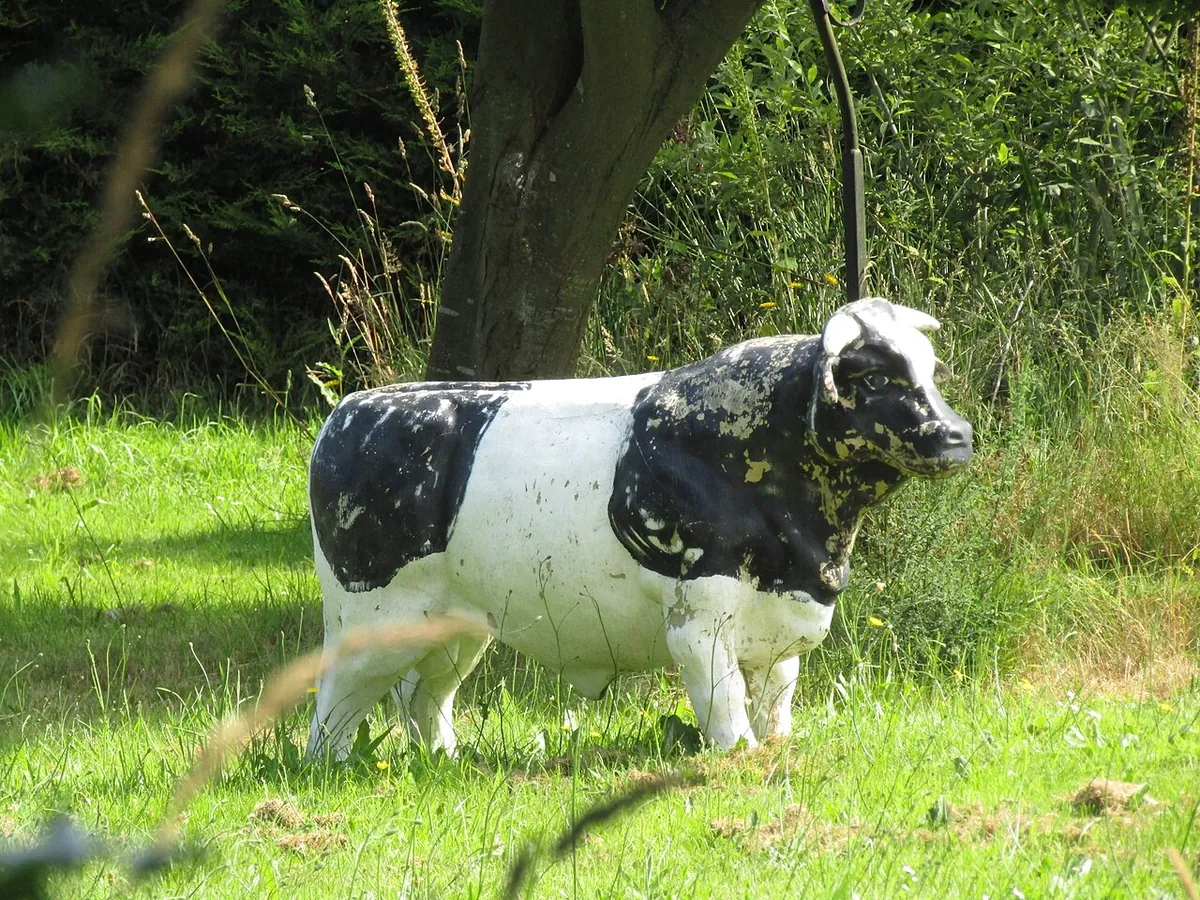
Photo: Kolforn, Wikimedia Commons, CC BY-SA 4.0
Quick Answer
Concrete garden statues are cast from a sand and cement mix in latex, rubber or fiberglass molds, cured, and often painted or stained. They range from small concrete garden gnomes and frogs to animals, angels, Buddhas, lions, fountains and life-size figures. Small pieces weigh 10 to 50 pounds; large concrete statuary can weigh several hundred pounds. Prices run about $20 to $100 for small statues, $100 to $500 for medium pieces, and more for large or custom work. To make a concrete statue last, seal it with a breathable masonry sealer, use exterior acrylic paint if you paint it, set it on a level base, and keep water from pooling and freezing in it. Concrete garden statues can last for decades and develop a mossy patina many gardeners love.
Concrete garden statues are one of the oldest and most popular forms of garden decoration. From the dignified cast stone urns of English estates to the dressed-up concrete goose statue on a Midwestern porch, concrete statuary adds personality, focal points and a sense of permanence to a yard. The painted concrete cow in the photo above, standing in the long grass of a Norfolk cottage garden with its paint worn by years of weather, is a perfect example: cheap, durable, slightly funny and part of the landscape.
This guide explains the types of concrete statues, how they are made, how they compare with stone and resin, how to choose and place them, how to paint, seal, clean, age and repair concrete statuary, how to protect it in winter and from theft, and what concrete garden statues cost.
Types of Concrete Garden Statues
Concrete garden statues come in almost every shape imaginable. Animals are the most popular category: frogs, turtles, rabbits, cats, dogs, deer, birds, pigs, cows, elephants and, in much of the American Midwest, the famous concrete goose statue. Figures include angels, cherubs, saints, children, monks and garden fairies, and the endlessly popular concrete garden gnome. Religious and spiritual pieces include Buddhas, Madonnas, St. Francis statues and lanterns. Architectural concrete statuary includes urns, finials, obelisks, sundials, plinths, columns, balls and lion statues that guard gateposts. Functional pieces such as bird baths, fountains, planters, benches and stepping stones are often grouped with concrete statues because they are made the same way and sold by the same suppliers. See concrete bird bath, concrete fountain, concrete bench and how to make concrete planters.
Styles range from classical and formal to rustic, whimsical, religious and modern. A classical urn on a pedestal suits a formal garden; a family of concrete garden gnomes suits a cottage garden; a minimalist sphere or abstract shape suits a modern landscape. The trick is to choose a few pieces that fit the style of the house and garden, rather than many small ones scattered across the lawn.
How Concrete Statues Are Made
Most concrete statuary is cast. A sculptor makes an original in clay, wood or another material. From that original, a mold maker produces a flexible mold of latex or silicone rubber, supported by a rigid outer shell of fiberglass or plaster so it keeps its shape. Producers pour a wet mix of portland cement, fine sand and sometimes fine gravel, plus fibers and admixtures, into the mold, vibrate it to remove air bubbles, and let it set overnight. Larger pieces are reinforced with steel rod or mesh to stop them breaking at thin sections such as necks, legs and tails. Once demolded, the casting is cleaned, any seams are trimmed, small holes are filled, and the piece cures for days or weeks. It may then be stained, painted or sealed. Because the same mold can be used hundreds of times, cast concrete statues are much cheaper than carved stone. See what concrete is made of and fiber-reinforced concrete.
Cast stone is a higher-grade version of the same idea, using finely crushed natural stone and white or colored cement to imitate carved limestone or sandstone. It is denser and finer than ordinary concrete statuary and is used for architectural ornaments and better garden pieces. Some concrete statues are also made from glass-fiber reinforced concrete (GFRC), a thin, strong shell that weighs much less than solid concrete, which is useful for large figures and roof or balcony placements. See glass fiber reinforced concrete.
Concrete vs Stone vs Resin Statues
When shopping, you will see garden statues in several materials. Concrete statues are heavy, sturdy, inexpensive for their size and durable outdoors, and they age naturally with moss and lichen. They need sealing in freezing climates and can chip if knocked. Carved natural stone, such as marble, limestone or granite, is the most prestigious and durable but costs many times more. Cast stone sits between the two. Resin and fiberglass statues are light, cheap, detailed and easy to move, often painted to look like stone or bronze, but they can fade, crack in sun and cold, and blow over in wind. Metal statues in bronze, iron or aluminum are durable and elegant but cost more. For a statue that stays put, weathers gracefully and costs little, concrete is hard to beat.
Concrete Garden Gnomes
The garden gnome began in 19th century Germany, where makers produced small clay figures of bearded gnomes said to protect gardens and mines. Today, concrete garden gnomes are a staple of cottage gardens, fairy gardens and lawns everywhere, ranging from traditional pointed-hat gnomes with wheelbarrows and lanterns to cheeky modern versions. A concrete garden gnome is heavier and more durable than plastic and resin gnomes, so it survives wind, pets and lawn mowers better, and it can be repainted every few years to keep its bright colors. Small concrete gnomes weigh 5 to 20 pounds. Many people paint their own from unpainted castings, which is a popular project with children. Seal painted gnomes with a clear exterior sealer to slow fading.
The Concrete Goose Statue
The concrete goose statue, often called a porch goose, is a beloved piece of American folk culture, especially in the Midwest. The goose, usually about 2 feet tall and weighing 25 to 30 pounds, sits on a porch or step and is dressed in seasonal outfits: a raincoat in spring, a swimsuit in summer, a football jersey in fall, a Santa suit at Christmas, and costumes for every holiday in between. There is a whole industry of goose outfits, and some owners own dozens. Concrete geese can be left gray, painted white, or painted with detailed feathers. Because they sit on porches exposed to rain and sun, a coat of sealer keeps the paint fresh, and setting the goose on a small pad or felt feet prevents rust and water stains on the porch. A concrete goose statue is also a popular target for pranksters, so some owners chain theirs down discreetly. See concrete porch.
Choosing and Placing Concrete Statuary
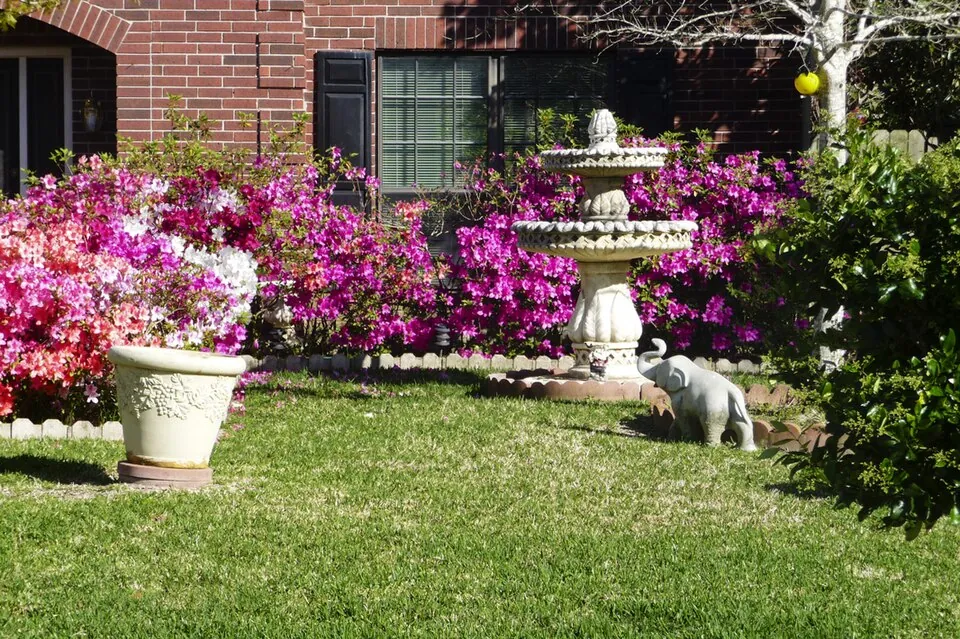
Photo: BFS Man, Wikimedia Commons, CC BY 2.0
Good placement makes concrete statuary look intentional instead of random. Use a single larger piece as a focal point at the end of a path, in the center of a bed, beside a door or gate, or where it can be seen from a window. Small pieces look best tucked into planting, peeking out of ferns or hostas, or grouped near a pond or bench. The front yard above shows a common combination: a tiered concrete fountain as the centerpiece, a cast concrete planter on one side and a small elephant statue among the plants, all in the same weathered gray. Scale matters: a tiny statue in a big lawn disappears, and a huge one in a small courtyard overwhelms it. Repeat the color and style of nearby hardscape, such as gray concrete statues with a concrete patio or cast stone urns with stone walls. See concrete patio ideas and concrete walkway ideas.
Every concrete statue needs a solid, level base. Set small pieces on a paver, a flat stone or a few inches of compacted gravel so they do not sink or tilt into soil. Larger pieces need a concrete pad or a compacted gravel base several inches thick, slightly larger than the footprint. Tall statues should be anchored with a steel pin or bolt into the base, both for stability and to prevent theft. Keep statues out of low spots where water collects, and away from sprinklers that soak them daily, which encourages algae and freeze damage. See concrete pads.
Buying Concrete Garden Statuary
Concrete garden statuary is sold by garden centers, home stores, online shops and, best of all, local statuary yards, small businesses that cast their own pieces and display hundreds of them outdoors. Buying locally lets you see the casting quality, choose finishes, and avoid huge shipping costs on heavy items. When you shop, look closely at the details: crisp features, smooth surfaces without large air holes, clean seams and a solid, flat base. Lift a corner to feel the weight; a very light piece may be resin or hollow GFRC rather than solid concrete. Check that multi-part pieces sit together firmly and come with pins or a socket. Ask whether the statue has been sealed, whether the paint is exterior grade, and how long it has cured, since fresh castings are weaker and more prone to efflorescence. Many statuary yards will paint, stain or seal pieces to order and deliver larger concrete garden statues with their own truck.
Online, read the dimensions and weight carefully, since photos can make a 10 inch statue look like a 3 foot one. Check the return policy for pieces damaged in shipping, which happens often with heavy concrete. Expect freight delivery to the curb for heavy items, so plan how you will move the statue into place.
Concrete Statues in Memorial and Religious Gardens
Concrete statues play a big role in memorial gardens, church grounds, grottos and home shrines. Angels, saints, Madonnas, crosses, Buddhas and lanterns are among the best-selling concrete statuary pieces, partly because concrete conveys permanence and calm and weathers to a soft, timeless look. Memorial benches, stepping stones with names or dates, and small concrete statues placed in remembrance of people and pets are common in home gardens. For these, many families choose plain gray or lightly stained concrete and let moss and lichen soften the piece over time. A memorial concrete statue should be set on a firm, level base that will not shift, and anchored if it stands in a public or semi-public place such as a church yard. See concrete burial vault.
Lighting and Displaying Concrete Statues
A well-placed light turns a concrete statue into a night-time feature. Low-voltage spotlights or solar uplights placed a few feet in front of a statue and aimed up create dramatic shadows on faces and wings. Side lighting brings out texture on weathered concrete. Keep fixtures hidden behind plants or rocks so the light, not the fixture, is what you see. For displays, plinths and pedestals raise smaller concrete statues to eye level so they read better from a distance. Plant soft, low groundcovers such as thyme, moss or creeping jenny around the base to anchor the statue visually and hide the edge of the pad. In formal gardens, matching pairs of concrete statues, such as lions at a gate or urns at the ends of a path, create symmetry. In informal gardens, single pieces half-hidden among plants feel more natural.
How Heavy Are Concrete Garden Statues?
Concrete weighs about 140 to 150 pounds per cubic foot, so even modest pieces are heavy. A 12 inch frog or gnome may weigh 10 to 20 pounds; a concrete goose statue about 25 to 30 pounds; a 3 foot angel or Buddha 80 to 200 pounds; a large lion or deer 200 to 400 pounds; and life-size figures and large fountains 500 pounds to more than a ton. Many larger pieces come in sections, such as a base, a body and a head, or a pedestal and basin, which are stacked and sometimes joined with adhesive or pins. Use a hand truck, furniture dolly, or two strong helpers, and lift with straps around the solid base, never by thin parts such as wings, ears or arms. For very large concrete statuary, the supplier may deliver with a lift gate or a small crane. See how much a yard of concrete weighs.
Painting a Concrete Statue
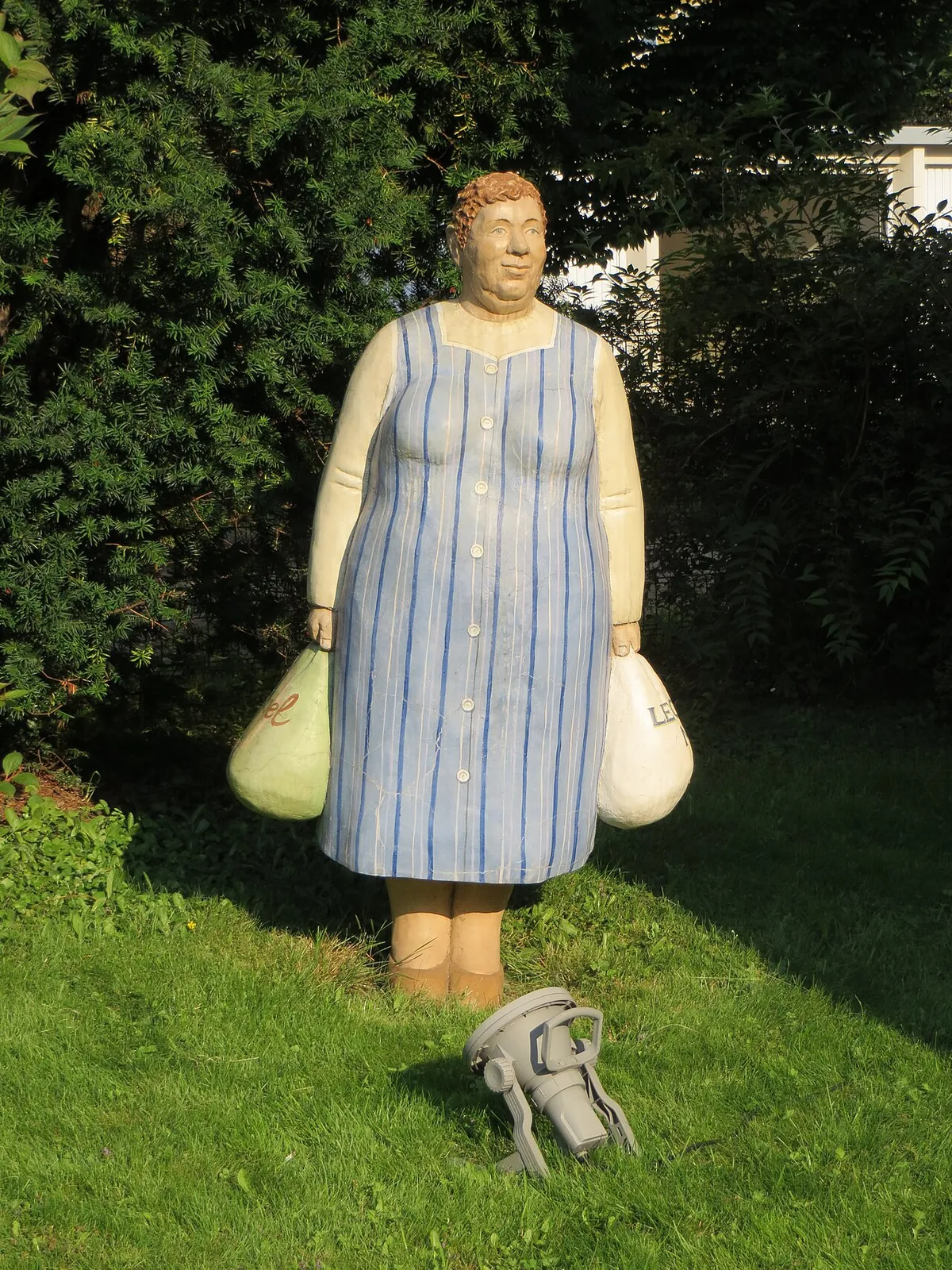
Photo: Reclus, Wikimedia Commons, CC0
Painting brings concrete statues to life, like the cheerful painted figure above, a work by a German sculptor standing in a private garden. Start with a clean, dry, cured statue; new castings should cure for at least a few weeks before painting so moisture and alkali do not spoil the paint. Scrub off dirt, algae and loose material with water and a soft brush, and let the statue dry completely. Apply a masonry primer or a coat of thinned exterior acrylic paint as a base. Then paint with exterior acrylic latex paints, which breathe and flex with the concrete. Artist's acrylics work for fine details but should be covered with a clear exterior sealer. Avoid oil paints and household enamels on concrete statuary; they trap moisture and peel. Work from large areas to small details, using small brushes for eyes and highlights. Dry brushing a lighter color over a darker base highlights texture. For an aged look, wipe a thin dark wash into recesses and wipe it off the high points. See concrete paint.
Stains are another option. Water-based concrete stains and acid stains soak into the surface instead of forming a film, giving natural, translucent colors that will not peel. They are good for earthy tones on animals, urns and classical figures. See concrete staining and how to color concrete.
Sealing Concrete Statuary
Sealing protects concrete garden statues from water, freeze-thaw damage, stains and fading paint. Use a breathable, water-based penetrating masonry sealer or a clear acrylic sealer made for concrete. Penetrating sealers soak in and keep a natural look; acrylic sealers add some sheen and protect paint. Apply two thin coats with a brush or sprayer to a clean, dry statue, including the base and any hollow areas, and let it dry fully before rain. Reseal every one to three years, or whenever water stops beading on the surface. In freezing climates, sealing is the single best way to prevent cracking, because water soaked into concrete expands when it freezes. See concrete sealer and how to seal concrete.
Aging Concrete Statues With Moss and Patina
Many gardeners prefer concrete statues that look old, with soft green moss, lichen and darkened crevices. New concrete is bright gray and alkaline, which slows moss growth, but it ages naturally in shady, damp places within a few years. To speed it up, rinse the statue several times to reduce surface alkalinity, place it in a shady, moist spot, and brush the surface with plain yogurt, buttermilk or a slurry of moss and water, which gives spores something to grow on. Keep it damp for a few weeks. Avoid sealing statues you want to age, since sealers repel water and slow moss. If you want the opposite, a clean, bright statue, clean it gently and seal it.
Cleaning Concrete Garden Statues
Clean concrete statues with water, a soft brush and mild soap. For algae, mildew and green stains, use a solution of oxygen bleach or a garden-safe cleaner, or very dilute household bleach if no plants or fish are nearby, then rinse thoroughly. Avoid high-pressure washers on detailed or painted statues; they can blast off paint, fine detail and soft surface layers. Do not use acids such as muriatic acid, which etch the concrete. Clean painted pieces gently and touch up the paint as needed. See how to clean concrete, mold on concrete and bleach on concrete.
Repairing Broken Concrete Statues
Concrete statues are sturdy but can chip or break when they fall, freeze or are hit by a mower. Clean breaks can usually be repaired. Clean both broken surfaces, dry-fit them, and glue them with a two-part exterior epoxy made for concrete and stone. Hold the pieces with tape, clamps or sandbags until the epoxy cures. For thin parts such as necks and legs, drill small holes in both pieces and set a stainless steel pin or threaded rod in the epoxy for strength. Fill gaps and chips with a polymer-modified concrete patch or epoxy putty, shape it with a damp brush or knife, and paint or stain it to match. Seal the whole statue afterward. See concrete adhesive, epoxy concrete crack repair and concrete patching compound.
Winter Care
Freeze-thaw cycles are the biggest threat to concrete garden statues in cold climates. Water soaks into the concrete, freezes and expands, causing cracks, flaking and broken pieces. To protect them, seal statues before winter, make sure they are not sitting in puddles or soggy soil, and raise them slightly on pavers or feet so water drains away. Empty anything that holds water, such as bird baths and fountain basins. Small and valuable pieces can be moved into a garage or shed. Larger statues can be covered with breathable frost covers or burlap, though plastic covers can trap moisture. Avoid deicing salts near concrete statuary, and do not shovel salty snow against statues along walks and driveways. See does salt damage concrete and concrete pitting and flaking.
Making Your Own Concrete Statues
Making concrete statues at home is a rewarding project. Ready-made latex and plastic molds for gnomes, animals, stepping stones and planters are sold online and in craft stores. You can also make your own mold from an existing figure with silicone or latex mold rubber, backed with plaster. Use a fine sand mix or a countertop mix, add fibers for strength, and mix to a thick, pourable consistency. Coat the mold with release, pour in layers, tap and vibrate to remove bubbles, and add a small piece of rebar or wire in thin parts. Let the casting cure in the mold for 24 to 48 hours, demold carefully, and cure it under plastic for a week before painting or sealing. Hypertufa, a light mix of cement, peat and perlite, is easier to carve and looks like old stone, but is weaker for thin shapes. See how to make concrete stepping stones and how to mix concrete.
Preventing Theft and Vandalism
Small and valuable concrete statues sometimes go missing, and gnome-napping is a long-running prank. To protect your pieces, anchor larger statues to a concrete base with a stainless pin set in epoxy, or with a hidden cable and ground anchor. Place small pieces where they are visible from the house. Mark the underside with your name or a code in permanent paint. Photograph your more valuable pieces for insurance, and keep receipts, since homeowner policies sometimes cover garden ornaments if you can prove what they were worth. For statues near the street, motion lights and cameras help deter vandals. See concrete bolts.
Concrete Garden Statue Costs
Prices vary with size, detail and finish. Small concrete statues such as frogs, turtles, gnomes and rabbits cost about $20 to $80. A concrete goose statue usually costs about $40 to $100, plus outfits. Medium statues such as angels, Buddhas and dogs cost about $100 to $400. Large animals, figures and classical statuary cost about $300 to $1,500, and life-size or custom concrete statuary can cost several thousand dollars. Painted pieces cost more than plain gray. Delivery for heavy pieces can add $50 to $200 or more. Local concrete statuary yards often sell for much less than garden centers because there is no shipping on heavy items, and many sell unpainted castings for DIY painting. Seconds with small cosmetic flaws, such as a chipped ear or an air hole on the back, are often half price and look fine once placed among plants, painted or allowed to weather with moss.
Frequently Asked Questions
Can concrete garden statues stay outside in winter?
Yes, if they are sealed, well drained and not sitting in water. Move small or fragile pieces indoors in very cold climates.
What paint should I use on a concrete statue?
Exterior acrylic latex paint over a masonry primer, finished with a clear exterior sealer.
How heavy is a concrete goose statue?
Most porch geese weigh about 25 to 30 pounds.
How do I make a concrete statue look old?
Place it in shade, keep it damp, and brush it with yogurt or buttermilk to encourage moss and lichen.
How do I fix a broken concrete statue?
Glue the pieces with exterior epoxy, pin thin parts with stainless rod, fill gaps with patch, then paint and seal.
Sources
- Portland Cement Association: concrete durability and freeze-thaw
- National Precast Concrete Association: cast concrete products
- Cast Stone Institute: cast stone materials and care
- University of Minnesota Extension: garden care in winter
Related Guides
- Concrete bench — outdoor benches, DIY and costs
- Concrete burial vault — vaults, grave liners and cost
- Concrete fountain — tiered fountains, pumps and care
- Concrete column — columns, rebar, forms and poles
- Concrete release agents — form oil and reactive release for forms and molds
- Concrete flower pots — sizes, weights, prices and extra large planters for outside
- Concrete slide — hillside and playground slides, plus concrete sliders (knee boards)