
Concrete Fountain Guide: Types, Installation, Pumps, Winter Care and Cost
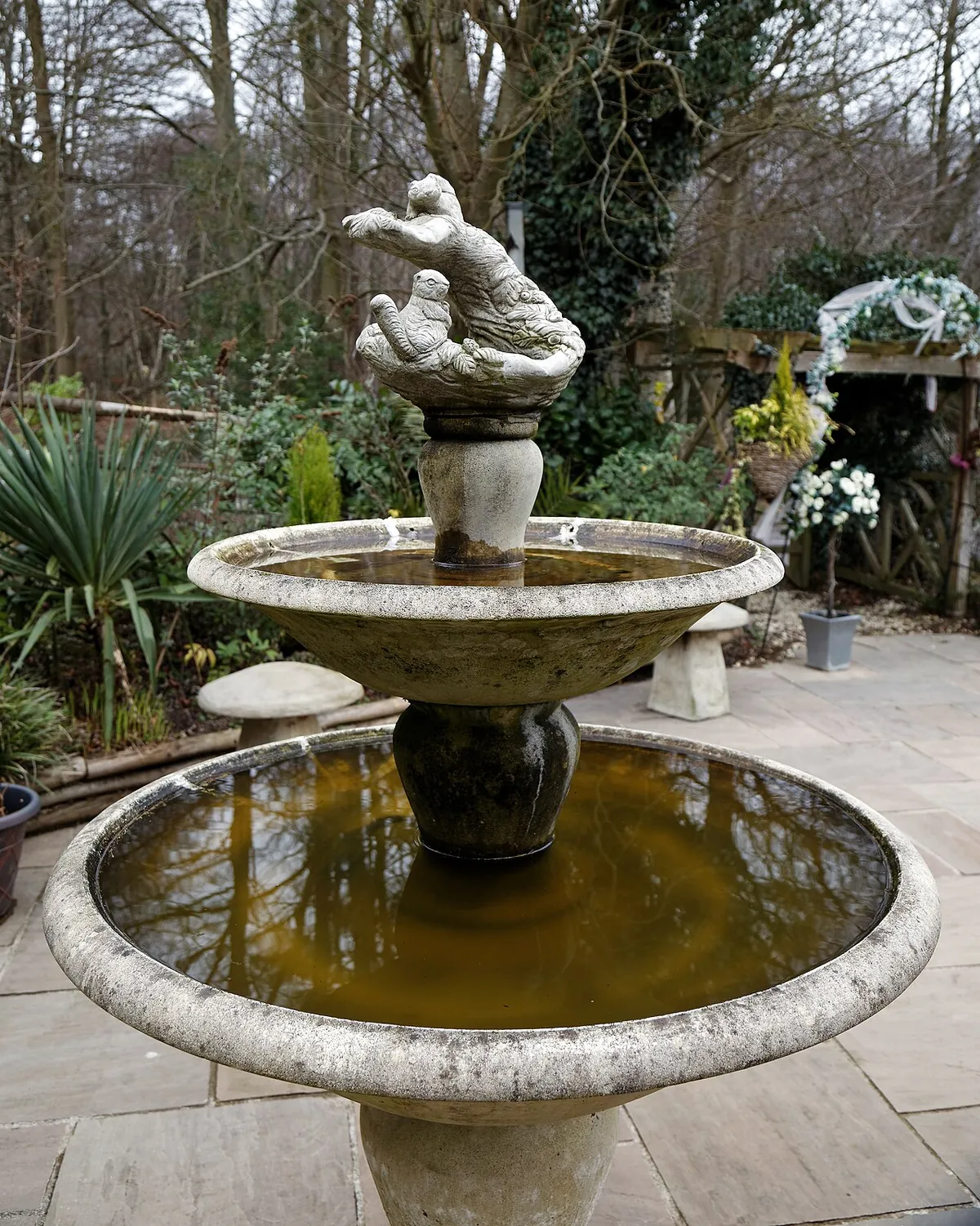
Photo: Acabashi, Wikimedia Commons, CC BY-SA 4.0
Quick Answer
A concrete fountain is an outdoor water feature cast from concrete or cast stone, usually with one or more bowls (tiers), a basin and a small submersible pump that recirculates the water. Concrete fountains are durable, heavy enough to stay put in wind, and age into a natural, weathered look. A two-tier garden fountain typically weighs 300 to 900 pounds, and three-tier models up to 2,000 pounds, so they need a firm, level base of compacted gravel, pavers or a concrete pad. Plan for a GFCI-protected outdoor outlet, seal the concrete every year or two, and drain and cover the fountain before freezing weather. Typical prices are $200 to $800 for small concrete fountains and $800 to $4,000+ for large tiered ones.
The sound of moving water makes a garden, patio or courtyard feel calm, cool and private, and a concrete fountain is one of the most traditional ways to add it. Concrete and cast stone fountains have decorated gardens for centuries, from grand estates to small backyards. The two-tier fountain in the photo above shows the typical form: a broad lower bowl, a smaller upper bowl on a pedestal, and a sculpted finial on top, all cast in concrete and weathered to a soft gray-green.
This guide explains the types of concrete fountains, concrete vs cast stone and resin, choosing the size and style, weight and foundations, pumps and electrical safety, installation, sealing, cleaning and algae control, winter care, making your own with concrete for fountain projects, common problems and costs.
Types of Concrete Fountains
Tiered fountains. The classic tiered concrete fountain has two or three bowls stacked on pedestals over a basin. Water is pumped up through the center to the top, spills over the edge of each bowl, and falls into the basin below. Tiered concrete fountains range from about 3 feet to more than 8 feet tall.
Basin and pool fountains. A large concrete basin or pool, often with a tiered fountain or a single spout in the middle, as in the courtyard below. Concrete fountains like this are common in public spaces, courtyards and formal gardens.
Wall fountains. A spout set in a wall, often a decorative face or lion's head, pours water into a basin at the base. Concrete wall fountains save space and suit courtyards and patios.
Bowl and urn fountains. A single large bowl, urn or jar with water bubbling from the top and spilling down the sides into a hidden reservoir. These are popular in modern gardens.
Statuary fountains. Figures of animals, children, fish or classical subjects with water flowing from them, either standalone or as the top piece of a tiered fountain. See concrete statues.
Pondless and disappearing fountains. Water falls onto a bed of stones and drains into a hidden reservoir underneath, which is safer around small children and easier to maintain.
Bird bath fountains. A concrete bird bath with a small bubbler or solar pump. See concrete bird bath.
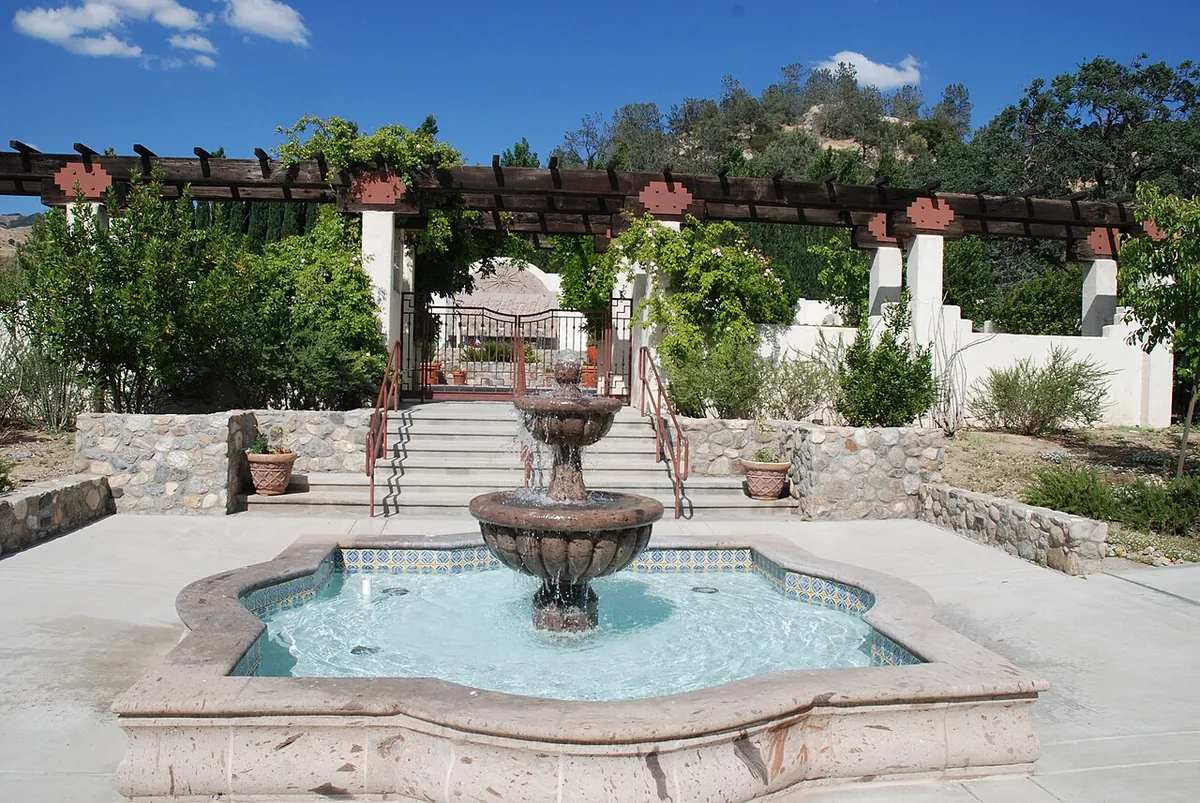
Photo: National Park Service (public domain), Wikimedia Commons
Concrete, Cast Stone and Resin Fountains
Concrete fountains and other garden fountains are sold in several materials that can look similar. Concrete fountains are cast from a mix of cement, sand and fine aggregate, often reinforced with steel or fibers, in rubber or fiberglass molds. They are heavy, sturdy and inexpensive for their size, and they develop moss and patina over time. Cast stone is a refined, dense concrete made with finely crushed natural stone, such as limestone, and cast in detailed molds, giving a smoother surface and sharper detail that look like carved stone. Cast stone fountains cost more and are often used in formal gardens. Resin and fiberglass fountains are lightweight plastic shells painted to look like stone or concrete; they are cheap and easy to move but can fade, crack in sun and blow over in wind. Natural stone fountains, carved from granite, limestone or marble, are the most expensive. For most homeowners, a good concrete fountain or cast stone fountain is the best balance of looks, durability and cost. See precast concrete.
Choosing the Right Concrete Fountain
Scale. Choose a concrete fountain that suits the space. A 3 to 4 foot fountain suits a small patio or courtyard; a 5 to 7 foot tiered fountain suits a larger garden or the center of a lawn; large basin fountains need an open area. Mark out the footprint with stakes before buying.
Style. Match the fountain to the house and garden: classical tiered fountains with traditional homes and formal gardens, simple bowls or modern geometric shapes with contemporary homes, rustic finishes with cottage and country gardens.
Sound. Tall tiered fountains with long falls are louder; bubblers and low bowls are quieter. A fountain near a bedroom window or a seating area should not be too loud.
Location. Place the concrete fountain where you can see and hear it from the house and seating areas, on level ground, within reach of power and water, and away from trees that drop leaves and needles into the water. Partial shade reduces algae and evaporation. See concrete patio ideas.
Weight and Foundations
A concrete fountain is heavy. Small tabletop and bowl fountains weigh 50 to 200 pounds, two-tier garden fountains 300 to 900 pounds, and large three-tier fountains 1,000 to 2,000 pounds or more, plus the weight of the water. They usually ship in several pieces: basin, pedestals, bowls and finial.
Every concrete fountain must sit on a firm, level base, or it will settle unevenly, tilt and spill water from one side of each bowl. On soil, dig out a few inches, add 4 inches of compacted gravel, and either set pavers or a precast pad on top, or pour a small concrete pad 4 inches thick, slightly larger than the basin. On an existing patio, check that the slab is sound and level. Large fountains may need a reinforced pad. Use shims and a level to make each tier perfectly level as you stack it, because even a small tilt shows in the way water falls. See concrete pads and concrete deck blocks.
Pumps and Electrical Safety
Almost every concrete fountain recirculates water using a small submersible pump that sits in the basin or a hidden reservoir. A tube runs from the pump up through the center of the pedestals to the top bowl. Choose a pump sized for the height the water must be lifted, called the head, and the flow you want; fountain makers usually recommend a pump size, often 100 to 600 gallons per hour for garden fountains. An adjustable flow valve lets you fine-tune the spill so water does not splash out of the basin.
Outdoor fountains must be powered from a GFCI-protected outdoor outlet with a weatherproof in-use cover, as required by electrical codes. Bury the cord in conduit or hide it under mulch where it will not be cut, and never use an indoor extension cord. If there is no outdoor outlet nearby, hire an electrician to add one. Solar fountain pumps are available for small fountains and bird baths, but they usually lack the power for tall tiered concrete fountains. Many owners put the pump on a timer to save power and reduce wear.
Installing a Concrete Fountain
1. Prepare the base. Build a level gravel, paver or concrete pad as described above.
2. Run power. Install or confirm a GFCI outlet within reach of the pump cord.
3. Set the basin. Place the basin on the pad and level it carefully in both directions.
4. Place the pump. Set the pump in the basin or reservoir, thread the tubing up through the pedestal openings, and lead the cord out through the notch or hole provided.
5. Stack the tiers. Set each pedestal and bowl in order, leveling each one with shims, and thread the tube through as you go. Many fountains use a bead of clear silicone or a small amount of mortar between pieces for stability; follow the maker's instructions.
6. Seal. If the concrete is new, seal the bowls and basin to reduce water loss, staining and efflorescence. Let the sealer cure before filling.
7. Fill and adjust. Fill the basin, start the pump, and adjust the flow until water spills evenly around the rims without splashing out.
Sealing a Concrete Fountain
Concrete is porous, so the unsealed bowls of a concrete fountain absorb water, which can lead to water loss, white mineral deposits (efflorescence), staining, and freeze-thaw damage in winter. A water-based penetrating sealer made for concrete and masonry, applied to clean, dry concrete, reduces absorption without changing the look much. For basins that hold water constantly, some owners use a waterproof coating or a pond-safe sealer inside. Use products that are safe for birds and wildlife if animals drink from the fountain. Reseal every one to two years, or when water stops beading on the surface. See concrete sealer and efflorescence on concrete.
Cleaning and Algae Control
In a concrete fountain, moving water stays cleaner than still water, but algae, leaves, mineral scale and debris still build up. Top off the water regularly, since concrete fountains lose water to evaporation and splash, especially in hot, windy weather; a pump that runs dry can burn out. Every few weeks, skim out leaves and wipe the bowls. Every few months, or as needed, drain the fountain, scrub the bowls and basin with a soft brush and a mild solution of water and vinegar or a fountain cleaner, rinse well, clean the pump intake, and refill. Avoid bleach and harsh chemicals that can damage concrete and harm birds. Fountain enzyme treatments and algaecides labeled safe for birds and pets help between cleanings. Using rainwater or filtered water reduces white mineral scale in hard-water areas. See how to clean concrete and mold on concrete.
Winter Care for Concrete Fountains
Freezing is the biggest threat to a concrete fountain, and winter care is the most important part of owning concrete fountains in cold climates. Water absorbed into the concrete, or left standing in the bowls, expands as it freezes and can crack bowls and basins, and ice can split the pedestals. In climates with freezing winters, winterize the fountain before the first hard frost.
Drain all the water, remove the pump, clean it and store it indoors, and let the concrete dry. Remove the top tiers and smaller bowls and store them in a garage or shed if possible. Turn bowls upside down or tilt them so rain and snow cannot collect. Cover the remaining parts with a breathable, waterproof fountain cover, not a plastic sheet that traps moisture. Never let water freeze solid in the basin. In mild climates where freezes are rare and short, some owners keep the fountain running through cold snaps, since moving water is slow to freeze, but this risks damage if the pump stops. See pouring concrete in cold weather for how freezing affects concrete.
Making Your Own Concrete Fountain
Building a DIY concrete fountain is a popular craft and garden project. Simple designs include a stack of concrete bowls cast in plastic mixing bowls or buckets, a concrete sphere or column with water bubbling from the top over a hidden reservoir, or a wall spout set in a concrete panel. The best concrete for fountain projects is a fine, sand-rich mix such as a sand mix or mortar mix, or a commercial countertop or GFRC mix, which fills molds well and gives smooth surfaces. Add a concrete fiber or a layer of wire mesh for strength in larger pieces, and cast a PVC tube or a piece of flexible tubing through the center for the water line. Coat molds with a release agent or cooking oil, vibrate or tap the molds to remove air bubbles, and keep the castings damp for a week while they cure. Seal the finished pieces before use. See how to make concrete planters, how to mix concrete and glass fiber reinforced concrete.
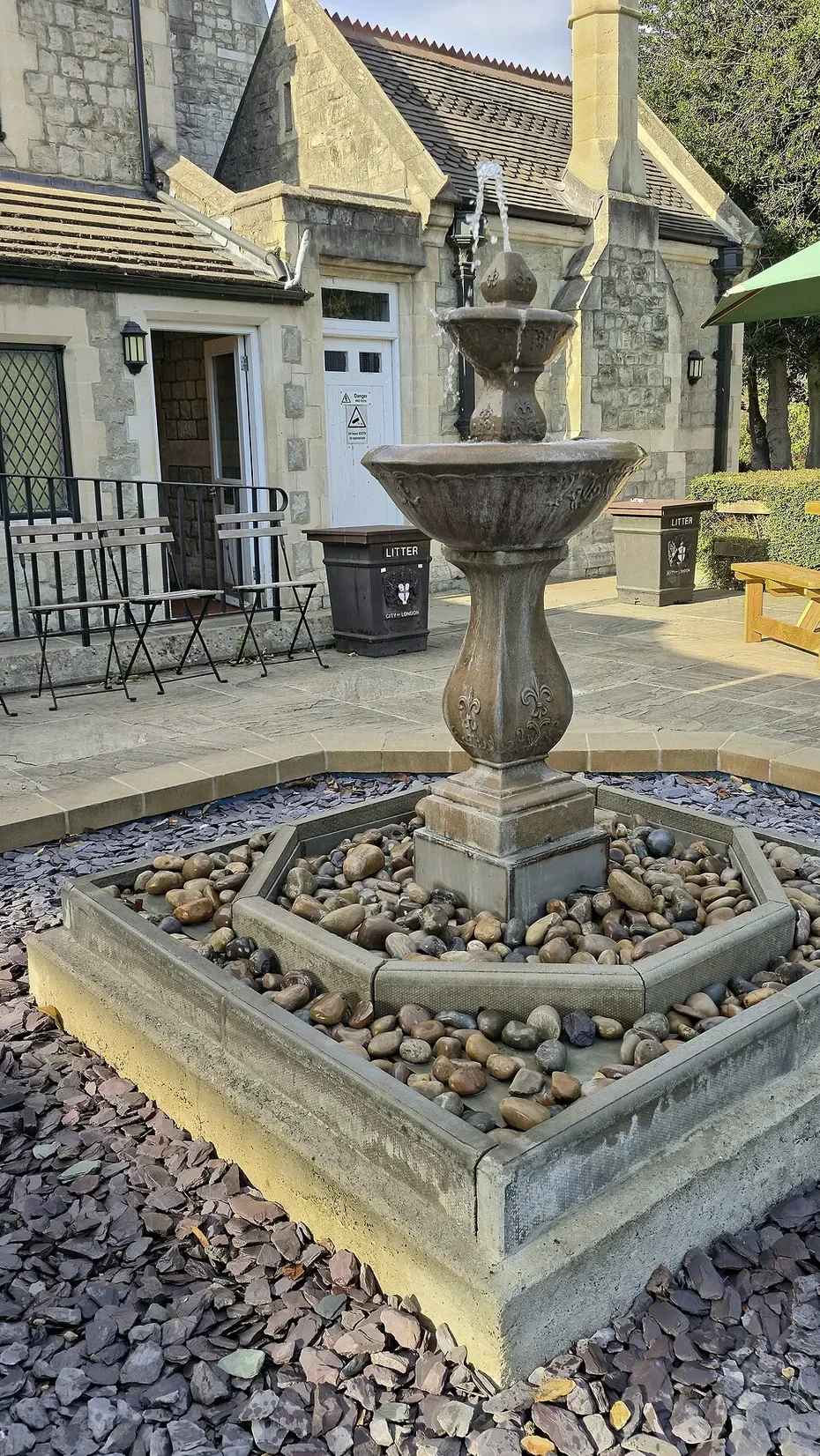
Photo: Acabashi, Wikimedia Commons, CC BY-SA 4.0 (cropped)
The fountain in the photo above shows a popular low-maintenance design: a cast concrete fountain with a shallow hexagonal basin filled with pebbles over a hidden reservoir, so there is no deep open pool of water.
Where to Buy a Concrete Fountain
Concrete fountains are sold by garden centers, landscape supply yards, statuary and cast stone makers, home improvement stores and online retailers. Local concrete statuary yards often have the widest choice of concrete fountains and can deliver and set a heavy concrete fountain for you, which matters when a three-tier concrete fountain weighs as much as a small car. Buying locally also lets you see the finish, check the castings for cracks and air pockets, and confirm that the bowls are well made before you pay. Online sellers offer more styles, but freight for a concrete fountain is expensive, delivery is usually curbside only, and returns are difficult, so check the weight, the dimensions of each piece and the shipping terms carefully. Ask whether the pump is included, what size it is, and whether replacement bowls and pumps are available later.
Concrete Fountain Finishes and Colors
A plain gray concrete fountain weathers naturally, growing moss and lichen in damp, shaded places and developing the aged look many gardeners love. Makers also offer concrete fountains in tinted and stained finishes, from warm sandstone and terracotta tones to white limestone, slate gray, charcoal and verdigris green. Some finishes are applied as acrylic stains after casting, and others are integral colors in the concrete itself, which wear more evenly. If you want a concrete fountain to look old quickly, painting it with yogurt or buttermilk, or a commercial moss starter, encourages moss and lichen growth in shady spots. If you prefer a cleaner look, seal the concrete fountain and clean it regularly. Colors can also be refreshed later with a concrete stain made for exterior use. See concrete staining and how to color concrete.
Concrete Fountains for Birds and Wildlife
Moving water attracts birds, butterflies and other wildlife, and a concrete fountain can become the busiest spot in the garden. Birds prefer shallow water, no more than 1 to 2 inches deep, with a rough surface for footing, which a concrete fountain bowl provides naturally. To make a concrete fountain bird friendly, place a few flat stones in a deeper bowl to create shallow perches, keep the flow gentle, and set the fountain near shrubs or trees where birds can escape predators but not so close that cats can ambush them. Avoid chemical algaecides that are not labeled bird safe, and clean the concrete fountain often in warm weather to prevent disease. In winter, a small heater can keep a bird bath open, but most tiered concrete fountains should be drained in freezing weather instead. See concrete bird bath.
Safety Around Concrete Fountains
Even a shallow concrete fountain can be a drowning risk for toddlers, who can drown in a few inches of water. In homes with small children, choose a pondless concrete fountain where water disappears into a covered reservoir, or a bowl fountain with no open basin, and supervise children near any water feature. Large concrete fountains with deep basins may be covered by local pool or water feature rules. Tall tiered concrete fountains must be stable; never let children climb them, and make sure each tier is secured so a heavy bowl cannot be pulled down. Keep electrical connections protected by a GFCI and in good condition, and turn off and unplug the pump before reaching into the water.
Moving or Relocating a Concrete Fountain
Moving a concrete fountain takes planning because of the weight. Drain the fountain, remove the pump and tubing, and take it apart from the top down, lifting off the finial, the upper bowls and the pedestals one at a time. Each piece of a large concrete fountain can weigh 100 to 400 pounds, so use a hand truck, a furniture dolly, lifting straps and several helpers, and protect the edges with blankets. Bowls are the most fragile part; carry them level and never lift them by the rim alone. Prepare the new base before moving the concrete fountain, then reassemble and level it in the new spot. For very large concrete fountains, a landscaper with a small skid steer or a statuary company with a lifting truck is the safer option.
Common Concrete Fountain Problems
Uneven water flow. A bowl is not level. Shim the pedestal until water spills evenly around the rim.
Splashing and water loss. Flow too high, wind, or a leaking seam. Reduce the flow, add a splash guard, and seal leaks.
Pump stops or runs noisily. Clogged intake, low water or a worn pump. Clean the intake, keep the water topped up, and replace old pumps.
Cracks. Usually from freezing or impact. Small cracks can be sealed with a concrete crack filler or epoxy; cracked bowls may need replacing. See epoxy concrete crack repair.
White crust. Mineral deposits from evaporating hard water. Scrub with diluted vinegar and use softer water.
Green algae. Sun, warmth and nutrients. Clean regularly, add shade, and use a bird-safe algae treatment.
How Long Does a Concrete Fountain Last?
A well-made concrete fountain that is sealed, kept level and protected from freezing can last for decades; many concrete fountains in old gardens are 50 years old or more. The parts that wear out first are the pump, which typically lasts 2 to 5 years, the tubing and seals, and in cold climates the bowls, which are most exposed to freeze-thaw damage. A concrete fountain left full of water through a hard winter can crack in a single season, while the same concrete fountain drained and covered each fall can last a lifetime. Thin, poorly cast concrete fountains with air pockets, or ones made with too much water in the mix, wear faster and crack more easily, so quality matters when buying. Look for dense, smooth castings, solid pedestals and bowls with a consistent thickness.
Over the years, a concrete fountain may need a replacement pump, new tubing, a fresh coat of sealer, and touch-ups to its color. Chipped rims can be patched with a concrete repair compound, and a cracked bowl can often be replaced with a matching piece from the same maker. Keeping the fountain level and clean, and winterizing it every year, does more than anything else to extend its life.
Concrete Fountain vs Resin Fountain: Quick Comparison
If you are deciding between a concrete fountain and a resin fountain, the trade-off is weight against durability. A concrete fountain is heavy, stable in wind, long lasting and ages naturally, but it costs more to ship and must be winterized. A resin fountain is light, cheap and easy to move, but it can fade, crack in the sun and tip over, and it rarely looks as convincing up close. Concrete fountains are the better choice for permanent garden features; resin suits renters, balconies and seasonal displays.
Concrete Fountain Cost
Typical US prices are $100 to $300 for small concrete bowl or wall fountains, $300 to $1,200 for two-tier garden fountains, $1,000 to $4,000 for large three-tier and cast stone fountains, and $5,000 to $20,000 or more for custom basin fountains and large architectural concrete fountains. Shipping heavy concrete fountains often adds $100 to $500. Installation, including a base, outlet and setup, typically adds $200 to $1,500. Running costs are low: a small pump uses about as much electricity as a light bulb or two. A DIY concrete fountain can cost under $100 in materials. See concrete cost guide.
Frequently Asked Questions
How heavy is a concrete fountain?
Two-tier garden fountains usually weigh 300 to 900 pounds, and large three-tier fountains 1,000 to 2,000 pounds or more, delivered in several pieces.
Do concrete fountains need to be sealed?
Sealing is recommended. It reduces water loss, stains, mineral crust and freeze-thaw damage. Reseal every one to two years.
Can a concrete fountain stay out in winter?
Yes, if it is drained, the pump is removed, loose tiers are stored or turned over, and the rest is covered with a breathable cover.
What is the best concrete for fountain projects?
A fine sand mix, mortar mix or a countertop or GFRC mix, which fills molds well and gives a smooth surface. Add fibers or mesh for larger pieces.
Do I need an outlet for a fountain?
Yes, a GFCI-protected outdoor outlet with a weatherproof cover, unless you use a solar pump on a small fountain.
Sources
- NFPA 70 National Electrical Code: GFCI protection for outdoor outlets and fountains
- National Precast Concrete Association: architectural precast and cast stone
- Cast Stone Institute: technical manual
- National Audubon Society: water features for birds
Related Guides
- Concrete pads — sheds, AC units, hot tubs, carports
- Concrete release agents — form oil and reactive release for forms and molds
- Concrete flower pots — sizes, weights, prices and extra large planters for outside
- Hydraulic concrete — hydraulic cement for leaks and concrete for dams, canals and tanks