
Concrete Bird Bath Guide: DIY, Best Concrete, Fountains and Care
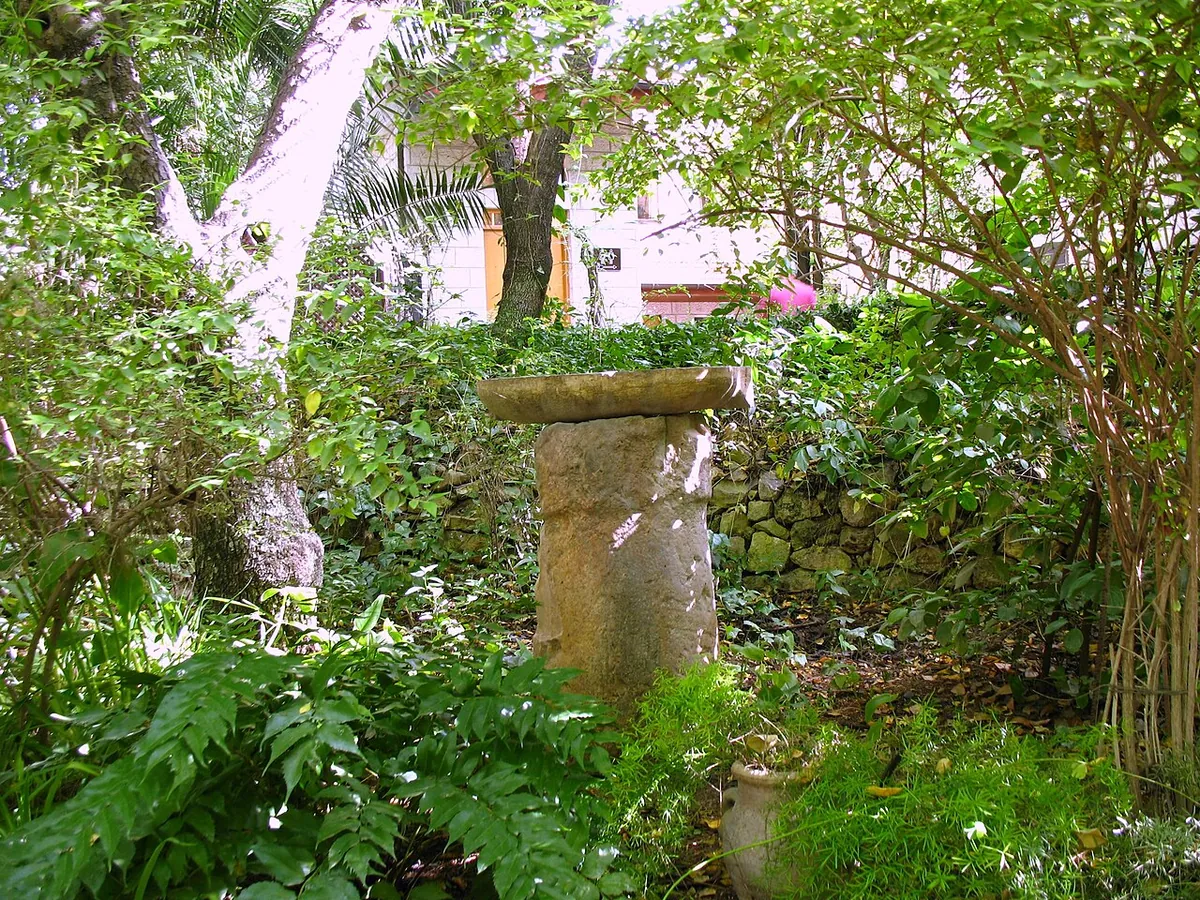
Photo: James Emery, Wikimedia Commons, CC BY 2.0
Quick Answer
A concrete bird bath is a shallow cast concrete basin, usually 18 to 24 inches wide, set on a pedestal 24 to 36 inches tall or placed on the ground. Birds want water only 1 to 2 inches deep at the edge and no more than about 3 inches in the middle, with a rough surface to grip. The best concrete for bird baths is a sand mix, countertop mix or high-strength mix with fine aggregate, cured slowly for a week and rinsed well before use. Store-bought concrete bird baths cost about $80 to $400; a DIY concrete birdbath costs about $15 to $50 in mix and mold. Adding a small solar pump turns any basin into a concrete bird bath fountain, which attracts more birds.
A concrete bird bath is one of the simplest ways to bring birds into a yard. Clean, shallow water draws far more species than a feeder alone, because birds need water to drink and to bathe year round. Concrete bird baths are the classic choice because they are heavy enough not to tip, cheap, and easy to make at home in almost any shape, from a rough stone-look basin on a pedestal, like the one above in a shady garden, to a smooth bowl sitting low among plants.
This guide explains how to make a concrete bird bath step by step, which concrete for bird baths works best, the depth and shape birds actually use, pedestals and placement, how to add a fountain, how to seal, clean and winterize concrete birdbaths, and what to look for when buying one.
Why Concrete for Bird Baths?
Bird baths come in plastic, glass, metal, ceramic, resin and stone, but concrete remains the most common material for good reasons. Concrete bird baths are heavy, so wind, squirrels and raccoons do not knock them over. The surface is naturally rough, giving birds good footing. Concrete stays cooler in summer than metal and does not crack in sun like plastic. It can be cast in any shape and colored with pigment or stained. The disadvantages are weight, which makes moving and cleaning harder, and the risk of freeze damage if water freezes in the basin, plus algae that grows on porous surfaces. A concrete birdbath that is well made and well cared for lasts for decades. See how long concrete lasts.
The Right Size and Depth
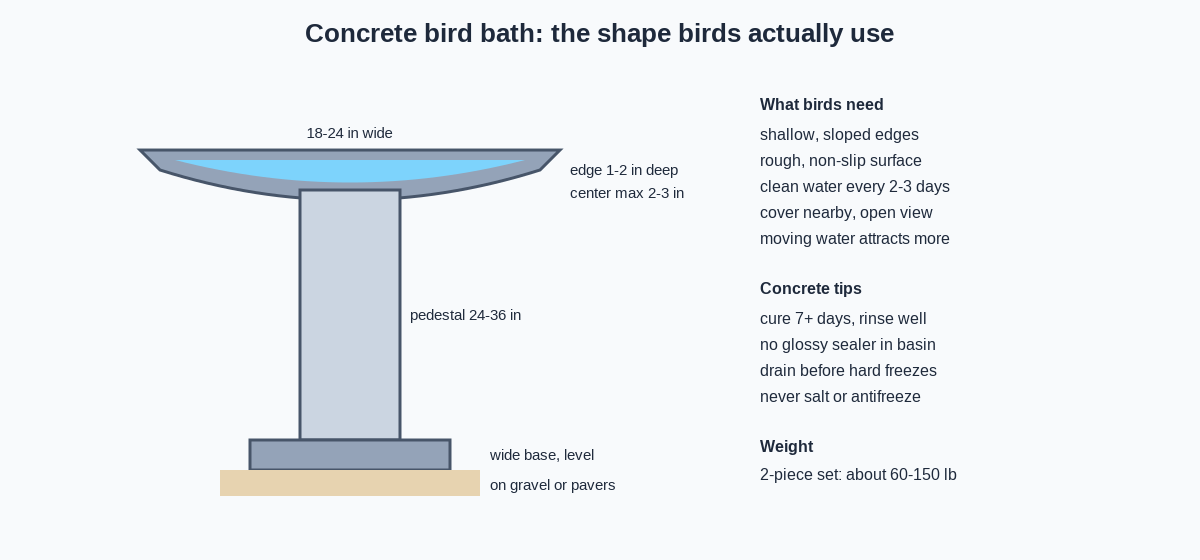
Depth matters more than anything else in a concrete bird bath. Most songbirds stand in water no deeper than their legs, about 1 to 2 inches, and they avoid deep bowls where they cannot judge the bottom. A good basin slopes gently from a very shallow edge to no more than 2 to 3 inches at the center, as shown in the diagram above. Width of 18 to 24 inches gives room for several birds. The surface should be rough or textured, not glossy, so wet feet can grip. Many decorative concrete bird baths sold in stores are too deep; adding a flat stone or a layer of pebbles in the middle fixes a deep bowl. Pedestal height of 24 to 36 inches puts the water out of reach of cats while still letting you see the birds from a window. Ground-level concrete bird baths are popular with ground birds like doves and thrushes but need more open space around them so cats cannot ambush the birds.
Best Concrete for Bird Baths
The best concrete for bird baths has fine aggregate and high strength, so the thin basin edges are smooth and dense. Good choices include:
- Sand mix or topping mix: cement and sand only, no gravel. Easy to shape, fills molds well, and gives a fine texture. The most common choice for a DIY concrete bird bath.
- Countertop mix: a high-strength, flowable mix with fibers and plasticizers, ideal for thin, crisp castings. See concrete countertops.
- High-strength concrete mix: 5,000 psi bagged mixes work for thick basins and pedestals, though gravel can show at the surface. See high-strength concrete.
- Hypertufa: a lighter mix of cement, peat moss and perlite. It looks like old stone and is easy to carve, but it is weaker and more porous, so it is better for planters than for concrete bird baths that hold water year round.
Add alkali-resistant fibers or a small piece of wire mesh to stop cracks in larger basins. In cold climates, an air-entraining admixture improves freeze-thaw resistance. Avoid adding extra water to make the mix flow; it weakens the concrete. See concrete mix ratio, fiber-reinforced concrete and concrete admixtures.
How to Make a Concrete Bird Bath
You can make a concrete bird bath in an afternoon and have it ready in about a week. Here is a simple method using two bowls or a sand mold.
What You Need
- One 60 or 80 pound bag of sand mix or countertop mix (enough for one basin)
- A large shallow plastic bowl, trash can lid, or sand pile for the mold
- A smaller bowl to form the inside, or a trowel to shape it
- Cooking spray, petroleum jelly or plastic wrap as a release
- Mixing tub, hoe or drill paddle, gloves, dust mask and eye protection
- Plastic sheet for curing and a wire brush for texture
Steps
- Prepare the mold. For the two-bowl method, coat the inside of the large bowl and the outside of the small bowl with release. For the sand method, pile damp sand into a smooth mound the shape of the inside of the basin and cover it with plastic wrap. A sand mound is the easiest way to make wide, shallow concrete birdbaths.
- Mix. Mix the concrete to a thick, peanut-butter consistency. It should hold its shape when squeezed. See how to mix concrete.
- Cast. For two bowls, pack 1.5 to 2 inches of concrete in the bottom of the large bowl, press the small bowl in, and fill the sides, tapping to remove air. For the sand mound, pack concrete over the mound 1.5 to 2 inches thick, thicker at the rim. Embed a short piece of PVC pipe in the center underside if you want to fit the basin onto a pedestal pin.
- Texture. When the concrete is stiff but not hard, about one to three hours later, brush the inside with a stiff brush or sponge so birds can grip it. Round the rim with a gloved finger.
- Cure. Cover with plastic and keep damp for at least five to seven days. Slow curing makes the basin stronger and more watertight. See how long concrete takes to cure.
- Demold. Remove the molds carefully and smooth any sharp edges with a rubbing stone.
- Rinse and soak. New concrete is very alkaline. Soak or rinse the basin several times over a few days, or wash with a mild vinegar solution and rinse well, before filling it for birds.
Leaf-casting is a popular variation: lay a large leaf such as rhubarb, hosta or elephant ear face down on a sand mound, pack concrete over it, and peel the leaf off after curing. The veins print into the surface, giving a natural, grippy concrete bird bath that sits on the ground or on a low stand. See how to make concrete stepping stones and how to make concrete planters, which use the same methods.
Making a Pedestal
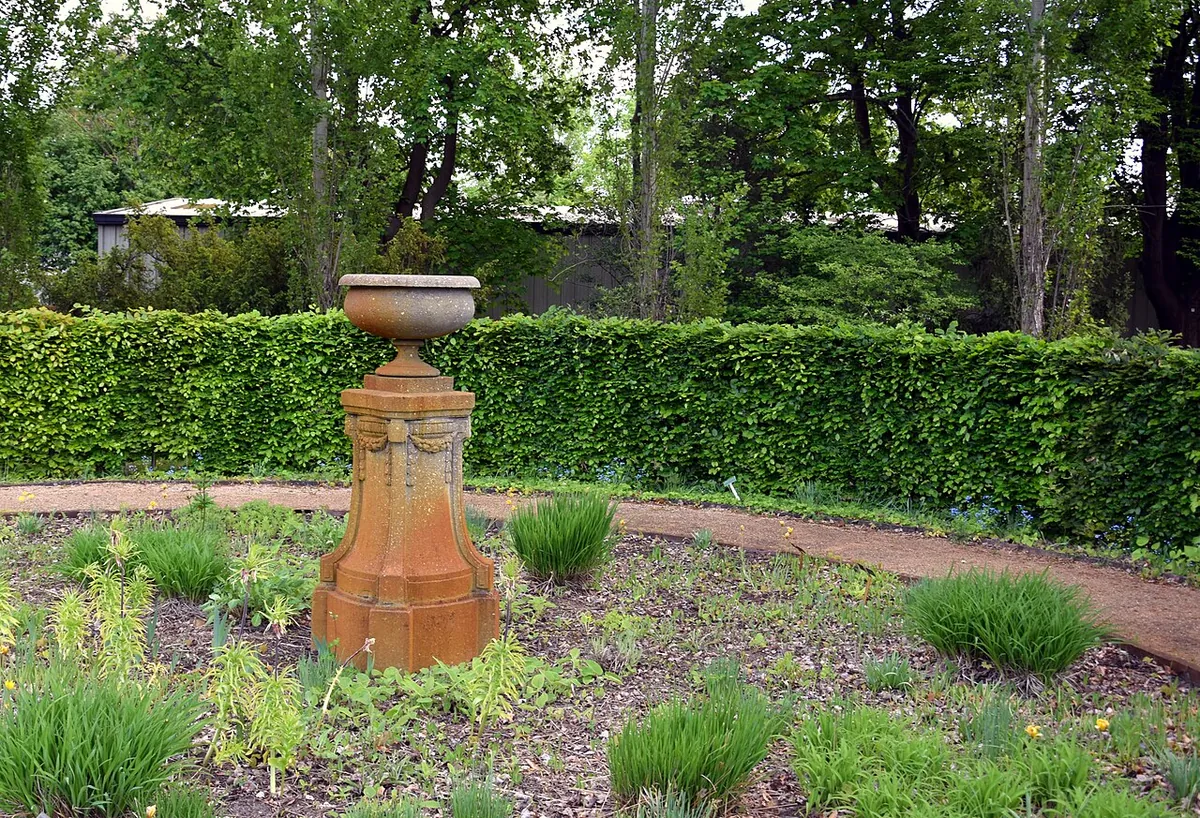
Photo: Singlespeedfahrer, Wikimedia Commons, CC0
A pedestal raises the basin and gives the classic look, like the cast stone pedestal in the Berlin garden above. The easiest DIY pedestal is a cardboard concrete form tube, 6 to 10 inches in diameter, filled with concrete and a length of rebar, with a short pipe or bolt sticking up to locate the basin. Plastic flower pots stacked upside down, a section of clay pipe, or a stack of bricks or stones also work. Make the base wider than the top so the bird bath cannot tip, and set it on compacted gravel, a paver or a small concrete pad so it stays level. Two-piece concrete bird baths are heavy; the basin alone may weigh 30 to 80 pounds and the pedestal another 30 to 80, so plan the location before you set them up. See concrete piers and concrete pads.
Adding a Fountain

Photo: David Nind, Wikimedia Commons, CC0
Moving water attracts more birds than still water, because they see the sparkle and hear the splash, and it slows algae and mosquito breeding. A concrete bird bath fountain can be as simple as a small solar pump floating in the basin, or a submersible pump in a hidden reservoir that pushes water up through a tube into the basin and lets it spill back down. Tiered fountains, like the garden fountain above, are larger versions of the same idea. Many people buy a concrete bird bath with fountain built in, with the pump hidden in the pedestal and a power cord or solar panel. For a DIY concrete bird bath fountain, cast a channel or hole for the tube in the basin and pedestal, use a recirculating pump rated for outdoor use, and keep the water level topped up so the pump does not run dry. A dripper, a tube that drips water into the basin, is another simple way to add movement. See concrete fountain.
Concrete Bird Bath Designs and Ideas
Concrete bird baths do not have to be the standard bowl on a column. Some popular designs:
- Leaf basins: cast over a large leaf, set on the ground, a low stand or a tree stump. The leaf veins give birds grip and the shape looks natural in planting beds.
- Hanging baths: a light, thin concrete birdbath hung from a branch or pergola with chains. Keep it small, because concrete is heavy.
- Boulder baths: a shallow depression cast into a large, rough concrete "rock" that sits low in a rock garden, often with a dripper.
- Tiered baths: two or three basins at different heights, with water spilling between them, usually as a concrete bird bath fountain.
- Mosaic baths: a concrete basin with tile or glass pieces set into the rim, keeping the inside rough.
- Pedestal classics: a scalloped or fluted bowl on a column, often with a small bird or cherub statue on the rim.
- Pond-edge baths: a shallow concrete shelf at the edge of a garden pond, where birds can bathe in a few centimeters of water.
Whatever the shape, keep the water shallow and the surface rough. Color can be added with pigments in the mix or with concrete stains after curing; earth tones, grays and greens blend into gardens. Avoid painting the inside of the basin. See how to color concrete and concrete staining.
Making a Concrete Bird Bath Fountain Step by Step
A homemade fountain is a weekend project, and it is the easiest way to upgrade a plain basin into a bird bath fountain. Concrete is easy to drill and cast around tubing, so you can build the plumbing in. Here is one simple layout. Bury or hide a plastic reservoir, such as a small tub or bucket, under or beside the pedestal. Place a small submersible pump in the reservoir, rated for continuous outdoor use. Run flexible tubing from the pump up through the hollow pedestal or along its back. Drill a hole through the center of the basin with a masonry bit, or cast a short PVC pipe in place when you make the basin, and feed the tubing up through it. Seal around the tube with silicone or epoxy. Water bubbles up in the center of the basin, spills over the rim or a lip, and runs back into the reservoir through a grate or a bed of stones. Use a ground-fault protected outdoor outlet for electric pumps, or a solar pump with a panel in sun. Check the water level often, because evaporation is fast in summer. See how to drill into concrete and concrete drill bit.
How Much Concrete Does a Bird Bath Need?
A typical basin 20 inches across and 2 inches thick uses about 0.2 to 0.3 cubic feet of concrete, which is about 30 to 45 pounds of mix. One 60 pound bag of sand mix makes about 0.5 cubic feet, enough for a basin and some extra. A pedestal cast in an 8 inch tube 30 inches tall needs about 0.9 cubic feet, roughly two 60 pound bags or one 80 pound bag plus a bit more. Plan for a little extra in case the mold is thicker than expected. Wear gloves, because wet concrete is caustic, and a dust mask when mixing dry powder. See how to calculate yards of concrete and how much is a bag of concrete.
Keeping Mosquitoes and Algae Away
Still water in any bird bath can breed mosquitoes, which need about a week to go from egg to adult. Changing the water every two to three days breaks the cycle completely. A concrete bird bath fountain or dripper keeps water moving, which mosquitoes avoid. Algae grow faster in sun and warm water and on rough, porous surfaces, so concrete birdbaths in full sun need more frequent scrubbing. Partial shade, regular cleaning and fresh water are the safest controls. Do not add chemicals to the water. Products sold to keep bird baths clean should be labeled safe for birds and wildlife, and even then, scrubbing and changing water is better.
Should You Seal a Concrete Bird Bath?
Sealing helps concrete bird baths resist water absorption, freeze damage and staining, but the sealer must be safe for birds and should not make the surface slippery. Options include a water-based penetrating sealer labeled non-toxic and safe for fish ponds or potable water once cured, or a pond-safe coating. Apply the sealer to the outside and the underside of the basin, where it does the most good against freeze-thaw damage, and consider leaving the inside unsealed or using a penetrating sealer that keeps the texture. Let the sealer cure fully, often a week or more, and rinse thoroughly before filling. Never use solvent-based sealers or paints inside the basin. See concrete sealer and is concrete waterproof.
Cleaning a Concrete Bird Bath
Clean water is important for bird health. Dirty bird baths can spread disease between birds. Empty and refill the water every two to three days, and more often in hot weather. Scrub the basin weekly with a stiff brush. For algae and stains, scrub with a solution of 1 part white vinegar to 9 parts water, or a very dilute bleach solution of about 1 part bleach to 9 parts water, then rinse thoroughly until there is no smell. Let the basin dry in the sun if possible. Never leave cleaner in the basin. Copper pieces sold to prevent algae are a matter of debate; keeping the basin clean is more reliable. See how to clean concrete, mold on concrete and bleach on concrete.
Winter Care for Concrete Bird Baths
Water expands about 9 percent when it freezes. Ice in a concrete birdbath can crack the basin or pop off pieces of the rim. In cold climates, either empty and cover the basin before hard freezes, turn it upside down, store it in a shed, or keep the water liquid with a bird bath heater or de-icer rated for use in concrete bird baths. Birds badly need open water in winter, so a heated bath is a great help to them. Never add salt, antifreeze or glycerin to bird bath water; they harm birds. A well-cured, sealed basin made with an air-entrained mix survives winters much better than a porous one. See pouring concrete in cold weather.
Which Birds Use Concrete Bird Baths?
Almost every garden bird uses water. Robins, starlings, sparrows, finches, cardinals, blue jays, chickadees, titmice, bluebirds, mockingbirds and doves are regular bathers in North America, and in Europe blackbirds, thrushes, tits, finches and wood pigeons visit concrete bird baths often. Warblers and other migrants that never visit feeders will stop for water, especially moving water, during spring and fall migration. Larger birds such as crows and jays may splash most of the water out, so a wider, heavier concrete birdbath is better if they are common in your area. Hummingbirds rarely bathe in basins but love a fine mist or a dripper. Birds also need water in winter, when natural sources freeze, which is why a heated concrete bird bath often becomes the busiest spot in a winter garden. Watching who comes is half the fun: keep a notebook or a camera by the window, and you will soon learn the daily schedule of each species.
Concrete Bird Baths for Small Spaces
You do not need a big yard for a concrete bird bath. On a balcony or small patio, a low basin 12 to 16 inches wide set on a sturdy stand or a large upturned pot works well, as long as the floor can take the weight. Light thin-shell basins cast from a sand mix with fibers weigh 15 to 25 pounds. Keep the bath close to a planter or climbing plants so birds have somewhere to land and look around before dropping in. In apartments, check building rules about water on balconies, and use a saucer or tray under the basin to catch splashes.
Placement Tips
Place a concrete bird bath where birds feel safe. Put it near shrubs or trees, about 10 to 15 feet away, so birds can flee to cover but cats cannot hide right beside the bath. Partial shade keeps the water cooler and slows algae. Place it where you can see it from a window and reach it easily with a hose. Set it on a level, firm surface so it does not tilt and spill. Keep it away from feeders so seed and droppings do not fall in the water. A ground-level concrete birdbath works in a flower bed or near a patio, while a pedestal bath fits open lawn areas. See concrete patio ideas.
Buying a Concrete Bird Bath
Store-bought concrete bird baths range from simple two-piece sets to large sculpted designs with statues, tiers and fountains. When buying, check the depth of the basin, the texture of the surface, and the weight; very light pieces may be resin or fiberglass with a concrete finish. Look for even color, no cracks, and a basin that sits level on the pedestal with a locating pin or socket. Ask whether the concrete was sealed and with what. Typical prices run about $80 to $200 for basic sets, $200 to $400 for larger decorative pieces, and $300 to $800 or more for a concrete bird bath with fountain or a heavy carved design. Delivery or pickup matters, since many sets weigh more than 100 pounds. See concrete garden statues.
Repairing a Cracked Concrete Bird Bath
Cracks in concrete bird baths usually come from freezing water, a fall, or settling of the pedestal. Small hairline cracks can be sealed with a waterproof epoxy or a pond-safe sealant on the outside and underside. Larger cracks can be repaired with a two-part epoxy for concrete, clamped while it cures, or patched with a polymer-modified repair mortar. For a basin broken into pieces, epoxy can join them, but the repair may leak; many people then use the broken basin as a planter. Let any repair cure fully and rinse before refilling. See epoxy concrete crack repair and concrete patching compound.
Common Mistakes
- Too deep. Birds avoid deep bowls. Keep the edge shallow and add stones if needed.
- Too smooth. Glossy sealers and polished basins are slippery for birds.
- Not rinsing new concrete. Fresh concrete is alkaline; rinse or soak it before use.
- Letting water freeze. Ice cracks basins. Empty, cover or heat in winter.
- Dirty water. Change water every few days and scrub weekly.
- Bad placement. Too close to cover lets cats ambush birds; too far from cover makes birds nervous.
Frequently Asked Questions
What is the best concrete for bird baths?
A sand mix, countertop mix or high-strength mix with fine aggregate, reinforced with fibers and cured slowly for a week.
Is concrete safe for birds?
Yes, once it is fully cured and rinsed. Avoid toxic sealers, paints and cleaners inside the basin.
How deep should a concrete bird bath be?
About 1 to 2 inches at the edge and no more than 2 to 3 inches at the center.
Can a concrete bird bath stay out in winter?
Only if it is empty, covered or kept from freezing with a heater. Ice in the basin can crack it.
How much does a concrete bird bath weigh?
A typical two-piece set weighs about 60 to 150 pounds, depending on size.
Sources
- National Audubon Society: bird baths and backyard bird care
- Cornell Lab of Ornithology: providing water for birds
- US Fish and Wildlife Service: bird bath safety in winter
- Portland Cement Association: concrete durability and curing
Related Guides
- Concrete garden statues — painting, sealing and care
- Concrete bench — outdoor benches, DIY and costs
- Concrete fountain — tiered fountains, pumps and care
- Concrete flower pots — sizes, weights, prices and extra large planters for outside