
Stamped Concrete Floor: Indoor and Outdoor Stamped Concrete Flooring Guide
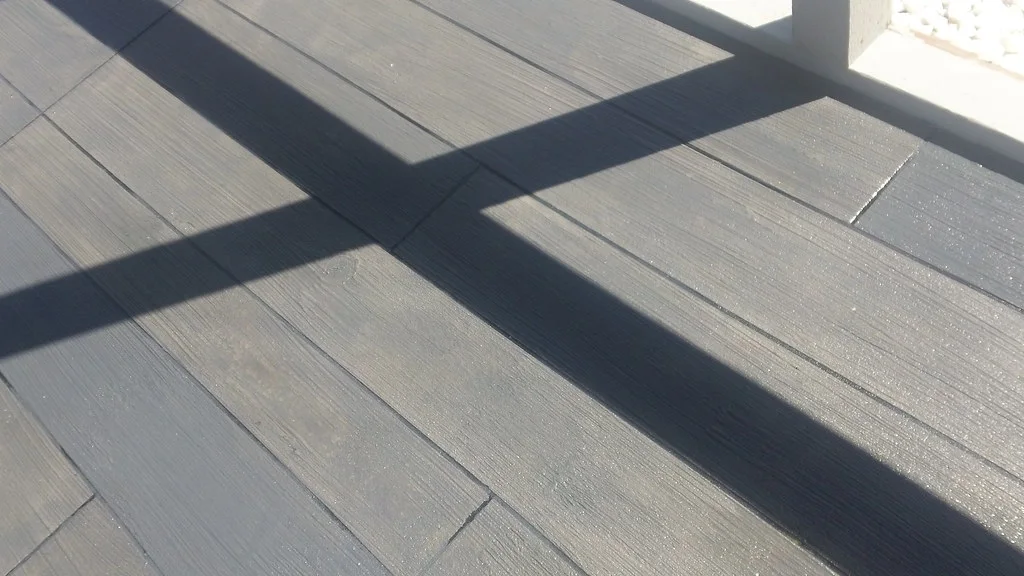
Photo: Decorative Concrete Kingdom, Flickr, CC BY 2.0
Quick Answer
A stamped concrete floor is concrete that has been colored and pressed with textured mats while fresh so it looks like wood planks, slate, flagstone, brick or tile. Outdoors, stamped concrete floors are used for patios, porches and pool decks; indoors, stamped cement floors are installed either on a new slab or as a thin stamped overlay on an existing concrete floor. Stamped concrete flooring typically costs about $10 to $20 per square foot on new slabs and $8 to $16 per square foot as an overlay, depending on pattern, colors and site conditions. It is durable and easy to clean, but it is hard underfoot, needs a sealer reapplied every two to five years, and should have a slip-resistant additive in wet areas.
Stamped concrete began as an outdoor finish for patios and driveways, but designers now use it for basements, kitchens, sunrooms, entries, restaurants and retail floors too. The floor in the photo above shows one of the most popular modern patterns: a gray wood plank stamp, complete with grain texture and plank seams, that looks like weathered boards but has the durability of concrete.
This guide covers what a stamped concrete floor is, indoor and outdoor options, new slabs versus overlays, patterns and colors, how stamped concrete flooring is installed, sealers, slip resistance, maintenance, pros and cons, and costs.
What Is a Stamped Concrete Floor?
Stamped concrete is ordinary concrete finished in a special way. After the concrete is placed and floated, color is added, a release agent is applied, and large polyurethane stamping mats are pressed into the surface in a repeating pattern. Flexible texture skins are used along edges and in tight spots. When the concrete hardens, the release agent is washed off and the surface is sealed. The result is a single, continuous concrete surface that looks like many separate stones, bricks or boards, without the joints that let weeds and water through. A stamped concrete floor indoors works the same way, but is usually finished smoother and sealed with a harder, more stain-resistant sealer.
Indoor vs. Outdoor Stamped Concrete Floors
Outdoor stamped concrete floors. Patios, porches, covered outdoor rooms, pool decks and walkways are the classic uses. They face sun, rain, freeze-thaw cycles and deicing salts, so they need air-entrained concrete, deeper textures for traction and a breathable exterior sealer. See stamped concrete patio.
Indoor stamped cement floors. Basements, kitchens, living areas, mudrooms, sunrooms and commercial interiors are protected from weather, so textures can be smoother and sealers glossier. Indoor stamped concrete flooring is often installed as an overlay on an existing slab, because pouring a new slab inside a finished building is rarely practical.
Garages and workshops. Stamped concrete floors in garages look attractive but face hot tires, oil and road salt, so they need durable, chemical-resistant sealers and regular maintenance.
New Slab vs. Stamped Overlay
Stamped new slab. On new construction or when replacing a damaged slab, the concrete itself is stamped while fresh, usually 4 inches thick for patios and floors. This gives the deepest, most authentic textures and is the most durable option.
Stamped overlay. A polymer-modified cement overlay, typically about 1/4 to 3/4 inch thick, is troweled over an existing sound concrete floor and stamped while it is still workable. Overlays let you add a stamped concrete floor to a basement, an old patio or a commercial interior without demolition and with less added height. They depend on good surface preparation, usually grinding or shot blasting, and they will reflect cracks and movement in the slab below. See concrete overlay cost and how to resurface concrete.
Microtopping and stencils. Even thinner decorative layers, such as microcement and spray-applied stencil systems, imitate pattern and texture with less depth than true stamping. See microcement.
Popular Stamped Concrete Floor Patterns
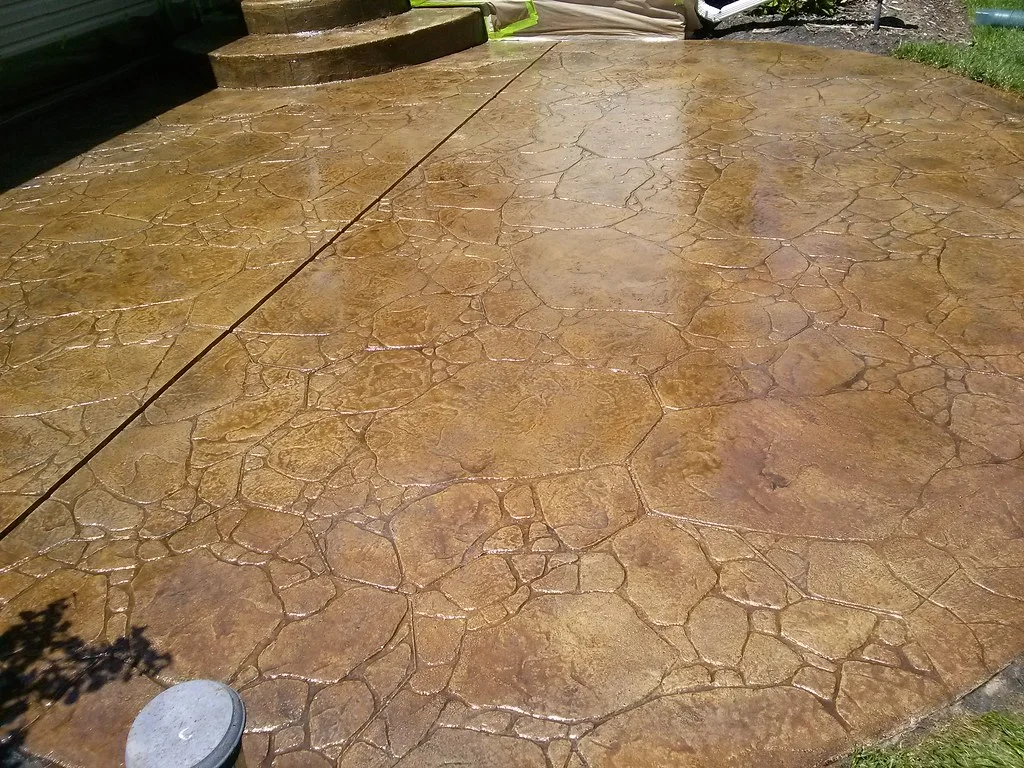
Photo: Decorative Concrete Kingdom, Flickr, CC BY 2.0
Wood plank. Long boards with grain and nail-hole details, popular for porches, sunrooms and rustic interiors.
Random flagstone and slate. Irregular stone shapes like the sealed floor above, the most common outdoor stamped concrete floor pattern because it hides cracks and color variation well.
Ashlar slate and cut stone. Rectangular stone in a repeating pattern, a more formal look suited to indoor stamped cement floors and entries.
Brick and cobblestone. Running bond, herringbone or basket-weave patterns for walkways, borders and old-world interiors.
Tile. Square or hexagonal patterns that imitate ceramic or stone tile, often with grout lines in a contrasting color.
Seamless texture. Stone texture without grout lines, for a subtle, natural surface.
See stamped concrete patterns for more options.
Color Options
Color is what makes stamped concrete flooring look like real stone or wood. Most installers use two colors: a base color and an accent color. The base color comes from integral color, mixed into the whole batch at the plant, or from a color hardener broadcast onto the fresh surface, which also makes it harder. The accent color comes from a colored powder release agent, which collects in the low spots and grout lines to add depth, or from stains applied after the release is washed off. Indoor stamped concrete floors are often finished with acid or water-based stains for richer, variegated color. Lighter colors stay cooler outdoors and show less dust; darker colors show more scratches and fade more in strong sun. See concrete staining.
How a Stamped Concrete Floor Is Installed
1. Prepare the base. For a new slab, compact a gravel base, set forms and place reinforcement. For an overlay, grind or shot blast the existing floor, repair cracks and clean thoroughly.
2. Place and finish. Place and screed the concrete or overlay, then float it smooth.
3. Add base color. Broadcast color hardener and float it in, unless integral color was used.
4. Apply release. Spread colored powder or clear liquid release so the mats do not stick.
5. Stamp. When the surface is firm enough to hold an imprint but still plastic, lay stamping mats in sequence and tamp them in. Detail edges with flexible texture skins. Timing is critical: too early and the imprint slumps, too late and it will not take.
6. Cut joints. Saw control joints, ideally along pattern lines so they blend in.
7. Wash and seal. After curing for a day or more, wash off excess release, let the surface dry, apply any stains, and seal. See concrete release agent.
Sealers for Stamped Concrete Floors
Sealer protects the color and surface and gives stamped concrete floors their finished look. Outdoors, breathable acrylic sealers, solvent- or water-based, are most common and are recoated every two to three years. Indoors, harder sealers such as high-performance acrylics, polyurethanes, epoxies with a urethane topcoat or polyaspartics resist scratches and stains better and can last longer. Many indoor stamped cement floors also get a sacrificial floor finish or wax that is easy to renew. Choose a sealer compatible with the colors and any existing coating, and apply thin coats to avoid a cloudy or slippery finish. See concrete sealer.
Slip Resistance
A glossy sealer on a stamped concrete floor can be slippery when wet, especially indoors and around pools. Installers reduce the risk by adding fine anti-slip grit to the final sealer coat, choosing patterns with deeper texture for wet areas, and avoiding thick, high-gloss coatings outdoors. Entry mats and good drainage help too. For commercial floors, ask about slip resistance testing and compliance with local requirements.
Covered Patios and Porches
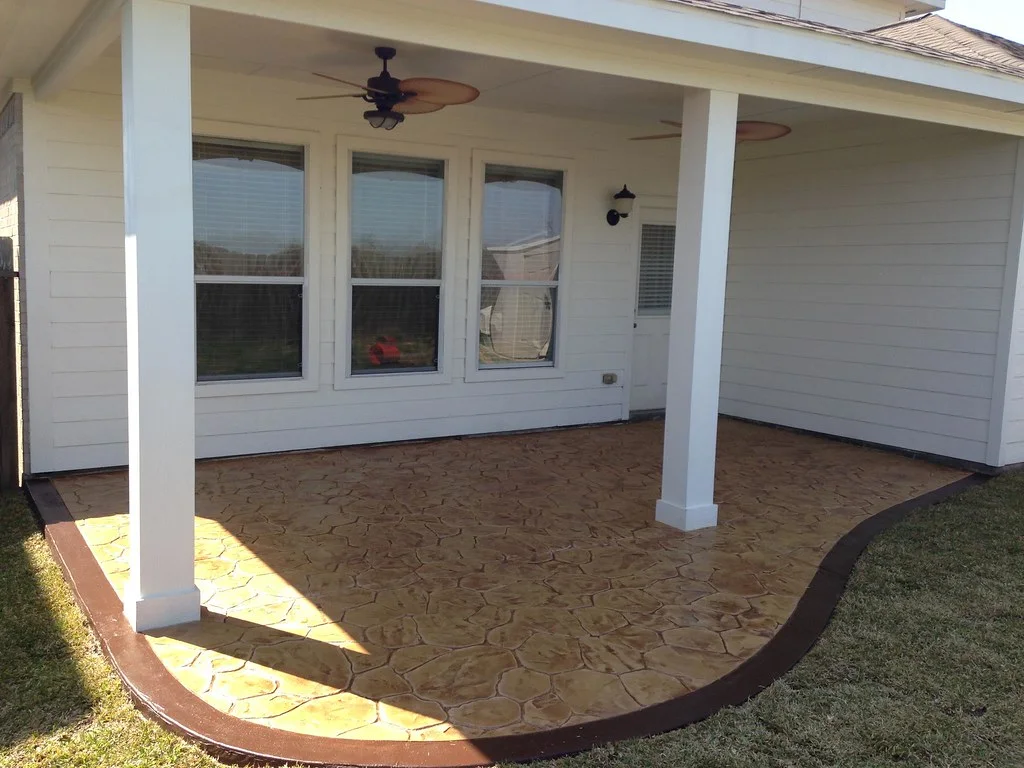
Photo: Texas_Custom_Patios, Flickr, CC BY-SA 2.0
Covered patios and porches like the one above sit between indoor and outdoor spaces, and they are one of the best places for a stamped concrete floor. The roof protects the surface from much of the sun and rain, so colors last longer and sealers wear more slowly, while the stamped pattern adds the look of stone at a lower cost. A contrasting border, here a darker band along the curved edge, frames the space. Make sure the slab slopes slightly away from the house so rain blowing in drains off, and plan lighting and ceiling fans before the pour so any conduit can be placed in the slab or columns rather than cut in later.
Stamped Concrete Floors in Basements
Basements are one of the most practical places for indoor stamped concrete floors. The slab is already there, carpet and wood risk moisture damage, and a stamped overlay can turn a plain gray floor into slate or wood plank without adding much height under low ceilings. Before installation, check the slab for moisture with a plastic sheet test or a professional moisture test, and fix leaks and drainage problems first, because trapped moisture can cause sealers to whiten or peel. Existing cracks should be repaired or treated with crack isolation so they do not telegraph through the overlay. A stamped concrete floor in a basement pairs well with area rugs in living spaces and with radiant floor heating, which removes the chill that otherwise makes concrete less comfortable below grade.
Kitchens, Living Rooms and Entries
In main-floor living spaces, stamped concrete flooring suits rustic, Mediterranean, Southwestern and industrial interiors. Ashlar slate, tile and wood plank patterns are common choices. Kitchens need a tough, stain-resistant sealer because of grease, acids and frequent cleaning, and many homeowners choose a lower-sheen finish that hides scratches and is less slippery than high gloss. Entries benefit from deeper textures and walk-off mats to trap grit. If the house sits on a slab foundation, a stamped overlay can run continuously from room to room, giving a seamless look without thresholds.
Stamped Concrete Floors and Radiant Heat
Concrete conducts and stores heat well, so stamped concrete floors are an excellent match for hydronic or electric radiant floor heating. In new construction, tubing or cables are placed in or under the slab before it is poured; with overlays, thin electric mats can sometimes be embedded in a leveling layer beneath the stamped overlay. Radiant heat makes concrete comfortable to walk on barefoot and evens out room temperatures. Follow the heating system and overlay manufacturers' instructions, raise floor temperatures gradually after installation, and avoid saw-cutting joints where tubing runs. See heated concrete floor.
Repairing a Cracked Stamped Concrete Floor
Stamped concrete floors crack for the same reasons as plain concrete: shrinkage, settlement and movement. Cracks are less noticeable in random stone patterns, where they can look like natural fissures, and more noticeable in regular patterns such as tile and brick. Fine, stable cracks can be filled with a color-matched flexible filler and resealed. Wider cracks can be routed, filled and colored to blend with the pattern, sometimes by carving the crack into a new grout line. Damaged areas can be cut out and re-stamped with the same mats, though matching color and texture exactly is difficult. Proper control joints at installation, cut along pattern lines, are the best way to keep cracks where they belong. See how to fix cracks in concrete.
Restoring Faded Stamped Concrete
Outdoor stamped concrete floors can fade and dull after years of sun, foot traffic and weather, especially if resealing was skipped. Restoration usually involves deep cleaning or pressure washing, stripping old, peeling or whitened sealer with a solvent stripper, recoloring with tinted sealer, water-based stains or antiquing colors to bring back contrast, and then applying a fresh sealer. Professional recoloring and resealing typically costs a few dollars per square foot and can make a ten-year-old stamped patio look close to new. Indoors, stamped cement floors usually need only cleaning and a fresh topcoat when the finish wears in traffic lanes.
Stamped Concrete vs. Other Flooring
Stamped concrete vs. tile. Tile offers exact, uniform patterns and easy single-tile replacement, but grout lines need cleaning and installation costs can be similar or higher. A stamped concrete floor has no grout to stain and no tiles to crack loose.
Stamped concrete vs. luxury vinyl. Vinyl plank is softer, warmer and cheaper to install, but can be damaged by water under the planks and has a shorter lifespan.
Stamped concrete vs. polished concrete. Polished concrete refines the slab itself for a modern look; stamped concrete adds texture and the look of other materials. See concrete polisher.
Stamped concrete vs. pavers. Outdoors, pavers can be lifted and reset and handle freeze-thaw well, while stamped concrete costs less to install and has no joints for weeds. See stamped concrete vs pavers.
Common Installation Mistakes
Stamping at the wrong time. Too early leaves a blurry imprint and mats that sink; too late leaves a shallow, incomplete pattern.
Too few mats. Large pours need enough mats and enough people to stamp the whole area at the right stage.
Poorly placed joints. Control joints that cut across the pattern look out of place and leave random cracks elsewhere.
Not washing off release. Excess release left under sealer looks chalky and can stop the sealer from bonding.
Thick or glossy sealer outdoors. Heavy coats trap moisture, turn white and become slippery when wet.
Poor overlay preparation. Overlays on dirty, smooth or sealed concrete delaminate.
Choosing a Stamped Concrete Installer
Stamped concrete flooring is a specialist trade, and results vary widely between installers. Ask to see finished stamped concrete floors the contractor installed several years ago, not just new ones, so you can judge how color and sealer have held up. Ask whether they will use integral color, color hardener or both; which release and sealer they use; how and where they will cut control joints; and whether the quote includes base preparation, reinforcement and the first resealing. For indoor overlays, ask about surface preparation methods, crack treatment and moisture testing. Get the pattern, colors, sealer and warranty in writing.
Pros and Cons of Stamped Concrete Flooring
Pros: looks like stone, brick or wood for less than the real material; one continuous surface with no loose pavers or weeds; very durable; works with radiant heating; easy to sweep and mop; many patterns and colors.
Cons: hard and cold underfoot indoors; can crack like any concrete, and cracks are harder to hide in some patterns; needs periodic resealing; color can fade outdoors; repairs are hard to match exactly; slippery if over-sealed; not a DIY-friendly project, because timing and stamping technique take experience.
Commercial Stamped Concrete Floors
Restaurants, wineries, hotels, retail stores and showrooms use stamped concrete floors to get a stone or wood look that stands up to heavy foot traffic and frequent cleaning. Commercial projects usually specify thicker overlays or new slabs, durable urethane or polyaspartic sealers, and slip resistance suitable for wet areas such as kitchens and entrances. Maintenance programs often include a sacrificial floor finish that is burnished and renewed on a schedule, protecting the sealer and color underneath. Because downtime is costly, many commercial owners choose fast-curing overlays and sealers so the space can reopen within days.
Can You DIY a Stamped Concrete Floor?
Stamped concrete is one of the hardest decorative finishes to do yourself. Timing is unforgiving: once the concrete is ready to stamp, the crew has a limited window to lay and tamp every mat, and mistakes cannot be undone once the concrete sets. Stamping mats and texture skins are expensive to buy, though some rental shops and suppliers rent them. A small, simple area such as a landing or a short walk with a texture skin or a single pattern can be a reasonable first project for a confident DIYer with experienced help. For larger patios, interior floors and overlays, most homeowners hire an experienced stamped concrete contractor, and many DIYers instead handle the resealing and maintenance themselves.
How Long a Stamped Concrete Floor Takes
A new outdoor stamped concrete floor or patio usually takes a day or two of site preparation and forming, one day to pour and stamp, and another visit after a day or more to wash off the release and seal. Light foot traffic is often fine after a day or two, furniture after several days, and vehicles on driveways after about a week or longer. Indoor stamped overlays take a day or two for surface preparation and crack repair, a day to apply and stamp, and a day or more for coloring and sealing, with sealer cure times added before heavy use.
Questions Before You Decide
Before committing to stamped concrete flooring, think about how the space will be used, whether bare feet will be on it, how much maintenance you are willing to do, and how the pattern and color will look in ten years. Look at aged examples in person, since photos of freshly sealed floors look glossier than the floor will in daily use. If you are on the fence, a smaller area such as a covered porch or entry is a low-risk way to try a stamped concrete floor before using it throughout a larger space.
Stamped Concrete Floors in Cold Climates
Outdoor stamped concrete floors in freeze-thaw climates need extra care to last. Use air-entrained concrete with a proper water-cement ratio, avoid finishing water into the surface, and cure well before the first winter. Breathable sealers are important, because non-breathable coatings can trap moisture that freezes and causes the sealer to whiten or flake. Do not use rock salt or other aggressive deicers on stamped concrete floors, especially in the first year; sand or a gentler deicer is safer. Clear snow with plastic shovels rather than metal blades, which can scratch sealers and chip pattern edges. With these precautions, stamped concrete floors perform well even in northern states. See best ice melt for concrete.
Matching Borders and Steps
A stamped concrete floor often looks best with a finished edge. Contrasting borders, smooth troweled or stamped in a different pattern such as brick soldier course, frame patios and indoor rooms and hide the transition to walls and lawns. Steps can be stamped to match, with formed edges that imitate stone treads, though steps need deeper textures for traction. Plan borders, step edges and joint locations before the pour, so the whole stamped concrete flooring layout looks intentional rather than improvised on the day.
Stamped Concrete Floor Cost
New stamped concrete floors and patios: about $10 to $20 per square foot installed, depending on pattern complexity, number of colors, borders, site access and region.
Stamped overlay on an existing slab: about $8 to $16 per square foot, plus surface preparation.
Resealing: about $1 to $3 per square foot professionally, less as DIY.
Repair and recoloring: often $2 to $5 per square foot for cleaning, recoloring and resealing faded floors.
Small projects often have minimum charges. See stamped concrete vs pavers for how costs compare with pavers.
Maintaining a Stamped Concrete Floor
Sweep or dust mop regularly and wash with a pH-neutral cleaner. Wipe up oil, grease, wine and acidic spills quickly, before they can soak through worn sealer into the colored surface. Use furniture pads indoors and avoid dragging heavy items such as appliances or planters across the surface. Outdoors, avoid deicing salts on new stamped concrete floors in their first winter and use sand for traction instead. Reseal when water stops beading or the color looks dull, typically every two to three years outdoors and as needed indoors. Before resealing, clean thoroughly and let the surface dry. See how to clean concrete floors.
Frequently Asked Questions
Can you stamp an existing concrete floor?
Yes, with a stamped overlay applied over a sound, properly prepared slab.
How much does a stamped concrete floor cost?
About $10 to $20 per square foot for new stamped concrete and $8 to $16 for stamped overlays.
Are stamped concrete floors slippery?
They can be when wet and heavily sealed; an anti-slip additive in the sealer reduces the risk.
How long do stamped cement floors last?
Decades with proper sealing and care; the sealer needs renewal every few years.
How often should a stamped concrete floor be resealed?
Every two to three years outdoors, or when water stops beading on the surface. Indoor floors need resealing or a fresh topcoat less often, mainly in high-traffic lanes.
Can a stamped concrete floor be installed over tile or wood?
No. Stamped overlays need a sound concrete base. Tile, vinyl and wood must be removed and the slab prepared before a stamped overlay is applied.
What is the most popular stamped concrete floor pattern?
Random flagstone and slate patterns outdoors, and ashlar slate, tile and wood plank patterns for indoor stamped cement floors.
Is stamped concrete flooring good for basements?
Yes, if the slab is dry and sound. Check for moisture problems first.
Sources
- American Concrete Institute: ACI 310R, guide to decorative concrete
- Concrete Network: stamped concrete and stamped overlays
- Portland Cement Association: decorative concrete finishes
- International Concrete Repair Institute: surface preparation for overlays