
Is Calcium Chloride Safe for Concrete? Choosing the Best Ice Melt for Concrete
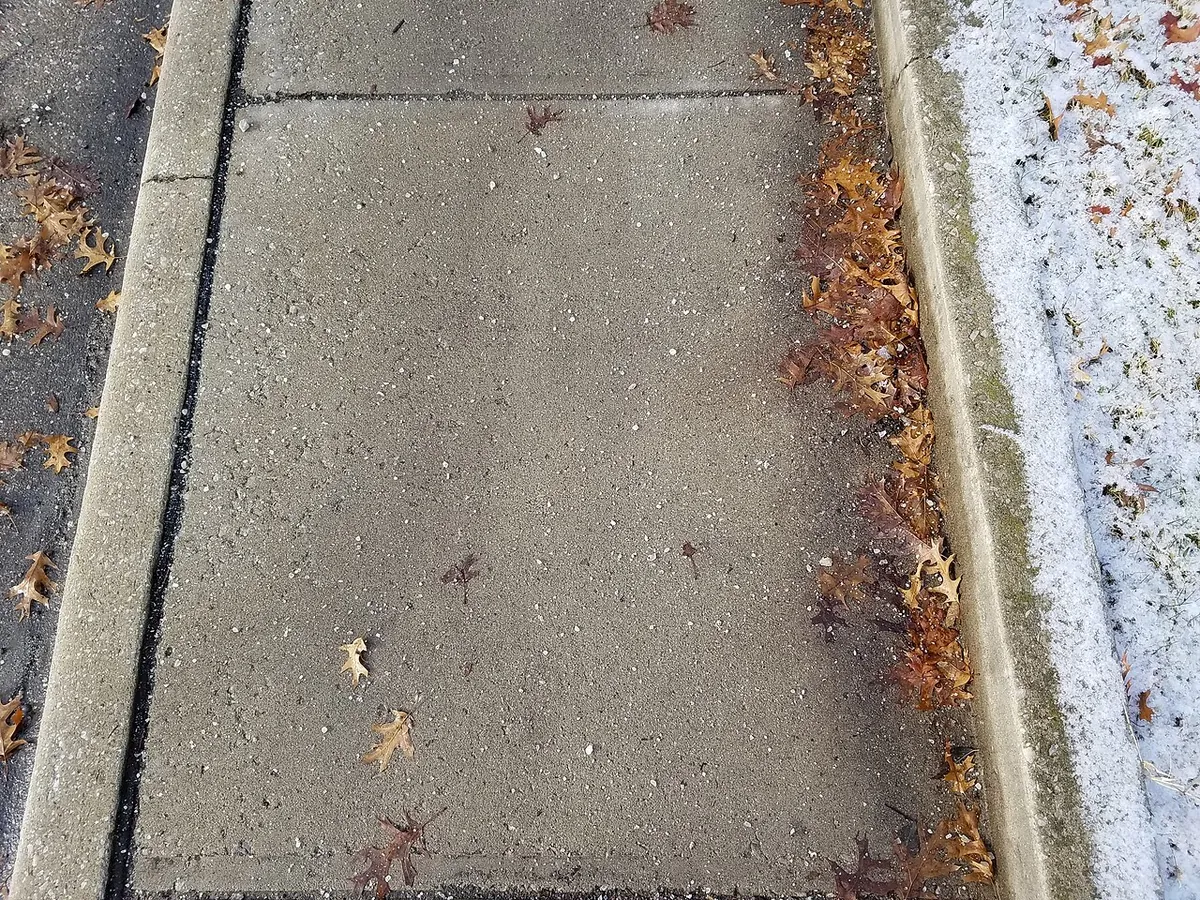
Photo: dankeck, Wikimedia Commons, CC0
Quick Answer
Is calcium chloride safe for concrete? For well-built, air-entrained concrete that is at least a year old, calcium chloride used in moderate amounts is generally considered one of the more concrete-friendly chloride ice melts: it works fast, down to about -25 degrees F, so less is needed. But no chloride is completely harmless. All of them increase freeze-thaw cycles at the surface and can contribute to scaling, and they corrode reinforcing steel if they reach it. Is magnesium chloride safe for concrete? Research shows magnesium chloride can chemically attack the cement paste with heavy, repeated use, so use it sparingly. Never use ammonium nitrate or ammonium sulfate. New concrete in its first winter should get sand only. Sealing, shoveling first and using the least ice melt that works protect concrete best.
Every winter, homeowners face the same question: how do you keep a concrete driveway, walk or steps safe from ice without damaging them? Ice melt products line hardware store shelves with labels promising to be "safe for concrete," but the truth is more nuanced. The kind of ice melt, the age and quality of the concrete, how much product is used, and how often all affect whether the surface stays sound or starts to flake and pit.
This guide explains how ice melts affect concrete, answers whether calcium chloride and magnesium chloride are safe for concrete, compares common ice melt types, explains why new concrete is most at risk, and gives practical steps to use ice melt without damaging your concrete.
How Ice Melt Damages Concrete
Ice melts work by lowering the freezing point of water, turning ice into brine. The damage they cause to concrete is mostly indirect. First, they increase freeze-thaw cycles: brine soaks into the concrete's pores, and when temperatures drop again, it refreezes; each cycle creates pressure inside the surface layer. Second, they cause osmotic and crystallization pressure: salts concentrate in the pores and can create extra pressure as water moves and salts crystallize. Third, some ice melts react chemically with the cement paste: magnesium chloride and especially ammonium products can break down the compounds that hold concrete together. Fourth, chlorides corrode reinforcing steel and wire mesh once they reach it, and rusting steel expands and cracks the concrete. The visible result is scaling, where thin flakes peel off the surface, pitting, and spalling. See does salt damage concrete and concrete pitting and flaking.
Is Calcium Chloride Safe for Concrete?
So, is calcium chloride safe for concrete? Calcium chloride is one of the most widely used ice melts for driveways and walks, and for good reasons. It melts ice down to about -25 degrees F, far colder than rock salt. It releases heat as it dissolves, so it starts working quickly. Because it is so effective, you usually need less of it than rock salt for the same result. And unlike magnesium chloride and ammonium compounds, calcium chloride does not significantly attack the cement paste chemically at normal application rates; the Portland Cement Association and many concrete contractors regard it as an acceptable deicer for mature, quality concrete when used in moderation.
But calcium chloride is still a chloride. Its brine soaks into concrete, increases the number of freeze-thaw cycles at the surface, and can contribute to scaling, especially on poor-quality, non-air-entrained, overworked or poorly cured concrete. Some research has found that very high concentrations of calcium chloride can react with the paste and cause deterioration over many years. Its chlorides can reach reinforcing steel through cracks and cause corrosion. It is also hygroscopic, meaning it attracts moisture, which keeps surfaces damp and slippery and can track into the house as a residue. In short, calcium chloride is reasonably safe for good, mature concrete when used sparingly, but it is not a free pass.
Is Magnesium Chloride Safe for Concrete?
Is magnesium chloride safe for concrete? Magnesium chloride is often marketed as a "safer" or "pet-friendly" ice melt, and it is less harmful to plants and less corrosive to metal than rock salt. It works down to around -5 to -10 degrees F. However, research by state transportation departments and universities has shown that magnesium chloride can react chemically with the cement paste, forming magnesium hydroxide and magnesium silicate hydrate, which are weaker than the original compounds. With repeated, heavy use, especially in high concentrations, this can soften and weaken concrete surfaces over time. For a home driveway that receives occasional light applications, the risk is modest, but magnesium chloride is not the safest choice for concrete despite its marketing. Use it sparingly and rinse residues off in spring.
Comparing Ice Melts for Concrete
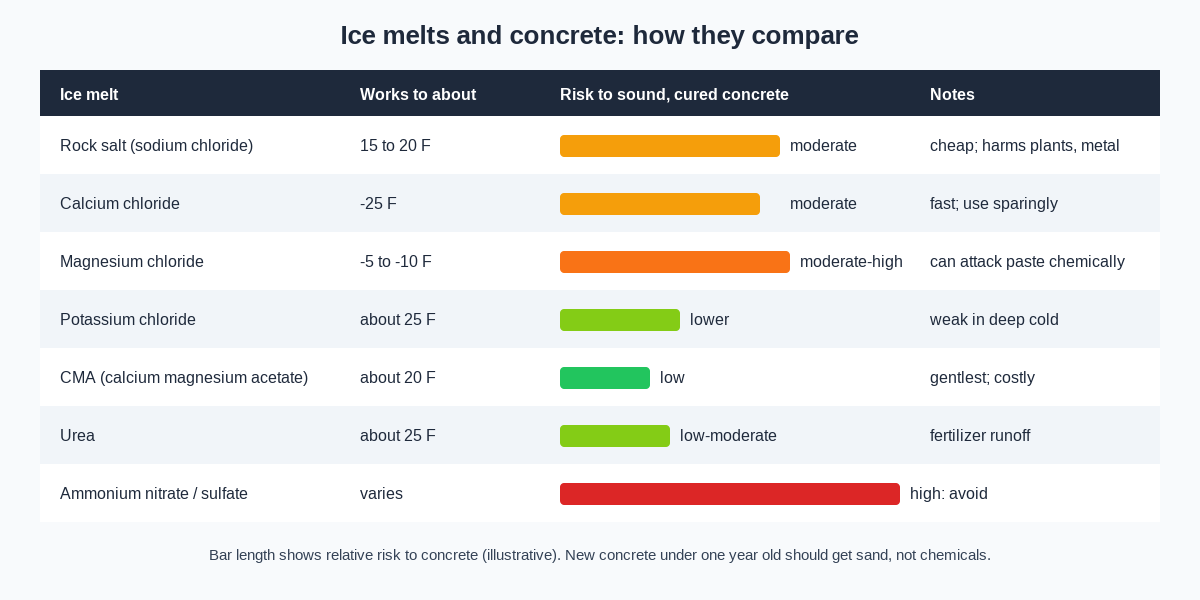
Rock salt (sodium chloride) is cheap and widely used, but it only works to about 15 to 20 degrees F, needs larger amounts in cold weather, harms lawns and plants, corrodes metal and vehicles, and contributes to scaling and steel corrosion. It is acceptable on mature, air-entrained concrete in moderation, but not ideal.
Calcium chloride works to about -25 degrees F, acts fast, and needs less product. It is a reasonable choice for mature concrete in moderation, but can leave a slippery residue and still contributes to freeze-thaw scaling.
Magnesium chloride works to about -5 to -10 degrees F and is gentler on plants and metal, but it can chemically weaken concrete with heavy use.
Potassium chloride is gentler on plants but only works to about 25 degrees F, so it is weak in deep cold. Its effect on concrete is similar to or milder than sodium chloride.
Calcium magnesium acetate (CMA) is a non-chloride deicer made from limestone and acetic acid. It is the gentlest common option for concrete, steel and plants, but it costs much more and works best above about 20 degrees F. It is often used on bridges and sensitive areas.
Urea is a fertilizer used as a deicer near plants and on some airports; it works only to about 25 degrees F and its runoff adds nitrogen to waterways.
Ammonium nitrate and ammonium sulfate, found in some fertilizers and blended deicers, chemically attack concrete and can cause severe damage. Never use them on concrete. Check labels on blends for ammonium compounds.

Photo: U.S. Air Force, Tech. Sgt. Anthony Plyler, Wikimedia Commons, public domain
Why New Concrete Is Most at Risk
Concrete gains strength and becomes less permeable over its first months. New concrete, especially in its first winter, has more open pores, holds more water and has not yet developed full resistance to freeze-thaw cycles. Ice melts on young concrete are a leading cause of early scaling. Most concrete associations and contractors recommend no chemical deicers at all on concrete less than about a year old; use sand or non-clumping kitty litter for traction instead, and shovel promptly. Concrete poured in late fall is especially vulnerable, because it has little time to dry and gain strength before winter. See pouring concrete in cold weather.
Concrete Quality Matters More Than the Product
Two driveways treated with the same ice melt can behave very differently. Concrete that resists deicers well is air-entrained, with about 5 to 7 percent entrained air that gives freezing water room to expand; has a low water-cement ratio, about 0.45 or lower, with no water added at the truck; was finished properly, without working bleed water into the surface or over-troweling; and was cured well, kept moist for at least several days. Concrete that lacks these qualities may scale with any deicer, or even with freeze-thaw cycles alone. If you are pouring new concrete in a cold climate, insist on these specifications. See concrete mix ratio and concrete curing compound.
How to Use Ice Melt Without Damaging Concrete
The way you use ice melt matters as much as which product you buy. Shovel first and often: remove as much snow as possible before it is packed into ice, so you need little or no ice melt at all. Apply ice melt before or early in a storm, in a thin, even layer; a light pre-treatment prevents ice from bonding and uses less product than melting thick ice later. Use the least amount that works: follow the label rate, usually only a few ounces per square yard, and use a hand spreader for even coverage rather than dumping handfuls. Remove the slush: once ice melt has turned ice to slush, shovel it off, so brine does not sit on the concrete and soak in. Rinse in spring: wash driveways, walks and steps with water once the weather warms to remove salt residues. And seal the concrete: a penetrating silane or siloxane sealer applied every few years in dry, mild weather keeps brine from soaking in and is one of the best defenses against deicer damage. See how to seal concrete and concrete sealer.
Sand, Grit and Non-Chemical Traction
On new concrete, or whenever you want to avoid chemicals, sand, grit, non-clumping kitty litter or crushed stone provide traction without melting ice. They do not harm concrete, but they track indoors and need sweeping up in spring, and they can clog drains. Some homeowners mix a small amount of calcium chloride into sand to keep it from freezing into clumps and to help it embed in the ice. Heated mats for steps and walkways, and heated driveway systems built into new concrete, eliminate the need for deicers entirely in high-traffic areas, at a higher upfront cost.
Is Calcium Chloride Safe for Concrete Steps, Pavers and Stamped Concrete?
Steps, stoops and porches are often the first concrete surfaces to show deicer damage, because brine collects on treads and runs over edges, and because steps are often less well consolidated than slabs. Use the gentlest deicer possible on steps, shovel and sweep frequently, and seal them before winter. Stamped and colored concrete is also vulnerable, because scaling is very visible on decorative surfaces and can strip color hardener and sealer; use sand or CMA where possible, and reseal decorative concrete regularly. Interlocking concrete pavers are generally dense and resistant to deicers, but the joint sand and edges still benefit from moderation. So, is calcium chloride safe for concrete steps and decorative surfaces? It can be used sparingly on mature, sealed steps, but sand or a non-chloride option is the safer choice. See how to fix concrete steps and stamped concrete driveway.
Ice Melt, Pets and Plants
Many ice melts are hard on paws and plants. Rock salt and calcium chloride can irritate paws, and dogs may lick the residue. Products labeled pet-friendly often use magnesium chloride, CMA, or urea blends, which are gentler on pets but, as noted, not always gentler on concrete. Wipe pets' paws after walks. For lawns and garden beds next to walks and driveways, chlorides draw water out of plant roots and build up in soil; avoid throwing ice melt onto lawns, shovel snow containing ice melt away from beds, and flush soil with water in spring where salt has accumulated.
Damage to Watch For
Inspect concrete in late winter and spring for signs of deicer damage: scaling, where thin flakes of the surface peel off; pitting and popouts; exposed aggregate in areas that were once smooth; cracks near edges and joints; white staining or efflorescence from salt residue; and rust stains or spalling over steel. Early scaling can often be stopped by improving drainage, cleaning, and sealing. Moderate scaling can be repaired with a resurfacer or overlay. Severe damage, especially with exposed or rusting reinforcement, may need panel replacement. See concrete spalling, how to resurface concrete and efflorescence on concrete.
Calcium Chloride in Concrete vs on Concrete
Calcium chloride plays two roles with concrete, which sometimes causes confusion. As an ice melt, it is applied to the surface of hardened concrete in winter. As an admixture, small amounts are added to fresh concrete as an accelerator to speed setting in cold weather. When used in the mix, calcium chloride is limited in reinforced concrete because chlorides promote steel corrosion, and it is not allowed in prestressed concrete. The question is calcium chloride safe for concrete as a deicer is therefore about surface exposure, not mix design. See calcium chloride in concrete.
A Winter Routine for Concrete Driveways and Walks
A simple routine protects concrete through the whole season. In fall, clean the concrete, repair cracks and seal driveways, walks and steps with a penetrating sealer while temperatures are still above about 50 degrees F. Buy the ice melt you plan to use and read the label for ingredients, avoiding anything with ammonium compounds. Set up a hand spreader and a bucket of sand. During storms, shovel early and often, before snow is packed down by feet and tires. Apply a light layer of ice melt before freezing rain or after the final shovel, only where traction is needed, such as steps, the walk to the door and slopes. After the ice melts, shovel or squeegee away the slush. During thaws, rinse heavy salt residue off the concrete. In spring, wash all concrete surfaces thoroughly, inspect for scaling or cracks, and plan repairs and resealing.
Ice Melt Choices by Climate
Climate changes which ice melt makes sense. In mild winters where temperatures rarely drop much below freezing, rock salt or potassium chloride used sparingly, or simply sand, may be enough. In moderate climates with occasional cold snaps, calcium chloride used lightly handles the coldest days with less product. In very cold regions where temperatures often fall below 0 degrees F, rock salt barely works and calcium chloride is often the only chemical that keeps up; there, good concrete quality, air entrainment and regular sealing are especially important. In coastal and wet climates with frequent freeze-thaw cycles but little deep cold, minimizing brine on the concrete and keeping drainage working matters most.
Commercial and Multi-Family Properties
Property managers face the same question, is calcium chloride safe for concrete, on a larger scale. Sidewalks, entries, parking garages and plazas get heavy deicer use, and liability for slips encourages generous application. Many commercial properties use liquid brine pre-treatments, which use less chemical than granules, and switch to CMA or blended products on parking decks with reinforcing steel and on decorative concrete. Parking garages are particularly sensitive, because chlorides from vehicles and deicers corrode reinforcing steel in elevated slabs; regular washing, sealers and membranes are standard maintenance. A written snow and ice plan that specifies products, rates and areas helps protect both people and concrete.
Does Concrete Sealer Stop Ice Melt Damage?
Sealer does not make concrete immune to ice melt, but it helps a lot. Penetrating silane and siloxane sealers line the pores with a water-repellent layer, so brine beads up instead of soaking in, which reduces freeze-thaw damage and slows chloride penetration toward steel. They do not change the look of the concrete much and are not slippery. Film-forming acrylic sealers also shed water but wear off faster on driveways and can be slippery. For best results, apply a penetrating sealer to clean, dry concrete every few years, ideally in early fall, and reapply when water stops beading. Sealing is cheap insurance for any concrete that gets ice melt every winter.
Reading Ice Melt Labels
Ice melt labels can be confusing. Many products are blends of several salts, often rock salt mixed with smaller amounts of calcium or magnesium chloride, and the most prominent ingredient on the front of the bag may not be the main one. Look at the ingredient list on the back. Check the lowest effective temperature, which tells you whether the product will work in your climate. Be cautious about "safe for concrete" claims: they usually mean the product will not chemically attack mature, quality concrete when used as directed, not that it cannot contribute to scaling on new or poor-quality concrete, and many labels themselves warn against use on concrete less than a year old. Look for warnings about ammonium compounds or fertilizer-based ingredients and avoid them on concrete. Coated or colored products, such as those with dye to show coverage or coatings to reduce tracking, can be helpful but cost more.
Liquid vs Granular Ice Melt
Ice melt comes as granules, pellets, flakes and liquids. Pellets of calcium chloride melt down through ice quickly and work well on thick ice. Flakes spread easily and dissolve fast. Liquid deicers, usually brines of sodium, calcium or magnesium chloride, are sprayed on concrete before a storm to prevent ice from bonding; they use much less chemical overall, which is better for concrete, plants and waterways, and are widely used by municipalities and commercial properties. Homeowners can buy small sprayers and premixed brine or make a simple brine following product directions. Whatever the form, the key is to use as little as needed and remove the slush promptly.
Ice Melt and Reinforced Concrete
Chlorides from ice melt are the main cause of corrosion in reinforced concrete exposed to winter conditions, such as bridge decks, parking garages, balconies and some driveways and steps with rebar. Once chlorides reach the steel in high enough concentration, the protective layer around the steel breaks down and rust forms, expanding and cracking the concrete above it. Good cover over the steel, low-permeability concrete, sealers and membranes, and limiting chloride deicers all slow this process. For home driveways and walks, this means keeping cracks sealed, sealing the surface, and using deicers sparingly, especially on elevated slabs or near exposed steel. See rebar in concrete.
Repairing Concrete Damaged by Ice Melt
If your driveway, walk or steps already show scaling from ice melt, the damage can often be repaired. Start by cleaning the surface thoroughly to remove loose flakes, salt residue and dirt; a pressure washer helps. For light scaling, a penetrating sealer applied after cleaning slows further damage. For moderate scaling, a polymer-modified concrete resurfacer, applied in a thin layer with a squeegee and broom finished, gives a new wearing surface; it must be applied to sound concrete in mild weather and sealed afterward. For deep scaling, spalling over reinforcement or widespread cracking, replacing the affected panels with properly air-entrained concrete is the long-term fix. Whatever repair you choose, change winter habits afterward: shovel more, use less ice melt, avoid ammonium products and magnesium chloride in quantity, and keep the surface sealed. See how to resurface concrete and concrete repair cost.
So, is calcium chloride safe for concrete in the end? Used sparingly on sound, mature, sealed concrete, it is one of the better chemical options, especially in very cold weather. Is magnesium chloride safe for concrete? It is gentler on plants and metal but riskier for the concrete itself with heavy use. The safest approach of all is to rely on shoveling, sand and sealing first, and to treat any ice melt as a tool to use lightly rather than a routine to spread on every snowfall. Your concrete, your plants, your pets and the local waterways will all be better off for it, and the driveway will still be safe to walk on through the coldest weeks of the year. A little restraint with the spreader each storm adds up to many extra years of life for the concrete driveway, walks, steps and patio around your home. It is a small habit with a big payoff.
Choosing the Best Ice Melt for Concrete
For most homeowners with mature, air-entrained concrete, a practical approach is: shovel first; use sand on new concrete and decorative surfaces; use calcium chloride in small amounts when you need deep-cold performance on mature concrete; use CMA where you want the gentlest option and can afford it; use magnesium chloride sparingly; avoid heavy use of rock salt; and never use ammonium-based products. Combine this with sealing every few years and prompt slush removal, and your concrete will handle many winters without serious damage.
Frequently Asked Questions
Is calcium chloride safe for concrete driveways?
In moderation on mature, air-entrained concrete, yes. It works at low temperatures so less is needed, but it still increases freeze-thaw stress and should not be used on concrete under a year old.
Is magnesium chloride safe for concrete?
It is gentler on plants and metal, but research shows it can chemically weaken cement paste with heavy, repeated use. Use it sparingly.
What ice melt does not damage concrete?
No ice melt is completely harmless, but calcium magnesium acetate is the gentlest common option, and sand causes no chemical damage.
Should I use ice melt on new concrete?
No. Use sand or grit for the first winter, and shovel promptly.
Sources
- Portland Cement Association: effects of deicers on concrete, and concrete in cold climates
- National Ready Mixed Concrete Association: CIP 2 scaling of concrete surfaces
- Federal Highway Administration: deicing chemicals and concrete durability research
- American Concrete Institute: ACI 201.2R guide to durable concrete
Related Guides
- Rock salt finish concrete — pitted decorative finish for pool decks and patios