
How to Wash Cement Floor Surfaces: The Best Way to Clean Concrete Floors
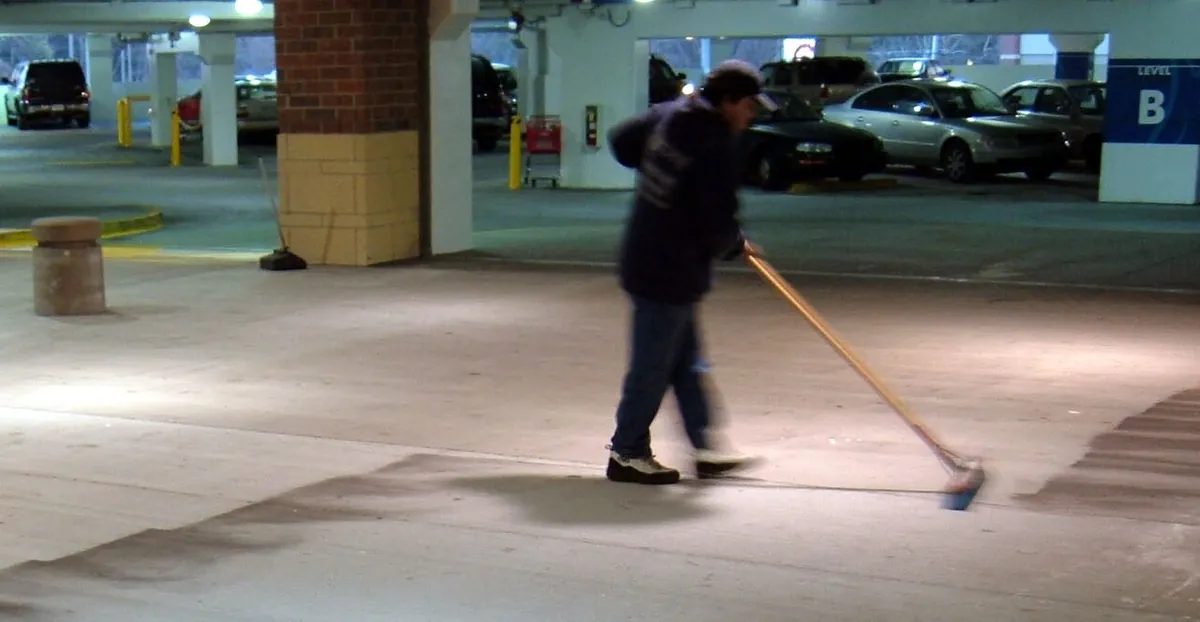
Photo: Scott Ehardt, Wikimedia Commons, public domain
Quick Answer
To wash cement floor surfaces, first sweep or vacuum all grit, then mop or scrub with warm water and a pH-neutral cleaner, working in sections, and rinse and remove the dirty water with a mop, squeegee or wet vacuum so it does not dry back onto the floor. The best way to clean concrete floors depends on the finish: sealed, stained and polished floors need neutral cleaners and soft mops, never vinegar, bleach or acids; bare basement floors can take a mild detergent and stiff brush; garage floors need a degreaser for oil; and outdoor slabs can be pressure washed. Treat stains such as oil, rust and mildew with specific cleaners, and dry the floor quickly to prevent mildew.
Concrete floors are among the easiest floors to keep clean, but they are not all the same. A polished concrete living room, a sealed and stained kitchen, an unsealed basement and an oily garage floor all need different approaches. Using the wrong cleaner can etch a polished surface, strip a sealer, or leave a sticky residue that attracts more dirt, while too much water on a bare basement slab can leave it damp and musty.
This guide explains how to wash cement floor surfaces step by step, the best way to clean concrete floors by type, cleaners and tools to use and avoid, how to remove common stains, and how to keep concrete floors clean with less effort.
Before You Wash a Cement Floor: Know the Finish
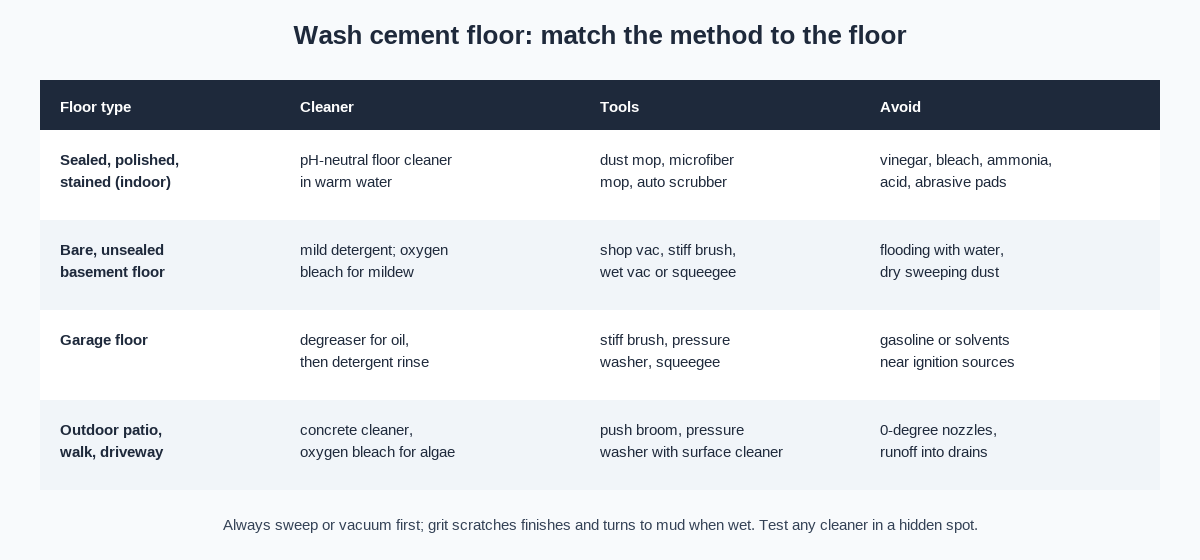
The first step in finding the best way to clean concrete floors is to identify the finish. Do a water drop test: sprinkle a few drops of water on the floor. If the water beads up and sits on the surface, the floor is sealed or coated, or densified and polished. If it darkens the concrete and soaks in within a minute or two, the floor is bare and porous. Polished concrete looks glossy without a film and feels hard and smooth. Coated floors, such as epoxy, have a plastic-like film. Stained floors have mottled or uniform color under a sealer. Each finish affects what cleaners are safe. See concrete floors in homes and concrete sealer.
How to Wash Concrete Floor Surfaces, Step by Step
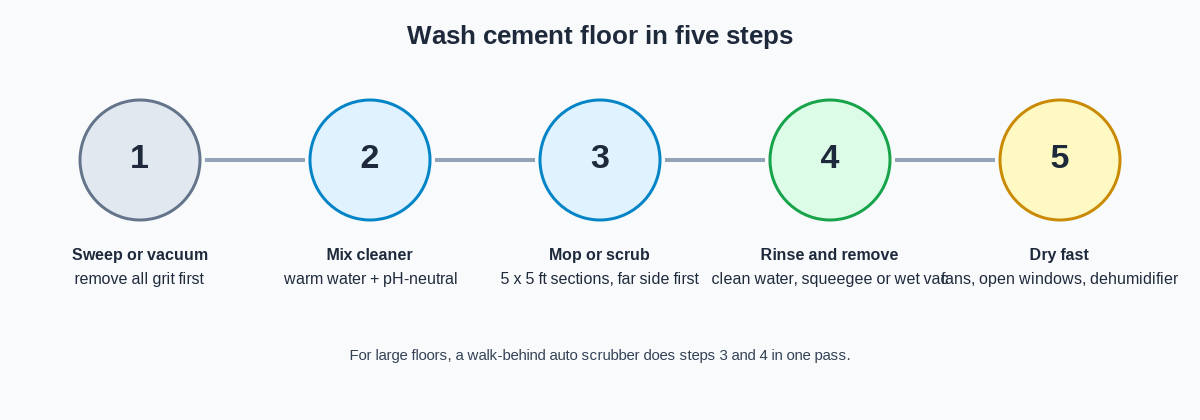
Here is how to wash concrete floor surfaces indoors, whether sealed, polished or bare.
First, clear and dry clean. Move furniture and rugs. Sweep with a soft broom or dust mop, or vacuum with a hard-floor attachment, to remove grit, sand and pet hair. Grit acts like sandpaper under mops and shoes, so this step prevents scratches and makes washing much more effective.
Second, mix the cleaner. Fill a bucket with warm water and add a pH-neutral floor cleaner at the label's dilution. For bare concrete, a few drops of mild dish soap in warm water also works. Use a second bucket of clean rinse water if you can.
Third, mop or scrub in sections. Work in areas of about 5 by 5 feet, starting at the far side of the room and moving toward the door. Use a damp, not dripping, microfiber or flat mop on sealed and polished floors. On bare or textured concrete, scrub with a stiff nylon brush or deck brush. Let the solution sit briefly on dirty areas, but do not let it dry.
Fourth, rinse and remove the water. Dirty water left on the floor dries into a dull film. Mop again with clean water, or remove the dirty solution with a squeegee into a floor drain or with a wet-dry vacuum. Change the rinse water often.
Fifth, dry the floor. Open windows, run fans or a dehumidifier, especially in basements, so the floor dries quickly and does not develop a musty smell or mildew.
That is the simplest answer to how to wash cement floor areas indoors. For large floors, rent or buy a walk-behind auto scrubber, which scrubs and vacuums up the water in one pass, the way commercial cleaners clean warehouse and store floors.
Best Way to Clean Concrete Floors by Type
Polished concrete floors. The best way to clean polished concrete floors is daily or regular dust mopping and periodic damp mopping with a pH-neutral cleaner made for polished concrete. Avoid vinegar, citrus cleaners, bleach, ammonia and other acidic or strongly alkaline products, which can etch or dull the surface. In high-traffic areas, an auto scrubber with a soft pad keeps the shine, and occasional burnishing with a high-speed buffer restores gloss. See polished concrete cost.
Sealed and stained concrete floors. Use a neutral cleaner and a soft mop, which protects the sealer. Harsh cleaners strip sealers and dull color. Reapply sealer or wax when water no longer beads up. See concrete staining and how to seal concrete.
Epoxy and coated floors. Use a neutral cleaner or a cleaner the coating maker recommends, with a soft mop or squeegee. Avoid citrus and soap-based cleaners that leave a film, and avoid harsh abrasives. See concrete coating cost.
Bare basement floors. The best way to clean cement floors in basements is to vacuum thoroughly, then scrub with a mild detergent and a stiff brush, and remove the water with a wet vacuum. Avoid flooding the floor. For mildew, use an oxygen bleach solution. Once clean and dry, consider sealing the floor with a penetrating sealer to make future cleaning easier and reduce dust. See mold on concrete.
Garage floors. Sweep, then treat oil and fluid stains with a concrete degreaser and a stiff brush, rinse, and wash the whole floor with a detergent solution. A pressure washer speeds up the job if the garage has a drain or can be rinsed out the door. Keep the area ventilated and avoid gasoline or solvents. See concrete garage floor repair and how to remove oil stains from concrete.
Best Way to Clean Cement Floor Stains
Stains need targeted treatment. The best way to clean cement floor stains is to identify the stain first, then use the right cleaner and test it in a hidden spot.
Oil and grease: blot fresh spills with cat litter or absorbent, then scrub with a concrete degreaser; for old stains, use a poultice that draws oil out over a day or two. Rust: use a rust remover made for concrete, often based on oxalic acid; test on colored or sealed floors. Mildew and mold: scrub with oxygen bleach solution and improve ventilation. Efflorescence, white powdery deposits: brush off dry deposits; for stubborn ones use a mild masonry cleaner, and fix the moisture source. Paint: scrape fresh drips; use a stripper for dried paint. Tire marks: degreaser and stiff brush, or a citrus-based cleaner on bare concrete. Food and drink: wipe up quickly and wash with neutral cleaner; acidic spills can etch polished or bare concrete. See how to remove rust stains from concrete, efflorescence on concrete, how to remove paint from concrete and how to remove tire marks from concrete.
Cleaners to Use and Avoid
Safe cleaners for most concrete floors include pH-neutral floor cleaners, cleaners labeled for polished or sealed concrete, mild dish soap in warm water for bare concrete, oxygen bleach for mildew, and concrete degreasers for oil. Avoid vinegar and other acids on polished, sealed or decorative floors, because acid etches concrete and dulls finishes; avoid chlorine bleach on colored concrete, because it can lighten stains and is harsh on sealers; avoid ammonia-based cleaners on sealed floors; and avoid abrasive powders and pads that scratch. Never mix bleach with ammonia or acids, which creates toxic gases. See concrete cleaner.
Tools for Washing Concrete Floors
The right tools make it much easier to wash cement floor areas of any size. A soft push broom or dust mop removes fine dust from smooth floors; a stiffer broom works on textured concrete. A vacuum with a hard-floor head or a shop vacuum picks up dust and debris, and a wet-dry vacuum removes dirty wash water. Microfiber flat mops are excellent on sealed and polished floors because they lift dirt with little water and leave few streaks. String mops work but hold more dirty water. Stiff nylon scrub brushes and deck brushes clean bare and textured concrete and grout lines in saw-cut patterns. A floor squeegee pushes water to a drain quickly. For big basements, garages or shops, a walk-behind auto scrubber or a rotary floor machine with a scrub pad saves hours. Pressure washers are best for garages with good drainage and outdoor slabs, not for basements or indoor rooms.
How Often to Wash Cement Floors
How often you need to wash cement floors depends on traffic and use. In living areas and kitchens with sealed or polished concrete, dust mop every day or two and damp mop weekly, more often in kitchens. Basements used as living space need weekly cleaning; storage basements can be cleaned monthly or seasonally. Garage floors usually need a thorough wash a few times a year, plus spot cleaning of spills. Workshops may need weekly sweeping and occasional degreasing. Entryways and mudrooms collect the most grit and benefit from mats at the door and frequent sweeping.
Cleaning Concrete Floors After Construction or Renovation
New and newly exposed concrete floors are often covered with drywall dust, paint drips, adhesive residue and construction grime. Start by vacuuming with a HEPA vacuum to control fine dust. Scrape dried drywall mud and paint gently with a plastic scraper or a floor scraper held at a low angle. Remove adhesive with a remover suited to the adhesive type, tested first. Then wash with a neutral cleaner and rinse well. If the floor will be polished or sealed, coordinate with the installer, because some cleaners interfere with densifiers and sealers. For floors that were covered by carpet, expect tack strip holes and glue lines; these may need grinding rather than cleaning. See concrete grinding and concrete dust.
Washing Unsealed Concrete Floors and Dusting
Bare, unsealed concrete floors often produce a fine dust that keeps coming back, called dusting. It comes from a weak surface layer of cement paste and is common on basement and garage slabs. Washing removes loose dust, but the floor keeps making more. The lasting fix is to treat the surface with a concrete densifier or a penetrating sealer, which hardens the top layer and stops dusting, or to coat the floor. After washing and drying a dusting floor thoroughly, apply a densifier or sealer following the label, and the floor will be far easier to keep clean afterward. See concrete dust and how to seal concrete.
Cleaning Concrete Floors With Pets
Concrete floors are pet-friendly because they do not trap hair or odors like carpet. Sweep or vacuum pet hair often. For urine accidents, blot quickly and clean with an enzyme cleaner designed for pet urine, which breaks down the compounds that cause odor; this is especially important on bare concrete, which absorbs urine and can hold odors. Sealed floors resist pet stains much better than bare ones, so sealing a basement or garage floor where pets live is a good idea. Avoid ammonia-based cleaners, which smell like urine to pets and can encourage repeat marking.
How to Wash Cement Floor Surfaces in a Garage, Step by Step
Garages collect oil, road salt, mud and tire marks, so they need a slightly different routine. Here is how to wash cement floor surfaces in a garage. Start by moving cars, tools and boxes, and cover outlets and anything that should not get wet. Sweep thoroughly with a stiff push broom. Spread cat litter or an oil absorbent on fresh oil spots, grind it in with your shoe, let it sit, and sweep it up. Apply a concrete degreaser to stained areas, scrub with a stiff brush, and let it work for the time on the label. Then wet the whole floor and scrub or pressure wash it with a detergent solution, working toward the garage door or drain. Rinse thoroughly, squeegee the water out, and leave the door open to dry. In winter, rinse salt off the floor regularly, because salt brine damages concrete and coatings over time. Once a garage floor is clean and dry, a penetrating sealer or a coating makes future cleaning much easier.
How to Wash Cement Floor Areas Outdoors
Outdoor cement floors, such as patios, porches, walks and pool decks, can be washed more aggressively than indoor floors. Sweep off leaves and debris, wet the surface and nearby plants, apply a concrete cleaner or oxygen bleach solution for algae and mildew, scrub with a stiff brush, and rinse. A pressure washer with a surface cleaner attachment cleans large areas evenly; keep the nozzle moving and avoid narrow, high-pressure tips that can etch the surface. Do not let cleaning runoff go into storm drains. Once clean and dry, reseal decorative outdoor concrete. See how to clean concrete.
Deep Cleaning Old, Neglected Concrete Floors
Old basement, shop or warehouse floors sometimes have years of built-up grime, old paint, oil and wax. Deep cleaning starts with scraping off loose material and vacuuming. Then use a heavy-duty concrete cleaner or degreaser with a rotary floor machine and a scrubbing pad or brush, working in sections and removing the slurry with a wet vacuum. Old wax or failed sealer may need a chemical stripper. For floors with ground-in stains that do not come out, light grinding removes the stained top layer and leaves a fresh surface ready for sealing or polishing. After deep cleaning, the best way to clean concrete floors going forward is regular dust mopping and neutral washing, which keeps the floor from getting that dirty again.
Cleaning Concrete Floors in Commercial Spaces
Stores, warehouses, restaurants and offices with concrete floors usually follow a routine: dust mopping or sweeping daily, auto scrubbing with a neutral cleaner daily or several times a week, spot cleaning of spills right away, and periodic burnishing for polished floors. Restaurants and kitchens need degreasers in food prep areas and must follow food safety rules for chemicals. Warehouses may use ride-on sweepers and scrubbers. Following the floor finisher's maintenance guide protects the warranty and keeps the floor safe and attractive. See polished concrete cost.
Safety When Washing Cement Floors
Wet concrete floors are slippery, so put out wet floor signs or keep people out until the floor dries. Wear gloves and eye protection when using degreasers, rust removers, strippers or oxygen bleach, and ventilate the area. Never mix cleaners, especially bleach with ammonia or acids. Keep electrical cords and tools away from water, and use ground-fault protected outlets when using pressure washers, scrubbers or wet vacuums. Store cleaners out of reach of children and pets.
Quick Reference: The Best Way to Clean Cement Floors
If you only remember one routine, remember this best way to clean cement floors: dry clean first, wash with a neutral solution, rinse, remove the water, and dry. To wash cement floor areas that are polished or sealed, use only neutral cleaners and soft mops. To wash cement floor areas that are bare, scrub with mild detergent and a stiff brush and remove the water with a wet vacuum. To wash cement floor areas in garages, degrease first and rinse well. And to wash cement floor areas outdoors, use a concrete cleaner and a pressure washer carefully. Following the best way to clean concrete floors for each finish keeps them looking good and lasting longer.
When in doubt, test a cleaner in a hidden corner and wait for it to dry before cleaning the whole room. That one habit prevents most cleaning damage on concrete floors, from dull patches on polished concrete to faded color on stained floors.
Washing Concrete Floors Before Sealing or Coating
If you plan to seal, stain, paint or coat a concrete floor, the best way to clean concrete floors first is a thorough degrease and rinse, because cleaning is the most important part of the preparation. Any oil, grease, wax, old sealer or soap residue will stop new products from bonding and cause peeling. Degrease thoroughly, scrub with a cleaner that rinses clean, rinse several times, and let the floor dry completely, often 24 to 48 hours, before applying anything. Do a water drop test after cleaning: if water still beads, there may be old sealer that needs stripping or grinding. Follow the product maker's preparation instructions, which may also call for etching or grinding. See concrete etching and concrete paint.
Choosing a Floor Cleaner for Concrete
When you wash cement floor surfaces, the cleaner matters. Store shelves are full of floor cleaners, and many are not right for concrete. When choosing one, read the label for the pH and the surfaces it is safe on. Look for products labeled pH-neutral or safe for sealed stone, polished concrete or epoxy floors. Avoid products that promise to "cut through" mineral deposits or soap scum, which are usually acidic, unless you are deliberately treating a stain on bare concrete. Avoid cleaners that leave a shine or wax film unless your floor is waxed, because buildup makes concrete look cloudy and slippery. Concentrated cleaners are economical, but measure carefully; more cleaner does not mean cleaner floors and often leaves residue. For heavy grease in garages and shops, choose a concrete degreaser rather than a general floor cleaner. And for specialty finishes, the floor installer's recommended cleaner is the safest choice.
Simple homemade solutions are often the best way to clean concrete floors for routine cleaning too: a few drops of mild dish soap in a bucket of warm water is effective and safe on most sealed and bare floors, as long as it is rinsed. For mildew on bare concrete, oxygen bleach mixed with warm water works well and is gentler than chlorine bleach. Whatever you use, the method matters as much as the product: dry clean first, wash in sections, rinse and remove the water.
Washing Cement Floors in Humid Climates
In humid regions and damp basements, when you wash cement floor areas they dry slowly, and frequent washing with lots of water can lead to mildew, musty smells and white efflorescence. Use as little water as possible, wash on dry days, run a dehumidifier during and after cleaning, and use fans to move air across the floor. Sealing the floor with a breathable penetrating sealer reduces how much moisture and dirt it absorbs. If the floor stays damp even without washing, the moisture is probably coming from below, and drainage or a vapor barrier may be needed. See vapor barrier under concrete.
Common Mistakes When Washing Cement Floors
The most common mistakes are mopping without sweeping first, which turns grit into mud and scratches finishes; using too much water, which leaves bare basement floors damp and can seep into joints; using too much detergent, which leaves a sticky residue that attracts dirt; leaving dirty water to dry on the floor; using vinegar or acidic cleaners on polished, sealed or stained concrete; using chlorine bleach on colored floors; pressure washing indoors; and not drying basement floors, which leads to musty odors. Keep it simple: dry clean, wash with a neutral solution, rinse, remove the water, and dry.
Keeping Concrete Floors Clean Longer
A few habits reduce how often you need to wash cement floor surfaces. Put mats inside and outside every entry to catch grit. Use felt pads under furniture. Seal bare concrete so spills sit on the surface instead of soaking in. Keep a dust mop handy for quick daily passes. Wipe up spills right away. In garages, use drip trays under vehicles and lawn equipment. In basements, control humidity with a dehumidifier to prevent mildew. Reseal or re-guard finished floors on schedule. These small steps keep concrete floors looking good with minimal effort.
Frequently Asked Questions
What is the best way to clean concrete floors?
Sweep or vacuum first, then mop or scrub with warm water and a pH-neutral cleaner, rinse, and remove the water. Adjust for the finish: neutral cleaners only on polished or sealed floors.
Can I use vinegar to wash a cement floor?
Not on polished, sealed or stained floors, because acid etches and dulls them. Diluted vinegar may be used sparingly on bare concrete, but a neutral cleaner is safer.
How do I wash a basement cement floor?
Vacuum, scrub with mild detergent and a stiff brush, remove water with a wet vacuum, and dry with fans or a dehumidifier.
What is the best way to clean concrete floor stains?
Identify the stain and use a matching cleaner: degreaser for oil, rust remover for rust, oxygen bleach for mildew, and test first.
Sources
- Portland Cement Association: removing stains and cleaning concrete
- American Society of Concrete Contractors, Concrete Polishing Council: maintaining polished concrete
- U.S. EPA: mold cleanup in homes
- OSHA: chemical hazards and safe use of cleaners
Related Guides
- Cleaning concrete driveway — pressure washers, cleaners and stains
- How to clean moss from concrete — removing moss and stopping regrowth
- Concrete tile — cement floor tiles, concrete look and outdoor tiles
- Chicken coop concrete floor — slabs, bedding and predators
- Concrete densifier — silicate hardeners for floors
- Concrete floor coverings — flooring options over slabs
- Bleach on concrete — mix ratios for mold, mildew and algae
- Concrete slab leak repair — signs, detection and repair options under slabs
- Concrete polisher — planetary grinders, hand polishers, pads and rental prices
- Stamped concrete floors — indoor patterns, overlays vs new slabs, sealers and cost
- Concrete machines — mixers, placer booms, screeds, trowels, sprayers, saws and scrubbers