
Stamped Concrete Patios: Designs, Colors, Cost, Pool Decks and Walkways
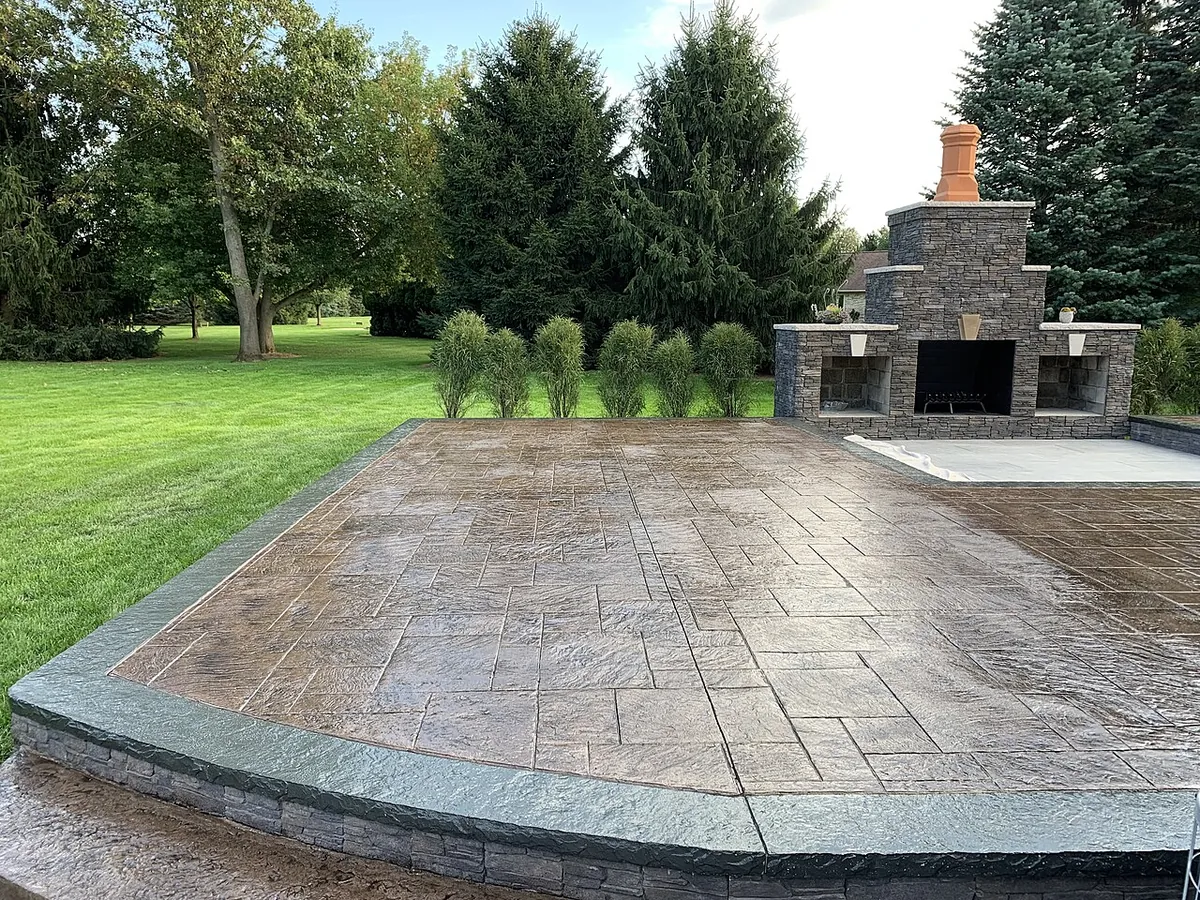
Photo: Deccon Concrete Restoration, Wikimedia Commons, CC BY-SA 4.0
Quick Answer
Stamped concrete patios are concrete slabs pressed with patterned mats while fresh and colored to look like stone, brick or wood. They typically cost about $12 to $25 per square foot installed, roughly half the price of natural stone and similar to or less than many paver patios. Popular stamped concrete patio designs include ashlar slate, flagstone, cobble, brick and wood plank, often with a contrasting border. Stamped and colored concrete uses a base color plus an accent release color for a natural look. The same methods are used for stamped concrete pool decks and walkways. A stamped patio should be sealed after curing and resealed every two to three years, and it can last 25 years or more.
A patio is one of the most popular outdoor upgrades, and stamped concrete has become one of the most popular ways to build one. It offers the look of slate, flagstone or brick with the speed and strength of a poured slab, no joints for weeds to grow through, and a price well below natural stone. With the right design, colors and installation, a stamped patio can look custom and last for decades.
This guide covers how stamped concrete patios are built, design and color choices, what they cost, stamped concrete pool decks and walkways, DIY versus hiring a pro, how they compare with pavers, and how to seal and maintain them.
How a Stamped Concrete Patio Is Built
A stamped concrete patio begins like any concrete patio. The area is excavated, the soil compacted, a gravel base of about 4 inches spread and compacted, forms set to the right height with a slope away from the house, and reinforcement placed, often wire mesh, rebar or fibers. Ready-mix concrete, usually 4 inches thick and often 4,000 psi with air entrainment in cold climates, is placed, screeded and floated. See concrete flatwork.
Color comes next. Either the concrete is colored throughout with integral pigment from the plant, or a color hardener is broadcast on the surface and floated in. A release agent, usually a powder in a darker accent color or a clear liquid, is applied so the stamps do not stick. Then the crew lays concrete stamp mats in rows and tamps them into the surface, working quickly while the concrete is at the right firmness. Edges and spots near walls are finished with flexible skins. After a day or two, the excess release powder is washed off, leaving darker color in the joints and texture, control joints are cut along pattern lines, and once cured the patio is sealed. See stamped concrete patterns for the patterns themselves.
Stamped Concrete Patio Designs
Stamped concrete patio designs combine a pattern, colors and a layout. The most common pattern for patios is ashlar slate, a mix of squares and rectangles with a slate texture, like the patio pictured above. Flagstone and random stone give a more natural, relaxed look. Brick and cobble suit traditional homes and small spaces. Wood plank creates the look of a deck without the maintenance. Many designs add a border, such as a band of brick, a smooth or seamless strip, or a contrasting color around the edge, which frames the patio and hides control joints.
In stamped concrete patios, layout matters as much as pattern. Curved edges soften a rectangular yard; separate zones for dining and lounging can be defined with borders; steps down to the lawn or a seat wall can be stamped to match. Some stamped cement patio designs include medallions such as compass roses at the center. Keep the design consistent with the house: the photo above shows a gray-bordered ashlar slate patio that matches the stone of the outdoor fireplace.
Stamped and Colored Concrete
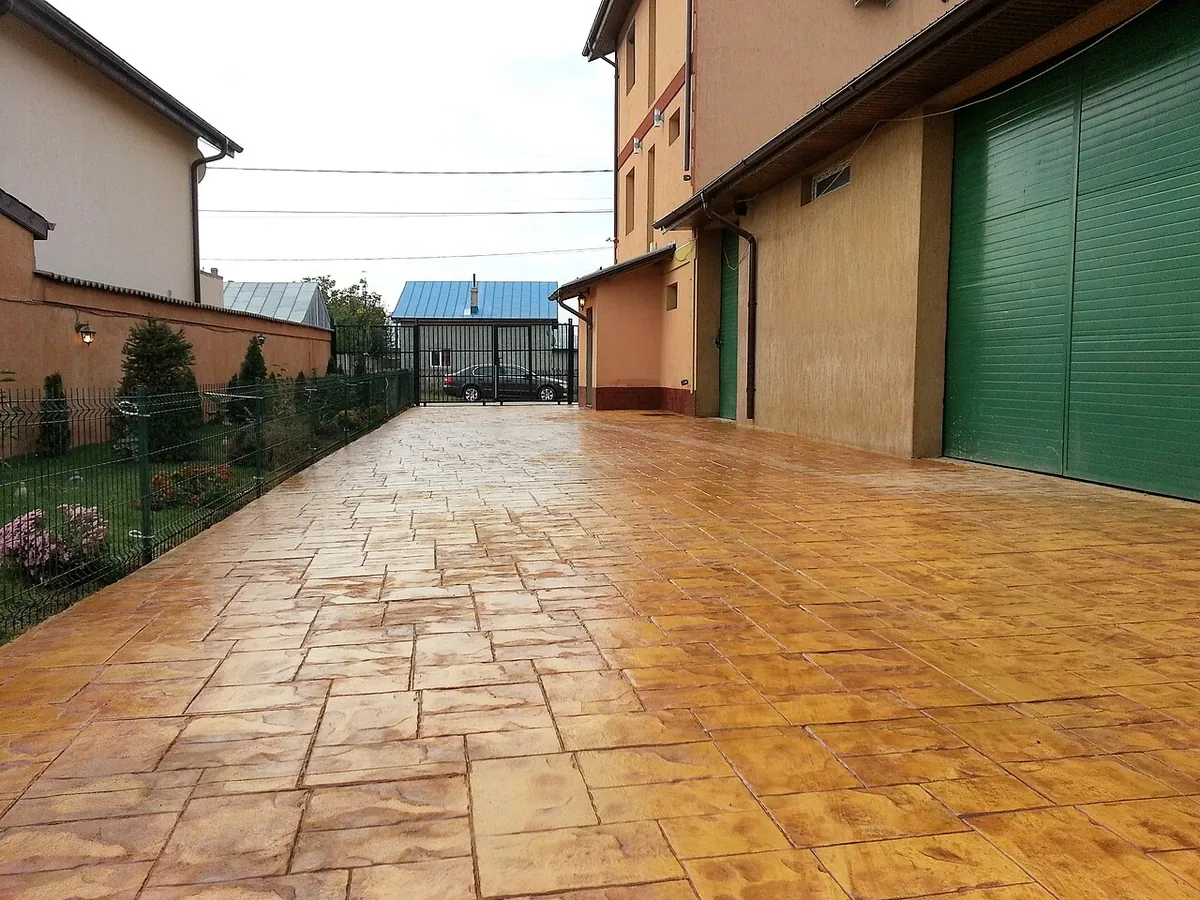
Photo: Beton amprentat Litoss, Wikimedia Commons, CC BY-SA 4.0
Color is what makes stamped concrete patios look real. Stamped concrete coloring usually involves three layers. The base color comes from integral color mixed into the concrete at the plant, which colors the whole slab, or from a color hardener broadcast onto the surface, which gives stronger, more wear-resistant surface color. The accent color comes from a powdered release agent in a darker shade that settles into the joints and low spots of the texture. Optional stains, tints or antiquing washes applied after curing add variation from stone to stone.
Popular colored stamped concrete schemes include gray with charcoal accent for slate, tan or buff with brown accent for sandstone and flagstone, terracotta with dark brown for brick and tile, and light brown with dark grain for wood. Lighter colors stay cooler in the sun, which matters for patios and pool decks. Ask to see color samples on stamped boards, and remember that sealer darkens and deepens the color. See how to color concrete.
Stamped Concrete Patio Cost
Stamped concrete patios typically cost about $12 to $25 per square foot installed in many U.S. markets, compared with roughly $6 to $12 for a plain broom-finish patio. A 300 square foot stamped patio might therefore cost around $3,600 to $7,500. The price depends on the size of the job, with small patios costing more per square foot; the pattern and number of colors; borders and decorative details; site access and excavation; removal of an old patio; reinforcement and thickness; steps, curves and seat walls; and local labor rates. See concrete slab cost and stamped concrete vs pavers.
Ways to keep stamped concrete patios affordable include choosing a single pattern and one or two colors, keeping the shape simple, using a stamped border around a plain broom-finish center, or stamping only a texture without a full pattern. Getting three quotes for stamped concrete patios with the same specification, pattern, colors, thickness, base, reinforcement and sealer, lets you compare fairly.
Planning a Stamped Concrete Patio
Good stamped concrete patios start with planning, not stamps. Decide what the patio is for: dining, lounging, a fire pit, an outdoor kitchen, or a combination. A dining area for a table and six chairs needs about 12 by 12 feet; a lounge area with a sofa and chairs needs about 12 by 14 feet or more; add room for walking around furniture and for a grill. Many people find their first patio plan is too small, so mark the outline with paint or a garden hose and set out furniture before you commit.
For stamped concrete patios, think about sun and shade, privacy, views, and how people will move between the house, the patio and the yard. Plan steps and transitions to doors early, so the patio sits at the right height below the door threshold, usually at least an inch or two, and slopes away from the house at about 1/8 to 1/4 inch per foot. Check for underground utilities, drainage paths, and any local permit requirements before excavation.
Patio Concrete Stamping Day, Step by Step
For a patio, concrete stamping day is a race against the clock, so preparation matters. The forms, base and reinforcement are ready and inspected; the stamps, release agent, color hardener, tampers, texture skins and hand tools are laid out; and the crew knows the plan. The concrete arrives and is placed, screeded and bull floated. If color hardener is used, it is broadcast in two applications and floated into the surface. Edges are tooled.
Next, the release agent is spread over the surface. When the concrete reaches the right firmness, usually when a thumb leaves a shallow print, the crew starts laying stamp mats along a straight line, often a form edge or a string line, so the pattern runs true. They tamp or step on each mat to press the pattern in evenly, lift the mats from behind, and move them forward in sequence. Floppy mats and texture skins finish the edges and corners, and hand tools touch up joint lines where mats meet. On a hot day the crew may need to work in sections or spray an evaporation retarder to keep the surface workable.
The next day, the slab is washed to remove excess release powder, leaving accent color in the low spots. Control joints are saw-cut along pattern lines. After the concrete cures, usually a week to a month depending on the sealer, the surface is cleaned and sealed. The patio can usually take foot traffic after a day or two and furniture after about a week.
Design Ideas for Stamped Concrete Patios
Stamped concrete patios can be much more than a rectangle. Popular ideas include a circular fire pit area in a fan or radial pattern; a covered patio stamped in slate to extend an indoor floor outdoors; an outdoor kitchen pad with a wood plank pattern; seat walls and steps faced with stamped vertical stone to match the floor; a border of brick or a darker color that frames the space; and separate zones for dining and lounging with a band between them. Curved edges and organic shapes look natural in garden settings, while crisp rectangles suit modern houses. Matching the patio to a stamped walkway and steps ties the whole yard together.
More on the Stamped Concrete Pool Deck
A stamped concrete pool deck usually covers a large area, so planning joints and drainage is especially important. Deck drains or a slope away from the pool, usually about 1/8 to 1/4 inch per foot, keep water from pooling and from running back into the pool with dirt. The coping, the edge cap around the pool, is often a different material such as precast stone or a cantilevered concrete edge with a smooth finish, with the stamped field starting beyond it. Expansion joints between the deck and the pool coping must be sealed with a flexible sealant so water cannot get under the deck. Plan shade areas, furniture spots and paths to the house and pool equipment.
If your existing pool deck is sound but plain or worn, a stamped overlay or spray texture can give it a new look without demolition. If the deck has settled, heaved or cracked badly, replacement is usually the better long-term option. See concrete pool deck resurfacing.
Climate and Stamped Patios
In cold climates, stamped concrete patios must handle freeze-thaw cycles and, near walks and steps, deicing salt. Specify air-entrained concrete with a low water-cement ratio, cure it properly, avoid salting it in the first winter, and keep it sealed. Shovel snow with plastic shovels to avoid scraping the sealer. In hot climates, the main concerns are heat and UV: lighter colors stay cooler, UV-resistant sealers last longer, and stamping crews must work quickly as concrete sets fast. In all climates, good drainage away from the slab is the best protection against settlement and cracks. See pouring concrete in cold weather.
Stamped Overlays on Existing Patios
If you already have a plain concrete patio in good condition, you may not need to replace it. A stamped overlay is a thin layer of polymer-modified cement applied over the old slab, colored and stamped with thin mats. It costs less than a new stamped patio and avoids demolition, but it only works on a sound slab without major cracks, heaving or settlement, and it requires careful surface preparation. See how to cover an old concrete patio and concrete overlay cost.
Stamped Patio Cost Examples
To put the price range in context, here are rough examples. A 12 by 12 foot stamped patio, 144 square feet, might cost about $2,000 to $3,600, with smaller jobs costing more per square foot because of setup and minimum charges. A 16 by 20 foot patio, 320 square feet, might run about $4,000 to $8,000. A 600 square foot stamped concrete pool deck with two colors and a border might cost around $8,000 to $15,000. Removal of an old patio, extra excavation, steps, seat walls, and difficult access add to these figures. See 12x12 concrete slab cost.
Stamped Concrete Pool Decks
Stamped concrete pool decks are one of the most popular uses of decorative concrete, because they combine the look of stone or wood with a continuous, easy-to-clean surface around the water. Pool decks have special needs. They must be slip resistant when wet, so choose a pattern with good texture and add an anti-slip additive to the sealer. They should stay as cool as possible under bare feet, so lighter colors are best; dark gray and charcoal can get uncomfortably hot. They must resist pool chemicals and salt water from saltwater systems, which calls for a good sealer and regular resealing. And they need proper drainage away from the pool and the house, with deck drains where needed.
Popular patterns for stamped concrete pool decks include ashlar slate, seamless stone texture, flagstone with a light color, and wood plank for a boardwalk look. Many designs use a smooth or lightly textured band around the pool coping and a stamped field beyond it. Existing pool decks can often be given a stamped look with a stamped overlay rather than full replacement. See concrete pool deck resurfacing and concrete pool deck repair.
Stamped Concrete Walkways
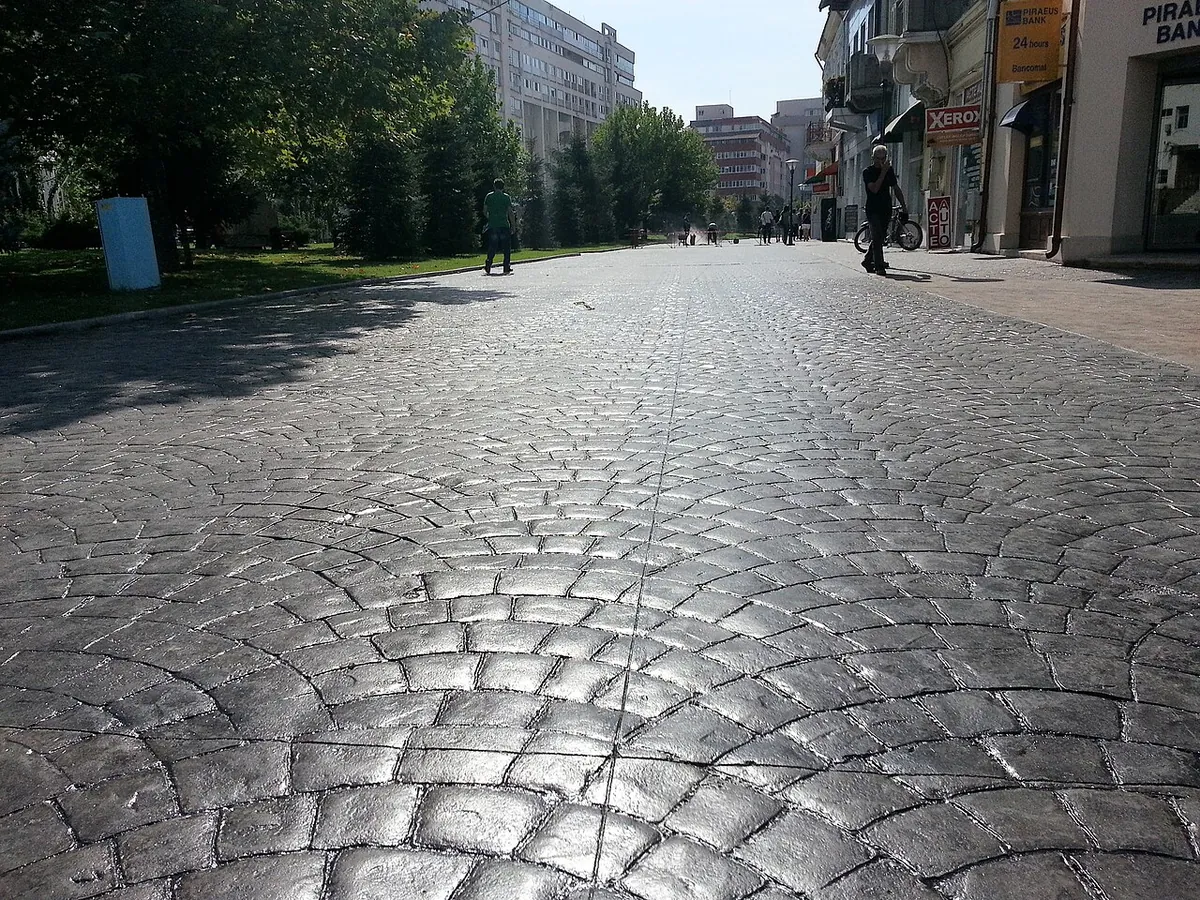
Photo: Beton amprentat Litoss, Wikimedia Commons, CC BY-SA 4.0
A stamped concrete walkway connects the patio, driveway, front door and garden with a matching look. Walkways are long and narrow, so patterns that run along the path, such as running bond brick, cobble or ashlar laid lengthwise, guide the eye and make the walk look intentional. Borders on both sides, often in a contrasting color or a soldier-course brick pattern, define the edges neatly. Concrete walkway stamps also come in smaller formats suited to narrow spaces, and fan cobble patterns like the pedestrian street pictured above work well on wide paths and courtyards.
Stamped concrete walkways should be at least 4 inches thick, sloped slightly to one side for drainage, and jointed every 4 to 6 feet across the width, with joints placed in pattern lines where possible. Front walks get a lot of foot traffic and, in cold climates, deicing salt, so use air-entrained concrete, cure it well, and seal it. See concrete sidewalk cost and does salt damage concrete.
Stamping Concrete Patio Yourself vs Hiring a Pro
Stamping concrete patio slabs is harder than pouring a plain slab, because coloring, release agent and stamping must all be done within a short window while the concrete is at the right firmness. A crew of three or four experienced people can stamp a few hundred square feet; doing it with untrained helpers risks a patchy color, uneven impressions, stamps sinking too deep, or concrete setting before the stamping is finished. If you want to try it, start with a small area, rent concrete stamps; patio projects of under about 100 square feet are realistic for a first attempt, and practice on a sample board. For anything larger, a decorative concrete contractor is usually worth the cost.
When hiring, ask to see finished patio stamped concrete jobs, preferably a few years old, ask which patterns and colors they own, how they place joints, what base and reinforcement they use, and which sealer they apply. Check reviews and insurance, and get a written warranty.
Stamped Concrete vs Pavers for a Patio
Pavers and stamped concrete patios both give a patterned look. Stamped concrete usually costs less, has no joints for weeds and ants, and goes in faster. Pavers cost more but can be lifted and relaid if the base settles or a section is damaged, handle frost movement well, and do not crack as a slab can. Stamped concrete needs resealing; pavers need joint sand topped up and occasional weeding. In regions with expansive soils or deep frost, pavers can be more forgiving; elsewhere, a well-built concrete stamped patio performs very well. See stamped concrete vs pavers for a full comparison.
Sealing and Maintaining Stamped Concrete Patios
Sealer is essential on stamped concrete patios. It deepens the colors, protects against stains, water, freeze-thaw and UV, and makes cleaning easier. Most contractors apply a solvent- or water-based acrylic sealer after curing, often with an anti-slip additive. Plan to clean and reseal every two to three years, or when water no longer beads on the surface. Clean with a broom, garden hose and mild detergent, or a low-pressure washer; avoid harsh acids that can etch the surface and color. In cold climates, avoid deicers containing ammonium nitrate or ammonium sulfate, and use sand for traction where possible. See how to seal concrete and concrete sealer.
How Long a Stamped Patio Project Takes
Most stamped concrete patios take about a week from start to finish for a typical residential job, plus curing time before sealing. Excavation, base and forms usually take one to two days. The pour, coloring and stamping happen in a single day, often starting early in the morning. Washing off the release agent and cutting joints happen the next day or two. The sealer goes on after the concrete has cured, which can be anywhere from a couple of days for some breathable sealers to about a month for others. Weather can add delays, since stamping crews will not pour into rain or extreme heat or cold.
Plan stamped concrete patios for spring or early fall in hot climates, and late spring to early fall in cold climates, when temperatures are moderate. Good contractors book up early in the season, so get quotes and schedule several weeks ahead.
Is a Stamped Concrete Patio Right for You?
Stamped concrete patios suit homeowners who want the look of stone, brick or wood at a moderate price, with a solid, continuous surface that is easy to sweep and has no joints for weeds. They are a good fit for most climates when built and sealed properly. They are less suitable if you want a surface that can be lifted and relaid easily, if the soil moves a lot, or if you dislike any maintenance at all, since resealing every few years is part of owning one. Weigh these points against your budget and style, and a stamped concrete patio can be one of the best-value upgrades for your outdoor space.
Furniture, Grills and Fire Pits on Stamped Patios
Stamped concrete patios hold up well to furniture, but a few habits protect the surface and sealer. Use pads or glides under metal chair and table legs so they do not scratch the sealer. Place a grill mat under the barbecue to catch grease, which can stain colored stamped concrete. Keep wood-burning fire pits on a raised base or a fire-safe pad, because intense heat can discolor and spall concrete over time. Planters should sit on feet or saucers so water does not stain the surface. These small steps keep stamped concrete patios looking new between reseals, and they cost far less than stain removal or recoloring later.
Before you sign a contract, put the details of your stamped concrete patio in writing: size and shape, thickness, base depth, reinforcement, concrete strength and air content, pattern names, base and accent colors, border details, joint layout, sealer type, cleanup and warranty. Clear specifications make stamped concrete patios easier to compare between contractors and prevent surprises on pour day. The best stamped concrete patios come from clear plans, good timing and a crew that has stamped many patios before; colored stamped concrete that is planned well looks natural for decades.
Common Problems With Stamped Patios
Cracks are the most common complaint with stamped concrete patios. Good joint planning, a solid base and proper thickness reduce them; hairline cracks can be filled with tinted caulk. Faded or blotchy color usually means the sealer has worn off or the color hardener was applied unevenly; resealing or a tinted sealer helps. A white haze or cloudy sealer comes from moisture trapped under the sealer and can often be fixed with a solvent that re-wets the sealer. Flaking or scaling usually traces back to poor curing, finishing problems or salt damage. See concrete pitting and flaking and why concrete cracks.
Frequently Asked Questions
How much does a stamped concrete patio cost?
Usually about $12 to $25 per square foot installed, depending on size, pattern, colors and site conditions.
How long do stamped concrete patios last?
Often 25 years or more with good installation and resealing every two to three years.
Is stamped concrete good for pool decks?
Yes, with a textured pattern, light color, and a sealer with anti-slip additive that resists pool chemicals.
Is stamped concrete slippery?
It can be when wet and sealed. Choose textured patterns and add a grit additive to the sealer.
Sources
- American Concrete Institute: ACI 310R guide to decorative concrete
- Portland Cement Association: patios and decorative concrete
- American Society of Concrete Contractors, Decorative Concrete Council
- National Ready Mixed Concrete Association: CIP 2 (scaling) and colored concrete
Related Guides
- Stamped concrete patterns — slate, flagstone, brick, cobble and wood
- Stamped concrete driveway — cost, patterns and construction
- Stenciled concrete — concrete stencils for patios and pool decks
- Concrete patio ideas — layouts, finishes and features
- Concrete walkway ideas — front walks, garden paths and borders
- Concrete fire pit — block, poured and fire pits on concrete
- Concrete pool coping — poured and precast coping, joints and repair
- Decorative concrete — types, finishes and costs
- Pool deck concrete — installation, finishes and cost
- Concrete decking — concrete decks vs wood
- Concrete release agents — form oil and reactive release for forms and molds
- Stamped concrete floors — indoor patterns, overlays vs new slabs, sealers and cost