
Stamped Concrete Patterns: The Most Popular Concrete Stamp Patterns and How to Choose
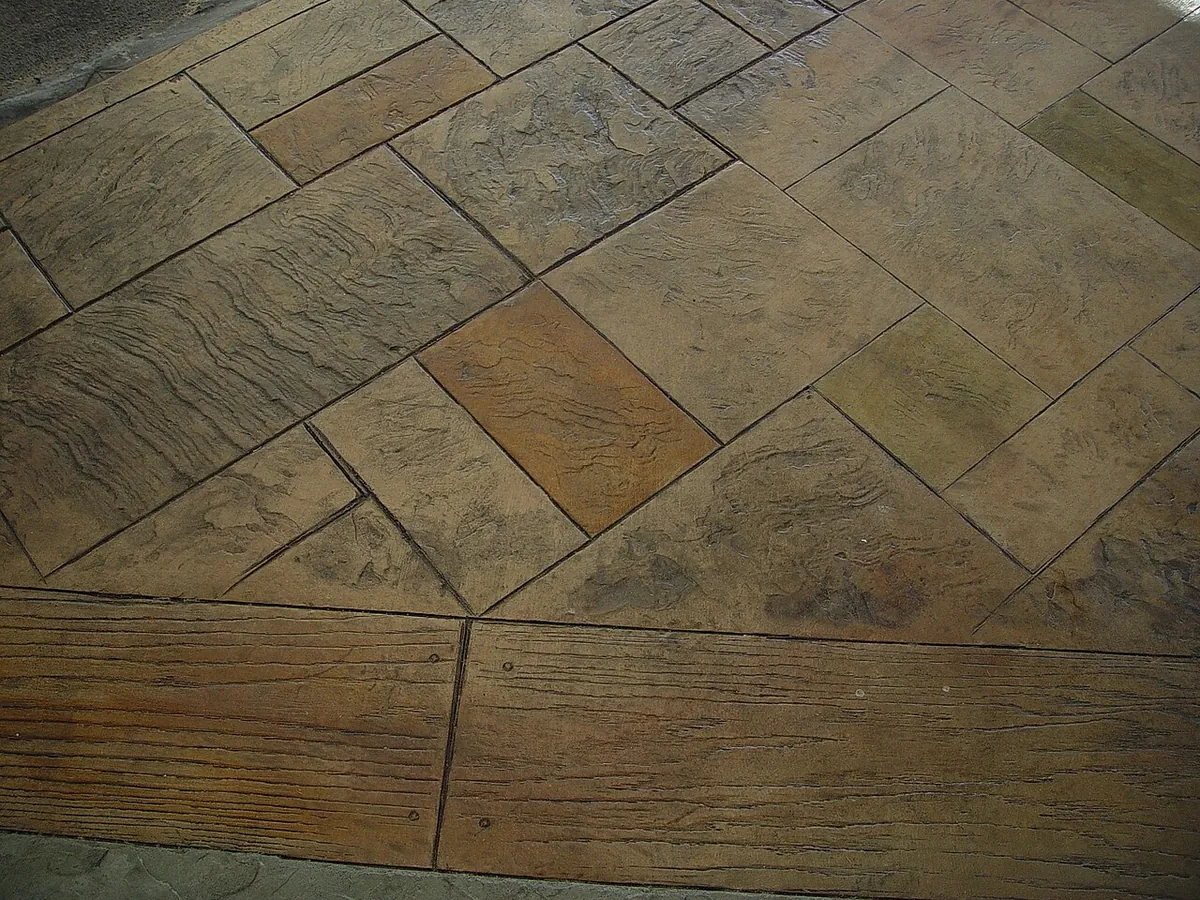
Photo: seminar attendees, Wikimedia Commons, CC BY-SA 3.0
Quick Answer
The most popular stamped concrete patterns are ashlar slate (rectangles and squares of textured slate), random stone and flagstone (irregular natural stone shapes), cobblestone and European fan, brick in running bond or herringbone, and wood plank. Seamless texture skins add a stone texture with no joint lines. Patterns are pressed into fresh concrete with flexible polyurethane concrete stamp mats, or rolled in with a concrete stamp roller for simple textures. Choose a pattern that suits the house and use: ashlar slate and flagstone suit most patios, brick and cobble suit walks and driveways, and wood stamped concrete suits pool decks and porches. Color, usually a base color plus a release-agent accent, makes the pattern look real.
Stamped concrete turns a plain slab into something that looks like slate, flagstone, brick, cobblestone or wood, at a fraction of the price of the real materials. The pattern is the first thing anyone notices, and it is also one of the first decisions you have to make, because it determines which stamps the contractor brings, how the joints are cut, and how the finished surface will look and wear for decades.
This guide walks through the main families of stamped concrete patterns, what each looks like and where it works best, how concrete stamp mats, texture skins and rollers create the pattern, how color brings the pattern to life, and practical tips for choosing patterns for stamped concrete patios, walks, pool decks and driveways.
How Stamped Concrete Patterns Are Made
Stamped concrete starts as a normal slab: base, forms, reinforcement and a ready-mix pour. After the concrete is placed, screeded and floated, a color hardener may be broadcast over the surface, or the concrete may already be colored throughout with integral pigment. A release agent, a colored powder or a clear liquid, is applied so the stamps do not stick. Then, while the concrete is still soft enough to take an impression but firm enough to hold it, the crew lays concrete stamp mats side by side and presses them in by walking on them or tamping them with a hand tamper. Each mat leaves the outline of stones, bricks or boards plus the texture of their surfaces. Flexible texture skins finish edges and spots the mats cannot reach. After curing, the excess release agent is washed off, leaving darker color in the grooves, and the surface is sealed.
Timing is critical. If the concrete is too soft, the pattern slumps and stamps sink too deep; if it is too hard, the pattern is faint and uneven. That is why stamping crews work quickly with several people and enough stamps to cover a section at once. See types of concrete finishes and concrete tools.
Ashlar Slate Stamped Concrete
Ashlar slate is the most widely used of all stamped concrete patterns. It combines squares and rectangles of several sizes, arranged in a repeating random-looking layout, with a layered slate texture on each piece. The straight lines look tidy and formal, which suits most houses, from traditional to modern. Ashlar slate stamped concrete is a common choice for patios, pool decks, walkways and front entries.
When shopping, you will find ashlar slate concrete stamps from many manufacturers, often called ashlar, ashlar cut or random ashlar. A typical ashlar slate concrete stamp set includes several pattern mats, one or two texture skins, and edge pieces. Laid in a running pattern, the mats interlock so the joints do not line up in obvious rows. The photo at the top of this page shows ashlar slate in tan and brown with a wood plank border.
Slate Stamped Concrete and Seamless Slate
Beyond ashlar, other slate stamped concrete patterns include square slate tiles in a grid or diamond layout, random slate with irregular rectangles, and seamless slate texture with no grout lines. A slate concrete stamp texture can be used alone over a whole slab, or combined with saw-cut lines to create large tiles. Concrete slate stamps work well indoors on basement and porch floors as well as outdoors, because the texture adds slip resistance without the deep grooves of a stone pattern.
Flagstone Stamped Concrete
Flagstone patterns imitate irregular natural stone slabs laid with wide, uneven joints. They give a relaxed, natural look that suits gardens, cottage and rustic homes, and pool areas. Flagstone stamped concrete has deeper joints and more variation than ashlar, so color plays a big role: two or three colors in the release agent or a stain make individual stones stand out. Stamped concrete flagstone patterns often go by names such as random stone, Yorkstone, Arizona flagstone or fieldstone. A flagstone concrete stamp set usually needs more texture skins to fill around the edges, because the irregular shapes do not end in straight lines at the forms.
Cobblestone, European Fan and Brick
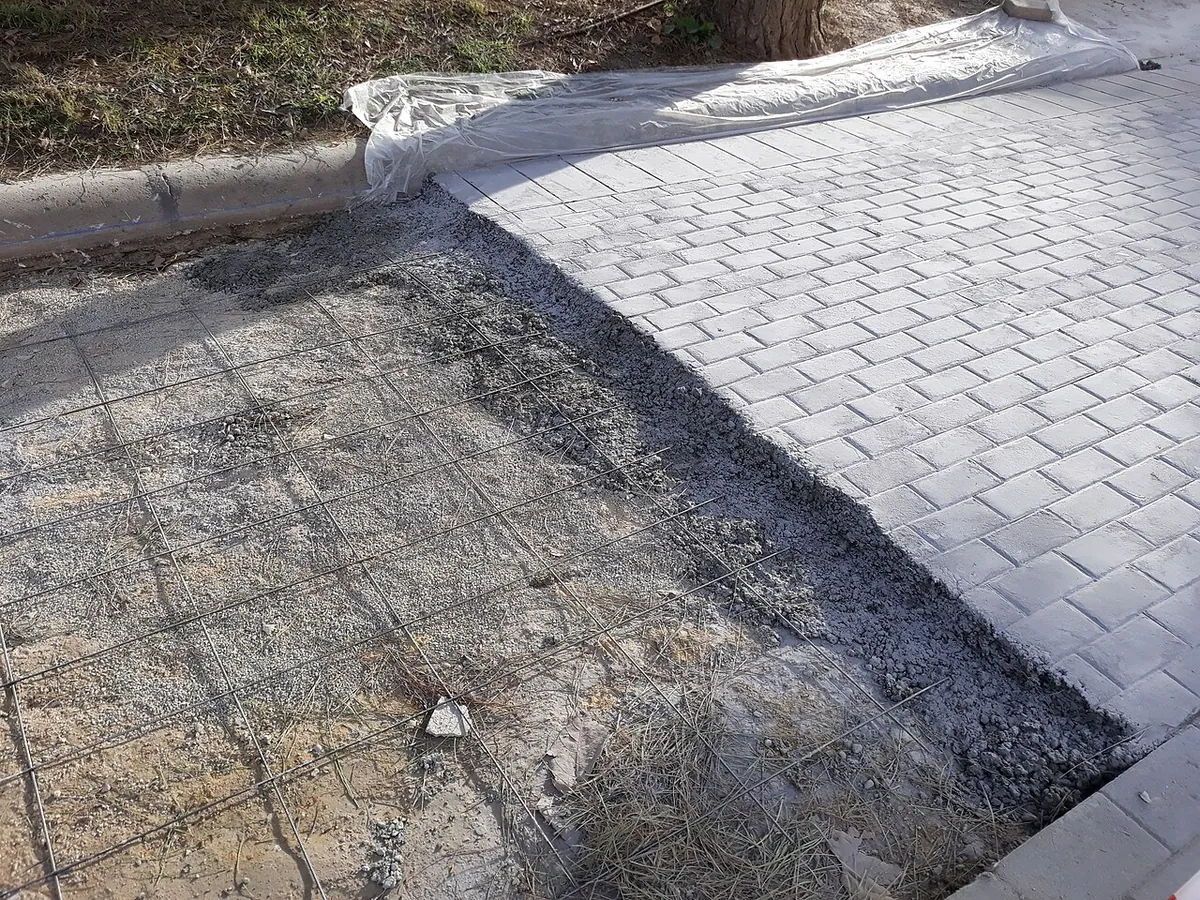
Photo: Pacopac, Wikimedia Commons, CC BY-SA 4.0
Cobblestone patterns imitate small, rounded or squared stones set in rows, arcs or random layouts, giving an old-world street look. European fan, or fan cobble, arranges small stones in overlapping fan-shaped arcs. These smaller, repeating patterns suit driveways, courtyards and walks, and they hide small cracks well, because cracks tend to follow the many joint lines.
Brick patterns are some of the oldest stamped concrete patterns. Common layouts are running bond, basket weave and herringbone, often in red or terracotta color to imitate clay pavers. Brick borders are also popular around a field of another pattern, framing a patio of ashlar slate or flagstone. The photo below shows a red herringbone brick pattern.
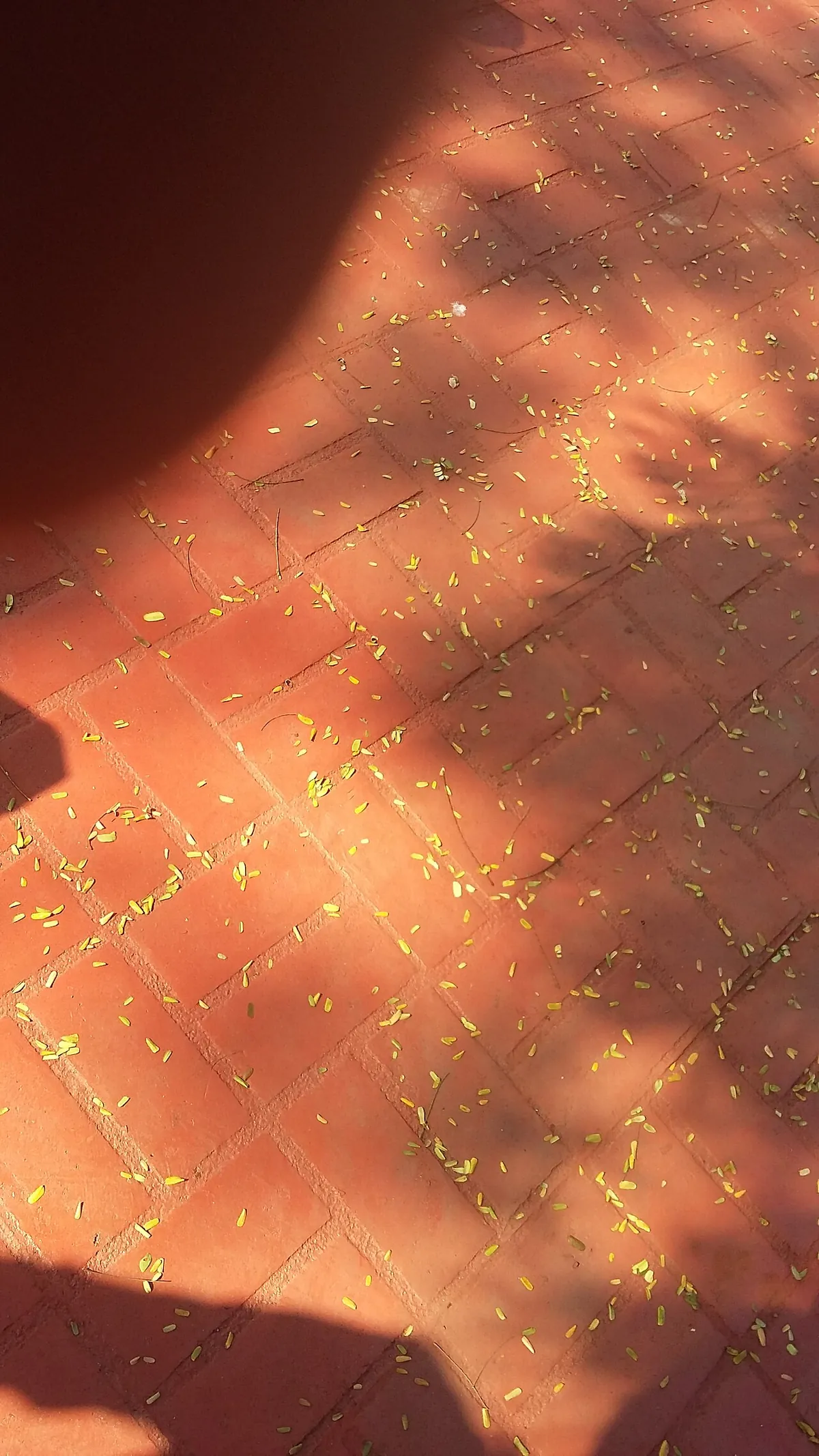
Photo: Swapnilw1986, Wikimedia Commons, CC BY-SA 4.0
Wood Stamped Concrete
Wood plank stamps imitate boards with grain, knots, nail holes and gaps between planks. Wood stamped concrete looks like a deck or boardwalk but never rots, splinters or needs staining like real wood, which makes it popular for pool decks, porches, patios and borders. Planks are usually 6 to 12 inches wide, laid straight or in herringbone or chevron layouts. A good wood concrete stamp set includes several plank mats with different grain so the pattern does not repeat obviously, and the finished surface is usually colored with a light base and a darker release agent or stain to bring out the grain. Some sets are designed as a concrete wood stamp border to run around the edge of a stone pattern, like the border shown in the top photo.
Seamless Textures and Specialty Patterns
Seamless texture skins have no joint lines; they press a stone, slate, sandstone or wood grain texture into the surface. They are used alone for a subtle look, combined with saw-cut joints in a tile pattern, or to fill areas next to patterned mats. Specialty patterns include compass roses, medallions, leaves, fossils, tile, and custom logos, often used as accents in the middle of a patio or at an entry.
Concrete Stamp Mats
Most stamped concrete patterns are made with concrete stamp mats: flexible polyurethane sheets, usually about 2 to 4 feet square, molded from real stone, brick or wood. Each concrete stamp mat has a pattern side and a flat top with handles. Mats in a set lock together edge to edge so the pattern continues across the slab without visible seams. A typical job uses enough mats to cover a full row across the slab, plus floppies, thin flexible versions of the mats used against walls, steps and edges where the rigid mats cannot be tamped. Stamping crews also use a few texture skins and hand tools for touching up joints.
Mats are expensive, often a few hundred dollars each, so contractors own a library of the most popular stamped concrete patterns, and homeowners usually choose from what the contractor has. Rental stores and decorative supply companies rent concrete stamp mats for DIY projects.
Concrete Stamp Rollers
A concrete stamp roller is a cylinder, usually 2 to 3 feet wide, covered with a texture or pattern, on a long handle like a paint roller. You roll it over the fresh concrete to imprint a pattern in one pass. Roller stamps for concrete are quicker and cheaper than mats and do not require tamping, but the pattern is shallower and the choice of designs is smaller: mainly stone textures, cobble, brick and simple tile. With a roller stamp, concrete walks and pool deck borders get a uniform texture quickly, and rollers are popular for vertical overlays and thin toppings too. A concrete stamping roller is a good choice for small DIY projects or for adding a light texture, while mats remain the standard for deep, realistic stone patterns.
Choosing Stamped Concrete Patio Patterns
Patios are where most people first use stamped concrete, and the choice of stamped concrete patio patterns has the biggest effect on how the space feels. Large-format patterns such as ashlar slate or big flagstone make a patio look calm and spacious; small patterns such as cobble or brick look busier and more traditional. For a patio of a few hundred square feet, a medium to large pattern usually looks best. For a small patio, a seamless texture or square slate keeps it from feeling cluttered.
Think about how the patio connects to the house. A patio off a brick house often looks good with a slate or flagstone field and a brick or soldier-course border that echoes the walls. A modern house suits large square slate, seamless texture with saw cuts, or a simple wood plank. A Mediterranean or Spanish-style house suits terracotta colors in tile, cobble or fan patterns. Look at photos of finished jobs from your contractor, and if possible visit a few in person; patterns look different at full scale than in a catalog.
Matching Patterns to Each Area
Different parts of a property suit different concrete stamping patterns. For pool decks, slip resistance and comfort on bare feet matter, so finer textures, seamless stone, or wood plank with a light color that stays cooler in the sun work well; deep flagstone joints can collect water and dirt. For walkways, brick, cobble and ashlar slate guide the eye along the path, and borders help define edges. For driveways, cobble, fan, brick and ashlar handle traffic well, and small patterns hide tire marks and small cracks; see stamped concrete vs pavers. For front porches and steps, slate textures on treads give grip, and a matching pattern on landings ties them together; see how to pour concrete steps. For interior floors in basements and sunrooms, seamless slate or tile patterns are easy to clean and look good under area rugs.
Borders, Bands and Combining Patterns
Combining stamp patterns for concrete is one of the best ways to make a stamped slab look custom. A common design is a main field in one pattern surrounded by a border in another: ashlar slate with a running bond brick border, flagstone with a smooth band, or cobble with a wood plank edge. Borders are usually 12 to 24 inches wide, often in a darker or contrasting color. Bands can also divide a large area into sections, which lets the contractor place control joints along the bands where they are hidden.
Keep combinations simple. Two stamped concrete patterns, or one pattern plus a smooth or seamless border, are usually enough. Too many patterns and colors in one space look busy and can make a patio look smaller.
Color and Pattern Together
Color is what makes stamped concrete look like stone or wood rather than gray concrete with grooves. Most stamped work uses a base color, either integral color mixed into the truck or a color hardener broadcast on the surface, plus an accent color from a powdered release agent that stays in the joints and texture after washing. Earth tones such as tan, buff, gray, brown, terracotta and charcoal are most common. After curing, stains or tints can add more variation to individual stones for an even more natural look.
Pattern and color should work together. Ashlar slate looks best with a gray, charcoal or tan base and a darker accent. Flagstone looks best with two or three warm colors. Brick suits red, terracotta and brown. Wood suits light brown or gray with dark grain. Ask your contractor for color samples on actual stamped boards, because color looks different on textured surfaces. See how to color concrete.
Pattern Scale, Joints and Cracking
All concrete cracks, and stamped slabs are no exception. Good contractors plan control joints so they follow pattern lines, where they disappear into the grout lines of the stones or bricks. Patterns with straight, continuous lines, such as ashlar, square slate and brick, make this easy. Flagstone and random stone patterns are harder, but joints can still be hidden in the wider grooves. Smaller patterns with many joint lines also hide random cracks better than large seamless textures. Ask your contractor how they will place joints in your chosen stamped concrete pattern before the pour. See control joints in concrete.
Slip Resistance and Comfort
Stamped concrete is textured, but sealers can make it slippery when wet. Patterns with deep texture, such as slate and flagstone, are less slippery than smooth tile or seamless smooth stone. For pool decks, steps and ramps, choose stamp patterns for concrete with plenty of texture, and ask for an anti-slip additive in the sealer. For bare feet, very deep, sharp textures can be uncomfortable; a medium texture is a good compromise.
Durability and Maintenance by Pattern
The pattern affects maintenance. Deep joints in flagstone and cobble collect dirt, leaves and water, and may need more frequent cleaning and resealing. Fine textures wear more evenly. Colors in the joints and high spots fade over time with sun and traffic, which is normal; resealing every two to three years refreshes the color and protects the surface. Driveways with stamped concrete patterns need a sealer that resists hot tire pickup and road salt. See how to seal concrete and does salt damage concrete.
Cost by Pattern
Stamped concrete typically costs more than plain concrete, often roughly $12 to $25 per square foot installed, depending on region, pattern, colors and site. The pattern itself has some effect: simple seamless textures and single-pattern jobs with one color are at the lower end; complex concrete stamping patterns with borders, multiple colors, hand-applied stains, medallions and detailed work around steps and curves are at the higher end. Stamp patterns the contractor already owns are cheaper than special-order mats. See stamped concrete vs pavers for a full cost comparison.
Can You Stamp Concrete Patterns Yourself?
Stamping is one of the harder concrete jobs to do yourself, because the whole slab must be placed, finished, colored and stamped within a short window. For a small area, a confident DIYer with experienced helpers can stamp concrete patterns successfully. Rent concrete stamp mats from a decorative concrete supplier or rental store, practice on a small test slab first, and keep the first project small, such as a walk or small pad. To stamp concrete, roller tools are the easiest starting point: a concrete roller stamp needs no tamping and one person can roll a texture or simple cobble pattern across a small slab. A stamp concrete roller is also handy for touching up edges and small areas. For larger patios and driveways, hiring a decorative concrete contractor is usually the safer choice.
Shopping for Concrete Stamps: Patterns and Sets
When you shop for concrete stamps, patterns are usually grouped by family, such as stone, slate, brick, cobble, wood, tile and texture, and sold as sets. A set includes enough rigid mats to work across a typical slab, one or more floppies for edges, and sometimes a texture skin. Look for mats made of durable polyurethane, with realistic depth and texture, and edges that interlock cleanly. Check whether the pattern requires tamping or can be walked in, and whether matching skins are available. Many suppliers show their concrete stamps patterns in photo galleries of finished jobs, which give a better idea of the result than pictures of the mats alone.
Stamped Overlays on Existing Concrete
If you already have a sound concrete patio or walk, you do not always need to tear it out to get a pattern. Stamped overlays are thin layers, usually 1/4 to 3/4 inch, of polymer-modified cement applied over existing concrete and stamped with thin overlay mats or a roller. Most of the popular patterns, including ashlar slate, flagstone, brick and wood, are available in overlay versions. The old slab must be structurally sound, with no major settlement or active cracks, and it must be cleaned and profiled so the overlay bonds. Overlays cost less than a new stamped slab and avoid demolition, but they are thinner and depend on the condition of the slab underneath. See how to resurface concrete and concrete overlay cost.
Vertical Stamped Concrete
Stamped patterns are not only for floors. Vertical stamping uses a stiff, lightweight mortar applied to walls, retaining walls, fireplaces, foundation walls and planters, then carved or stamped with texture skins to imitate stacked stone, brick, rock or wood. Many of the same stamped concrete patterns used on patios are available as vertical skins, so a stone wall can match a flagstone patio. Vertical work is a specialty, done by hand in thin layers, and is usually priced per square foot of wall.
How Long Stamped Patterns Last
A well-built stamped concrete slab can last as long as plain concrete, often 25 years or more, and the pattern itself does not wear away under normal foot traffic. What changes over time is the color and the sealer. Sun fades colors slightly, traffic wears the high points of the texture, and sealers break down, especially on driveways and pool decks. Cleaning and resealing every two to three years keeps the pattern crisp and the colors rich. Chips and small cracks can be patched with color-matched repair mortar and a small texture skin, so even repairs can blend into the original pattern.
Questions to Ask Your Contractor About Patterns
Before you sign, ask which stamped concrete patterns the contractor owns and can show you on finished jobs, how many mats they have of your chosen pattern (enough to cover a full row speeds up the work and improves the result), how they will handle edges, steps and curves, where control joints will go, what base and accent colors they recommend, which sealer they use and whether it includes an anti-slip additive, and what maintenance they recommend. Ask to see a sample board with your pattern and colors. A contractor who answers these questions clearly is more likely to deliver a pattern that looks right and lasts.
It also helps to ask for addresses of jobs that are a few years old. New stamped concrete always looks good; seeing how a pattern and sealer have held up after several winters or summers tells you much more about the contractor's work and about how your chosen pattern will age. If an older job looks faded or worn, ask whether it was resealed on schedule; many problems with stamped concrete patterns come from skipped maintenance rather than poor installation. Put a reminder on your calendar to clean and reseal the slab every two to three years, and it will keep its rich color and crisp pattern lines.
Common Mistakes With Stamped Concrete Patterns
The most common mistakes are choosing a pattern that is too small or busy for a large area, mixing too many patterns and colors, choosing a deep pattern for a pool deck where bare feet and cleaning matter, ignoring how control joints will fit the pattern, and stamping too early or too late so the impression is poor. Another mistake is skipping the sealer, which leaves the color dull and the surface vulnerable to stains and salt. Plan the pattern, the colors and the joints together before the pour, and the finished stamped concrete pattern will look natural for years.
Frequently Asked Questions
What is the most popular stamped concrete pattern?
Ashlar slate is the most widely used, followed by flagstone and random stone, cobble, brick and wood plank.
Which stamped concrete pattern is best for a driveway?
Cobble, European fan, brick and ashlar slate work well, because their many joint lines hide cracks and tire marks.
What is a concrete stamp roller used for?
Rolling a texture or simple pattern into fresh concrete or an overlay without tamping mats; it is faster but shallower than mats.
Is wood stamped concrete slippery?
Not usually, because the grain adds texture, but add an anti-slip additive to the sealer for pool decks and steps.
Sources
- American Concrete Institute: ACI 310R guide to decorative concrete
- Portland Cement Association: stamped and colored concrete
- American Society of Concrete Contractors, Decorative Concrete Council: stamped concrete guidance
- National Ready Mixed Concrete Association: CIP 24 (cracking) and colored concrete
Related Guides
- Stamped concrete patios — designs, colors, cost and pool decks
- Stamped concrete driveway — cost, patterns and construction
- Stenciled concrete — concrete stencils for patios and pool decks
- Concrete patio ideas — layouts, finishes and features
- Concrete walkway ideas — front walks, garden paths and borders
- Concrete tile — cement floor tiles, concrete look and outdoor tiles
- Concrete curb machine — landscape curbing and edging
- Decorative concrete — types, finishes and costs
- Pool deck concrete — installation, finishes and cost
- Brushed concrete — broom finish and concrete brushes
- Concrete decking — concrete decks vs wood
- Concrete release agents — form oil and reactive release for forms and molds
- Rock salt finish concrete — pitted decorative finish for pool decks and patios
- Stamped concrete floors — indoor patterns, overlays vs new slabs, sealers and cost
- Concrete worker — job duties, pay, training, safety and career path