
Concrete Driveway Resurfacing: Cost, Step-by-Step Process and When It Works
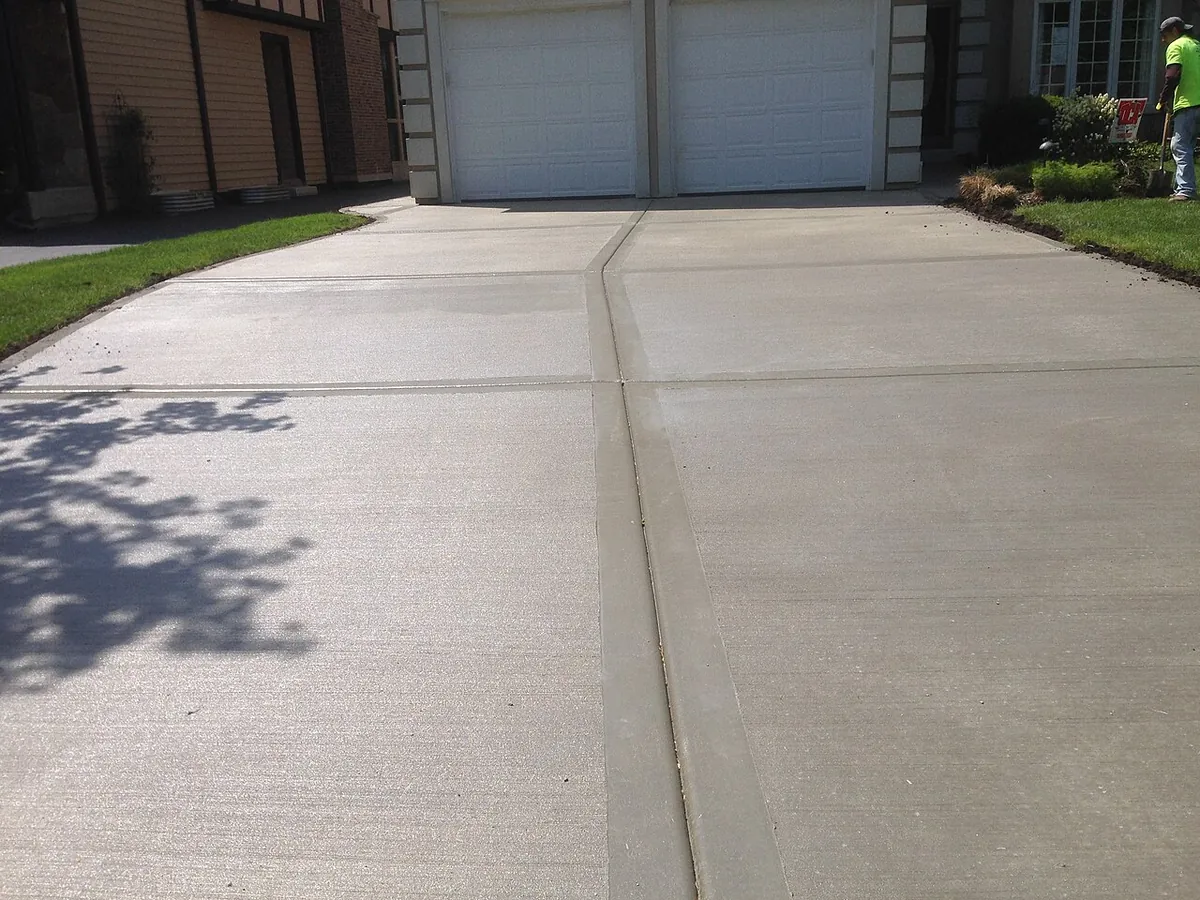
Photo: Catalano Concrete, Wikimedia Commons, CC BY-SA 4.0.
Quick Answer
Concrete driveway resurfacing applies a thin new layer of polymer-modified cement over an old driveway that is worn but structurally sound. It hides pitting, scaling, stains and mismatched patches and makes the driveway look new. Professional concrete driveway resurfacing cost is typically about $3 to $5 per square foot, or roughly $1,200 to $2,000 for a 20 × 20 foot driveway, compared with about $6 to $14 per square foot to tear it out and pour new concrete. Decorative overlays with color or stamped patterns cost more, about $6 to $10 per square foot. Resurfacing only works if cracks are repaired, sunken panels are lifted, and the surface is cleaned thoroughly first. It cannot save a driveway that is broken into pieces or still moving.
A concrete driveway can last decades, but its surface often looks old long before the slab underneath wears out. Road salt pits it, oil stains it, patches leave it blotchy, and the top layer can flake off after a few hard winters. For many homeowners, resurfacing concrete driveway slabs is the middle ground between living with an ugly driveway and paying for a full replacement.
This guide explains what concrete driveway resurfacing is, when it works and when it doesn't, what it costs, how to refinish a concrete driveway step by step, DIY versus hiring a contractor, decorative options, and how to make a resurfaced driveway last.
What Is Concrete Driveway Resurfacing?
Concrete driveway resurfacing means bonding a thin layer of new cement-based material, usually about 1/16 to 1/2 inch thick, to the top of the existing driveway. The resurfacer contains polymers that help it stick to old concrete and resist cracking. After it cures, the driveway has a fresh, uniform surface, typically with a broom finish for traction, and it can be sealed like new concrete.
Resurfacing is not the same as sealing, which only protects the surface, or replacing, which removes the slab entirely. It is also different from an asphalt overlay; asphalt driveways are resurfaced with new asphalt, not cement. Our driveway resurfacing cost calculator estimates both.
Is Your Driveway a Good Candidate?
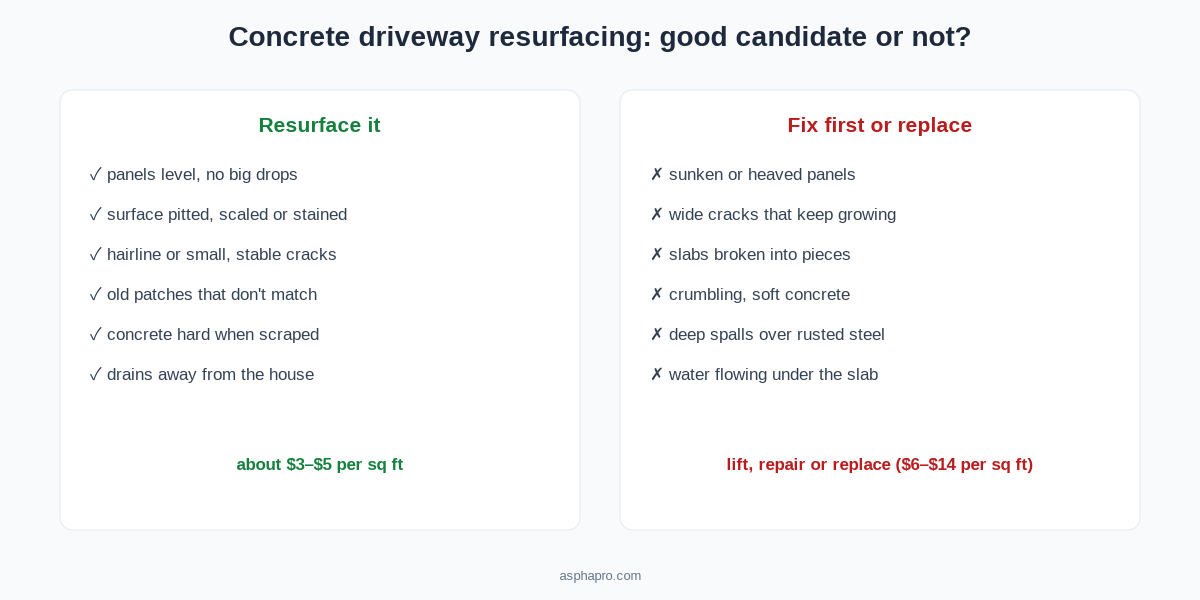
Resurfacing concrete driveway slabs works best when the problems are on the surface. Good candidates have:
- Panels that are level with each other, without sunken corners or trip edges.
- Surface damage: pitting, scaling, flaking, wear, stains and old patches.
- Only hairline or small cracks that have been stable for a year or more.
- Concrete that is hard when you scrape it with a screwdriver.
- Good drainage away from the house and garage.
Resurfacing is not a fix for:
- Sunken or heaved panels. Lift them first; see concrete leveling cost.
- Wide cracks that keep growing, or panels broken into many pieces.
- Soft, crumbling concrete.
- Deep spalls with rusted steel showing. See spalling concrete.
- Water running under the slab from downspouts or poor grading.
If more than a few panels have these problems, replacement may cost less over time. See concrete driveway cost.
Concrete Driveway Resurfacing Cost
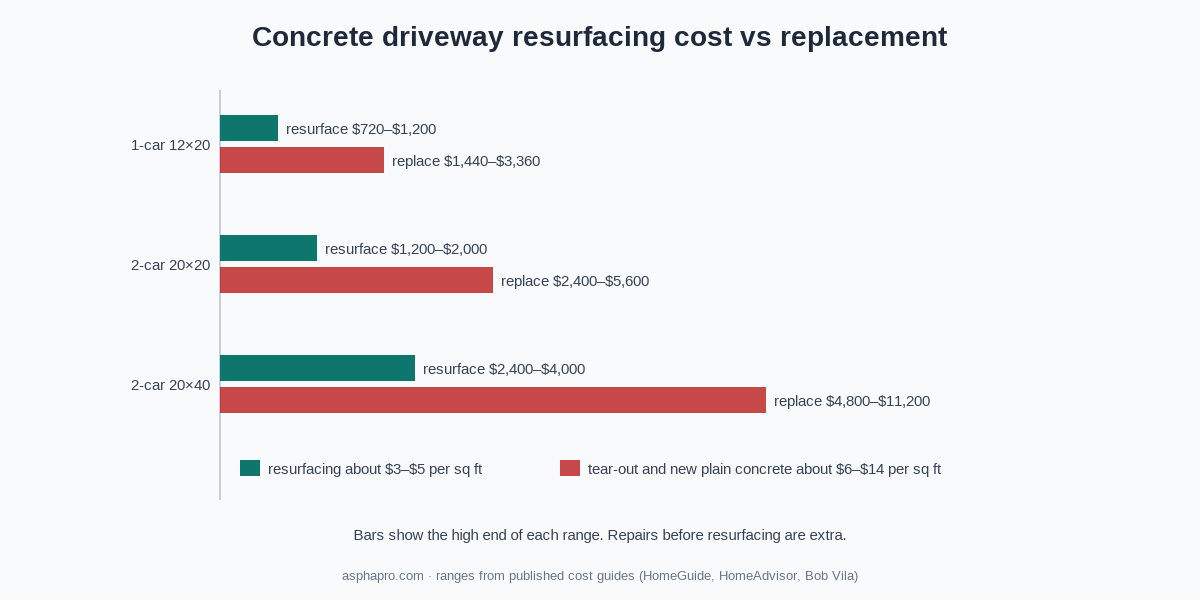
| Driveway | Size | Resurfacing at $3 – $5 / sq ft | Replacement at $6 – $14 / sq ft |
|---|---|---|---|
| One-car | 12 × 20 ft (240 sq ft) | about $720 – $1,200 | about $1,440 – $3,360 |
| Two-car, short | 20 × 20 ft (400 sq ft) | about $1,200 – $2,000 | about $2,400 – $5,600 |
| Two-car, standard | 20 × 24 ft (480 sq ft) | about $1,440 – $2,400 | about $2,880 – $6,720 |
| Two-car, long | 20 × 40 ft (800 sq ft) | about $2,400 – $4,000 | about $4,800 – $11,200 |
| Three-car | 30 × 30 ft (900 sq ft) | about $2,700 – $4,500 | about $5,400 – $12,600 |
These ranges come from published cost guides including HomeGuide, HomeAdvisor and Bob Vila, and match our concrete overlay cost guide. What pushes resurface concrete driveway cost up or down:
- Repairs before resurfacing: crack sealing, patching and lifting sunken panels are extra.
- Surface prep: grinding off old coatings or heavy oil costs more than pressure washing alone.
- Thickness: heavily pitted surfaces need more material.
- Finish: plain broom finish is cheapest; color, stencils or stamping add a lot.
- Size and access: small jobs often hit a contractor's minimum.
- Sealing: some quotes include a sealer, others do not.
- Location: labor rates vary widely by region.
Doing it yourself, materials for a typical driveway often cost a few hundred dollars: resurfacer bags, crack filler, a pressure washer rental and sealer. You will also need a heavy-duty drill and mixing paddle, several clean buckets, a long-handled squeegee and a good push broom. The biggest hidden cost of DIY is labor: plan on a full weekend and at least two helpers for a two-car driveway, because the resurfacer has to be mixed and spread quickly and evenly from one end to the other.
Repairs to Make Before Resurfacing
Every good concrete driveway resurfacing job starts with repairs. The new layer is thin, so it copies whatever is underneath.
- Lift sunken panels with mudjacking or foam so the surface is continuous.
- Seal cracks. Clean them, add backer rod if deep, and fill with a flexible sealant. Moving cracks will reflect through any resurfacer, so many pros treat them as joints. See fixing cracks in concrete driveway slabs.
- Patch deep spots. Fill spalls, pop-outs and holes deeper than the resurfacer's maximum with repair mortar. See concrete patching compound.
- Fix drainage. Extend downspouts and fill washouts along the edges so water stays out from under the slab.
How to Refinish Concrete Driveway Slabs: Step by Step
Here is how most DIYers and many contractors refinish a concrete driveway with a bagged resurfacer. Always follow the specific product's instructions.
Step 1: Check the weather
Plan for a mild, dry day with temperatures above about 50°F during application and for at least the next day, and no rain for several hours. Avoid direct hot sun and wind. Early morning starts are best in summer.
Step 2: Clean thoroughly
Degrease oil spots, then pressure-wash the entire driveway with a washer of about 3,000 psi or more, ideally with a surface cleaner attachment. Remove loose material, dirt, mildew and old sealer. Rinse well. Any contamination left now is where the resurfacer will peel later.
Step 3: Mask and protect
Tape or fill control joints so the resurfacer does not bridge them, and protect garage doors, walls, landscaping and the street edge from splashes.
Step 4: Dampen the slab
Wet the driveway, then sweep or blow off standing water so it is damp but not shiny. This keeps the old concrete from drawing water out of the thin new layer.
Step 5: Mix
Measure water exactly and add the powder while mixing with a heavy drill and paddle. Mix the same way every time for consistent color. Mix only what you can spread before it starts to set.
Step 6: Spread section by section
Pour the mix in a line across one section between joints and spread it with a long-handled squeegee, pressing it into the surface. Work from the garage toward the street, so you do not have to walk on fresh material. Keep a wet edge between batches.
Step 7: Broom the surface
Within minutes, drag a broom across the section in one direction, usually across the slope, for traction. Keep the broom pattern consistent across the whole driveway.
Step 8: Open joints and cure
Remove joint tape while the material is soft and clean up joint edges. Mist the surface lightly as the product allows, and keep it shaded in hot weather. Keep people off for several hours and cars off for at least a day or the time on the bag.
Step 9: Seal
After the cure time the maker recommends, apply a penetrating or acrylic sealer to protect the new surface from water, salt and stains. See how to reseal concrete.
For more detail on materials and technique, our guide to how to resurface concrete covers mixing, coverage and fixing surface cracking.
Signs It Is Time for Concrete Driveway Resurfacing
- The surface feels rough and sandy, with small stones showing.
- Thin flakes have peeled off near the street or in the wheel paths.
- Oil, rust and tire stains no longer come out.
- Several mismatched patches make the driveway look blotchy.
- Pop-outs and small pits hold water after rain.
- The driveway is otherwise level and solid, and you want it to look new without the cost of replacement.
If you see two or more of these signs on an otherwise solid slab, concrete driveway resurfacing is likely a good fit. Catching these signs early is cheaper than waiting. A pitted surface lets in more water and salt each winter, and the damage gets deeper and harder to cover with a thin layer.
Choosing a Resurfacer for a Driveway
Not every product in the concrete aisle is made for driveways. When you choose a resurfacer, check that it is:
- Rated for exterior use and vehicle traffic. Some thin toppings are for foot traffic only.
- Polymer-modified. Polymers help the layer stick to old concrete and resist cracking.
- Suited to the thickness you need. Check the minimum and maximum thickness per coat.
- Freeze-thaw resistant if you live in a cold climate.
- Available in enough quantity from the same lot, so color matches across the driveway.
Contractors may use professional systems with separate primers, base coats and topcoats, which can give better results on badly worn driveways.
How Much Resurfacer Do You Need for a Driveway?
Coverage depends on product and thickness. A typical 40 lb bag of resurfacer covers only a few dozen square feet at a thin coat, so a driveway takes many bags. Here is a simple way to estimate for a 20 × 24 foot driveway (480 square feet):
- Check the bag's coverage at your planned thickness, for example about 40 square feet per bag at a thin skim coat.
- Divide 480 by 40 to get 12 bags.
- Add 15 percent for rough, pitted areas and waste: about 14 bags.
- For a thicker coat on a heavily pitted driveway, you might need twice as many.
Always use the coverage chart for the exact product you buy; coverage varies widely between brands and thicknesses.
Resurfacing Driveways: Concrete vs Asphalt
When comparing ways of resurfacing driveways, concrete and asphalt work very differently. A concrete driveway is resurfaced with a thin cement-based layer that bonds to the old slab. An asphalt driveway is resurfaced with a new layer of hot asphalt, usually about 1 1/2 to 2 inches thick, laid over the old one after repairs. You cannot put a cement resurfacer on asphalt; it will not bond or move with it. You can put asphalt over concrete in some cases, but that brings its own problems with cracks and drainage. See can you put asphalt over concrete and asphalt vs concrete driveway cost.
What to Expect When a Pro Resurfaces Your Driveway
- Inspection and quote: the contractor checks for sunken panels, cracks, drainage and old coatings, and explains repairs.
- Repair day: cracks are sealed or routed, holes patched, and any panels lifted, sometimes on a separate visit.
- Prep: pressure washing or grinding, joint masking and protecting the garage and landscaping.
- Application: the crew mixes and spreads the resurfacer, usually in one day for a typical driveway, then brooms it.
- Cure: the driveway is closed to cars for at least a day, sometimes longer in cool weather.
- Sealing: a sealer goes on after the recommended wait, either in the same visit or a return trip.
Driveway Aprons and City Rules
The apron where the driveway meets the street, and any sidewalk crossing the driveway, are often regulated by the city or town. Some places require permits or specific materials for work there, and some are responsible for part of the apron. Check local rules before resurfacing these areas. The apron also takes the most salt and the heaviest loads, so it often needs more repairs before resurfacing than the rest of the driveway.
A Maintenance Schedule After Resurfacing
| When | What to do |
|---|---|
| First month | Keep heavy trucks off; clean spills quickly |
| First winter | No rock salt; use sand or a gentle deicer; shovel with a plastic blade |
| Every spring | Rinse off winter grime, check edges and joints, seal new cracks |
| Every 2 to 3 years | Reapply sealer as the product recommends |
| As needed | Degrease oil spots; touch up small chips with the same resurfacer |
A Worked Example: Resurfacing a 20 × 24 Driveway
A 15-year-old 20 × 24 foot driveway is pitted across the bottom third, has oil stains near the garage, three stable hairline cracks and one panel by the street that has dropped about 3/4 inch.
- Lift the dropped panel with foam or mudjacking.
- Seal the three cracks with flexible sealant and patch the deepest pits.
- Degrease the oil stains and pressure-wash the whole driveway.
- Resurface in four sections between joints with a broom finish.
- Seal after the cure time and switch to a gentler deicer.
A contractor would typically charge about $1,440 to $2,400 for the resurfacing at $3 to $5 per square foot, plus lifting and repairs, compared with roughly $2,880 to $6,720 to replace the driveway.
DIY vs Professional Concrete Driveway Resurfacing
A driveway is a big area to resurface in one go. The resurfacer has a short working time, the whole surface must look uniform, and mistakes are visible every time you pull in. DIY can work well on a small, simple driveway with two or three helpers and careful planning. Hire a pro when:
- The driveway is large, long or sloped.
- Panels need lifting or extensive repairs.
- Old coatings must be ground off.
- You want a decorative finish with color, stencils or stamps.
- You want a warranty.
Ask contractors how they prepare the surface, how they handle cracks and joints, what product they use, whether sealing is included, and to see jobs that are at least two winters old.
Decorative Options When Resurfacing Concrete Driveway Slabs
- Colored resurfacer: integral color or a tinted sealer gives a warmer look than gray.
- Stenciled patterns: paper stencils create brick, cobblestone or tile patterns in the overlay.
- Stamped overlays: a thicker overlay stamped to look like stone or slate, often with a border.
- Exposed-aggregate look: some systems imitate pebble finishes.
- Saw-cut borders: decorative cuts and color bands add interest at low cost.
Decorative options typically cost about $6 to $10 per square foot or more, and need more maintenance, including resealing. See stamped concrete vs pavers.
How Long Does a Resurfaced Concrete Driveway Last?
A well-installed resurfaced driveway can last many years when it goes over a sound, clean slab, is sealed every few years, and is spared heavy rock salt. Problems that shorten its life include poor cleaning, skipped repairs, resurfacing over moving cracks or sunken panels, mixing too wet, applying in hot sun or cold, and heavy salting. In freeze-thaw climates, keep salt off during the first winter and use sand or a gentler deicer after that. See does salt damage concrete.
Resurfacing vs Sealing vs Replacing a Concrete Driveway
| Option | What it fixes | Typical cost |
|---|---|---|
| Clean and seal | Protects a driveway in good shape; slight color refresh | Lowest; often under $1 per sq ft DIY |
| Resurface | Pitting, scaling, stains, patches, wear | About $3 to $5 per sq ft |
| Decorative overlay | Surface damage plus a new look | About $6 to $10 per sq ft |
| Lift and resurface | Settled panels plus surface wear | Lifting about $3 to $25 per sq ft plus resurfacing |
| Replace | Broken, sunken, failing driveways | About $6 to $14 per sq ft including removal |
Is Concrete Driveway Resurfacing Cost Worth It? A Cost-Per-Year View
One way to judge concrete driveway resurfacing cost is to compare it per year of use. Say resurfacing a 480 square foot driveway costs about $1,900 and buys roughly 8 to 15 more years of good looks if it is sealed and cared for. That works out to about $125 to $240 per year. Replacing the same driveway might cost about $4,800 and last 25 years or more, or about $190 per year, but it requires the full amount up front and a week or more without the driveway.
So resurfacing concrete driveway slabs makes the most sense when:
- The slab is still sound and you want to delay the cost of replacement.
- You plan to sell in the next several years and want better curb appeal for less.
- The surface is the only problem, and the base and drainage are good.
Replacement makes more sense when the driveway already has structural problems, because money spent resurfacing a failing slab is lost when it has to be torn out a few years later.
Concrete Driveway Resurfacing in Cold and Hot Climates
In cold climates, freeze-thaw cycles and road salt are the main threats to a resurfaced driveway. Choose a product rated for freeze-thaw, make sure the driveway drains well, seal it after curing, and avoid rock salt, especially in the first winter. Schedule the work for late spring or early fall, so the new surface has warm weeks to cure before the first frost.
In hot climates, the danger is the new layer drying too fast. Start at dawn, keep the slab damp before application, work in small sections, and mist and shade the surface while it cures. Avoid working in the hottest months if you can. Light-colored finishes stay cooler and show less heat-related wear.
Slope, Drainage and Edges
A resurfacer follows the shape of the driveway, so it does not fix a driveway that slopes toward the garage or holds water. Fix those problems first by lifting panels or adding a drain. Pay special attention to the edges: if soil has washed away from the sides of the driveway, backfill and compact it before resurfacing so the edges are supported. Along the garage door, keep the joint between the driveway and the garage slab open and seal it afterward with a flexible sealant, so water does not run under the garage floor.
Refinish Concrete Driveway Surfaces Without Resurfacing?
If your driveway is only stained and dull, not pitted or scaled, you may not need a full resurfacer. Deep cleaning with a degreaser and a pressure washer, followed by a good sealer, can refresh a concrete driveway for much less. A tinted sealer can even out minor color differences between old patches. Resurfacing is the next step up when the surface itself is damaged.
Common Concrete Driveway Resurfacing Mistakes
- Skipping the pressure washing or degreasing.
- Resurfacing over sealer, paint or oil.
- Covering cracks without repairing them, or bridging control joints.
- Resurfacing a driveway with sunken panels.
- Adding extra water to make the mix easier to spread.
- Working in direct sun, wind or cold.
- Driving on it too soon, or letting a delivery truck onto the fresh surface.
- Salting it heavily the first winter, before the new layer has fully hardened.
Concrete Driveway Resurfacing Checklist
- Concrete driveway is level; sunken panels lifted.
- Cracks sealed, holes and spalls patched.
- Downspouts and drainage directed away from the driveway.
- Driveway pressure-washed and degreased; old sealer removed.
- Control joints taped; garage door and plants protected.
- Enough resurfacer bought for the whole concrete driveway, plus extra.
- Mild, dry weather forecast; helpers lined up.
- Plan for curing, then sealing the resurfaced driveway.
- Cars parked on the street for the cure time.
Frequently Asked Questions
How much does concrete driveway resurfacing cost?
About $3 to $5 per square foot for a standard resurfacer installed by a pro, or roughly $1,200 to $2,000 for a 20 × 20 foot driveway. Decorative overlays cost about $6 to $10 per square foot.
Is resurfacing concrete driveway slabs worth it?
Yes, when the driveway is level and solid with surface damage. It typically costs half or less of replacement. It is not worth it on a driveway that is broken or sinking.
How long does concrete driveway resurfacing last?
Often many years when installed over a sound, clean slab and sealed every few years. Poor prep, moving cracks and heavy salt shorten its life.
Can I refinish a concrete driveway myself?
Yes, with a bagged resurfacer, a pressure washer, a squeegee, a broom and helpers. Large or sloped driveways and decorative finishes are easier with a pro.
Can you resurface a cracked concrete driveway?
Yes, after the cracks are cleaned and sealed and any sunken panels are lifted. Cracks that still move can show through again.
How soon can I drive on a resurfaced driveway?
Usually after at least a day, and sometimes longer in cool weather. Follow the product's drive-on time.
Sources
- HomeGuide: Concrete Resurfacing Cost
- HomeAdvisor: Concrete Resurfacing and Overlays Cost
- Bob Vila: Concrete Resurfacing Cost
- HomeGuide: Concrete Driveway Cost
- HomeGuide: Mudjacking Cost
Related Guides
- Stamped concrete driveway — cost, patterns and construction
- Concrete driveway apron — street and garage aprons, thickness and cost
- Cleaning concrete driveway — pressure washers, cleaners and stains
- Concrete restoration — repair process, methods and cost