
Cleaning Concrete Driveway Surfaces: Pressure Washers, Cleaners and Stain Removal
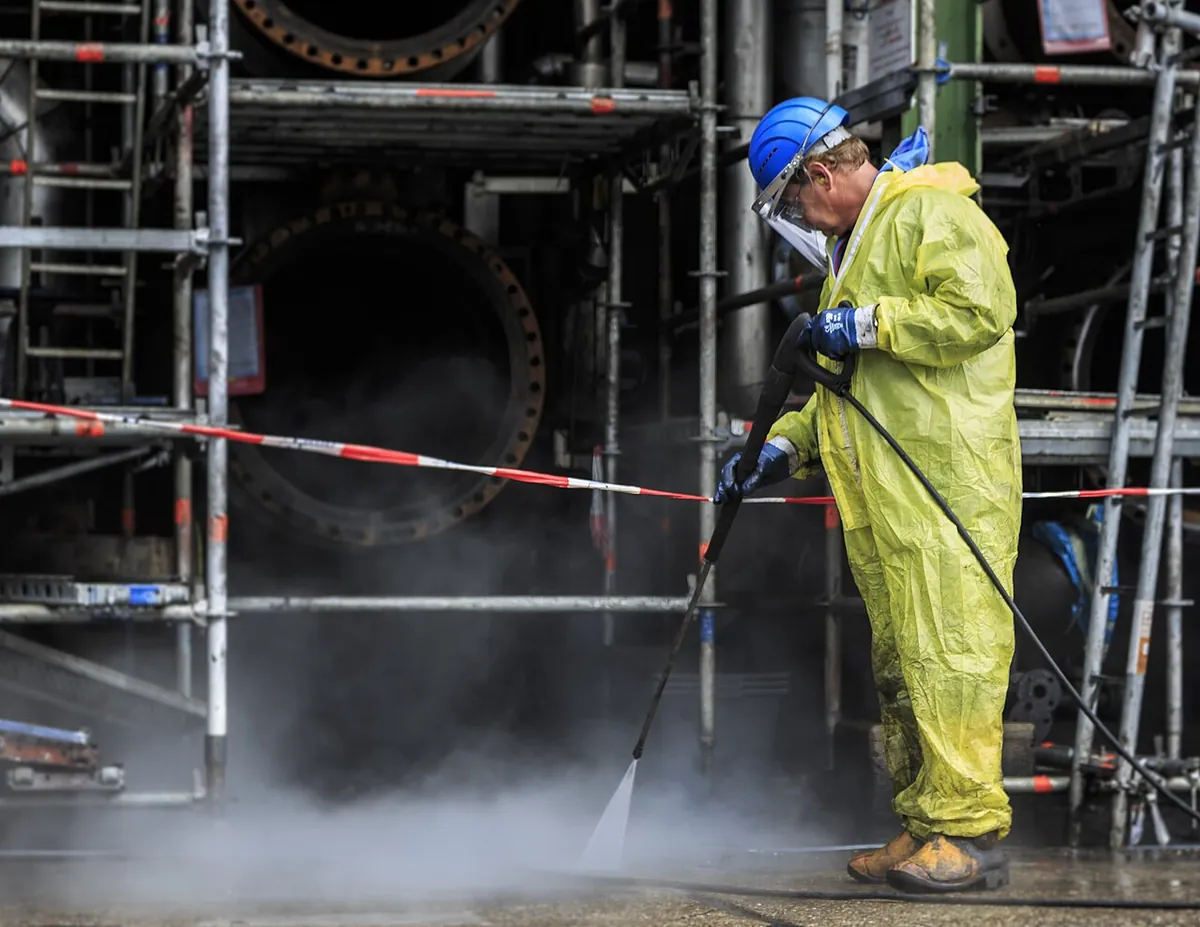
Photo: CEphoto, Uwe Aranas, Wikimedia Commons, CC BY-SA 3.0
Quick Answer
Cleaning concrete driveway surfaces works best in four steps: clear and sweep the driveway, pre-treat stains (degreaser on oil, oxygen bleach or concrete cleaner on mildew and algae, rust remover on rust), apply a concrete driveway cleaner through the pressure washer's detergent setting, then pressure wash with a 25-degree or 15-degree tip at about 2,500 to 3,300 psi, ideally with a surface cleaner attachment, working from the top of the slope down in overlapping passes. Rinse, let it dry, and seal it with a penetrating sealer to keep it cleaner longer. Avoid 0-degree tips, which can etch the surface, and keep runoff out of storm drains.
Cleaning concrete driveway surfaces matters because a concrete driveway takes more abuse than almost any other surface at a home: oil and fluid drips, tire marks, leaves, mud, road salt, mildew in shady corners and rust from planters and fertilizer. Over time, all of this turns a light gray driveway dark and blotchy. The good news is that concrete is easy to clean with the right tools, and a thorough cleaning once or twice a year makes a big difference to curb appeal.
This guide explains how to clean concrete driveway surfaces step by step, how to choose a concrete driveway cleaner, how to use a pressure washer to clean concrete safely, which concrete cleaner pressure washer setups work best, how to remove common stains, and how to keep the driveway clean longer.
Tools and Supplies for Cleaning a Concrete Driveway
For a typical driveway you will need a leaf blower or push broom; a garden hose; a pressure washer, either gas or electric, ideally 2,500 to 3,300 psi and at least 2 to 2.5 gallons per minute; a surface cleaner attachment that fits the washer; a selection of nozzle tips; a concrete driveway cleaner or degreaser that is safe for pressure washers; a stiff nylon brush for scrubbing stains; oil absorbent or cat litter for fresh oil; safety glasses, closed shoes and gloves; and plastic sheeting to protect plants. If you do not own a pressure washer, tool rental stores rent them by the day along with surface cleaners.
How to Clean Concrete Driveway Surfaces, Step by Step
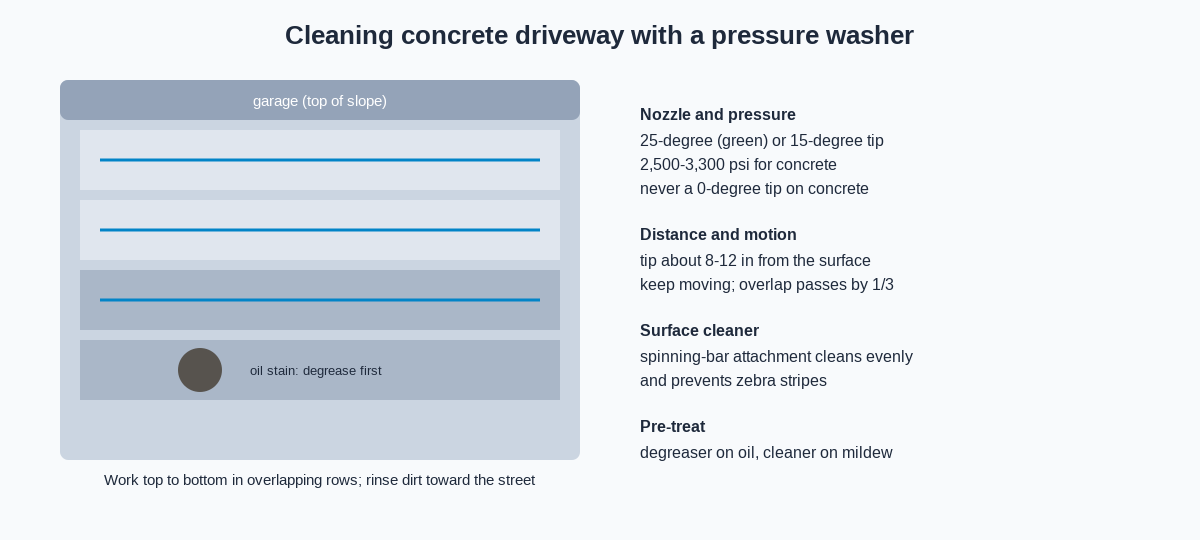
Here is how to clean concrete driveway surfaces from start to finish.
First, clear and sweep. Move cars, bins and planters. Blow or sweep off leaves, dirt and gravel; loose debris clogs surface cleaners and turns to mud. Cover nearby plants, outlets, and door thresholds, and close garage doors and windows.
Second, pre-treat stains. Cover fresh oil with cat litter or absorbent for several hours, then sweep it up. Apply a concrete degreaser to oil and grease stains, scrub with a stiff brush, and let it sit as the label directs. Apply a mildew or algae cleaner, or an oxygen bleach solution, to green or black growth in shady areas. Treat rust with a rust remover made for concrete. Pre-treating is what makes the difference between a driveway that looks clean and one that still shows ghosts of old stains.
Third, apply a concrete driveway cleaner. Wet the driveway with the hose. Fit the pressure washer's black soap nozzle or use a downstream injector to apply a concrete cleaner for pressure washer use, at the dilution on the label, working from the bottom up so the cleaner does not streak. Let it dwell for a few minutes, but do not let it dry.
Fourth, pressure wash. Switch to a 25-degree green tip, or a 15-degree yellow tip for tough dirt, or attach a surface cleaner. Start at the top of the slope, near the garage, and work down toward the street in overlapping rows. Hold a wand tip about 8 to 12 inches from the surface and keep it moving at a steady pace; stopping in one spot or holding it too close can etch the concrete and leave marks. A surface cleaner keeps the distance constant and cleans wide paths evenly, which prevents the zebra-striped look that wands often leave.
Fifth, rinse and inspect. Rinse the whole driveway with the pressure washer or hose, pushing dirty water toward the street or a lawn area, not into storm drains. Look for remaining stains once it dries and repeat the pre-treatment where needed.
Sixth, seal. After the driveway has dried for at least 24 to 48 hours, apply a penetrating sealer, such as a silane or siloxane, or an acrylic sealer if you prefer a sheen. Sealing makes future cleaning much easier and protects against oil, water and salt. See how to seal concrete and concrete sealer.
Choosing a Concrete Driveway Cleaner
A good concrete driveway cleaner matches the dirt you are removing. General-purpose concrete cleaners and detergents loosen dirt, grime and light stains and are made to be applied through a pressure washer. Degreasers, often alkaline, break down oil, grease and automotive fluids. Oxygen bleach products, based on sodium percarbonate, kill and lift mildew, algae and organic stains without harming plants as much as chlorine bleach. Rust removers, often based on oxalic acid, dissolve iron stains from fertilizer, metal furniture or irrigation water. Enzyme and bacterial cleaners digest oil over time and work well on stubborn oil stains in garages. Choose a concrete pressure washer cleaner labeled as safe for the machine, because some strong chemicals damage pump seals. See concrete cleaner.
Avoid muriatic acid for routine cleaning; it etches the surface and is hazardous. Avoid chlorine bleach on colored or stamped driveways, because it can lighten color. Test any cleaner in a hidden corner before doing the whole driveway.
Using a Pressure Washer to Clean Concrete Safely
A pressure washer to clean concrete is the fastest tool, but it can damage surfaces and people if used carelessly. Never point the wand at people, pets or your own feet; pressure washer injuries can cut skin and inject water and debris under it. Wear safety glasses and closed shoes. Use the widest nozzle that does the job: 25-degree for general cleaning, 15-degree for tougher spots, and never the 0-degree red tip on concrete, which can carve lines into the surface, especially on newer or softer concrete. Keep the tip moving and at a consistent distance. Be gentle on stamped, colored or exposed aggregate driveways, and on joints and sealant, which pressure can blow out. Gas pressure washers produce carbon monoxide, so run them outdoors away from open doors and windows.
Cleaning concrete with pressure washer equipment also uses a lot of water. Plan where runoff goes, keep detergent-laden water out of storm drains, and avoid washing during water restrictions. Many communities ask that washwater be directed to lawn or gravel areas where it can soak in.
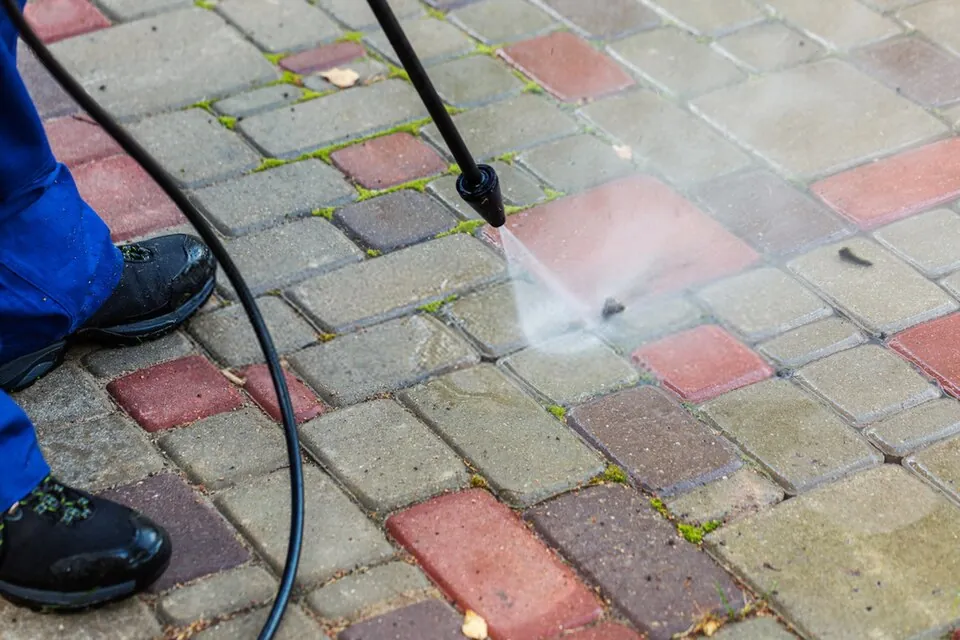
Photo: Cvcuk, Wikimedia Commons, CC BY-SA 4.0
Surface Cleaners vs Wands
A surface cleaner is a round attachment with spinning nozzles under a hood. It is the best tool for cleaning concrete driveway surfaces because it keeps a constant distance and overlap, cleans a 15 to 20 inch path in each pass, reduces splash, and avoids the striping that wands leave. Wands are still needed for edges, cracks, steps and corners. If you clean a driveway every year, a surface cleaner is worth buying; otherwise rent one with the pressure washer.
Removing Common Driveway Stains
Oil and fluid stains. Oil is the most common stain when cleaning concrete driveway surfaces. Fresh spills should be covered right away with cat litter, sawdust or a commercial absorbent and left for several hours before sweeping. For set-in oil, scrub a degreaser into the stain, let it dwell, and pressure wash. For deep, old stains, a poultice, a paste of absorbent powder mixed with a solvent or degreaser, spread over the stain, covered with plastic and left for a day or two, draws oil out of the pores. Enzyme cleaners can also break down remaining oil over several days. Several rounds may be needed, and some very old stains only fade. See how to remove oil stains from concrete.
Rust stains. Orange rust stains come from fertilizer granules, metal furniture, steel tools and iron in sprinkler water. Use a rust remover designed for concrete, apply it, let it work briefly, scrub and rinse. Test first on colored concrete. See how to remove rust stains from concrete.
Tire marks. Hot tires leave black marks, especially on sealed driveways. A degreaser or citrus-based cleaner, a stiff brush and hot water usually remove them; tire marks on soft sealers may need the sealer stripped and reapplied. See how to remove tire marks from concrete.
Mildew, algae and moss. Shady, damp areas grow green or black films. Apply an oxygen bleach solution or mildew remover, let it work, scrub and pressure wash. Trim plants and improve drainage to keep it from coming back. See how to clean moss from concrete.
Leaf and tannin stains. Brown leaf stains usually fade with an oxygen bleach cleaner and sunlight. Sweep leaves regularly in fall to prevent them.
Paint and sealer drips. Scrape fresh drips; use a paint stripper on dried paint, following safety directions. See how to remove paint from concrete.
Efflorescence. White, powdery deposits come from salts in the concrete carried to the surface by moisture. Brush them off when dry and use a mild masonry cleaner if needed; fix drainage to prevent recurrence. See efflorescence on concrete.
Cleaning Concrete Driveway Surfaces Without a Pressure Washer
You can clean concrete driveway surfaces without a pressure washer. Sweep thoroughly, wet the surface with a garden hose, apply a concrete driveway cleaner or a mix of warm water and laundry detergent or oxygen bleach, and scrub with a stiff push broom or deck brush. Let the cleaner work for 10 to 15 minutes, scrub again, and rinse well with a hose fitted with a jet nozzle. This method is slower and needs more effort, but it is gentle on older or decorative concrete and uses less water. A garden hose with a turbo or rotating nozzle helps rinse loosened dirt.
How Often to Clean Concrete Driveways
Most homeowners clean concrete driveways once or twice a year, typically in spring after winter salt and sand, and in fall after leaves and summer use. Clean oil and fluid spills as soon as they happen. Shady driveways in humid climates may need more frequent mildew treatment. In snowy regions, rinsing salt off the driveway several times during winter, when temperatures allow, helps protect the surface. Regular sweeping and blowing, especially of leaves and dirt, reduces how often deep cleaning is needed.
Cleaning Decorative and Stamped Driveways
Stamped, colored and exposed aggregate driveways need gentler cleaning. Use a lower pressure, about 1,500 to 2,500 psi, a wider 25- or 40-degree nozzle, and keep the tip farther from the surface. Avoid harsh acids and chlorine bleach, which can lighten color or damage the sealer. Use cleaners labeled safe for sealed and decorative concrete. After cleaning, decorative driveways usually need resealing to restore color and protection, typically every two to three years. If the sealer is peeling or whitened, it may need to be stripped and reapplied. See stamped concrete driveway.
Sealing After Cleaning
Concrete driveway cleaning is the best time to seal, because the concrete is free of dirt and stains that would be trapped under the sealer. Let the driveway dry completely, then apply a sealer suited to the driveway. Penetrating silane and siloxane sealers soak in, repel water and salt, do not change the look much and are not slippery. Acrylic sealers give a wet look and enhance color, but need reapplication every couple of years and can be slippery. A sealed driveway resists oil stains better, sheds water and dirt, and is much easier to clean next time. See how to seal concrete.
Hiring a Professional Driveway Cleaner
Professional pressure washing companies clean concrete driveways with commercial-grade hot-water machines and surface cleaners, which remove oil and grime faster than homeowner equipment. Prices commonly run about $0.10 to $0.40 per square foot, or roughly $100 to $300 for a typical driveway, with extra charges for heavy oil stain treatment and sealing. Hiring a professional is worth considering for very dirty driveways, large areas, decorative concrete, or if you do not want to rent equipment. Ask whether they reclaim washwater, what cleaners they use, and whether sealing is included.
Picking a Pressure Washer for Concrete Driveway Cleaning
Not every pressure washer is suited to concrete driveway cleaning. Pressure, measured in psi, and flow, measured in gallons per minute or gpm, together determine cleaning power; multiply them for "cleaning units." For cleaning concrete driveway surfaces, a gas unit of about 2,800 to 3,300 psi and 2.3 to 2.8 gpm cleans quickly and runs a 15 to 20 inch surface cleaner well. Electric units of about 1,800 to 2,300 psi can clean a driveway but take longer and work better with small surface cleaners. Hot-water pressure washers, used by professionals, remove oil and grease far more effectively than cold water. If you are renting, ask for a unit that matches the surface cleaner, and check that the hose is long enough to reach the end of the driveway without moving the machine constantly.
For the concrete cleaner pressure washer setup, most consumer machines draw detergent only through a low-pressure soap nozzle. Apply the concrete pressure washer cleaner first at low pressure, let it dwell, then switch to the cleaning tip or surface cleaner. Some surface cleaners have their own chemical injection; check that the cleaner is compatible with your machine's seals.
Cleaning Concrete With Pressure Washer: Technique Tips
Good technique matters as much as equipment when cleaning concrete with pressure washer tools. Test your tip and distance in an inconspicuous spot first. Keep the wand angled at about 45 degrees to push dirt away from you rather than straight down. Work in consistent rows and overlap each pass slightly. With a surface cleaner, walk at a slow, steady pace and do not stop with the machine running in one spot. Clean joints and edges with the wand after the surface cleaner. Rinse frequently so loosened dirt does not settle back. On sloped driveways, always work downhill so dirty water runs over areas you have not cleaned yet, not over clean ones.
Seasonal Concrete Driveway Cleaning Plan
A simple seasonal plan keeps concrete driveway cleaning manageable. In spring, do a full cleaning: blow off debris, treat oil and rust, pressure wash, and reseal every few years. In summer, spot clean oil drips quickly and rinse off fertilizer granules before they stain. In fall, blow or sweep leaves often, because wet leaves leave brown tannin stains, and do a second full wash if needed. In winter, shovel early, use sand or concrete-safe ice melt sparingly, and rinse salt residue during mild spells. This routine keeps clean concrete driveways looking fresh all year with only a couple of full washes.
Clean Concrete Driveways and Curb Appeal
Clean concrete driveways make a big difference to how a house looks from the street, and cleaning is one of the cheapest ways to improve curb appeal before selling. A stained, dark driveway makes a property look tired; after a thorough wash and seal, the concrete looks years younger. If stains will not come out, consider a concrete stain or resurfacer to even out color. Combining driveway cleaning with cleaning walks, steps and the patio gives the whole exterior a fresh look. See concrete driveway resurfacing and how to clean concrete.
Environmental Tips for Cleaning Concrete Driveways
Driveway runoff often flows straight to the street and into storm drains that lead to creeks and rivers without treatment. To reduce your impact when cleaning concrete driveway surfaces, sweep up absorbent and debris instead of washing it away, use biodegradable or phosphate-free cleaners, use the least amount of cleaner that works, and direct washwater onto lawn or gravel where soil can filter it. Absorb oil before washing, and dispose of oily absorbent with household trash, not down a drain. Some cities restrict washing driveways or require that commercial cleaners recover washwater. Choosing oxygen bleach over chlorine bleach and enzyme oil cleaners over solvent degreasers also reduces harm to plants and waterways.
Preventing Stains Between Cleanings
Prevention keeps a driveway clean longer. Park leaking vehicles on a drip pan or mat until the leak is fixed. Keep a bag of cat litter or absorbent in the garage for quick spill response. Store fertilizer, rusty tools and metal furniture off the concrete. Point sprinklers away from the driveway if your water has high iron. Blow off leaves regularly in fall. Keep a good sealer on the driveway, because sealed concrete resists stains much better than bare concrete. These habits make the next round of concrete driveway cleaning faster and easier.
Should You Rent or Buy a Pressure Washer?
If you clean concrete driveways only once a year, renting a pressure washer and surface cleaner for a day is usually cheaper than buying. Rental machines are often more powerful than consumer models, which speeds the job. If you also wash a deck, siding, patio, fences and vehicles, owning a mid-range gas or electric pressure washer pays off over a few years. When buying, choose a machine with enough flow to run a surface cleaner, a pump that can be serviced, and a hose long enough for your driveway.
Cleaning Concrete Driveway Cracks and Joints
Joints and cracks collect dirt, weeds and moss, and they need attention during concrete driveway cleaning. Pull weeds by hand or treat them with a weed killer before washing. Use a wand with a 15- or 25-degree tip to clean dirt out of joints, holding it at an angle and keeping it moving, but be careful not to blast out joint sealant or erode crack edges. After the driveway dries, refill joints with a self-leveling polyurethane joint sealant and seal cracks with a concrete crack filler. Sealed joints keep water and weeds out, protect the base, and make the next round of cleaning concrete driveway surfaces much easier. See how to fix cracks in a concrete driveway and concrete expansion joints.
In short, the best approach to cleaning concrete driveway surfaces is simple: sweep, pre-treat, wash with the right concrete driveway cleaner and pressure, rinse, and seal. Do it once or twice a year, deal with spills quickly, and your driveway will stay clean and attractive for many years.
Time and Cost of a DIY Driveway Cleaning
A typical two-car concrete driveway of about 600 square feet takes roughly two to four hours to clean yourself with a rented pressure washer and surface cleaner, including setup, stain treatment and rinsing, plus drying time before sealing. Costs are modest: a day's rental of a pressure washer and surface cleaner, a jug of concrete driveway cleaner or degreaser, and absorbent for oil usually total well under the price of hiring a professional. Add the cost of a penetrating sealer if you plan to seal. Doing it yourself once or twice a year keeps clean concrete driveways looking good at very low cost, and it is a satisfying weekend job that shows results immediately once the concrete dries and the sealer goes on later that same weekend for lasting protection.
Common Mistakes When Cleaning Concrete Driveways
The most common mistakes are using a 0-degree or very narrow tip and etching lines into the concrete; holding the wand too close or in one spot; skipping pre-treatment, so stains remain; using chlorine bleach on colored concrete; letting cleaners dry on the surface; washing dirty water into storm drains; blasting sealant out of joints; and sealing before the concrete is dry, which traps moisture and causes cloudy sealer. Taking a little more time with preparation and technique gives a much better result.
Frequently Asked Questions
What is the best way to clean a concrete driveway?
Sweep, pre-treat stains, apply a concrete driveway cleaner, pressure wash with a surface cleaner or 25-degree tip, rinse, and seal once dry.
What psi pressure washer do I need for concrete?
About 2,500 to 3,300 psi is typical for concrete driveways; use less on decorative or older concrete.
Can a pressure washer damage concrete?
Yes, a 0-degree tip or holding the wand too close can etch the surface. Use wider tips, keep moving, or use a surface cleaner.
How do I get oil stains off a concrete driveway?
Absorb fresh oil with cat litter, scrub with a degreaser, pressure wash, and use a poultice or enzyme cleaner for old stains.
Sources
- Portland Cement Association: removing stains and cleaning concrete surfaces
- U.S. EPA: stormwater and runoff from washing
- U.S. Consumer Product Safety Commission: pressure washer injury safety
- OSHA: chemical hazards and safe use of cleaners
Related Guides
- How to clean moss from concrete — removing moss and stopping regrowth
- Exposed aggregate concrete — how it's made, sealing and cost
- Bleach on concrete — mix ratios for mold, mildew and algae