
Concrete Driveway Apron: What It Is, How It Is Built, and What It Costs
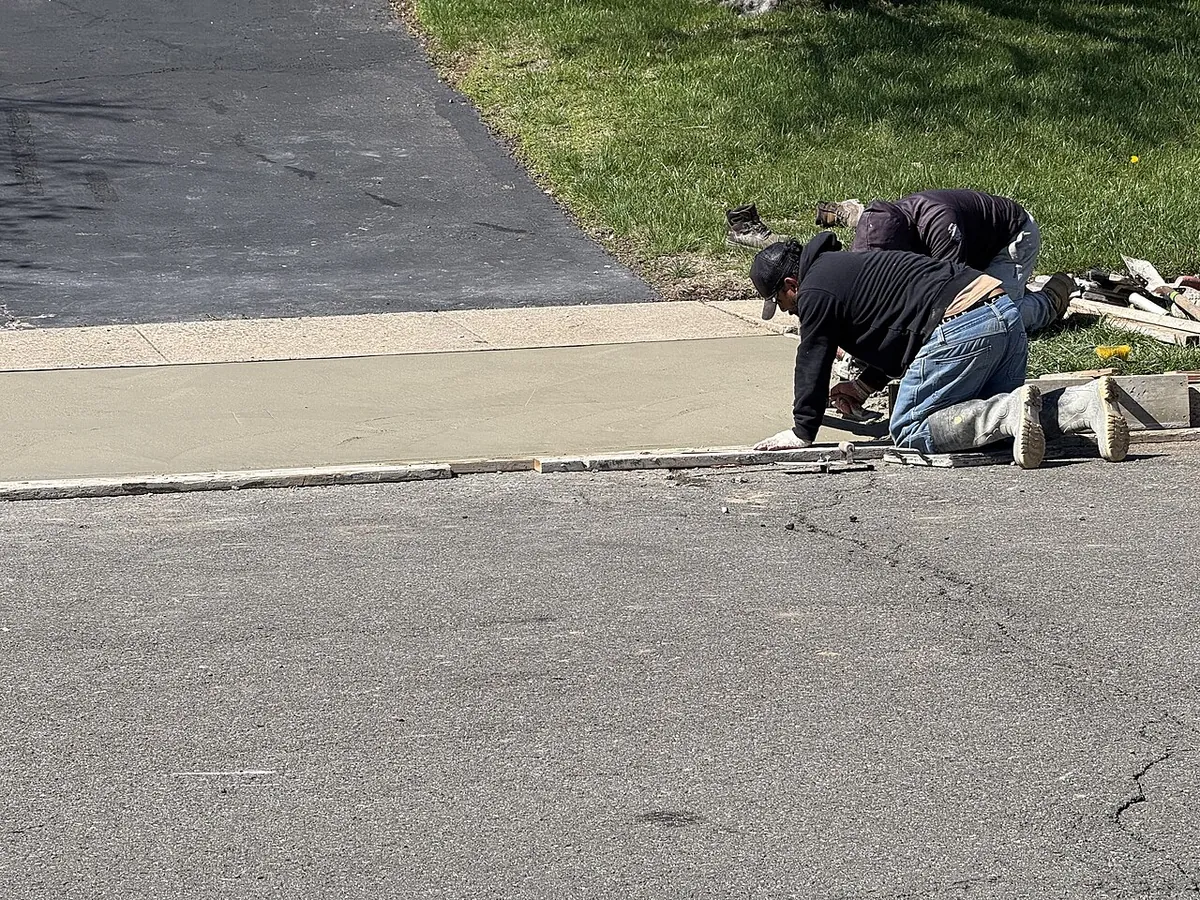
Photo: Famartin, Wikimedia Commons, CC BY-SA 4.0
Quick Answer
A concrete driveway apron is the section of concrete that connects a driveway to the street, usually between the curb and the sidewalk, or the strip at the garage door where the garage slab meets the driveway. The street apron takes the heaviest loads and is often controlled by city rules: it typically needs a permit, a specified width and flare, and a thickness of about 6 inches on a compacted base with reinforcement. A concrete apron typically costs about $8 to $15 per square foot installed, or roughly $1,000 to $3,500 for a typical residential street apron, more with curb cutting and sidewalk replacement. Aprons crack from heavy vehicles, poor bases and settlement, so build them thick and well jointed.
The concrete apron is the hardest-working part of most driveways. Every car, delivery truck, garbage truck and moving van that turns into the driveway crosses it, often at an angle and while braking or accelerating. It sits where water from the street and the driveway collects, and in cold climates it takes plowed snow and road salt. That is why driveway aprons crack and sink more often than the rest of the driveway, and why many homeowners with asphalt driveways choose a concrete apron at the street.
This guide explains what a concrete driveway apron is, the difference between street and garage aprons, how an apron should be built, sizes, thickness and slope, permits and city rules, costs to install or replace, common problems, and maintenance.
What Is a Concrete Driveway Apron?
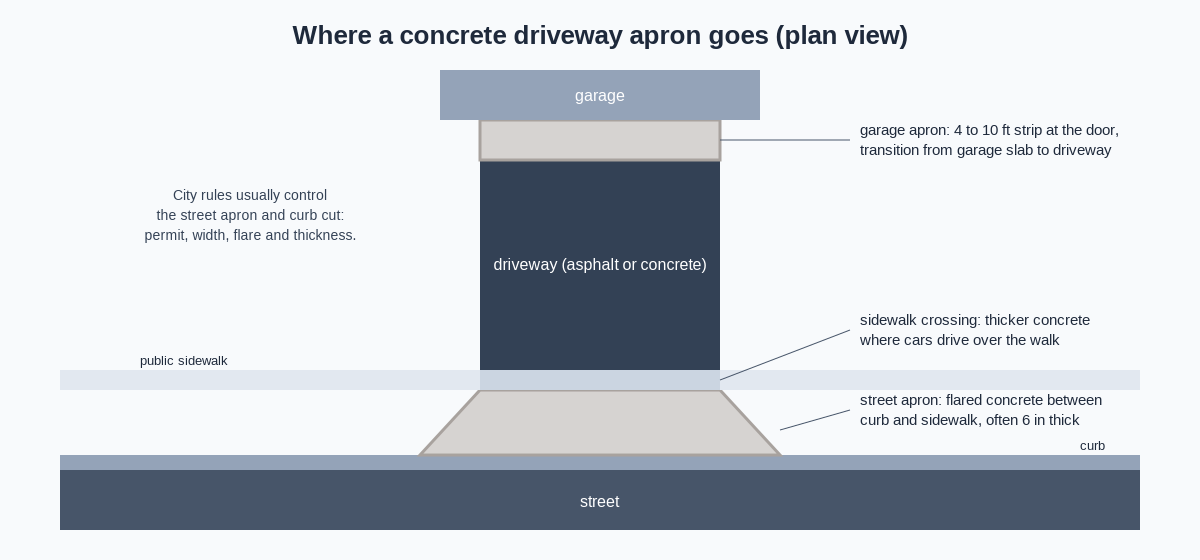
The word apron is used for two different places on a driveway. The street apron, sometimes called the driveway approach, entrance or curb cut, is the section between the street and the property, usually running from the curb or edge of pavement across or up to the public sidewalk. It is often flared at the sides so cars can turn in easily. This is the most common meaning of concrete driveway apron, and it is often partly or wholly on public land, so the city or county may own it or regulate how it is built.
The garage apron is the strip of driveway directly in front of the garage door, where the garage floor slab meets the driveway. It is often poured separately, sometimes as concrete even when the rest of the driveway is asphalt, and it has to handle water running toward or away from the garage, tires turning, and the edge of the garage slab. Both are aprons, and both are common places for cracks and settlement.
A concrete apron can be part of an all-concrete driveway, or a separate concrete section at the street or garage with asphalt, pavers or gravel in between. Concrete is popular for aprons even with asphalt driveways because it handles turning tires, heavy loads and the curb edge better and does not get soft and rutted in summer heat. See concrete driveway cost and asphalt vs concrete driveway cost.
Why Driveway Aprons Crack and Sink
A concrete driveway apron fails more often than the rest of the driveway for several reasons. It carries the heaviest loads, because delivery trucks, garbage trucks, moving vans and service vehicles often pull only partway into a driveway and stop on the driveway apron. It takes turning and braking forces, which twist and push the slab. It sits at the low point where water from the street, gutter and driveway collects, softening the base and washing out fines. Utility trenches often run under the concrete apron area, and poorly compacted trench backfill settles over time. Street plows hit the edge, and road salt splashes onto it. And many older aprons were poured too thin, without reinforcement or a proper base. The result is cracking, spalling at the curb edge, sinking that creates a lip at the street or sidewalk, and broken corners at the flares.
Building the concrete apron thicker than the rest of the driveway, on a well-compacted base, with reinforcement and proper joints, addresses most of these problems. See why concrete cracks and does salt damage concrete.
How a Concrete Driveway Apron Should Be Built
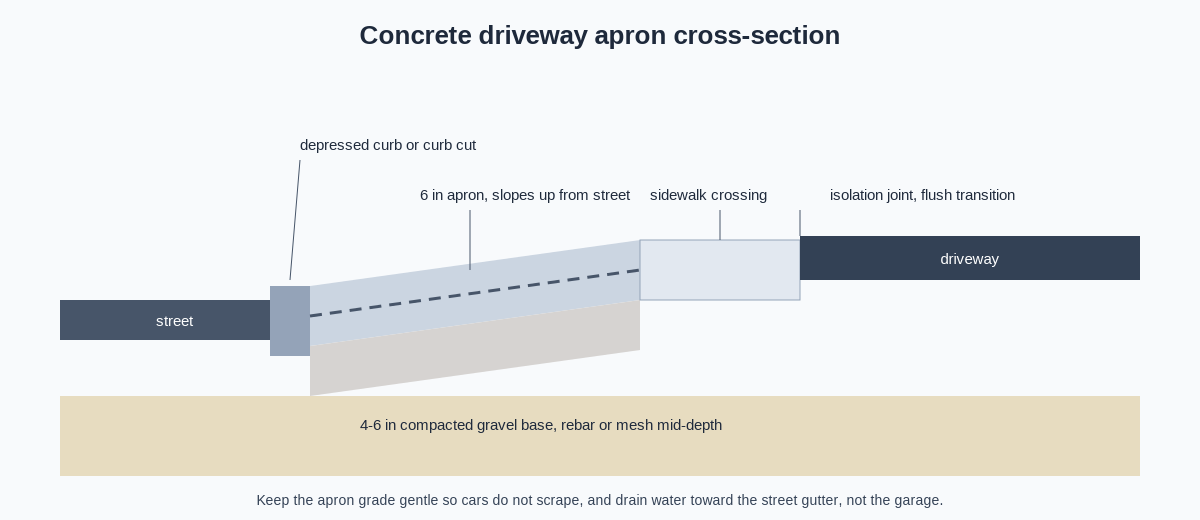
Good construction starts below the surface. The old apron and any soft soil are removed, and the subgrade is compacted. A base of 4 to 6 inches of compacted crushed stone goes on top, extending slightly beyond the slab edges. Forms are set to the grade the city or the design requires, so the driveway apron rises from the gutter line to the sidewalk or driveway at a gentle, even slope that cars can cross without scraping.
Thickness matters most. Many cities require a residential concrete driveway apron to be at least 6 inches thick, and 7 or 8 inches is common for commercial driveways. Even where 4 inches is allowed for the rest of the driveway, a 6 inch apron is a good investment. Reinforcement, such as rebar on chairs or welded wire mesh placed mid-depth, helps hold cracks tight; some cities specify it. The concrete itself should be at least 4,000 psi, air-entrained in freeze-thaw climates, with a low water-cement ratio. See how thick a concrete driveway should be and rebar in concrete.
Joints control cracking. Isolation joints separate the concrete apron from the curb, sidewalk and driveway so each can move independently, and control joints divide large aprons into roughly square panels. The surface usually gets a broom finish for traction, and the edges along the curb are tooled or finished carefully, because that is where plows and tires hit. Curing for at least several days, and keeping vehicles off for about a week, lets the concrete gain strength before it takes heavy loads.
Concrete Apron Size, Width and Flare
Street aprons are usually as wide as the driveway at the property line, plus flares on each side that widen toward the street so cars can turn in without running over the curb or lawn. Typical residential driveway openings are about 10 to 24 feet wide, with flares of a few feet on each side, though cities set their own limits on width, flare shape and distance from property lines, fire hydrants, utility poles and corners. The depth of the concrete apron from curb to sidewalk varies with the width of the planting strip between them, often 4 to 10 feet. Garage aprons usually run the full width of the garage door opening and extend about 4 to 10 feet out from the door. Measure your existing apron and check local standards before planning a new one.
Slope and Drainage
Slope is a balance. The street apron must rise from the gutter to the sidewalk or property line, but if the transition is too abrupt, cars scrape their bumpers or undercarriages. Many cities publish standard drawings showing the maximum slope and the shape of the transition. Where a public sidewalk crosses the driveway, accessibility rules usually require the walking route across the driveway apron to keep a gentle cross slope, around 2 percent, so people using wheelchairs can cross safely. That often means the concrete apron is flat across the sidewalk path and steeper on either side. At the garage, the driveway apron should slope away from the garage door, typically about 1/8 to 1/4 inch per foot, so rain and snowmelt do not run into the garage. If the driveway slopes toward the garage, a trench drain at the concrete apron may be needed.
Permits and City Rules
Because the street apron is usually in the public right of way, most cities and counties require a permit to build, replace or widen a concrete driveway apron or curb cut. The permit often specifies thickness, concrete strength, reinforcement, width, flare, slope, the sidewalk crossing, and inspection before and after the pour. Some cities require licensed and bonded contractors for right-of-way work, and some do the curb and apron work themselves and bill the homeowner. In many places, the homeowner is responsible for maintaining the driveway apron and sidewalk in front of the property even though the land is public. Always check with the local public works or engineering department before replacing an apron, and get the permit before work starts; unpermitted aprons can be ordered removed.
Concrete Driveway Apron Cost
Costs vary with size, thickness, access, city requirements and region. As a rough guide, a new or replacement concrete driveway apron often costs about $8 to $15 per square foot installed, including removal of the old apron, base, forms, reinforcement and a 6 inch slab. A typical residential street apron of 150 to 250 square feet might therefore cost about $1,200 to $3,750. Cutting and replacing a curb, replacing the public sidewalk crossing, permit fees, traffic control, and decorative finishes add to the price. Garage aprons are usually priced similarly per square foot. Many contractors have minimum charges for small jobs, so a small concrete apron can cost more per square foot than a full driveway. See concrete driveway cost, concrete removal cost and concrete sidewalk cost.
Repair or Replace a Concrete Apron?
Small problems can be repaired. Hairline cracks can be sealed with a flexible crack sealant to keep water out. A concrete apron that has sunk as a single slab can sometimes be lifted with mudjacking or polyurethane foam, which costs much less than replacement. Spalled or scaled surfaces can be patched or resurfaced if the slab is otherwise sound. But if the concrete apron is broken into many pieces, has sunk unevenly, has a large lip at the street or sidewalk, or is too thin for the loads it carries, replacement is usually the better choice. Replacing just the driveway apron is a common project and does not require replacing the whole driveway. See concrete leveling cost and how to fix cracks in a concrete driveway.
The Garage Apron in Detail
The garage apron is where the garage floor slab, the foundation, and the driveway all meet, which makes it a common trouble spot. Garage slabs are usually poured separately from the driveway, and the joint between them must stay sealed so water does not get under either slab. In cold climates, frost can heave the driveway side of the joint upward, creating a lip that catches snow shovels and can stop the garage door from closing properly. Water draining toward the garage can freeze in the joint or run under the door.
A well-built garage concrete apron slopes away from the door, sits slightly below the garage floor, and has an isolation joint filled with a flexible sealant where it meets the garage slab. It is usually at least as thick as the driveway, often 5 to 6 inches, and doweled to the garage slab in some designs to keep the two at the same height. If the driveway slopes toward the garage, a trench drain across the concrete apron, connected to a dry well or storm line, keeps water out. Replacing a cracked or heaved garage apron is a common, contained project that restores a smooth entry.
Concrete Aprons With Asphalt Driveways
Many homes have an asphalt driveway with a concrete apron at the street, and sometimes another at the garage. This combination uses concrete where it performs best, at the curb, the sidewalk crossing and the garage edge, and asphalt for the long run of driveway where it is cheaper. The joint between asphalt and concrete should be cut straight and sealed, because water getting into that seam softens the asphalt base and causes potholes. When the asphalt is repaved, the paver should feather the new asphalt down to meet the concrete apron cleanly, without leaving a lip. A concrete driveway apron also protects the asphalt edge from being crushed by turning tires at the street. See asphalt vs concrete driveway cost and how long an asphalt driveway lasts.
Aprons for Gravel and Paver Driveways
Gravel driveways benefit greatly from a concrete apron at the street. Without one, gravel gets dragged onto the road by tires, washes into the gutter in heavy rain, and the edge breaks down where cars turn. A short concrete apron, often 10 to 20 feet deep, keeps gravel in place, gives a clean edge at the street, and often satisfies city rules that require a paved approach. For paver driveways, a concrete apron or a concrete edge restraint at the street gives the pavers a solid border and handles the turning loads at the entrance. See gravel driveway cost and stamped concrete vs pavers.
Decorative Concrete Driveway Aprons
The driveway apron is a small area, so it is an affordable place to add a decorative touch that ties the driveway to the house and walkway. Popular options include an exposed aggregate apron with a smooth border; a stamped cobble or brick band at the street; a colored apron that matches a stamped walkway; and a band of pavers set across the apron. Check city rules first, because some cities require a plain broom finish in the public right of way, especially across the sidewalk. Decorative aprons need a sealer that stands up to tires and salt, and periodic resealing. See stamped concrete driveway and types of concrete finishes.
Commercial and Wide Aprons
Commercial driveways, shared driveways and entrances used by trucks need heavier aprons. Cities usually require thicker concrete, often 7 to 8 inches or more, with reinforcement, wider openings and larger flares for turning trucks, and sometimes specific curb return radii. Apron design for commercial sites is often part of the site engineer's plans and must meet the local standard details. Residential owners with RVs, boats or frequent heavy deliveries should also consider a thicker concrete apron than the minimum.
The Sidewalk Crossing
Where a public sidewalk crosses a driveway, the concrete is usually thicker than the normal sidewalk, often 6 inches, because cars drive over it. Accessibility rules generally require the walking route across the driveway to keep a gentle cross slope so people in wheelchairs do not tip toward the street, and the surface must be smooth and level with the adjoining sidewalk. Many cities show the sidewalk crossing as part of their standard concrete driveway apron drawing. When replacing an apron, the sidewalk crossing is often replaced at the same time, and must be built to city specifications. See concrete sidewalk cost.
Replacing a Concrete Driveway Apron, Step by Step
A typical replacement starts with a permit from the city, utility locates, and a site visit to confirm the grade. The contractor saw-cuts a clean line where the new apron will meet the driveway, the curb or street, and the sidewalk, then breaks out and hauls away the old concrete apron. Soft soil is removed and replaced, the subgrade compacted, and a gravel base placed and compacted. Forms are set to the city's grades and flares, reinforcement is placed, and an inspector may check the forms and base. The concrete is poured, finished with a broom texture, jointed and cured. Barricades keep vehicles off for about a week, sometimes longer in cool weather. The whole job usually takes a few days of work spread over a week or so, with the main inconvenience being no driveway access while the driveway apron cures.
Plan where you will park during the curing period, and let neighbors and delivery services know. If you have only one driveway entrance, some contractors can pour the concrete apron in two halves on different days, so one side stays usable, though this adds a joint and some cost.
Concrete Driveway Apron vs Asphalt Apron
Some homeowners wonder whether an asphalt apron would be cheaper. Asphalt aprons cost less up front, but they deform under turning tires in hot weather, crumble at the curb edge, and need sealing and patching more often. A concrete driveway apron lasts much longer, often 25 to 40 years when well built, keeps a crisp edge at the curb, and handles the twisting loads of turning vehicles better. Many cities require concrete for aprons and sidewalk crossings in the public right of way for exactly these reasons. Over the life of the driveway, a concrete apron usually costs less than repeatedly repairing an asphalt one. See is asphalt cheaper than concrete.
Planning a New Driveway Apron
If you are widening a driveway, adding a second entrance, or building a new home, plan the concrete driveway apron early. Check the city's rules on how many driveways a lot may have, how wide each can be, how far it must be from the property line, corners, hydrants and utility poles, and whether trees in the parkway may be removed. Confirm the curb type: a rolled curb may not need cutting, while a vertical curb needs a curb cut or a depressed curb section. Coordinate with utilities if water meters, valves or cable boxes sit in the apron area; they may need to be raised or moved, often at the owner's cost. Get the permit before scheduling the pour, and book the inspection. Careful planning avoids the most common problem with new aprons: having to tear out work that did not meet the city standard.
Questions to Ask a Contractor About Your Concrete Apron
Ask whether the contractor will pull the permit and schedule inspections; how thick the concrete apron will be and what base and reinforcement they will use; what concrete strength and air content they will order; how they will handle the curb, sidewalk crossing and transitions to the driveway; where joints will go; how long you will be without driveway access; and what warranty they provide. Ask for references from recent concrete driveway apron jobs in your town, because contractors who work there regularly will know the local standards and inspectors. A clear written quote that covers all of these points protects both you and the contractor.
How Long a Concrete Driveway Apron Lasts
A well-built concrete driveway apron, 6 inches thick on a compacted base with reinforcement and good joints, commonly lasts 25 to 40 years. A thin concrete apron poured on soft soil may crack within a few years. Salt, heavy trucks and poor drainage shorten the life of any driveway apron, while sealing, sealed joints and good drainage extend it. If your concrete apron is cracking or sinking while the rest of the driveway is fine, replacing only the apron is usually the most economical fix, and a properly built new concrete driveway apron will often outlast the driveway behind it.
When you replace it, take the opportunity to correct problems such as a lip at the street, poor drainage toward the garage, or a width that is too narrow for your vehicles. A new concrete apron built to current standards can make the whole driveway safer and easier to use. Ask the contractor to check the transition heights at the street, sidewalk and driveway before the pour, so the finished concrete apron is smooth to drive over and does not trap water, ice or debris at any of its edges for years to come. A few minutes of checking with a level and string line before the concrete arrives is far cheaper than grinding or replacing a badly set driveway apron a year or two later, after the first winter shows the problem.
Caring for a Concrete Apron
A few habits extend the life of a concrete apron. Seal it with a penetrating sealer every few years, especially in salt-heavy climates. Keep the joints sealed. Avoid using rock salt in the first winter, and avoid deicers containing ammonium compounds at any time. Ask plow drivers to keep blades off the curb edge, or mark the edges with stakes. Keep heavy trucks off the driveway apron where possible, or have it built thicker if they are common. Keep gutters clear so water flows past rather than ponding at the concrete apron. Address small cracks and settlement early, before water gets under the slab and makes them worse. See how to seal concrete.
Frequently Asked Questions
What is a driveway apron?
The section connecting the driveway to the street, usually between the curb and the sidewalk, or the strip in front of the garage door.
How thick should a concrete driveway apron be?
Usually at least 6 inches for residential street aprons, often with reinforcement; check your city's standard.
Do I need a permit for a concrete apron?
Usually yes for street aprons and curb cuts in the public right of way; garage aprons on private property may not need one.
How much does it cost to replace a driveway apron?
Often about $1,000 to $3,500 for a typical residential concrete apron, more with curb and sidewalk work.
Sources
- American Concrete Institute: ACI 330R guide for concrete parking lots and site paving; ACI 332 residential concrete
- Portland Cement Association: concrete driveways and approaches
- U.S. Access Board: sidewalk crossings and accessible routes at driveways
- National Ready Mixed Concrete Association: CIP 6 (joints) and CIP 2 (scaling)
Related Guides
- Concrete ramp — slope rules, design and cost
- Is calcium chloride safe for concrete? — choosing the best ice melt
- Concrete parking blocks — wheel stops: sizes and installation
- Concrete culvert — concrete pipe and box culverts
- Concrete curb machine — landscape curbing and edging
- Concrete trench drain — channel drains, grates, install and cost
- Concrete catch basin — storm inlets, sizes and install