
How Long After Shocking Pool Can You Swim? Wait Times and Tests
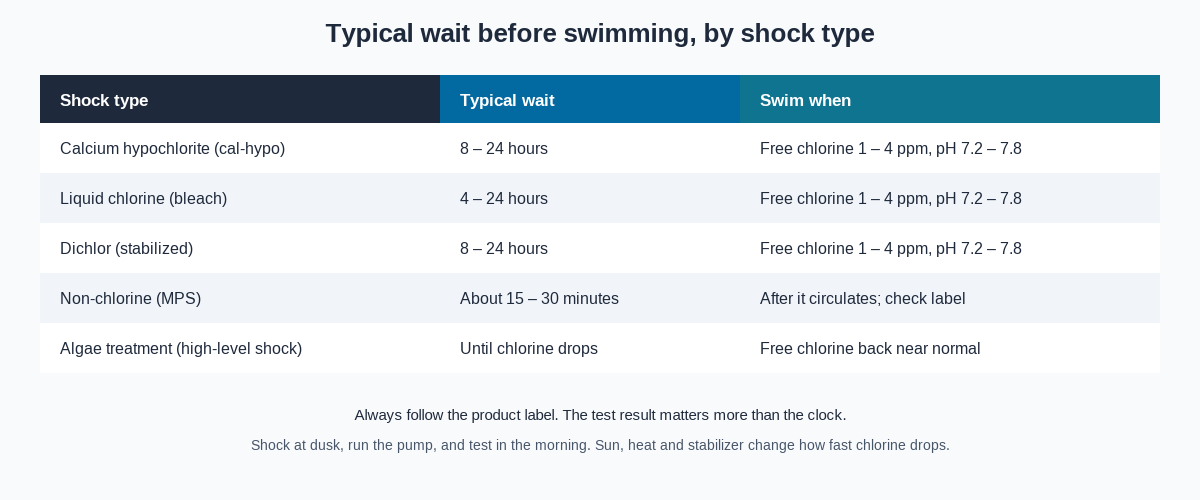
Chart: Asphapro.com
Quick Answer
How long after shocking pool water can you swim? It depends on the shock and on your test results. After non-chlorine shock (potassium monopersulfate), you can usually swim in about 15 to 30 minutes, once it has circulated. After chlorine shock such as cal-hypo, liquid chlorine or dichlor, wait until free chlorine drops back to about 1 to 4 ppm and pH is 7.2 to 7.8, which usually takes 8 to 24 hours. The easiest plan is to shock at dusk, run the pump overnight, and test in the morning before anyone swims. Always follow the product label, and if the pool is cloudy after shock, keep the filter running until the water is clear before swimming.
Shocking a pool means adding a large dose of oxidizer, usually chlorine, to burn off contaminants, kill algae and bacteria, and break down chloramines, the compounds that cause the "chlorine smell" and red eyes. A shock dose raises chlorine far above the normal swimming level, often to 10 ppm or higher. That high level does its job, but it is too strong to swim in comfortably or safely right away.
This guide explains how long to wait after shocking pool water for each type of shock, what to test before swimming, how to speed things up, and why a pool can turn cloudy after shock. For when and how often to shock, see our guide on when to shock a pool.
Why You Need to Wait After Shocking
High chlorine levels can irritate eyes, skin and lungs, and can bleach swimsuits and hair. Undissolved shock granules can also burn skin if someone touches them on the pool floor. The pH can swing after shocking, especially with cal-hypo, which raises pH. Swimming before chlorine drops and pH settles can cause discomfort and, at very high levels, real harm. Waiting also gives the shock time to finish its work, which is the reason you added it.
How Long to Wait After Shocking Pool Water, by Type
Calcium hypochlorite (cal-hypo). Cal-hypo is the most common granular shock. It is strong, unstabilized, and raises pH and calcium. Most labels say to wait until chlorine returns to normal, which usually takes 8 to 24 hours. Pre-dissolve it in a bucket of water to avoid granules on the floor.
Liquid chlorine (sodium hypochlorite). Liquid chlorine mixes in quickly and leaves no residue. How fast chlorine drops depends on the dose, sun, temperature and stabilizer. For a typical weekly shock, levels often fall back into the swimming range in 4 to 24 hours.
Dichlor. Dichlor is a stabilized granular chlorine that dissolves quickly and has a near-neutral pH. It adds stabilizer (cyanuric acid) to the water, which can build up over time. Wait 8 to 24 hours, or until chlorine is back in range.
Non-chlorine shock (MPS). Potassium monopersulfate oxidizes contaminants without adding chlorine. It does not kill algae or sanitize, but it breaks down chloramines and organic waste. Most labels allow swimming about 15 minutes after adding it, once it has circulated.
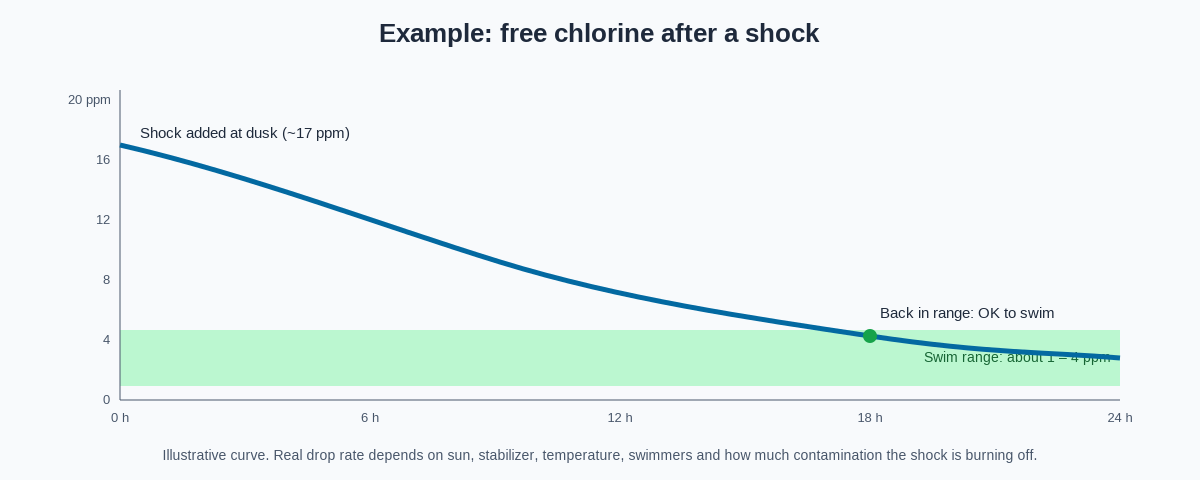
Chart: Asphapro.com
What to Test Before You Swim
The clock is only a guide; test results are what count. Before swimming after a chlorine shock, check:
- Free chlorine: back to about 1 to 4 ppm. Many owners treat 4 to 5 ppm as the upper limit for comfortable swimming. In pools with high stabilizer, a little higher may be normal.
- pH: 7.2 to 7.8. Cal-hypo raises pH, so you may need to add acid.
- Combined chlorine (chloramines): close to zero. If it is still high, the shock may not have finished.
- Water clarity: you should clearly see the main drain at the deep end.
A drop-based test kit gives the most accurate chlorine readings at high levels. Test strips may max out above 10 ppm, so they cannot show how high the level really is until it falls.
Can You Swim 4 Hours After Shocking Pool Water?
Can you swim 4 hours after shocking pool water? Sometimes, but only if a test shows free chlorine is back to about 1 to 4 ppm and pH is in range. After a small shock with liquid chlorine on a sunny afternoon, chlorine can drop quickly, especially in a pool with low stabilizer, because sunlight breaks chlorine down fast. After a heavy shock with cal-hypo or dichlor, 4 hours is usually too soon. With non-chlorine shock, 4 hours is far more than enough; most labels allow swimming after about 15 minutes.
The safest answer to how soon can you swim after shocking pool water is: test first. If your test kit shows chlorine above 5 ppm, wait and test again in a few hours. Never guess based on time alone, because every pool loses chlorine at a different rate.
Can You Swim 12 Hours After Shocking Pool Water?
Can you swim 12 hours after shocking pool water? In many cases, yes. If you shock in the evening, run the pump overnight and test the next morning, about 12 hours later, chlorine is often back in the swimming range. That is why most pool pros recommend shocking at dusk: the shock works overnight without sunlight breaking it down, and by morning the levels have dropped. If the morning test still shows high chlorine, wait a few more hours, uncover the pool, and let the sun help bring it down.
How Long After You Shock a Pool Can You Swim if You Shocked for Algae?
Shocking for algae is different from a routine weekly shock. To kill algae, you raise chlorine much higher and keep it there, often for several days, while you brush, vacuum and filter. During this process, chlorine may be 10 to 30 ppm or more, depending on your stabilizer level. It is best not to swim until the algae is gone, the water is clear, and chlorine has dropped back to normal. That can take two days to a week. See our guide on how to get rid of algae in pool water for the full process.
How to Shock So You Can Swim Sooner
If you want to know how long to wait after shocking pool water and make that wait as short as possible, use these habits:
- Shock at dusk so the shock works overnight and you can swim in the morning.
- Use the right dose. Over-shocking does not clean faster, it just makes the wait longer. Our how much chlorine to add to pool calculator helps you size the dose.
- Run the pump for at least 8 hours after shocking to circulate and filter.
- Pre-dissolve granular shock so it mixes evenly and leaves nothing on the floor.
- Use liquid chlorine if you want fast mixing with no residue.
- Use non-chlorine shock for routine oxidizing between chlorine shocks when you need to swim soon.
- Leave the cover off after the overnight period to let sunlight lower chlorine if needed.
Photo: Bernard Gagnon, Wikimedia Commons, CC BY-SA 4.0
Pool Cloudy After Shock: Why It Happens
A pool cloudy after shock is very common, and it usually clears on its own within a day or two. The shock is breaking down contaminants and killing algae and bacteria, and those dead particles hang in the water until the filter catches them. Cloudy water also happens when cal-hypo is added to water with high pH or high calcium: the extra calcium and pH push calcium carbonate out of solution, giving a milky look. Undissolved granules, a dirty filter and not running the pump long enough also leave a pool murky after shock.
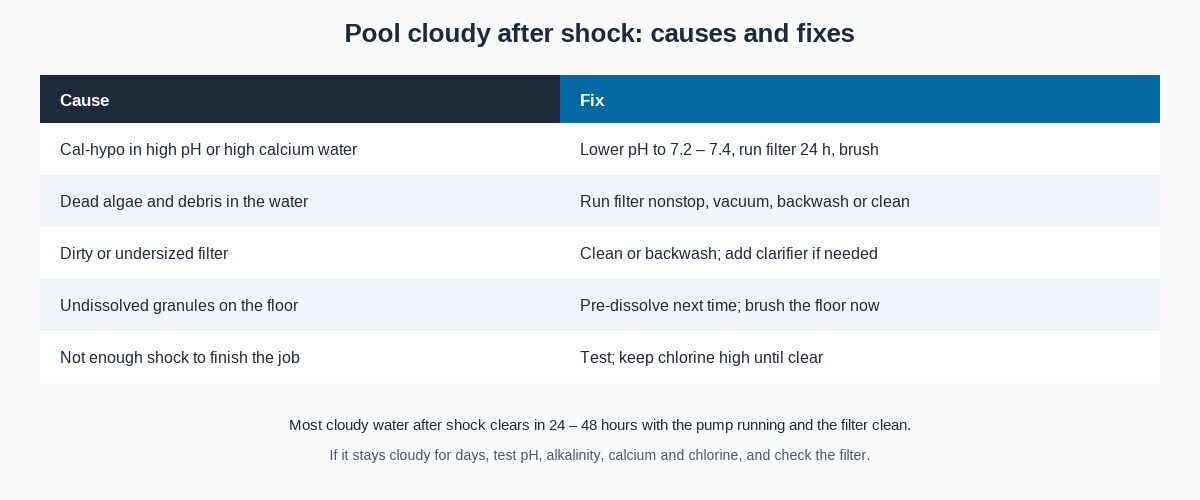
Chart: Asphapro.com
How to Fix a Cloudy Swimming Pool After Shocking
To clear a cloudy swimming pool after shocking, start by running the pump and filter around the clock until the water clears. Brush the walls and floor to stir up settled particles so the filter can catch them, and vacuum any debris. Test pH; if it is above 7.6, lower it to about 7.2 to 7.4 with acid, which helps dissolve calcium haze. Check the filter: backwash a sand or DE filter or clean a cartridge if the pressure is high. If the water is still hazy after 24 to 48 hours, add a clarifier to clump fine particles so the filter can catch them, or a flocculant to drop them to the floor for vacuuming to waste. For more fixes, see our guide on how to clear a cloudy pool.
Do not swim in a cloudy pool. If you cannot see the main drain at the deep end, a swimmer in trouble could be hidden from view. Wait until the water is clear and chlorine is back in range.
How Long to Wait After Pool Shock in a Hot Tub
Hot tubs and spas hold much less water than pools and run hot, so chlorine drops faster. After shocking a spa with chlorine shock, most labels say to wait until chlorine falls to 3 to 5 ppm, usually 12 to 24 hours with the cover open part of the time. After non-chlorine shock, most spas can be used about 15 to 20 minutes later, once the jets have circulated the water. Always follow the label for your spa product.
Common Mistakes After Shocking a Pool
The most common mistake is swimming without testing, trusting the clock instead of the test kit. Another is shocking in the middle of a sunny day, when the sun burns off much of the chlorine before it can work, wasting money and lengthening the process. Adding shock through the skimmer can damage equipment, especially with cal-hypo, and mixing different shock products together can cause dangerous reactions. Finally, many owners forget to check pH after shocking, which leads to cloudy water and scale with cal-hypo.
How Often Should You Shock?
Most pools need a routine chlorine shock about once a week in the swim season, and after heavy use, parties, storms, or any sign of algae or cloudiness. Pools with a salt system can use the boost mode or a liquid chlorine shock. Non-chlorine shock can be used more often, even after each heavy swim day, because swimmers can get back in soon. Planning your shocks for evenings keeps the pool ready to use every morning.
How Shock Works in Pool Water
Normal chlorine levels, about 1 to 4 ppm, keep a clean pool sanitized. But swimmers bring in sweat, oils, sunscreen and urine, and the wind adds dust, pollen and leaves. Chlorine reacts with these and forms combined chlorine, also called chloramines. Chloramines are weak sanitizers and cause the sharp "pool smell," red eyes and itchy skin many people blame on too much chlorine. In fact, these problems usually mean there is too little free chlorine for the amount of waste in the water.
A shock dose raises free chlorine high enough to break apart chloramines and burn off organic waste, a process called breakpoint chlorination. It also kills algae spores and bacteria that may be building up. When the job is done, the extra chlorine slowly breaks down, mostly through sunlight and reactions with what is left in the water, and the level falls back into the normal range. That drop is the wait you see after shocking.
How Stabilizer Affects the Wait
Cyanuric acid, also called stabilizer or CYA, protects chlorine from sunlight. Pools with CYA of 30 to 50 ppm hold chlorine much longer in the sun than pools with no stabilizer. That is good for daily sanitizing, but it also means a shock dose can stay high for longer in a stabilized pool. On the other hand, stabilizer reduces how harsh a given chlorine level feels, so in a pool with 50 ppm CYA, 5 ppm free chlorine is usually comfortable. Pools with very high stabilizer need higher shock doses to work, and the wait can be longer. Our guide on how to add stabilizer to pool water explains target levels.
Worked Examples
Example 1: routine weekly shock. A 15,000-gallon pool with chlorine at 2 ppm and 40 ppm stabilizer gets a weekly shock of liquid chlorine at 8 pm, raising free chlorine to about 10 ppm. The pump runs overnight. At 8 am, the test shows 5 ppm. By noon, after some sun, it reads 3.5 ppm, and the family swims. That is about 16 hours after shocking.
Example 2: party cleanup. After a pool party, the water smells of chlorine and swimmers had red eyes, a sign of chloramines. The owner adds a dose of cal-hypo at dusk, pre-dissolved in a bucket, and runs the pump all night. The next morning, chlorine is 6 ppm and pH has risen to 7.9. They add a little acid to bring pH to 7.4 and wait until early afternoon, when chlorine is 4 ppm. About 18 hours after shocking, the pool is ready.
Example 3: midday top-up with non-chlorine shock. On a hot Saturday with guests arriving, the water looks dull. The owner adds non-chlorine shock at 11 am, runs the pump, and lets guests swim 30 minutes later. The chlorine level stays normal, and the water looks fresher.
Signs the Pool Is Ready for Swimming
When you are checking how long after shocking the pool can you swim, look for these signs: the free chlorine test reads 1 to 4 ppm, pH is 7.2 to 7.8, combined chlorine is near zero, the water is clear enough to see the main drain, and no granules or residue remain on the floor. The strong chlorine smell should be gone; a clean pool has very little smell. If any of these are not right, wait, adjust and test again.
Safety When Shocking a Pool
Shock products are strong oxidizers. Store them in a cool, dry, ventilated place, away from acids, other pool chemicals, fuel and anything flammable. Never mix different shock products or add shock to a bucket that held another chemical. Always add shock to water, not water to shock. Wear gloves and eye protection when handling granular shock, and keep children and pets away during the process. Keep the pool closed and covered with a safety cover or fenced off until the water is ready for swimming.
How Much Shock to Use
The right dose depends on why you are shocking. For routine weekly shocks, many owners raise free chlorine to about 10 ppm, or roughly 10 times the combined chlorine reading if chloramines are present. For algae, the target is higher and is often based on your stabilizer level, with chlorine held there until the water is clear. A common rule for cal-hypo is about 1 pound of 65% to 73% cal-hypo per 10,000 gallons for a routine shock, but always follow the product label. Using too much shock makes the wait longer and can raise pH and calcium; using too little does not finish the job. Testing combined chlorine before you shock helps you choose the dose.
Shock Timing Through the Season
At pool opening in spring, most owners shock heavily to clear winter debris and algae, so expect the longest wait of the year, often a day or more before swimming. During the swim season, routine shocks every week or after heavy use keep chloramines down and usually need an overnight wait. After storms, shock to burn off debris and organic matter washed in by rain. At closing, many owners shock a few days before covering the pool, giving chlorine time to fall before winter chemicals are added.
Shocking Indoor Pools
Indoor pools lose chlorine much more slowly because there is no sunlight to break it down, so a shock dose can stay high for a long time. Chloramines also build up in indoor air, causing the strong smell and eye irritation common in indoor pools. Owners of indoor pools often use smaller, more frequent shocks, non-chlorine shock, and good ventilation. Expect a longer wait after a chlorine shock indoors, sometimes a full day or more, and always test before swimming. See our guide on indoor pool cost for ventilation and dehumidifier needs.
Keeping Swimmers Comfortable After the Wait
Even after levels are back in range, a freshly shocked pool can feel a little strong to sensitive swimmers. A quick shower before swimming reduces the oils and sweat that form chloramines, which keeps the water fresher for longer. Goggles help with eye comfort, and rinsing off after swimming protects skin and hair. Keeping pH at about 7.4 to 7.6 makes the water feel softer, since water with low pH feels harsher on eyes and skin.
Testing Tips After Shocking
High chlorine can bleach the pink color in standard DPD test tablets and drops, giving a falsely low or even zero reading. If a test shows little or no chlorine right after a shock, the level may actually be very high. A FAS-DPD drop kit avoids this problem and reads accurately at high levels. If you only have strips, wait a few hours and test again, or dilute a water sample with tap water that has no chlorine, test it, then multiply the result. Take samples from elbow depth, away from returns, and test at the same time of day so readings are easy to compare. Write down each result so you can learn how fast chlorine drops in your pool and plan future shocks with confidence.
With a little practice, you will know how long after shocking pool water you need to wait in your own pool, and you can plan shocks so the water is always ready when your family wants to swim.
How Long After Shocking Pool Can You Swim: Key Points
- Non-chlorine shock: about 15 to 30 minutes.
- Chlorine shock: usually 8 to 24 hours, until free chlorine is 1 to 4 ppm.
- Test free chlorine and pH before swimming.
- Shock at dusk, run the pump overnight, test in the morning.
Frequently Asked Questions
Can you swim after shocking pool water the same day?
After non-chlorine shock, usually yes. After chlorine shock added in the morning, sometimes by evening if chlorine has dropped to 1 to 4 ppm. Test before anyone gets in.
What happens if you swim too soon after shocking?
You may get red eyes, itchy skin, breathing irritation and bleached swimwear. Very high chlorine can cause more serious irritation, and undissolved granules on the floor can burn skin. If anyone feels unwell after swimming in freshly shocked water, rinse with fresh water and seek medical advice.
How long after shocking a pool can you swim with kids?
Use the same rule: wait until free chlorine is 1 to 4 ppm and pH is 7.2 to 7.8. Children are more sensitive to high chlorine, so it is wise to stay at the low end of that range.
How long to wait to swim after shocking pool water with cal-hypo?
Usually 8 to 24 hours. Test chlorine and pH, and lower pH if the cal-hypo pushed it up above 7.8.
How long to wait after shock pool treatments with liquid chlorine?
Often 4 to 24 hours, depending on the dose, sun and stabilizer. Test before swimming, every time.
How long after shocking pool can I swim if I used non-chlorine shock?
Usually about 15 minutes, once the pump has circulated it. Check the product label, since some products and spa versions list a slightly longer wait, and keep the pump running while people swim.
How long after I shock the pool can I swim at night?
If you shock at dusk, the pool is usually not ready until the next morning. Plan night swims for a day you did not shock, or use non-chlorine shock that evening instead.
How long can I swim after shocking pool water the next day?
As long as you like, once chlorine and pH are back in range. Keep testing daily to keep levels steady, and add chlorine as needed so the pool stays sanitized between shocks.
How long after pool shock can you swim if the water is still cloudy?
Wait until it is clear. Cloudy water hides swimmers in trouble. A cloudy pool after shock usually clears in 24 to 48 hours with the filter running.
How soon can you swim after shocking a pool with a salt system?
After a boost or superchlorinate cycle, wait until free chlorine falls back to 1 to 4 ppm, usually the next day.
How long to swim after shocking pool water is safe?
There is no time limit once levels are normal. The key is waiting until chlorine and pH are back in range before you get in.
Sources
- CDC: Pool chemistry and testing
- CDC: Healthy swimming
- Trouble Free Pool: Pool water chemistry
- Pool and Hot Tub Alliance