
Polished Concrete Cost in 2026: Floor Prices per Square Foot, Sheen Levels and Options
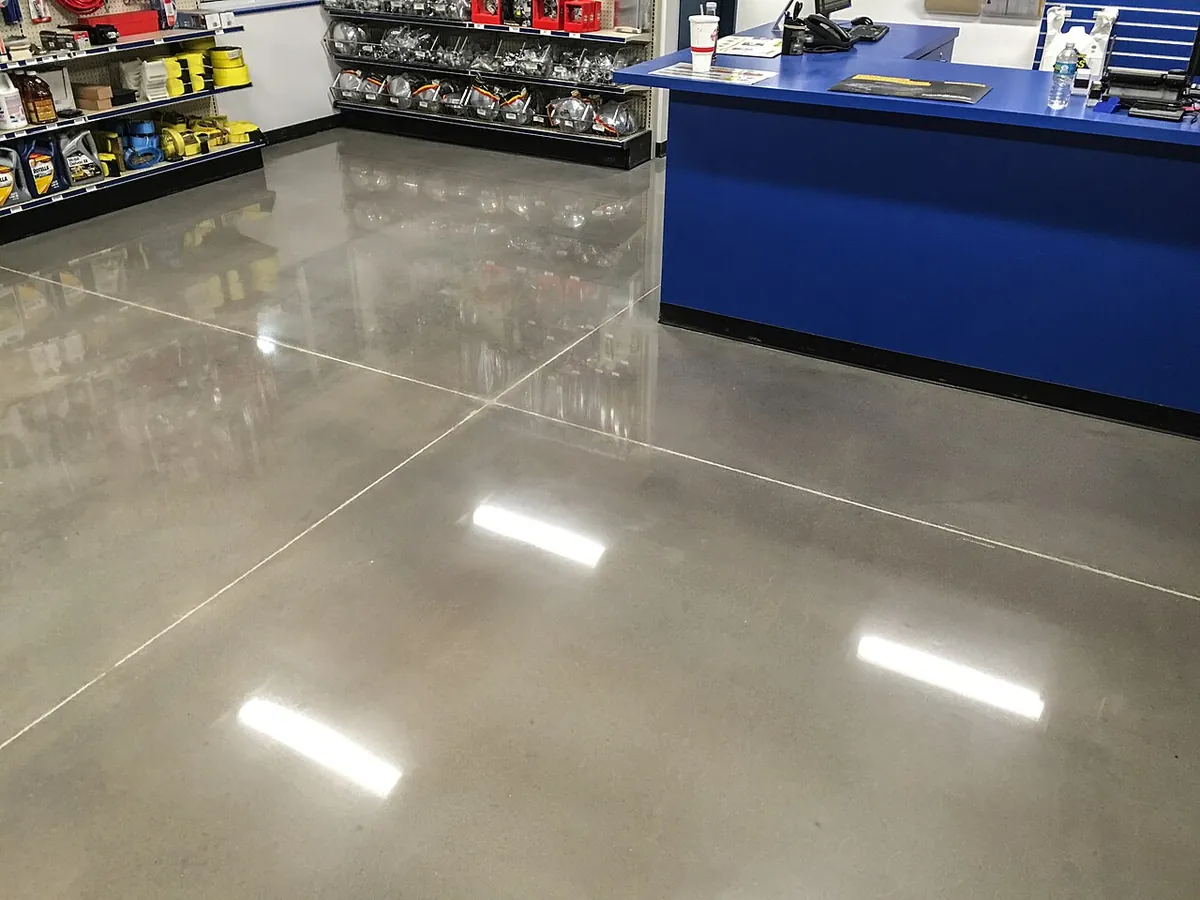
Photo: Intellicents, Wikimedia Commons, CC BY-SA 4.0
Quick Answer
The typical polished concrete cost in 2026 is about $3 to $15 per square foot, according to HomeGuide, with basic polished finishes at about $3 to $12 and decorative work with stains, dyes or patterns at about $5 to $15 or more. Angi reports most jobs between about $2 and $16 per square foot. Grinding alone typically runs about $1 to $4 per square foot, and sealing about $0.85 to $1.60. A 500 square foot basement or garage floor usually costs roughly $1,500 to $7,500, depending on the slab condition, sheen level and finish.
Polished concrete turns an ordinary slab into a hard, glossy, low-maintenance floor. Instead of covering the concrete with tile, wood or carpet, a crew grinds the surface with progressively finer diamond tools, hardens it with a densifier, and polishes it to the sheen you choose, from a soft satin to a mirror-like gloss. It is common in modern homes, basements, garages, shops, retail stores and offices.
This guide explains polished concrete cost per square foot, what drives the price, how sheen levels and aggregate exposure work, the difference between grind-and-seal and true polishing, how polished concrete compares with other flooring, and how to plan a project. Price ranges come from HomeGuide, Angi and Thumbtack, listed in the sources.
Polished Concrete Cost at a Glance
| Item | Typical cost | Source |
|---|---|---|
| Polished concrete floor (overall) | $3 – $15+ per sq ft | HomeGuide |
| Basic polished finish | $3 – $12 per sq ft | HomeGuide |
| Decorative (stains, dyes, patterns) | $5 – $15+ per sq ft | HomeGuide |
| Typical job range | $2 – $16 per sq ft | Angi |
| Grinding only | about $1 – $4 per sq ft | Angi |
| Sealing only | about $0.85 – $1.60 per sq ft | Angi |
| National average polishing project | about $1,048 – $3,035 total | Thumbtack |
Polished Concrete Cost by Floor Size
| Area | Square feet | Basic ($3 – $12) | Decorative ($5 – $15) |
|---|---|---|---|
| Bathroom or laundry | 60 | often a minimum charge | often a minimum charge |
| Kitchen | 200 | $600 – $2,400 | $1,000 – $3,000 |
| One-car garage | 250 | $750 – $3,000 | $1,250 – $3,750 |
| Basement | 500 | $1,500 – $6,000 | $2,500 – $7,500 |
| Two-car garage | 480 | $1,440 – $5,760 | $2,400 – $7,200 |
| Open main floor | 1,200 | $3,600 – $14,400 | $6,000 – $18,000 |
Small rooms cost more per square foot because the crew still brings large grinders, dust collectors and several sets of diamond tooling. Large, open floors spread that setup cost and often come in toward the lower end of the range.
What Is Polished Concrete?
True polished concrete is a mechanical process, not just a shiny coating. The crew uses heavy planetary grinders fitted with diamond tools, starting with coarse grits to flatten the surface and remove defects, then moving through finer grits until the concrete itself reflects light. Along the way, a liquid densifier is applied, which reacts with the concrete to harden the surface. A guard or sealer may be added at the end for stain resistance. The shine comes from the concrete being ground smooth, not from a film on top. That is why polished concrete is so durable: there is no coating to peel.
Grind and Seal vs True Polish
Many lower-priced "polished" floors are actually grind-and-seal floors. The crew grinds the concrete to a smooth or exposed-aggregate surface and then applies a topical sealer that provides the shine. Angi lists grinding at about $1 to $4 per square foot and sealing at about $0.85 to $1.60. Grind-and-seal costs less upfront and can look similar at first, but the sealer wears and must be reapplied. A true mechanically polished floor costs more because it takes more passes with finer diamonds, but its shine lasts longer with less maintenance. Ask contractors which method they are quoting.
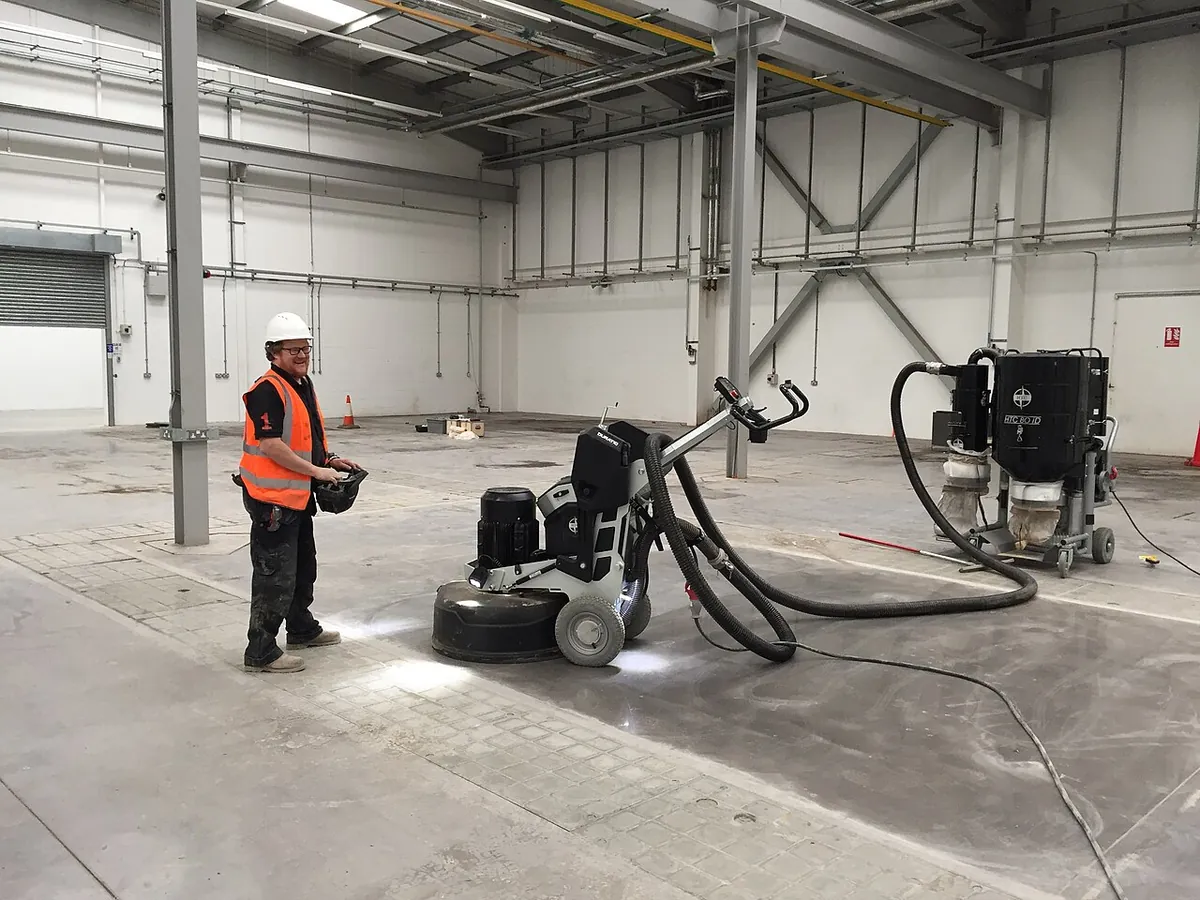
Photo: Kyriakos04072004, Wikimedia Commons, CC BY-SA 4.0
Sheen Levels and How They Affect Cost
The polishing industry commonly describes sheen in levels from flat to high gloss. More shine means more polishing passes with finer diamonds, which means more labor:
| Sheen | Look | Cost effect |
|---|---|---|
| Flat / ground | Matte, little reflection | Lowest |
| Satin | Soft sheen, low glare | Moderate |
| Semi-gloss | Clear reflections | Higher |
| High gloss | Mirror-like | Highest; most passes |
Angi notes that highly polished floors require more grinding and smoothing, which raises the price. Satin is a popular choice in homes because it hides dust and footprints better than high gloss and costs less.
Aggregate Exposure Levels
How deep the crew grinds decides how much of the stone in the concrete shows. A "cream" finish barely grinds the surface and shows little stone; a "salt and pepper" finish exposes fine sand; a full aggregate finish grinds deeper to show larger stones. Deeper grinding takes more time and tooling, so it costs more, and the look depends on the stone that was in the original mix, which can vary across a slab. For new slabs poured with polishing in mind, contractors can choose the stone and finishing method to get a more even result.
What Affects Polished Concrete Cost
- Slab condition: cracks, patches, old glue, paint or coatings must be repaired or removed first.
- Sheen level: higher gloss takes more passes.
- Aggregate exposure: deeper grinding to show stone costs more.
- Stains, dyes and patterns: color and saw-cut designs raise the price into the decorative range.
- Floor size and layout: small rooms, closets and edges need hand tools.
- New or existing slab: new slabs placed and finished for polishing can cost less to polish than old, uneven slabs.
- Moisture and flatness: wavy floors may need more grinding or leveling.
- Location: labor and specialty contractor availability vary.
Removing Old Flooring and Coatings
Many existing slabs are hidden under carpet, tile, vinyl or old paint. Removing them adds cost: carpet comes up easily, but tile thinset and old mastic adhesive often need extra grinding. Some older adhesives may contain asbestos, so testing is wise before grinding old black mastic in older homes. Epoxy and paint coatings must be ground off completely. Ask for removal and coating removal to be priced separately so you can compare quotes fairly.
How a Polished Concrete Floor Is Installed
- Assessment. The contractor checks the slab for cracks, patches, moisture, flatness, old coatings and how hard the concrete is. Hardness affects which diamond tools and how many passes are needed.
- Prep and repair. Old flooring and adhesives are removed, cracks and holes are filled with a repair material that grinds and polishes with the floor, and joints are cleaned.
- Coarse grinding. Metal-bond diamonds flatten the surface, remove coatings and expose the chosen level of aggregate.
- Densifier. A liquid densifier is applied to harden and dust-proof the surface.
- Honing and polishing. Resin-bond diamonds in finer grits refine the surface step by step until it reaches the chosen sheen.
- Color (optional). Dyes or stains are applied during the process if a colored floor is wanted.
- Guard or sealer. A stain-resistant guard is often applied and burnished for extra protection.
- Joint filling. Control joints may be filled with a semi-rigid filler for a smooth, cleanable floor.
A typical residential floor takes from one to several days depending on size, condition and sheen. Modern equipment uses dust extraction, but the space should still be cleared and protected.
Polishing a New Slab vs an Existing Slab
The best polished floors often start with a new slab placed with polishing in mind. The contractor can choose the concrete mix and stone, finish the slab flat and dense, protect it during construction, and avoid patches and stains. That can make polishing faster and more even, which can lower polished concrete cost per square foot. Existing slabs are often less predictable: they may have patches, old adhesive, uneven stone, cracks, and areas that were troweled differently, which show up after polishing. Many homeowners like that character; others prefer a more uniform look. If you are building new, tell your concrete contractor and polisher early so the slab can be planned for polishing. See the cost to pour a concrete slab.
Polished Concrete in Different Rooms
Basements
Basements are a natural fit because the slab is already there and moisture-sensitive flooring can be a problem below grade. Polished concrete does not trap moisture like some coatings or wood products can. Rugs can add warmth, and radiant heat in the slab makes it comfortable. Check for active water leaks first.
Garages and shops
Polished garage floors resist tire marks and are easy to sweep. A guard helps resist oil and chemical stains. Some owners prefer epoxy for color and chemical resistance; see concrete coating cost.
Kitchens and living areas
In modern homes, polished concrete is used throughout main floors. It handles spills well but is hard underfoot, so plan rugs and comfortable mats where you stand for long periods.
Commercial spaces
Retail stores, warehouses and offices use polished concrete because it handles heavy traffic and cleaning machines. Large commercial floors often come in at lower costs per square foot thanks to their size.
Stains and Dyes
Color is one of the main reasons polished concrete moves from the basic range into the decorative range of about $5 to $15 or more per square foot. Water-based and solvent-based dyes penetrate the polished surface and come in many colors. Acid stains react with the concrete for variegated, earthy tones. Multiple colors, borders, logos and saw-cut patterns add layout time and skill. Test samples on a hidden area, since the same dye can look different on different slabs.
Cracks, Patches and Joints
Polishing does not hide everything. Cracks can be filled with color-matched fillers, but they usually remain visible as lines. Patches from old repairs may polish to a different color than the surrounding concrete. Control joints are often filled for a smooth surface, but new cracks may still form as the slab moves. Many people embrace this as part of the industrial look; if you want a flawless surface, consider a coating or overlay instead. See concrete overlay cost and why concrete cracks.
Maintenance and Lifetime Cost
Polished concrete is one of the lowest-maintenance floors. Daily care is dust-mopping, with damp mopping using a neutral pH cleaner made for polished concrete. Avoid acidic cleaners and vinegar, which can etch the surface. In busy areas, the floor may need periodic re-burnishing and reapplication of guard to restore shine. Because there is no coating to replace, the lifetime polished concrete cost can be lower than flooring that must be refinished or replaced every decade or so.
Pros and Cons of Polished Concrete
| Pros | Cons |
|---|---|
| Very durable and long-lasting | Hard and cold underfoot |
| Low maintenance | Cracks and patches remain visible |
| No coating to peel | Can be slippery when wet |
| Reflects light, brightening rooms | Loud; sound echoes |
| Works well with radiant heat | Results vary with slab quality |
| Uses the existing slab | Dropped items break more easily |
Can You Polish Concrete Yourself?
Rental shops carry floor grinders, and some homeowners attempt grind-and-seal projects. True polishing is harder: it takes heavy equipment, a full set of diamond tooling, a dust extractor, densifier and experience to get an even shine without swirl marks. For small areas, DIY grinding and sealing can work; for a lasting high-quality polish, most homeowners hire a specialist. If you DIY, rent a grinder with a HEPA dust extractor, wear a respirator, and practice in a closet or garage corner first.
Three Polished Concrete Cost Examples
Basement, satin polish
A 600 square foot basement slab in good condition, with carpet removed, polished to a satin finish with a guard. At about $5 per square foot, the polished concrete cost is about $3,000.
Garage, grind and seal
A 480 square foot garage floor ground smooth and sealed. At about $3 per square foot, the cost is about $1,440, with resealing needed every few years.
Main floor, dyed high gloss
A 1,200 square foot main floor in a new home, dyed and polished to high gloss with saw-cut borders. At about $12 per square foot, the cost is about $14,400.
Polished Concrete Cost by Region
Polishing is specialized work that needs expensive grinders and tooling, so polished concrete cost depends heavily on how many specialists work in your area. Large metro areas usually have several polishing contractors and competitive pricing for big floors, though labor rates are higher. Smaller towns may have few or no specialists, which can mean travel charges or higher prices. Getting quotes from both decorative concrete companies and flooring contractors that offer polishing can help you find a fair price.
Polished Concrete and Radiant Heat
Polished concrete pairs well with in-floor radiant heating because concrete stores and slowly releases heat, and there is no flooring layer to slow it down. In new construction, radiant tubing is placed before the slab is poured; the polisher must know where the tubing runs and keep grinding depth shallow enough to stay well above it. Adding radiant heat makes polished floors far more comfortable in cold climates, which answers one of the main complaints about concrete floors.
Common Problems and How to Avoid Them
- Uneven shine: usually caused by skipped grit steps or soft spots in the slab. A good polisher checks reflectivity as they go.
- Swirl marks: scratches from coarse grits not removed by finer ones; more common with rushed or DIY jobs.
- Haze or dullness: often residue from densifier or guard that was not burnished properly, or the wrong cleaner.
- Etching: acidic spills like vinegar, citrus or wine can dull spots; wipe spills quickly and use the right cleaner.
- Stains: oil and food can penetrate polished concrete without a guard; ask for a stain guard in kitchens and garages.
- Visible patches: old repairs polish differently; discuss expectations before starting.
Planning a Polished Concrete Project
Good planning keeps polished concrete cost under control. Start by uncovering a small area of the slab, if it is under carpet or tile, to see its condition and the stone in the mix. Decide on the sheen and aggregate exposure by looking at sample boards or finished floors in person, since photos rarely show true gloss. Plan the job before furniture moves in or after it moves out, because the room must be empty. Schedule polishing after drywall, painting and other messy trades in new construction, but before baseboards and cabinets where possible, so the polisher can reach the edges. Protect the finished floor from construction traffic with breathable floor protection, and avoid taping directly to the polished surface. Finally, budget for occasional maintenance: a neutral cleaner, an auto-scrubber pad or mop, and periodic re-burnishing in high-traffic areas.
Choosing the Right Finish for Your Space
For a busy family kitchen or mudroom, a satin polished concrete floor with a "salt and pepper" look and a stain guard is a practical choice: it hides dust, resists spills and costs less than high gloss. For a modern living area where the floor is a design feature, a higher sheen or exposed aggregate can be worth the extra cost. For garages and shops, a durable grind-and-seal or lightly polished finish with a strong guard often gives the best value. Matching the finish to how the room is used keeps your polished concrete cost reasonable and your floor easy to live with.
Hidden Costs to Watch For
- Old adhesive removal under tile or vinyl, which can take extra grinding passes.
- Asbestos testing for old black mastic in older homes before grinding.
- Crack and patch repair with polishable filler.
- Edge work along walls, cabinets and stairs, done with hand grinders.
- Moving furniture and appliances out of the work area.
- Baseboard removal and reinstallation to reach the edges.
- Joint filling if you want a smooth, cleanable surface.
- Leveling very uneven floors before polishing.
Ask each contractor to list these items, so you can compare the real polished concrete cost and avoid surprises once the old flooring comes up.
Is Polished Concrete Worth the Cost?
For many homeowners with a sound slab, yes. Polished concrete uses the floor you already have, lasts a long time, and needs little upkeep, so its lifetime cost can compare well with tile, vinyl or wood. It is less attractive if the slab is badly damaged, if you need a soft or warm floor in bedrooms, or if you want a uniform, flawless look; in those cases, a coating, overlay or another floor covering may suit you better.
Hiring a Polished Concrete Contractor
Look for contractors who specialize in polished concrete or decorative concrete rather than general flooring. Ask to see completed floors similar to yours and how they looked a year or two later. Get a written quote that lists the polished concrete cost per square foot, the grit sequence or target sheen, aggregate exposure, densifier and guard, crack repair, joint filling, removal of old flooring and edges. Make sure everyone agrees on the sheen and look by testing a small area first.
Questions to ask
- Is this true polishing or grind and seal?
- What sheen and aggregate exposure are included?
- How will cracks, patches and joints be handled?
- Is dust extraction used, and how will you protect the rest of the house?
- What maintenance do you recommend, and is re-burnishing offered?
Polished Concrete vs Other Flooring
| Flooring | Typical installed cost per sq ft | Pros | Cons |
|---|---|---|---|
| Polished concrete | $3 – $15+ | Very durable, low maintenance, no seams | Hard and cold underfoot, cracks may show |
| Epoxy coating | $4 – $10 (HomeGuide) | Color options, chemical resistance | Can peel if moisture or prep is poor |
| Stained concrete (sealed) | varies by stain and sealer | Rich color | Sealer needs upkeep |
| Tile, vinyl, wood | varies widely | Warm or familiar look | Adds material cost and maintenance |
See concrete coating cost for epoxy and polyaspartic floors.
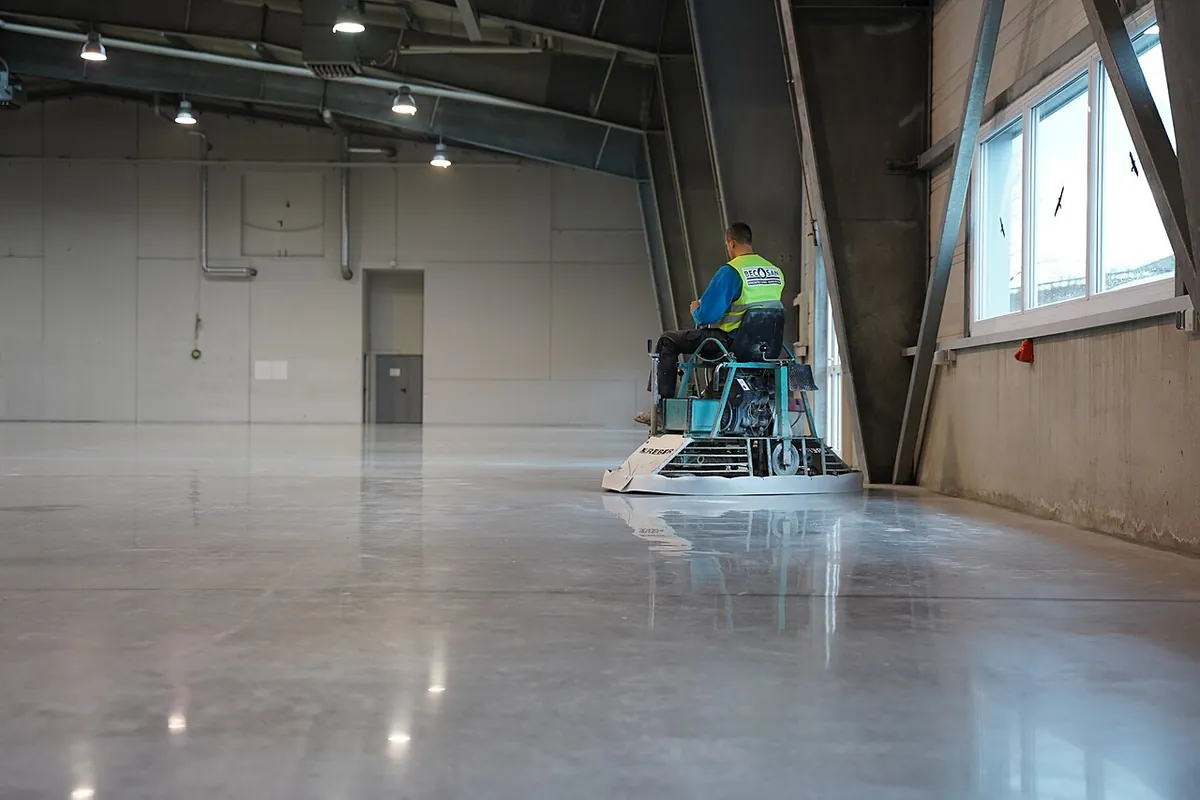
Photo: BECOTREAT, Wikimedia Commons, CC BY-SA 4.0
Frequently Asked Questions
How much does polished concrete cost?
About $3 to $15 per square foot, according to HomeGuide, with basic finishes around $3 to $12 and decorative finishes around $5 to $15 or more.
Is polished concrete cheaper than tile or wood?
Often, if you already have a sound slab, because there is no new flooring material to buy. Decorative or high-gloss polish on a damaged slab can cost as much as other floors.
What is the difference between grind and seal and polished concrete?
Grind and seal uses a topical sealer for shine and needs resealing. True polished concrete gets its shine from grinding and polishing the concrete itself, with a densifier to harden it.
How long does polished concrete last?
A well-polished floor can last many years with routine cleaning and occasional re-burnishing or guard reapplication.
Can any concrete floor be polished?
Most sound slabs can be polished, but cracks, patches and variations in the stone will show. Badly damaged or very soft slabs may not polish well.
How much does it cost to polish a garage floor?
For a 480 square foot two-car garage, expect roughly $1,440 to $5,760 for a basic polish at $3 to $12 per square foot, or less for a simple grind-and-seal finish.
Does polished concrete cost more for high gloss?
Yes. High gloss needs more polishing passes with finer diamonds than satin or matte finishes, so it costs more.
How long does it take to polish a concrete floor?
A typical residential room or basement takes one to several days, depending on size, slab condition and sheen.
Can polished concrete be stained after polishing?
Dyes are usually applied during the polishing process, between grit steps, so they penetrate well. Adding color to a finished polished concrete floor is possible but may need light re-grinding first.
Does polished concrete add value to a home?
It can appeal to buyers who want a modern, low-maintenance floor, especially in basements and open living areas, but tastes vary. Think of it mainly as a durable, practical floor rather than an investment.
Is polished concrete cost lower on a new slab?
Often, yes. A new slab placed and finished with polishing in mind is flatter and more uniform, so it may need fewer grinding passes than an old, patched slab.
What does polished concrete maintenance cost?
Routine care costs little: a dust mop and a neutral cleaner. High-traffic floors may need occasional re-burnishing or guard reapplication by a professional.
Is polished concrete good for basements?
Yes, if the slab is dry and sound. It uses the existing concrete, handles moisture better than many floor coverings and is easy to clean.
Is polished concrete slippery?
Dry polished concrete usually has good traction, but it can be slippery when wet or dusty. Lower sheen levels and prompt cleanup help.
Sources
- HomeGuide, "How much do polished concrete floors cost?" homeguide.com
- Angi, "How much does polished concrete flooring cost?" angi.com
- Angi, "How much does it cost to polish concrete floors?" (grinding and sealing). angi.com
- Thumbtack, "How much do polished concrete floors cost?" thumbtack.com
- HomeGuide, "Epoxy flooring cost" (comparison). homeguide.com
- Image credits: floor photo by Intellicents, grinder photo by Kyriakos04072004 and buffing photo by BECOTREAT (all CC BY-SA 4.0), via Wikimedia Commons.
Prices checked November 2026. They are national ranges; local prices can be higher or lower.
Related Guides
- How to get blood out of concrete — enzyme cleaners and disinfecting
- How to get tire marks off concrete — degreasers and hot tire pickup
- How to remove paint from concrete — spray paint, epoxy and glue
- Types of concrete — high performance, precast and gunite
- Types of concrete finishes — broom, trowel, stamped, polished
- How to reseal concrete — sealer types and dry times
- How to use self leveling concrete — prep, pour and dry times
- Can concrete burn? — fire resistance and heat damage