
Concrete Mixer Rental Cost: Renting a Concrete Mixer or Buggy, Prices and Tips
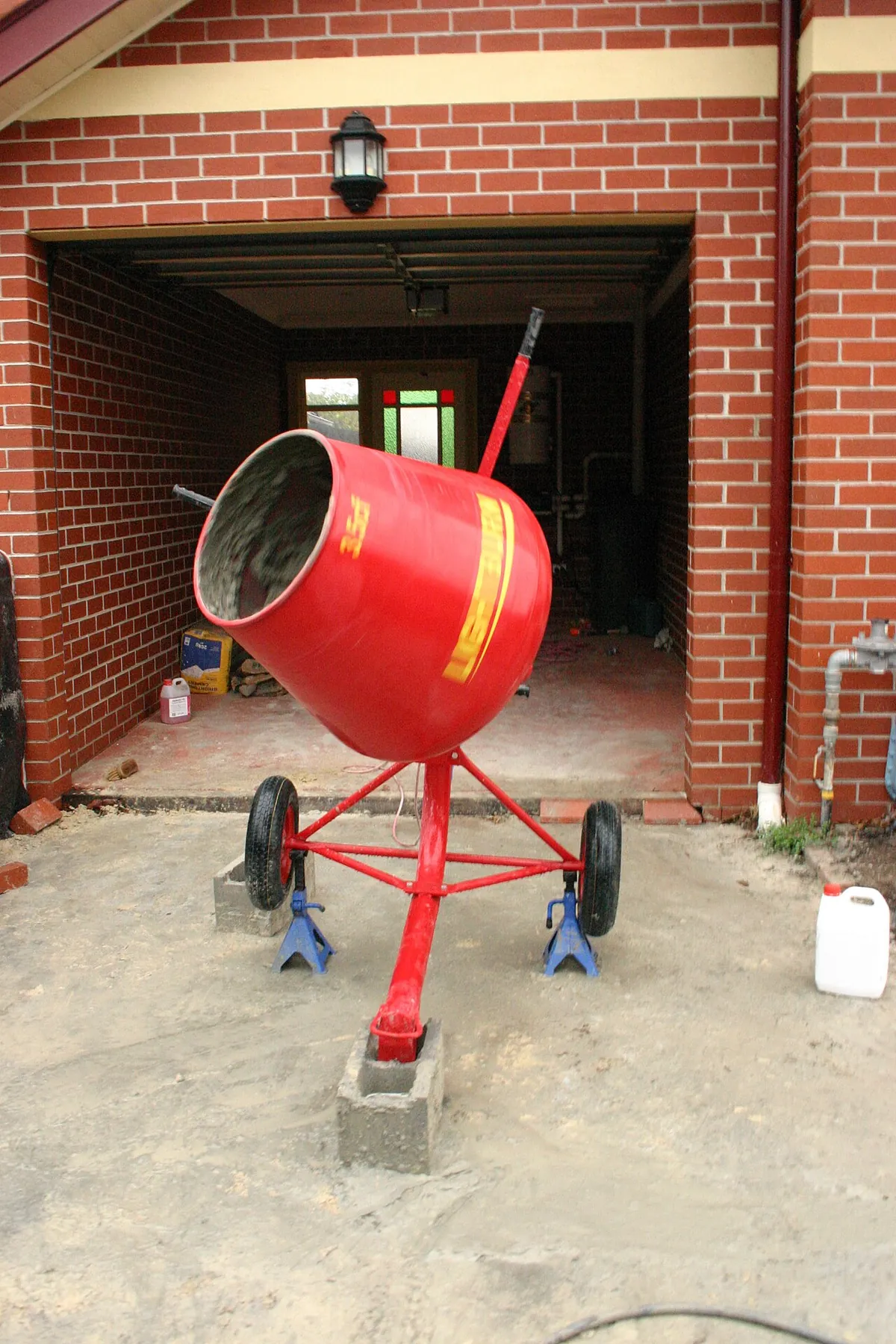
Photo: Jacks Rache, Wikimedia Commons, public domain
Quick Answer
Concrete mixer rental typically costs about $40 to $70 per day for a small electric drum mixer (about 3 to 4 cubic feet), and about $80 to $150 per day for a larger towable gas mixer (about 6 to 9 cubic feet), with weekly rates of roughly three to four times the daily rate. Concrete buggy rental runs roughly $150 to $300 per day for a walk-behind or ride-on power buggy. A small concrete mixer rental handles about 1 to 2 bags of 80 lb concrete per batch; a large towable mixer handles about 3 to 6. Renting a concrete mixer makes sense for jobs from a few bags up to about a cubic yard; beyond that, ordering ready-mix concrete is usually cheaper and faster. Prices vary by region and store, so check locally.
For small and mid-size concrete projects, such as setting fence posts, pouring a shed pad, building steps, filling footings or making a short walk, mixing your own concrete from bags is often the practical choice. Mixing by hand in a wheelbarrow works for a few bags, but it is hard work and the results are uneven. A concrete mixer rental turns out consistent batches quickly, and a rented power buggy moves the concrete to the forms without wearing out your crew.
This guide explains the types of mixers you can rent, what concrete mixer rental costs per day and week, how much concrete each size mixes, concrete buggy rentals, how to choose between renting, buying and ordering ready-mix, and tips for picking up, using and returning rental equipment.
Types of Concrete Mixers for Rent
Rental stores and home centers usually stock two or three kinds of concrete mixers for rent.
Small electric drum mixers have a drum of about 3 to 4 cubic feet on a stand with two wheels, run on a standard household outlet, and fit in the back of a pickup or SUV with the stand folded. They are light, quiet and easy to clean, and they are the most common rental concrete mixer for homeowners. They handle mortar, grout and small concrete batches well.
Towable mixers have a larger drum, about 6 to 12 cubic feet, a gas engine or electric motor, and a trailer axle with a hitch so they can be towed behind a vehicle. They mix bigger batches quickly and are used for footings, slabs and block wall work. You need a vehicle with a suitable hitch and ball, and a towable mixer is heavier to maneuver around a yard.
Mortar mixers have a horizontal tub with paddles rather than a rotating drum. They are designed for mortar, plaster and grout, and some handle small-aggregate concrete, but for normal concrete with gravel, a drum mixer is better.
Some stores also rent wheelbarrow mixers, small mixers built into a wheelbarrow-style frame, and paddle mixers that fit a heavy drill for buckets of mortar or self-leveling compound. See concrete cement mixers for more on mixer types.
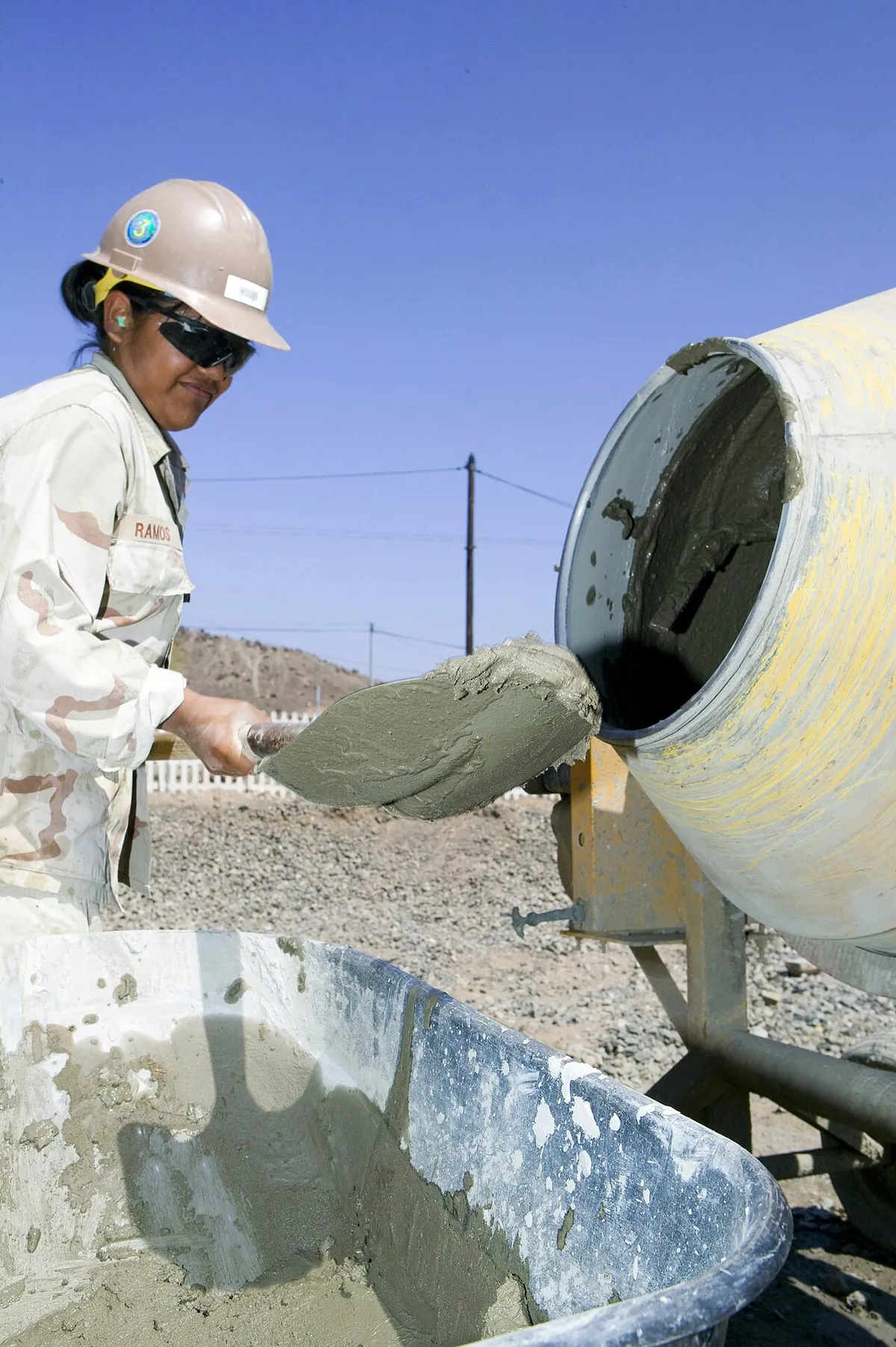
Photo: U.S. Navy, Chief Petty Officer Robert Gallagher, Wikimedia Commons, public domain
Concrete Mixer Rental Cost
Concrete mixer rental prices vary by store, region and season, but typical ranges in the United States are roughly as follows. A small electric mixer of 3 to 4 cubic feet often rents for about $40 to $70 per day, or around $25 to $45 for four hours where half-day rates are offered. A towable mixer of 6 to 9 cubic feet often costs about $80 to $150 per day. Larger 9 to 12 cubic foot towable mixers can cost more. Weekly rates are usually about three to four times the daily rate, and monthly rates are lower again per day.
Watch for extra costs: a damage waiver, often 10 to 15 percent of the rental, a cleaning fee if the mixer comes back with hardened concrete in the drum, delivery and pickup charges if you cannot transport it yourself, fuel charges for gas mixers returned less than full, and late fees. Some stores require a deposit. When you compare concrete mixer rent prices, compare the total, not just the daily rate.
Concrete Buggy Rental
A concrete buggy moves concrete from the mixer or truck to the forms. Manual buggies, large two-wheel carts, are cheap to rent, often similar to a small mixer. Power buggies, walk-behind or ride-on machines with a tipping bucket of about 10 to 16 cubic feet, or a half yard and more, cost more, commonly around $150 to $300 per day. Tracked power carriers, like the one pictured below, handle soft ground, slopes and lawns well.
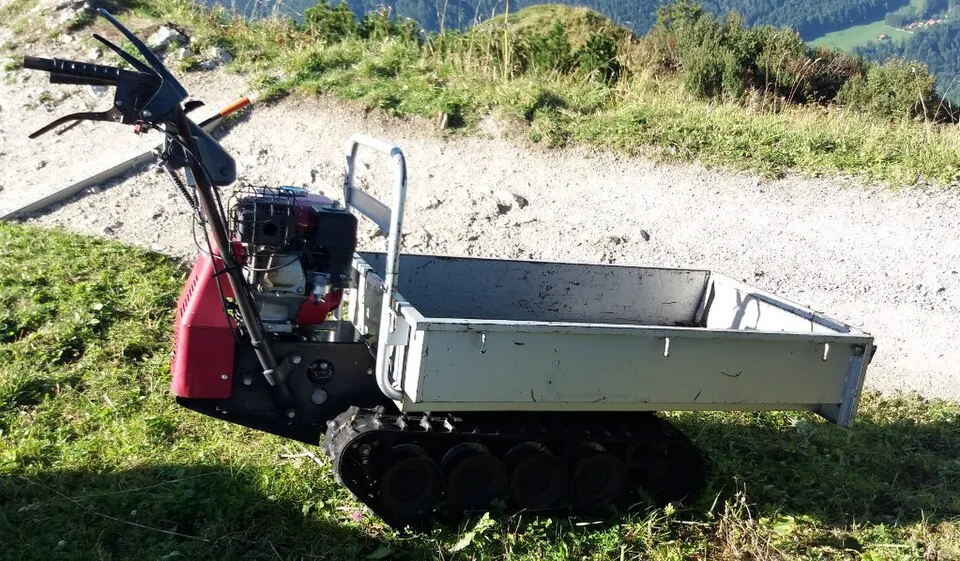
Photo: Phrontis, Wikimedia Commons, CC BY-SA 3.0
Concrete buggy rentals are worth it when the concrete has to travel more than a short distance, especially over grass, up slopes, or across a long backyard, and when there is more concrete than a crew can comfortably wheelbarrow. One power buggy can do the work of several people with wheelbarrows. Make sure the buggy will fit through gates and paths; measure the narrowest point before you rent. For large pours where the truck cannot reach, compare a buggy with a pump; see concrete pump truck cost.
Where to Find a Concrete Mixer for Rent
Most people find a concrete mixer for rent at one of four places. Home centers often have a tool rental counter with small electric mixers and sometimes towable mixers; they are convenient and open long hours. Equipment rental stores, both national chains and local independents, usually carry the widest range of concrete mixers for rent, plus power buggies, compactors, saws and other tools you may need for the same job, and their staff can advise on sizes. Masonry and landscape supply yards sometimes rent mixers alongside the bags, sand and gravel they sell. Finally, peer-to-peer tool rental sites and local listings sometimes offer a rental concrete mixer from a private owner at a lower price, though with less support if something breaks.
Call ahead to check availability and price, and ask whether the price includes the damage waiver. A concrete mixer rental reserved a week ahead is much easier to get on a sunny spring Saturday than one you try to pick up that morning.
Half-Day, Daily and Weekly Concrete Mixer Rental
Choose the rental period to match the job. A half-day concrete mixer rental, where offered, suits a quick job such as setting a few posts or a small pad that you can mix and pour in a morning. A daily rental is the most common choice for steps, footings and small slabs. A weekly concrete mixer rental makes sense for block walls, where you mix mortar and grout over several days, or for a series of small pours. Because weekly rates are often only three to four times the daily rate, renting for a week can be cheaper than renting for three separate days. Ask whether the store counts a "day" as 24 hours or as the store's opening hours, and whether weekend rentals picked up Saturday and returned Monday are charged as one day.
Concrete Mixer Rental Cost Examples
Here are a few rough examples to show how concrete mixer rental fits into project budgets. For 20 fence posts using about 2 bags each, about 40 bags in total, a small electric mixer for one day at around $50 to $70 is enough, and two people can set the posts in a day. For a 10 by 10 foot shed pad 4 inches thick, about 1.2 cubic yards or roughly 55 bags, a towable mixer at $80 to $150 for a day plus a crew of three can do it, but a small ready-mix load may cost about the same once labor is counted. For a set of three concrete steps with a landing, about 15 to 25 bags, a small electric mixer for a day is ideal. For a block wall of a few hundred blocks, a weekly mortar mixer or drum mixer rental covers mixing mortar and grout over several days.
In each case, add the cost of bags, gravel base, forms and any other rental equipment. When renting a concrete mixer is part of a bigger job, a combined rental of mixer, buggy and plate compactor from one store often earns a small discount.
More on Concrete Buggy Rentals
Concrete buggy rentals come in three main types. Manual buggies are large, balanced carts with one or two wheels that hold more than a wheelbarrow and are easier to push. Walk-behind power buggies have an engine, a hydrostatic drive and a tipping hopper; the operator walks behind and controls speed and dumping with levers. Ride-on power buggies carry larger loads, often half a cubic yard or more, and travel faster across larger sites. Tracked versions spread their weight over soft ground and lawns, while wheeled versions are faster on hard surfaces.
When you arrange concrete buggy rental, check the machine's width against your narrowest gate or path, its weight against soft ground or slopes, and whether you will need plywood runways. Ask the store to show you the controls, especially the dump and brake. Power buggies are simple but can tip on slopes when loaded, so avoid side slopes and keep loads moderate until you are comfortable. Fuel and a short practice run before the concrete arrives make pour day much smoother.
Delivery and Transport
Small electric mixers fit in a pickup bed or a large SUV, often with the stand removed, and two people can lift them. Towable mixers need a vehicle with a hitch, the correct ball size, and working lights; most stores check your hitch before you leave. Power buggies are heavy and usually need a trailer or delivery. Many rental stores offer delivery and pickup for a fee, which is worth paying for a power buggy or a large towable mixer if you do not have the right vehicle. Factor that fee into your concrete mixer rental cost comparison.
Pickup Checklist
When you collect a concrete mixer rental, check the drum is clean and turns freely, the tilt lock works, tires are inflated, the cord or engine is in good shape, and the safety guards are in place. Take photos of any existing damage. Ask how to start and stop it, how to lock the drum position, and what the store expects for cleaning on return. Get the return time in writing. A few minutes of checks at the counter prevent arguments about damage and fees later.
How Much Concrete Can a Rental Mixer Make?
A mixer's drum size is not the amount of concrete it can mix at once. Drums need room for the concrete to tumble, so the usable batch is usually about half to two thirds of the drum's rated volume. As a rough guide, a 3 to 4 cubic foot electric mixer handles about 1 to 2 bags of 80 lb concrete per batch, or about 1 to 1.5 cubic feet of mixed concrete. A 6 cubic foot towable mixer handles about 3 to 4 bags per batch, and a 9 cubic foot mixer about 5 to 6 bags. Each 80 lb bag makes about 0.6 cubic feet of concrete.
Each batch takes a few minutes to load, mix and dump. With a steady crew, a small mixer might produce roughly a quarter to a third of a cubic yard per hour, and a large towable mixer around a cubic yard per hour or more, depending on how fast people can load bags and move the concrete away. That is why the size of the mixer matters for bigger jobs: a cubic yard is about 45 bags of 80 lb concrete, which takes a long time to mix two bags at a time. See how many bags of concrete in a yard.
Rent, Buy or Order Ready-Mix?
Renting a concrete mixer makes the most sense for jobs from roughly 10 bags up to about a cubic yard: several fence posts, steps, a small pad, a set of footings, or a few days of block work with mortar and grout. Below about 10 bags, mixing in a wheelbarrow with a hoe may be fine, or a bucket and paddle mixer for mortar. Above about a cubic yard, ordering ready-mix concrete is usually cheaper, faster and more consistent. A short load from a ready-mix plant carries a fee, but it saves hours of heavy work and gives you concrete of tested strength. See concrete price per yard and yards of concrete in a truck.
Buying a mixer instead of renting a concrete mixer makes sense if you mix concrete or mortar often: for a long series of projects, a masonry hobby, or a small contractor business. Small electric mixers cost roughly $250 to $600 new, so if you would rent one more than about six to ten times, buying may be cheaper, though you also need space to store it. Used mixers are common and can be a good value if the drum and motor are sound.
There is also a middle option for some jobs: mini-mix or short-load services that deliver small amounts of ready-mix in a small truck or a towable mixer trailer, which some suppliers rent out filled with concrete. These are worth looking into for jobs of half a yard to two yards.
Tips for Renting a Concrete Mixer
Reserve the concrete mixer rental ahead of time, especially in spring and summer weekends when rentals run out. Ask the store which concrete mixer for rent suits your job and whether a towable or electric mixer is better for your site. Check what you need to transport it: a small electric mixer fits in a pickup, but a towable mixer needs a hitch with the right ball size and working trailer lights. Inspect the mixer before you leave: check the drum for hardened concrete, the cord or engine, the tires and the tilt mechanism, and point out any damage so you are not charged for it later.
Plan your day so the concrete mixer rental period is used for mixing, not for waiting. Have bags, water, wheelbarrows and forms ready before you pick up the mixer. If you rent a gas mixer, bring fuel. For an electric mixer, use a heavy-gauge outdoor extension cord on a ground-fault protected outlet, as short as possible.
How to Use a Rental Concrete Mixer
Set the rental concrete mixer on firm, level ground close to the work and to where you will dump batches into wheelbarrows or a buggy. Start the drum turning before you add material. Add about half the water first, then the bagged concrete, then more water a little at a time until the mix reaches the right consistency, like thick oatmeal that holds its shape. Mix for about three to five minutes, until the color and texture are even. Tilt the drum to dump into the wheelbarrow while it is still turning. Between batches, keep the drum turning or rinse it if there will be a delay, so concrete does not build up inside. See how to mix concrete for water amounts and timing.
Keep hands, shovels and hoes out of the turning drum, wear gloves, eye protection and a dust mask when opening bags, and never reach into the drum while it is running. Wet concrete is alkaline and can burn skin; see can concrete burn.
Returning the Mixer Clean
Stores expect a concrete mixer rental back clean, and cleaning fees for a drum with hardened concrete can be steep. Clean as you go: when you finish the last batch, add a few shovels of gravel and water and let the drum turn for a few minutes to scour the inside, then dump it and rinse well. Hose off the outside, the stand and the wheels. Do the rinsing where the wash water can be contained, not where it runs into the street or a drain; see concrete washout. For a power buggy, rinse the bucket and tracks or wheels before concrete sets on them.
Concrete Mixers for Rent vs Mixing by Hand
Mixing by hand in a wheelbarrow or mixing tub is cheap but slow and tiring. One person can mix one or two bags at a time, and getting an even mix with the right amount of water takes effort. For a handful of fence posts or a small patch, hand mixing is fine. Once a job runs to more than about 10 to 15 bags, rent a concrete mixer: it saves your back, mixes more evenly, and frees people to place and finish the concrete while the next batch mixes. A concrete mixer rental is one of the cheapest upgrades you can make to a DIY concrete project.
Rental Mixer Concrete Projects
Typical jobs people use a rental mixer. Concrete for footings for decks and sheds, steps and landings, small slabs and pads, post holes for fences and pergolas, setting edging and curbs, mortar for block and brick walls, and grout for block cores. For each, estimate the number of bags first, then choose the mixer size: small electric for under about 20 bags spread over a day, towable for more or for large batches. See concrete footings, how to pour concrete steps and concrete fence posts.
Concrete Mixer Rental vs Hiring a Contractor
For many homeowners, the real choice is between renting a concrete mixer and doing the job themselves, or hiring a concrete contractor. A concrete mixer rental keeps the equipment cost low, and bagged concrete is easy to buy, so small DIY jobs can cost a fraction of a contractor's price. The trade-off is labor and skill: mixing, placing, finishing and curing concrete well is hard physical work with little room for mistakes. For fence posts, small footings and simple pads, DIY with a rental concrete mixer is very doable. For driveways, patios larger than a couple of hundred square feet, and anything structural, a contractor with ready-mix, a crew and finishing experience is usually the better value. See concrete slab cost and concrete flatwork.
Weather Tips for Rental Mixer Days
Plan your concrete mixer rental for a day with mild weather. In hot weather, concrete sets faster, so mix smaller batches, keep bags and the mixer in the shade, use cool water, and start early in the morning. In cold weather, keep bags dry and above freezing, use warm water if allowed, avoid pouring on frozen ground, and protect the finished concrete with blankets. Rain can spoil fresh surfaces and wash out mixes, so check the forecast before you rent a concrete mixer and have plastic sheeting ready. If the weather turns, most stores will let you reschedule a reservation if you call ahead. See pouring concrete in cold weather.
With the right size of concrete mixer for rent, a plan for moving the concrete, and good weather, a DIY concrete project can go smoothly and cost far less than you might expect.
What to Rent Along With the Mixer
A concrete project usually needs more than a mixer. Depending on the job, consider renting a plate compactor to firm up the gravel base, a post hole digger or auger for fence and deck posts, a power buggy or extra wheelbarrows for moving concrete, a concrete saw for cutting control joints, a bull float and edger if you do not own them, and a pressure washer for cleanup. Renting everything from one store on the same ticket saves trips and sometimes money. Make a list of each step of the job, from digging to curing, and check off the tools you will need for each one before you go to the counter. A complete list means one trip, one concrete mixer rental ticket, and no time lost on pour day running back to the store for a forgotten tool or part.
Frequently Asked Questions
How much does it cost to rent a concrete mixer?
About $40 to $70 per day for a small electric mixer and $80 to $150 per day for a towable mixer, plus damage waivers and any cleaning fees.
How much does concrete buggy rental cost?
Roughly $150 to $300 per day for a power buggy; manual buggies are cheaper.
How many bags can a rental mixer mix at once?
About 1 to 2 bags of 80 lb concrete in a small electric mixer and about 3 to 6 in a towable mixer.
When should I order ready-mix instead?
For anything over about a cubic yard, ready-mix is usually cheaper and faster than mixing bags.
Sources
- Portland Cement Association: mixing concrete and batch quantities
- OSHA: construction equipment and electrical safety
- American Rental Association: equipment rental guidance
- National Ready Mixed Concrete Association: ordering ready-mix concrete
Related Guides
- Concrete pump truck cost — boom and line pump prices
- How to pour a concrete patio — DIY steps, calculator and cost
- Sonotube concrete calculator — bags per tube, sizes and pouring piers
- Concrete curb machine — landscape curbing and edging
- World of Concrete — the industry's annual trade show in Las Vegas
- Concrete machines — mixers, placer booms, screeds, trowels, sprayers, saws and scrubbers