
Concrete Pump Truck Cost: Boom Pumps, Line Pumps, Rentals and Pumping Services
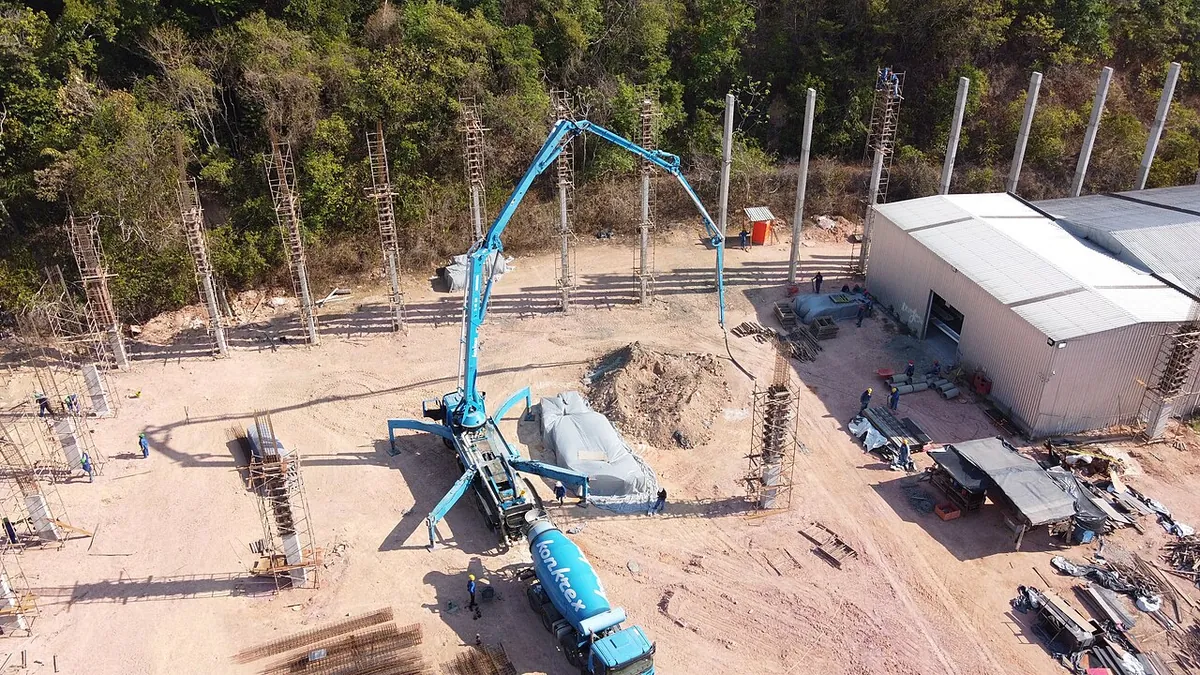
Photo: Bernardobenzecry, Wikimedia Commons, CC BY-SA 4.0
Quick Answer
A concrete pump moves concrete from the ready-mix truck to where it is needed through a hose or pipeline. A concrete pump truck with a folding boom typically costs roughly $150 to $250 per hour for common residential sizes, usually with a 2 to 4 hour minimum, so many home pours end up around $600 to $1,500. A smaller concrete line pump, often a trailer pump that pushes concrete through hoses laid on the ground, often runs about $100 to $175 per hour or a flat $400 to $800 for a small job. Many companies also add a per-yard fee, travel charges and costs for extra hose. Pumps are always rented with an operator from a concrete pumping service. They pay off when the truck cannot reach the forms, when wheelbarrowing would take hours, or for walls, upper floors and backyards.
For many concrete jobs, the hardest part is getting the concrete from the truck to the forms, which is exactly what a concrete pump is for. A ready-mix truck's chute reaches only about 15 to 20 feet behind it, and the truck often cannot drive onto lawns, over septic systems, into backyards or up to a foundation wall. Wheelbarrows and buggies work for small amounts, but moving 10 yards by wheelbarrow means more than 100 trips across the yard, while the concrete is setting and the truck driver is charging for waiting time. A concrete pump solves the problem, and its cost is often smaller than people expect compared with the labor it saves.
This guide explains the types of concrete pumps, what a concrete pump truck costs and how pumping services price their work, line pumps and concrete pump trailers, concrete pump rental options, what makes a pumpable mix, and how to plan a pumped pour so it goes smoothly.
Types of Concrete Pumps
Boom Pump Trucks
A boom pump truck carries a powerful concrete pump and a folding, articulated boom with a steel pipeline along it. The ready-mix truck backs up to the pump's hopper and discharges into it; the pump pushes the concrete up the boom and out of a flexible hose at the tip, which a crew member guides over the forms. Booms are sized by vertical reach, from about 20 meters, or roughly 65 feet, for small trucks used on houses, up to 60 to 70 meters or more for high-rise and large commercial work. Boom pumps place concrete fast, typically 50 to 150 cubic yards per hour or more, and can reach over houses, across yards and up to upper floors without laying any pipe. The photos on this page show typical concrete pump trucks.
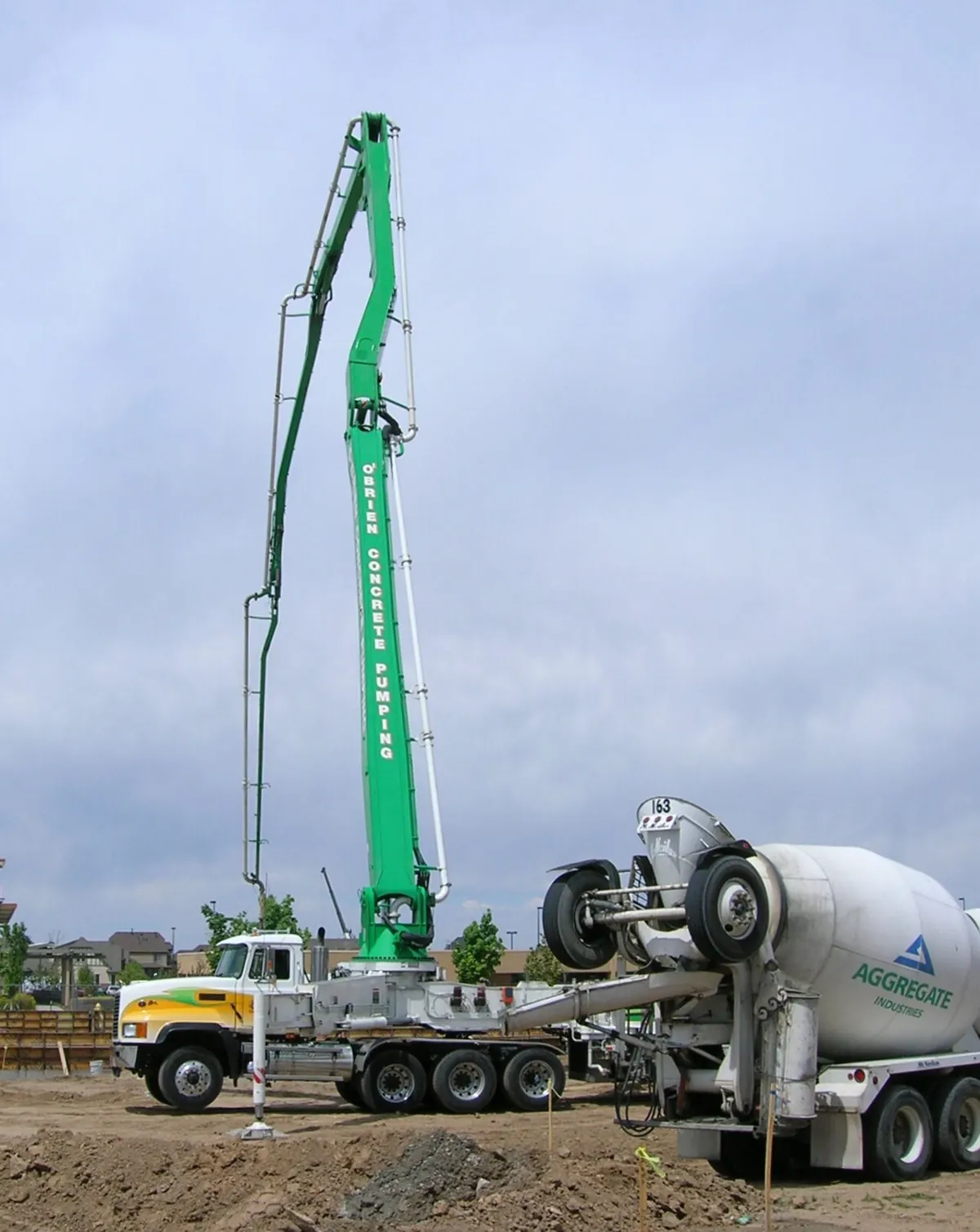
Photo: Greg Goebel, Wikimedia Commons, CC BY-SA 2.0
Line Pumps and Trailer Pumps
A line pump is a smaller pump, usually mounted on a trailer or a truck, that pushes concrete through steel pipe or rubber hoses laid on the ground from the pump to the pour. Line pumps are slower than booms, often about 15 to 60 cubic yards per hour, and usually need a mix with smaller aggregate, typically 3/8 inch pea gravel, though larger line pumps handle standard mixes. They are ideal for residential slabs, sidewalks, backyard patios, pool decks, footings, small walls and grout for block walls. Because the hose can snake through a gate, around a house and into a backyard, a concrete line pump reaches places a boom cannot, and it costs less. Trailer concrete pumps are the most common type of line pump for home jobs.
Other Pumps
Truck-mounted line pumps, stationary pumps for high-rise buildings that feed placing booms on upper floors, and specialized shotcrete and grout pumps are also used. For most homeowners, the choice is between a boom pump and a line pump.
How a Concrete Pump Works
Every modern machine built to pump concrete, truck or trailer mounted, works the same way: two hydraulic cylinders drive two material pistons that take turns drawing concrete from the hopper and pushing it into the delivery pipe. A valve, often an S-shaped swinging tube, switches between the two cylinders so that while one pushes, the other refills, keeping a nearly continuous flow. Agitator paddles in the hopper, like those in the photo above, keep the concrete mixed and feeding evenly. Smaller pumps used for grout and very small aggregate may use a squeeze or rotor-stator design instead of pistons.
The pipe or hose is the other half of the system. Steel pipe on the boom or along the ground carries the concrete with little friction; flexible rubber hose at the end lets the operator place it exactly. Each bend, each foot of hose and each foot of height adds resistance, which is why long lines and high placements need more powerful pumps and well-designed pump mixes.
Concrete Pump Trailer vs Boom Truck
A concrete pump trailer is a line pump on a towable chassis with its own diesel engine. It is pulled to the site behind a pickup, parked near where the ready-mix truck can reach it, and connected to a line of steel pipe and rubber hose that runs to the pour. Concrete line pumps on trailers are compact, cheaper to run than boom trucks, and very flexible about where the hose goes: through a side gate, across a backyard, down a basement window, or around obstacles a boom could not clear. Their limits are output, usually slower than a boom, the labor of laying and moving hose, and the need for a pumpable small-aggregate mix on many units.
A boom truck sets up in one spot and reaches over everything, which is faster and needs no hose laying, but it needs space for its outriggers, overhead clearance, and firm ground, and it costs more per hour. For backyard patios, pool decks, small slabs and block wall grouting, a line concrete pump is often the best value. For foundation walls, large slabs, driveways where the boom can reach from the street, and anything above the ground floor, a boom is usually better. Some companies run truck-mounted concrete line pumps that combine a line pump with a truck chassis for easier travel.
Concrete Pumper Truck Sizes and Reach
A concrete pumper truck is described by its boom length in meters. The most common sizes on residential and light commercial jobs are roughly 28 to 38 meters, which reach about 90 to 125 feet vertically and somewhat less horizontally once the boom is unfolded. Larger concrete pumping trucks of 42 to 58 meters handle commercial buildings and long reaches, and the biggest exceed 60 meters for high-rise and infrastructure work. Bigger trucks cost more per hour and need more room to set up, so pumping companies match the truck to the job; ask for the smallest boom that reaches every corner of your pour comfortably.
Remember that horizontal reach is less than vertical reach and drops further when the boom has to clear a house, trees or power lines. Measure from where the pumper truck can park to the farthest corner of the pour, and tell the company about obstacles. Pumper truck. Concrete placement is fastest when the boom can reach every part of the pour without the truck having to move partway through. If it must move, plan for extra time.
Concrete Pump Trucks for Different Jobs
Foundation walls are a classic job for concrete pump trucks: the boom places concrete into the tops of wall forms in even lifts as the crew walks around the house, which is much faster and more even than chuting from several truck positions. Basement slabs often need a pump because the ready-mix truck cannot get close to the excavation. Backyard patios and pool decks are often line pump jobs. Driveways can usually be poured from the chute if the truck can back down the drive, but a pump avoids heavy trucks on new curbs or soft ground. Elevated slabs, decks and upper floors need a boom or a line pump with a vertical line. Block walls are grouted with small line pumps or grout pumps. See concrete footings, concrete slab cost and concrete block wall cost.
What Can Go Wrong When Pumping Concrete
The most common problem is a line blockage, when concrete packs solid in the pipe or hose. Causes include a harsh or poorly graded mix, too little paste, slump loss from long delays, a mix with aggregate too large for the line, or a dry line that was not primed with grout or slurry before pumping began. Clearing a blockage takes time and can be dangerous, because the line is under pressure. Choosing the right pump mix, priming the line, keeping trucks arriving steadily, and never adding water at the truck to "help it pump" all reduce the risk. Adding water may make the concrete pump more easily, but it weakens the concrete and can lead to segregation in the line.
Other problems include the pump arriving before the forms are ready, trucks bunching up or arriving late, and finishing crews unable to keep up with the pump's speed. All of these are planning problems more than equipment problems.
Who Books the Pump?
On most jobs, the concrete contractor books the pump and includes it in their price, because they know the site, the timing and the local pumping companies. If you are acting as your own general contractor, you may book the ready-mix concrete and pump yourself; in that case, confirm the date, start time, pump type and size, mix, number of trucks, and site access with both companies the day before, and have a phone number for each dispatcher on pour day.
Line Pump Concrete: Hose, Mix and Crew
If you hire a line pump, concrete delivery works a little differently from a boom pour. The operator parks the concrete pump trailer where ready-mix trucks can back up to its hopper, then lays out steel pipe and rubber hose to the forms, usually in 10 to 25 foot sections. Standard packages often include a set length of hose, with extra sections charged per foot. Before the first truck discharges, the operator primes the line with a slurry or grout so the concrete does not stick and block the hose.
During the pour, one person holds the end hose and directs the concrete while others move hose sections as the pour progresses. Ask the concrete pump company how many people they send; you may need to supply a helper. Most line pumps handle a 3/8 inch pea gravel pump mix best, so tell the ready-mix plant in advance. At the end, the operator pushes a cleanout ball through the line with water or air, and the leftover concrete and slurry go to the washout. A well-run line pump concrete pour on a 10 to 15 yard patio can be finished in an hour or two of pumping.
The bottom line is that a concrete pump is usually money well spent whenever the ready-mix truck cannot reach the pour. Compare the cost of the pump with the labor, time and quality you would lose doing the job by wheelbarrow, and in most backyard and foundation pours, the pump wins. Get two or three quotes, ask what each includes, and book early in the busy spring and summer months when good pumps and operators fill up fast.
Concrete Pump Truck Cost
Concrete pumping services price concrete pump truck work in a few common ways, and most quotes combine several of them. The most common is an hourly rate with a minimum, such as a set number of hours charged even if the pour finishes sooner. Some companies charge a flat rate for a half day or a full day, and many add a per-yard charge for every cubic yard pumped. Travel time or mileage from the yard, extra hose or pipe beyond a standard length, a washout fee, Saturday or overtime rates, and cancellation fees are other common items.
As a rough national guide, a small to mid-size concrete pump truck with a boom of about 28 to 38 meters often costs about $150 to $250 per hour with a minimum of two to four hours. Larger booms cost more, commonly $250 to $500 per hour or more for 50 meter and bigger machines. A per-yard charge of a few dollars per cubic yard is common on top of the hourly rate. For a typical residential pour of 10 to 30 yards, such as a basement slab, a driveway or foundation walls, the total pump truck concrete bill often lands somewhere between about $600 and $1,500.
Concrete line pumps usually cost less. A concrete line pump with an operator commonly runs about $100 to $175 per hour, or a flat price of roughly $400 to $800 for a small job such as a backyard patio or sidewalk, plus charges for extra hose and per-yard fees. Prices vary a great deal by region, season and demand, so call two or three local companies for quotes and ask exactly what is included.
Concrete Pump Rental
When people search for concrete pump rental, they usually mean hiring a pump with an operator, which is how almost all pumps are supplied. Boom pumps are complex, heavy machines that need trained, often certified operators, and pumping companies do not rent them out for customers to run. A concrete pump truck rental is therefore a service: the company sends the truck and operator, sets up, pumps the concrete, cleans out and leaves.
Some equipment rental companies do rent small trailer pumps, mainly grout and small aggregate pumps, to contractors who know how to run them. A concrete trailer pump rented without an operator still requires experience: priming the line, keeping the hopper full, preventing blockages, and cleaning out safely are all skills. For a homeowner, hiring a concrete pumping service is almost always the better choice. Ask your ready-mix supplier or concrete contractor which pumping companies they work with; they coordinate the timing of trucks and pump every day.
When Is a Concrete Pump Worth the Cost?
A pump for concrete pays off whenever the truck cannot discharge directly into the forms and the alternative is a lot of wheelbarrow or buggy work. Typical cases include backyard patios, pool decks and slabs behind a house, foundation walls and footings, basement floors where the truck cannot get close, upper-floor slabs and decks, driveways where the truck would damage the lawn or a septic field, and any pour larger than a few yards where speed matters for finishing.
The math is often simple. Without a pump, a crew might spend two or three hours wheeling 10 yards of concrete while the ready-mix driver charges waiting time, the concrete stiffens, and finishers fall behind. With a pump, the same concrete may be placed in under an hour, with fewer workers, better finishing and less risk of cold joints. Many contractors include the pump in their price automatically for backyard and foundation work. For a small pad right next to the driveway, though, the chute is enough and a pump is wasted money. See yards of concrete in a truck and concrete price per yard.
Pumped Concrete: What Mix Do You Need?
Not every mix pumps well, and a concrete pump is only as good as the mix fed into it. Pumped concrete needs enough paste, a well-graded aggregate and enough workability to travel through the pipe without the water separating from the solids, which causes blockages. Ready-mix plants offer pump mixes designed for this, often with slightly more cement or fly ash, more sand, and a water reducer. For line pumps, a 3/8 inch pea gravel mix is common; boom pumps usually handle standard 3/4 inch or 1 inch aggregate mixes. A slump of about 4 to 6 inches is typical for pumping. Tell the ready-mix dispatcher that the concrete will be pumped, and with what kind of pump, so they send the right mix. A pump mix can cost a little more per yard, but it avoids blockages that can cost much more. See concrete slump and concrete mix ratio.
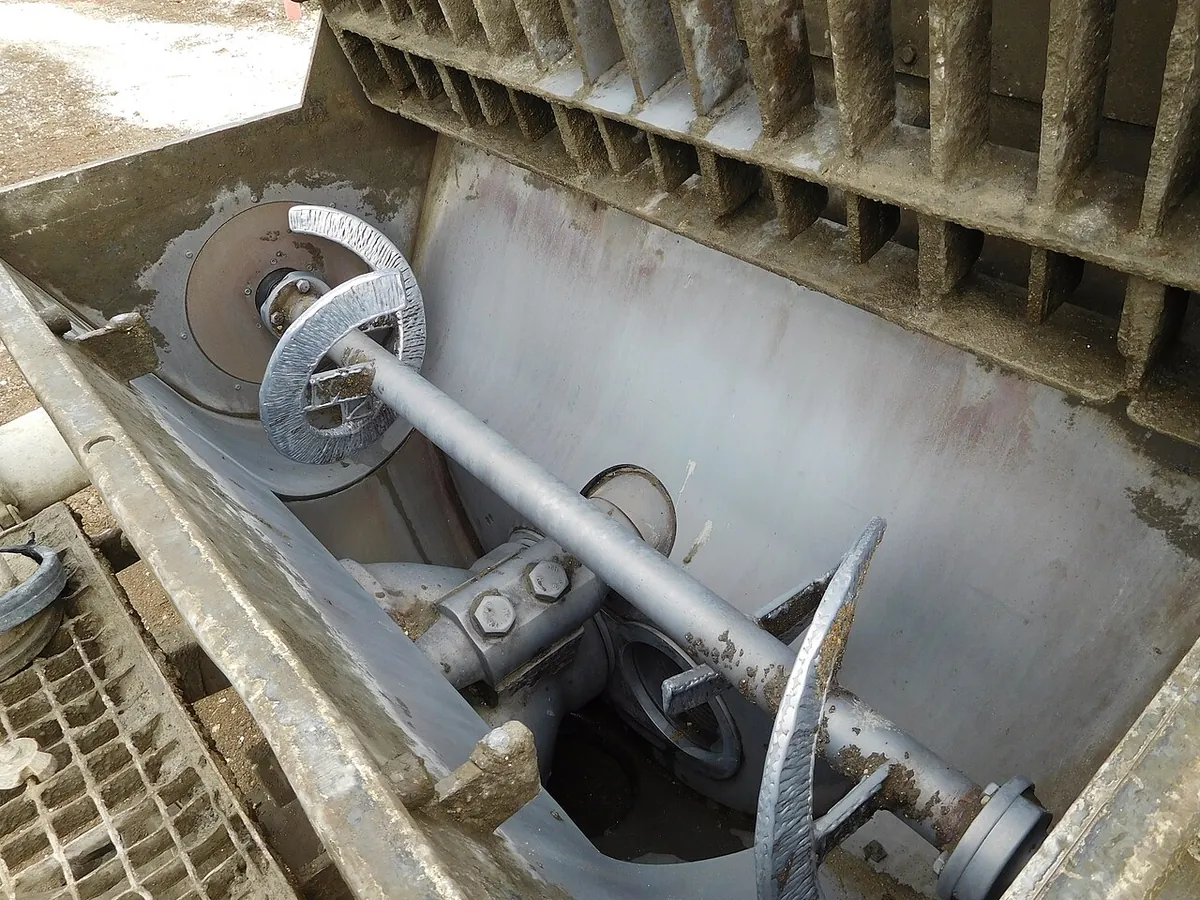
Photo: Cjp24, Wikimedia Commons, CC BY-SA 4.0
Choosing a Concrete Pumping Service
When comparing concrete pumping services, ask about the pump type and boom length or line length they will bring, their hourly rate, minimum and per-yard charges, travel fees, extra hose charges, washout arrangements, cancellation policy, and insurance. Ask whether the operator will help set up hoses and move them during the pour, and whether a second hose person is included. Check reviews and ask your concrete contractor or ready-mix supplier for recommendations; good pumping companies are booked ahead, especially in spring and summer.
Tell the concrete pump service everything about the site: how far from the street the pour is, any overhead power lines, slopes, soft ground, gates and their widths, and whether the pump can set up on the street or driveway. A boom pump needs room to set its outriggers on firm ground, and line hoses need a clear path. The pump operator may visit the site beforehand for larger jobs.
Planning a Pumped Pour
Good coordination makes a concrete pump cheaper, because you pay for the pump's time. Schedule the concrete and pump to arrive together, with the first truck arriving shortly after the pump has set up. Space the ready-mix trucks so the pump never sits idle waiting, and so trucks do not wait long either. Have forms, rebar, inspections and the finishing crew ready before the pump arrives. For line pumps, plan the hose route and have helpers ready to move the hose as the pour progresses. When the concrete and pump are both on site and the crew is ready, pumping a typical house slab or wall takes only an hour or two.
Plan for the washout. The pump operator cleans out the hopper, boom or hose at the end, which produces a lot of concrete slurry; agree in advance where it will go. Many pumping companies bring a washout bin or bag. See concrete washout.
Concrete Pump Safety
Concrete pumps are powerful machines, and pumping accidents can be serious. The biggest hazards are booms contacting overhead power lines, outriggers sinking into soft ground and tipping the truck, hose whipping when a blockage clears or the line is opened under pressure, and people standing under the boom. Keep everyone except the hose operator away from the end hose, never stand under the boom, keep clear of the outriggers, and follow the operator's instructions. Before the pump arrives, identify overhead lines; OSHA and the American Concrete Pumping Association set minimum clearances around energized lines, and many pours require the utility to de-energize or shield lines. Make sure the ground where outriggers go is firm, and avoid placing them over trenches, septic tanks or fresh backfill.
Ways to Lower Concrete Pump Costs
Combine pours so the concrete pump is used for several items in one visit, such as footings and a slab, or a patio and a walk. Have everything ready so you do not pay for the pump to wait. Choose the smallest pump that can do the job; a line pump for a backyard patio is usually cheaper than a boom truck. Ask whether a per-yard or flat-rate price is better for your volume. Book weekdays when possible, and get quotes from more than one pumping company. Finally, accurate yardage helps: running out of concrete and waiting for another truck keeps the pump on the clock. See how to calculate yards of concrete.
Frequently Asked Questions
How much does a concrete pump truck cost?
Often about $150 to $250 per hour for residential boom pumps with a 2 to 4 hour minimum, so many home pours cost $600 to $1,500 for the pump.
Can I rent a concrete pump without an operator?
Boom pumps always come with an operator. Some small trailer pumps can be rented, but hiring a concrete pumping service is safer for most homeowners.
What is the difference between a boom pump and a line pump?
A boom pump has a long folding arm that places concrete from above; a line pump pushes concrete through hoses laid on the ground. Line pumps are smaller, slower and cheaper.
Do I need a special mix for pumped concrete?
Yes, tell the ready-mix plant the concrete will be pumped. Line pumps often need a pea gravel mix; boom pumps usually take standard mixes.
Sources
- American Concrete Pumping Association: pumping guidance and safety
- American Concrete Institute: ACI 304.2R placing concrete by pumping methods
- OSHA: concrete pumping and power line safety
- National Ready Mixed Concrete Association: CIP 21 (loss of slump) and pumping
Related Guides
- Concrete mixer rental cost — mixer and buggy rental prices
- Concrete batching plant — how ready-mix is made
- Concrete barriers — jersey barriers, bollards and interlocking blocks
- Concrete storm shelters — storm cellars and tornado shelters
- Concrete culvert — concrete pipe and box culverts
- Concrete pool — construction, gunite and costs
- Metal decking for concrete — composite steel deck floors
- World of Concrete — the industry's annual trade show in Las Vegas
- Commercial concrete — specs, tilt-up, parking decks, testing, costs and contractors
- Concrete worker — job duties, pay, training, safety and career path
- Concrete machines — mixers, placer booms, screeds, trowels, sprayers, saws and scrubbers