
Concrete Step Installation Cost in 2026: Precast vs Poured, Replacement and Repair
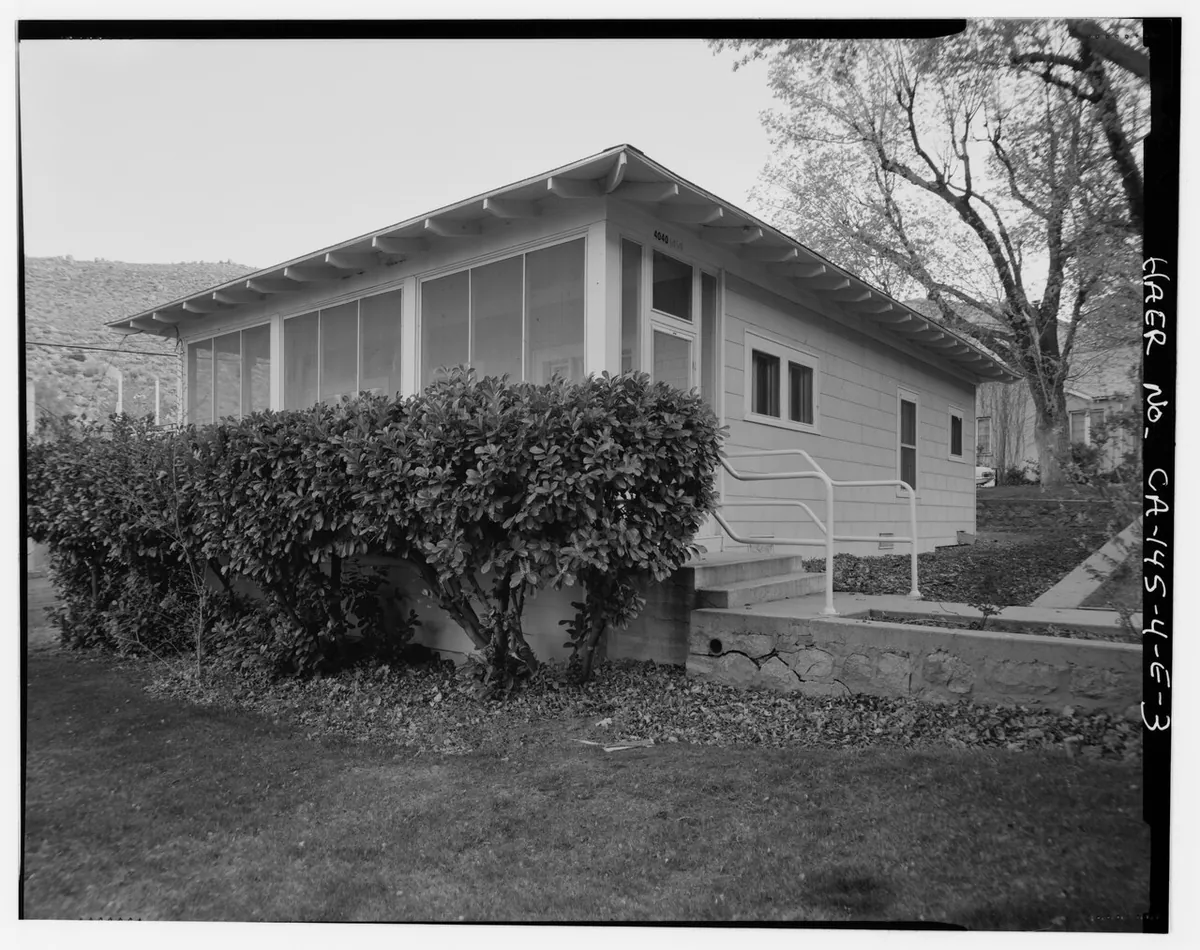
Photo: Gregory L. O'Laughlin, HAER, Wikimedia Commons, public domain
Quick Answer
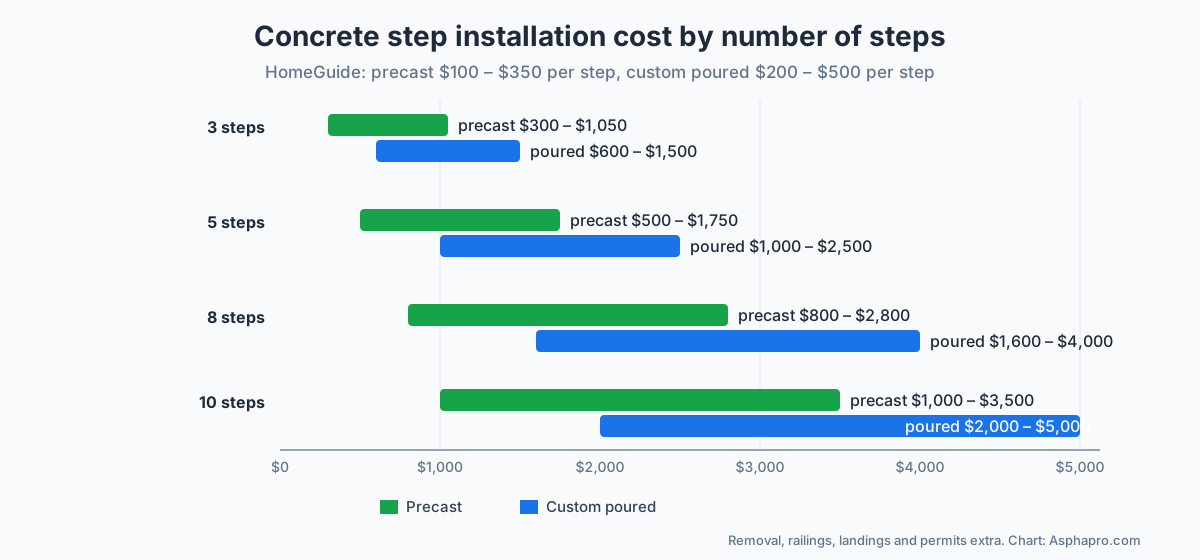
Concrete step installation cost in 2026 is about $100 to $350 per step for precast concrete steps and $200 to $500 per step for custom poured steps, according to HomeGuide. A set of 5 precast steps typically costs about $500 to $1,750 installed, while 5 poured steps run about $1,000 to $2,500. Removing old steps, adding a landing, railings and permits ($100 to $1,000 where required) add more. The cost to repair concrete steps is often far lower: HomeAdvisor cites an average repair near $500 versus about $3,500 for full replacement.
Front steps take a lot of abuse. They carry every visitor, they are exposed to rain, snow and de-icing salt, and they often sit on soil that settles over time. Eventually corners chip, treads crack, or the whole set of steps pulls away from the house. At that point you have three options: repair what is there, replace it with precast steps, or pour new custom concrete steps.
This guide covers concrete step installation cost for precast and poured steps, the cost to replace concrete steps, the cost to repair concrete steps and concrete stair repair cost, prefabricated concrete steps, concrete steps for mobile homes, and what adds to the price. Ranges come from HomeGuide, Angi and HomeAdvisor, listed in the sources.
Concrete Step Installation Cost at a Glance
| Item | Typical cost | Source |
|---|---|---|
| Precast concrete steps, installed | $100 – $350 per step | HomeGuide |
| Custom poured concrete steps | $200 – $500 per step | HomeGuide |
| 4 ft wide step (poured or precast) | $200 – $600 per step | Angi |
| 5 – 10 precast steps, installed | about $500 – $3,000 | HomeGuide |
| Average step repair | about $500 | HomeAdvisor |
| Average full replacement | about $3,500 | HomeAdvisor |
| Small crack filling on steps | $20 – $100 | Angi |
| Larger crack patching | $50 – $300 | Angi |
| Building permit, if required | $100 – $1,000 | HomeGuide |
Precast vs Poured Concrete Steps
Precast concrete steps cost less than custom poured steps for a standard entry, because the forms are reused at the plant and installation takes hours instead of days. Poured steps cost more but can be any width or shape.
Prefabricated concrete steps are made in a factory, delivered to your home and set in place with a truck-mounted crane or boom, usually on a prepared gravel base or footings. Custom poured steps are formed and poured on site.
| Factor | Precast steps | Poured steps |
|---|---|---|
| Cost per step | about $100 – $350 | about $200 – $500 |
| Install time | often hours | days, including forming and curing |
| Sizes and shapes | standard widths and rises | any size, shape or landing |
| Finish options | standard textures | broom, stamped, colored, natural stone caps |
| Access needed | room for the delivery truck and boom | wheelbarrow or pump access |
| Best for | standard entries, side and back doors, mobile homes | wide entries, curves, landings, matching existing concrete |
Angi notes that installing a prefab staircase is faster, so labor costs less than pouring. Precast steps make sense for standard doorways where a standard size fits. Poured steps are better for wide front entries, unusual heights, wraparound designs or when you want a specific finish.
Cost to Replace Concrete Steps
The cost to replace concrete steps includes removing the old steps, preparing the base or footings, and installing new precast or poured steps. HomeAdvisor's figures put full replacement at an average of about $3,500. A typical breakdown:
- Removal and disposal of old steps: solid steps are heavy and usually broken in place with a breaker; see how to remove concrete.
- Base or footings: compacted gravel for precast steps, or footings below the frost line where required.
- New steps: $100 to $350 per step for precast, or $200 to $500 per step for poured.
- Landing: a top landing in front of the door adds concrete and labor.
- Railings: metal railings are often required for steps with several risers.
- Permit: HomeGuide lists $100 to $1,000 where a permit is required.
See concrete removal cost for typical demolition prices.
Cost to Repair Concrete Steps
Repair is usually much cheaper than replacement. HomeAdvisor's guide puts an average step repair at about $500, compared with about $3,500 for replacement. Angi lists small crack filling at about $20 to $100 and larger crack patching at about $50 to $300. Common repairs and their typical approach:
- Cracks: clean and fill with crack sealant or patching compound.
- Chipped corners and edges: rebuild with repair mortar and a simple form.
- Worn or scaled treads: resurface with a cement overlay.
- Steps sunken or tilted: lift with mudjacking or foam, or reset precast steps; see concrete leveling cost.
- Gap at the house: seal the joint, or lift and re-anchor the steps.
- Loose railing posts: reset with anchoring cement.
For step-by-step repair methods, see how to fix concrete steps. Concrete stair repair cost rises when damage is widespread, the steps are moving, or rebar is rusting inside.
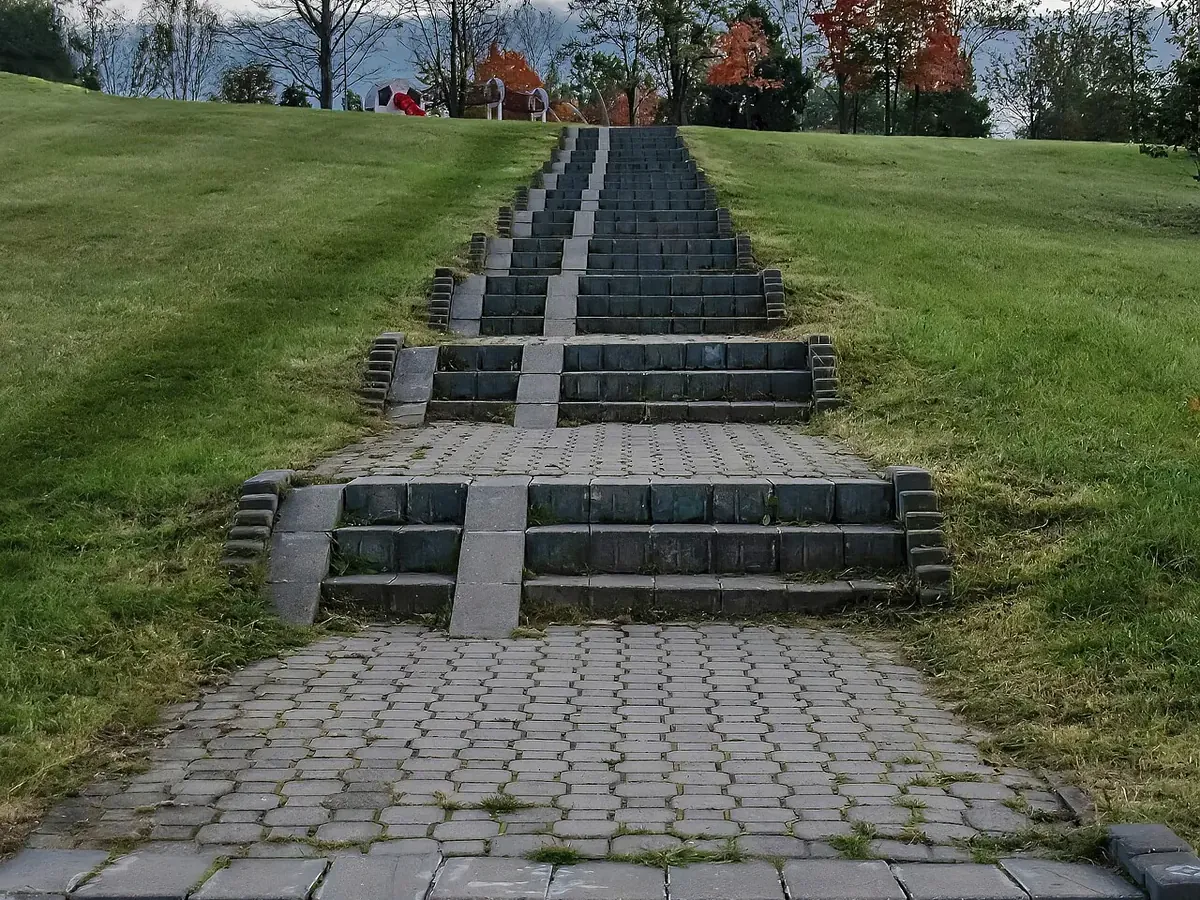
Photo: Krzysztof Popławski, Wikimedia Commons, CC BY-SA 4.0
Concrete Steps for Mobile Homes
Concrete mobile home steps are popular because they do not rot or rust and need little care, but they are heavy, so they must sit on a firm, level base and be placed with a boom truck.
Concrete steps for mobile homes are usually precast units sized to the door height of manufactured homes. They are a durable upgrade from wood or metal steps and are often set on a compacted gravel pad. Because mobile home doors are often higher than site-built homes, the steps may have more risers and need a railing. Pricing usually follows precast steps, about $100 to $350 per step installed, plus delivery and a base. Check with the park or community rules and local codes for railing and landing requirements.
What Affects Concrete Step Installation Cost
- Number of steps: the main cost driver; each riser adds concrete and labor.
- Width: wider steps use more concrete; Angi's per-step range is for 4 foot wide steps.
- Landing: a landing at the top adds a small slab.
- Precast or poured: poured steps cost more but offer more design options.
- Finish: stamped, colored or stone-capped steps cost more.
- Removal: taking out old steps adds demolition and disposal.
- Footings: some areas require footings below frost depth.
- Railings: metal railings add materials and installation.
- Access: precast delivery needs room for a truck and boom.
- Permits: HomeGuide lists $100 to $1,000 where required.
Step Dimensions and Codes
Residential building codes set limits on step dimensions so stairs are safe. Under the International Residential Code, exterior stairs that are part of the required exit generally follow the same rules as interior stairs: risers no higher than about 7 3/4 inches and treads at least about 10 inches deep, with consistent heights from step to step. Stairs with four or more risers typically need a handrail. A landing is usually required at an exterior door. Local codes can differ, so check before you build; inspectors pay close attention to rise and run because uneven steps cause falls.
How Precast Steps Are Installed
Precast installation is quick, which is a big part of why it costs less. The supplier measures the height from the ground to the door threshold and the width you need, then picks or makes a unit to match. On install day, the crew removes the old steps if needed, digs out soft soil, and builds a compacted gravel pad or sets small footings, depending on local rules. A delivery truck with a crane or boom lifts the unit into place, and the crew levels it, checks the top step height against the threshold, and sets it tight to the house with a small gap for a joint. Railings are bolted on afterward. Many jobs are finished in a few hours. Because the unit is cast in a controlled factory setting, the concrete is consistent, but the size choices are limited to the supplier's molds.
How Poured Steps Are Built
Poured steps take more planning and labor. The contractor calculates the number of risers and the tread depth from the total rise, then builds wooden forms for the sides and riser boards for each step. In many cases, the inside of large steps is partly filled with compacted gravel or rubble to save concrete, and rebar is added to tie the steps together and sometimes to the house foundation. The concrete is placed from the bottom step up, and each tread is finished with a broom or texture for grip. Riser forms are removed carefully once the concrete can hold its shape, so the faces can be finished. After curing, the side forms come off. From start to finish, poured steps usually take a few days, including curing time before heavy use. The result can be any width, height or shape, with a landing that fits the doorway exactly.
Design Ideas for New Steps
- Wide, shallow steps feel more welcoming and are easier for older visitors.
- A generous landing at the door gives room to open storm doors and set down packages.
- Bullnose edges soften the look and reduce chipping.
- Stamped or colored finishes match a stamped walkway or patio.
- Stone or brick caps on poured steps add a classic look.
- Built-in lighting in the risers or sides improves safety at night.
- Side planters or cheek walls frame the entry.
Alternatives to Concrete Steps
Wood steps are cheaper upfront but need more upkeep and do not last as long outdoors. Brick and natural stone steps are attractive and long-lasting but usually cost more, since they take skilled masonry labor. Pavers can be built into steps on a concrete or block base. Composite steps work well over a small wood frame. For most front entries, concrete offers the best mix of durability, safety and price, especially precast units for standard doors.
Railings and Lighting
Railings are often required when steps have several risers and are always a good idea for safety. Simple metal railings bolted to precast or poured steps are the most common choice. Ornamental iron, aluminum with powder coating, and cable rail designs cost more. Lighting can be added with small step lights set into risers during the pour, or with path lights at the sides. Plan electrical runs before the concrete is poured; adding wiring later means drilling or surface-mounted conduit.
How Long Do Concrete Steps Last?
Well-built concrete steps can last for decades. The most common reasons they fail early are settling of the soil underneath, water running behind or under the steps, freeze-thaw damage made worse by salt, and rusting rebar near the surface. Keep gutters and downspouts from dumping water at the steps, seal the joint where the steps meet the house, use sand or concrete-safe de-icers in winter, and fix chips and cracks before water gets in. See does salt damage concrete and how to seal concrete.
Project Timeline
Precast replacement often takes a single day, sometimes just a few hours, once the unit is made. Poured replacement usually takes two to four days of work, plus curing: one day for removal and base, one for forms and steel, and one for the pour and finishing, with forms stripped later. Plan to use another entrance during the work, and wait for the contractor's go-ahead before heavy use. See how long concrete takes to cure.
Three Example Projects
Back door, 3 precast steps
A 3-step precast unit at a back door, set on a gravel pad, with a simple railing. At about $250 per step installed, the steps cost about $750, plus the railing.
Front entry, 5 poured steps with a landing
Five poured steps, 5 feet wide, with a 5 × 5 foot landing and a broom finish. At about $400 per step plus a few hundred dollars for the landing, the total is roughly $2,300 to $2,600, plus removal of the old steps.
Mobile home entry, 4 precast steps
Four precast steps sized to a manufactured home door, with a railing on both sides. At about $200 per step plus railings and delivery, the total is often around $1,000 to $1,500.
Concrete Step Installation Cost by Region and Season
Labor is a large part of the price of poured steps, so concrete step installation cost follows local wages. In high-cost metro areas, expect quotes toward the top of the per-step ranges, and sometimes above them for small jobs with minimum charges. In smaller towns, prices are often lower. Precast prices depend on how far you are from the precast plant, since the unit must be trucked and set with a boom. Spring and early summer are busy for concrete contractors; booking in late summer or fall can mean shorter waits. Pouring in freezing weather is possible with heated concrete and blankets but costs more, and many contractors avoid winter step jobs entirely.
Matching New Steps to Your Home
Steps are one of the first things people see, so they affect curb appeal. Match the width to the door and walkway; steps that are too narrow look cramped. Consider the color of the concrete next to brick, siding or stone. Integral color or a stain can tie new steps to an existing walkway. If the walkway and steps are both being replaced, pour them together for a consistent finish. For walkway prices, see concrete sidewalk cost.
Accessibility and Ramps
If anyone in the home uses a wheelchair or walker, or may in the future, consider a ramp instead of, or in addition to, steps. Concrete ramps need gentle slopes, landings and handrails, and they take more space and concrete than steps. Some homeowners add a ramp at a side or back entrance and keep steps at the front. Ask a contractor familiar with accessible design for options; ramp costs are usually figured per square foot of concrete plus railings.
Questions to Ask Before You Hire
- Is your price per step or for the whole job, and what does it include?
- Will you remove and haul away the old steps?
- Will the new steps sit on gravel or on footings?
- How will the top step meet the door threshold?
- Are railings included, and do they meet code?
- Who handles the permit, if one is required?
- What warranty do you offer?
How Many Steps Do You Need?
Measure the total rise, the vertical distance from the ground where the bottom step will sit to the top of the door threshold or landing. Divide by a comfortable riser height of about 7 inches, and round up to get the number of risers. For example, a 28 inch rise divided by 7 gives 4 risers. Then divide the total rise by the number of risers to get the exact riser height: 28 ÷ 4 = 7 inches each. The number of treads is usually one fewer than the risers when the top riser meets a landing or the door. Tread depth is commonly about 11 to 12 inches for comfortable outdoor steps. Use these numbers to price the job per step, and check them against local code limits before ordering precast units or building forms.
Garden Steps and Steps on Slopes
Outdoor steps in a sloped yard are often built differently from front entry steps. They can be individual concrete treads set into the slope, poured in place with simple side forms, or precast blocks stacked on a gravel base. The rise and run can be more relaxed than at a doorway, such as 5 to 6 inch risers with deep treads, which feels natural outdoors. Drainage is critical on slopes: water running down the hill can wash out the base under each step, so add gravel and consider a drain at the bottom. Garden steps are often priced per tread rather than per set, and costs vary with access and how much digging the slope needs.
Safety: Grip, Handrails and Visibility
Steps cause many household falls, so safety details matter. Give every tread a broom or textured finish for grip, especially where steps get wet or icy. Keep riser heights the same from top to bottom; even a small difference can trip people. Install sturdy handrails that are easy to grab and extend the full length of the stairs. Light the steps at night with fixtures that shine down on the treads. In cold climates, plan where snow will go when you shovel, and avoid designs that trap water on the treads.
Replacing Only Part of a Set
Sometimes only the bottom step or the landing is damaged. Partial replacement is possible with poured steps: the damaged section is cut out with a saw, the remaining concrete is drilled for dowels or rebar, and new concrete is formed and poured to tie in. The new section will look lighter at first and may not match exactly. For precast steps, individual parts usually cannot be swapped, so the whole unit is replaced or repaired in place. Ask your contractor whether partial replacement makes sense, or whether the rest of the set is close to failing anyway.
Buying Precast Steps
Precast steps are usually sold by local precast concrete companies, and some building suppliers order them. Many suppliers include delivery and setting in their price, since placing the unit requires a boom truck. Ask whether removal of old steps, the gravel base and railings are included. Lead times vary from days to a few weeks depending on the size and the supplier's schedule. Measure carefully, since a precast unit cannot be adjusted on site the way poured concrete can.
Ways to Save on Concrete Steps
- Repair instead of replace when the steps are structurally sound.
- Choose precast for standard door heights and widths.
- Keep the design simple: straight steps cost less than curved or wraparound designs.
- Pour with other concrete work, like a new walkway, to share mobilization.
- Do the demolition yourself if your contractor agrees.
- Get several quotes, including at least one precast supplier.
Hidden Costs to Watch For
- Old fill inside the steps: large old stoops may be filled with rubble or soil that adds to removal time.
- Damaged foundation or siding behind the old steps that must be repaired before the new ones go in.
- Moving utilities such as hose bibs, dryer vents or electrical lines near the steps.
- Door threshold changes if the new top step height does not match the old one.
- Landscaping repair after equipment and forms are removed.
- Railing upgrades required to meet current code.
Ask for a written scope that lists each of these, so the final price matches the quote. A good contractor will look behind and under the old steps before giving a final number, and explain any extra work they find before doing it.
Frequently Asked Questions
How much does concrete step installation cost?
About $100 to $350 per step for precast concrete steps and $200 to $500 per step for custom poured steps, according to HomeGuide.
What is the cost to replace concrete steps?
HomeAdvisor cites an average of about $3,500 for full replacement, including removal. Smaller precast sets can cost much less.
What is the cost to repair concrete steps?
HomeAdvisor cites an average repair near $500. Small crack filling costs about $20 to $100, and larger patching about $50 to $300, according to Angi.
Are prefabricated concrete steps cheaper?
Usually. Precast steps cost about $100 to $350 per step installed, compared with $200 to $500 for poured steps, and install faster.
How much are concrete steps for a mobile home?
Precast mobile home steps usually follow precast pricing, about $100 to $350 per step installed, plus delivery, base and any railing.
Do new steps need footings?
It depends on local codes and the design. Some precast steps sit on compacted gravel, while poured steps attached to the house may need footings below the frost line. Your building department can tell you what is required.
How much does a concrete landing cost?
A landing is a small slab, so it is often priced like flatwork, roughly $4 to $8 per square foot or more for small pads, plus any extra thickness or steel. A 5 × 5 foot landing is 25 square feet.
What is the cheapest way to fix ugly steps?
If they are structurally sound, cleaning, patching chips and applying a resurfacer can make old steps look new for far less than replacement. See our guide on how to fix concrete steps.
How long do precast steps take to install?
Often a few hours once the unit is delivered, after any old steps are removed and the base is prepared.
Can I pour my own steps?
Small sets of two or three steps are a manageable DIY project if you build accurate forms and follow code rise and run limits. Larger steps and steps tied to the house are usually better left to a contractor.
Why do steps pull away from the house?
Usually because the soil under them settled, often from water draining near the foundation. The steps tilt and leave a gap at the house. Lifting, re-anchoring or replacing them, and fixing drainage, solves the problem.
Do I need a permit for new concrete steps?
Sometimes. HomeGuide notes permits may cost $100 to $1,000 depending on size and local codes. Check with your building department.
Sources
- HomeGuide, "How much do concrete steps cost?" homeguide.com
- Angi, "How much do poured and precast concrete steps cost?" angi.com
- Angi, "How much does concrete step repair cost?" angi.com
- HomeAdvisor, "How much does concrete step repair cost?" homeadvisor.com
- International Code Council, International Residential Code, stairways section. iccsafe.org
- Image credits: porch steps photo by Gregory L. O'Laughlin, HAER (public domain) and stairway photo by Krzysztof Popławski (CC BY-SA 4.0), via Wikimedia Commons. Chart by Asphapro.com.
Prices checked November 2026. They are national ranges; local prices can be higher or lower.
Related Guides
- How to get concrete splash off bricks — fresh splatter, lumps and haze
- How to build concrete forms — layout, stakes and slope
- Types of concrete anchors — plugs, screws, wedge and epoxy
- Types of concrete — high performance, precast and gunite
- Does salt damage concrete? — deicers, scaling and protection