
How to Hang Pictures on Concrete Walls: No-Drill and Drill Methods
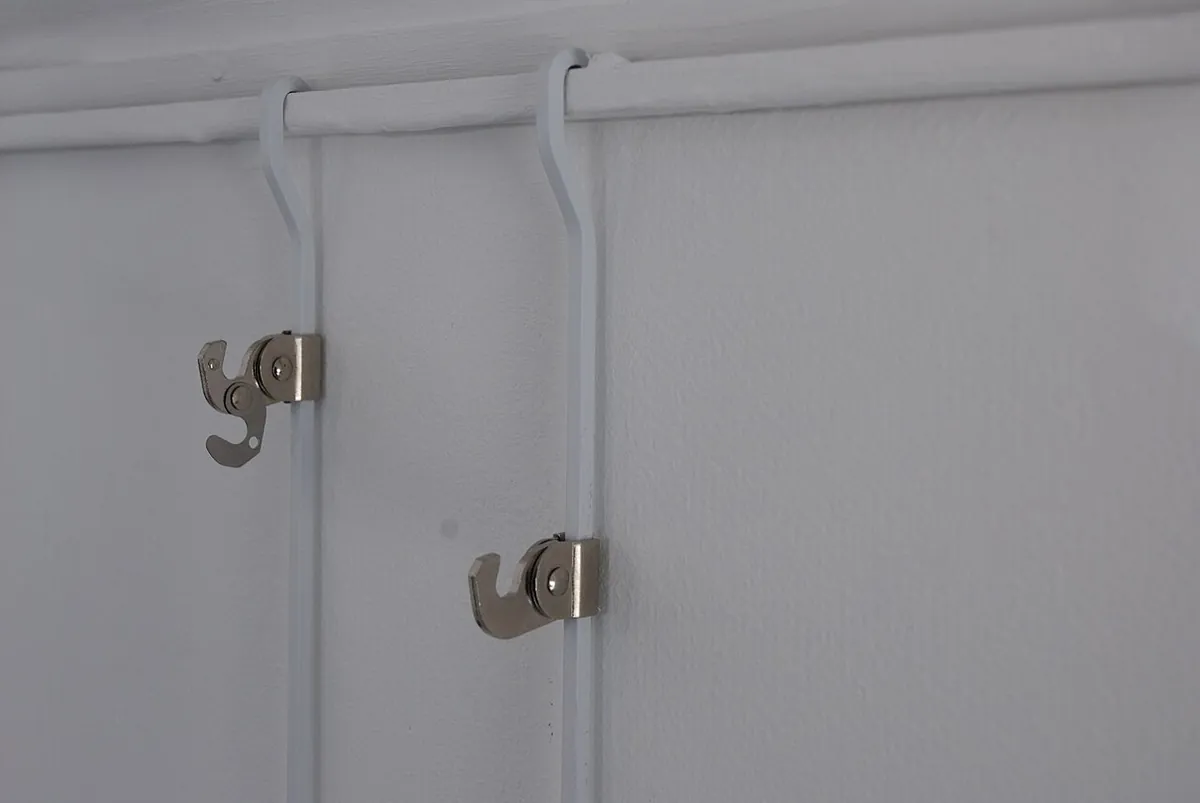
Photo: Stephhzz, Wikimedia Commons, CC BY-SA 3.0
Quick Answer
Here is how to hang pictures on concrete walls, by weight: for light frames under about 5 pounds, use adhesive strips or hooks on a clean, smooth wall; for light to medium frames, use hardened steel picture hooks or concrete nails tapped into the wall; for heavier pictures, drill a hole with a masonry bit and hammer drill and use a plastic wall plug and screw or a concrete screw; for very heavy mirrors and art, use sleeve anchors. To hang many pictures with few holes, install a picture rail or hanging track. On hollow block walls, drill into the solid face or use small concrete block anchor screws. Always check the load rating and drill carefully to avoid wires and pipes.
Concrete walls are common in basements, apartments, lofts, older buildings, modern homes and offices. They are strong and durable, but a regular nail will just bend when you try to hammer it in, and a standard drill barely scratches the surface. People often ask how do you hang pictures on a concrete wall without cracking it or spending all afternoon drilling. The good news is that there are simple methods for every situation, from renter-friendly no-drill options to secure anchors for heavy mirrors. The photo above shows one of the most elegant: a picture rail near the ceiling with sliding hooks and cords, which lets you hang and rearrange pictures with only a few fixings in the wall.
This guide explains how to hang pictures on concrete walls with and without drilling, the tools and hardware you need, how to drill into concrete safely, how to handle block and brick walls, renter-friendly tips, and how to fix mistakes.
Choose the Method by Weight
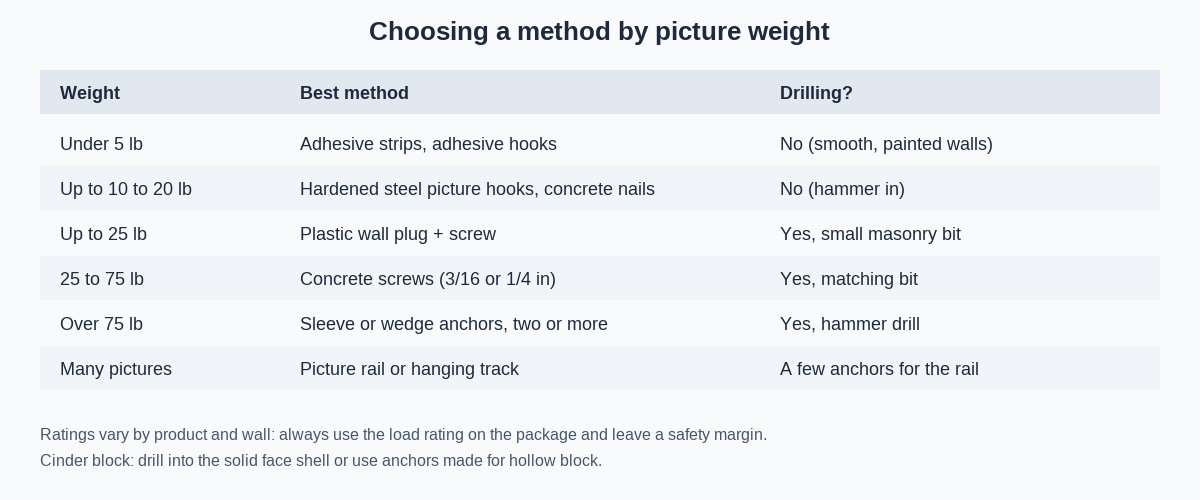
The first step in hanging pictures on concrete walls is to weigh the picture, or estimate it, and choose a method rated for that weight with a safety margin, as in the chart above. Glass, mirrors, thick frames and canvas on heavy stretchers weigh more than they look. Most packages state a maximum load; use hardware rated for at least twice the picture's weight, and use two hangers for wide frames so they stay level.
How to Hang Pictures on Concrete Walls Without Drilling
Adhesive strips and hooks. Removable adhesive strips and hooks work well for light frames, posters and small canvases on smooth, painted concrete. Clean the wall with rubbing alcohol, let it dry, press the strip firmly for 30 seconds, and wait an hour before hanging. They do not stick well to rough, dusty, textured or freshly painted concrete, or in damp basements, and they can pull paint off when removed.
Hardened steel picture hooks. Special picture hooks with thin, hardened steel pins, often three or four pins per hook, are designed to be tapped into concrete, plaster and brick with a hammer. The thin pins enter the surface without cracking it, and each hook can hold roughly 10 to 30 pounds depending on the product. They leave only tiny holes.
Concrete nails. Hardened steel concrete nails, also called masonry nails, can be hammered directly into softer concrete, mortar joints and concrete block. Tap them in at a slight downward angle using a heavy hammer, wear eye protection, and do not drive them near edges, where they can break the concrete. They do not work well in very hard, high-strength concrete. See concrete nailer for powered fastening.
Picture rails and hanging systems. A rail mounted along the top of the wall, near the ceiling, or a track in the ceiling, lets you hang many pictures on cords or rods with sliding hooks, using only a few screws to fix the rail. It is ideal for galleries, rentals and anyone who changes pictures often.
Leaning and shelves. Large art can simply lean on a console or a floor, and picture ledges, fixed with a few anchors, hold several frames that can be swapped without new holes.
Tools for Drilling Into Concrete Walls
- A hammer drill or rotary hammer. A regular drill struggles with concrete; a hammer drill adds a pounding action that makes drilling fast.
- Carbide-tipped masonry drill bits sized to match the anchors, typically 3/16 to 1/4 inch for picture hanging.
- Plastic wall plugs (anchors) and screws, concrete screws, or sleeve anchors, depending on weight.
- A pencil, tape measure, level and painter's tape.
- Safety glasses, a dust mask and a vacuum.
- A stud and wire finder or scanner to check for wiring and pipes.
See how to drill into concrete and concrete drill bit.
How to Hang Pictures on Concrete Walls by Drilling
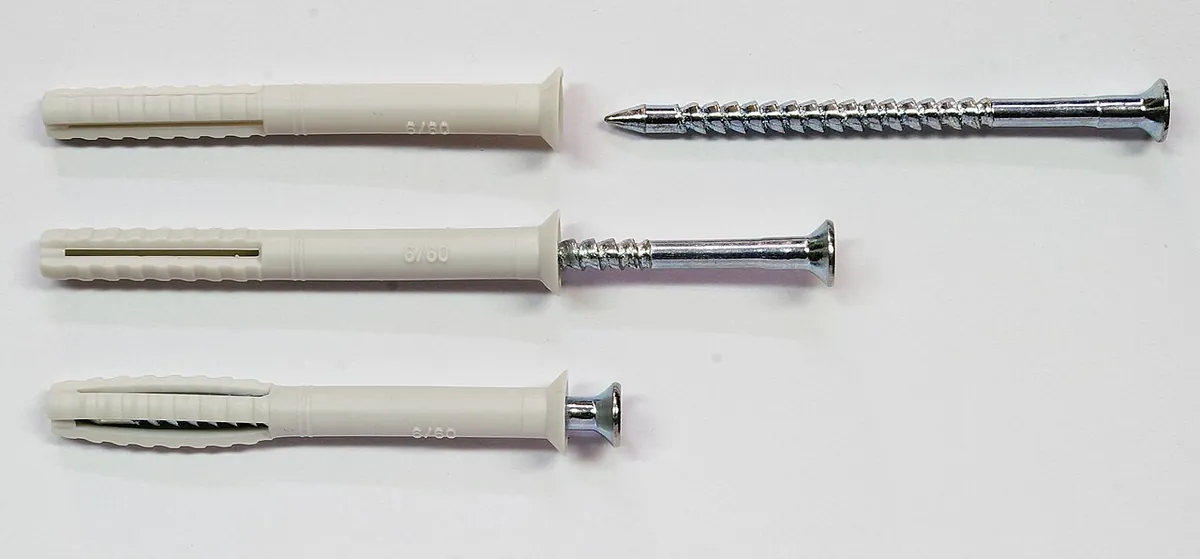
Photo: smial, Wikimedia Commons, Free Art License
For medium and heavy pictures, drilling and using an anchor is the most secure way. Here is how do I hang pictures on a concrete wall with anchors, step by step.
1. Plan the position. Hold the picture against the wall or use a paper template to decide where it goes. The center of a picture is usually hung about 57 to 60 inches above the floor. Mark where the hanger on the back of the frame will fall, not the top of the frame. For two hangers, measure the distance between them on the frame and mark both points level.
2. Check for hazards. Use a scanner to check for electrical cables, pipes and, in some buildings, post-tensioning tendons or radiant heating. Avoid drilling directly above or below outlets and switches, where wires often run.
3. Mark and tape. Mark the hole with a pencil cross and put a piece of painter's tape over it; this stops the bit from wandering and reduces chipping.
4. Drill. Fit a masonry bit the same diameter as the plug or screw, set the drill to hammer mode, hold it level and perpendicular, and start slowly. Drill slightly deeper than the anchor length, pulling the bit out occasionally to clear dust. Wear eye protection and a mask.
5. Clean the hole. Vacuum or blow out the dust so the anchor fits snugly.
6. Insert the anchor. Tap a plastic plug in flush with the wall, then drive the screw, leaving it sticking out enough to hang the wire or hook. For concrete screws, drive the screw directly into the hole without a plug. For sleeve anchors, insert and tighten as directed.
7. Hang and level. Hang the picture and check it with a level. A small piece of adhesive putty or bumpers on the bottom corners keeps it straight.
Concrete Screws and Sleeve Anchors for Heavy Pictures
For heavy mirrors, large framed art, televisions and shelves, use stronger anchors. Concrete screws, often blue-coated, are driven into a pre-drilled hole of the specified size and cut their own threads in the concrete; a 3/16 inch screw with 1 inch or more of embedment can hold substantial loads in solid concrete, and they can be removed later. Sleeve anchors expand as they are tightened and are good for heavy items in concrete and solid block. Always follow the maker's hole size and embedment depth, and use at least two anchors for heavy pieces. See concrete screws and types of concrete anchors.
Hanging Pictures on Cinder Block and Brick Walls
Concrete block walls are hollow inside, with solid face shells about 1 to 1.5 inches thick and hollow cores. When hanging pictures on block, drill into the solid face shell or, better, into the solid webs; short anchors and screws that stay within the face shell hold well. Small concrete block anchor screws, such as short concrete screws and ribbed plastic plugs designed for hollow block, are the usual choice for light to medium frames. For heavy items on hollow block, use toggle-type anchors designed for hollow masonry, or anchors set in grouted cells. Mortar joints are softer and easier to drill, but anchors in mortar can pull out more easily, so for heavy pieces drill into the block itself. On brick walls, drill into the brick rather than the mortar for strength, or into the mortar if you want an easier repair later. See concrete masonry unit and how to paint cinder blocks.
Renter-Friendly Ways to Hang Pictures on Concrete
If you rent, check your lease and ask your landlord before drilling. Many landlords allow small holes that are easy to patch. Renter-friendly options include adhesive strips and hooks, hardened steel picture hooks that leave tiny holes, existing picture rails, tension rods and freestanding easels, leaning art on furniture, and a single anchor for a picture ledge that holds several frames. When you move out, fill small holes with spackle or a concrete patching compound and touch up the paint. See concrete patching compound.
Finding the Right Height and Layout
Before you work out how to hang pictures on concrete walls, decide exactly where each picture should go, because holes in concrete are harder to move than holes in drywall. Galleries and designers usually hang art so the center of the picture is about 57 to 60 inches above the floor, roughly eye level for most adults. Above a sofa or sideboard, leave about 6 to 10 inches between the top of the furniture and the bottom of the frame. For a group of pictures, treat the whole group as one large picture and center it at the same height, with 2 to 3 inches between frames. A simple trick is to cut paper templates the size of each frame, mark where the hanger falls on each template, and tape them to the wall with painter's tape. Step back, adjust until the layout looks right, then drill or tap hooks through the marks on the paper. This saves extra holes, which is especially valuable when hanging pictures on concrete walls, where every hole takes effort to drill and to patch.
How to Hang Pictures on Concrete Walls in Basements
Basement walls are often poured concrete or concrete block, and they can be cool and slightly damp, which affects how to hang pictures on concrete walls in those rooms. Adhesive strips may not hold on damp or dusty walls, and moisture can damage paper art, so use frames with backing boards and a small air gap behind them, such as bumpers on the corners, to let air circulate. Mechanical fasteners, such as hardened hooks, plugs and concrete screws, are more reliable than adhesives in basements. Before drilling, check whether the wall has insulation and drywall over the concrete; if so, you may need longer screws that pass through the drywall into the concrete, or simply hang light pictures on the drywall with standard anchors. If the basement wall shows dampness or efflorescence, fix the moisture problem before hanging valuable art. See is concrete waterproof and efflorescence on concrete.
How to Hang Pictures on Concrete Walls in Apartments and Lofts
In many apartments, condos and loft buildings, interior walls are concrete or concrete block, which is why the question how do you hang pictures on a concrete wall comes up so often. Start by reading the lease or building rules, since some buildings restrict drilling, especially in post-tensioned concrete where cables run inside floors and some walls, or in shared walls that carry fire ratings. In modern buildings, ask the building manager whether walls contain cables, conduits or radiant heating pipes. Where drilling is allowed, use the smallest anchors that will safely hold the picture, keep holes away from outlets and switches, and avoid drilling near the top and bottom of walls where services often run. Where drilling is not allowed, picture rails, ceiling tracks, adhesive systems, tension poles and leaning art on furniture are good alternatives that leave little or no trace. See post-tensioned concrete slab.
Hanging Mirrors, TVs and Shelves on Concrete
Heavier items follow the same principles as hanging pictures on concrete walls, with stronger hardware. Large mirrors should be hung with two or more concrete screws or sleeve anchors through a French cleat or mirror brackets, so the weight is spread and the mirror cannot slip off. Televisions need a wall mount rated for the TV's weight and size, fastened with the concrete anchors supplied or recommended by the mount maker, usually sleeve or wedge anchors or heavy concrete screws, in solid concrete rather than hollow block cores. Floating shelves and cabinets need several anchors along a rail. For any heavy or valuable item, use a level, double-check that the anchors are fully tight, and test the mount by pulling down on it firmly before hanging the item. See how to anchor a post to concrete and concrete bolts.
Removing Anchors and Patching Holes in Concrete
When you change your layout or move out, you may need to remove hooks and anchors and patch the holes. Adhesive strips are removed by pulling the tab slowly straight down along the wall. Hardened picture hooks and concrete nails can be pried out gently with pliers. Plastic plugs can be removed by threading a screw partway in and pulling it out with pliers, or by pushing them in slightly and filling over them. Concrete screws back out with a driver. Sleeve anchors can be cut flush with a grinder or driven in. Then fill the holes with spackle for painted walls, or with a concrete patching compound for bare concrete, let it dry, sand it smooth and touch up the paint. On exposed concrete, mix a small amount of patching compound to match the color as closely as possible. See how to remove concrete anchors and concrete patching compound.
Safety When Drilling Concrete Walls
Drilling concrete creates fine dust that contains crystalline silica, which is harmful to breathe over time. When drilling a few holes for pictures, wear safety glasses and a dust mask, hold a vacuum nozzle under the hole or tape an envelope below it to catch dust, and clean up with a vacuum rather than sweeping. Hammer drills are loud, so hearing protection helps on bigger jobs. Keep the drill level and avoid leaning on it, which can make the bit bind and twist your wrist. And always check for hidden cables and pipes first; hitting a live wire or water pipe turns a simple picture-hanging job into a costly repair. See concrete dust.
Hanging Pictures on Concrete Walls Outdoors
Patios, porches, garden walls and covered outdoor rooms often have concrete or block walls, and outdoor art, mirrors, planters, signs and lights can make them feel like part of the house. Outdoors, hanging pictures on concrete walls calls for weather-resistant hardware: stainless steel or coated concrete screws, and anchors rated for exterior use, since plain steel rusts and stains the wall. Adhesive strips generally fail outdoors due to temperature swings and moisture. Choose frames and art made for outdoor use, such as metal, sealed wood, outdoor canvas or tile, and leave a small gap behind them so water can drain. Seal around anchors with a dab of exterior caulk to keep water out of the drilled holes, especially in freezing climates. See concrete fence and concrete patio ideas.
Quick Summary: How to Hang Pictures on Concrete Walls
To sum up how to hang pictures on concrete walls: weigh the picture, choose hardware rated for at least twice that weight, plan the layout with paper templates, check the wall for wires and pipes, and then use the simplest method that works. Light frames can go up with adhesive strips or hardened picture hooks; medium frames with plastic plugs and screws; heavy mirrors and art with concrete screws or sleeve anchors; and whole collections on a picture rail. On block walls, use small concrete block anchor screws in the solid face shells. Drill with a hammer drill and the right masonry bit, keep holes away from edges, and clean up the dust. With these steps, anyone can learn how to hang pictures on concrete walls neatly and securely, and how do you hang pictures on a concrete wall stops being a frustrating question.
Tips From Professional Picture Hangers
Professional installers who spend their days hanging pictures on concrete walls in galleries, hotels and offices rely on a few habits. They use two hangers on anything wider than about 18 inches, so frames stay level and do not shift when bumped. They use D-rings on the back of frames rather than wire for heavy pieces, because D-rings sit flat and spread the load. They measure twice and drill once, often using a laser level to line up a row of frames. They use security hardware in public spaces so art cannot be lifted off the wall. And they always keep a small kit of patching compound and touch-up paint, because even professionals sometimes need to move a hole.
Choosing Picture Hangers and Frame Hardware
The hardware on the back of the frame matters as much as the anchor in the wall. Sawtooth hangers are fine for small, light frames but can slip off a nail or hook if bumped. Picture wire, stretched between two D-rings or screw eyes about a third of the way down the frame, lets a single hook hold a medium frame, though the picture can tilt. D-rings screwed to each side of the frame and hung on two hooks or screws keep heavier pictures level and secure. French cleats, a pair of interlocking beveled strips, one on the wall and one on the frame, spread the weight of heavy mirrors and large art across several anchors and make leveling easy. For canvases, the stretcher bar itself can sit on a screw head or a hook. When planning how to hang pictures on concrete walls, match the frame hardware to the anchor: wire to a single hook, D-rings to two screws, and cleats to a row of concrete screws.
Tools Checklist for Hanging Pictures on Concrete Walls
Gather everything before you start so the job goes quickly. You will need a tape measure, pencil, level, painter's tape and paper for templates; a stud and wire scanner; a hammer for hooks and nails; a hammer drill with masonry bits in 3/16 and 1/4 inch sizes for most anchors; plastic plugs, concrete screws or sleeve anchors suited to the weight; a screwdriver or drill driver; safety glasses and a dust mask; and a vacuum for the dust. Keep a small tub of patching compound and some touch-up paint on hand for any holes in the wrong place. With this kit, hanging pictures on concrete walls takes only a few minutes per frame once you have done the first one.
Common Mistakes and How to Fix Them
Using a regular drill. Without hammer action, drilling concrete is slow and burns out bits. Use a hammer drill, which many hardware stores rent by the day if you only need a few holes.
Wrong bit size. A hole too big lets the anchor spin; too small and it will not go in. Match the bit to the anchor.
Hole too shallow. Drill slightly deeper than the anchor length so dust has somewhere to go, and mark the depth on the bit with tape.
Drilling at the edge. Holes near corners and edges can blow out chunks of concrete. Keep at least 2 inches from edges, and further for larger anchors such as sleeve anchors, which expand and push outward as they are tightened.
Spinning plug. If a plug spins, remove it, fill the hole with a little patching compound or use a larger plug, or move the hole slightly.
Wrong position. Fill the old hole with patching compound, let it dry, sand and paint, and drill a new hole at least an inch away, because drilling right next to an old hole can make the new one wander into it and leave the anchor loose. If the picture will cover the old hole, you can skip the patching altogether.
Frequently Asked Questions
How do you hang pictures on a concrete wall without drilling?
Use adhesive strips or hooks for light frames, hardened steel picture hooks or concrete nails for heavier ones, or a picture rail.
Can you hammer a nail into a concrete wall?
Regular nails bend. Hardened concrete nails or special picture hooks with steel pins can be hammered into many concrete walls.
What size drill bit for hanging pictures on concrete?
Usually 3/16 to 1/4 inch, matched to the plug or concrete screw.
Do I need a hammer drill?
For concrete, yes. A hammer drill makes drilling fast and easy; a regular drill struggles.
How do I hang heavy pictures on concrete walls?
Use concrete screws or sleeve anchors rated for well over the weight, and at least two fixings.
Sources
- OSHA: silica dust when drilling concrete
- National Concrete Masonry Association: anchors in concrete masonry
- American Concrete Institute: anchoring to concrete
- US Consumer Product Safety Commission: anchoring heavy furniture and TVs
Related Guides
- Concrete board — backer board for shower walls and tile floors, installation and waterproofing