
Concrete Post Base: How to Anchor 4x4 and 6x6 Posts to Concrete
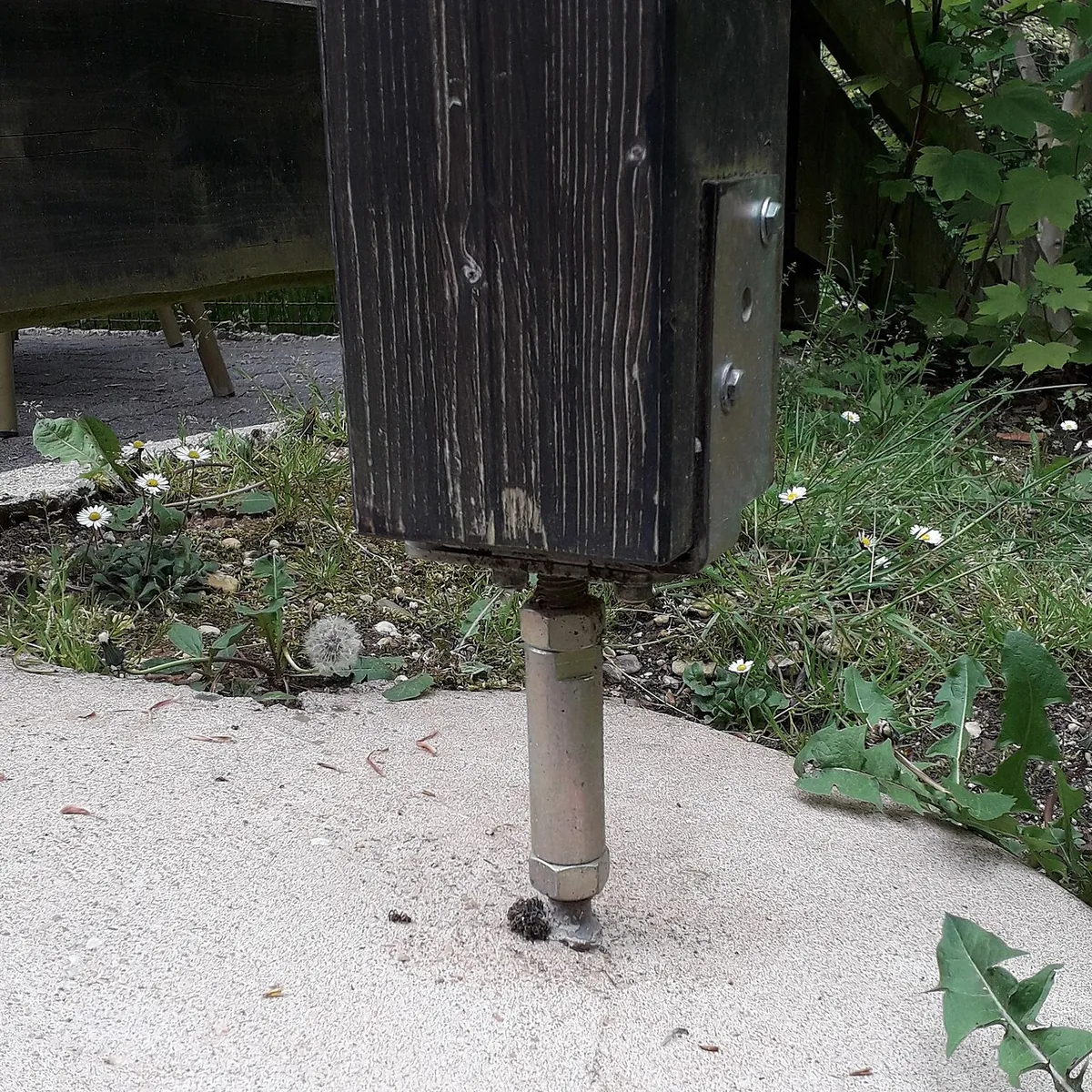
Photo: ABBwiki, Wikimedia Commons, CC BY-SA 4.0
Quick Answer
A concrete post base is a galvanized steel bracket that holds a wood post on top of a concrete slab, pier or footing, keeping the end grain about an inch off the concrete so it does not rot. To anchor a post to concrete, either set a wet-set post base into fresh concrete, or bolt a standoff post base to cured concrete with a 1/2- or 5/8-inch wedge anchor, epoxy anchor or J-bolt, then nail or screw the post into the bracket with the fasteners the maker specifies. Buy the base for the post's actual size: a 4x4 post base for concrete fits a 3-1/2-inch post, and a 6x6 concrete post base fits a 5-1/2-inch post. Keep anchors well back from slab edges. Post bases cost about $8 to $40 each.
Posts sit on concrete all over a house: deck and porch posts on piers, pergola and carport posts on patios, fence and mailbox posts, basement support posts, and shade structures on pool decks. The way a post meets the concrete decides how long it lasts and how safe it is. Set a wood post directly on concrete, or bury it in concrete, and it soaks up water and rots at the bottom. Fasten it with a nail or two into nothing, and the first strong wind or a heavy lean can knock it loose. A proper concrete post base fixes both problems.
This guide covers the types of concrete post bases and post brackets for concrete, 4x4 and 6x6 sizes, which concrete post anchors to use, step-by-step methods for anchoring 4x4 post to concrete and for 6x6 posts, edge distance and load rules, and the most common mistakes.
What Is a Concrete Post Base?
A concrete post base, also called a post bracket, post anchor or post saddle, is a formed steel connector. The post sits in a U-shaped cup or between two side plates, and the bottom of the connector attaches to the concrete. Good concrete post bases do three jobs:
- Hold the post in place against sideways pushes and uplift, within the limits on the maker's data sheet.
- Lift the post off the concrete with a standoff, usually about 1 inch, so water drains away from the end grain and the wood can dry.
- Make a clean, adjustable connection that is easy to inspect and replace.
Most are hot-dip galvanized (G90 or heavier, or triple-zinc G185) or stainless steel, because pressure-treated lumber corrodes plain steel. Use fasteners with the same or better coating as the bracket.
Types of Concrete Post Bases and Brackets
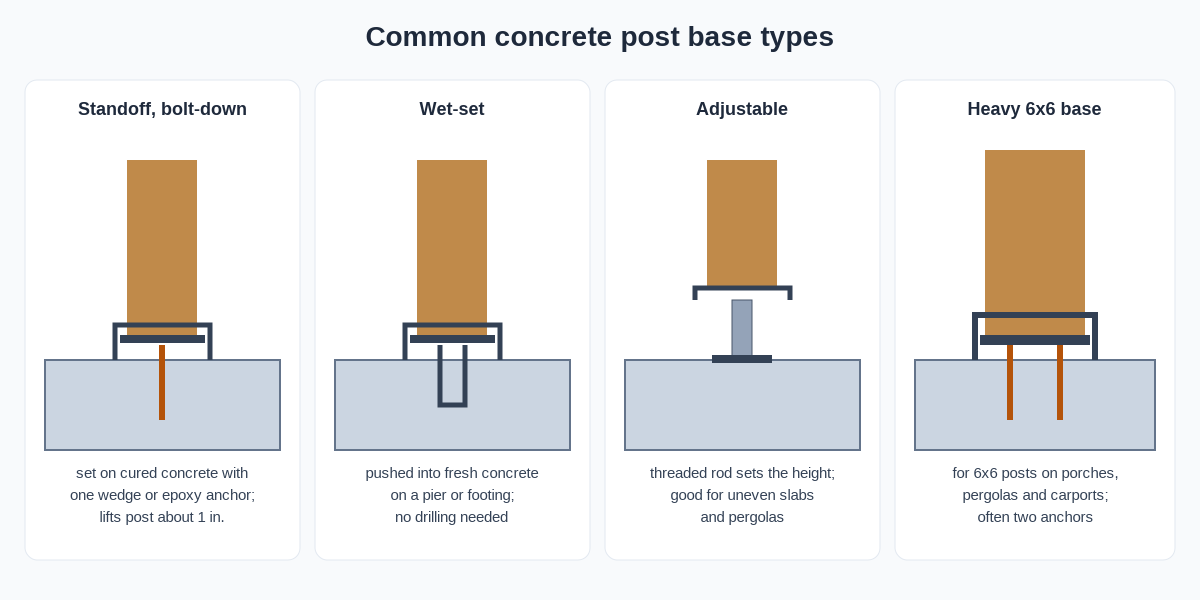
- Standoff bolt-down post base. The most common type for existing slabs and piers. A cup with a standoff plate is bolted to cured concrete through a center hole with one anchor. Brands sell them in 4x4, 6x6 and other sizes.
- Wet-set post base. Has a leg or strap that is pushed into fresh concrete as you finish a pier or footing. No drilling, and very strong once the concrete cures, but you must place it accurately while the concrete is wet.
- Adjustable post base. A threaded rod or bolt lets you fine-tune the post height after the base is anchored, handy on uneven slabs and for pergolas, like the one in the photo above.
- Elevated or decorative bases. Raise the post several inches with a steel tube or hide the bracket under a trim cover.
- Heavy-duty column bases. Thicker steel with two or more anchors for 6x6 and larger posts carrying roofs, carports and big pergolas.
- Simple flat brackets and angle clips. L-shaped concrete post brackets screwed to the sides of a post and to the slab. Cheap, but usually not rated for uplift, and they leave the post end on the concrete unless you add a spacer.
Post brackets for concrete are also sold as "post anchors for concrete" and "concrete post brackets"; the names overlap. What matters is the post size, the standoff, the rated loads, and how it attaches to the concrete.
4x4 and 6x6 Concrete Post Base Sizes
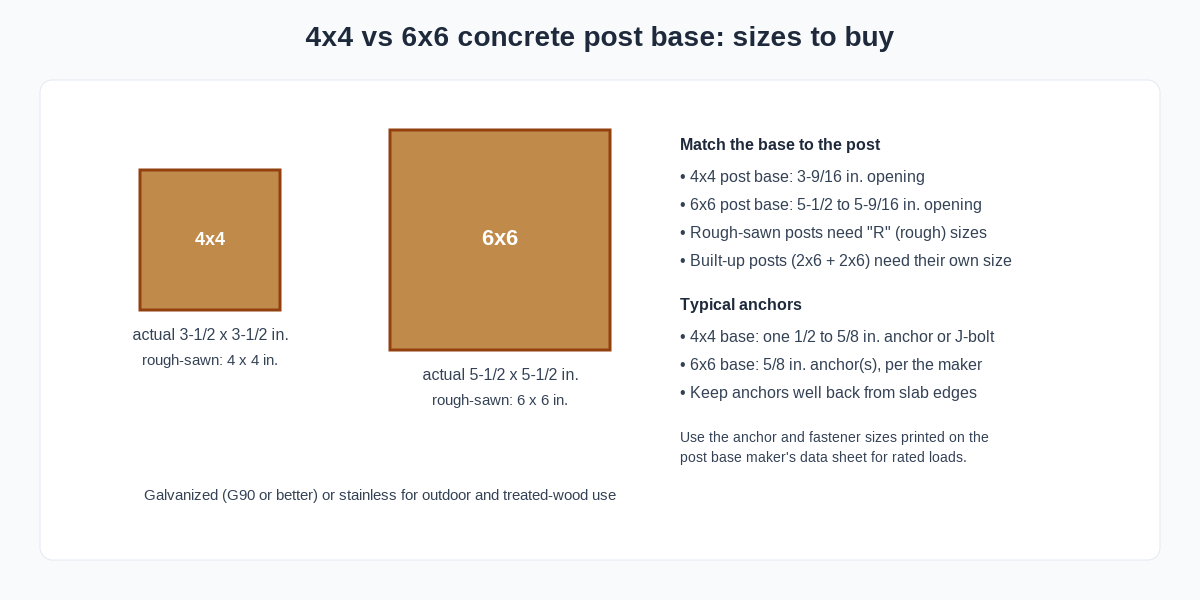
Lumber names are bigger than the real wood. A surfaced 4x4 is actually 3-1/2 by 3-1/2 inches, and a 6x6 is 5-1/2 by 5-1/2 inches. Rough-sawn posts are closer to their full size and need brackets labeled for rough lumber.
| Post | Actual size | What to buy | Common uses |
|---|---|---|---|
| 4x4 | 3-1/2 × 3-1/2 in. | 4x4 post base for concrete, one 1/2–5/8 in. anchor | Low decks, fences, mailbox posts, light pergolas, railings |
| Concrete post base, 6x6 | 5-1/2 × 5-1/2 in. | 6x6 concrete post base, 5/8 in. anchor(s) | Deck and porch posts, pergolas, carports, covered patios |
| Rough 4x4 / 6x6 | 4 × 4 / 6 × 6 in. | Bases sized for rough lumber | Timber-frame and rustic structures |
| Built-up posts | Varies | Bases sized for 2-ply or 3-ply posts | Porch columns, beams on built-up posts |
Building codes now require 6x6 posts for many deck heights; the American Wood Council's DCA 6 deck guide, for example, limits 4x4 posts to shorter heights. For a deck or porch, check your plans before buying 4x4 post brackets for concrete.
Which Concrete Post Anchors to Use
| Anchor | When to use | Notes |
|---|---|---|
| J-bolt or anchor bolt cast in | New piers and footings | Strongest and simplest; set while concrete is wet |
| Wedge anchor | Cured solid concrete, away from edges | Common for 1/2- and 5/8-inch post bases; needs edge distance |
| Epoxy anchor (threaded rod in adhesive) | Cured concrete, near edges, high loads | No expansion stress; follow cure time |
| Screw anchor (large concrete screw) | Lighter loads, removable bases | Easy to install; check rated capacity |
| Sleeve anchor | Brick, block, weaker concrete | Not for edge locations on thin slabs |
Concrete post anchors, 6x6 and larger, generally use 5/8-inch anchors; 4x4 post anchors for concrete commonly use 1/2- or 5/8-inch anchors. Use the anchor diameter and embedment shown on the post base's data sheet, since that is what its rated loads assume. For anchor types in depth, see types of concrete anchors and concrete screws.
How to Anchor a Post to Concrete: Bolt-Down Base
Use this method to anchor a post to concrete that is already cured: a patio, pool deck, garage slab or existing pier.
- Check the concrete. It should be solid, at least about 4 inches thick for light posts and thicker or on a footing for heavy loads, and free of cracks where the base will sit. Tap it with a hammer; a hollow sound means a void or delamination.
- Lay out the post locations with string lines, and mark the center of each base. Keep anchors well back from slab edges: for a 1/2-inch wedge anchor, at least about 2-1/2 inches, and 4 inches or more is better.
- Drill the hole with a hammer drill and a carbide bit of the anchor's exact diameter, to the embedment depth plus about 1/2 inch. See concrete drill bits.
- Clean the hole with a blow-out pump and brush.
- Set the anchor. For a wedge anchor, tap it through the base into the hole and tighten the nut to the specified torque. For epoxy, inject adhesive, insert threaded rod, wait for cure, then attach the base.
- Square the base to the string lines before final tightening, so the post faces line up.
- Set the post in the cup, plumb it with a level, and brace it.
- Fasten the post with every nail or structural screw the maker calls for, of the specified type and length. Missing fasteners can reduce the base's rated capacity to a fraction.
Anchor 4x4 post to concrete: quick version
For a fence, mailbox, railing or light pergola post, the steps are the same at a smaller scale: buy a 4x4 post bracket for concrete with a standoff, drill one 1/2-inch hole, set a wedge or screw anchor, plumb the post and nail or screw it in. When anchoring 4x4 post to concrete patios for anything taller than about 4 feet, add diagonal bracing or tie the posts together at the top, because a single bracket at the base does not make a tall post rigid.
Wet-Set Bases: The Strongest Concrete Base for Post Anchors
When you pour a new pier, footing or slab, a wet-set post base or cast-in J-bolt gives the strongest connection and saves drilling. It is the best concrete base for post anchors on new decks, porches and pergolas.
- Pour and finish the pier or footing; see concrete piers and concrete footings.
- Set string lines so you can place each base exactly where the post will go.
- Push the wet-set base or J-bolt into the fresh concrete, wiggling it slightly so concrete fills around the leg, until the standoff plate is at the right height.
- Check alignment along the strings and plumb, then smooth the concrete around it.
- Let it cure before loading; light framing can often start after a few days.
For a 4x4 post, concrete base piers of 8 to 10 inches are common; for a 6x6 post, concrete base piers of 10 to 12 inches or more give room for the bracket and anchor. Do not trap concrete in post anchor cups; keep the cup clean so the post seats fully.
6x6 Posts: Pergolas, Porches and Carports
Larger structures put more load and leverage on each base. Choosing a 6x6 post anchor, concrete thickness and edge distance matter even more:
- Use a heavy-duty 6x6 concrete post anchor rated for uplift and lateral loads, often with a 5/8-inch anchor.
- Put the base on a footing or a thickened part of the slab, not on a thin patio edge. A 4-inch patio is often too thin and too close to an edge for a roofed structure.
- For a 6x6 post, concrete anchor holes should be drilled to full embedment, cleaned, and set with wedge or epoxy anchors as the base maker specifies.
- Brace the posts with knee braces or tie them into beams; post bases alone do not make a freestanding structure stable against wind.
- Check local code: covered patios, carports and pergolas over a certain size often need a permit and designed footings.
With a 6x6 post base, concrete strength also matters; old, cracked or weak patio concrete may not hold an expansion anchor. When in doubt, cut a square out of the slab and pour a proper footing under each post.
Anchor Post to Concrete or Set It in Concrete?
Many people set fence and deck posts directly in concrete in a hole. It is quick and strong at first, but wood posts in concrete often rot within 10 to 15 years, because the concrete holds water against the wood and the post shrinks away from the concrete, leaving a gap that fills with water. Post bases on top of concrete piers keep the wood dry and let you replace a damaged post without breaking out concrete.
| Method | Pros | Cons |
|---|---|---|
| Post base on concrete | Post stays dry, easy to replace, inspectable | Needs bracing on tall posts; more hardware |
| Post buried in concrete | Fast, rigid for fences | Rot at grade; hard to replace |
| Post on gravel in hole (fences) | Drains well, easy to replace | Less rigid in soft soil |
For decks, porches and pergolas, most codes and deck guides call for posts on footings with approved connectors, not posts buried in concrete.
Edge Distance, Slab Thickness and Loads
- Edge distance: expansion anchors near edges can split off concrete. Stay back as far as the anchor data sheet requires; for a 4x4 post anchor, concrete edges within about 2 inches are risky, and 4 inches or more is a better target.
- Spacing: keep anchors in a multi-anchor base at the spacing the base provides; do not add extra holes close together.
- Slab thickness: anchors need concrete below their embedment; thin slabs can blow out the bottom.
- Uplift: roofs, shade sails and pergolas can lift posts in wind. Choose bases with published uplift ratings and use every fastener.
- Lateral load: standoff bases are not designed to make a post stand up on its own as a cantilever; brace the structure.
4x4 Post Base: Concrete Checklist Before You Drill
- Is it solid? Old patios can be hollow underneath from washed-out base. Tap with a hammer and listen.
- How thick is it? Drill a test hole in an out-of-the-way spot or check the edge. Most anchors need at least 1-1/2 times their embedment in total thickness.
- Where are the edges and joints? Keep anchors away from slab edges, control joints and cracks.
- What is under it? Radiant tubing, conduit, plumbing and post-tension cables can run through slabs. Scan if in doubt.
- Is it level? Adjustable bases or shims under the base plate can take up small differences.
Mailbox, Fence and Railing Posts
Small posts are where most homeowners first need to fasten wood to concrete. To attach a 4x4 post to concrete, bracket choice depends on how tall the post is and what pushes on it. A mailbox post or a short railing post on a driveway edge or sidewalk can use a single 4x4 post base with a 1/2-inch wedge anchor, plus a diagonal brace or a solid connection to a rail at the top. If there is no slab, you need a concrete base for 4x4 post support: dig a hole below the frost line, pour a small pier and set a wet-set base or J-bolt in it. For fences on a patio or retaining wall cap, use bases rated for the wind load on the fence panels, or switch to surface-mount metal fence posts made for concrete.
A simple concrete post bracket made from bent steel angle, screwed into the side of the post and anchored to the slab, works for light garden posts, trellises and planter frames. It is not a substitute for a rated post base on anything that carries a roof or people.
Pergolas and Shade Structures on Patios
Pergolas are the most common reason people search for post bases. For a pergola on concrete, 6x6 post base selection comes down to three things: the size of the pergola, the wind, and the patio's thickness at each post. A small freestanding pergola with knee braces on a sound 4-inch patio can often use bolt-down 6x6 bases with wedge anchors set well back from the edges. A large pergola, one with a solid roof or shade fabric, or one in a windy area usually needs a footing under each post: cut out a square of the patio, dig a footing, pour it, and set a wet-set or bolt-down base on it. Many pergola kits list the base and anchor they require, and some include them.
Basement Support Posts and Columns
Basement beams often rest on wood posts or steel columns sitting on the basement floor. These should stand on a proper footing under the slab, not just on a thin floor. A wood post in a basement needs a concrete post bracket or base with a standoff, or at least a moisture barrier under the end grain, because basement slabs stay damp. Adjustable steel columns, often called lally or screw jack columns, use a steel plate fastened to the footing. Replacing or adding basement posts changes how the house carries its weight, so get a contractor or engineer to size the post and footing.
Removing or Replacing a Post Base
To replace a rotted post, brace the beam above it, remove the fasteners and slide the old post out. If the base is rusted or bent, remove the nut on a bolt-down base, or cut the anchor flush with a grinder and drill a new hole at least a few anchor diameters away. Wet-set bases cast into concrete usually cannot be removed; cut them off and install a bolt-down base next to the stub, or core out the old one. Clean rust stains with the methods in removing rust stains from concrete.
Tools and Materials
- Post bases sized for your posts, plus the structural nails or screws listed on the package.
- Anchors: wedge anchors, epoxy kit with threaded rod, or J-bolts for new concrete.
- Hammer drill or rotary hammer with carbide bits; blow-out pump and wire brush.
- Torque wrench or socket set, hammer, impact driver.
- String line, tape measure, 4-foot level, post level, temporary braces and clamps.
- Safety glasses, hearing protection and a dust mask.
Before drilling, read the base and anchor instructions together. Each lists a hole size, embedment, edge distance and fastener schedule, and the rated load only applies when all of them are followed. If the structure is on permitted plans, the plans may name a specific base and anchor; using a substitute can fail inspection.
Working in Cold Weather or Fresh Concrete
Epoxy anchors cure slowly in cold weather and some will not cure at all below their minimum temperature, so check the label and warm the concrete or wait for a milder day. Wedge anchors work in any weather but need fully cured concrete; expansion anchors set in green concrete, less than about a week old, can loosen. When you pour new piers, set wet-set bases or J-bolts while you finish the concrete instead of drilling later, and keep loads off until the concrete reaches strength.
Painting and Protecting Post Bases
Galvanized bases look shiny and industrial, which some people like and others want to hide. You can paint galvanized steel after cleaning it with a mild detergent and using a primer made for galvanized metal; ordinary paint peels off zinc. Decorative trim covers and post skirts slide over the base and hide it completely, but leave a small gap at the bottom so water can drain. Do not pile mulch, soil or gravel against a post base; it holds moisture against the steel and the wood and defeats the purpose of the standoff. Hose off salt and fertilizer splash a few times a year near driveways and lawns, and look for rust at the welds each spring.
Common Mistakes With Concrete Post Bases
- Wrong size bracket. A 4x4 bracket on a 6x6 post, or rough lumber in a surfaced-size cup.
- Too few fasteners or deck screws instead of rated structural fasteners.
- Plain steel hardware with treated lumber, which corrodes quickly.
- Anchors at the edge of a patio or pier, cracking the concrete.
- Post set right on the concrete with no standoff, so it rots.
- Expecting the base to brace the post. Tall posts still need bracing.
- Drilling into post-tensioned slabs without scanning; see post tension concrete slab.
Concrete Post Base Cost
- 4x4 standoff post base: about $8 to $20.
- 6x6 post base: about $15 to $40.
- Adjustable or decorative bases: about $20 to $80.
- Wedge anchors: about $1 to $4 each; epoxy cartridge about $15 to $40.
- Pro installation: often $50 to $150 per post, more if footings must be poured.
Frequently Asked Questions
How do you anchor a post to concrete?
Bolt a standoff post base to cured concrete with a wedge or epoxy anchor, or set a wet-set base into fresh concrete, then fasten the post into the base with the specified nails or screws.
What size concrete post base for a 4x4?
A 4x4 base for a surfaced post with a 3-9/16-inch opening, or a rough 4x4 base for full-size lumber.
Can I use a 4x4 post for a deck on concrete?
Only for low decks, depending on your code. Many deck guides now require 6x6 posts for most heights.
Do post bases need to be galvanized?
Yes outdoors. Use G90 or heavier galvanized, or stainless steel, with matching fasteners, especially with treated lumber.
Should I put a post directly in concrete?
For decks and pergolas, a post base on a concrete pier lasts longer and is easier to replace. Posts buried in concrete tend to rot at the surface.
Can I put a post base on an old patio?
Yes, if the concrete is solid, thick enough for the anchor and the base is well away from edges and cracks. For roofed structures, pour a footing under each post instead.
What is the best concrete post base for a pergola?
A galvanized 6x6 standoff or adjustable base rated for uplift, anchored with 5/8-inch wedge or epoxy anchors into a footing or thick slab.
Sources
- American Wood Council: DCA 6 Prescriptive Residential Wood Deck Construction Guide
- International Code Council: 2021 IRC Section R507 decks, posts and connections
- Simpson Strong-Tie: post base technical data
- American Concrete Institute: anchoring to concrete
Related Guides
- Handrails for concrete steps — types, code and how to install
- Concrete fence posts — concrete per post, best mix and cold weather
- Dry pour concrete — when pouring dry mix works and when it fails
- How to drill into concrete — hammer drills, bits and step-by-step
- How to remove concrete anchors — wedge, sleeve, screw and epoxy anchors
- Concrete adhesive — epoxy, construction adhesive and bonding agents
- Sonotube concrete calculator — bags per tube, sizes and pouring piers
- Concrete bolts — expansion, lag and anchor bolt sizes
- Concrete nailer — powder, gas and battery tools
- Concrete fence — panel, poured and block fences
- 80 lb bags of concrete — yield, price and how many bags you need
- Sakrete concrete mix — High Strength, 5000 Plus and Fast Setting compared