
How to Remove Concrete Anchors: Every Anchor Type, Tools and Patching
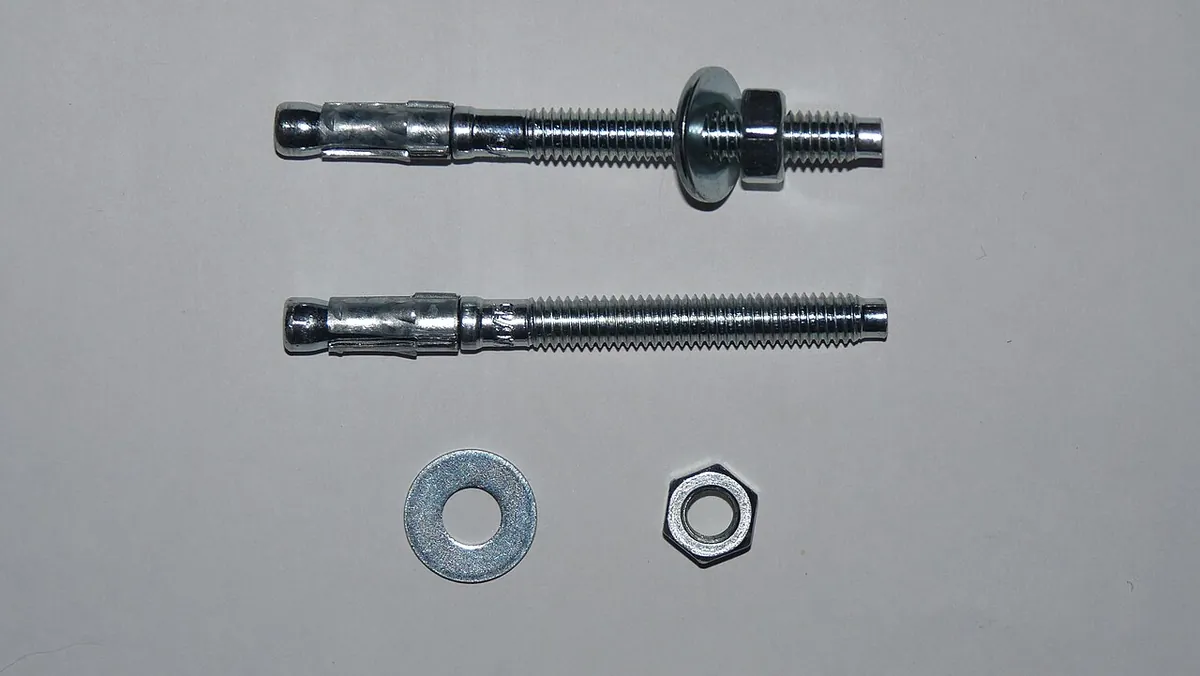
Photo: Dmitry G, Wikimedia Commons, CC BY-SA 3.0
Quick Answer
How to remove concrete anchors depends on the type. Wedge anchors cannot be pulled out once set, so cut them flush with an angle grinder, or remove the nut and hammer the stud down into the hole if the hole was drilled deeper. Sleeve anchors and drop-in anchors can often be loosened and pried out. Concrete screws such as Tapcons back out with a drill or impact driver. Adhesive (epoxy) anchors are cut flush, or heated and twisted out, or core-drilled. After removing concrete anchors, grind any stub below the surface and fill the hole with epoxy or a cement patching compound.
Concrete anchors are made to stay put. Wedge anchors and sleeve anchors expand inside the hole, screws cut their own threads into the concrete, and adhesive anchors are glued in with epoxy. That is good when you are holding up a handrail, a post base, shelving, a machine, or a mailbox. It is a problem when you need to remove the railing, move equipment, change a layout, or clean up an old patio or garage floor full of studs. The two wedge anchors pictured above, one with its nut and washer, show why: the clip at the bottom grips the hole and only tightens when pulled.
This guide explains how to remove concrete anchors of every common type, which tools to use, how to deal with broken and rusted anchors, how to remove anchor bolts cast into concrete, and how to patch the holes so the surface looks clean and is safe to walk on. Most jobs need only basic tools: a wrench, hammer, angle grinder, drill and patching material.
First, Identify the Anchor Type
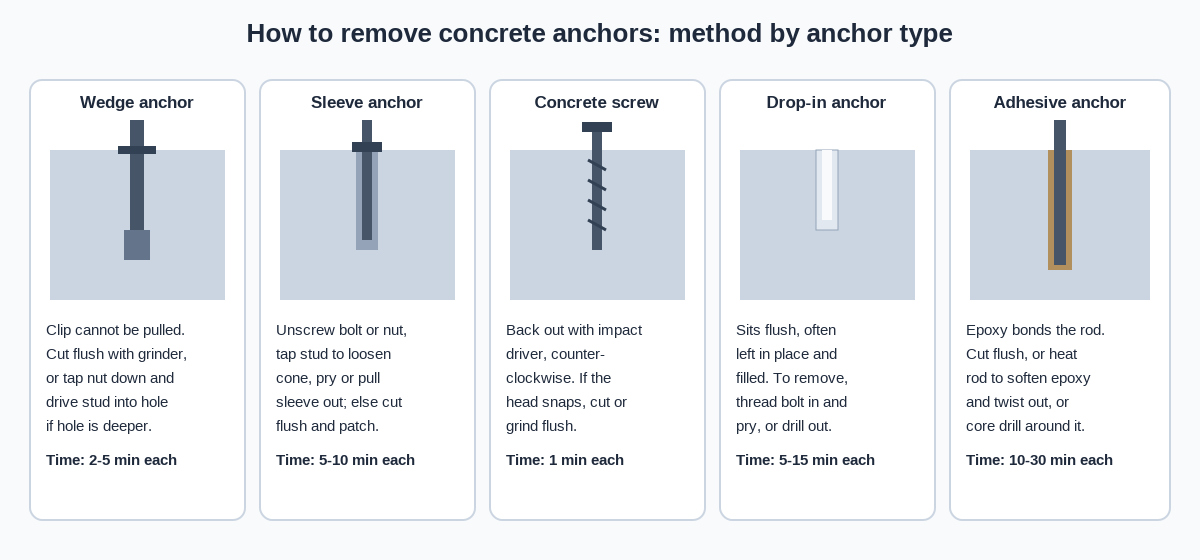
Before you start, figure out what kind of concrete anchor you have, because the method changes completely by type, as the chart above shows. Look at what is above the surface. A threaded stud with a nut and washer is usually a wedge anchor or an adhesive anchor. A bolt head or nut with a short sleeve visible at the surface usually means a sleeve anchor. A hex or flat head with no nut, often blue, is a concrete screw. A flush internally threaded metal ring is a drop-in anchor. A threaded rod with dried epoxy around it at the hole is an adhesive anchor. Large L-shaped or J-shaped bolts sticking out of foundations and footings are cast-in anchor bolts, which were set when the concrete was poured. If you installed them, check your receipts or the remaining box. See types of concrete anchors and concrete screws.
Tools and Safety Gear
For most jobs, gather a socket or wrench set, a hammer and a punch or old bolt, a pry bar, locking pliers, an angle grinder with metal cutting discs and a grinding disc, a cordless drill or impact driver, a hammer drill with carbide masonry bits if you need to drill out an anchor, a shop vacuum, and patching material. For adhesive anchors, add a heat gun or propane torch. Wear safety glasses or a face shield, hearing protection, and gloves. Cutting steel throws hot sparks, so clear flammable materials and keep a fire extinguisher nearby. Grinding concrete produces silica dust, so wear a respirator and use a vacuum with a shroud where possible. See concrete dust and concrete drill bit.
How to Remove Wedge Anchors
Wedge anchors are the most common heavy-duty concrete anchors and the hardest concrete anchors to remove. The steel clip near the bottom expands when the nut is tightened and bites into the concrete. Pulling the stud of a wedge anchor only tightens the clip. You have three options.
Option 1: Cut It Flush
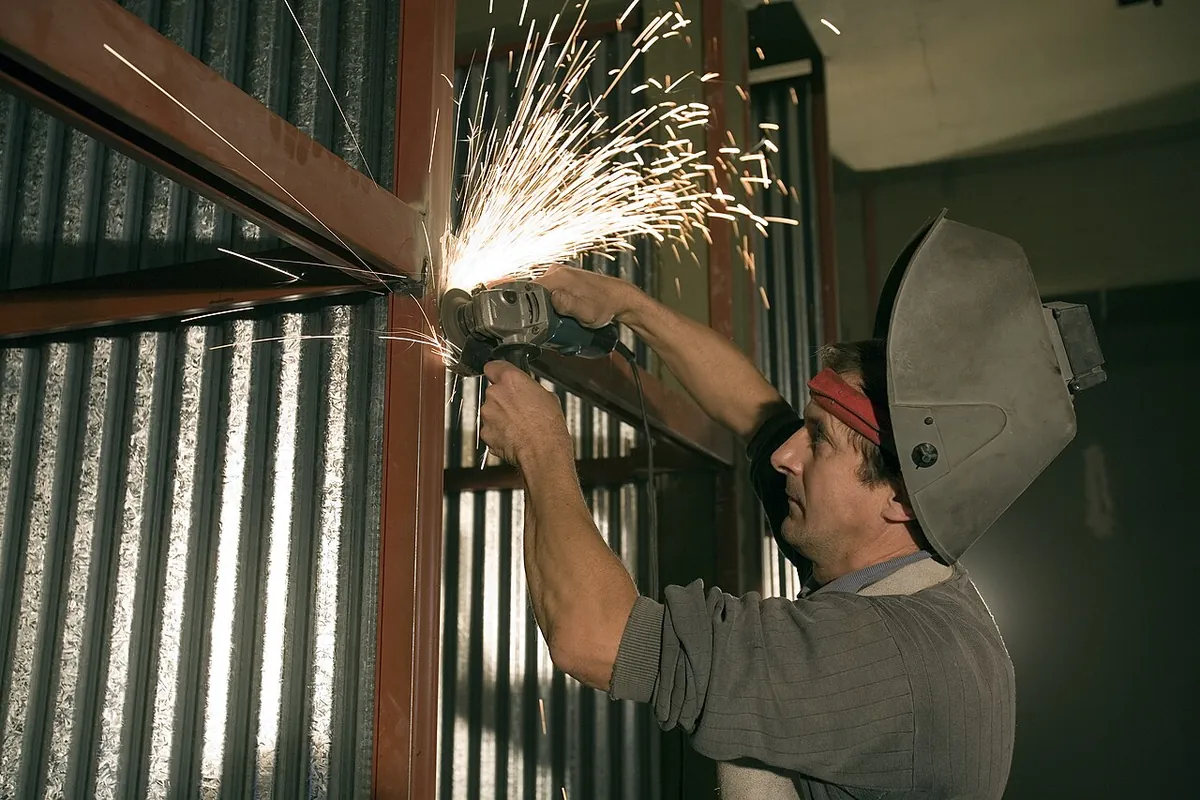
Photo: Jorge Royan, Wikimedia Commons, CC BY-SA 3.0
The fastest way to remove concrete anchors of the wedge type is to cut them off with an angle grinder fitted with a thin metal cutoff disc, as in the photo above. Remove the nut and washer first. Cut the stud as close to the concrete as possible. Then switch to a grinding disc or a flap disc and grind the remaining stub slightly below the surface, about 1/8 inch, so the patch can cover it. Grinding below the surface also prevents rust from staining through the patch later. This method leaves the rest of the anchor in the concrete, which is fine for most uses. A reciprocating saw with a metal blade or an oscillating multi-tool also works where a grinder does not fit, such as against a wall.
Option 2: Drive It Down
If the wedge anchor was installed in a hole deeper than the anchor's length, which is common because installers often drill extra depth, you can drive the stud down. Thread the nut on flush with the top of the stud so you do not damage the threads, then hit it hard with a hammer. If it moves, remove the nut and keep driving with a punch or a short piece of bolt until the top is below the surface. Then fill the hole. You can test whether there is space below by tapping lightly: a stud that moves even slightly can usually be driven down.
Option 3: Drill It Out
When you need to reuse the same spot or the hole must be completely clean, the concrete anchor can be drilled out. Cut the stud flush, then drill around the anchor with a hammer drill and a carbide bit slightly larger than the anchor diameter, or use a core bit sized just over the anchor. Break the anchor loose and pull it, then clean the hole. This is slow and wears bits, because the bit hits steel. See how to drill into concrete and concrete core drilling.
How to Remove Sleeve Anchors
Sleeve anchors have a bolt or threaded stud inside an expansion sleeve. Tightening pulls a cone into the sleeve and spreads it against the hole. To remove concrete anchors of the sleeve type, first remove the nut or unscrew the bolt head as far as it will go. Tap the stud or bolt gently down into the hole to push the cone away from the sleeve and relax it. Then grip the sleeve with locking pliers, or thread the nut back on, and pry upward with a pry bar or claw hammer under a block of wood. Many sleeve anchors pull out this way. If the sleeve anchor will not move, cut it flush and grind below the surface, as with a wedge anchor.
How to Remove Concrete Screws
Concrete screws, such as Tapcon screws and larger heavy-duty screw anchors, are the easiest concrete anchors to remove. Use a drill or impact driver set to reverse with the correct bit or socket and back the screw out. If the screw is tight, apply steady pressure and slow speed to avoid stripping the head. Penetrating oil can help on old rusty screws. If the head strips or snaps off, grab the remaining shank with locking pliers, or cut it flush and grind below the surface. Unlike a wedge anchor, concrete screws are designed to be removed, and many heavy-duty screw anchors can even be reinstalled in the same hole for temporary uses, following the manufacturer's instructions. See concrete screws.
How to Remove Drop-In Anchors
Drop-in anchors are internally threaded steel shells set flush with the surface, often in ceilings to hang pipe and conduit. Because they sit flush, many people simply leave them in place and fill them. To remove one, thread a bolt into the anchor, then pry or pull on the bolt with a claw hammer or slide hammer. If it does not come out, drill it out with a carbide bit, or fill the threaded opening with epoxy or patching compound so it disappears. See concrete patching compound.
How to Remove Adhesive (Epoxy) Anchors
Adhesive anchors are threaded rods or rebar glued into holes with epoxy, vinyl ester or similar resin. They are very strong and do not loosen like mechanical anchors. To remove concrete anchors of the adhesive type, you can cut them flush and grind below the surface, which is the simplest choice. If you need the hole clear, heat the rod with a heat gun or propane torch for a few minutes. Most epoxies soften at around 150 to 400 degrees Fahrenheit, depending on the product. Then grip the rod with locking pliers or a pipe wrench and twist it out while still hot. Be careful: heat can damage nearby finishes and the concrete surface, and fumes from burning epoxy are unpleasant. Ventilate the area. As a last resort, core drill around the rod.
How to Remove Cast-In Anchor Bolts
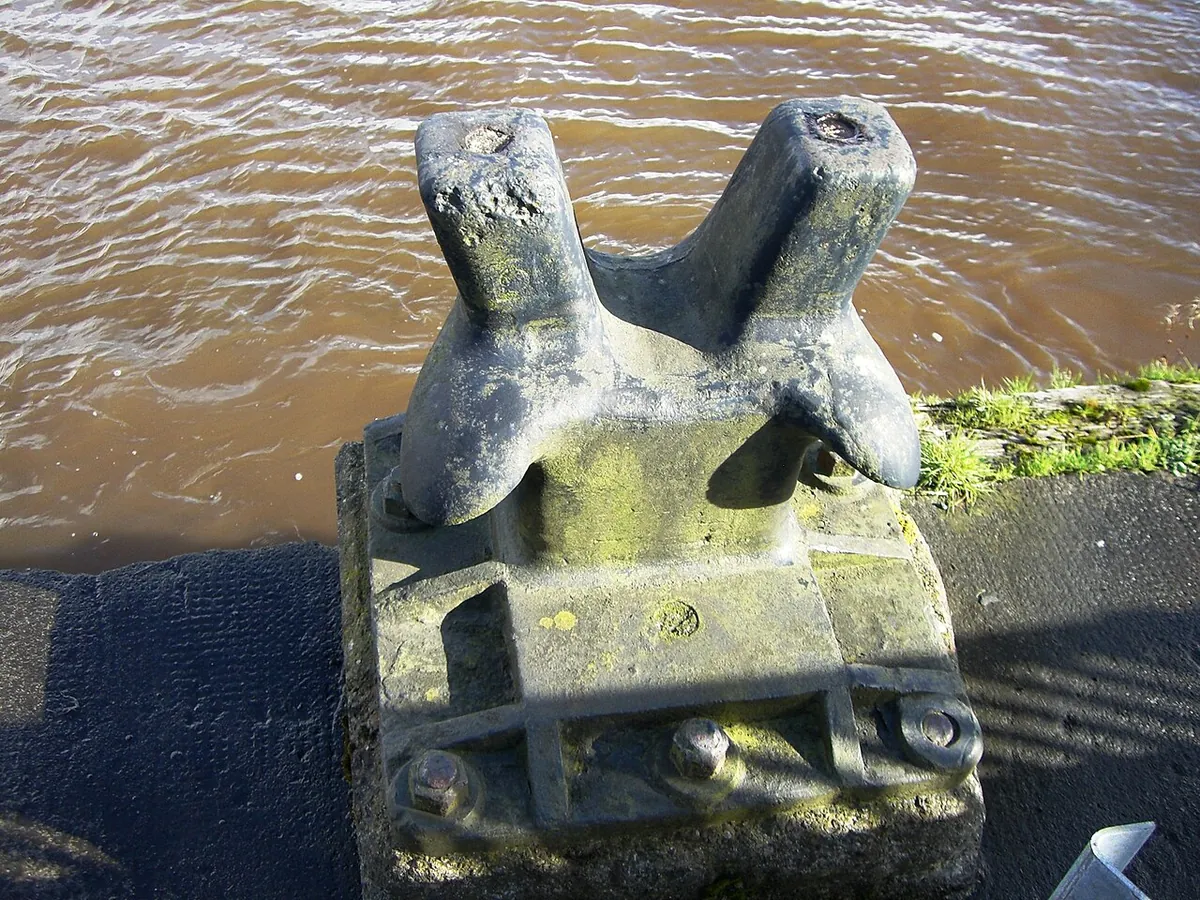
Photo: Lennon, Wikimedia Commons, CC BY-SA 3.0
Cast-in anchor bolts, such as J-bolts in foundations, L-bolts holding light poles, and bolts holding equipment like the old bollard above, are part of the concrete. They cannot be pulled out. The practical approach is to cut them flush and grind below the surface, then patch. If the concrete itself is being removed, the bolts come out with it. Do not cut anchor bolts in a house foundation, light pole base or structural connection unless you are sure they are no longer needed, because they hold the building or structure down against wind and earthquakes. See concrete footings and how to anchor a post to concrete.
Removing Broken or Rusted Anchors
Old outdoor concrete anchors are often rusted, bent or broken, and each broken concrete anchor needs a slightly different fix. Soak rusted nuts with penetrating oil for 15 minutes or overnight before trying to turn them. If the nut will not move, cut it off with a grinder or nut splitter. Bent studs can be cut flush. Broken anchors below the surface can be left in place if they are well below the surface, then patched over. If rust has cracked or spalled the concrete around an anchor, remove loose concrete, cut the anchor well below the surface, and patch with repair mortar. Rust expands and can keep cracking the concrete if steel is left close to the surface. See concrete spalling and how to remove rust stains from concrete.
Patching Anchor Holes
Once you remove concrete anchors or cut them down, patch the holes left by every concrete anchor so they do not collect water, debris or trip people. Steps:
- Clean the hole. Vacuum dust and debris out of the hole. Blow out with compressed air if available.
- Dampen if using cement patch. For cement-based patches, lightly dampen the hole without leaving standing water. For epoxy, keep the hole dry.
- Fill. Use an epoxy repair paste, a hydraulic cement, an anchoring cement, or a polymer-modified cement patching compound. Pack it in firmly, slightly overfilled.
- Finish. Strike it flush with a putty knife or trowel. For a better color match, brush the surface lightly or sprinkle a little dust from the surrounding concrete onto the wet patch.
- Cure. Keep cement patches damp for a day or two if possible; epoxy cures on its own.
Small anchor holes in garage floors and patios blend in well once filled. On decorative or polished floors, color-matched epoxy fillers make the patches less visible. See how to fix cracks in concrete, concrete patching compound and epoxy concrete crack repair.
Removing Anchors From Concrete Steps and Railings
Handrails on concrete steps are often attached with wedge anchors, sleeve anchors, anchor bolts or posts set in core-drilled holes filled with grout or anchoring cement. To remove a railing, first remove the nuts or bolts at the base plates and lift the railing away. Then deal with the concrete anchors one at a time using the method for their type. Posts set in grout can be cut flush with a grinder or reciprocating saw, then ground below the surface and patched. If you plan to install a new railing, you may be able to reuse the holes for new anchors of a larger diameter, or drill new holes a few inches away. Be careful near the edges of steps, where concrete can break off if drilled or hammered too hard. See handrails for concrete steps and how to fix concrete steps.
Removing Anchors From Garage Floors and Shops
Shops and garages often have old anchors from machinery, lifts, shelving and workbenches. Car lift concrete anchors are usually large wedge anchors, 3/4 inch diameter or more, set 4 to 6 inches deep. Cut them flush and grind below the surface, then patch. For lifts or heavy equipment you plan to reinstall in a different spot, check that the floor is thick and strong enough there. If you are coating the floor with epoxy, grind the anchors below the surface and fill with epoxy patching paste before coating, so the steel does not show through. See concrete garage floor repair, concrete coating cost and concrete grinding.
Removing Anchors From Walls and Ceilings
When removing concrete anchors from walls and ceilings, work carefully overhead with eye protection, since debris and sparks fall. Concrete screws and sleeve anchors back out or pry out easily. Drop-in anchors in ceilings are usually left in and filled. A wedge anchor in a wall is cut flush. Make sure the item they held, such as a TV mount, cabinet or pipe hanger, is fully supported before removing the last anchor. Patch wall holes with a patching compound that matches the wall texture, then paint. See concrete paint.
Reusing Anchor Holes
You usually cannot reuse a hole from a wedge anchor or sleeve anchor with the same size concrete anchor, because the hole is enlarged and damaged by the expansion. Options include drilling the hole to the next anchor size up and using a larger anchor, using an adhesive anchor in the old hole, which bonds to the rough sides, or drilling a new hole at least 10 anchor diameters away from the old one to avoid weak concrete. For structural or safety-critical uses, such as railings, follow the anchor manufacturer's spacing and edge distance rules. See types of concrete anchors.
Can You Remove Anchors Without Damaging Concrete?
When you remove concrete anchors carefully, damage is minimal. Concrete screws come out cleanly with no damage. Sleeve anchors and drop-in anchors usually come out with minor damage at the hole edge. A wedge anchor cut flush leaves only a small steel dot that disappears under a patch. Drilling anchors out or prying hard can chip the surface around the hole, especially near edges. Work slowly, use the right method for each type, and patch neatly, and most surfaces look almost the same as before. On decorative surfaces such as stamped or polished concrete, a small color-matched patch is usually less visible than an attempt to pull the anchor that chips a wider area. See types of concrete finishes.
How Much Does It Cost to Remove Concrete Anchors?
Doing it yourself costs little if you own the tools: cutoff discs cost a few dollars each, a tub of epoxy or patching compound about $15 to $40, and an angle grinder about $40 to $150. A handyman typically charges $60 to $120 per hour, and can remove and patch most residential concrete anchors in an hour or two, since each wedge anchor or sleeve anchor takes only minutes. Larger jobs, like removing dozens of anchors from a commercial floor before coating, are often priced per anchor, around $5 to $25 each including patching. See concrete repair cost.
Removing Anchors From Patios, Decks and Post Bases
Patios and porches collect concrete anchors over the years: post bases for pergolas and deck posts, brackets for umbrellas and swings, mailbox posts, fence posts and old railings. Post bases are usually held by one or two wedge anchors or anchor bolts. Remove the nut and washer, lift off the post base, and then cut the wedge anchor flush and grind it just below the surface. If the post base sat on a sleeve anchor, try the loosen-and-pry method first. Outdoor concrete anchors are often rusted, so give penetrating oil time to work before trying the nuts. Once every anchor is gone, fill the holes with an exterior-rated patch so water cannot sit in them and freeze. If you are adding a new pergola or deck, set the new concrete anchors at least a few inches away from the old holes. See concrete patio ideas, concrete porch and concrete fence posts.
Removing Anchors Before Resurfacing or Coating
Before you resurface a slab, stain it, polish it or coat it with epoxy, remove concrete anchors and any other steel from the surface. Overlays and coatings are thin, often 1/8 to 1/2 inch, and steel that sits at the surface will show through, rust, or crack the new layer. Cut every wedge anchor, sleeve anchor and anchor bolt below the surface, grind smooth, and fill the holes with a compatible patching material or the overlay base coat. On floors that will be ground and polished, grind anchors at least 1/4 inch below the final surface, because grinding removes some concrete. See how to resurface concrete, concrete overlay cost and polished concrete cost.
Removing Anchors From Brick and Concrete Block
The same methods work on concrete block and brick, with more care. Hollow concrete blocks and bricks break more easily than solid concrete, so avoid heavy prying and hammering. Back out concrete screws, unscrew and pull sleeve anchors gently, and cut a wedge anchor flush rather than trying to drive it down, since the hole in a block may open into a hollow core. Fill the holes with mortar or a masonry patch that matches the color. See concrete blocks and how to remove concrete from brick.
When to Leave an Anchor in Place
Not every concrete anchor needs to come out. If the anchor is in a spot nobody walks on, such as a wall, a ceiling or the edge of a shop floor, and nothing will be installed there again, cutting it flush and patching is enough. Drop-in anchors in ceilings are usually just filled. Cast-in anchor bolts that may be needed later, such as foundation bolts, should be left alone or capped with a nut to protect the threads. Leaving a cut wedge anchor buried under a patch is normal practice and causes no harm as long as the steel is below the surface and covered, so moisture cannot reach it. Full removal is worth the extra work only when you need the exact hole again, when the concrete surface will be polished, or when rusting steel is already cracking the concrete around the anchor.
Step-by-Step Summary
Here is the short version of how to remove concrete anchors on almost any job. Identify the anchor type from what you see at the surface. Remove nuts, washers and the item being held. Back out concrete screws with a driver. Loosen and pry out sleeve anchors and drop-in anchors where you can. Cut each wedge anchor, adhesive anchor and anchor bolt flush with an angle grinder, then grind it slightly below the surface, or drive the wedge anchor down if the hole is deep enough. Vacuum the holes, fill them with epoxy or patching compound, finish flush and let them cure. With the right tools, a homeowner can remove concrete anchors in a few minutes each and leave a neat, safe surface ready for the next use.
Common Mistakes
- Trying to pull a wedge anchor. Pulling tightens the clip. Cut it or drive it down.
- Leaving stubs at the surface. Grind below the surface so the patch covers the steel and prevents rust stains and trip hazards.
- Skipping eye protection. Grinding and hammering steel throws sparks and chips.
- Cutting structural anchor bolts. Make sure foundation and pole anchors are not needed before cutting.
- Prying near edges. Concrete near edges chips easily.
- Leaving holes open. Water and debris collect in open holes, and freezing water can crack the concrete. See pouring concrete in cold weather.
Frequently Asked Questions
Can you unscrew a wedge anchor?
You can remove the nut, but the stud itself will not come out by turning or pulling, because the clip grips the hole. Cut it flush or drive it down.
What is the easiest concrete anchor to remove?
Concrete screws, such as Tapcons, are the easiest. They back out with a drill or impact driver.
How do you remove an anchor that spins?
Hold the stud with locking pliers while you turn the nut, or cut the stud flush and grind below the surface.
What do you fill anchor holes in concrete with?
Use epoxy repair paste, anchoring cement, hydraulic cement or a cement-based patching compound.
Can you reuse an anchor hole?
Usually only with a larger anchor or an adhesive anchor. Otherwise drill a new hole a safe distance away.
Sources
- Simpson Strong-Tie: mechanical and adhesive anchor installation guides
- Hilti: anchor technical manuals
- American Concrete Institute: anchoring to concrete (ACI 318 Chapter 17)
- OSHA: respirable crystalline silica
Related Guides
- Concrete adhesive — epoxy, construction adhesive and bonding agents
- Concrete bolts — expansion, lag and anchor bolt sizes
- Concrete nailer — powder, gas and battery tools
- Concrete chisel — hand and SDS chisels
- How to hang pictures on concrete walls — hooks, plugs and concrete screws