
How to Paint Cinder Blocks: Prep, Block Filler and the Best Cinder Block Paint

Photo: Rcsprinter123, Wikimedia Commons, CC BY-SA 3.0
Quick Answer
Yes, you can paint cinder blocks, and done right the paint lasts 10 years or more. Here is how to paint cinder blocks: clean the wall and remove efflorescence, repair cracks and mortar joints, check for moisture, let it dry, roll on a coat of block filler (a thick acrylic primer that fills the pores), then apply two coats of 100 percent acrylic masonry or exterior latex cinder block paint with a 3/4 to 1-1/4 inch nap roller, working it into the mortar joints. For damp basement walls use a masonry waterproofing paint instead. Expect to use roughly a gallon of block filler per 75 to 125 square feet and a gallon of paint per 200 to 300 square feet per coat.
Cinder blocks, more correctly called concrete blocks or concrete masonry units, are everywhere: basement walls, garages, garden walls, sheds, retaining walls, outdoor kitchens and commercial buildings. Bare block looks rough and gray, collects dirt and lets water soak in. Painting cinder blocks brightens a basement, gives a garden wall a finished look, and adds a layer of protection. But block is not like drywall. It is very porous, full of pinholes, alkaline, and often damp, and ordinary paint applied straight to it soaks in unevenly, peels or blisters. The wall in the photo above shows the right result: block filled smooth and painted in two colors, with the texture of the block still visible but the pores sealed.
This guide covers how to paint cinder blocks inside and outside, from cleaning and repairs to block filler, choosing cinder block paint, rolling and spraying, painting cinder block basement walls and garden walls, common problems and costs.
Can You Paint Cinder Blocks?
You can paint cinder blocks, and it is one of the most common masonry projects homeowners take on. The key is understanding what makes block different. Concrete block is made of cement, sand and gravel or lightweight aggregate, molded and cured. Its surface has thousands of small voids and pinholes, the mortar joints are recessed and rough, and the material absorbs water like a sponge. Block is also strongly alkaline, especially when new, and that alkali can break down oil-based paint. Finally, block walls that touch soil, such as basement and retaining walls, often have water moving through them.
Each of those facts shapes how to paint cinder blocks. The pores are filled with a block filler so the paint does not soak in unevenly. The alkali is handled by using acrylic or latex products made for masonry instead of oil-based paint. And moisture is checked and dealt with before painting, because no paint can hold back water pushing through a wall from behind. See concrete masonry unit and cinder block vs concrete block for more about the material.
Tools and Materials
- Stiff nylon brush, wire brush and a pump sprayer or pressure washer.
- Masonry cleaner or trisodium phosphate substitute, and an efflorescence remover if needed.
- Mortar repair mix or masonry crack filler and a pointing trowel.
- Plastic sheet and tape for a moisture test.
- Block filler (acrylic primer-surfacer for masonry).
- Cinder block paint: 100 percent acrylic masonry paint, exterior acrylic latex, elastomeric coating or masonry waterproofing paint.
- Rollers with 3/4 to 1-1/4 inch nap, a 4 inch masonry brush, roller frame, extension pole, tray or bucket with grid.
- Drop cloths, painter's tape, gloves, eye protection.
- Optional: an airless sprayer for large walls.
How to Paint Cinder Blocks Step by Step
Step 1: Clean the wall
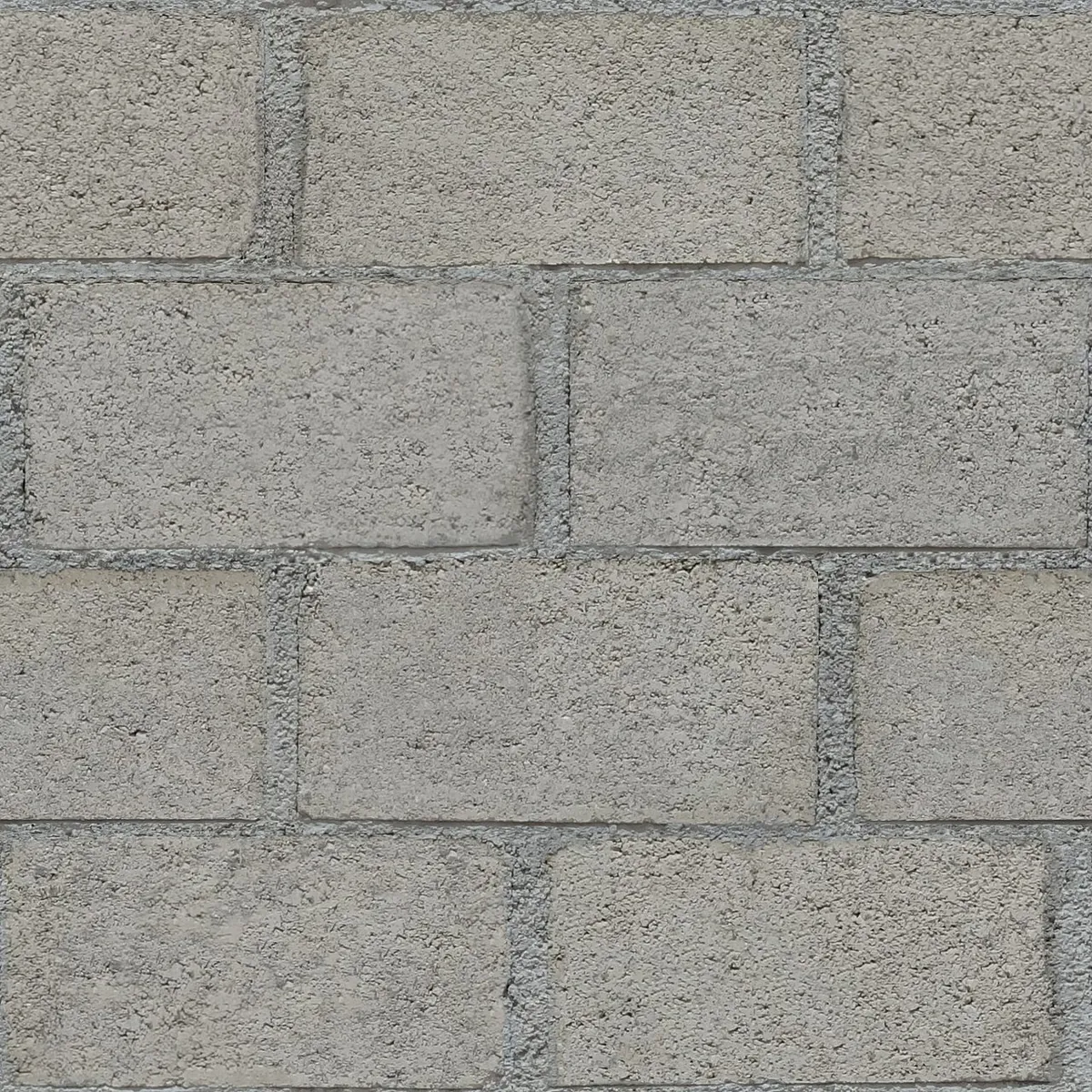
Photo: Sisters.seamless, Wikimedia Commons, CC0
Before painting cinder block, remember that bare block like the wall above holds dust, dirt, spider webs, mildew and loose sand in its pores and joints, and paint will not stick to any of it. Brush the whole wall with a stiff brush to knock off loose material. Then wash it with a masonry cleaner, scrubbing with a nylon brush, and rinse thoroughly. Outdoors, a pressure washer at moderate pressure works well, but hold the tip far enough away not to erode the mortar joints. Remove mildew with a mildew cleaner, and remove oil or grease with a degreaser. See how to clean concrete and mold on concrete.
Step 2: Remove efflorescence
White, powdery deposits on block are efflorescence, salts carried to the surface by water moving through the wall. Paint applied over efflorescence will lift off as more salts push out behind it. Brush off as much as possible dry, then use an efflorescence remover or a diluted acid masonry cleaner, following the label, and rinse well. Efflorescence is also a warning sign that water is moving through the wall, which matters for step 4. See efflorescence on concrete.
Step 3: Repair cracks and joints
Rake out loose or crumbling mortar and repoint the joints with mortar repair mix. Fill cracks with a masonry crack filler or patching compound, and fill large holes and broken block corners with a patching mortar. Let repairs cure as directed, usually at least a few days for mortar, before painting. Stair-step cracks along the joints and horizontal cracks in basement walls can indicate structural movement; have them checked before you cover them with paint. See how to fix cracks in concrete and concrete patching compound.
Step 4: Check for moisture
This is the step most people skip, and the most common reason painting cinder block fails. Tape an 18 inch square of clear plastic sheet tightly to the wall in a few places, including low on basement walls, and leave it for 24 hours. If the block under the plastic darkens or water droplets form on the inside of the plastic, moisture is coming through the wall. Ordinary cinder block paint will blister and peel. Fix outside drainage first, with gutters, downspout extensions and grading that slopes away from the house, and then use a masonry waterproofing paint rather than standard paint. If droplets form on the outside of the plastic, it is condensation from humid air, which a dehumidifier can solve. See is concrete waterproof and concrete splash blocks.
Step 5: Let new block cure and the wall dry
New block walls and fresh mortar should cure for at least 30 days before painting so the alkali level drops and the mortar gains strength. After washing, let the wall dry for at least 24 to 48 hours, longer in cool or humid weather. Painting cinder blocks that are still damp traps water under the paint film.
Step 6: Apply block filler
Block filler is the secret when you paint cinder blocks. It is a thick, high-solids acrylic primer designed to fill the pinholes and pores of concrete block, so the topcoat goes on smooth and even and does not soak in. Apply it with a heavy-nap roller, 3/4 to 1-1/4 inch, loading the roller fully and pressing it into the surface. Then go over it with a brush or back-roll to push the filler into pinholes and mortar joints. Some painters use a rubber squeegee or wide drywall knife to work filler into very rough block. One coat usually fills most pores; very rough split-face or old block may need two. Let it dry as the label directs, typically 2 to 4 hours or overnight.
Block filler is what gives the smooth wall in the first photo its finish. Without it, a cinder block wall paint job needs three or four topcoats to look uniform, and still shows pinholes. For more on primers, see concrete primer.
Step 7: Apply the paint
Apply two coats of cinder block paint. To paint a cinder block wall, cut in along the edges, corners and around windows and doors with a masonry brush, then roll the field with a 3/4 inch nap roller, working in sections of a few blocks at a time and rolling in several directions to cover the rough texture and the recessed mortar joints. Keep a wet edge to avoid lap marks. Let the first coat dry as directed, usually 2 to 4 hours, then apply the second coat. Check the joints from different angles; it is easy to miss the bottom edges of recessed mortar lines.
Step 8: Spray for large walls
To paint cinder blocks on long garden walls, commercial buildings or large basements, an airless sprayer is much faster. Spray the block filler and back-roll it immediately to work it into the pores, then spray the topcoats, back-rolling the first coat as well. Mask windows, doors and anything nearby carefully, and do not spray in wind outdoors.
Choosing Cinder Block Paint
The right cinder block paint depends on where the wall is and whether moisture is a concern.
| Paint type | Best for | Notes |
|---|---|---|
| 100% acrylic masonry paint | Interior and exterior block walls | Breathable, alkali-resistant, the standard paint for cinder blocks |
| Exterior acrylic latex | Garden walls, sheds, garages | Good choice over block filler; use satin or eggshell |
| Elastomeric coating | Exterior walls with hairline cracks | Thick, flexible, bridges small cracks, very water-resistant |
| Masonry waterproofing paint | Basement and below-grade walls | Contains cement or resins that block water; not for heavy leaks |
| Epoxy or dryfall coatings | Commercial interiors, washrooms, kitchens | Hard, washable; professional products |
| Masonry stain | Natural look on exterior block | Soaks in, does not peel, less coverage of texture |
Avoid oil-based and alkyd paints directly on block; the alkali in fresh masonry reacts with them, a process called saponification, which makes them soft and peel. For sheen, flat or matte hides texture flaws best, satin or eggshell is easier to clean, and semi-gloss is used in washrooms and kitchens where walls are scrubbed often. On exterior walls, a breathable paint that lets water vapor escape lasts longer than a film that traps moisture. See concrete paint and concrete staining.
Painting Cinder Block Basement Walls
Basement walls are the hardest place to paint cinder blocks because water can come through from the soil outside. Before you paint a cinder block wall in a basement, do the plastic sheet test and look for efflorescence, water stains, damp spots after rain and musty smells. If the wall stays dry, prepare it as above, apply block filler and two coats of acrylic masonry paint. If there is dampness but no active leaks, use a masonry waterproofing paint, which is thicker and applied heavily with a brush and roller to fill every pore, usually two coats. These products slow moisture coming through the block, but they cannot stop water under pressure from a high water table or poor drainage. Active leaks need outside drainage work, crack injection or a drainage system inside. Keep the basement dehumidified to around 50 percent humidity to protect the new paint, and check the walls each spring for new damp spots or efflorescence so small problems can be fixed early.
Painting Exterior Cinder Block Walls
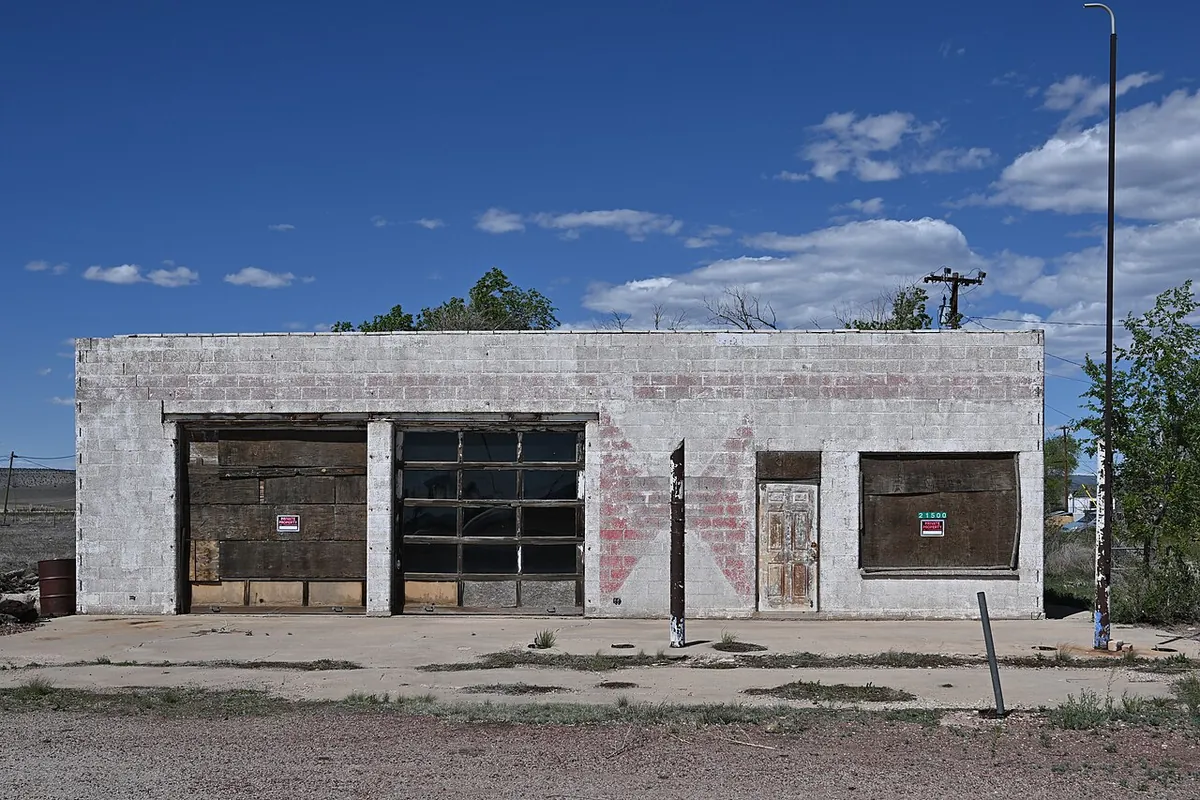
Photo: G. Edward Johnson, Wikimedia Commons, CC BY 4.0
The old block service station above shows what happens to painted block outdoors over decades: sun, rain and water moving through the wall have faded and worn the paint until the block and an old painted sign show through. Exterior cinder block wall paint needs to handle UV, rain, freeze-thaw and water vapor moving out of the wall. Paint in dry weather between about 50 and 90 degrees Fahrenheit, with no rain forecast for 24 hours, and avoid painting a wall in direct hot sun, which dries the paint too fast. Use block filler and two coats of 100 percent acrylic masonry paint or an elastomeric coating. Cap the top of freestanding garden walls with a sloped concrete or stone cap so rain does not soak down into the cores, which is a leading cause of peeling on garden walls. Keep sprinklers from spraying the wall and keep soil and mulch below the bottom course.
For retaining walls, the back of the wall touches wet soil, so paint on the front often peels unless the back has drainage and damp-proofing. Masonry stain or a breathable elastomeric coating usually lasts longer than ordinary paint on retaining walls. See concrete retaining walls.
Choosing Colors for Painting Cinder Block
Color choice matters more on block than on smooth walls, because the texture of the block and the grid of mortar joints are always visible. Light colors such as white, warm white, light gray and pale beige make a basement or garage feel larger and brighter and hide the shadows in the texture. Dark colors show every pinhole and missed joint, absorb heat outside, and fade faster in sun, so they need careful filling and high-quality cinder block paint. Two-tone schemes, like the wall in the first photo, with a darker color on the lower courses and a lighter color above, are practical in garages, workshops and hallways because the lower band hides scuffs and dirt.
Outside, think about the house and the landscape. A garden wall painted the same color as the house trim ties the yard together, while a soft green or gray lets the wall blend into planting. If you plan to paint cinder block wall surfaces outdoors in a hot climate, lighter colors stay cooler and last longer. Always paint a test patch of two or three blocks and look at it in daylight and at night before buying all the paint, since colors look different on rough block than on a smooth paint chip.
Painting Cinder Block in Garages, Workshops and Utility Rooms
Garages, workshops, laundry rooms and utility rooms are among the most common places homeowners paint cinder blocks. These rooms are often unheated or only partly heated, so the walls can be cold and prone to condensation, and they take knocks from tools, bikes, car doors and storage shelves. Prepare the walls carefully, apply block filler, and choose a durable, scrubbable acrylic masonry paint in satin or eggshell. In a garage, painting cinder block walls white or light gray reflects light and makes the space much brighter at night. In a workshop, a darker lower band hides marks. Many people use the same project to paint the concrete floor; floor paint and coatings are a separate product with their own prep, covered in our concrete paint and epoxy for concrete guides.
If you hang shelving, cabinets or pegboard on block walls, install the anchors after painting and touch up around them, or paint first and mark the locations. For fastening into block, see concrete screws and types of concrete anchors.
Repainting a Previously Painted Cinder Block Wall
Repainting is easier than painting cinder blocks for the first time, but the old paint has to be sound. Scrape and wire brush any loose, peeling or blistered paint, then wash the wall. Test the old paint with a strip of tape: press it on firmly and pull it off quickly. If paint comes off with the tape, it must be removed in that area. Feather the edges of scraped areas with a brush and spot-prime them with block filler or masonry primer so they do not show through the new finish. If the old paint is glossy, scuff it lightly or use a bonding primer. If you do not know whether the old paint is oil-based, rub a small spot with a rag soaked in rubbing alcohol: latex paint softens, oil-based paint does not, and oil-based coatings need a bonding primer before acrylic cinder block paint.
When the paint is failing over a large part of the wall, the cause is almost always moisture, and repainting without fixing it only repeats the problem. In that case, find and fix the water source, strip the old paint with a scraper, wire brush or pressure washer, or a masonry paint stripper, and start again with block filler. Homes built before 1978 may have lead paint on block walls; test before sanding or scraping and follow lead-safe practices. See how to remove paint from concrete.
Best Time and Conditions to Paint Cinder Blocks
The weather and the wall conditions have a big effect on how well cinder block paint bonds and how long it lasts. Most acrylic masonry paints need an air and surface temperature of at least 50 degrees Fahrenheit, and some low-temperature formulas go down to 35 degrees. Avoid painting when temperatures will drop near freezing overnight, when rain is expected within a day, or when humidity is very high, which slows drying. On exterior walls, follow the shade around the building: paint the east wall in the afternoon and the west wall in the morning, so the paint is not baked onto hot block. Inside a basement, run a dehumidifier for several days before and after painting and keep the room ventilated. Late spring and early fall are often the best times to paint cinder block walls outdoors in most climates, when days are mild and dry.
Common Problems When Painting Cinder Blocks
Peeling and blistering. Usually caused by moisture behind the paint, efflorescence, painting too soon after rain or on new block, or using oil-based paint. Fix the moisture source, scrape and wire brush loose paint, remove efflorescence, and repaint with breathable acrylic.
Pinholes in the finish. Not enough block filler, or the filler was not worked into the pores. Apply another coat of block filler to the problem areas and repaint.
Blotchy color. Uneven porosity between blocks, patches and mortar. Block filler or a primer evens it out.
Chalking. Old or low-quality exterior paint breaks down into powder. Wash, prime with a chalk-binding masonry primer and repaint.
Missed mortar joints. Recessed joints are easy to miss with a roller. Use a thick-nap roller, roll in several directions and touch up with a brush.
Mildew. On damp, shaded walls. Clean with a mildew cleaner and use paint with mildewcide.
How Much Paint and What It Costs
Before you paint cinder blocks, measure the wall area, length times height, and subtract large openings. Block filler covers about 75 to 125 square feet per gallon on average block, less on rough or split-face block. Acrylic cinder block paint covers about 200 to 300 square feet per gallon per coat on filled block. Masonry waterproofing paint covers only about 75 to 100 square feet per gallon per coat because it is applied thickly.
For example, a 30 by 8 foot basement wall is 240 square feet. It would take about 2 to 3 gallons of block filler and about 2 gallons of paint for two coats. Typical prices are $25 to $50 per gallon for block filler, $35 to $70 per gallon for good acrylic masonry paint, $40 to $80 for elastomeric coatings and $35 to $60 for masonry waterproofing paint. Materials for painting cinder block walls in a typical basement run $200 to $600. A painting contractor typically charges $1.50 to $4 per square foot to clean, fill and paint block walls, more for heavy repairs or waterproofing. For the cost of new block walls, see concrete block wall cost.
Painting Cinder Blocks for Decor and Projects
Cinder blocks are also popular for DIY projects such as planters, benches, shelving, garden borders, fire pits and outdoor kitchens. Painting cinder blocks for these projects follows the same rules on a small scale: clean, let dry, prime with block filler or a masonry primer, and use exterior acrylic paint. Spray paint made for masonry works for small decorative blocks, but brush or roll paint into the cores and corners. Do not paint the inside of blocks used for a fire pit; heat-resistant paint is required, and ordinary concrete block can crack under direct flame. See concrete fire pit, concrete bench and cinder block outdoor kitchen.
Frequently Asked Questions
Can you paint cinder blocks without primer?
You can, but the paint soaks in unevenly and shows pinholes, so it takes more coats. Block filler gives a smoother, longer-lasting finish with less paint.
What is the best paint for cinder blocks?
For most walls, 100 percent acrylic masonry paint over a block filler. Use masonry waterproofing paint on damp basement walls and elastomeric coatings on cracked exterior walls.
How long does paint last on cinder block?
Typically 5 to 10 years outside and 10 years or more inside, when the wall is dry and properly prepared.
Should I paint cinder block with a roller or sprayer?
A thick-nap roller works well for most homeowners. Sprayers are faster on large walls but the coat should be back-rolled into the pores.
Can I paint a damp cinder block wall?
Not with ordinary paint. Fix the water source, let the wall dry, and use a masonry waterproofing paint if dampness remains.
Sources
- National Concrete Masonry Association: TEK notes on coatings and water repellents for concrete masonry
- American Coatings Association: painting masonry surfaces
- US EPA: mold and moisture in homes
- Portland Cement Association: concrete masonry and efflorescence
Related Guides
- Concrete raised beds — block, poured and beds on concrete
- Concrete lintel — precast lintels over openings
- Cinder block outdoor kitchen — building a block grill island