
Concrete Admixture Guide: Air Entrained Concrete, Water Reducers, Accelerators and Retarders
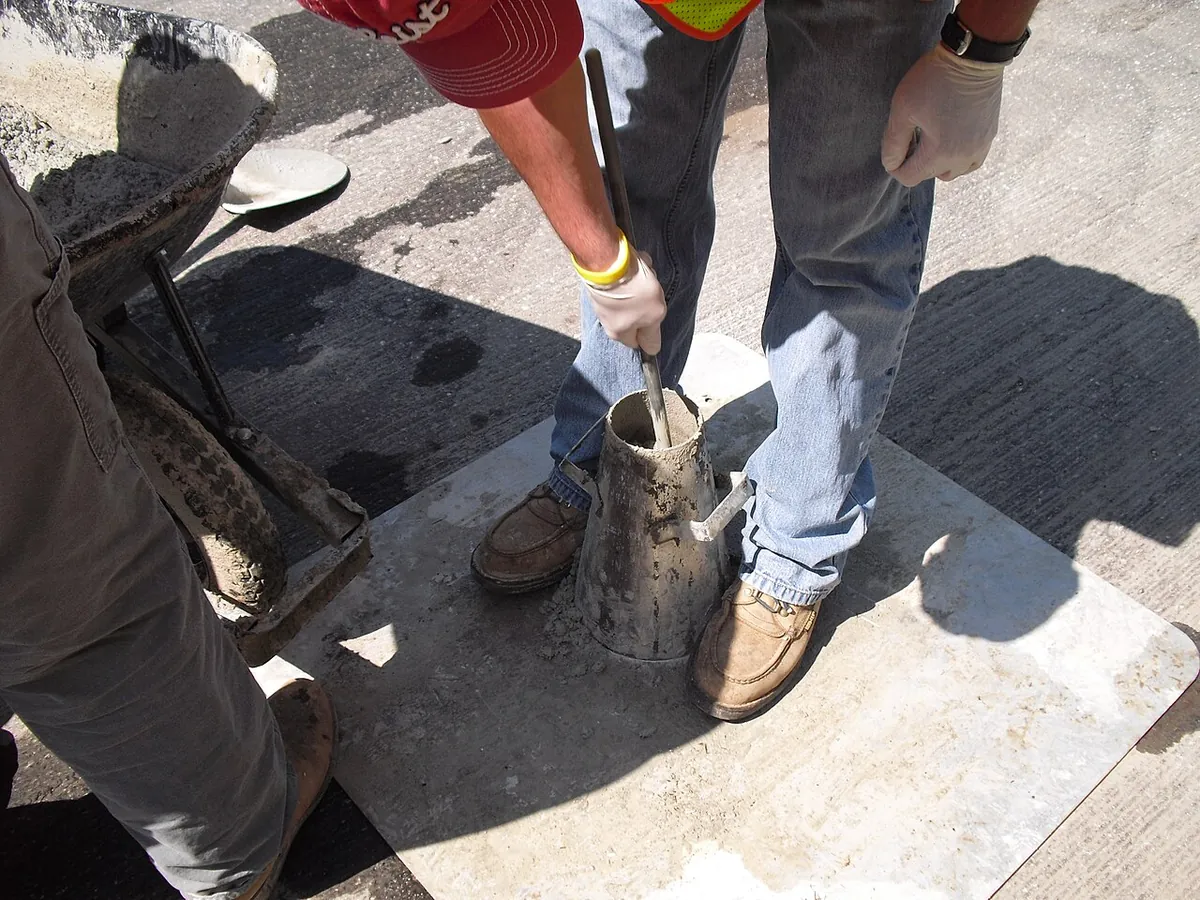
Photo: NCDOT Communications, Wikimedia Commons, CC BY 2.0
Quick Answer
A concrete admixture is any ingredient other than cement, water and aggregate added to concrete just before or during mixing to change how it behaves. The most important for homeowners is air entrained concrete: an air-entraining admixture creates billions of microscopic bubbles (usually 5 to 7 percent air) that let concrete survive freezing, thawing and deicing salt. Other common admixtures in concrete include water reducers and superplasticizers (workability with less water), accelerators (faster setting in cold weather), retarders (slower setting in heat), and supplementary materials such as fly ash and slag. Chemical admixtures are dosed in ounces per 100 pounds of cement and usually add only a few dollars per cubic yard.
Almost every truckload of ready-mix concrete delivered today contains at least one admixture, and many contain three or four. They are the reason modern concrete can be pumped up a skyscraper, poured in a heat wave without setting in the truck, placed in winter, finished smoothly with less water, and survive decades of road salt. A few ounces of the right concrete admixture can matter more to a driveway's life than an extra bag of cement.
This guide explains what admixtures are, how air entrained concrete works and when you need it, the main types of chemical and mineral admixtures, how they are dosed and specified, what they cost, and the few admixtures homeowners can use with bagged mixes.
What Is a Concrete Admixture?
Concrete has four basic ingredients: cement, water, fine aggregate and coarse aggregate. Anything else added on purpose to change the fresh or hardened properties is an admixture. Most are liquids dispensed by automated equipment at the ready-mix plant, measured in fluid ounces per hundred pounds of cement. Some are powders, such as fly ash, slag and silica fume, which are added in much larger amounts and partly replace cement. Admixtures do not fix a poor mix; they fine-tune a good one. A concrete admixture cannot make up for dirty aggregate, too much water added on site, poor consolidation or skipped curing, and most problems blamed on admixtures in concrete turn out to have one of those causes.
In the U.S., chemical admixtures are classified under ASTM C494 into types: Type A water-reducing, Type B retarding, Type C accelerating, Type D water-reducing and retarding, Type E water-reducing and accelerating, Type F high-range water-reducing, Type G high-range water-reducing and retarding, and Type S specific performance. Air-entraining admixtures have their own standard, ASTM C260. Each admixture, concrete producers test with their own cement and aggregates, because the same product can behave differently with different materials.
Air Entrained Concrete
Air entrained concrete is the single most important use of admixtures for outdoor home concrete in cold climates. Concrete always contains some water in its tiny pores. When that water freezes, it expands by about 9 percent, building pressure that can crack the paste. After enough freeze-thaw cycles, non-air-entrained concrete scales, flakes and crumbles, especially when deicing salts are used. An air-entraining admixture, a soap-like chemical, stabilizes billions of microscopic bubbles in the paste during mixing, most of them smaller than a grain of fine sand and spaced closely together. When water freezes, it can push into these empty bubbles instead of cracking the concrete, so the bubbles act as pressure-relief chambers.
Typical air contents for exterior concrete exposed to freezing are about 5 to 7 percent by volume, depending on aggregate size and exposure; ACI 318 lists target air contents by maximum aggregate size and severity of exposure. The air content is measured on site with a pressure meter on fresh concrete. Air entrainment also makes fresh concrete more workable and reduces bleeding. The trade-off is strength: each 1 percent of air lowers compressive strength by roughly 5 percent, which mix designers offset with a lower water-cement ratio.
When you need air entrained concrete
- Driveways, sidewalks, patios, steps, pool decks and any exterior flatwork in climates with freezing winters.
- Concrete exposed to deicing salts, including garage aprons where cars drip salty slush.
- Exterior walls, curbs and pavements that stay wet and freeze.
When you do not want it
Interior slabs that will be hard steel-troweled, such as warehouse and garage floors finished with power trowels, generally should not be air-entrained, because the dense troweled surface can trap air and bleed water and blister or delaminate. ACI guidance limits air content for hard-troweled slabs to about 3 percent. For a garage floor that will see road salt, discuss the trade-off with the supplier. Warm-climate concrete that never freezes does not need air entrainment for durability. See does salt damage concrete and concrete pitting and flaking.
Water Reducers and Superplasticizers
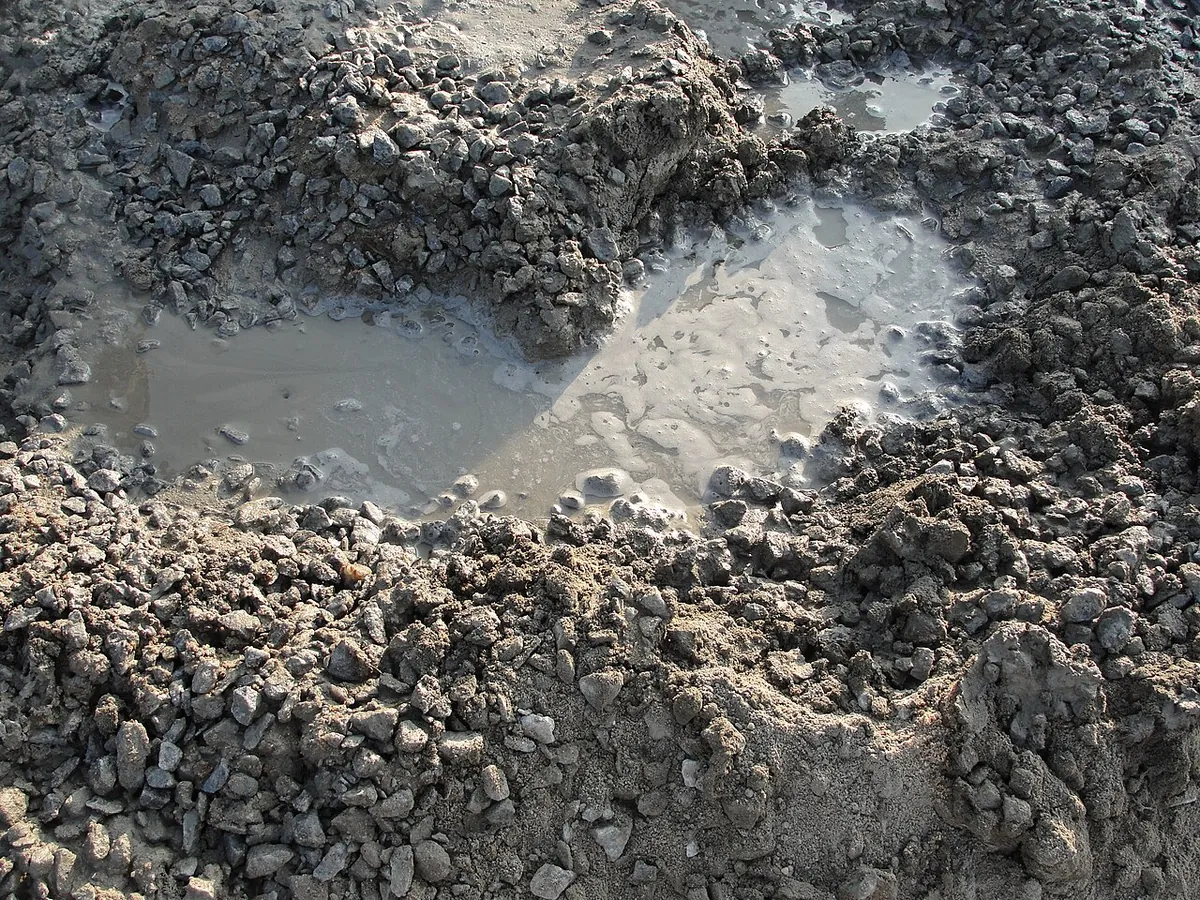
Photo: Thamizhpparithi Maari, Wikimedia Commons, CC BY-SA 3.0
Water is the enemy of concrete strength, but crews need concrete wet enough to place and finish, and a water-reducing concrete admixture resolves that. Water reducers solve that conflict. They disperse cement particles, which otherwise clump together and trap water, so the same mix flows with less water. A normal-range water reducer (Type A) cuts water by about 5 to 12 percent; a mid-range product somewhat more; and a high-range water reducer, or superplasticizer (Type F), by 12 to 30 percent or more. The result is either a stronger, denser concrete at the same slump, or a more fluid concrete at the same water content. Superplasticizers make possible high strength concrete, self-consolidating concrete that flows around dense rebar without vibration, and pumped concrete in tall buildings. See high strength concrete mix.
For homeowners, the practical lesson is this: if a load of concrete arrives too stiff, ask the driver to add the plant's water reducer or superplasticizer rather than water. Many trucks carry it for exactly that purpose.
Accelerators
An accelerating concrete admixture speeds setting and early strength gain, which matters in cold weather, when concrete otherwise sets slowly and risks freezing, and for fast-track repairs. The classic accelerator is calcium chloride, cheap and effective at doses up to about 2 percent by weight of cement. Its drawback is that chloride corrodes steel, so it is not permitted in prestressed concrete, is limited in reinforced concrete, and should be avoided where metal is embedded. Non-chloride accelerators based on calcium nitrate, calcium nitrite or other salts give much of the benefit without the corrosion risk and are standard for reinforced work. Accelerators do not replace cold-weather protection: concrete still needs to be kept from freezing until it gains strength. For details, see our guide to calcium chloride in concrete and how long concrete takes to cure.
Retarders
A retarding concrete admixture does the opposite: it slows the setting of cement. In hot weather, concrete can stiffen in the truck or set before finishers can work it, leading to cold joints and rough surfaces. A retarding admixture (Type B, or Type D combined with water reduction) buys extra time for long hauls, large pours and complex placements. Retarders are also sprayed on surfaces, or on form faces, to delay setting of the top layer so it can be washed off to create exposed aggregate finishes. See cold joints in concrete and types of concrete finishes.
Mineral Admixtures: Fly Ash, Slag and Silica Fume
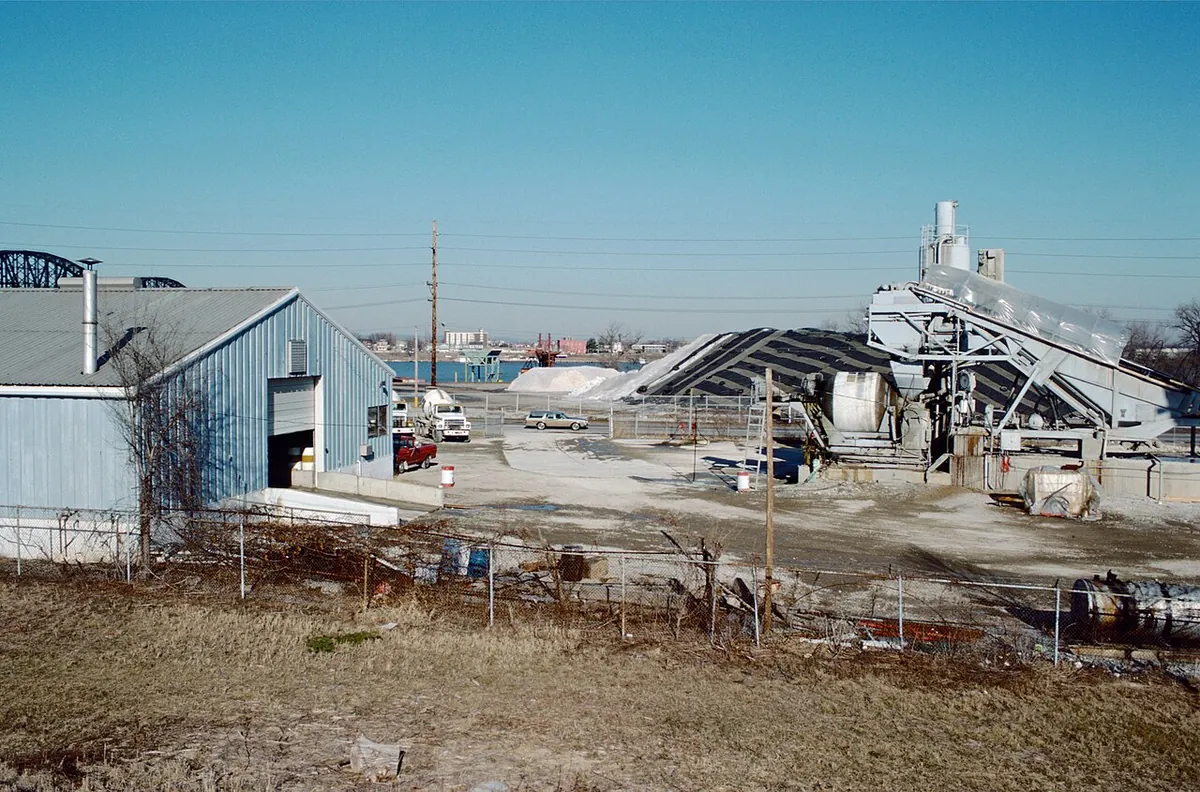
Photo: William Alden, Wikimedia Commons, CC BY-SA 2.0
Supplementary cementitious materials, often called mineral admixtures in concrete, are fine powders that react with the byproducts of cement hydration to form additional binder. Fly ash, from coal-burning power plants, improves workability, lowers heat, reduces permeability and helps control alkali-silica reaction, while gaining strength more slowly. Slag cement, ground granulated blast-furnace slag from iron production, improves long-term strength and durability and gives a lighter color. Silica fume, an ultra-fine byproduct of silicon production, makes very dense, high-strength, low-permeability concrete. These materials commonly replace 15 to 50 percent of the portland cement in ready-mix, cutting cost and carbon footprint. Natural pozzolans and calcined clays are growing alternatives as coal-ash supply declines.
Specialty Admixtures in Concrete
Beyond the main families, producers use specialty admixtures in concrete for specific needs. Corrosion inhibitors, often calcium nitrite, protect reinforcing steel in parking decks and marine structures. Shrinkage-reducing admixtures lower the surface tension of pore water to reduce drying shrinkage and curling in slabs. Viscosity-modifying admixtures keep self-consolidating concrete from segregating. Crystalline waterproofing admixtures form crystals in pores to reduce water penetration in basements and tanks. Lithium compounds help control alkali-silica reaction. Integral coloring pigments, usually iron oxides, give colored and decorative concrete. Fibers are also sometimes counted as admixtures; see fiber concrete.
How Admixtures Are Dosed and Specified
Liquid chemical admixtures are dosed in fluid ounces per hundred pounds (per hundredweight, or cwt) of cementitious material, within ranges the manufacturer recommends and the producer confirms through trial batches. Automated dispensers at the plant meter each admixture into the mix water or onto the aggregate in a set order, because some admixtures interact; for example, air-entraining agents and some water reducers must be added separately. On specifications, engineers usually state performance requirements, such as air content, slump, setting time or strength, and let the producer choose the products, or they name approved admixture types. For home projects, you specify the result: "4,000 psi, air-entrained, 4-inch slump, for an exterior driveway," and the plant selects the admixture concrete package for its materials and season.
Choosing the Right Concrete Admixture for Your Project
For most homeowners, choosing a concrete admixture means describing the job well and letting the ready-mix plant pick the package. Still, it helps to know what to expect. A driveway, patio or sidewalk in a cold climate should be air entrained concrete with a water reducer, so it is durable and still easy to finish. A summer pour on a hot afternoon may need a retarder so the finishers have time to work. A winter pour usually gets hot water and an accelerator, preferably non-chloride if there is rebar or mesh. A garage floor that will be steel-troweled may use a water reducer but little or no air. A foundation wall with dense rebar may use a mid-range or high-range water reducer so the concrete flows into the forms without extra water. A basement slab or tank that must keep water out may get a crystalline waterproofing admixture. In every case, one concrete admixture solves one problem; combining several is normal, and the plant makes sure they work together.
Finishing Air Entrained Concrete
Air entrained concrete feels a little different under the float and trowel. It is creamier, more cohesive and bleeds less water, which many finishers like, but the reduced bleeding means the surface can dry faster in sun and wind, so evaporation control and early curing matter. The main rule is not to overwork it. Excessive troweling, especially with a steel trowel or power trowel, can seal the surface, trap bleed water and air below, and lead to blisters or a thin surface layer that later delaminates. For exterior flatwork, the standard finish on air entrained concrete is floating with a magnesium float, light edging and jointing, then a broom finish, which also gives good traction. Avoid sprinkling dry cement on the surface to soak up bleed water; it creates a weak, dusty top that scales. Wait for any bleed water to evaporate on its own before the final floating and brooming, then start curing right away. See types of concrete finishes.
Testing Air Content and Admixture Performance
On commercial projects, technicians test every load or a set frequency of loads of air entrained concrete with a pressure meter (ASTM C231) or a volumetric meter for lightweight mixes. They also check slump, temperature and unit weight, and cast cylinders for strength. If air content is outside the specified range, the load may be adjusted or rejected, because too little air leaves the concrete vulnerable to freezing and too much reduces strength. Plants verify every admixture in concrete with trial batches when they change materials or seasons, since cement chemistry, temperature and aggregate grading all affect how admixtures in concrete perform. Homeowners rarely test air, but you can ask the plant to confirm on the delivery ticket that the concrete is air-entrained and what target air content was batched.
Admixtures in Concrete Through the Seasons
Ready-mix producers change their admixture programs with the weather. In spring and fall, standard mixes with air and a water reducer cover most work. In summer, they add retarders and sometimes use chilled water or ice to keep concrete from setting too quickly in the truck and on the slab. In winter, they switch to hot water, accelerators and sometimes higher cement contents, and they may charge winter service fees. Air entrainment stays in exterior mixes year-round where freezing occurs, because the concrete will face winter eventually even if it was poured in July. If you schedule a pour in shoulder seasons, ask the plant what their current mix includes so the concrete matches the weather on pour day.
A Short History of Admixtures
People have added things to concrete and mortar for thousands of years. Roman builders reportedly mixed animal fat, blood and milk into lime mortars, which may have improved workability and frost resistance in ways we now achieve with air-entraining agents. The modern story of air entrained concrete began in the 1930s, when engineers in New York noticed that certain highway pavements resisted salt scaling far better than others; the difference was traced to small amounts of beef tallow and other grinding aids in the cement that had entrained air. Deliberate air entrainment was standardized soon after. Lignosulfonate water reducers, made from paper industry byproducts, came into wide use in the mid-20th century, and the synthetic superplasticizers developed in Japan and Germany in the 1960s and 1970s, followed by today's polycarboxylate products, made high-strength and self-consolidating concrete possible. Each new concrete admixture has expanded what concrete can do, from taller buildings and longer bridges to thinner, more durable slabs, and research continues on admixtures that cut cement use further and help concrete heal its own small cracks.
Admixtures and the Environment
Admixtures help reduce concrete's carbon footprint in several ways. Water reducers allow the same strength with less cement. Supplementary materials such as fly ash and slag replace part of the portland cement with industrial byproducts. Air entrainment and corrosion inhibitors make concrete last longer, which avoids the emissions of repairs and replacements. Some newer admixtures are designed specifically to work with low-carbon cements such as portland-limestone cement. The amounts are small, but the effect on cement use, durability and service life across millions of cubic yards is large.
Air Entrained Concrete vs Non-Air-Entrained Concrete
Side by side, the two look the same in a driveway, but they age very differently in a cold climate. Non-air-entrained concrete may look perfect for a few winters, then start to scale: the top 1/8 to 1/4 inch flakes off in patches, exposing the sand and stone, often worst where cars drip salty slush or where snow is piled. Air entrained concrete placed and cured properly can go decades with little more than occasional sealing. The extra cost of air entrained concrete is usually only a few dollars per cubic yard, a tiny fraction of the cost of resurfacing or replacing a scaled driveway. That is why many building codes require air entrainment for exterior concrete exposed to freezing, and why ready-mix plants in cold regions include it in their standard exterior mixes. If you are pouring in a freezing climate, confirm it on the order and on the delivery ticket. For repairs to surfaces that have already scaled, see how to resurface concrete and concrete spalling.
Questions to Ask About Admixtures in Concrete
When ordering concrete for a home project, a few questions about admixtures in concrete will get you the right mix. Is the mix air-entrained, and what air content is targeted? Does it include a water reducer, and what slump will it arrive at? If the truck has to wait or the mix is stiff, will the driver adjust it with an admixture rather than water? Is there a retarder or accelerator in the mix for the season? Does any concrete admixture in the mix contain chloride, if your project has rebar or mesh? Does the mix use fly ash or slag, and how does that affect setting time and finishing on a cool day? Good suppliers answer these quickly and often suggest changes that make the job easier. Keep the delivery tickets; they list the mix and admixtures, which is useful if questions come up later.
Self-Consolidating Concrete and Modern Mixes
Some of today's most impressive concrete would not exist without admixtures. Self-consolidating concrete flows like a thick liquid, fills complicated forms and dense reinforcement under its own weight, and levels itself with no vibration, yet does not separate into paste and stone. It depends on a high-range water reducer for flow and often a viscosity-modifying admixture for stability. Precast plants use it for smooth, bug-hole-free architectural panels, and contractors use it for heavily reinforced walls and columns. Pumped concrete for high-rise floors relies on admixtures to stay pumpable over long distances and heights. Even ordinary sidewalk concrete is more consistent than it was a generation ago, because modern admixtures let plants control water and workability closely. For homeowners, the benefit is concrete that arrives ready to place and finish, with fewer surprises and less temptation to add water on site.
How Much Do Concrete Admixtures Cost?
- Air entrainment: often about $1 to $4 per cubic yard.
- Normal or mid-range water reducer: about $2 to $8 per cubic yard.
- High-range water reducer (superplasticizer): about $5 to $20 per cubic yard.
- Accelerator (hot water and accelerator in winter): about $3 to $10 per cubic yard, plus winter surcharges.
- Retarder: about $2 to $6 per cubic yard.
- Integral color: often $20 to $60 or more per cubic yard.
- Fly ash or slag: often lowers the price slightly compared with all-portland mixes.
Prices vary by region and supplier, and many plants include air and a water reducer in their standard exterior mixes. See concrete price per yard.
Admixtures for DIY and Bagged Concrete
Homeowners mixing bags have fewer options, but a few concrete admixture products are sold for small jobs. Liquid concrete accelerators speed setting in cool weather; follow the label and avoid chloride products if you are embedding steel. Bonding adhesives help new concrete or patching mortar stick to old concrete. Some mortar and stucco products contain air-entraining agents already. Integral color is available in bags or liquid bottles for small batches. Most bagged concrete mixes are not air-entrained, so for exterior work in freezing climates, a ready-mix order with specified air is often the better choice for driveways and walks. See how to make concrete.
Common Mistakes With Admixtures
The most common admixture problem on home jobs is ordering exterior concrete in a cold climate instead of air entrained concrete, which shows up years later as scaling and flaking. Others include adding water at the truck instead of a water reducer, using calcium chloride near reinforcing steel, hard-troweling air-entrained concrete on an interior slab, overdosing retarders so concrete stays soft for days, and assuming an accelerator removes the need to protect fresh concrete from freezing. Most of these are avoided by telling the ready-mix plant exactly what you are building, where it is, and when you are pouring.
Frequently Asked Questions
What is air entrained concrete?
Concrete made with an air-entraining admixture that creates billions of tiny bubbles, usually 5 to 7 percent of the volume, so it resists damage from freezing, thawing and deicing salts.
What does a concrete admixture do?
It changes fresh or hardened properties: workability, water demand, setting time, air content, strength gain, durability or color.
Do I need air entrained concrete for my driveway?
Yes in climates with freezing winters, especially where deicing salts are used. Warm-climate driveways usually do not need it.
What are the main admixtures in concrete?
Air-entraining agents, water reducers and superplasticizers, accelerators, retarders, and mineral admixtures such as fly ash, slag and silica fume.
Do admixtures make concrete stronger?
Indirectly. Water reducers and silica fume allow a lower water-cement ratio and denser paste, which raises strength. Air entrainment slightly lowers strength but greatly improves durability.
Sources
- ASTM C494: Chemical Admixtures for Concrete
- ASTM C260: Air-Entraining Admixtures for Concrete
- American Concrete Institute: ACI 212.3R chemical admixtures and ACI 318 air content
- Portland Cement Association: air-entrained concrete and admixtures
Related Guides
- High strength concrete mix — psi classes, ingredients and cost
- Calcium chloride in concrete — accelerators, risks and rapid set options
- Concrete slump test — what slump means and how to test it
- Concrete cylinder tests — strength testing and cylinder calculator
- Concrete blankets — insulated and curing blankets
- Shotcrete vs gunite — sprayed concrete for pools and walls
- Is concrete waterproof? — porosity, waterproof concrete and sealants
- Sugar in concrete — how sugar delays or stops setting
- Concrete batching plant — how ready-mix is made
- World of Concrete — the industry's annual trade show in Las Vegas
- Temperature to pour concrete — ideal range, minimums and hot or cold precautions
- Green concrete — low-carbon mixes with fly ash, slag and Type IL, plus fresh green concrete
- Wet concrete — how liquid concrete works, workability, setting times and safety
- Concrete canoe — how a concrete boat floats and the ASCE competition