
Concrete Sand: What It Is, How to Use It, and How to Sand Concrete
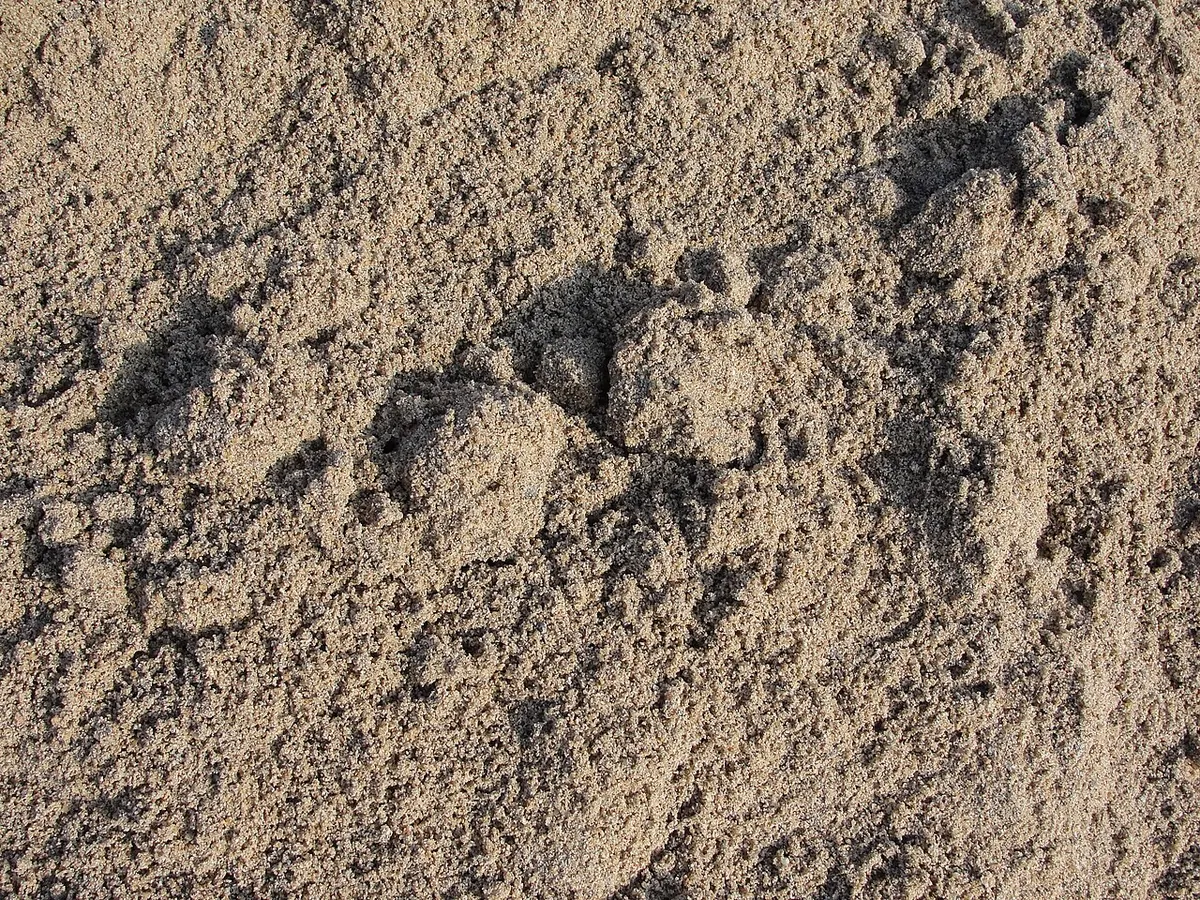
Photo: Thamizhpparithi Maari, Wikimedia Commons, CC BY-SA 3.0
Quick Answer
Concrete sand is a coarse, washed sand with angular grains in a range of sizes up to about 3/16 inch, graded to meet ASTM C33 for fine aggregate in concrete. It is the sand for concrete mixes, the standard bedding layer under pavers, and a common base under slabs and pipes. It is coarser than masonry sand (for mortar) and far coarser than play sand, which is too fine and rounded for strong concrete. Bulk concrete sand costs about $15 to $45 per ton before delivery. Sand mix concrete is a bagged mix of sand and cement without gravel for thin work. And yes, you can sand concrete: use diamond grinding pads or silicon carbide abrasives, not ordinary sandpaper, with dust control.
Sand is the quiet workhorse of concrete. A cubic yard of concrete holds roughly 1,200 to 1,400 pounds of sand, filling the spaces between the stones so the cement paste has less space to fill. It also shows up under pavers, behind retaining walls and under slabs. But not every sand works. Order the wrong sand for concrete and the mix comes out weak, sticky or full of cracks; set pavers on the wrong sand and they shift and sink.
This guide explains what is concrete sand, how it differs from masonry sand and play sand, how much sand goes into concrete, how to use concrete sand for pavers, what sand mix concrete is, what concrete sand costs, and, since many people searching for concrete sand are really asking about finishing, how to sand concrete surfaces.
What Is Concrete Sand?
What is concrete sand? It is a fine aggregate produced for use in concrete. It may be natural sand dredged from rivers and pits, or manufactured sand made by crushing rock. Either way, it is screened to a specific range of particle sizes and washed to remove clay, silt and organic matter that would weaken concrete.
In the U.S., the standard for sand for concrete is ASTM C33, the specification for concrete aggregates. It sets limits on how much sand passes each sieve size, from 3/8 inch down to the very fine No. 100 sieve, and limits on clay lumps, coal, lightweight particles and organic impurities. Concrete sand typically has a fineness modulus between about 2.3 and 3.1, which describes how coarse it is overall. In practical terms, concrete sand feels gritty, has grains you can see, and does not pack into a smooth ball like beach or play sand.
Concrete Sand vs Masonry Sand vs Play Sand
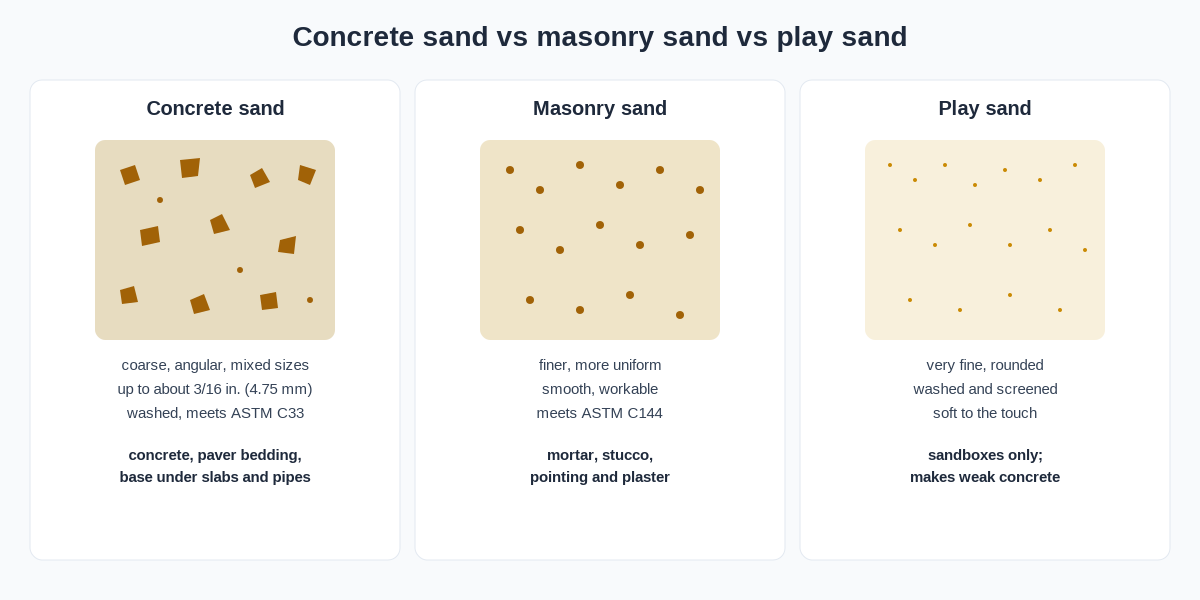
| Sand | Grain | Standard | Best for |
|---|---|---|---|
| Concrete sand | Coarse, angular, mixed sizes | ASTM C33 | Concrete, paver bedding, slab and pipe base |
| Masonry (mortar) sand | Finer, more uniform, smoother | ASTM C144 | Mortar, stucco, pointing, plaster |
| Play sand | Very fine, rounded, washed | None for construction | Sandboxes |
| Fill sand | Unwashed, variable | None | Filling low areas, not concrete |
| Polymeric sand | Fine sand with binder | Product specific | Paver joints only |
The main differences come from grain size and shape. Concrete sand has a range of sizes, so smaller grains fill the gaps between larger ones; that makes a dense mix that needs less cement paste. Angular grains lock together and grip the paste. Masonry sand is finer and smoother so mortar spreads easily on a trowel and squeezes into thin joints. Play sand is so fine and round that it needs extra water and cement, and it makes weak, crack-prone concrete. Beach sand also carries salt that can corrode reinforcing steel.
How Much Sand Is in Concrete?
Sand is usually about 25 to 35 percent of concrete by volume, roughly a third of the total aggregate. A common home mix ratio by volume is 1 part cement, 2 parts sand and 3 parts gravel, which puts sand at about a third of the dry materials. Ready-mix plants proportion sand and concrete aggregates by weight for each mix design. A typical cubic yard of 3,000 to 4,000 psi concrete contains roughly 1,200 to 1,400 pounds of sand, 1,700 to 1,900 pounds of coarse aggregate, 500 to 600 pounds of cement and 250 to 300 pounds of water.
When mixing your own concrete, use damp concrete sand rather than bone-dry sand, and account for the water it already holds when adding water to the mixer. Sand bulks up, takes more space, when damp, so measuring by bucket gives slightly less sand than you think. For ratios and batching, see what concrete is made of and cement vs concrete.
Sand for mixing concrete by hand
If you buy sand for mixing concrete in a wheelbarrow or small mixer, ask the supplier for washed concrete sand, not fill sand, and keep it covered so leaves and dirt do not get in. Mix dry cement, sand and gravel thoroughly before adding water, then add water slowly until the mix is like thick oatmeal. Too much water weakens concrete far more than slightly wrong proportions. See concrete cement mixers for mixing tips.
Concrete Sand for Pavers
Concrete sand for pavers is the standard bedding layer under interlocking concrete pavers and many brick and stone pavers. The Interlocking Concrete Pavement Institute (ICPI) recommends washed, coarse concrete sand meeting ASTM C33 for the bedding course, laid about 1 inch thick after compaction over a compacted gravel base. Its coarse, angular grains drain water and lock together under compaction, so pavers stay level.
- Base: 4 to 6 inches of compacted crushed stone for patios and walks, 8 to 12 inches for driveways.
- Bedding: a uniform 1-inch layer of concrete sand, screeded flat with pipes and a straight board, not compacted before the pavers go down.
- Pavers: laid on the screeded sand, then compacted with a plate compactor, which presses them into the sand.
- Joints: filled with fine joint sand or polymeric sand, not concrete sand, which is too coarse for narrow joints.
Do not use stone dust or screenings as bedding under pavers in wet climates; they hold water and can lead to settling and efflorescence. See can you lay pavers over concrete and paving a patio yourself.
Sand Mix Concrete and Sand Concrete
Sand mix concrete, also sold as sand mix or topping mix, is a bagged blend of portland cement and sand with no gravel. Because it lacks stone, it can be placed in thin layers, typically 1/2 inch to 2 inches, where a regular concrete mix would not fit. It is used for:
- Topping and resurfacing slabs and steps, with a bonding agent.
- Filling shallow holes and setting flagstones.
- Mortar beds under pavers and stone where a rigid bed is wanted.
- Small cast pieces such as stepping stones and planters.
A concrete sand mix is not as strong in thick sections as concrete with gravel, and it shrinks more, so use regular concrete mix for anything thicker than about 2 inches. Sand concrete, concrete made only with sand and no coarse stone, is also used in some countries for thin precast pieces and where gravel is scarce; it needs more cement and careful curing. A homemade sand and concrete mix for patching should follow the bag-style proportions, roughly 1 part cement to 3 parts sand, and should be kept damp while it cures. See concrete patching compound and how to resurface concrete.
Other Uses for Concrete Sand
- Bedding for pipes and utilities in trenches.
- Leveling layer under above-ground pools, sheds and some slabs.
- Base under artificial turf and horseshoe pits.
- Infill for drainage in some soils, mixed with gravel.
- Winter traction on icy walks; coarse sand gives grip without the damage salt can do. See does salt damage concrete.
Natural Sand vs Manufactured Sand
Natural sand comes from rivers, glacial deposits and pits, where water has worn the grains into rounded or subrounded shapes. Manufactured sand is made by crushing rock in a quarry and screening the result, which gives sharp, angular grains. Both can meet the specification for concrete aggregate. Natural sand tends to make concrete that flows and finishes easily with less water. Manufactured sand gives a strong bond with the cement paste, but its angular grains and higher content of very fine dust can make a stiffer mix that needs more water or a water-reducing admixture, so plants adjust the mix design. As river sand becomes scarcer and harder to permit in many regions, manufactured sand is becoming more common, and many suppliers now blend the two. For a homeowner buying a few tons, either is fine as long as the yard sells it as washed concrete sand that meets the local specification.
A Simple Jar Test for Dirty Sand
Clay, silt and organic matter in sand weaken concrete, slow setting and cause surface dusting. You can check a sand pile with a quick jar test. Fill a clear jar about one third full of sand, add water until it is about two thirds full, add a pinch of dish soap, shake hard for a minute, and let it settle for a few hours. Clean sand settles quickly, with a thin layer of fine material on top and fairly clear water. If the layer of silt and clay on top is more than a few percent of the sand layer, or the water stays brown and cloudy, the sand is too dirty for good concrete. Dark, tea-colored water can also mean organic matter. Reputable yards wash their concrete sand, but sand stored on bare ground for months can pick up dirt, so the test is worth a few minutes.
Moisture and Bulking When You Measure Sand
Sand almost always holds some water, and that water affects both how much sand you measure and how much water you add. Damp sand fluffs up, a property called bulking, so a bucket of damp sand can hold 20 to 30 percent less actual sand than a bucket of dry sand. The water in the sand also adds to the mix water. A wet pile of sand can hold a gallon or more of water per cubic foot. When you hand-mix, use sand from the same part of the pile throughout, start with less water than you expect and add more only as needed. Ready-mix plants measure the moisture in their sand stockpiles every day and adjust the batch weights automatically, which is one reason truck concrete is more consistent than mixer batches.
Sanded Concrete and Sand-Finish Surfaces
"Sanded concrete" can mean two different things. The first is concrete that has been sanded or ground after it hardens, as described above. The second is a sand finish, a decorative or slip-resistant surface where the very top layer of cement paste is removed by light sandblasting, a surface retarder and washing, or acid etching, so the fine sand grains show. The result looks like fine sandpaper or sandstone and gives good traction around pools, on sidewalks and on ramps. A sand finish is subtler than an exposed aggregate finish, which shows the larger stones. See types of concrete finishes for more options and concrete pool deck resurfacing for slip-resistant pool deck surfaces.
Sanding Concrete Countertops, Steps and Walls
Smaller concrete pieces are sanded with the same tools at a smaller scale. Concrete countertops are usually wet-polished with a variable-speed polisher and a sequence of resin diamond pads, keeping the surface flooded with water to control dust and heat. Steps and walls with form lines, fins and small bumps are rubbed down with a silicon carbide rubbing stone while the concrete is still young, often within a few days of stripping the forms, when it is easier to work. Old painted or coated steps can be ground with a diamond cup wheel to remove the coating before resurfacing. On any of these, take off as little as needed; sanding concrete too deep exposes stones and changes the look. See concrete countertops and how to fix concrete steps.
Storing Sand on a Job Site
Keep bulk sand on a tarp or plywood rather than bare soil, ideally on a level spot that drains, so you do not shovel dirt into the mix. Cover it to keep out leaves, rain and pets, especially if the pile will sit for days. Place it close to the mixer and as near as possible to the pour, with a clear wheelbarrow path. Order a little extra; some of the bottom of the pile always gets mixed with soil. Sweep up spills at the end of each day. After the job, leftover concrete sand is handy for paver repairs, leveling under stepping stones, and winter traction.
Sand Supply and the Environment
Sand seems endless, but construction-grade sand is not. Desert sand is too smooth and fine for concrete, and the world uses tens of billions of tons of sand and gravel a year, much of it for concrete. Over-mining of river and coastal sand in some countries has damaged rivers, deltas and beaches. That is why manufactured sand, recycled concrete aggregate and careful mix designs that use less sand and cement are growing. For homeowners, the practical takeaways are simple: buy from licensed local yards, order what you need without large excess, and reuse leftovers in the garden and on walks.
How Much Sand Do You Need for a Concrete Project?
If you are mixing your own concrete from separate materials, figure the sand from the mix ratio. For a 1:2:3 mix, about 2/6, or one third, of the dry volume is sand. Because dry materials shrink in volume when mixed with water, plan on about 1.5 cubic feet of dry materials for every cubic foot of finished concrete. Example: a small 4 × 6 foot pad 4 inches thick is 8 cubic feet of concrete. Multiply by 1.5 to get 12 cubic feet of dry materials, and take one third of that, so you need about 4 cubic feet of concrete sand, 6 cubic feet of gravel and 2 cubic feet of cement, which is about two 94-pound bags. For anything bigger than about a cubic yard, bagged concrete or a ready-mix truck is usually easier than buying sand and concrete materials separately. For the bag math, see how many bags of concrete in a yard.
Concrete Sand Under Slabs and Patios
Some builders spread a thin layer of concrete sand over the compacted gravel base before pouring a slab, to fill voids and give a smooth surface for the vapor retarder or the concrete. A sand layer can protect a plastic vapor barrier from sharp stones. But sand under a slab can also hold water from rain or curing and feed moisture back into the concrete, so current guidance favors a well-graded, compacted crushed stone base with the vapor barrier directly under the concrete for interior floors. For outdoor patios and walks, a few inches of compacted crushed stone is usually a better base than sand alone, because sand washes out at the edges. See concrete moisture barrier and concrete slab thickness.
Common Mistakes With Sand and Concrete
The most common mistake is grabbing whatever sand is handy. Beach sand carries salt that corrodes steel, play sand is too fine, fill sand is dirty, and masonry sand makes a weaker, sticky concrete. The second is adding too much water to make a stiff mix easier to work, often because the sand was damp to begin with and the extra water was not accounted for. The third is using too much sand in a homemade mix, which makes concrete that is easy to finish but weak and prone to shrinkage cracks. On paver projects, the big mistakes are bedding sand laid too thick, which lets pavers rut and settle, using stone dust instead of concrete sand in wet climates, and compacting the bedding before laying the pavers, which leaves nothing for them to settle into. When sanding concrete, the usual problems are skipping dust control, starting with too fine a grit and wasting pads, or grinding too deep in one spot and leaving a dip. Each of these is easy to avoid once you know it, and each one costs far less to prevent than to fix after the concrete has hardened.
Buying Concrete Sand: Questions for the Supplier
When you call a sand and gravel yard, ask whether the sand is washed concrete sand that meets ASTM C33 or the local state highway spec, whether it is natural or manufactured, the price per ton and per yard, the minimum delivery and the delivery fee, and how close the truck can dump it to where you need it. If you are bedding pavers, tell them; many yards stock a specific paver bedding sand. Ask for the weight per yard so you can convert between tons and cubic yards accurately, and ask whether they sell half loads if you only need a little.
How Much Does Concrete Sand Cost?
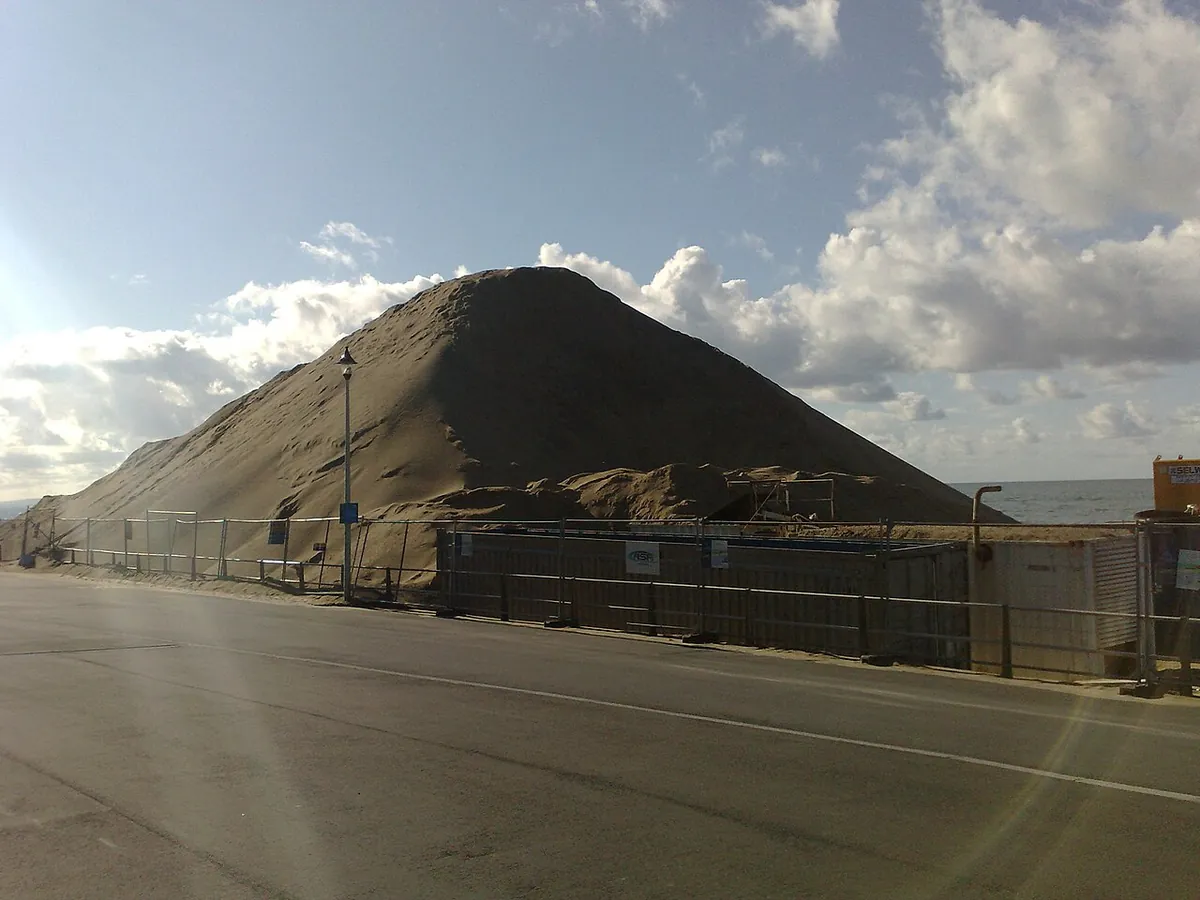
Photo: Jonathan Hutchins, Wikimedia Commons, CC BY-SA 2.0
- Bulk at the yard: about $15 to $45 per ton, or roughly $20 to $60 per cubic yard.
- Delivery: often $50 to $150 per load, depending on distance and truck size.
- Bagged all-purpose or paver sand: about $4 to $8 per 50-pound bag.
- Bagged sand mix: about $6 to $10 per 60- or 80-pound bag.
A cubic yard of concrete sand weighs about 2,600 to 3,000 pounds, roughly 1.3 to 1.5 tons. To figure how much you need for paver bedding, multiply the area by the bedding thickness: a 1-inch layer over 300 square feet is 300 × 1/12 = 25 cubic feet, or about 0.93 cubic yard, roughly 1.3 tons with a little extra. See how to calculate yards of concrete for the same volume math.
Can You Sand Concrete?
Can you sand concrete? Yes, but not the way you sand wood. Hardened concrete is much harder than sandpaper grit, so ordinary sandpaper wears out almost instantly. Sanding concrete means grinding it with abrasives harder than the concrete: diamond grinding cups and pads, or silicon carbide sanding screens and rubbing stones. People sand concrete to smooth rough patches and trowel marks, flatten ridges, remove thin coatings or adhesive, open the surface before staining or sealing, and polish countertops and floors.
How to sand concrete: tools
- Angle grinder with a diamond cup wheel and a dust shroud connected to a vacuum, for edges, small areas, steps and countertops.
- Walk-behind floor grinder with diamond tooling, rented for floors and garages.
- Floor buffer with sanding screens or diamond pads, for light smoothing.
- Variable-speed polisher with wet resin diamond pads, for countertops and polished finishes.
- Hand rubbing stone (silicon carbide brick), for removing form lines and small bumps on fresh walls and steps.
How do you sand concrete step by step?
- Clean the surface and remove loose material; fill large cracks and holes first.
- Choose your starting grit. Coarse metal-bond diamonds (about 30 to 40 grit) remove ridges and coatings; finer diamonds (about 80 to 150) smooth the surface.
- Control dust. Use a shroud and HEPA vacuum, or work wet. Wear a respirator; concrete dust contains crystalline silica.
- Make overlapping passes, keeping the tool moving so it does not dig in.
- Step up through grits, each roughly double the last, until the surface is as smooth as you want.
- Clean and seal the sanded concrete with a penetrating sealer or coating.
For floors that you want to look like polished stone, the process continues through resin pads up to 800, 1,500 or 3,000 grit with a densifier and guard. See polished concrete cost. For coating prep, see concrete coating cost.
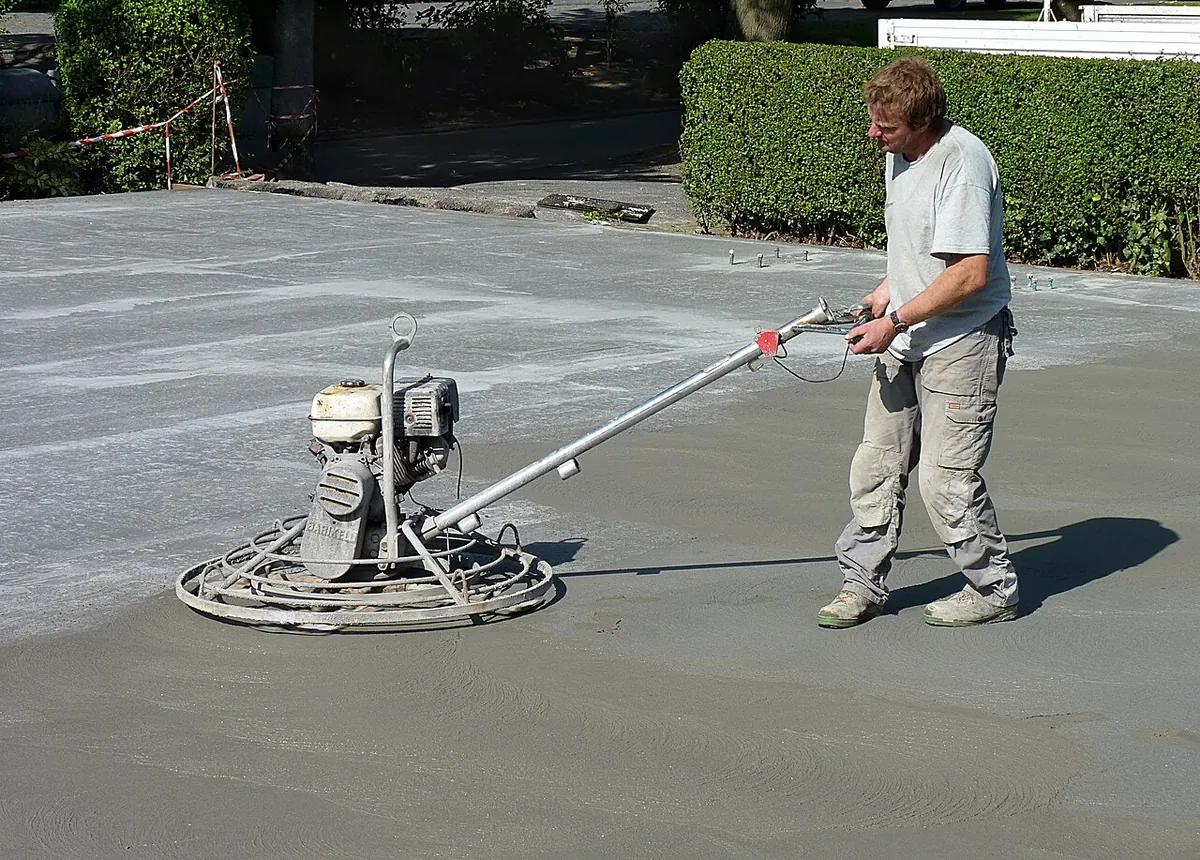
Photo: Jamain, Wikimedia Commons, CC BY-SA 3.0. A power trowel smooths fresh concrete; sanding and grinding come after it hardens.
Frequently Asked Questions
What is concrete sand used for?
Making concrete, bedding pavers, leveling under slabs and pools, and bedding pipes. It is coarse, washed and graded to ASTM C33.
Can I use play sand for concrete?
It is not recommended. Play sand is too fine and round, needs more water and cement, and makes weaker concrete.
Is concrete sand good for pavers?
Yes. Washed concrete sand is the standard 1-inch bedding layer under pavers. Use fine or polymeric sand for the joints.
How do you sand concrete?
Use diamond grinding cups or pads on a grinder or floor machine, starting coarse and moving to finer grits, with a dust shroud and vacuum or water.
What is sand mix concrete?
A bagged mix of cement and sand without gravel, for layers about 1/2 to 2 inches thick, patches and small castings.
Sources
- ASTM C33: Standard Specification for Concrete Aggregates
- Interlocking Concrete Pavement Institute: bedding sand for pavers
- Portland Cement Association: aggregates for concrete
- OSHA: crystalline silica dust control
Related Guides
- Cement vs concrete — the difference explained
- Concrete aggregate guide — sizes, grading and types of stone
- Concrete mixing ratio — 1:2:3 mix, water ratio and calculator formula
- How to make concrete — mixing in a bucket, wheelbarrow or mixer
- Crushed concrete — driveways, calculator and concrete crushers
- Sugar in concrete — how sugar delays or stops setting
- Concrete curb machine — landscape curbing and edging
- Gravel base for concrete — best base material, thickness, compaction and quantities