
Concrete Aggregate: Types, Sizes, Grading and How to Choose Aggregates for Concrete
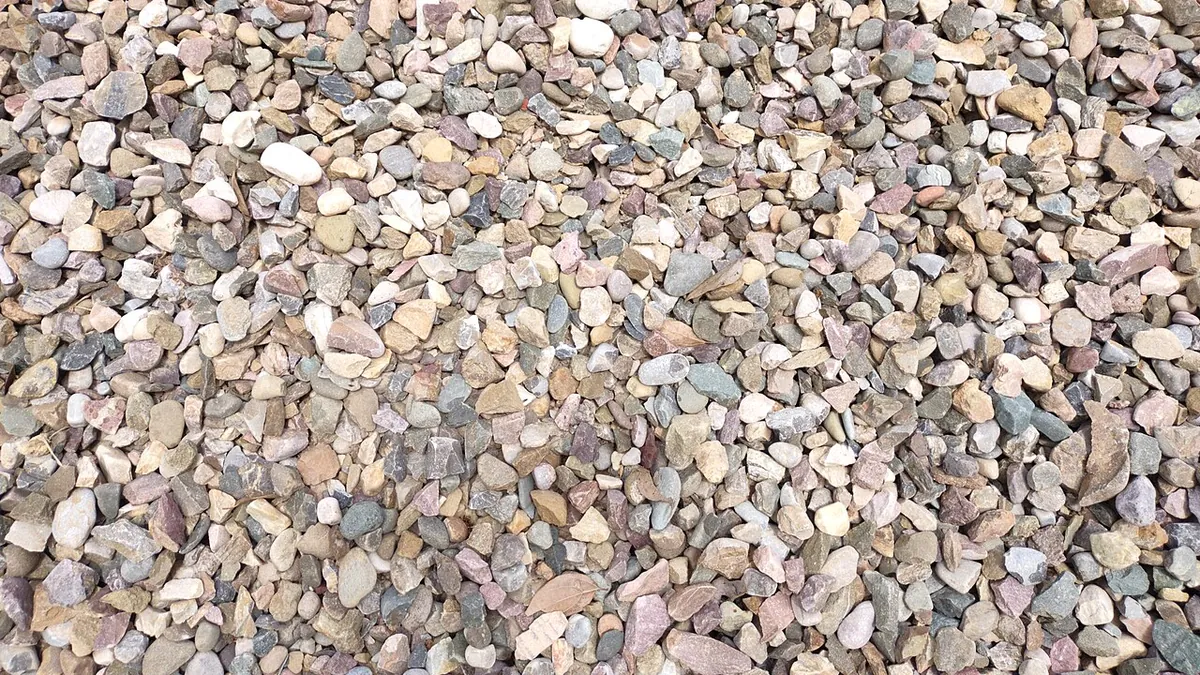
Photo: Microrao, Wikimedia Commons, CC BY-SA 4.0
Quick Answer
Concrete aggregate is the sand, gravel and crushed stone that make up about 60 to 75 percent of concrete's volume and 70 to 85 percent of its weight. Fine aggregate is sand smaller than about 3/16 inch; coarse aggregate is gravel or crushed stone larger than that, usually up to 3/4 or 1 inch in home concrete (sizes No. 67 and No. 57). Good aggregates for concrete are clean, hard, durable and well graded, meeting ASTM C33. Crushed stone bonds well and makes strong concrete; rounded river gravel makes concrete that flows and finishes easily. Special concrete aggregates include lightweight expanded shale, heavyweight barite and recycled concrete. Crushed stone costs about $25 to $65 per ton.
When people picture concrete, they think of the gray cement. But most of what you see and walk on in a slab is stone. Concrete aggregate fills the volume, carries most of the load, controls shrinkage, and sets much of the cost. The cement paste is the glue; the aggregate is what gets glued. Choose the wrong aggregate and concrete can crack, pop out, wear quickly, or simply cost more than it should. Choose the right one and it lasts for generations.
This guide explains what concrete aggregate is, the difference between fine and coarse aggregates, common sizes and grading, the main types of aggregates for concrete, the properties that matter, how aggregate affects strength and durability, exposed aggregate concrete finishes, and what concrete aggregates cost.
What Is Concrete Aggregate?
Concrete aggregate is any granular material, natural or manufactured, mixed with cement and water to make concrete. It is classed by size:
- Fine aggregate: natural or manufactured sand, particles that pass a No. 4 sieve (about 3/16 inch, 4.75 millimeters). See concrete sand.
- Coarse aggregate: gravel, crushed stone, slag or recycled concrete, retained on the No. 4 sieve, commonly up to 3/4 inch, 1 inch or 1-1/2 inches.
The two work together. Coarse aggregate forms a stone skeleton that carries load and resists shrinkage. Fine aggregate fills the gaps between stones, and cement paste fills the remaining gaps and coats everything. A well-graded mix of sizes packs tightly, needing less paste, which means less cement, less water and less shrinkage. That is why aggregate grading matters so much in aggregate concrete.
Concrete Aggregate Sizes and Grading
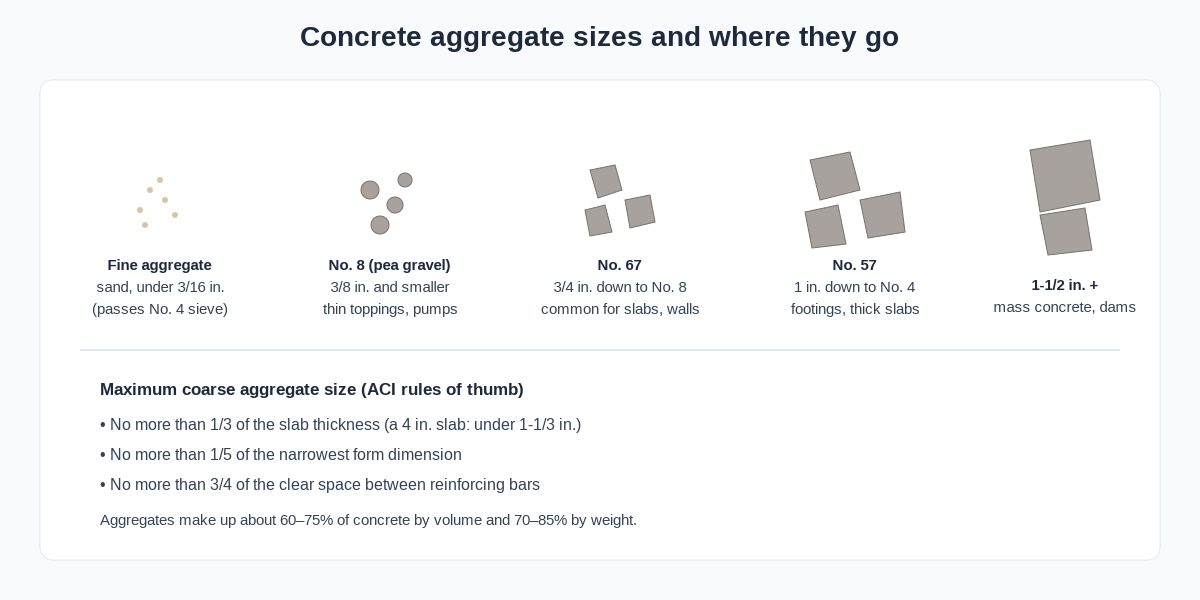
In the U.S., coarse aggregate sizes are named by number under ASTM C33, based on the sieve sizes they pass and are retained on. The most common sizes of concrete aggregates are:
| Size number | Nominal size | Typical uses |
|---|---|---|
| No. 8 | 3/8 in. down to No. 16 | Pea gravel mixes, thin toppings, pump mixes, precast |
| No. 7 | 1/2 in. down to No. 4 | Thinner slabs, overlays, pump mixes |
| No. 67 | 3/4 in. down to No. 4 | General slabs, walls, driveways, sidewalks |
| No. 57 | 1 in. down to No. 4 | Footings, slabs, paving, general structural |
| No. 467 | 1-1/2 in. down to No. 4 | Mass concrete, thick pavements |
The maximum size of coarse aggregate is limited by the size of the concrete element. Common rules of thumb from the American Concrete Institute: the largest stone should be no more than one fifth of the narrowest form dimension, one third of the slab thickness, and three quarters of the clear space between reinforcing bars or between bars and forms. For a 4-inch slab, 3/4- or 1-inch stone is fine; for a thin topping or a tightly reinforced wall, smaller stone is needed. Larger stone needs less paste per cubic yard and can make concrete slightly cheaper and lower in shrinkage, as long as it fits.
Grading describes the mix of particle sizes. A well-graded aggregate has a smooth range from large to small, so particles fill each other's gaps. A gap-graded or uniform aggregate leaves more voids that the paste must fill. Ready-mix plants test the grading of every stockpile and blend sizes to hit the target.
Types of Aggregates for Concrete
Natural gravel
Dredged from rivers or dug from glacial deposits, natural gravel has rounded, smooth particles. Rounded concrete aggregate flows easily, pumps well and needs less water for the same workability, which helps strength. The smooth surface gives a slightly weaker bond with the paste, which can matter for high-strength concrete.
Crushed stone
Quarried rock such as limestone, granite, dolomite, basalt or trap rock is blasted, crushed and screened. Crushed stone concrete aggregate is angular and rough, which gives an excellent bond with cement paste and good strength, but it is harsher to finish and needs a bit more water or admixture to work. Limestone is the most common crushed stone for concrete in much of the U.S., followed by granite and trap rock.
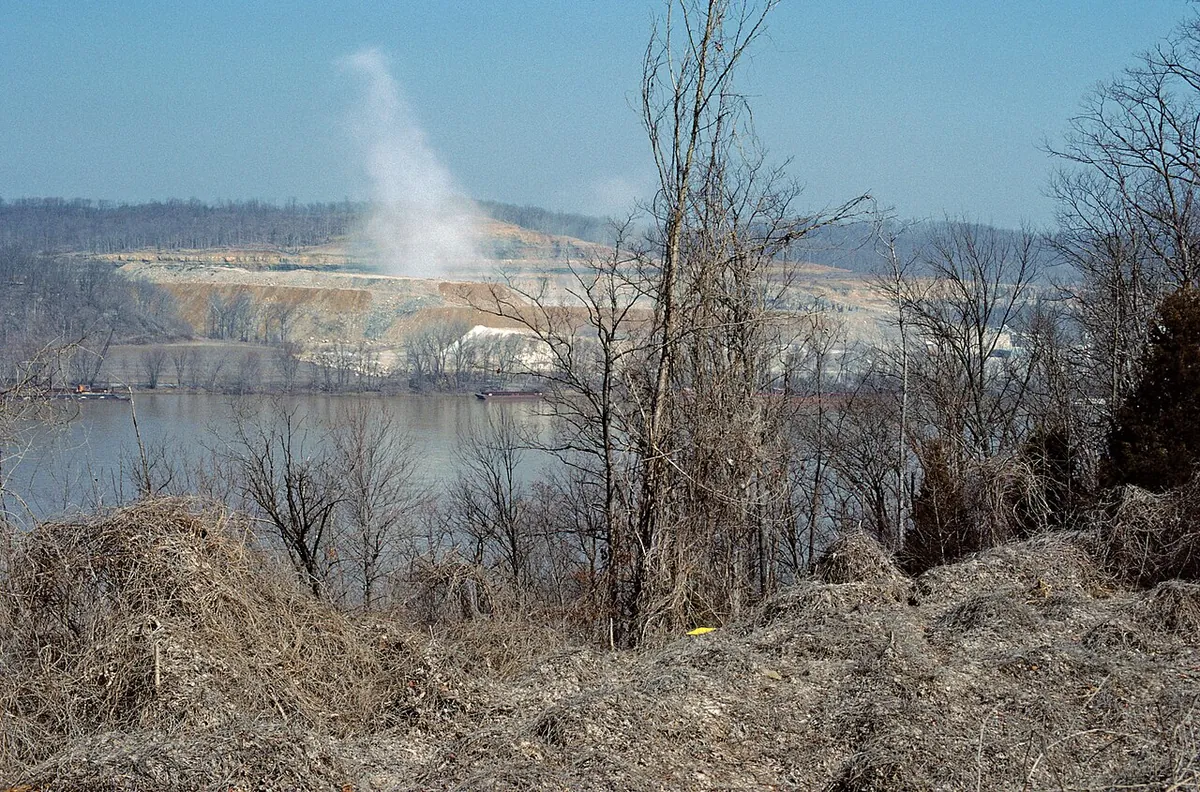
Photo: William Alden, Wikimedia Commons, CC BY-SA 2.0
Lightweight aggregate
Expanded shale, clay or slate is heated in a rotary kiln until it puffs up like popcorn, leaving a hard ceramic shell with many tiny pores. Lightweight aggregate concrete weighs about 90 to 120 pounds per cubic foot, compared with about 145 to 150 for normal concrete, which reduces dead load in high-rise floors, roof decks and precast panels. Pumice and scoria are natural lightweight aggregates, used in some regions for blocks and insulating concrete. Lightweight aggregates also absorb water, which can be used for internal curing.
Heavyweight aggregate
Barite, magnetite, hematite and steel shot make concrete weighing 200 pounds per cubic foot or more, used for radiation shielding in hospitals and power plants and for counterweights.
Recycled concrete aggregate
Old concrete from demolished slabs, roads and buildings can be crushed, screened and reused. Recycled concrete aggregate is widely used for road base and fill, and increasingly in new concrete, especially for non-structural work. It absorbs more water than virgin stone and may carry contaminants, so mix designs are adjusted. See how to remove concrete for what happens to old slabs.
Slag and other manufactured aggregates
Air-cooled blast furnace slag from iron production is crushed and used as coarse aggregate in some regions; other industrial byproducts are used occasionally.
Properties That Make Good Aggregates for Concrete
- Clean: free of clay, silt, dust, organic matter and coatings that weaken the bond. Most concrete aggregates are washed.
- Hard and strong: at least as strong as the cement paste. Weak, soft or flaky particles limit strength.
- Durable: resistant to freezing and thawing, wetting and drying. Porous, absorptive stone can cause pop-outs and D-cracking in pavements.
- Well graded: a good spread of sizes for tight packing.
- Good shape: roughly cubical or rounded particles are best; flat and elongated pieces need more paste and can weaken concrete.
- Chemically stable: not reactive with the alkalis in cement (see alkali-silica reaction below).
- Abrasion resistant for floors and pavements that see traffic.
ASTM C33 sets limits on deleterious materials and grading for concrete aggregate, and state highway departments add their own requirements for paving work.
How Concrete Aggregate Affects Strength and Durability
Concrete aggregate affects the finished concrete in several ways. Because the stone is usually stronger than the paste, the weak point in ordinary concrete is the paste and the zone where paste meets stone. Clean, rough, angular aggregate improves that bond. Larger, well-graded aggregate reduces the paste needed, which reduces shrinkage and cracking. Aggregate also controls the concrete's stiffness, thermal expansion and weight.
Two durability problems trace directly to concrete aggregates:
- Alkali-silica reaction (ASR): some aggregates contain reactive silica that reacts with alkalis in the cement paste, forming a gel that swells with moisture and cracks the concrete in a map-like pattern over years. It is prevented by testing aggregates and using fly ash, slag or low-alkali cement with reactive sources. See why concrete cracks.
- Pop-outs and D-cracking: porous particles near the surface absorb water, freeze, expand and pop out a cone of concrete, or crack pavement slabs along joints. Using durable, low-absorption stone prevents it. See concrete pitting and flaking.
Choosing Aggregates for Concrete Projects at Home
Most homeowners never pick a concrete aggregate directly; it comes already blended in a bag of concrete mix or a ready-mix truck. But knowing what to ask for helps. For a driveway, patio or sidewalk from a ready-mix plant, a standard mix with 3/4-inch or 1-inch coarse aggregate is normal, and in freeze-thaw climates you should ask for air-entrained concrete made with durable, frost-resistant stone. For a thin overlay or topping, a pea gravel mix or a sand mix without coarse aggregate is used. For concrete countertops, small 3/8-inch stone or a sand-only mix makes it easier to cast thin edges and polish the surface. For footings and thick slabs, larger 1-inch stone is fine and slightly reduces the cement needed. For decorative exposed aggregate concrete, ask the plant which local stones are available; colors and shapes vary a lot by region.
If you mix your own concrete from separate materials, buy washed concrete sand and clean crushed stone or gravel labeled for concrete, not road base or fill. Road base, often called crusher run or dense grade, contains stone dust and fines that make good compacted base but poor concrete aggregate, because the fines soak up water and weaken the paste.
Moisture in Concrete Aggregates
Aggregates hold water, and that water affects the mix. Engineers describe four moisture conditions: oven-dry, air-dry, saturated surface-dry (SSD), where the pores are full but the surface is dry, and wet, with free water on the surface. Concrete mix designs are written for aggregates in the SSD condition. If the concrete aggregates are drier than SSD, they absorb some of the mix water and the concrete stiffens; if they are wetter, the extra surface water adds to the mix water and weakens the concrete. Ready-mix plants measure stockpile moisture and adjust batch weights so the water-cement ratio stays on target. On a small job, keeping the sand and gravel piles evenly damp, not soaked and not bone dry, gives more consistent batches.
Aggregate-to-Cement Ratio and Mix Proportions
Concrete mixes are often described by the ratio of cement to fine aggregate to coarse aggregate. A classic general-purpose mix is 1:2:3 by volume, one part cement, two parts sand and three parts stone, so the aggregates for concrete make up five of six parts of the dry materials. Richer mixes such as 1:1.5:3 use more cement for higher strength; leaner mixes such as 1:3:6 use less for mass fill. Engineered mixes are proportioned by weight following methods like ACI 211, which start from the maximum aggregate size, the fineness of the sand and the target strength, then calculate the volume of coarse aggregate, the water and the cement. In those methods, the coarse aggregate volume is chosen first because it has the biggest effect on how much paste the mix needs. See what concrete is made of for typical proportions.
How Concrete Aggregate Is Tested
Aggregate suppliers and ready-mix plants test their materials regularly. Common tests include sieve analysis to check grading, specific gravity and absorption to calculate mix weights and water, unit weight, the Los Angeles abrasion test for toughness, soundness tests that soak the stone in sulfate solutions to simulate freeze-thaw damage, and tests for clay lumps, lightweight particles and organic impurities. Where alkali-silica reaction is a risk, aggregates are screened with expansion tests on mortar bars or concrete prisms. State highway departments keep lists of approved aggregate sources for paving, and many ready-mix suppliers use the same sources for all their concrete. For a homeowner, the practical step is simply to buy concrete from an established plant or bagged mixes from known brands, which use tested concrete aggregates.
Aggregate Concrete in Roads and Highways
Concrete pavements depend heavily on their aggregate. The coarse aggregate in a highway slab carries truck loads, resists wear from tires and snowplows, and must survive decades of freezing and thawing and deicing salts. Some aggregate concrete pavements built with porous limestone have failed early from D-cracking, a pattern of fine cracks along joints caused by water freezing inside the stones. Modern specifications limit absorption and require freeze-thaw testing of coarse aggregate for paving. Highway agencies also use aggregate size and type to control slab curling and joint behavior, and they increasingly use recycled concrete aggregate from old pavements in base layers or even in new concrete. See dowel bars and continuously reinforced concrete pavement for more on concrete roads.
Quarrying, Recycling and the Environment
Aggregates are the most mined materials on Earth by volume, and in the U.S. alone more than two billion tons of crushed stone, sand and gravel are produced each year, most of it for concrete and road building. Quarries bring dust, noise, truck traffic and land use, and river sand and gravel mining can damage riverbeds. Recycling old concrete into new concrete aggregates and base material reduces both quarrying and landfill use. Using larger, well-graded aggregate also lowers the cement needed per cubic yard, which cuts the larger carbon footprint that comes from cement. For homeowners, reusing broken concrete as fill or base on site and choosing local aggregate sources are simple ways to reduce impact.
Why Aggregate Shape and Texture Matter
Two concrete aggregates with the same size and grading can behave very differently because of particle shape and surface texture. Rounded, smooth river gravel lets particles slide past each other, so the fresh concrete flows, pumps and finishes easily with less water. Angular, rough crushed stone interlocks and grips the paste, which improves strength, especially flexural strength in pavements, but the fresh mix feels harsher and may need more fine aggregate or a water-reducing admixture to place and finish well. Flat or elongated particles, sometimes produced by poor crushing, are the worst of both: they need more paste, can stack and trap water under them, and break more easily. Aggregate specifications often limit the share of flat and elongated pieces in coarse aggregate. When concrete from a new supplier suddenly finishes differently, a change in aggregate shape is a common reason.
Aggregates for Concrete in Different Climates
Climate shapes which aggregates for concrete work best. In cold, wet regions with road salt, durable, low-absorption stone and air-entrained concrete are critical to avoid pop-outs, scaling and D-cracking. In hot, dry regions, aggregate stockpiles can get very hot in the sun, which speeds setting and increases water demand; plants sprinkle stockpiles with water or shade them, and some cool the concrete with chilled water or ice. Along coasts, aggregates must be washed free of salt, because chlorides corrode reinforcing steel. In areas with reactive aggregates, plants routinely add fly ash or slag to control alkali-silica reaction. Local ready-mix producers know these issues for their region, so asking them for their standard exterior mix is usually the right call. See does salt damage concrete.
Common Aggregate Problems in Home Concrete
Most problems homeowners see that trace back to concrete aggregate are cosmetic or minor. Small cone-shaped pop-outs on a driveway are usually caused by a few porous or reactive particles near the surface absorbing water and freezing. Rust-colored spots can come from iron-bearing particles such as pyrite in the stone. Dark spots and a dusty surface can come from dirty aggregate with too much clay or silt. Stones showing through a fresh broom finish usually mean the concrete was overworked or too wet, letting paste float to the top. And a very rocky, honeycombed edge means the mix segregated or was not consolidated. Each has a different fix, from patching to sealing to better placement practice next time. See concrete spalling and honeycombing in concrete.
Coarse Aggregate vs Fine Aggregate: How Much of Each?
A typical cubic yard of normal concrete contains roughly 1,700 to 1,900 pounds of coarse aggregate and 1,200 to 1,400 pounds of fine aggregate. The balance between them changes how the concrete behaves. More coarse aggregate means less paste, lower cost and less shrinkage, but a harsher mix that is harder to finish. More fine aggregate makes a creamier, easier-finishing mix, which finishers often prefer for flatwork, but needs more water and cement for the same strength and shrinks more. Pump mixes usually carry a little more fine aggregate and smaller coarse aggregate so they flow through the hose. Mix designers adjust the coarse aggregate content based on the maximum stone size and the fineness of the sand. When a plant offers a "flatwork mix," "pump mix" or "footing mix," the main difference between them is often the size and amount of the coarse aggregate and the share of fine aggregate.
For bagged products, the same logic applies: concrete mix has both coarse aggregate and sand; sand mix has only fine aggregate; and mortar mix has fine aggregate plus lime. Pick the bag by the thickness and use of the work, not by the price per bag, and check the label for the largest stone size.
Buying Aggregate for a DIY Concrete Batch
If you plan to mix concrete on site from separate materials, for example at a cabin or farm where bagged mix is impractical, order from a sand and gravel yard and ask for washed concrete sand and a coarse aggregate sized for your work, usually No. 67 for general slabs and walks. Ask for the weight per cubic yard so you can convert between tons and yards, and have both delivered on a tarp or a clean, firm area. Plan roughly 1,300 pounds of sand and 1,800 pounds of stone for each cubic yard of concrete, plus about six 94-pound bags of cement. Keep the piles separate so you can measure each one accurately, and cover them when not in use. A small drum mixer, a few marked buckets for measuring and a hose with a shut-off nozzle are all the tools you need. Measure every batch the same way, because consistency from batch to batch matters as much as the exact ratio. Make a small test batch first and adjust the water before mixing the rest.
Exposed Aggregate Concrete
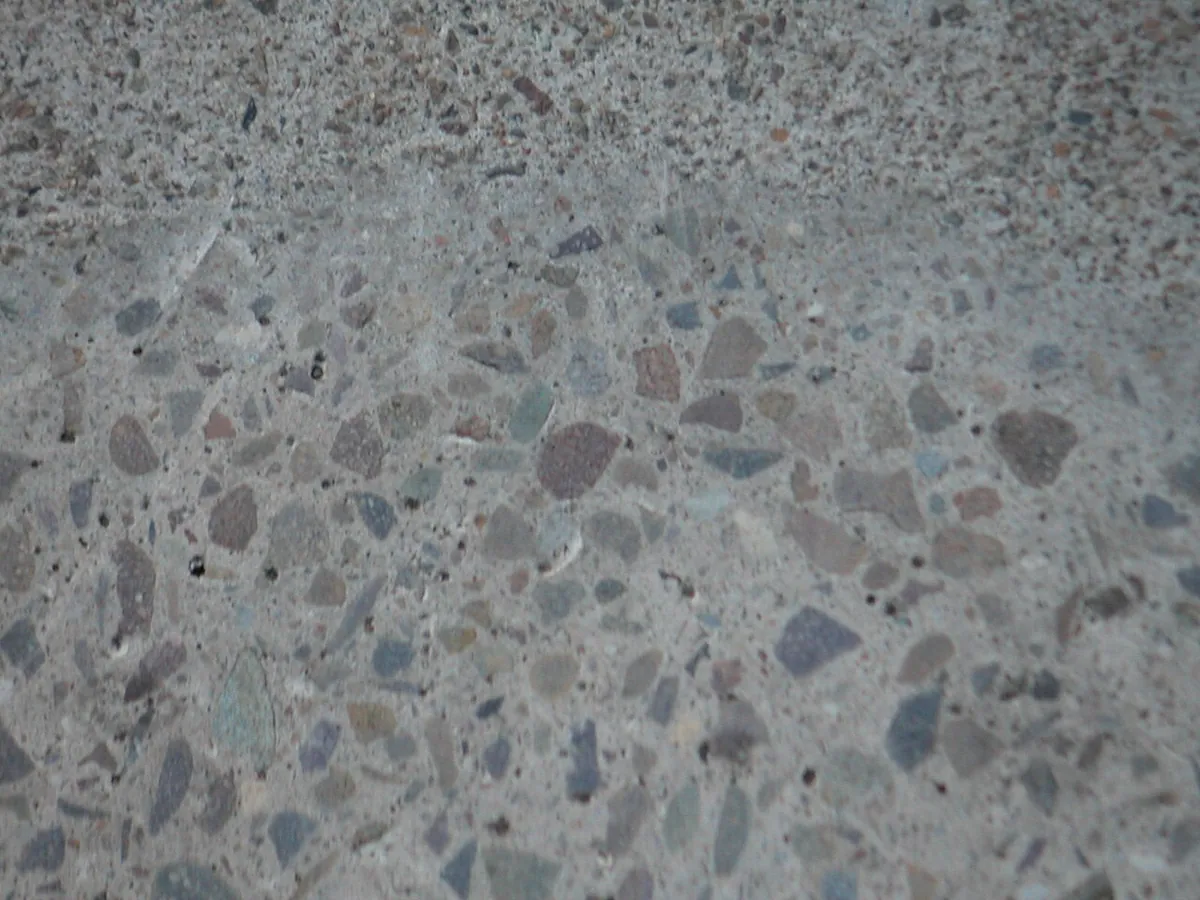
Photo: Wikimedia Commons, public domain.
Concrete aggregate is usually hidden inside the slab, but some finishes show it off. Exposed aggregate concrete is finished by washing or brushing away the top layer of cement paste, often with a surface retarder sprayed on the fresh concrete, to reveal the stones. Polished concrete grinds the surface down to show a cross-section of the aggregate, like the floor in the photo above. Decorative aggregates such as river rock, colored granite, glass or shell can be seeded into the surface for a custom look. These finishes are slip resistant and hide dirt well. See types of concrete finishes and polished concrete cost.
How Much Do Concrete Aggregates Cost?
- Crushed stone (No. 57 or No. 67): about $25 to $65 per ton at the yard.
- Pea gravel: about $30 to $55 per ton.
- Concrete sand: about $15 to $45 per ton.
- Recycled concrete aggregate: often $10 to $30 per ton.
- Lightweight aggregate: more, often sold by the cubic yard.
- Delivery: about $50 to $150 per load locally.
- Bagged gravel: about $4 to $8 per 50-pound bag.
A cubic yard of gravel or crushed stone weighs about 2,400 to 2,900 pounds, roughly 1.2 to 1.45 tons. For most homeowners, buying cement, sand and gravel separately only makes sense for remote sites or very small batches; bagged concrete or ready-mix is usually easier. See concrete price per yard and how much a bag of concrete costs.
Frequently Asked Questions
What is concrete aggregate?
The sand, gravel and crushed stone mixed with cement and water to make concrete. It makes up about 60 to 75 percent of the volume.
What size aggregate is used in concrete?
Most home concrete uses 3/4- or 1-inch coarse aggregate (No. 67 or No. 57) plus sand. Thin toppings use 3/8-inch pea gravel or no coarse stone.
Is crushed stone or river gravel better for concrete?
Both work. Crushed stone bonds better and gives slightly higher strength; rounded gravel flows and finishes more easily with less water.
Can you use recycled concrete as aggregate?
Yes, especially for base layers and non-structural concrete. Mix designs are adjusted for its higher absorption.
Why does aggregate need to be clean?
Clay, silt and dust coat the stones and weaken the bond with the cement paste, reducing strength and durability.
Sources
- ASTM C33: Standard Specification for Concrete Aggregates
- Portland Cement Association: aggregates for concrete
- American Concrete Institute: ACI 211 and ACI 318 aggregate size limits
- Federal Highway Administration: alkali-silica reaction and pavement durability
Related Guides
- Cement vs concrete — the difference explained
- Concrete sand guide — sand for concrete, pavers and sanding concrete
- Concrete mixing ratio — 1:2:3 mix, water ratio and calculator formula
- High strength concrete mix — psi classes, ingredients and cost
- Light concrete guide — lightweight aggregate, AAC and foam concrete
- Concrete slump test — what slump means and how to test it
- Pervious concrete — permeable paving that drains rainwater
- Crushed concrete — driveways, calculator and concrete crushers
- Concrete batching plant — how ready-mix is made
- Exposed aggregate concrete — how it's made, sealing and cost
- Density of concrete — unit weight and modulus of elasticity
- Roller compacted concrete — RCC pavements and dams