
Exposed Aggregate Concrete: Methods, Uses, Sealing, Repairs and Cost
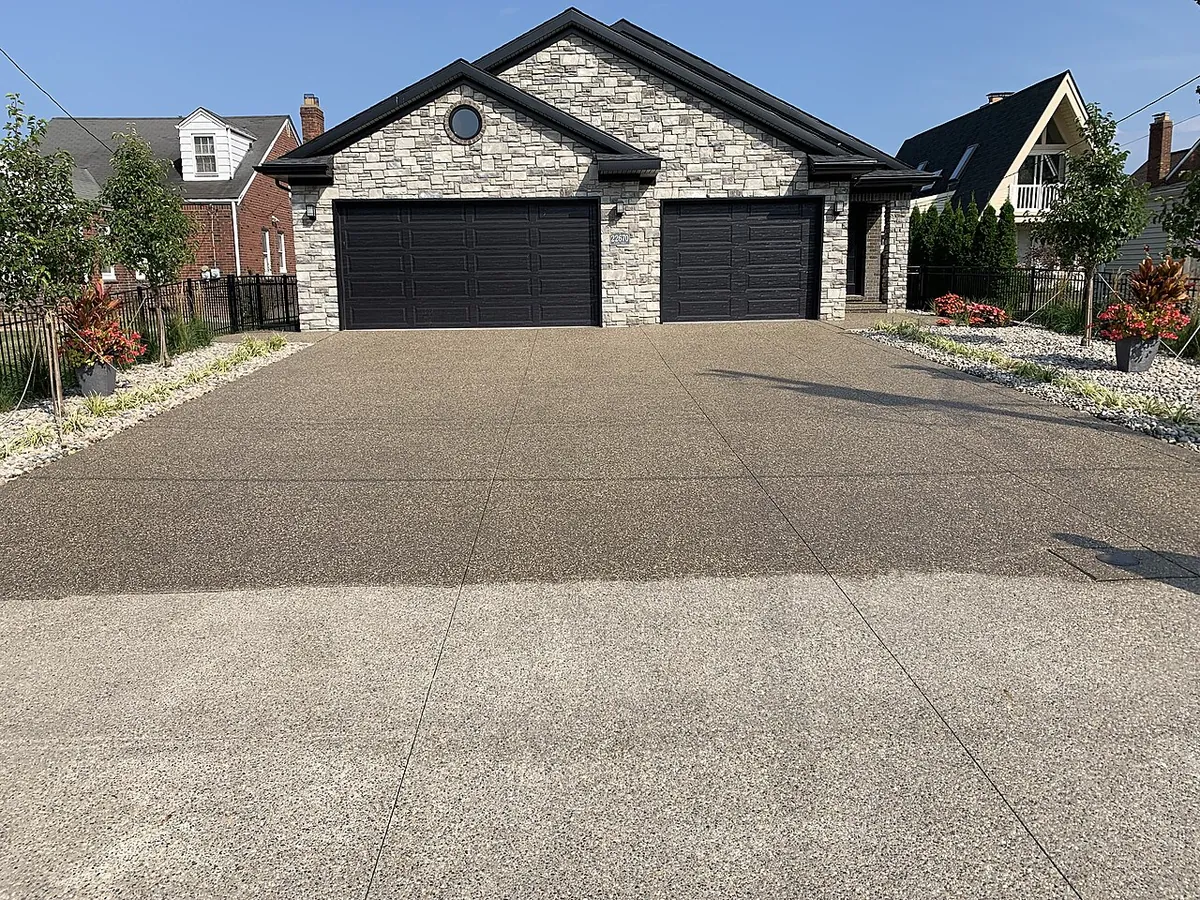
Photo: Deccon Concrete Restoration, Wikimedia Commons, CC BY-SA 4.0
Quick Answer
Exposed aggregate concrete is concrete whose top layer of cement paste is removed so the stones in the mix show at the surface. Contractors place and finish the concrete, often seeding decorative pebbles into the top, spray a surface retarder to slow the top layer's set, and the next morning or a few hours later wash and brush away the paste to reveal the stones. The result is a textured, slip-resistant, very durable surface that hides dirt and stains. Exposed aggregate costs about $8 to $16 per square foot installed including the slab, more with special stones. It is popular for driveways, patios, pool decks and walkways. Seal it every two to three years to deepen color and help hold the stones.
Exposed aggregate concrete is one of the most practical decorative finishes. Instead of a smooth gray surface, the top shows thousands of small stones, giving texture, color and grip. The driveway in the photo above, in Michigan, has just been washed and sealed: the darker, freshly sealed area near the garage shows how a sealer deepens the color of the stones compared with the unsealed apron in the foreground. Exposed aggregate has been used for decades on sidewalks, plazas, driveways and pool decks, and it remains popular because it looks good, wears well and needs little care.
This guide explains what exposed aggregate concrete is, the main methods of exposing the stones, how to choose aggregate, where exposed aggregate works best, step-by-step installation, sealing and cleaning, common problems and repairs, pros and cons, and costs.
What Is Exposed Aggregate Concrete?
All concrete is made of cement, water, sand and coarse aggregate, the gravel or crushed stone that makes up most of its volume. In a normal slab, finishing tools push the stones down and bring a layer of cement paste and sand to the top, which is troweled or broomed smooth. Exposed aggregate concrete reverses this at the surface: the paste on top is removed to a depth of about 1/16 to 1/4 inch, so the tops of the stones are exposed and bonded in place by the cement around them. The look depends on the size, shape and color of the stones, how deeply they are exposed, the color of the cement paste around them, and whether the surface is sealed or polished. Rounded river pebbles give a smooth, comfortable surface; crushed stone gives a more angular, sparkly texture. See concrete aggregate and what concrete is made of.
Methods of Exposing Aggregate
The most common modern method uses a surface retarder. After the concrete is placed, screeded, floated and lightly finished, the installer sprays a chemical retarder on the surface. The retarder slows the setting of the top few millimeters of paste while the concrete below hardens normally. A few hours later, or the next morning depending on the product and weather, the crew washes the surface with water and stiff brooms or a pressure washer, removing the soft paste and revealing the stones. The depth of exposure depends on the retarder strength and timing. This method gives consistent results and allows crews to wash at a convenient time.
The traditional method is washing without retarder. The crew waits until the concrete is firm enough to hold the stones but the surface paste is still soft, then brushes and washes the surface. Timing is critical: too early and stones loosen; too late and the paste is too hard to remove. This method is still used for small jobs. Other methods include abrasive blasting, where sand or shot blasting removes the paste from hardened concrete, giving a matte, etched look, and grinding, where diamond grinding cuts through the top of the slab and slices the stones flat, giving a polished, terrazzo-like look. Acid washing can expose fine aggregate on existing slabs.
Seeded vs Integral Exposed Aggregate
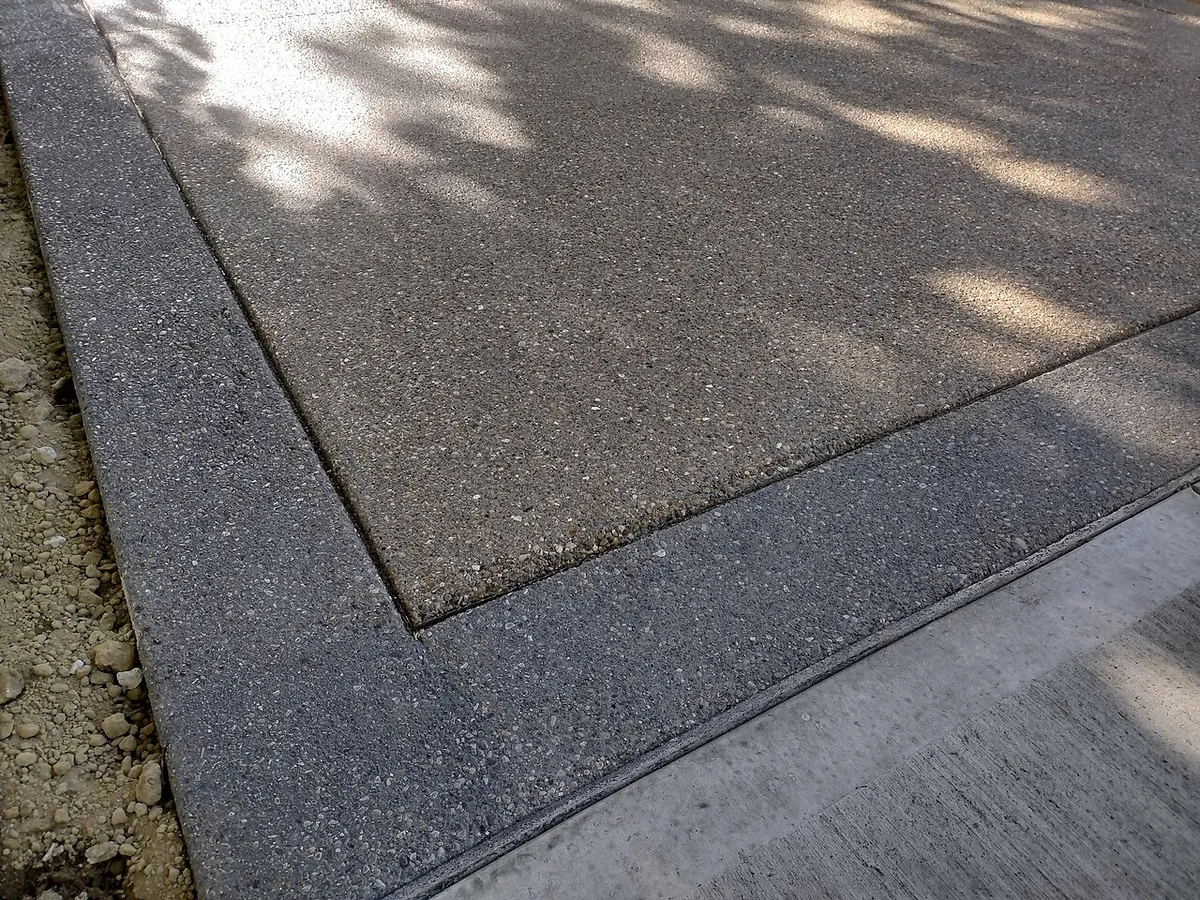
Photo: Chris Gentrup, Wikimedia Commons, CC BY-SA 4.0
There are two ways to get decorative stones into the surface. Integral exposed aggregate uses a concrete mix that already contains the desired stones throughout, often a special mix with more coarse aggregate of a chosen color and size. When the surface is washed, those stones appear. This is common for driveways and large areas. Seeded exposed aggregate uses ordinary structural concrete, and the installer broadcasts decorative stones, such as colored river pebbles, glass or shells, onto the surface after screeding, then presses them in with a float so they are fully embedded. After retarding and washing, only the seeded stones show. Seeding allows expensive decorative stones to be used only at the surface, saving cost, and gives a denser, more uniform look. The patio in the photo above shows a seeded exposed aggregate field with a darker sealed border next to a plain broom-finished walk, a common way to frame an area. See concrete walkway ideas.
Choosing the Aggregate
The choice of stone defines the look. Rounded river gravel and pea gravel, about 3/8 to 1/2 inch, is the most common, comfortable underfoot and attractive in mixed browns, grays and whites. Crushed granite and quartz give sparkle and more angular texture. Basalt and dark stones create dramatic black or charcoal surfaces. White marble and quartz chips give bright, clean looks. Colored glass and shells are used for accents. Local stones keep costs down and help the concrete blend with the landscape. Aggregate size matters for comfort and appearance: larger stones look bolder but are rougher to walk on barefoot, while smaller stones give a finer texture. For pool decks and areas used barefoot, small rounded stones are best. The cement paste color can also be tinted with integral color to complement the stones.
Where Exposed Aggregate Works Best
Exposed aggregate concrete is ideal for exterior flatwork where slip resistance, durability and low maintenance matter. Driveways are a top use: the texture provides traction in rain and snow, hides tire marks, oil drips and dirt, and stands up to traffic. Patios and walkways benefit from the natural look and grip. Pool decks use small rounded aggregate for comfortable, non-slip surfaces. Public plazas, sidewalks, school yards and building entrances use exposed aggregate for its durability and resistance to wear. Steps and ramps benefit from the traction. Indoors, polished exposed aggregate floors, ground flat and polished, offer a terrazzo-like look in homes, schools and commercial buildings. Exposed aggregate is less suited to surfaces where a very smooth finish is needed, such as garage floors used for rolling equipment or areas for skating. See concrete driveway cost, concrete patio ideas and pool deck concrete.
How Exposed Aggregate Concrete Is Installed
Installation starts like any concrete slab: excavate, compact a gravel base, set forms, place reinforcement, and plan joints. The concrete is placed, screeded and bull floated. For seeded exposed aggregate, the crew broadcasts decorative stones evenly across the surface and embeds them with a float until they are just covered by paste. Edges are finished and jointing tools run, or joints are planned for saw cutting later. A surface retarder is sprayed evenly over the surface, and the slab is sometimes covered with plastic to keep the retarder from drying too fast. After the right time, depending on the retarder, temperature and humidity, the crew washes the surface with water and stiff brooms or a low-pressure washer, starting in a test area to check the depth of exposure, then working across the whole slab, rinsing the paste away. Control joints are saw-cut if not tooled. After curing, typically several days to a few weeks, the surface is cleaned with a mild acid wash if needed to remove cement haze, and sealed. See concrete flatwork, control joints in concrete and concrete bull float.
Sealing Exposed Aggregate
Sealing exposed aggregate concrete deepens the color of the stones, gives a wet look or a natural matte finish, helps resist stains, and helps bind the surface so stones are less likely to loosen. Acrylic sealers, solvent- or water-based, are the most common choice and can be glossy or satin. Penetrating sealers protect without changing the look much. Polyurethane and epoxy coatings are tougher but can be slippery and are less common outdoors. Sealers on exposed aggregate should include an anti-slip additive if a glossy finish is used, especially on pool decks and steps. Apply sealer to a clean, dry surface, typically two thin coats, by sprayer or roller, and avoid puddles in low spots. Reseal every two to three years or when the stones look dull and water soaks in, choosing the same sealer type as before so the new coat bonds to the old one. See concrete sealer and how to seal concrete.
Cleaning and Maintenance
Exposed aggregate is low maintenance. Sweep and rinse regularly, especially in autumn when leaves can stain the surface. Pressure wash with moderate pressure once or twice a year, keeping the nozzle moving and not too close, to avoid loosening stones. Treat oil stains promptly with a degreaser, and treat algae and mildew with oxygen bleach or a concrete cleaner. Reseal on schedule. Avoid deicing salts, which damage the paste around the stones; use sand for traction instead. Over time, a few stones may come loose at edges or high-traffic spots; they can be re-glued with epoxy or the area patched. See how to clean a concrete driveway, how to remove oil stains from concrete and does salt damage concrete.
Common Problems and Repairs
The most common problems with exposed aggregate concrete are uneven exposure, loose stones, cement haze, cracking and sealer issues. Uneven exposure happens when the retarder was applied unevenly or washing timing varied; it can be improved by careful acid washing or light blasting. Loose stones result from overexposure, washing too early, or weak paste; small areas can be fixed with epoxy, and badly overexposed areas may need an overlay. Cement haze, a cloudy film on the stones, is removed with a mild acid wash and rinse. Cracks are treated as on any slab, with flexible sealants or patches colored to match; seeded aggregate can be pressed into a fresh patch to blend it in, though perfect matches are hard. Sealer problems, such as whitening or peeling, come from moisture under the sealer or too-thick coats, and are fixed by stripping and resealing. See how to fix cracks in concrete and concrete patching compound.
Polished Exposed Aggregate
Polished exposed aggregate brings the look indoors and to smooth commercial floors. Instead of washing the paste away, the slab is ground with diamond tools until the stones are cut flat, then densified and polished. The result is a smooth, glossy surface showing cross-sections of the stones, similar to terrazzo but made in one pour. Decorative stones can be seeded into the slab before it sets to increase density and color. Polished exposed aggregate is popular in modern homes, offices, schools, airports and retail stores. It is very durable and easy to clean, but costs more than washed exposed aggregate because of the grinding. See polished concrete cost and concrete grinding.
Exposed Aggregate Driveways
Exposed aggregate is one of the best finishes for a concrete driveway, especially in climates with rain, snow and ice. The stones give tires and shoes grip on slopes, and the varied color hides oil drips, tire marks and dirt that show clearly on plain gray concrete. An exposed aggregate driveway should follow the same structural rules as any driveway: at least 4 inches thick for cars, 5 to 6 inches for heavier vehicles, on a compacted gravel base, with reinforcement and control joints about every 10 to 12 feet. Because the paste around the stones is the weak point, use a strong, air-entrained mix in freeze-thaw climates and avoid overexposing the stones. Contrasting borders, such as a smooth troweled band or a different aggregate color along the edges, add a finished look. Many homeowners pair an exposed aggregate driveway with matching walkways and a front step for a coordinated entry. See how thick a concrete driveway should be and concrete driveway apron.
In snowy regions, exposed aggregate driveways need a little extra care. Plastic-edged shovels and snow blowers with skid shoes set slightly high prevent scraping stones loose. Deicing salts, especially rock salt and calcium chloride used heavily, attack the paste and can loosen stones over time, so use sand for traction or a deicer labeled safe for concrete, sparingly. Keep the driveway sealed to reduce water absorption. See best ice melt for concrete.
Exposed Aggregate Pool Decks and Patios
Around pools, exposed aggregate concrete combines grip with a natural, resort-like look. For comfort, choose small, rounded aggregate, about 1/4 to 3/8 inch, and expose it lightly so bare feet do not feel sharp edges. Light-colored stones and paste stay cooler in sun than dark ones. Seal with a non-slip sealer or a penetrating sealer to protect from pool chemicals and stains while keeping traction. On patios, exposed aggregate works well with outdoor furniture, planters and fire pits, and it does not show small scratches the way smooth colored concrete does. Combining an exposed aggregate field with smooth or stamped borders, steps or seat walls adds contrast and highlights the design. See concrete pool coping and concrete fire pit.
DIY Exposed Aggregate: Is It Possible?
Small exposed aggregate projects, such as stepping stones, a short path or a small pad, are possible for experienced DIYers. Retarders are sold in small quantities, and bagged concrete can be seeded with decorative pebbles. The challenge is timing and consistency: exposing too early loosens stones, too late leaves the paste too hard, and uneven retarder application gives patchy results. Work in small sections, keep a garden hose and stiff broom ready, and test a small area before washing the whole surface. For driveways and large patios, the volume of concrete, the need for fast placement and the importance of even exposure make professional installation the safer choice. See how to make concrete stepping stones and how to pour a concrete patio.
Exposing Aggregate on Existing Concrete
Can you turn an existing plain slab into exposed aggregate? Not in the same way as with fresh concrete, because the paste has hardened. However, there are options. Light abrasive blasting or grinding can expose the fine sand and some of the stones near the surface, giving a sandblasted or salt-and-pepper look. Deeper grinding and polishing can expose larger stones on interior floors. Outdoors, a decorative overlay with seeded aggregate, or a thin bonded topping of exposed aggregate concrete, can be applied over a sound slab. Whether these options make sense depends on the condition of the slab, the look you want, and the budget, compared with removing and replacing the concrete. See concrete overlay cost and can you pour concrete over concrete.
Exposed Aggregate vs Other Finishes
Compared with broom-finished concrete, exposed aggregate is more decorative and hides stains better, at a modest extra cost. Compared with stamped concrete, it is more slip-resistant, wears better under traffic, and needs less frequent resealing to look good, though it offers fewer pattern options. Compared with pavers, it has no joints for weeds and ants, and costs less, but repairs are harder to blend in. Compared with stone, it is far cheaper while giving a natural look. Exposed aggregate fits best where a practical, durable, natural-looking surface is wanted rather than a strong pattern. See types of concrete finishes and decorative concrete.
Pros and Cons
Exposed aggregate concrete has many advantages: excellent slip resistance, high durability, natural attractive appearance, many color and texture options, ability to hide dirt and stains, low maintenance, good performance in freeze-thaw climates when well made, and moderate cost compared with pavers and stone. The disadvantages include a rougher surface that can be uncomfortable for bare feet and knees with large stones, harder snow shoveling than smooth concrete, difficult invisible repairs, the need for skilled crews to get even exposure, possible loose stones, and the need for periodic sealing to keep the best look. For most driveways, walkways and patios, the advantages of exposed aggregate outweigh the drawbacks, which is why it has stayed popular for decades while other decorative trends came and went.
Exposed Aggregate Concrete Costs
Exposed aggregate concrete typically costs about $8 to $16 per square foot installed, including excavation, base, forms, reinforcement, concrete, seeding, retarding, washing and sealing. Seeded exposed aggregate with premium stones, colored paste or complex borders can run $15 to $25 per square foot. Polished exposed aggregate indoors costs about $8 to $20 per square foot, depending on grinding depth and finish. Resealing costs about $1 to $3 per square foot. Removing and replacing an old driveway with exposed aggregate adds removal costs. Compared with plain broom-finished concrete at about $6 to $12 per square foot, exposed aggregate adds a few dollars per square foot; compared with stamped concrete or pavers, it is often similar or less. See concrete cost per square foot, concrete removal cost and stamped concrete vs pavers.
Choosing an Exposed Aggregate Contractor
Exposed aggregate is less forgiving than broom finishing, because the crew must get the retarder, timing and washing right across the whole slab. When choosing a contractor, ask to see several finished exposed aggregate jobs, including some that are a few years old, and look for even stone exposure, few loose stones, clean joints and consistent color between pours. Ask which aggregate and retarder they use, whether they seed the surface or use an integral mix, how they plan to handle joints and borders, and whether sealing is included. Request a small sample panel with your chosen stone and paste color before the pour, since colors look different on a sample chart than in real concrete. A written contract should list the mix design, thickness, reinforcement, aggregate type, sealer and cure time before use. Good crews also protect nearby walls, doors and plants from the wash water and slurry, which contains cement and should not run into storm drains.
Environmental Notes
Washing exposed aggregate creates cement slurry that is highly alkaline and harmful to plants, fish and soil. Responsible contractors contain the washout, direct it to a lined pit or washout area, and let solids settle and dry for disposal, rather than letting it run into storm drains, gutters or streams. Many cities require this by law. Using local aggregates reduces transport emissions, and recycled glass or crushed concrete can sometimes be used as decorative aggregate. Exposed aggregate's long life and low maintenance also mean fewer replacements over the years. See concrete washout and crushed concrete.
Exposed Aggregate Walkways and Steps
Walkways and front steps are natural places for exposed aggregate. The texture gives safe footing in rain, and the stones match well with gardens, brick and stone houses. On steps, keep the stones small and the exposure light so the nosing edges stay strong, and consider a smooth troweled band at each nosing for a crisp line and easier sweeping. A matching exposed aggregate walkway from the driveway to the door ties the front of the house together and wears well under daily traffic and deliveries. See how to pour concrete steps.
Exposed Aggregate in Precast Products
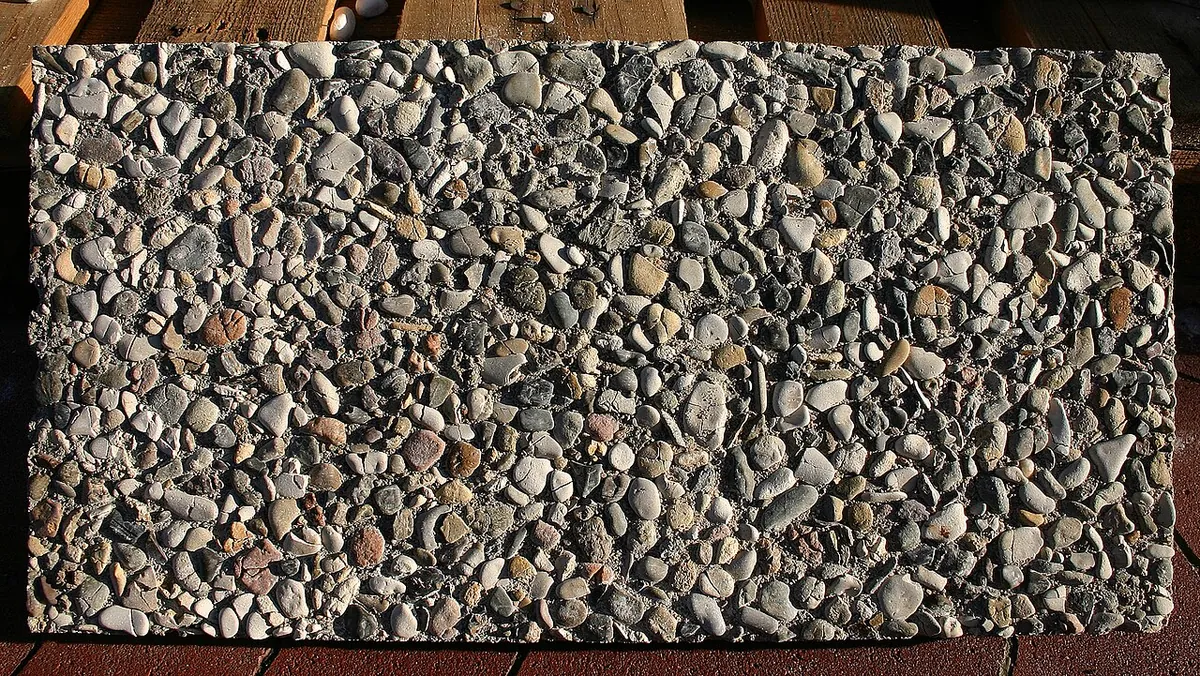
Photo: Elke Wetzig, Wikimedia Commons, CC BY-SA 3.0
Exposed aggregate is common in precast concrete too. Washed concrete paving slabs, like the pebbly flagstone above, were hugely popular in Europe from the 1960s to 1990s for patios, garden paths and public spaces, and are still sold today. Precast planters, benches, bollards, wall panels and stair treads often have exposed aggregate faces for durability and texture. Architectural precast facade panels use exposed aggregate in many colors to give buildings a stone-like appearance at lower cost. These products are made by applying retarder to the mold face or by washing the top face after casting. See precast concrete and concrete stair treads.
Frequently Asked Questions
Is exposed aggregate concrete slippery?
No. Its textured surface is one of the most slip-resistant concrete finishes, though glossy sealers can reduce grip unless anti-slip additives are used.
How long does exposed aggregate concrete last?
A well-installed exposed aggregate slab commonly lasts 25 to 40 years or more with resealing every few years.
Does exposed aggregate need to be sealed?
Sealing is recommended to enhance color, resist stains and help hold stones, typically every two to three years.
Is exposed aggregate more expensive than regular concrete?
Usually by a few dollars per square foot, but often less than stamped concrete or pavers.
Can you shovel snow on exposed aggregate?
Yes, but the texture makes shoveling slightly harder. Use a plastic-edged shovel and avoid salt deicers.
Sources
- Portland Cement Association: exposed aggregate finishes
- American Concrete Institute: decorative and architectural concrete
- ASCC Decorative Concrete Council
- National Precast Concrete Association: architectural precast finishes
Related Guides
- Pool deck concrete — installation, finishes and cost
- Brushed concrete — broom finish and concrete brushes
- Concrete stair treads — precast and poured treads