
Bleach on Concrete: How to Use It Safely and What It Can Clean
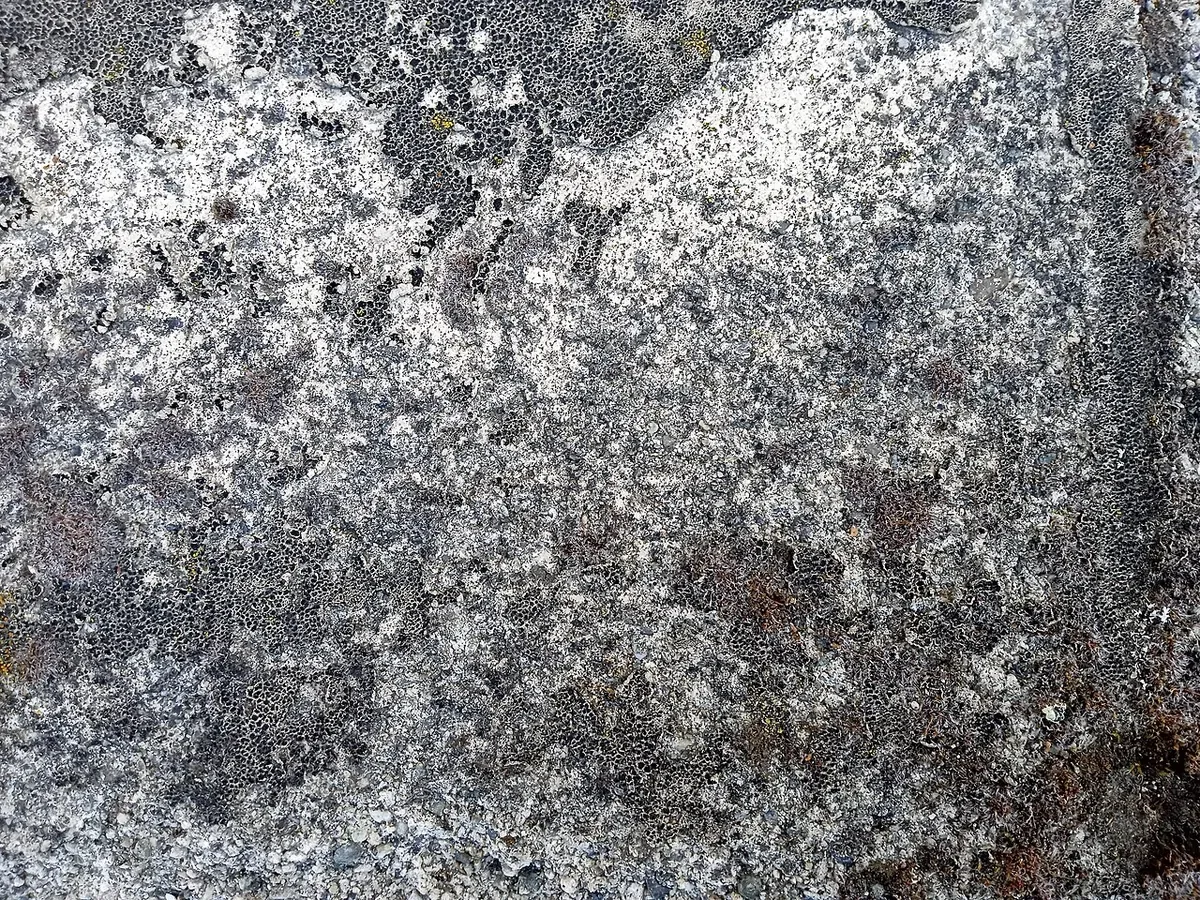
Photo: Gayest Frogs, Wikimedia Commons, CC BY-SA 4.0
Quick Answer
Yes, you can use bleach on concrete. Diluted household bleach does not harm cured, plain concrete and is effective at killing and lightening mildew, mold, algae and some organic stains. A common mix is 1 part bleach to 10 parts water for routine cleaning and about 1 part bleach to 3 or 4 parts water for heavy growth. Wet the concrete, apply the solution, let it sit 10 to 15 minutes without drying, scrub and rinse thoroughly. Bleach does not remove oil, grease, rust or tire marks, it can lighten colored or stained concrete and damage some sealers, and it harms plants and waterways. Never mix bleach with ammonia or acid cleaners, which releases toxic gas.
Outdoor concrete turns green, black and gray over time. Patios under trees, north-facing steps, shady sides of driveways and basement floors near damp walls all grow mildew, mold, algae, moss and lichen. Household bleach is the cleaner most people already have, and using bleach on concrete is one of the cheapest ways to brighten a dingy slab. The photo above shows the kind of dark organic staining that bleach handles well on outdoor concrete.
Used the wrong way, though, bleach on concrete can discolor decorative finishes, kill lawns and garden beds, leave a slippery residue, or, if mixed with the wrong cleaner, release dangerous fumes. This guide covers whether bleach is safe for concrete, how to mix and apply it, what it can and cannot clean, alternatives such as oxygen bleach, and the safety rules to follow.
Is Bleach Safe for Concrete?
For ordinary, cured, uncolored concrete, diluted bleach is safe. Household bleach is a solution of sodium hypochlorite in water, typically about 5% to 8% strength. It is alkaline, like concrete itself, and it does not dissolve cement paste the way acids such as muriatic acid or vinegar do. Using bleach on concrete at normal cleaning dilutions will not weaken a slab or etch its surface.
There are a few exceptions worth knowing:
New concrete. Wait until the concrete has cured for about 28 days before using bleach on concrete or any strong cleaner, so the surface has hardened and any curing compound has done its job.
Colored, stained and stamped concrete. Bleach can lighten integral color, acid stains, water-based stains and colored release agents, especially when used strong or repeatedly. Test a hidden spot first.
Sealed concrete. Strong bleach can dull or soften some acrylic sealers and coatings. Dilute well, keep contact time short and rinse thoroughly. On epoxy or polyaspartic floors, follow the coating manufacturer's cleaning instructions.
Metal and rebar. Bleach is corrosive to metal. Rinse it off metal railings, drains and exposed rebar, and do not let it pool around steel fixtures.
See concrete sealer and concrete staining.
What Bleach Cleans on Concrete, and What It Doesn't
Bleach works well on:
Mildew and mold. Gray, black and green spots on shaded patios, walkways, pool decks, steps and basement floors. Bleach kills surface growth and lightens the stains it leaves.
Algae. Green, slippery films on damp concrete, which are a real slip hazard on steps and ramps.
Moss and lichen. Bleach kills both, though thick moss should be scraped off first and lichen often leaves a pale mark that fades over weeks.
Organic stains. Leaf tannin stains, berry and fruit stains, some food and drink spills, and bird droppings usually lighten with bleach on concrete.
Bleach does not work on:
Oil and grease. Bleach does nothing to petroleum stains; use a degreaser, poultice or enzyme cleaner instead. See how to remove oil stains from concrete.
Rust. Bleach can actually make rust stains worse. Use an oxalic acid or other rust remover made for concrete. See how to remove rust stains from concrete.
Efflorescence. The white, powdery salt deposits on concrete and masonry are minerals, not organic growth, and bleach will not dissolve them. See efflorescence on concrete.
Paint, tire marks and sealer residue. These need solvents, strippers or mechanical cleaning. See how to remove paint from concrete.
How to Mix Bleach for Concrete
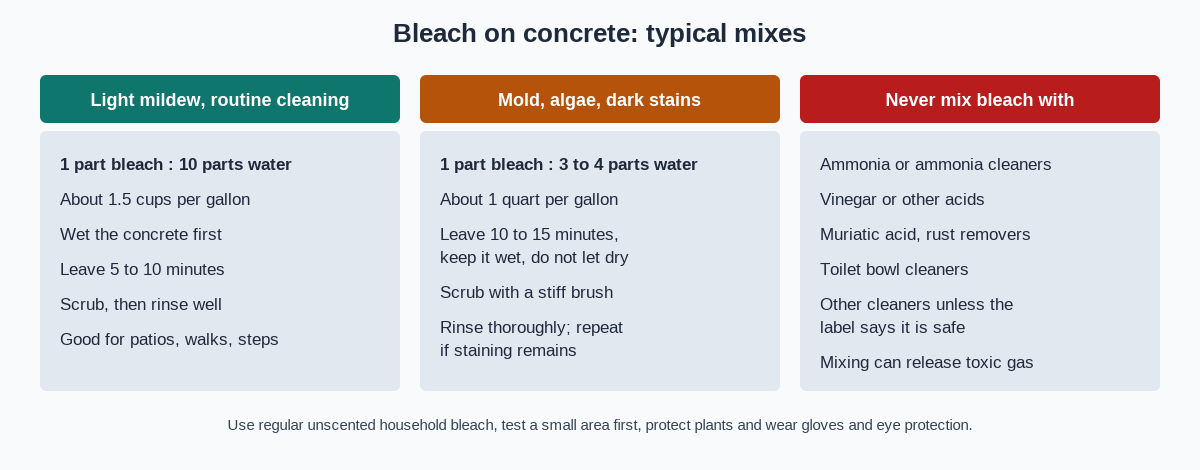
As the chart shows, the right strength of bleach on concrete depends on the job:
Routine cleaning and light mildew: about 1 part bleach to 10 parts water, roughly 1.5 cups of bleach per gallon of water.
Heavy mold, algae and dark stains: about 1 part bleach to 3 or 4 parts water, roughly 1 quart of bleach per gallon of water.
Use plain, unscented household bleach rather than splashless or scented versions, which contain additives and are often weaker. Some people add a small squirt of plain dish soap (one that contains no ammonia) to help the solution cling and lift dirt; check the soap label first. Mix in a plastic bucket or a garden pump sprayer, add the bleach to the water rather than the other way around, and mix only what you will use that day, because diluted bleach loses strength quickly.
Step by Step: Cleaning Concrete with Bleach
1. Clear and sweep. Move furniture, planters and mats. Sweep away loose dirt and leaves, and scrape off thick moss with a putty knife or flat shovel.
2. Protect plants and drains. Water nearby grass, shrubs and flower beds thoroughly so their leaves and soil are saturated, and cover them with plastic sheeting. Block or protect nearby storm drains so bleach runoff does not reach them.
3. Wet the concrete. Hose down the surface first. Damp concrete absorbs less bleach and the solution spreads more evenly.
4. Apply the bleach solution. Use a pump sprayer, watering can or mop to cover the stained area. Work in sections small enough to keep wet.
5. Let it work. Leave the bleach on the concrete for about 10 to 15 minutes. Keep it wet; if it starts to dry, mist it with more solution or water. Work in the shade or on a cool day if possible.
6. Scrub. Use a stiff nylon brush or push broom to scrub the surface, paying attention to joints and textured areas where growth hides. Avoid wire brushes on decorative concrete.
7. Rinse thoroughly. Rinse with plenty of clean water, or use a pressure washer on a low to moderate setting with a wide fan tip. Rinse plants again afterward.
8. Repeat if needed. Stubborn stains may need a second application. Some lichen and mildew marks continue to fade over the following days in sunlight.
See how to clean concrete and how to clean a concrete driveway.
Bleach on Concrete Patios, Driveways and Steps
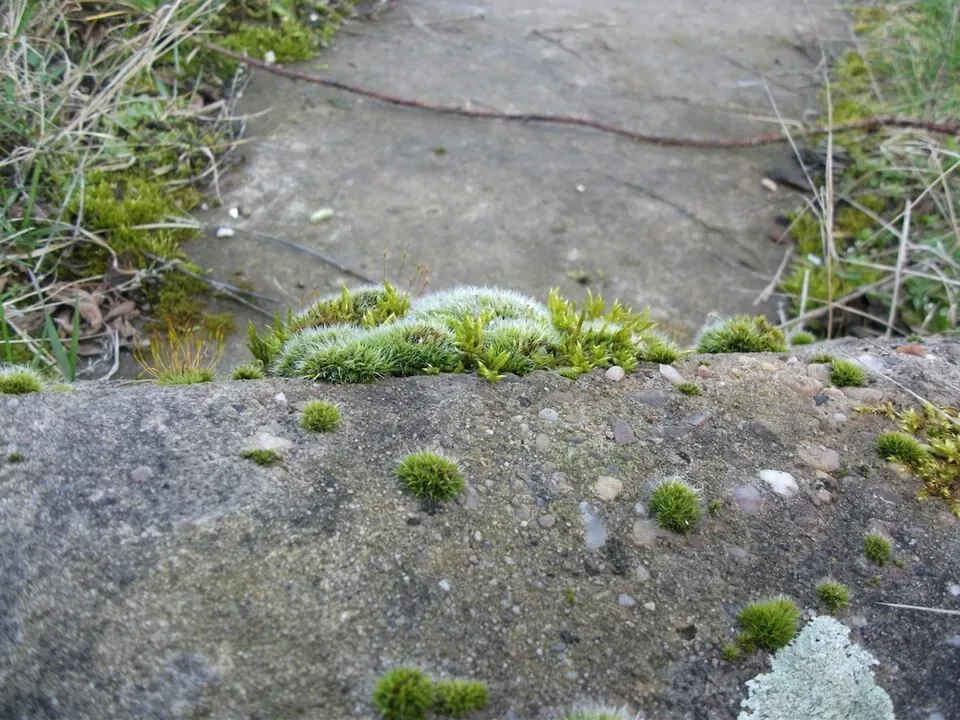
Photo: Imagaril, Wikimedia Commons, public domain
Outdoor slabs next to lawns and beds, like the one above, are where bleach on concrete is most useful and where it needs the most care. Patios and walkways in shade grow mildew and algae every damp season, so many homeowners clean them each spring. Driveways mainly collect oil, tire marks and dirt, which bleach does not touch, but the shaded edges and north sides often turn green and respond well. On steps and ramps, removing algae is a safety issue as well as a cosmetic one. After cleaning outdoor concrete with bleach, consider applying a penetrating sealer once the surface is fully dry; sealed concrete absorbs less water, so mildew and algae come back more slowly. See how to clean moss off concrete.
Bleach on Basement and Garage Floors
Inside, bleach on concrete is mainly used for mildew on basement floors and the bottoms of walls. Because indoor spaces trap fumes, ventilate well with open windows and fans, use the weaker mix, and keep children and pets out until the floor is rinsed and dry. Mold on a basement floor is a symptom of moisture, so cleaning alone rarely fixes the problem: look for leaks, condensation and poor drainage, and run a dehumidifier. The US Environmental Protection Agency's mold guidance notes that the main goal is to remove mold and fix the moisture source, and that biocides such as bleach are usually not needed for routine mold cleanup; detergent and water often do the job on hard surfaces. See mold on concrete and how to clean concrete floors.
Bleach on Concrete Countertops and Indoor Surfaces
Indoor concrete countertops, sinks, floors and furniture are almost always sealed, and their sealers are the part most sensitive to cleaners. Using bleach on concrete countertops is generally not recommended except in a very weak dilution for disinfecting, followed by an immediate rinse, because repeated bleach use can dull or soften many countertop sealers and lighten colored mixes. For daily cleaning, a pH-neutral cleaner or mild dish soap and water is safer. If a food-safe disinfectant is needed, check the sealer manufacturer's list of approved products. On polished concrete floors, avoid strong bleach and acidic cleaners; neutral cleaners made for polished concrete protect the shine. See concrete countertops and polished concrete cost.
Bleach and Pet Urine on Concrete
Do not use bleach on concrete to clean pet urine. Urine contains ammonia compounds, and mixing it with bleach can release chloramine gas, the same hazard as mixing bleach with ammonia cleaners. Bleach also does little against urine odor, which comes from uric acid crystals deep in the pores of the concrete. Use an enzyme cleaner made for urine instead, applied generously and allowed to soak in, then rinse. For kennels and dog runs on concrete, many owners clean with an enzyme cleaner weekly and reserve a weak bleach solution for occasional disinfecting after the urine has been fully rinsed away with plenty of water.
Using Bleach with a Pressure Washer
Professional exterior cleaners often use a method called soft washing: applying a diluted sodium hypochlorite solution at low pressure, letting it dwell, then rinsing. Homeowners can do something similar by applying the bleach solution with a pump sprayer and then rinsing with a pressure washer. Do not run bleach through a pressure washer's pump unless the manufacturer says it is safe, because bleach can damage seals and internal parts; many machines have a downstream chemical injector or detergent tank designed for cleaners. Keep the pressure moderate on concrete; very high pressure with a narrow tip can etch the surface and leave visible wand marks. See concrete cleaner.
Oxygen Bleach and Other Alternatives
Oxygen bleach. Sodium percarbonate powder, sold as oxygen bleach, releases hydrogen peroxide and soda ash when mixed with warm water. It removes many organic stains and mildew, is gentler on colored concrete and sealers, and is much less harmful to plants. Mix according to the label, apply, let it bubble for 10 to 30 minutes, scrub and rinse.
Commercial concrete cleaners. Products made for mold, mildew and algae on outdoor surfaces, many based on quaternary ammonium compounds or other biocides, can give longer-lasting results. Follow the label exactly and do not combine them with bleach.
Detergent and water. For light dirt and mildew, a stiff brush with hot water and a little dish detergent often works.
Vinegar. Vinegar is acidic, can etch the surface of concrete and fade colored finishes, and must never be mixed with bleach. Use it only diluted and rarely, if at all.
Bleach on Concrete Pool Decks
Concrete pool decks stay damp and often grow algae and mildew around the edges, in expansion joints and under furniture. Bleach on concrete pool decks works the same way as on a patio, and the chlorine is the same chemical family as pool chlorine, so small amounts that rinse toward the pool are not a problem for the water. Large amounts of runoff can push the pool's chlorine and pH out of balance, though, so rinse away from the pool where possible and test the water afterward. Many pool decks have a coating or a cool-deck finish, so test the bleach mix on a small area first, and keep contact time short. On salt-water pool decks, rinse well after any cleaning, because salt and cleaners left in the surface can speed scaling and surface wear. See concrete pool deck and concrete pool deck repair.
Testing Bleach on Stamped and Colored Concrete
Before using bleach on concrete that has been colored, stained or stamped, run a quick test. Pick an out-of-sight spot, such as behind a planter or along an edge, and apply your bleach mix for the same time you plan to use on the whole area. Scrub and rinse, then let it dry completely, ideally overnight, since wet concrete always looks darker. Compare the test spot with the surrounding surface in daylight. If the color has lightened, switch to oxygen bleach or a cleaner labeled safe for decorative concrete, or use a weaker bleach mix with a shorter dwell time. Stamped concrete often has a darker antiquing release color in the low spots, and that accent color is the first thing strong bleach can wash out. See stamped concrete patio and decorative concrete.
Bleach vs. Muriatic Acid on Concrete
People sometimes reach for muriatic acid when bleach does not work, but the two do different jobs. Bleach on concrete kills and lightens organic growth and stains without attacking the cement. Muriatic acid dissolves cement paste and minerals, which is why it is used to etch concrete before coating, to remove efflorescence and mortar smears, and to clean masonry. Acid will not kill mold any better than bleach, and it can etch, roughen and discolor the surface if used carelessly. Most important, bleach and acid must never be used together or one right after the other without a full rinse in between, because the combination releases chlorine gas. See concrete etching.
Why Mold and Algae Come Back, and How to Slow Them
Bleach on concrete kills what is growing on the surface today, but if the conditions that let it grow stay the same, mildew and algae return, often within a season. Concrete is porous and holds water, and shady areas with little airflow stay damp for days after rain. To slow regrowth:
Improve drainage. Make sure the slab slopes away from the house and that downspouts discharge away from patios and walks.
Let in light and air. Trim trees and shrubs that shade the concrete and drop leaves on it.
Keep it clean. Sweep leaves and dirt regularly; decaying leaves feed mildew and leave tannin stains.
Seal the surface. A good penetrating or film-forming sealer reduces how much water the concrete holds, which makes it harder for growth to take hold.
Clean lightly and often. A light bleach or oxygen bleach wash once or twice a year is easier on the concrete, and on nearby plants, than a strong treatment every few years.
Bleach on Concrete Walls and Block
Retaining walls, foundation walls, block walls and concrete fences grow mildew and algae on their shaded faces, especially near the ground. Bleach on concrete walls works well, but vertical surfaces need a little more care. Start at the bottom and work up, so the solution does not run down over dry concrete and leave streaks. Keep the surface wet while the bleach works, then rinse from the top down. On painted block or concrete walls, test first, because bleach can fade or chalk some paints. White powder that remains after cleaning is usually efflorescence, which needs a different cleaner. See concrete retaining wall and concrete fence.
Can Bleach Whiten Concrete?
Bleach does not change the color of the cement itself. When concrete looks whiter after cleaning with bleach, it is because dirt, mildew and algae have been removed, revealing the original color. Gray concrete stays gray. Concrete that has darkened because of oil, rust or sealer buildup will not get lighter with bleach. If you want a lighter, more uniform color on old concrete, the options are a deep clean followed by a concrete stain or tinted sealer, a resurfacing overlay, or paint made for concrete. See concrete paint.
Disposing of Leftover Bleach Solution
Diluted bleach breaks down quickly, so mix only what you need. Small amounts of leftover diluted solution can generally go down an indoor sink or toilet with plenty of water, where it goes to a wastewater treatment plant, but check local rules. Do not pour bleach solution onto soil, into storm drains, street gutters or ditches, which lead directly to streams and lakes. Rinse sprayers and buckets with clean water after use, and store bleach in its original container, away from ammonia products and acids.
Safety When Using Bleach on Concrete
Never mix bleach with ammonia, including window cleaners and some all-purpose cleaners, or with acids such as vinegar, muriatic acid, rust removers and toilet bowl cleaners. These combinations release chloramine or chlorine gas, which can cause serious lung injury.
Protect yourself. Wear rubber gloves, eye protection and old clothes; bleach stains fabric instantly. Work in fresh air and step away if you smell strong fumes.
Protect plants, pets and water. Bleach runoff can burn grass and garden plants and harm fish and aquatic life. Pre-wet and cover plants, keep pets away until the area is rinsed and dry, and do not wash bleach solution into storm drains, ditches or ponds.
Rinse well. Bleach residue can leave a slippery surface, attract moisture and react with later cleaners, so finish with a thorough rinse.
Bleach on Concrete in Different Seasons
The best time to use bleach on concrete outdoors is a mild, overcast day in spring or fall, with temperatures between about 50°F and 80°F and no rain expected for a day. On hot, sunny days, the solution dries before it can work, and strong sun and heat also make bleach break down faster. In cold weather, below about 40°F, mildew and algae are dormant and harder to kill, rinsing is unpleasant, and water left in the concrete can freeze. Many homeowners clean in early spring, when winter growth is most visible, and again in fall after leaves drop. Cleaning in late fall before freezing weather also removes slippery algae from steps and walks before ice season.
Common Mistakes When Using Bleach on Concrete
Using it too strong. Undiluted bleach is rarely needed and is more likely to lighten colored concrete, damage sealers, harm plants and create strong fumes. Start weak and increase only if needed.
Letting it dry on the surface. Bleach that dries on concrete stops working and can leave blotchy, uneven results. Keep the area wet until you scrub and rinse.
Skipping the rinse. Bleach left in the surface can be slippery, can attack sealers over time and can react with the next cleaner you use.
Using it on the wrong stain. Bleach on oil, rust or efflorescence wastes time and can make rust worse. Identify the stain first.
Forgetting the plants. Brown patches in the lawn along the edge of a cleaned patio are the most common side effect. Pre-wetting and covering plants prevents most damage.
Mixing cleaners. Following a bleach wash with a vinegar, ammonia or acid cleaner without rinsing in between can release toxic gas. Use one product at a time and rinse thoroughly between them.
Power washing too hard. High pressure with a narrow tip can carve lines into the surface and expose aggregate. Let the bleach do the work and use pressure only to rinse.
How Much Bleach Do You Need?
A gallon of household bleach costs about $4 to $7. At the 1:10 mix, a gallon of bleach makes about 11 gallons of cleaning solution, enough to treat several hundred square feet of concrete. At the stronger 1:4 mix, a gallon of bleach makes about 5 gallons of solution, which covers a typical 12 by 16 foot patio once or twice. Oxygen bleach costs more per use, usually $10 to $20 for a container that treats a patio or two. Hiring a pressure washing company to clean and treat a patio or driveway typically costs about $150 to $400, depending on size, access, how heavy the growth is and the region, and many companies offer a lower price when patio, walks and driveway are done in one visit. See concrete cleaning near me.
Frequently Asked Questions
Does bleach damage concrete?
Diluted household bleach does not damage cured, plain concrete. It can lighten colored or stained concrete and affect some sealers, so test first.
What is the best bleach to water ratio for concrete?
About 1 part bleach to 10 parts water for light cleaning, and 1 part bleach to 3 or 4 parts water for heavy mold or algae.
How long should bleach sit on concrete?
About 10 to 15 minutes, kept wet, before scrubbing and rinsing.
Can bleach remove oil stains from concrete?
No. Use a degreaser, poultice or enzyme cleaner for oil and grease.
Will bleach kill grass next to the concrete?
It can. Water and cover nearby plants before cleaning, and rinse them afterward.
Sources
- US EPA: Mold cleanup guidance
- CDC: Cleaning with bleach safely and never mixing bleach with ammonia or acids
- Portland Cement Association: Removing stains and cleaning concrete surfaces
- Concrete Network: Cleaning stamped, stained and sealed concrete