
How to Clean Moss From Concrete Patios, Driveways and Walkways
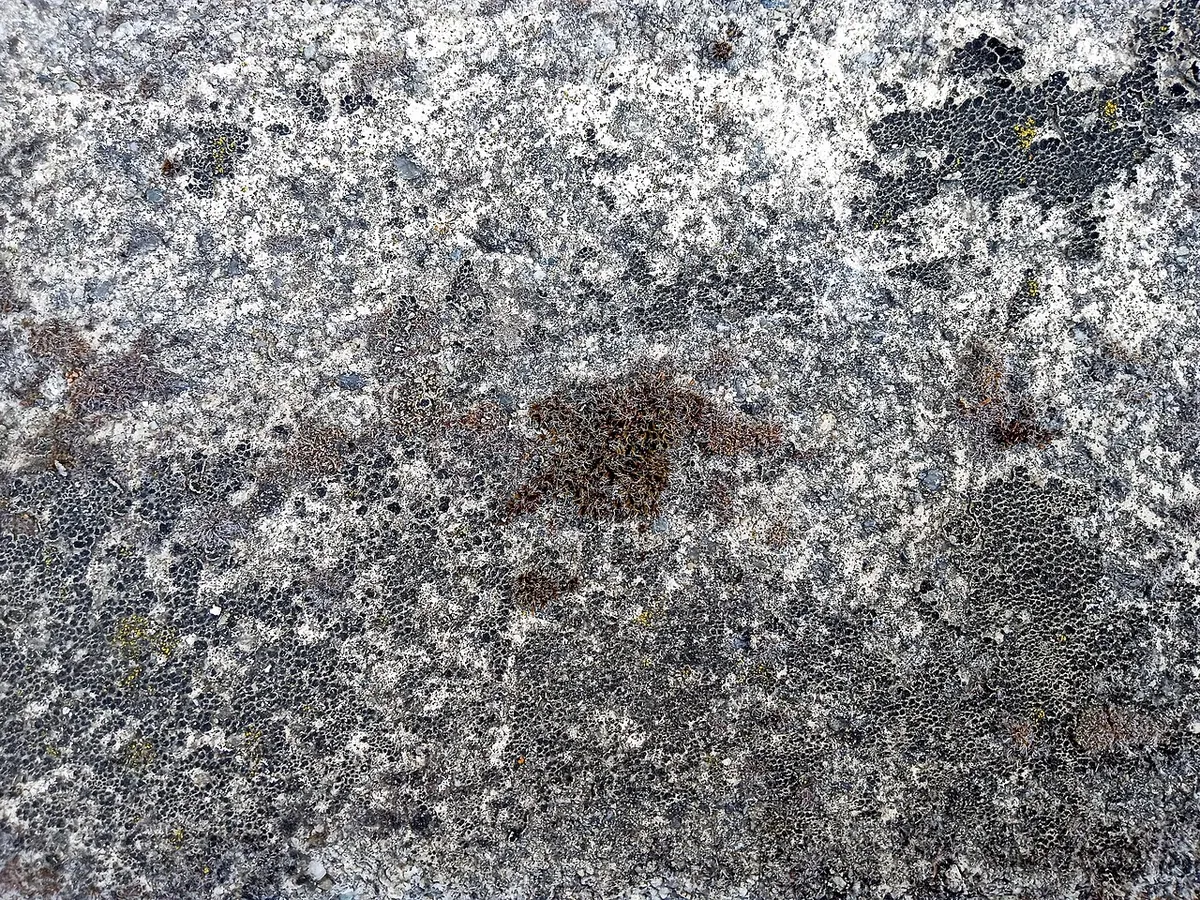
Photo: Gayest Frogs, Wikimedia Commons, CC BY-SA 4.0
Quick Answer
How to clean moss from concrete: scrape off thick moss with a scraper or stiff broom while it is dry, then apply a moss killer, an oxygen bleach solution (sodium percarbonate in warm water) or a concrete cleaner made for algae and moss, let it work for 15 to 30 minutes or as the label says, and scrub and rinse or pressure wash with a 25-degree tip. Clean joints and cracks with a wand at an angle. To keep moss from coming back, increase sun and airflow, fix drainage and gutters, keep the surface clean, seal the concrete, and fill joints. Avoid strong chlorine bleach and acids on colored or sealed concrete and near plants.
Moss on concrete turns patios, driveways, walkways, steps and pool decks green, slippery and dirty-looking, especially in shady, damp yards and in rainy climates. It grows in joints and cracks, on north-facing slabs, under trees and wherever water sits. Moss itself does little structural harm, but it makes surfaces slippery, holds moisture against the concrete, traps dirt and can widen cracks over time. Removing it is simple; keeping it away takes a little more planning.
This guide explains how to clean moss from concrete step by step, which products work and which to avoid, how to pressure wash moss without damaging the surface, how to deal with moss in joints and cracks, the difference between moss, algae and lichen, and how to prevent moss from coming back.
Why Moss Grows on Concrete
Moss on concrete needs three things: moisture, shade, and a surface it can grip. Concrete provides the surface, especially when it is rough, porous or broom finished, and when joints and cracks hold soil and debris. Shade from trees, buildings and fences keeps surfaces damp for longer after rain. Poor drainage, leaking gutters, sprinklers that hit the concrete, and low spots where water collects keep it wet. Organic debris such as leaves and soil adds nutrients. Moss also prefers slightly acidic conditions, which develop on the surface of older concrete as it weathers and carbonates. Fix any of these conditions and moss has a much harder time returning.
How to Clean Moss From Concrete, Step by Step
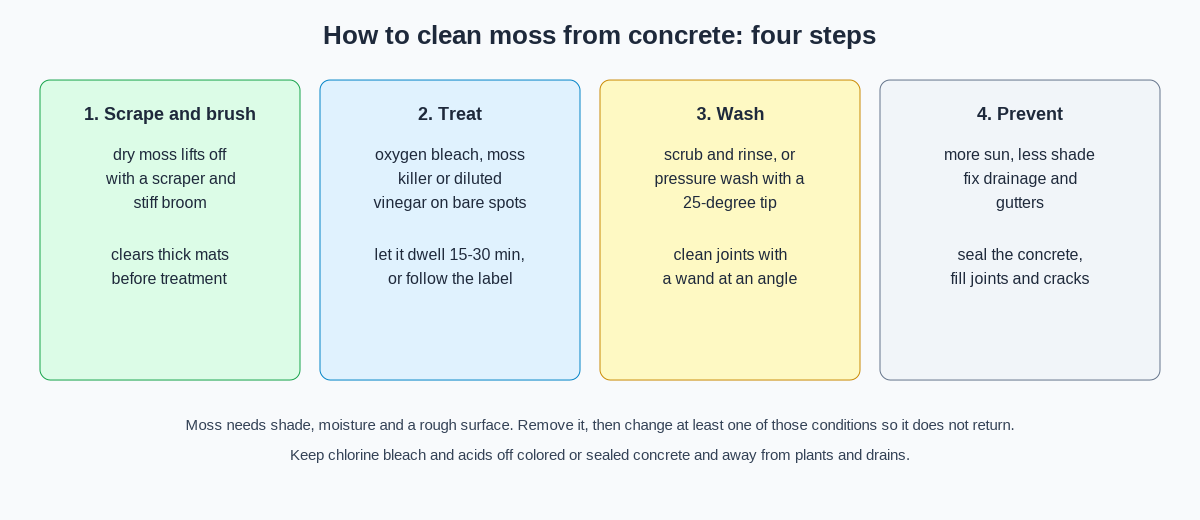
Here is how to clean moss from concrete patios, driveways, walks and steps.
Step one: pick a dry day. Moss is easier to scrape when it is dry and the treatment works best when it will not be rinsed away by rain for a day. Clear furniture, planters and leaves from the area, and wet nearby plants with plain water to protect them from any cleaner overspray.
Step two: scrape and sweep. Use a flat garden scraper, putty knife or stiff wire brush to lift thick mats of moss, especially along edges and in joints. Follow with a stiff push broom to sweep away the loosened moss and debris. Removing the bulk of the moss first lets the cleaner reach the roots and the concrete pores.
Step three: apply a moss treatment. Choose one of the options below and apply it evenly with a garden sprayer or watering can, following the label. Common choices are an oxygen bleach solution, a commercial moss and algae remover for hard surfaces, or a concrete cleaner formulated for organic growth. Let it dwell for the time the label recommends, usually 15 to 30 minutes, keeping it damp but not letting it dry or run off.
Step four: scrub and rinse. Scrub the treated area with a stiff nylon brush or deck brush, focusing on joints and cracks, and rinse thoroughly with a garden hose. For large areas or heavy staining, pressure wash as described below. Some moss killers are designed to be left on and work over days or weeks as rain washes the dead moss away; follow the product instructions.
Step five: let it dry and seal. Once the concrete is clean and fully dry, apply a penetrating sealer to reduce how much water the surface holds, which makes it less inviting to moss. Fill or seal open joints and cracks. See how to seal concrete.
Moss Killers and Cleaners for Concrete
Oxygen bleach. Sodium percarbonate, sold as oxygen bleach powder, mixed with warm water is an effective, relatively gentle choice for how to remove moss from concrete. It kills moss and algae, lifts green staining, and breaks down into water, oxygen and soda ash. It is safer on plants and colored concrete than chlorine bleach, though it is still wise to rinse plants nearby.
Commercial moss and algae removers. Products made for patios and hard surfaces often use quaternary ammonium compounds, potassium salts of fatty acids, or other active ingredients. Some act quickly with scrubbing; others are spray-and-leave treatments that kill moss and let rain wash it away over weeks. Follow the label for dilution, protective gear and plant safety, and choose products labeled for concrete.
Iron sulfate and zinc products. Moss killers based on iron sulfate work quickly but can leave rust-colored stains on concrete, so they are better for lawns than hard surfaces. Zinc-based products are used on roofs and can stain or run off into soil. Avoid these on light-colored concrete.
Vinegar. Household white vinegar, sprayed undiluted or slightly diluted on moss, can kill small patches. It is mildly acidic and can etch the surface of concrete with repeated use, dulling sealed or colored finishes, so use it sparingly on bare concrete, rinse afterwards, and avoid it on decorative or polished surfaces.
Chlorine bleach. Diluted household bleach kills moss and algae quickly, but it can lighten colored concrete, harm plants and lawns, corrode metal, and must never be mixed with ammonia or acids. If you use it, dilute it well, keep it off plants, and rinse thoroughly. Oxygen bleach is usually the better choice.
Boiling water and baking soda. Pouring boiling water over moss in cracks kills it without chemicals, and sprinkling baking soda on small patches can dry it out. These work for small areas, though moss may regrow if conditions do not change.
Pressure Washing Moss Off Concrete
A pressure washer is the fastest way to remove moss from concrete after treatment. Use a 25-degree nozzle or a surface cleaner, hold the tip about 8 to 12 inches from the surface, and keep it moving. Do not use a 0-degree tip, which can etch lines into the concrete and blast out joint material. Work from the top of slopes downward and rinse debris away from the cleaned areas. Pressure washing alone removes the visible moss but can leave spores and roots in pores and joints, so treating first gives longer-lasting results. Be gentle on stamped, colored or exposed aggregate concrete, and on older, weak surfaces. See cleaning concrete driveway.
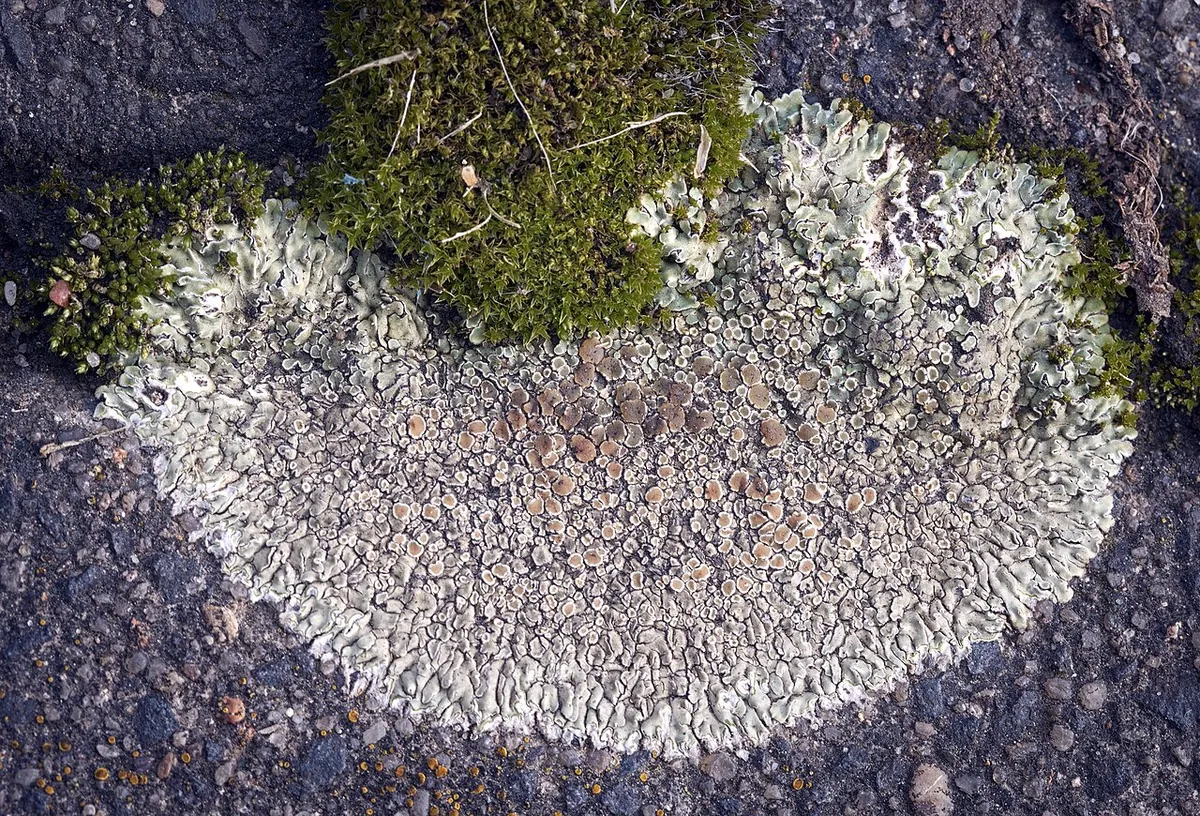
Photo: hedera.baltica, Wikimedia Commons, CC BY-SA 2.0
Moss, Algae, Lichen and Mildew
Several different growths besides moss on concrete make it green, black or patchy. Moss forms small, soft green cushions, often in joints, cracks and on shaded slabs. Algae forms a slippery green or black film on damp surfaces, common on north-facing patios and pool decks. Lichen forms tough, crusty, flat patches in gray, green, yellow or orange, like the pale rosette in the photo above; it clings tightly and is harder to remove. Mildew and mold form black or gray spots in damp, shady areas. Oxygen bleach and moss and algae removers work on most of these; lichen often needs repeated treatment and scrubbing, and may leave faint marks even after it dies. See mold on concrete.
Removing Moss From Concrete Joints and Cracks
Joints and cracks are where moss on concrete usually starts and where it is hardest to remove, because soil and debris collect there and stay damp. To remove moss from concrete joints, rake it out with a crack weeder, a narrow scraper or an old screwdriver, then sweep out the loose material. Spray the joints with your moss treatment, let it work, and scrub with a narrow brush. A pressure washer wand held at a low angle along the joint clears remaining roots and soil, but take care not to blast out joint sealant or erode crack edges. Once the joints are clean and dry, fill control joints with a flexible polyurethane joint sealant and fill cracks with a concrete crack filler. Sealed joints give moss nowhere to grow, which is the best long-term fix. See how to fix cracks in concrete and control joints in concrete.
How to Remove Moss From Concrete Steps and Pool Decks
Moss on concrete steps is a safety hazard, because it makes treads slippery when wet. Treat steps first in any cleanup, using the same scrape, treat and rinse method, and scrub the step nosings carefully. On pool decks, avoid products that could wash into the pool and upset water chemistry; oxygen bleach rinsed well away from the pool is usually safest, and some pool owners lower the water level slightly or cover the edge while cleaning. After cleaning, apply a sealer with an anti-slip additive to steps and decks, and keep them swept and dry. See how to fix concrete steps and concrete pool deck repair.
How to Clean Moss From Concrete Driveways
Driveways often grow moss along shaded edges, in expansion joints, and where cars rarely drive. To clean moss from concrete driveways, scrape and blow off the moss, treat the green areas with oxygen bleach or a moss and algae remover, and pressure wash with a surface cleaner for an even finish. Pay attention to joints between driveway panels and along the edges where lawn meets concrete. After cleaning, seal the driveway and the joints, and trim back overhanging shrubs that keep the edges shaded and damp.
How to Keep Moss From Coming Back
Removing moss from concrete is only half the job; preventing it is what saves time. Start with sunlight and airflow: trim trees and shrubs that shade the concrete, and thin hedges that block air movement, because surfaces that dry quickly after rain rarely grow moss. Fix water sources by repairing leaking gutters and downspouts, redirecting downspouts away from walks and patios, adjusting sprinklers so they do not hit the concrete, and regrading low spots where water collects. Keep the surface clean: sweep or blow off leaves, soil and grass clippings regularly, because organic debris feeds moss. Seal the concrete with a penetrating water repellent, which makes the surface shed water and dry faster, and fill joints and cracks so moss has no foothold. Finally, apply a preventive treatment: some moss and algae products are designed to be applied once or twice a year to keep regrowth down; follow the label.
Natural Ways to Remove Moss From Concrete
Many people prefer to avoid harsh chemicals near gardens, pets and children. Natural approaches to remove moss from concrete include scraping and sweeping regularly; boiling water poured over moss in cracks; baking soda sprinkled on small patches, then swept off after a few days; diluted vinegar sprayed on bare concrete, used sparingly and rinsed; and oxygen bleach, which breaks down into harmless by-products and is considered one of the safer cleaners. The most effective natural method is prevention: more sun, better drainage and regular sweeping. Natural methods may need repeating more often than commercial treatments, but they are gentle on plants and soil.
Is Moss on Concrete Harmful?
Moss on concrete does not usually damage sound concrete quickly, but it does cause problems over time. It makes surfaces slippery and dangerous, especially on steps, ramps and sloped driveways. It holds moisture against the concrete, which can increase freeze-thaw damage in cold climates and encourage efflorescence. Roots and the soil that collects with moss can widen cracks and joints. It traps dirt and stains the surface. And it can spread onto nearby roofs, fences and siding. For safety and the life of the concrete, removing moss and preventing its return is worthwhile. See concrete spalling and efflorescence on concrete.
When to Clean Moss From Concrete
The best times to clean moss from concrete are in spring and early fall, during dry spells when the surface will stay dry for a day or two after treatment. Moss is actively growing in cool, damp seasons, and treatments work well then. Avoid applying cleaners right before rain, which washes them away, or in freezing weather, when they will not work and rinse water can freeze. Many homeowners make moss removal part of a spring cleaning routine for patios and driveways, followed by sealing once the concrete is dry.
How to Clean Moss From Concrete Walls and Retaining Walls
Moss on concrete walls, block retaining walls and foundation walls grows where the surface stays damp, usually on the shaded side or where soil sits against the wall. To clean moss from concrete walls, brush off what you can with a stiff brush, spray the wall with oxygen bleach or a moss and algae remover from the bottom up, let it dwell, and scrub and rinse from the top down. Use low pressure on walls, because high pressure can erode mortar joints and the surface of older concrete block. Improve drainage behind retaining walls, keep soil and mulch below the top of foundation walls, and trim back plants that hold moisture against the wall. A breathable water repellent sealer on above-grade walls helps them dry faster after rain. See concrete block wall cost.
Choosing a Product to Remove Moss From Concrete
When choosing a product to remove moss from concrete, read the label for the surfaces and plants it is safe on, whether it works quickly with scrubbing or slowly over weeks, how often it can be applied, and the protective gear needed. For colored, stamped or sealed concrete, choose products labeled safe for decorative concrete and test a small area first. For areas near ponds, streams or storm drains, pick the gentlest effective product and keep runoff contained. If pets and children use the area, keep them off until the product has dried or been rinsed, as the label directs. Many homeowners find that an oxygen bleach cleaner for the first cleanup, followed by a yearly preventive spray, keeps moss under control.
Moss on Concrete in Different Climates
Moss on concrete is most common in mild, wet climates such as the Pacific Northwest, the UK and coastal areas, where surfaces stay damp for much of the year. In these regions, plan on cleaning moss from concrete at least once a year and sealing every few years. In cold climates, moss grows in shaded spots and dies back in winter, but freeze-thaw cycles in moss-covered joints can widen cracks, so clean joints before winter. In hot, dry climates, moss is rare except where sprinklers keep concrete wet; adjusting irrigation usually solves it. Whatever the climate, the principle is the same: remove the moss, then remove the moisture and shade it needs.
Safety and the Environment
Wear gloves and eye protection when mixing and applying moss treatments, and follow label directions for any commercial product. Keep children and pets away until treated areas are dry or rinsed. Do not let cleaners or rinse water run into storm drains, ponds, streams or vegetable beds; direct runoff onto lawn or gravel where it can soak in, or use less product. Never mix bleach with vinegar, ammonia or other cleaners. When pressure washing, protect your eyes and feet, keep others away, and use slip-resistant shoes, since wet moss is very slippery.
A Yearly Plan to Keep Moss Off Concrete
A simple yearly routine keeps moss off concrete with little effort. In early spring, inspect patios, walks, steps and driveways for green growth, especially in shaded areas and joints. Scrape, treat and wash to clean moss from concrete surfaces before it spreads. Once the concrete is dry, refill open joints and apply or refresh a penetrating sealer every few years. Through summer, sweep leaves and soil weekly and check that sprinklers are not soaking the concrete. In fall, rake leaves off hard surfaces promptly, clean gutters, and apply a preventive moss treatment if you live in a wet climate. In winter, keep drains and downspouts clear so meltwater runs off. Following this plan, most homeowners only need a quick touch-up to remove moss from concrete each year instead of a big cleanup.
Keep notes on which areas grow moss first. Those spots tell you where shade, drainage or joint repair will do the most good, and fixing them is the most effective way to stop moss on concrete for good.
DIY or Hire a Professional?
Cleaning moss from concrete is an easy DIY project for most patios, walks and driveways. Hiring a pressure washing or exterior cleaning company makes sense for large areas, steep or high surfaces, decorative concrete that needs gentle treatment, or when you also want roofs, siding and fences cleaned. Professionals often use soft-washing methods with low pressure and specialized cleaners, which remove moss from concrete and other surfaces without damage. Ask what products they use, how they protect plants and drains, and whether sealing is included. Typical costs vary by region and area, but many companies price patio and driveway cleaning per square foot with a minimum charge.
Moss on New Concrete
Even new concrete can grow moss within a year or two in shady, damp spots. To protect a new patio or walk, plan it with drainage in mind: slope it at least 1/8 to 1/4 inch per foot so water runs off, keep downspouts away from it, and avoid placing it under dense trees if possible. A fine broom finish holds less soil than a coarse one. Once the concrete has cured, usually about a month, apply a penetrating sealer to reduce water absorption, and seal the joints. These steps make it much harder for moss on concrete to get started, so you will rarely need to clean moss from concrete that was built this way.
Moss on Pavers and Concrete Blocks
Concrete pavers and blocks have many more joints than a slab, so moss grows readily in the sand between them. To remove moss from concrete pavers, scrape and brush the joints, treat with oxygen bleach or a paver-safe moss remover, and rinse or pressure wash gently, keeping the nozzle angled so you do not blow out all the joint sand. Refill joints with polymeric sand, which hardens and resists moss and weeds far better than loose sand, then seal the pavers. The same approach works for concrete block walls, garden edging and stepping stones. See stamped concrete vs pavers.
Whichever surface you are working on, the order of work stays the same when you clean moss from concrete: dry scrape, treat, scrub or wash, let it dry, then seal and fix the conditions that let the moss grow. Done once a year, this routine keeps patios, paths and driveways clean, safe and free of slippery green growth, and it takes far less time than a full cleanup after years of neglect. A few hours each spring is usually enough to keep moss on concrete from ever getting a foothold again, even in shady, damp yards where it grows fastest. Pair that spring session with quick sweeping through the year, and the concrete will stay clean, safe and good looking for a long time. Small, regular effort always beats one big yearly scrub.
Common Mistakes When Removing Moss
The most common mistakes are pressure washing too close or with a 0-degree tip, which damages the concrete and blasts out joints; using chlorine bleach or strong acids on colored or sealed concrete; letting chemicals run into lawns, beds, ponds or storm drains; using iron sulfate moss killers on light concrete and leaving rust stains; skipping the joints, where moss returns first; and not fixing the shade and moisture that caused the moss. Treat the cause as well as the symptom, and moss stays away much longer.
Frequently Asked Questions
What kills moss on concrete permanently?
No treatment is permanent. Kill and remove the moss, then fix shade, moisture and joints and seal the concrete so it does not return.
Is vinegar good for removing moss from concrete?
It can kill small patches, but it is acidic and can dull or etch concrete with repeated use. Oxygen bleach is gentler.
Can I pressure wash moss off concrete?
Yes, with a 25-degree tip or surface cleaner, after treating the moss. Avoid narrow tips and holding the wand too close.
How do I remove moss from concrete joints?
Rake it out, treat and scrub the joints, rinse, and refill the joints with sealant once dry.
Sources
- Oregon State University Extension: managing moss in lawns and hardscapes
- U.S. EPA: safe use of pesticides and moss killers
- Portland Cement Association: cleaning concrete surfaces
- Royal Horticultural Society: moss, algae and lichen on hard surfaces
Related Guides
- Cleaning concrete driveway — pressure washers, cleaners and stains
- Concrete splash blocks — downspout splash blocks and drainage
- How to kill roots under concrete — tree roots lifting slabs
- Concrete bird bath — making, sealing and caring for one
- Concrete garden statues — painting, sealing and care
- Bleach on concrete — mix ratios for mold, mildew and algae