
Concrete Chisel Guide: Hand and Power Chisels for Concrete and How to Use Them
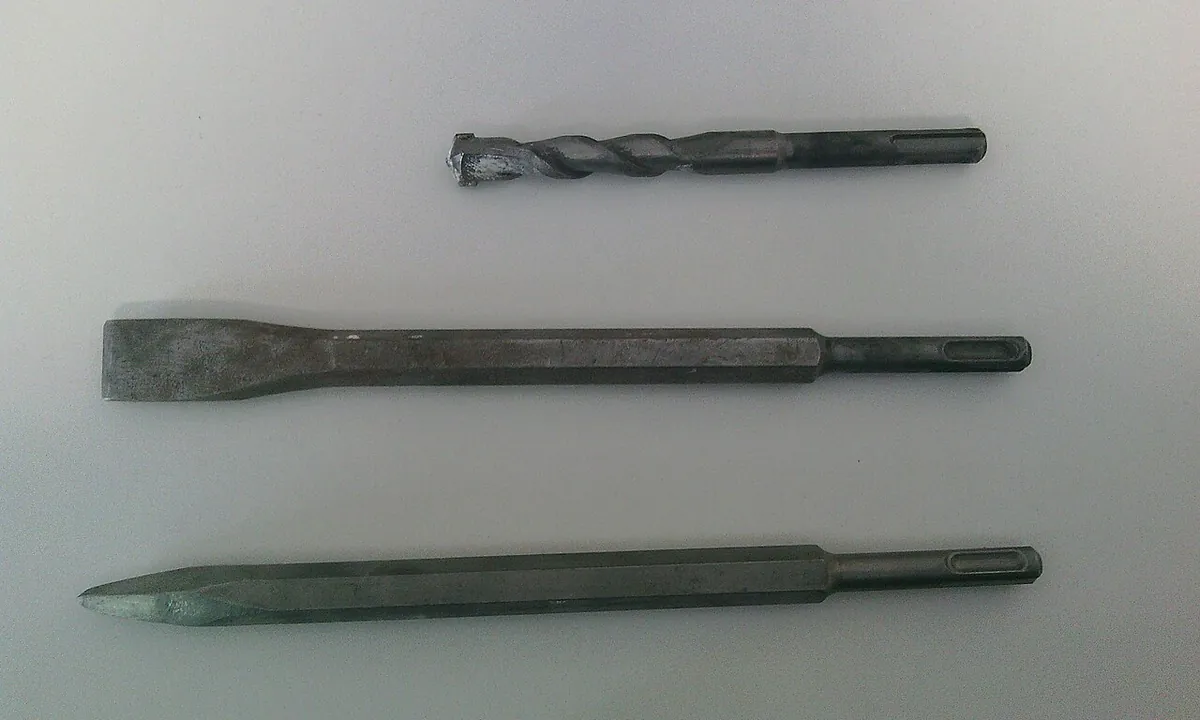
Photo: Hoëlig, Wikimedia Commons, CC BY-SA 3.0
Quick Answer
A concrete chisel is a hardened steel tool for cutting, chipping, breaking and shaping concrete, masonry and stone. Hand chisels, such as cold chisels, masonry chisels and wide brick bolsters, are struck with a 2 to 4 pound hammer and suit small jobs like trimming edges, cleaning out cracks and removing a few inches of concrete. Power chisels fit SDS-plus or SDS-max rotary hammers and demolition hammers and come as point, flat, wide, scaling, channel and tile chisels for heavier work. Always wear eye protection, gloves and hearing protection, and control silica dust. A hand chisel for concrete costs about $8 to $40; SDS chisel bits cost about $10 to $80 each.
Concrete is hard and abrasive, and the tools that shape it have to be tougher still. Whether you are chipping out a broken step edge, cutting a channel for a pipe, removing old tile and thinset, breaking up a small slab, cleaning a crack before patching, or knocking a lump of hardened concrete off a form, a concrete chisel is usually the tool for the job. The photo above shows three common bits for an SDS rotary hammer: a drill bit at the top, a flat chisel in the middle, and a point chisel at the bottom, each with the slotted SDS shank that locks into the hammer.
This guide explains the main types of concrete chisels, how to choose the right chisel for concrete jobs, how to use hand and power chisels step by step, sharpening and care, safety and dust control, common mistakes, and what they cost.
Hand Concrete Chisels
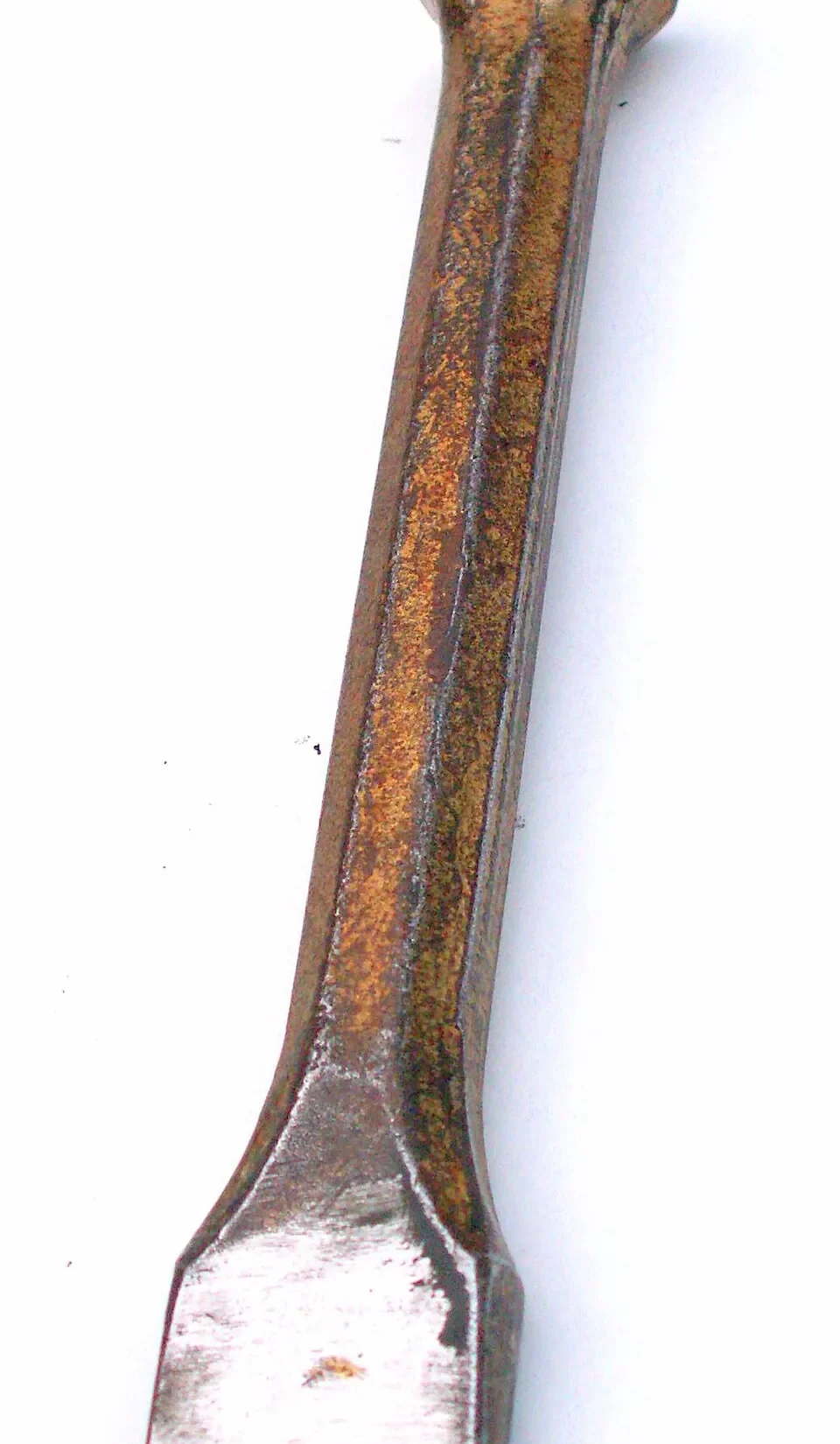
Photo: Satrughna, Wikimedia Commons, CC BY-SA 3.0 (cropped)
Hand concrete chisels are struck with a hammer and are the simplest, cheapest and most controllable way to work concrete on small jobs. The main types are:
Cold chisel. A bar of hardened, tempered steel, usually 1/2 to 1 inch wide at the tip and 6 to 12 inches long, with a narrow cutting edge and a flat striking end. Originally made for cutting cold metal, cold chisels are widely used as a general concrete chisel for chipping, cutting small grooves and breaking edges.
Masonry and plugging chisels. Similar to cold chisels but often with a tapered or fluted shape for removing mortar from brick and block joints and chipping concrete. Plugging chisels have a narrow, angled tip for cleaning mortar joints.
Brick bolster. A wide, thin chisel, typically 2.5 to 4 inches across, used to cut bricks and blocks cleanly, score concrete edges, and lift tiles. Its wide blade spreads the blow along a line.
Point chisel. A chisel with a sharp point instead of an edge, used to break up concrete, start holes and rough out stone.
Carbide-tipped chisels. Chisels with a tungsten carbide edge, like the stone chisel in the photo above, stay sharp far longer in hard concrete and stone and are favored by masons and stone carvers.
Many hand concrete chisels have a rubber hand guard or grip, which protects your hand from a missed hammer blow and reduces vibration. Always use a hammer, such as a 2 to 4 pound club or lump hammer, not a claw hammer, which can chip and send fragments flying.
Power Concrete Chisels: SDS-Plus and SDS-Max
For more than a few minutes of chipping, a power tool saves time and effort. Rotary hammers and demolition hammers accept chisel bits with special shanks that lock into the tool and slide back and forth with each blow. The two most common systems are SDS-plus, with a 10 mm shank, used in light and medium rotary hammers, and SDS-max, with an 18 mm shank, used in larger rotary hammers and demolition hammers. Heavier breakers use hex shanks. To chisel, the rotary hammer is switched to hammer-only mode so the bit hammers without rotating. Many models let you lock the chisel at different angles. See how to drill into concrete and concrete drill bit.
Common power chisel types include the following.
Point chisel (bull point). Concentrates force at a point to crack and break concrete, start holes, and demolish small slabs, footings and curbs. The workhorse for breaking concrete.
Flat chisel. A 3/4 to 1 inch wide edge for controlled chipping, cutting edges, removing high spots, and cleaning out cracks before repair.
Wide chisel and scaling chisel. Blades 1.5 to 4 inches wide, like the scaling chisel below, for removing tile, thinset, plaster, stucco, adhesive and thin layers of concrete. Their wide, flat blade lifts material in sheets.
Channel or gouge chisel. A U-shaped or angled blade for cutting grooves in concrete and masonry for pipes and electrical conduit.
Tile chisel. A wide, angled or bent blade designed to slide under floor tile and lift it off.
Bushing tool and clay spade. Bush hammer heads texture and roughen concrete surfaces; clay spades dig hard soil and clay.
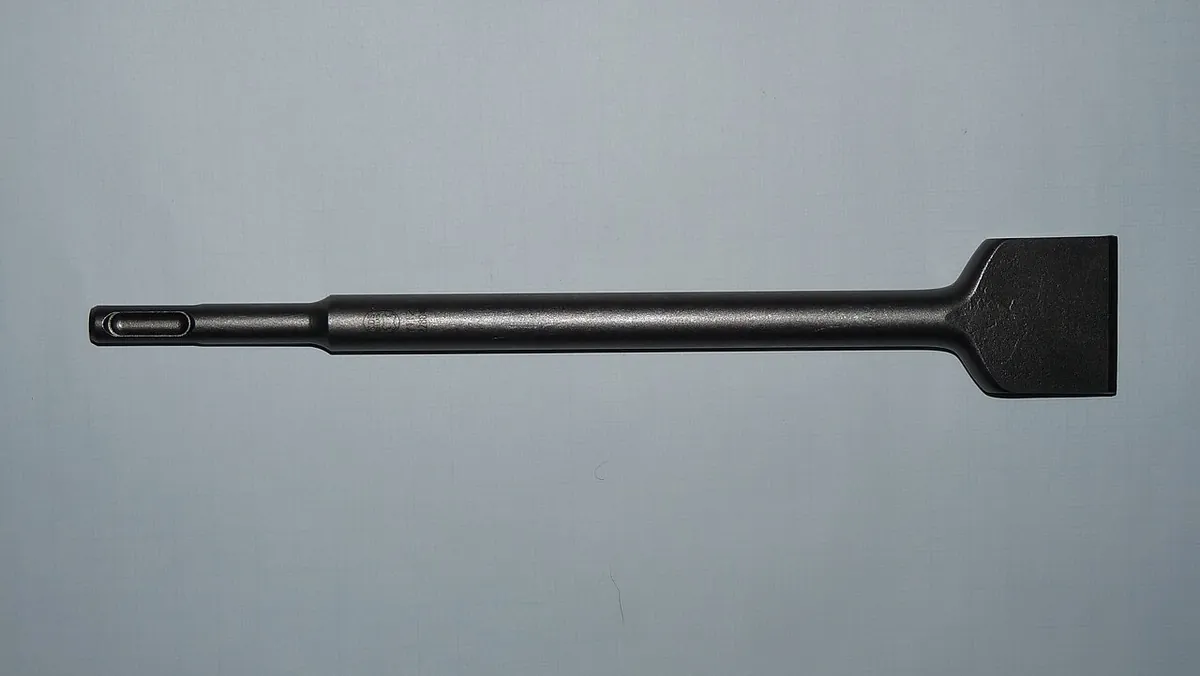
Photo: Dmitry G (public domain), Wikimedia Commons
Choosing the Right Chisel for Concrete
The best chisel for concrete depends on the job. For trimming a small edge, cleaning a crack, or removing a little concrete around a post, a hand cold chisel or flat chisel and a lump hammer give the most control. For removing old tile, thinset or a thin overlay, a wide or tile chisel in an SDS-plus rotary hammer is fast. For chipping out a spalled area before patching, a flat chisel in an SDS-plus or SDS-max hammer works well, followed by hand cleanup. For breaking up a small slab, step or footing, a point chisel in an SDS-max demolition hammer, or a larger breaker for thick concrete, is the right choice. For cutting channels for pipes and wires, a saw cut on each side followed by a flat or channel chisel gives the cleanest result. For texturing and roughening surfaces before an overlay, a bushing tool or a grinder works better than a chisel. See how to remove concrete and how to cut concrete.
Choose a concrete chisel that matches your tool's shank system and power. SDS-plus chisels are lighter and suit tools up to about 3 to 4 joules of impact energy; SDS-max chisels are thicker and suit tools with 6 to 20 joules or more. Longer chisels reach farther but flex and vibrate more; shorter chisels give more control. Self-sharpening chisels, with special profiles that wear evenly, stay effective longer. Look for forged, heat-treated steel from a reputable maker; cheap chisels dull and mushroom quickly.
How to Use a Hand Concrete Chisel
1. Prepare. Put on safety glasses or a face shield, gloves and hearing protection. Clear the area and protect nearby surfaces from flying chips. Mark the line or area you want to remove.
2. Score the line. For a clean edge, score along the line first, either with a saw cut or by tapping the chisel lightly along the line, moving it a little with each blow.
3. Chip at an angle. Hold the chisel at about 30 to 45 degrees to the surface, with the edge pointing toward the edge you want to remove. Strike the chisel firmly and squarely with the hammer, letting the chisel take small bites. Work from the edge inward, removing a little at a time.
4. Keep the chisel moving. If the chisel gets stuck, do not pry hard on it, which can snap the tip. Move to a new spot and approach from another angle.
5. Clean up. Brush or vacuum away debris and check the depth and shape. Finish rough edges with a smaller chisel or a grinder if needed.
How to Use a Power Concrete Chisel
1. Choose and insert the bit. Clean and lightly grease the shank, insert it into the chuck until it locks, and set the tool to hammer-only mode. Set the chisel angle if your tool allows it.
2. Hold the tool firmly. Use both hands and the side handle. Let the tool's weight and impact do the work; pushing hard does not speed it up and increases fatigue and vibration.
3. Start at an edge. Concrete breaks most easily from an edge or a saw cut. For a slab, start at the edge and work inward, breaking off pieces a few inches at a time rather than driving the point straight down in the middle. Angle the chisel at 30 to 60 degrees.
4. Pry gently. Use the chisel to crack pieces off, then remove them by hand or with a bar, rather than levering hard with the bit, which can bend or break it.
5. Take breaks. Vibration from hammer tools can cause hand-arm vibration injuries. Use tools with vibration control, wear anti-vibration gloves, and take regular breaks.
6. Watch for rebar. If the chisel hits steel, stop. Cut rebar with an angle grinder or bolt cutters rather than hammering at it. See rebar in concrete.
Common Concrete Chisel Jobs
Preparing cracks and spalls for repair. Before patching, damaged concrete must be removed back to sound material, and crack edges are often chiseled into a V or undercut groove so the repair material locks in. See how to fix cracks in concrete and concrete spalling.
Fixing step edges. Broken step noses are chipped back to sound concrete, then rebuilt with repair mortar. See how to fix concrete steps.
Removing tile and thinset. A wide or tile chisel in a rotary hammer lifts tile and scrapes thinset from a slab.
Cutting channels. Plumbers and electricians cut grooves for pipes and conduit, usually with two parallel saw cuts and a chisel between them.
Removing anchors and embedded items. Old anchors, posts and bolts are chipped out with a small chisel. See how to remove concrete anchors.
Cleaning forms and tools. Hardened concrete on forms, mixers and wheelbarrows is knocked off with a cold chisel and hammer. See concrete cement mixers.
Breaking small slabs. A demolition hammer with a point chisel breaks walkways, pads and steps for removal.
Hand Chisel vs Power Chisel for Concrete
Deciding between a hand concrete chisel and a power concrete chisel comes down to how much material you need to remove and how precise the work must be. A hand chisel for concrete is quiet, cheap, and gives you complete control, which makes it ideal for fine work: shaping a repair edge, cleaning out a narrow crack, chipping around a pipe or post, removing a small lump of concrete from a form, or trimming a block. It is also the safest choice near finished surfaces, glass or delicate fixtures where a power tool might do too much damage. The downside is speed: removing more than a few square inches by hand is slow and tiring.
A power concrete chisel in a rotary or demolition hammer removes material many times faster and with less effort, making it the right choice for removing tile and thinset over a whole room, chipping out large spalled areas, cutting long channels, or breaking up steps, pads and footings. It is louder, produces more vibration and dust, and can overshoot, cracking concrete you want to keep. Many professionals use both: a power concrete chisel for the bulk of the removal and a hand concrete chisel for the final clean edges and corners. For DIY projects, owning a good hand chisel for concrete and renting a power tool when needed is often the best approach.
Concrete Chisel Sizes and Shapes Explained
Concrete chisels come in many widths and lengths, and choosing the right size makes work faster and more precise. Narrow hand chisels, 1/4 to 1/2 inch wide, are for detail work, cleaning mortar joints and cutting small notches. Medium widths of 3/4 to 1 inch are the general-purpose concrete chisel sizes for chipping and cutting. Wide bolsters of 2.5 to 4 inches cut bricks and blocks and score straight lines. For SDS bits, standard flat chisels are about 3/4 to 1 inch wide, wide chisels 1.5 to 2 inches, and scaling or tile chisels 2 to 4 inches or more. Length matters too: a short concrete chisel, around 10 inches, gives more control and less vibration for close work, while a long concrete chisel, 16 to 24 inches, reaches into deep holes and lets you work standing up on floors.
Tip shape also changes how a concrete chisel behaves. A point concentrates force and fractures concrete quickly but leaves a rough surface. A flat edge removes material in controlled chips and leaves a flatter surface. A gouge or channel shape cuts a groove. A bent or angled tile chisel slides under tiles parallel to the floor. Spade and clay chisels dig. Having a small set of concrete chisels, a point, a flat and a wide chisel, covers most jobs.
Concrete Chisel Materials and Quality
A good concrete chisel is forged from high-carbon or alloy tool steel, then heat treated so the cutting edge is hard enough to resist wear while the body and striking end are tougher and less brittle. Poor-quality chisels may be too soft, so the edge rolls and dulls after a few blows, or too hard and brittle, so the tip chips or snaps. Carbide-tipped concrete chisels have a tungsten carbide insert brazed at the edge, which stays sharp far longer in hard concrete and stone but can chip if used to pry. For SDS bits, look for forged chisels with hardened tips and shanks made to the SDS standard, so they fit snugly and transmit energy efficiently. Reputable tool brands publish the steel grade and heat treatment; very cheap concrete chisels often lack both and wear out quickly, costing more in the long run.
Using a Concrete Chisel to Prepare Repairs
One of the most important uses of a concrete chisel is preparing damaged concrete for repair. Patching materials bond poorly to weak, dusty or feathered edges, so the damaged area must be cut back to sound concrete with clean, square or slightly undercut edges. The usual method is to saw cut the outline of the repair about 1/2 inch deep, then use a power concrete chisel or a hand chisel for concrete to remove the damaged concrete inside the outline, working down until the chisel rings on hard, sound material. Around exposed rebar, the concrete chisel is used to remove concrete behind the bars so the repair material can surround them. Finally, a small hand chisel and a wire brush clean the edges and corners. This careful preparation, more than the patching material itself, determines how long a repair lasts. See concrete patching compound and concrete restoration.
Common Mistakes With a Concrete Chisel
Using the wrong hammer. Claw and finishing hammers are not made for striking hardened steel and can chip. Use a club or lump hammer with a softer face.
Working with a dull or mushroomed chisel. A dull concrete chisel bounces and wastes energy, and a mushroomed head can throw steel splinters. Sharpen and dress your chisels regularly.
Prying with the chisel. Concrete chisels are made to be struck, not used as pry bars. Prying snaps tips and bends SDS bits.
Pushing too hard on power tools. Leaning on a rotary hammer slows it down and increases vibration. Let the tool do the work.
Starting in the middle. Concrete breaks far more easily from an edge or a saw cut than from the middle of a slab, so start every concrete chisel job at an edge whenever you can.
Skipping protection. Flying chips cause many eye injuries. Always wear eye protection, even for a few quick blows with a concrete chisel.
Building a Basic Concrete Chisel Kit
For homeowners and DIYers, a small kit covers almost every job. Start with a 3/4 or 1 inch cold chisel and a 3 pound lump hammer for general chipping, a 3 or 4 inch brick bolster for cutting block and scoring lines, and a narrow plugging chisel for joints and tight spots. Add safety glasses, gloves and hearing protection. If you have or rent an SDS-plus rotary hammer, add a point chisel, a flat concrete chisel and a wide scaling or tile chisel. For bigger demolition jobs, rent an SDS-max or demolition hammer with its own concrete chisel bits rather than wearing out a light tool. Store the kit together in a sturdy bag or box so the edges do not bang against other tools and the right concrete chisel is always at hand when a repair comes up.
When to Use a Saw Instead of a Concrete Chisel
A concrete chisel is not always the best tool. When you need a straight, clean edge, such as removing a section of a driveway, cutting an opening in a wall, or making a repair outline, a concrete saw cut first gives a far neater result, and the chisel then removes the material inside the cut. For long cuts, thick slabs and walls, a saw or core drill is faster and causes less damage to the surrounding concrete than a concrete chisel alone. Saws do create more dust and need water or dust extraction. A common professional sequence is to saw the edges, break the middle with a power concrete chisel, and finish with a hand chisel for concrete. See concrete saw and concrete saw blades.
Sharpening and Caring for Concrete Chisels
Every concrete chisel dulls with use. A dull chisel bounces off the surface, works slowly and puts more strain on you and the tool. Hand chisels can be resharpened on a bench grinder or with a file, restoring the original bevel angle, usually around 60 to 70 degrees for concrete. Grind lightly and cool the steel often in water; overheating, shown by blue discoloration, ruins the temper and makes the edge soft. The striking end of a hand chisel mushrooms over time from hammer blows; grind the mushroomed edges off, because fragments can break off and fly into eyes or hands. SDS chisels can also be reground, though many users replace them when worn, and self-sharpening designs reduce the need. Keep shanks clean and lightly greased with the tool maker's grease, store chisels dry to prevent rust, and replace any chisel that is cracked, bent or badly mushroomed.
Safety and Silica Dust
Using a concrete chisel throws sharp chips and creates dust containing crystalline silica, which can cause serious lung disease when inhaled over time. Always wear safety glasses or goggles, ideally with a face shield for power chiseling, gloves, sturdy boots and hearing protection. Control dust by misting the work area with water, using tools with dust extraction shrouds connected to a HEPA vacuum, and wearing a properly fitted respirator rated N95 or better, as recommended by OSHA's silica rules for construction. Keep bystanders away. Never use a chisel with a mushroomed head or a cracked tip. Check for buried electrical cables, pipes and post-tensioning tendons before chiseling into walls and slabs. See concrete dust and post-tensioned concrete slab.
Concrete Chisel Cost
A hand concrete chisel costs about $8 to $25 for a basic cold chisel or masonry chisel, $15 to $40 for a brick bolster or carbide-tipped chisel, and $20 to $50 for a set. SDS-plus chisel bits cost about $10 to $40 each, and SDS-max chisels about $25 to $80 each, with sets offering savings. A rotary hammer costs about $100 to $400 for SDS-plus models and $300 to $1,000 or more for SDS-max and demolition hammers. Rental stores rent demolition hammers and chisels for about $50 to $100 per day. For occasional jobs, buying a good hand chisel and renting a power tool is often the most economical approach. See concrete removal cost.
Frequently Asked Questions
What is the best chisel for concrete?
For hand work, a hardened cold chisel or carbide-tipped masonry chisel. For power work, a point chisel to break concrete and a flat or wide chisel to chip and remove layers.
Can you use a wood chisel on concrete?
No. Wood chisels are not hardened for concrete and will chip and dull immediately. Use a concrete or cold chisel.
What hammer should I use with a concrete chisel?
A 2 to 4 pound club or lump hammer. Avoid claw hammers, which can chip.
SDS-plus or SDS-max for chiseling concrete?
SDS-plus is fine for light chipping and tile removal. SDS-max tools and chisels are better for breaking slabs and heavy removal.
How do I sharpen a concrete chisel?
Grind the original bevel lightly on a bench grinder, cooling often in water, and grind off any mushroomed striking head.
Sources
- OSHA: respirable crystalline silica standard for construction
- NIOSH: silica and hand-arm vibration hazards
- International Concrete Repair Institute: surface preparation for repair
- OSHA 1926.301: hand tools, mushroomed heads
Related Guides
- How to hang pictures on concrete walls — hooks, plugs and concrete screws