
Concrete Cutting Blade Guide: Diamond Blades, Sawzall Blades, Sizes and Safe Use
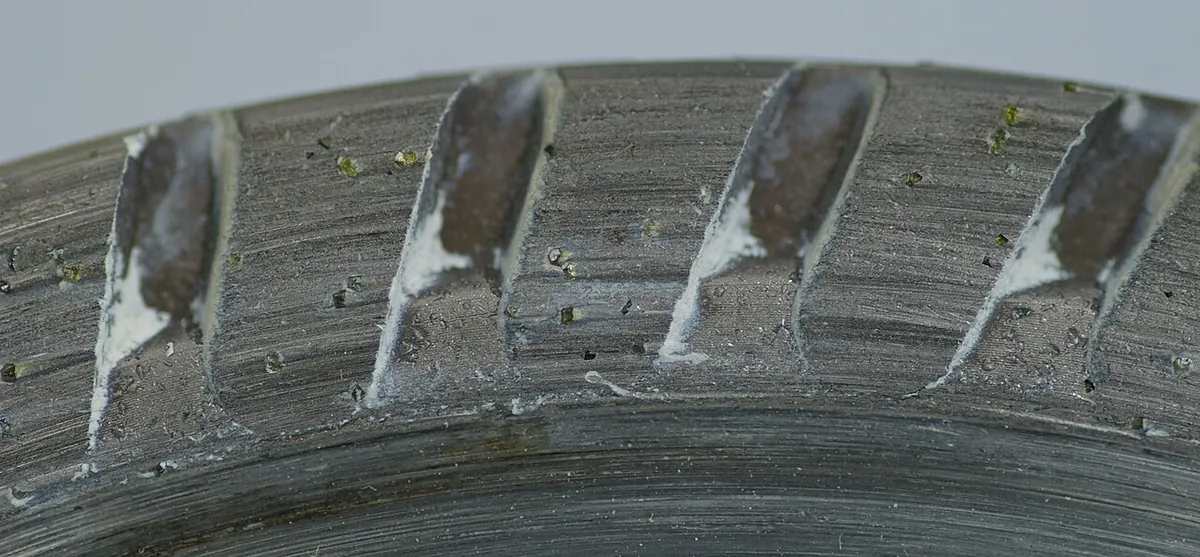
Photo: Hustvedt, Wikimedia Commons, CC BY-SA 3.0
Quick Answer
The best concrete cutting blade for most jobs is a diamond blade: a steel disc with a rim of industrial diamonds held in a metal bond that grinds through concrete. Segmented diamond blades cut fast, wet or dry; turbo rim blades cut fast with a cleaner edge; continuous rim blades give the smoothest cuts but need water. Match the blade to the saw's size and speed, and to the material: hard bond blades for soft, abrasive materials like green concrete and block, soft bond blades for hard, cured concrete with hard aggregate. For tight spots, a concrete sawzall blade with diamond or carbide grit cuts block, thin slabs and pipe. Diamond blades cost about $15 to $40 for grinders, $40 to $150 for 12 to 14 inch cut-off saws, and more for large walk-behind saws. Cut wet whenever possible to cool the blade and control silica dust.
Cutting concrete is hard on tools. Concrete is a mix of hard stone and abrasive sand held in cement, and it quickly destroys ordinary wood or metal blades. The right concrete cutting blade makes the difference between a straight, clean cut in minutes and a burned blade, a wandering cut and a cloud of dust. The close-up above shows how modern diamond blades work: tiny diamond crystals, visible as specks on the rim, are held in a metal bond, and slots between the segments let water, air and slurry escape and keep the blade cool.
This guide explains the types of concrete blades, how diamond blades for concrete work, how to choose the right blade for your saw and material, sizes and cut depths, concrete sawzall blades for tight spots, wet vs dry cutting, safe use, how to make blades last, and what blades cost. For saws themselves and cutting techniques, see concrete saw and how to cut concrete.
How a Concrete Diamond Blade Works
A concrete diamond blade does not actually cut like a saw tooth; it grinds. The rim of the blade contains synthetic diamond crystals mixed into a metal powder bond, sintered or laser-welded onto a steel core. As the blade spins, the exposed diamonds scratch and fracture the concrete into fine dust or slurry. The metal bond around the diamonds slowly wears away, exposing fresh, sharp diamonds as the old ones wear and break off. This self-sharpening process is key: if the bond wears too slowly, the diamonds polish smooth and the blade glazes and stops cutting; if it wears too fast, the blade wears out quickly. Blade makers balance diamond size, concentration and bond hardness for specific materials. That is why a blade made for cured concrete may perform poorly on asphalt or fresh concrete, and vice versa.
Types of Concrete Cutting Blades
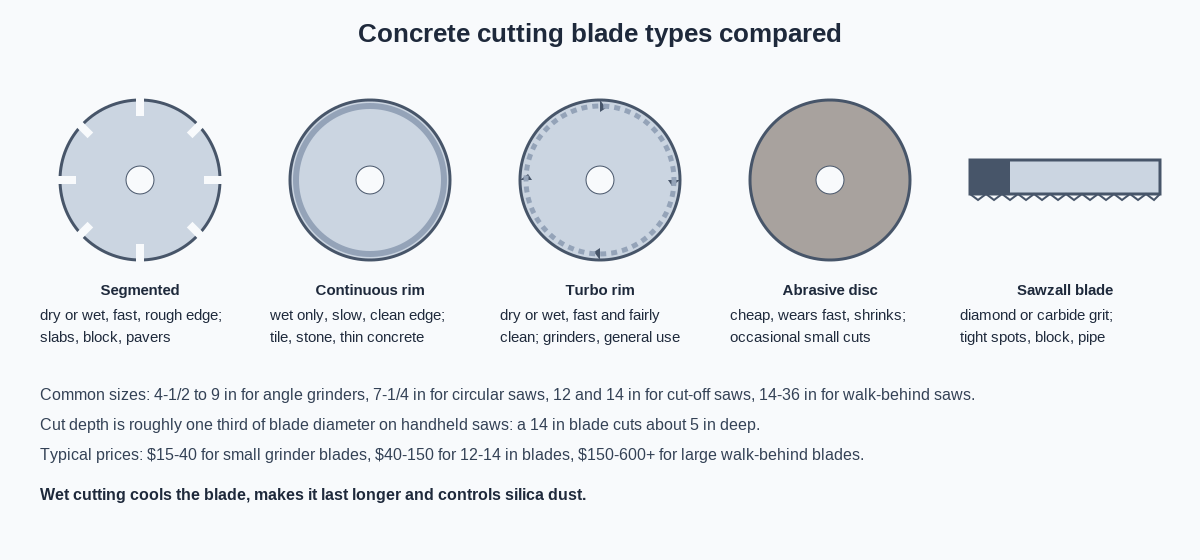
Segmented diamond blades have rims divided into segments separated by gullets or slots, as in the first blade in the chart above. The gaps let air and water flow, cool the blade and clear debris, so segmented blades cut quickly and can be used dry with breaks. They leave a rougher edge with some chipping. They are the workhorse for cutting slabs, walls, block, pavers, curbs and brick with cut-off saws, walk-behind saws and circular saws. Continuous rim diamond blades have a solid, smooth rim with no gaps. They cut slowly but leave a very smooth, chip-free edge, and need water for cooling. They are used for tile, porcelain, stone, glass and thin concrete where appearance matters, such as on a wet tile saw. Turbo rim blades have a continuous rim with a serrated or wavy pattern that improves cooling and speed while still giving a fairly clean edge. They are popular on angle grinders and for general concrete and masonry cutting, wet or dry.
Abrasive blades, made of silicon carbide or aluminum oxide grit in a resin bond, are cheap and can cut concrete and masonry, but they wear down quickly, shrinking in diameter as they cut, which changes cutting depth. They are best for occasional, small cuts. Specialty diamond blades include tuck-point blades for removing mortar joints, cup wheels for grinding surfaces rather than cutting, crack chasers for opening cracks for repair, and blades designed for cutting green concrete within hours of placement for early-entry joint sawing. See concrete grinding and control joints in concrete.
Bond Hardness: Matching the Blade to the Material
The metal bond holding the diamonds is the most important technical choice in a concrete diamond blade. The rule is counterintuitive: hard materials need soft bonds, and soft, abrasive materials need hard bonds. Hard, dense materials, such as cured concrete with hard aggregate like granite or quartz, and porcelain, wear the diamonds but not the bond, so a softer bond is needed to release worn diamonds and expose new ones. Soft, abrasive materials, such as green concrete, asphalt, block and sandstone, wear the bond quickly, so a harder bond is needed to hold diamonds long enough. Using a hard-bond blade on hard concrete causes glazing, where the blade stops cutting and gets hot. Using a soft-bond blade on abrasive material wears the blade out quickly. Many general-purpose blades use a medium bond for a range of materials. For large jobs, ask the supplier which blade suits your concrete's aggregate and age. See concrete aggregate.
Blade Sizes, Arbors and Cut Depth
Concrete blades come in sizes to fit different saws. Angle grinders use 4 to 9 inch blades; 4-1/2 and 5 inch are most common, cutting about 1 to 1-1/2 inches deep. Circular saws use 7-1/4 inch diamond blades, cutting about 2 to 2-1/2 inches deep. Handheld cut-off saws, also called power cutters or demo saws, use 12 and 14 inch blades, cutting about 4 to 5 inches deep, and 16 inch models cut about 6 inches. Walk-behind flat saws use 14 to 36 inch blades, cutting from about 4 to 14 inches deep. Wall saws and wire saws handle thick structural concrete. Each blade has an arbor hole that must match the saw, commonly 7/8 inch, 1 inch or 20 mm, sometimes with a diamond knockout for certain saws. Every blade also has a maximum safe RPM that must equal or exceed the saw's speed. Never use a blade rated below the saw's speed, and never force a blade onto the wrong arbor. See concrete saw.
Concrete Sawzall Blades
A reciprocating saw, often called by the brand name Sawzall, is not the first choice for cutting concrete slabs, but special concrete sawzall blades make it useful in tight places. Diamond grit and carbide grit reciprocating blades have no teeth; instead, their edges are coated with abrasive grit that grinds through masonry. They cut concrete block, brick, cement board, thin concrete, stucco, clay and concrete pipe, plaster and cast iron. They are handy for cutting openings in block walls, trimming pavers and block in place, cutting through concrete around pipes, and making plunge cuts where a circular blade cannot fit. Concrete blades for sawzall use are slow on thick, hard concrete with rebar, and they wear faster than circular diamond blades, but they reach where other saws cannot. Use slow to medium speed, let the grit do the work, and keep the shoe of the saw against the material to reduce vibration. Ordinary toothed sawzall blades do not cut concrete. See concrete blocks and concrete pipe.
Concrete Diamond Blades for Common Jobs
Cutting a slab for removal or a trench. For breaking out a section of patio, driveway or garage floor, or cutting a trench for plumbing, use a 14 inch segmented concrete cutting blade on a cut-off saw, or a larger blade on a walk-behind saw for long, deep cuts. A general-purpose concrete diamond blade with a medium bond handles most residential slabs. Score the line with a shallow first pass, then deepen in passes of 1 to 2 inches, using water. See how to remove concrete.
Cutting control joints. For new slabs, a walk-behind saw or a handheld saw with a concrete blade designed for green concrete cuts control joints within hours of finishing, before random cracks form. Early-entry saws use special blades and skid plates to cut very fresh concrete without raveling the edges. For older slabs, a standard concrete cutting blade on a circular saw or cut-off saw can add joints, but cracks may already have formed.
Cutting pavers, block and brick. A segmented or turbo concrete diamond blade on a cut-off saw or masonry saw cuts pavers, retaining wall blocks, concrete block and brick quickly. For visible paver edges, a turbo blade leaves a cleaner edge. A wet masonry saw gives the best results and controls dust. See concrete masonry unit.
Cutting countertops, tile and thin concrete. Continuous rim or fine turbo diamond blades on wet tile saws, rail saws or grinders give smooth, chip-free edges on concrete countertops, cement tiles and thin precast pieces. See concrete tile and concrete countertops.
Cutting openings in walls. For doors, windows and vents in concrete or block walls, contractors use wall saws on tracks, large cut-off saws, or ring saws for deep cuts, finishing corners with a sawzall blade for concrete or a chain saw for concrete. For block walls, a cut-off saw from both sides is common. Always check for structural concerns before cutting openings in load-bearing walls.
Choosing Between Concrete Blades for Your Saw
Every saw type has its own best concrete blade. On an angle grinder, a 4-1/2 to 7 inch turbo or segmented diamond blade handles small cuts, notches, trimming pavers and cutting out cracks. On a circular saw, a 7-1/4 inch dry-cut segmented concrete blade makes shallow cuts in slabs and pavers, though most circular saws are not built for heavy dust, so use a vacuum shroud. On a gas or battery cut-off saw, 12 and 14 inch segmented diamond blades are standard, wet or dry. On a walk-behind saw, large wet-cut blades in specific bonds for cured concrete, green concrete or asphalt give long life on large jobs. On a wet tile saw, continuous rim blades give clean edges. On a reciprocating saw, a concrete sawzall blade with diamond or carbide grit handles tight, irregular cuts. Using the right concrete cutting blade for the saw keeps cuts straight, protects the motor and extends blade life.
Reading a Diamond Blade Label
Concrete diamond blades carry important information on the core or packaging. The diameter, such as 14 inches, and the arbor size, such as 1 inch or 20 mm, must fit the saw. The maximum RPM must be at least as high as the saw's no-load speed. The direction arrow shows which way to mount the blade. Labels also state wet, dry or wet/dry use, the intended materials, such as general purpose, cured concrete, green concrete, asphalt, masonry or tile, and sometimes the segment height, which affects blade life. Premium blades may list the diamond concentration or bond type. Some blades carry safety standard markings such as EN 13236 or ANSI B7.1. If the label is worn or missing, do not use the blade on a high-speed saw.
Sawzall Blade for Concrete: Tips
When using a sawzall blade for concrete, a few tips make the job easier. Choose diamond grit blades for long life and faster cutting in hard material, and carbide grit for occasional use in softer masonry. Use a longer blade than the material thickness so the blade does not slip out of the cut on the backstroke. Set the saw to orbital off, if it has orbital action, for smoother cuts. Run at medium speed and apply light, steady pressure. Spray water on the cut if the saw is rated for it, or use a vacuum to control dust. Expect slower progress than with a circular concrete cutting blade; a reciprocating saw is for access, not speed. For cutting cast iron and concrete pipe, the same diamond grit blades work well.
Wet vs Dry Cutting
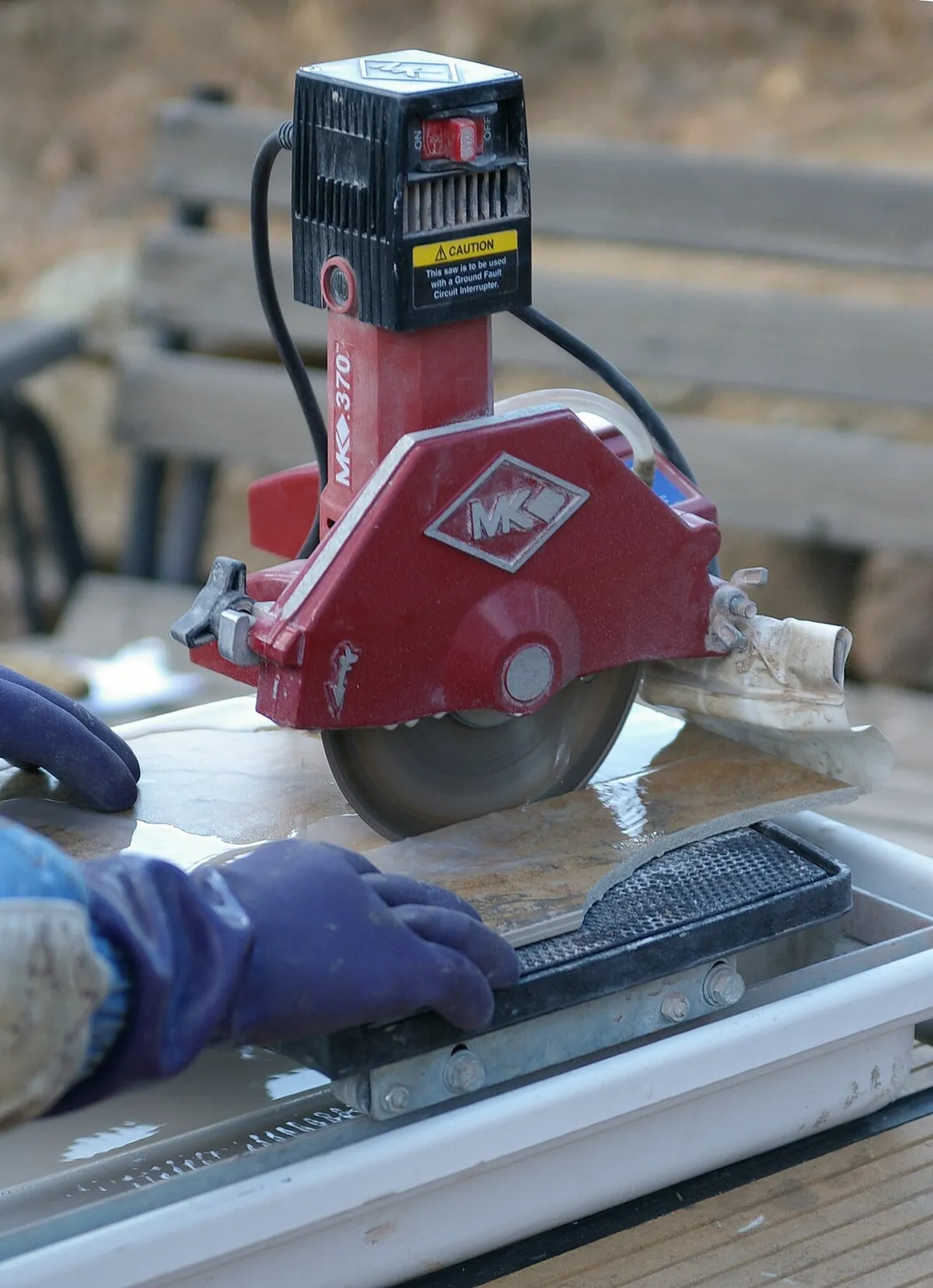
Photo: Hustvedt, Wikimedia Commons, CC BY-SA 3.0
Water makes a huge difference when cutting concrete. Wet cutting cools the diamond blade, so it lasts much longer and cuts faster. It flushes away slurry so the blade does not clog. Most importantly, it controls respirable crystalline silica dust, which causes silicosis, lung cancer and other diseases. The tile saw above uses a pump to spray water onto a continuous rim blade as it cuts, which is why it can make clean cuts without dust. Many concrete cutting blades are labeled wet only, wet or dry, or dry. Dry-cutting blades are designed to shed heat through their segments and should be used in short passes, letting the blade spin freely in the air every 30 to 60 seconds to cool. Even with dry blades, dust control is essential: OSHA's silica rule requires water delivery or vacuum dust collection on most handheld concrete saws and grinders, plus respirators for longer work. Wet cutting creates slurry, which must be contained and cleaned up, and electric saws used wet must be designed for it and plugged into ground-fault protected outlets. See concrete dust.
How to Choose the Right Concrete Blade
Start with the saw: blade diameter, arbor size and maximum RPM must match. Then consider the material: cured concrete, green concrete, block, pavers, brick, stone, asphalt or tile, and whether there is rebar or mesh. Many general-purpose diamond blades handle concrete with light rebar; for heavy rebar, choose a blade rated for reinforced concrete. Decide on wet or dry cutting. Consider the edge quality you need: rough demolition cuts can use segmented blades, while visible cuts in pavers or tile need turbo or continuous rim blades. Finally, consider how much cutting you will do: for one small job, an economy blade or a rental blade may be enough; for regular work, a professional-grade blade with more diamond content and taller segments lasts much longer and cuts faster, saving money per foot of cut. See tool rental costs.
Using a Concrete Cutting Blade Safely
Diamond blades spin at high speed and cut a material that can bind and kick back, so safety matters. Inspect blades before use for cracks, missing segments, a bent core or damaged arbor, and never use a damaged blade. Mount the blade with the arrow pointing in the direction of rotation. Use the saw's guard and keep it adjusted correctly for the depth of cut. Wear eye and face protection, hearing protection, gloves, sturdy boots and a respirator rated for silica dust when cutting dry. Support the work so the cut does not close and pinch the blade. Start the blade before it touches the concrete, and let it reach full speed. Cut straight, without twisting or side-loading the blade, which can crack the core or cause kickback. Let the blade do the work; pushing too hard overheats it and causes binding. With cut-off saws, stand to the side of the blade and keep a firm grip with both hands. Never cut overhead with a handheld cut-off saw. Turn off the saw and let the blade stop before setting it down. Keep bystanders, children and pets well back from the cutting area, since fragments and slurry can fly several feet.
Making Diamond Blades Last
Diamond blades last much longer with good technique. Use water whenever possible. Use the right bond for the material. Keep cutting speeds and pressure moderate; excessive force overheats the blade and wears it unevenly. Make shallow passes on deep cuts, especially with handheld saws, rather than trying to cut full depth at once. Let dry blades cool between cuts. If the blade glazes and stops cutting, dress it by making a few shallow cuts in an abrasive material such as a cinder block, sandstone or a dressing stone, which exposes fresh diamonds. Watch for signs of wear: segment height worn down, uneven wear, cracks or a blue-colored core from overheating. Replace blades before segments wear down to the core. Store blades flat and dry, away from heavy objects that could bend them, and keep the original packaging or a label on each one so you always know which concrete cutting blade suits which material, saw and speed.
Cutting Concrete With Rebar
Reinforced concrete adds steel to the cutting job. Most quality diamond blades for concrete can cut through occasional rebar and wire mesh, but steel wears blades faster and can cause binding. When cutting reinforced slabs, use a blade rated for reinforced concrete, keep the speed steady, and do not force the blade when it hits steel. For heavy reinforcement, contractors use specialized blades with higher diamond concentration, or wall saws and wire saws. Cutting through rebar can affect the strength of structural elements, so check with an engineer before cutting beams, columns, elevated slabs or post-tensioned slabs, where cutting a tendon is dangerous. See rebar in concrete and post-tensioned concrete slab.
Buy or Rent a Concrete Cutting Blade?
For a one-time job, renting a cut-off saw or walk-behind saw with a concrete cutting blade is common. Rental shops supply blades but usually charge for blade wear, measured by the loss of segment height, so ask how wear is charged before you start. If you expect to cut more than a few dozen feet, or you will reuse the blade on future jobs, buying your own mid-grade concrete diamond blade is often cheaper. Bring the blade to the rental shop and confirm it fits the rented saw's arbor and speed. For angle grinders and circular saws you already own, buying a blade is almost always the better deal, since small diamond blades are inexpensive and last for many projects. Keep blades labeled by material, so a blade used for asphalt does not end up on cured concrete or tile.
Troubleshooting Cutting Problems
If the concrete blade is cutting slowly or not at all, it may be glazed from a too-hard bond, from cutting hard concrete dry, or from too little pressure; dress it on an abrasive block and check that the bond suits the material. If segments are wearing fast, the bond may be too soft for an abrasive material such as green concrete or asphalt, or the blade may be running without enough water. If the blade wobbles, the core may be bent from overheating or side pressure, or the flange may not be clean and tight; stop using a bent blade. If cuts wander, the blade may be dull on one side, the saw may be pushed off-line, or the guide may need adjustment. If segments crack or break off, stop immediately: this can be caused by overheating, hitting steel hard, twisting the blade in the cut, or a manufacturing defect, and continuing is dangerous. If the cut edge chips badly, switch to a turbo or continuous rim blade and cut more slowly.
Concrete Blade Costs
Prices depend on size, quality and diamond content. Small diamond blades for angle grinders cost about $15 to $40. Seven-inch circular saw diamond blades cost about $25 to $60. Twelve and fourteen inch blades for cut-off saws cost about $40 to $150 for general-purpose blades, and $150 to $300 for premium professional blades. Large walk-behind saw blades cost $150 to $600 or more. Concrete sawzall blades with diamond or carbide grit cost about $10 to $40 each. Abrasive discs cost a few dollars each but wear quickly. Rental shops often charge for blade wear by measuring the segment height before and after use, which can add $10 to $50 or more to a saw rental. For DIY projects, buying a mid-grade blade is often cheaper than paying blade wear charges. See concrete removal cost.
Frequently Asked Questions
What is the best blade for cutting concrete?
A diamond blade matched to the saw size and the concrete hardness. Segmented blades cut fastest; turbo and continuous rim blades give cleaner edges.
Can a sawzall cut concrete?
Yes, with a diamond or carbide grit concrete sawzall blade. It works well for block, thin concrete and tight spots, but slowly on thick slabs.
How deep can a 14 inch concrete blade cut?
About 5 inches on most handheld cut-off saws.
Should I cut concrete wet or dry?
Wet whenever possible. It cools the blade, extends its life and controls hazardous silica dust.
Why did my diamond blade stop cutting?
It has probably glazed. Dress it by cutting into an abrasive block, and use a softer bond blade for hard concrete.
Sources
- OSHA: respirable crystalline silica, Table 1 controls for saws and grinders
- Concrete Sawing and Drilling Association: sawing practices and safety
- ANSI B7.1: safety for abrasive wheels and blades
- Portland Cement Association: joint sawing
Related Guides
- Concrete slurry — bonding slurry, flowable fill and cutting slurry
- Concrete cutter — cut-off saws, Stihl models, concrete chainsaws, depths and rental