
Concrete Sink Guide: Types, DIY Casting, Concrete Worktop Mix, Care and Cost
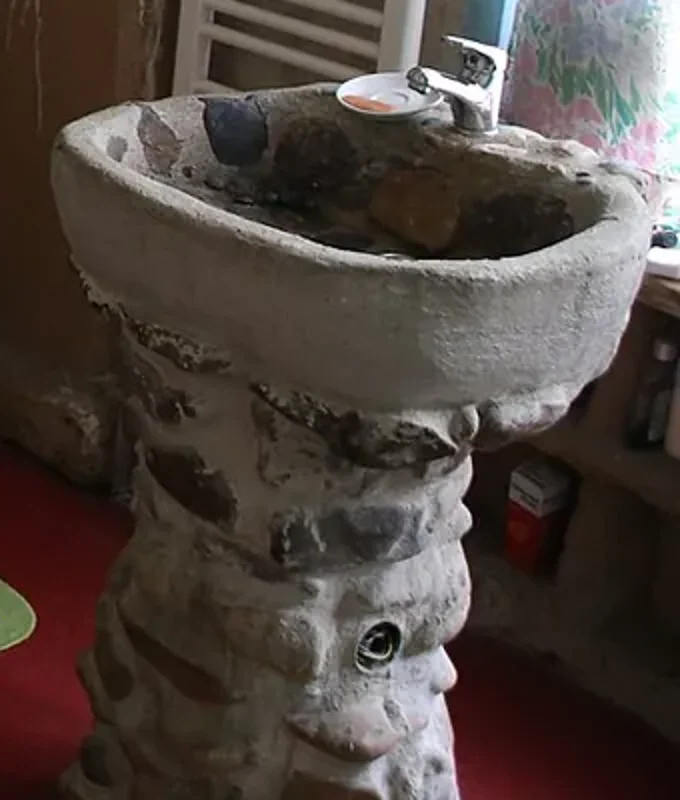
Photo: Manuel Schmalstieg, Wikimedia Commons, CC BY 3.0 (cropped)
Quick Answer
A concrete sink is a basin cast from concrete, usually a thin, strong GFRC (glass fiber reinforced concrete) or a dense concrete worktop mix, then sealed so it resists water and stains. Concrete sinks come as bathroom vessel sinks, integral sinks cast in one piece with a vanity top, kitchen farmhouse and undermount sinks, ramp and trough sinks, and outdoor and utility sinks. They are durable and fully customizable but need a good sealer, renewed every few years, and gentle pH-neutral cleaners. A DIY concrete sink costs about $50 to $300 in materials; fabricator-made bathroom concrete sinks typically cost $400 to $1,500 and kitchen or integral concrete sinks $1,000 to $4,000+.
Concrete has become one of the most popular materials for sinks in modern, industrial, farmhouse and rustic interiors. A concrete sink can be any shape and color, can be cast as one seamless piece with a countertop, and has a natural, handmade character that factory-made ceramic and steel sinks do not. The sink in the photo above shows how far that character can go: a handmade concrete basin on a pedestal, with stones pressed into the surface, built for a one-of-a-kind bathroom.
This guide explains the types of concrete sinks, GFRC versus cast concrete, how to make a concrete sink step by step, how to choose a concrete worktop mix, sealing and care, common problems, and what concrete sinks cost.
Types of Concrete Sinks
Vessel sinks. A concrete vessel sink is a bowl or box that sits on top of a vanity or countertop. Vessel sinks are the easiest concrete sinks to buy, install and replace, and they show off the material from every side. Round, square, rectangular and organic shapes are common.
Integral sinks. An integral concrete sink is cast in one piece with the countertop, so there is no seam between the top and the basin. Integral sinks are popular in bathrooms, with a sloped basin or a ramp that drains to a hidden slot, and in kitchens and bars. They need careful fabrication and are usually made by specialist shops. See concrete countertops.
Ramp and trough sinks. Long, shallow concrete sinks with a sloped floor that drains to one end or to a slot, often wide enough for two faucets. They suit modern bathrooms, commercial washrooms and schools.
Farmhouse and apron-front sinks. Kitchen concrete sinks with an exposed front panel, set into the base cabinets. They are deep, strong and handle heavy pots well.
Undermount and drop-in sinks. Concrete sinks mounted below or into a separate countertop of concrete, stone or wood.
Pedestal and wall-mounted sinks. Freestanding concrete sinks on a column, like the one in the photo above, or sinks hung on a wall with brackets or a concealed frame.
Outdoor and utility sinks. Concrete sinks for outdoor kitchens, potting benches, garden stations, laundry rooms and workshops, where durability matters more than delicacy. See cinder block outdoor kitchen.
GFRC vs Cast Concrete Sinks
Most professionally made concrete sinks today are GFRC. GFRC is a mix of cement, fine sand, polymer, admixtures and alkali-resistant glass fibers. It is sprayed or packed into molds in thin layers, often just 3/4 to 1 inch thick, giving a strong, light piece with crisp edges and very few cracks. A GFRC bathroom vessel sink might weigh 30 to 60 pounds, compared with 80 to 150 pounds for a similar sink cast from conventional concrete. GFRC also takes fine detail and smooth surfaces well. See glass fiber reinforced concrete.
Cast concrete sinks, made with a conventional or countertop concrete mix poured into a mold and vibrated, are thicker and heavier, typically 1.5 to 2 inches thick, and are reinforced with wire mesh, rebar or fibers. They have a solid, monolithic feel and are easier for DIY makers who do not have GFRC spray equipment. Both methods produce excellent concrete sinks when done well; the choice depends on the design, weight limits and the maker's skills. See precast concrete.
Concrete Worktop Mix for Sinks
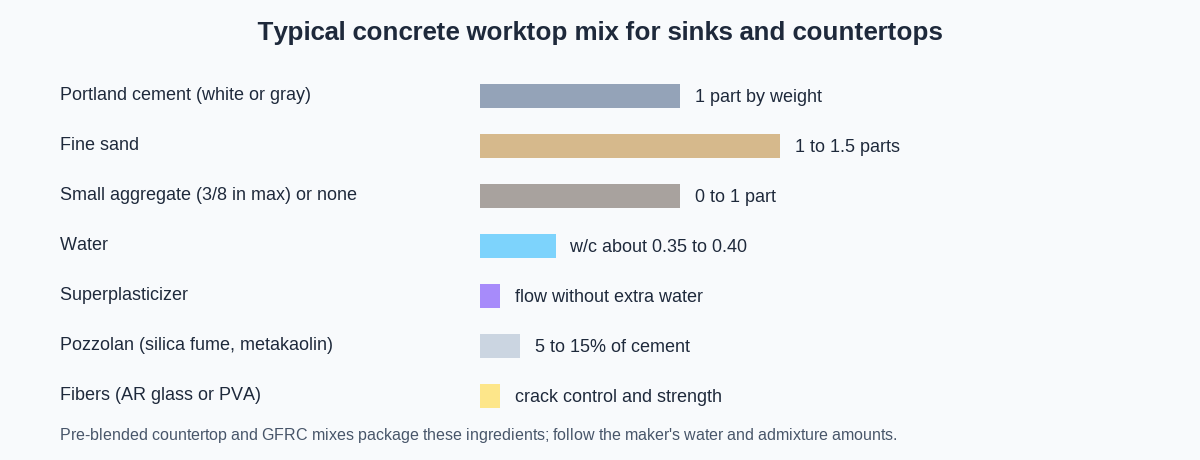
The right concrete worktop mix makes the difference between a concrete sink that lasts for decades and one that cracks, stains or leaks. Ordinary bagged concrete, made for sidewalks and footings, contains large stones and a lot of water, which leaves a weak, porous surface. A good worktop mix, like the one in the chart above, uses fine sand and small or no coarse aggregate so it fills thin molds, a low water-cement ratio of about 0.35 to 0.40 for strength and low porosity, a superplasticizer so it flows without extra water, a pozzolan such as silica fume or metakaolin to make it denser and reduce efflorescence, and fibers to control cracking. The result is a dense, strong concrete, often 5,000 to 8,000 psi, with a smooth, tight surface that takes sealer well.
Many people buy a pre-blended concrete worktop mix or countertop mix designed for sinks and counters, which packages the right cement, sand, admixtures and fibers in one bag, along with matching pigments. These products are easier than mixing from scratch and give consistent results. For GFRC, specialty suppliers sell GFRC mix kits with polymer, fibers and a separate face coat. White cement gives brighter and truer colors when pigments are added, while gray cement gives classic concrete tones. See concrete admixtures, high-strength concrete and how to color concrete.
How to Make a Concrete Sink
Making a concrete sink is a rewarding DIY project for someone who has done some concrete work. Start small, with a vessel sink, before attempting an integral sink.
1. Design the sink. Choose the shape and size, the drain location and type, whether it will have an overflow, and how it will mount. Most bathroom vessel sinks are about 16 to 24 inches across and 4 to 6 inches deep. Get the faucet and drain first so you can size the openings exactly.
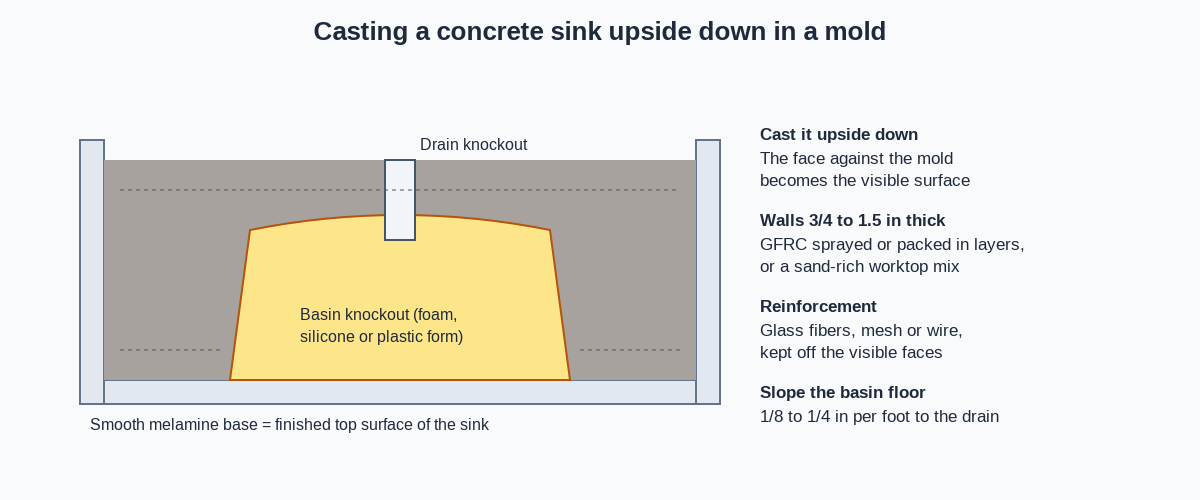
2. Build the mold. Most concrete sinks are cast upside down, as in the diagram, so the smooth surface of the mold becomes the finished top and basin. Build the outer mold from melamine-coated particleboard, which leaves a smooth face, screwed together and sealed at the seams with silicone. Make the basin knockout from rigid foam shaped and coated smooth, a silicone or plastic form, or a commercial sink mold. Add a drain knockout, a short length of PVC pipe or a foam plug, sized for the drain, and slope the basin floor slightly toward it.
3. Prepare reinforcement. For cast concrete, cut wire mesh or fiberglass mesh to fit inside the walls and base, held away from the surfaces so it will not show. For GFRC, the fibers are in the mix.
4. Mix the concrete. Mix the concrete worktop mix with the exact water and admixture amounts specified, plus pigment if desired. Mix thoroughly so the color is even.
5. Fill the mold. For cast concrete, pour the mix into the mold, starting at the bottom, and vibrate the mold with a vibrating table, a sander pressed against the mold, or by tapping, to release air bubbles from the surface. For GFRC, spray or hand-apply a thin face coat first, then pack the fiber-rich backer mix in layers.
6. Cure slowly. Cover the mold with plastic and keep the concrete damp for at least three to seven days. Slow, moist curing makes the concrete stronger and reduces cracking.
7. Demold and finish. Carefully remove the mold, turn the concrete sink over, and inspect the surface. Fill any pinholes with a cement slurry, then sand or polish with diamond pads to the finish you want, from a smooth honed look to exposed fine aggregate.
8. Seal. After the sink has dried as the sealer maker requires, apply a penetrating sealer followed by a topical sealer suited to sinks.
9. Install. Set the sink on the vanity or countertop, fit the drain with plumber's putty or silicone, connect the plumbing, and seal the joint between the sink and the countertop. See how to mix concrete and concrete curing compound.
Sealing a Concrete Sink
Sealing is essential, because unsealed concrete absorbs water, soap, toothpaste, oils and food and stains quickly, and acids such as vinegar, citrus and some cleaners etch the surface. The best sealers for concrete sinks are designed for countertops and sinks: penetrating sealers that soak in and repel water and oil, followed by a topical sealer such as a water-based polyurethane, an epoxy, or a hybrid food-safe sealer that forms a thin, stain-resistant film. Some fabricators use reactive sealers that bond chemically with the concrete. No sealer makes concrete as stain-proof as glazed ceramic, but a good system makes it very resistant. Plan to renew the topcoat every 1 to 3 years in a busy kitchen and every 2 to 5 years in a bathroom. See concrete sealer and how to seal concrete.
Caring for Concrete Sinks
Daily care for concrete sinks is simple: rinse after use, wipe dry with a soft cloth to prevent water spots and mineral buildup, and clean with a pH-neutral cleaner made for stone or sealed concrete. Avoid acidic cleaners, vinegar, lemon, bleach, ammonia and abrasive powders or pads, which wear down the sealer and etch the concrete. Do not leave wet soap bars, toothpaste, cosmetics, wine, coffee or cooking oil sitting on the surface. In kitchens, use a sink grid to protect the basin from heavy pots and knives. Apply a wax or maintenance polish if the fabricator recommends it, and reseal when water stops beading on the surface. Small scratches and wear marks are part of the character of concrete sinks, and many owners like the patina that develops over time.
Common Problems With Concrete Sinks
Staining and etching. The most common issue, caused by worn or inadequate sealer and acidic or oily products. Light stains can often be cleaned; etched areas may need light sanding and resealing.
Hairline cracks. Fine surface cracks, called crazing, can appear from shrinkage, especially in thick or poorly cured castings. They are usually cosmetic and sealed over. Structural cracks that leak are rare in well-made GFRC sinks.
Pinholes. Small air holes in the surface from inadequate vibration. They are filled with a cement slurry before sealing, and a few tiny pinholes are normal on handmade concrete sinks; many owners see them as part of the material's natural look.
Efflorescence. White deposits from salts in the concrete, more common in sinks made with ordinary concrete. Pozzolans and good sealers reduce it. See efflorescence on concrete.
Water pooling. A basin floor without enough slope holds water, which leaves rings and mineral spots as it evaporates. Design a slope of at least 1/8 inch per foot toward the drain into the mold, and check it with a level before casting.
Leaks at the drain. Usually a drain fitting that was not sealed properly, not the concrete itself. Remove the drain, clean both surfaces, and reinstall it with fresh silicone or plumber's putty recommended for stone and concrete.
Concrete Sinks in the Bathroom
Bathrooms are the most common place for concrete sinks, because a bathroom sink sees mostly water, soap and toothpaste rather than the acids, oils and heavy pots of a kitchen. A concrete vessel sink on a wood vanity is a classic modern look, and an integral concrete sink with a sloped ramp basin creates a clean, minimalist vanity with no visible drain. Double vanities can use one long trough concrete sink with two faucets. For small bathrooms and powder rooms, a compact wall-mounted concrete sink saves space and becomes a feature in a small room. When planning concrete sinks for a bathroom, choose wall-mounted or deck-mounted faucets that suit the sink's height and depth, make sure the faucet spout reaches the center of the basin, and pick a drain style, such as a grid drain or a hidden slot drain, that matches the design. Bathroom concrete sinks pair well with concrete or cement tile floors, microcement walls and concrete tubs. See concrete tub, microcement and cement tile.
Concrete Sinks in the Kitchen
Kitchen concrete sinks work hard. They are exposed to hot pans, heavy cast iron, knives, acidic foods such as tomatoes, citrus and vinegar, wine, coffee, oils and strong cleaners, often all in one day. A kitchen concrete sink can handle this, but it needs the best sealer system available, careful habits and more frequent resealing than a bathroom sink. Many kitchen designers recommend a farmhouse or undermount concrete sink with a large, deep basin, a stainless steel sink grid to protect the bottom, and a sealer specifically rated for food contact and kitchen use. An integral concrete countertop and sink, with a built-in drainboard sloped toward the basin, is one of the most striking features a kitchen can have. Some homeowners choose a concrete countertop with a stainless steel or ceramic undermount sink instead, getting the look of concrete on the counter while using a more stain-proof material in the basin itself. See concrete countertops.
Outdoor and Utility Concrete Sinks
Outdoors, concrete sinks are at home in outdoor kitchens, by the barbecue, at potting benches and garden work stations, and near pools. They resist sun and rain better than many materials and look natural beside stone and concrete hardscape. Outdoor concrete sinks in freezing climates should drain completely and have their water supply shut off and drained in winter, because water trapped in the concrete or the plumbing can freeze and crack them. A dense worktop mix and a good penetrating sealer improve freeze-thaw resistance. In laundry rooms, mudrooms, garages and workshops, rugged concrete utility sinks hold up to paint brushes, muddy boots and pet washing, and a rough, practical finish is fine. See cinder block outdoor kitchen and concrete fountain.
Colors and Finishes for Concrete Sinks
Concrete sinks can be made in almost any color using integral pigments mixed into the concrete. Popular choices include natural gray, white, charcoal and black, warm sand and beige tones, and earthy colors like terracotta and olive. White cement gives cleaner, brighter colors. Finishes range from a smooth, troweled or cast face with a soft sheen, to a honed or polished surface that reveals fine sand, to textured or rustic finishes with visible pores and variation. Some makers add inlays such as glass, stone, shells or metal into the surface, or embed stones in the walls as in the pedestal concrete sink at the top of this page. Remember that darker colors show water spots and mineral deposits more, and very light colors show stains more, so mid-tones are the most forgiving for everyday use. See decorative concrete.
Supporting and Installing Concrete Sinks
Concrete sinks are heavier than most other sinks, so the vanity, cabinet or brackets must be strong enough. A small GFRC vessel sink can sit on any sturdy vanity, but integral concrete sinks and kitchen sinks may weigh 100 to 300 pounds or more, plus water. Base cabinets should be well built and fastened to the wall and floor, and long integral tops may need extra support, such as steel brackets or a strengthened cabinet frame. Wall-mounted concrete sinks need a concealed steel frame or heavy-duty brackets anchored into studs or blocking, not just drywall. When installing, set the sink level so water drains properly, use silicone rather than rigid adhesives so the sink can move slightly, and seal the joint between the sink and wall or countertop. A plumber should connect the drain and supply lines, and test for leaks before the vanity doors and trim are installed.
Choosing a Concrete Sink Maker
If you are buying rather than making a concrete sink, look for a fabricator with a portfolio of sinks, not just countertops, and ask to see or touch finished pieces. Ask whether the sink is GFRC or cast concrete, how thick the walls are, what the sink weighs, and what reinforcement is used. Ask which sealer system they use, how it handles your likely use, how often it needs resealing, and whether they offer resealing and repairs. Check the lead time, often 3 to 8 weeks, and the warranty. Make sure the maker knows the exact faucet, drain and cabinet dimensions so all the openings line up.
Tips for a Successful DIY Concrete Sink
First-time makers of concrete sinks tend to run into the same handful of problems, and most are easy to avoid. Build the mold carefully and seal every seam, because any gap leaves a visible line or leaks paste. Make the basin knockout smooth and slightly tapered so it releases from the hardened concrete without breaking the sink. Weigh the mix ingredients rather than measuring by volume, and add water slowly; a mix that is too wet is the main cause of weak, porous, cracked concrete sinks. Vibrate thoroughly to remove air bubbles from the face. Keep the casting damp and covered while it cures, away from heat and drafts. Wait longer than you think before demolding, often two to three days for thin pieces. Handle the green sink gently; it is much weaker in its first week. Practice the whole process on a small test piece, such as a soap dish or a sample tile, using the same concrete worktop mix and sealer, before casting the real sink. Finally, test the sealer on the sample with water, oil, coffee and lemon juice so you know how it will perform.
Many DIY makers start with a simple rectangular vessel sink, then move on to curved shapes, ramp sinks and integral tops once they have learned how their mix and molds behave. Online communities, classes and books on concrete countertops and sinks are helpful resources.
How Long Do Concrete Sinks Last?
A well-made, well-sealed concrete sink can last for decades, often as long as the house itself. The concrete is strong and does not wear out under normal use. What changes over time is the surface: the sealer wears and needs renewing, small scratches and marks build up, and the color may deepen into a patina. With regular resealing and gentle cleaning, concrete sinks keep their looks for many years, and worn surfaces can be refinished by lightly sanding and resealing, which is not possible with glazed ceramic or enameled sinks.
Concrete Sinks vs Other Sink Materials
Compared with vitreous china and porcelain, concrete sinks are heavier, more customizable and more natural in appearance, but less stain-proof and need periodic sealing. Compared with stainless steel, concrete is quieter, warmer looking and more distinctive, but heavier and more porous. Compared with natural stone, concrete is easier to shape into custom forms and can include integral countertops and drainboards, with similar care requirements. Compared with composite granite and quartz sinks, concrete offers more design freedom but needs more maintenance. A concrete sink is ideal for homeowners who value a custom look and do not mind a little care, and less ideal where a perfectly stain-proof, zero-maintenance surface is the priority.
Concrete Sink Cost
Costs depend on size, type, finish and maker. A DIY concrete sink typically costs $50 to $300 in materials, molds and sealers, plus tools such as a mixer and polisher. Fabricator-made concrete vessel sinks for bathrooms usually cost $400 to $1,500. Integral bathroom vanity tops with a concrete sink typically run $1,200 to $4,000, depending on length and design. Kitchen farmhouse and undermount concrete sinks typically cost $1,000 to $3,500, and long ramp or trough concrete sinks $1,500 to $5,000 or more. Installation by a plumber adds about $200 to $600. Resealing by a professional costs about $100 to $300. See concrete countertops and concrete cost guide.
Frequently Asked Questions
Are concrete sinks a good idea?
Yes, if you like a custom, natural look and are willing to seal and clean them properly. They are durable and can last for decades.
What is the best concrete worktop mix for a sink?
A fine-aggregate, low water-cement mix with superplasticizer, pozzolan and fibers, such as a pre-blended countertop or GFRC mix.
Do concrete sinks stain?
Unsealed concrete stains easily. A good sealer makes concrete sinks very stain-resistant, but it must be maintained.
How heavy is a concrete sink?
A GFRC bathroom vessel sink weighs about 30 to 60 pounds; cast concrete and kitchen sinks can weigh 100 to 300 pounds or more.
How do you clean a concrete sink?
Use a pH-neutral cleaner and a soft cloth. Avoid acids, bleach and abrasive pads, and wipe the sink dry after use.
Sources
- Precast/Prestressed Concrete Institute: recommended practice for glass fiber reinforced concrete
- American Concrete Institute: decorative and architectural concrete
- Portland Cement Association: concrete countertops and sinks
- National Precast Concrete Association: architectural precast products
Related Guides
- Cinder block outdoor kitchen — building a block grill island
- Concrete release agents — form oil and reactive release for forms and molds
- Concrete board — backer board for shower walls and tile floors, installation and waterproofing