
Concrete Dye and Concrete Pigment: How to Color Concrete From White to Black
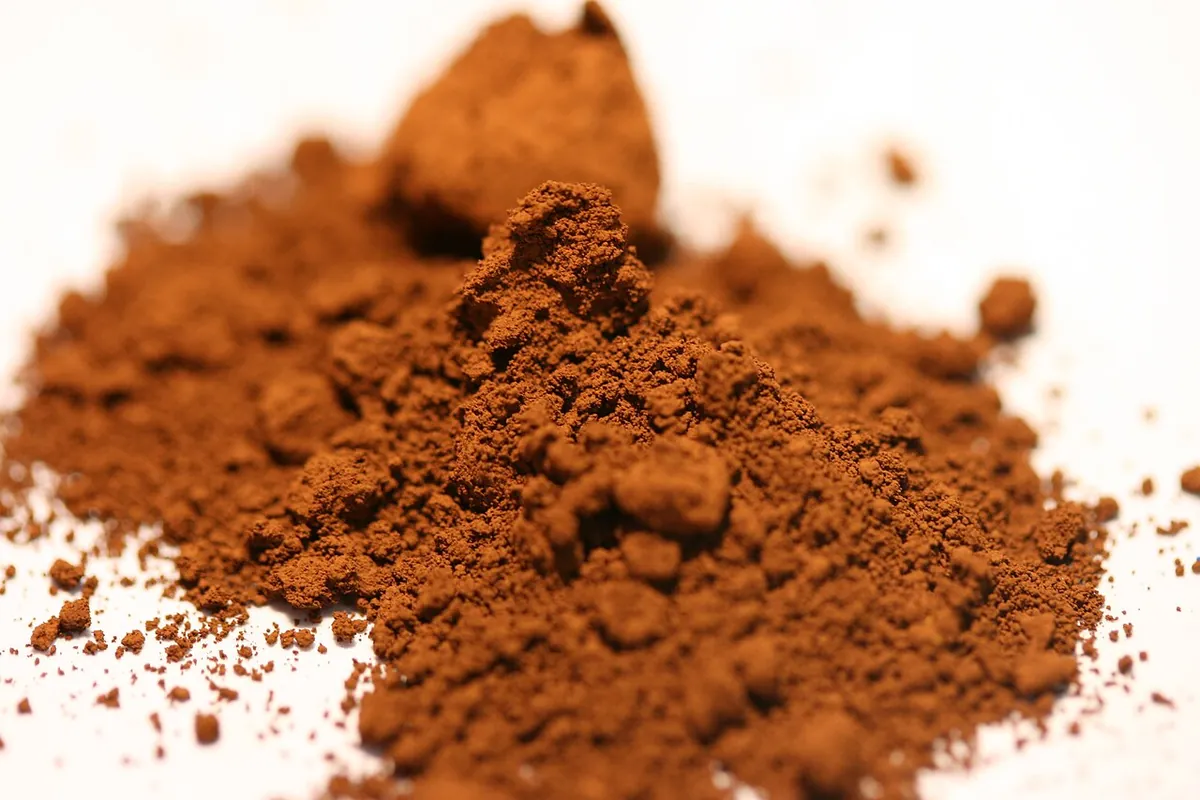
Photo: Marco Almbauer, Wikimedia Commons, public domain.
Quick Answer
There are two main ways to color concrete. Integral color uses a concrete pigment, usually iron oxide coloring powder for concrete or liquid color, mixed into the whole batch at about 2 to 6 percent of the cement weight, so the color goes all the way through. A concrete dye is a thin, penetrating color, usually water- or acetone-based, applied to hardened concrete, popular for interior and polished floors. White concrete is made with white portland cement and light sand and stone, sometimes with titanium dioxide; black concrete uses a high dose of black iron oxide and usually ends up deep charcoal. Integral color typically adds about $20 to $60 per cubic yard from a ready-mix plant. Seal colored concrete to deepen and protect it.
Plain gray concrete is practical, but color can make a driveway match the house, turn a patio into a warm terracotta or slate, or give a basement floor the look of polished stone. You can color concrete before it is poured, by adding pigment to the mix, or after it hardens, by applying dye, stain or paint. Each method has strengths and limits. Integral pigmented concrete is durable and the color does not wear off, but it is subtle and must be chosen before the pour. Concrete dyes give vivid colors on existing concrete, but most are best indoors.
This guide explains concrete pigments and how much to use, coloring powder for bagged mixes, how to make white concrete and black concrete, what concrete dyes are and how to dye concrete floors, how dyes compare with stains and paint, and the tips that make color come out even.
Ways to Color Concrete
- Integral color (concrete pigment): pigment mixed into fresh concrete so the whole slab is colored. Durable, subtle, uniform.
- Color hardener (dry-shake): a colored powder of cement, pigment and hard aggregate broadcast onto fresh concrete and troweled in, common on stamped concrete. Intense surface color.
- Concrete dye: a translucent penetrating color applied to hardened concrete. Vivid, quick, mostly interior.
- Acid and water-based stains: chemical or penetrating stains that give mottled, variegated tones. See concrete staining.
- Paint and coatings: opaque films on top of the concrete. See concrete paint.
- Colored aggregates and white cement: for exposed aggregate and polished floors where the stone itself provides color.
Concrete Pigment: Integral Color
Most concrete pigments are synthetic iron oxides, the same chemistry as rust, made in controlled factories for consistent color. Iron oxides give reds, browns, tans, yellows and blacks, and they are very stable in alkaline concrete and sunlight. Chromium oxide gives greens, and cobalt gives blues at a much higher price. Pigments for concrete should meet ASTM C979, which covers color stability, effect on setting time and strength, and resistance to alkali and light. Pigments come as:
- Powder, often sold as concrete coloring powder in tubs or bags.
- Pre-weighed dissolvable bags that are tossed into a ready-mix truck whole.
- Liquid color, dispensed by automated systems at the plant.
- Granular pigments that flow without dust.
How much concrete pigment to use
Pigment dosage is measured as a percentage of the weight of cementitious material, not of the total concrete. Light pastels use about 1 to 2 percent; typical tans, reds and browns about 2 to 6 percent; deep colors and charcoals up to about 8 to 10 percent. Above roughly 10 percent, adding more pigment hardly darkens the color and can start to weaken the concrete, because the extra fine powder needs more water. A cubic yard with 500 pounds of cement at 4 percent uses about 20 pounds of pigment. Always use the same dose, same cement and same water content for every batch, or the color will vary from truck to truck.
Coloring powder for concrete in bagged mixes
For small DIY jobs, home centers and concrete suppliers sell coloring powder for concrete and liquid colorants sized for bagged mixes. Follow the package dose, which is often enough to color one or two 80-pound bags. Mix the pigment thoroughly with the dry mix or the mix water before adding the rest, measure water carefully for every bag, and mix all the batches for one project the same way. Even small changes in water change the final color: wetter batches dry lighter. For larger areas, ready-mix with integral color is far more consistent than hand-mixed bags.

Photo: Krzysztof Popławski, Wikimedia Commons, CC BY-SA 4.0. Red paths like this are made with pigmented concrete or colored surface coatings.
White Concrete
Ordinary gray portland cement gets its color from iron and other minerals. White concrete starts with white portland cement, made from raw materials very low in iron and manganese, which costs roughly two to three times as much as gray cement. Combined with white or light-colored sand and stone, it produces bright white concrete for architectural panels, precast details, countertops and decorative work. Titanium dioxide pigment can brighten it further. White cement also makes the best base for bright pigment colors such as pure yellows, blues and greens, because gray cement dulls every color. Adding white pigment to gray cement gives only a pale gray, not true white.
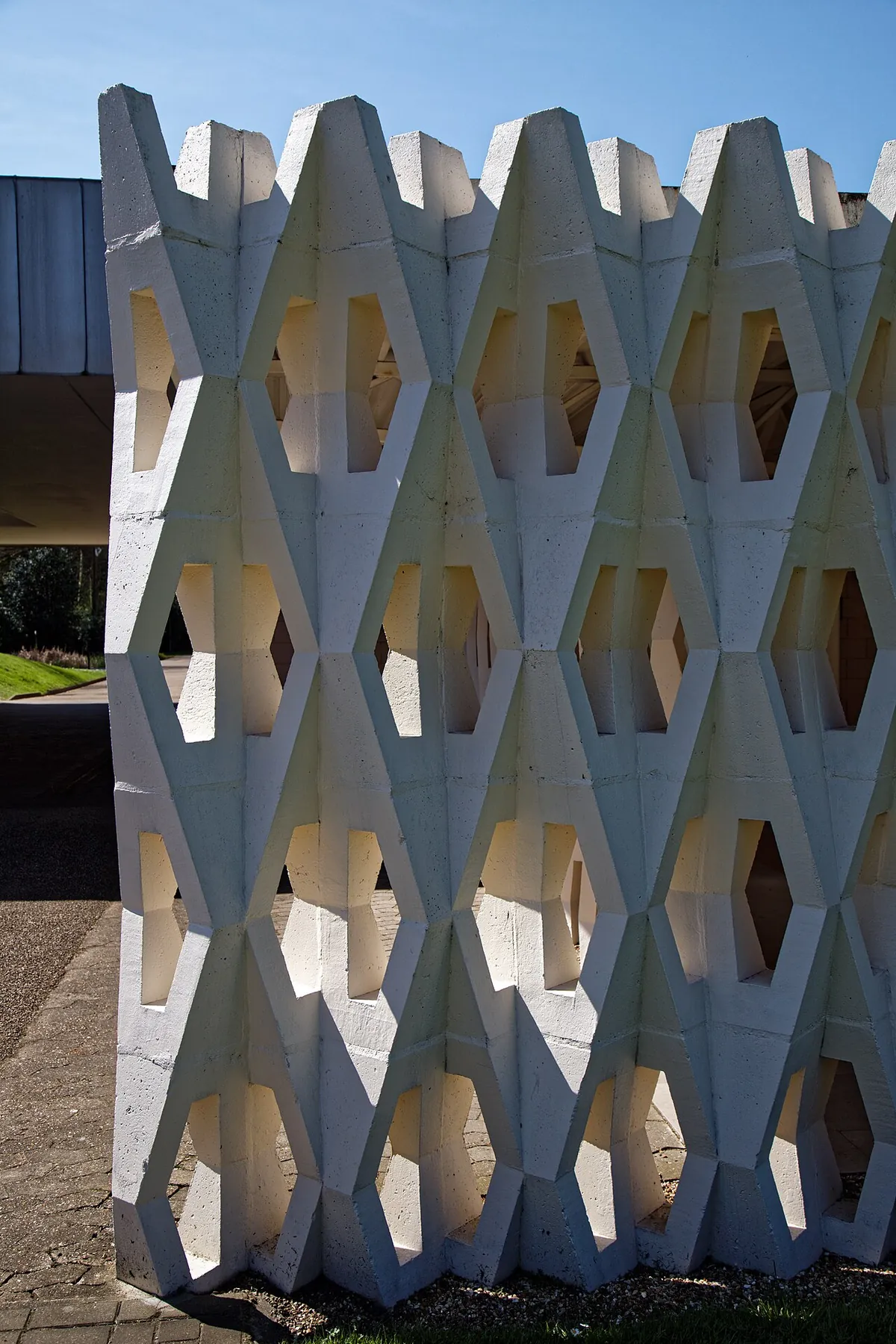
Photo: Acabashi, Wikimedia Commons, CC BY-SA 4.0
White concrete needs extra care: clean mixers, forms and tools so gray residue does not streak it, curing methods that do not stain, and sealers that resist dirt. It shows dirt, efflorescence and tire marks more than gray concrete, so it is most popular for walls, panels and interior surfaces rather than driveways.
Black Concrete
Black concrete is made with black iron oxide pigment at high doses, typically about 6 to 10 percent of the cement weight. In practice, integral black usually reads as a deep charcoal rather than jet black, especially when dry, because the cement paste and sand lighten it. A dark sealer or a color-enhancing sealer deepens it toward black. Carbon black pigments give an intense black but can wash out of the surface over time outdoors and are harder to disperse, so iron oxide black is usually preferred for durability. Black concrete absorbs more heat in the sun, which matters for patios and pool decks in hot climates; dark surfaces can get uncomfortably hot underfoot. For a black floor indoors, a black concrete dye on polished concrete gives a richer, more uniform result.
What Is a Concrete Dye?
A concrete dye is a solution of very fine coloring agents, carried in water or solvent such as acetone, that soaks into the pores of hardened concrete. Unlike acid stains, dyes do not react chemically with the concrete, so the color is more predictable and the range is wide: bright reds, blues, greens, golds and true blacks are possible. Dyes dry in minutes, allowing several colors and patterns in a day. Their weakness is ultraviolet light: many concrete dyes fade outdoors or in strong sun through windows, so they are mostly used indoors, especially on polished concrete floors, under a protective sealer or guard. Some UV-stable dyes are made for limited outdoor use. See polished concrete cost.
How to Dye Concrete Floors
- Prepare the surface. The concrete must be clean, dry and open-pored. Remove paint, sealers, adhesives and curing compounds by grinding; dye cannot penetrate a sealed surface. On polished floors, dye is usually applied after the early grinding steps, around 100 to 400 grit, before densifying.
- Test first. Apply the dye to a small hidden area or a sample board to check color and penetration.
- Mask walls, doors and anything you do not want colored; dyes stain everything.
- Apply the dye with a pump sprayer or HVLP sprayer in thin, overlapping passes, keeping a wet edge, and work the dye into the surface with a microfiber pad or brush if the maker recommends. Apply a second coat for deeper color.
- Let it dry, often 15 minutes to an hour, then remove loose residue as directed.
- Lock it in with a densifier, guard or sealer compatible with the dye. A sealer also deepens the color and protects against wear.
Acetone-based concrete dyes penetrate quickly and dry fast but are flammable and need strong ventilation; water-based dyes are easier to use indoors. Wear gloves, eye protection and a respirator as the label requires.
Dye vs Stain vs Integral Color vs Paint
| Method | When applied | Look | Durability | Best for |
|---|---|---|---|---|
| Integral concrete pigment | Mixed in before pouring | Uniform, subtle | Color through full depth | Driveways, patios, walls |
| Color hardener | Troweled into fresh concrete | Intense surface color | Very durable surface | Stamped concrete |
| Concrete dye | On hardened concrete | Vivid, translucent | Good indoors, may fade in sun | Polished and interior floors |
| Acid stain | On hardened concrete | Mottled, earthy | Permanent once sealed | Interior floors, patios |
| Paint or coating | On hardened concrete | Opaque, solid | Wears and peels over time | Garage floors, walls, quick refreshes |
Getting Even Color With Pigmented Concrete
Pigmented concrete looks best when the color is even across the whole slab, and that depends as much on the job site as on the pigment. Order all the concrete for one area from the same plant, with the same cement, sand and dose, ideally batched in one session. Keep the water content constant: never add water to one truck and not the next, because extra water lightens the color and makes the surface blotchy. Use the same finishing method and timing across the slab; troweled areas look darker than broomed areas, and overworked spots can look different. Cure uniformly with a curing compound or cure and seal made for colored concrete rather than plastic sheeting, which leaves light and dark marks where it touches. Protect the slab from rain and efflorescence in the first weeks, and seal it once it has dried. Following these steps makes the difference between rich, uniform color and a patchy slab that looks like it was poured on different days. See concrete curing compound.
Colored Concrete Driveways and Patios
Integral concrete pigments are the most durable way to color a driveway or patio, because the color goes all the way through: chips, scratches and wear show the same color underneath. Earth tones such as tan, buff, terracotta, sandstone and charcoal are most popular, because they hide dirt and tire marks and age gracefully. Bright colors and pure white show dirt and stains and are rare outdoors. Many homeowners combine integral color with a contrasting color hardener and stamping for a stone or brick look, or with a darker release powder for antiqued joints. Edges, steps and garage aprons see the most wear, so they benefit most from color that goes all the way through. Keep in mind that outdoor colored concrete lightens somewhat as it weathers, and sealers need renewing every few years to keep the color rich. See stamped concrete vs pavers and concrete driveway cost.
Using Dye in Concrete Countertops, Crafts and Sinks
For concrete countertops, sinks, planters and craft projects, color can go in the mix or on the surface. Integral pigments in a white or gray cement mix give a solid, durable color that survives grinding and polishing. Using dye in concrete pieces after they cure gives brighter, translucent tones and can create veins and mottling, but needs a good sealer on surfaces that see food, water and cleaning. Many makers combine both: an integral base color with a dye or stain accent. Because small pieces show every variation, measure pigment by weight with a kitchen or postal scale, keep the water exact, and make a test sample before casting the final piece. See concrete countertops and GFRC concrete.
Choosing a Color
Concrete pigments look different in the bag, in the wet mix, and on the finished, dry, sealed slab. The dry slab is always lighter than the wet concrete; a sealer brings back some depth. Gray cement mutes every color toward a dusty tone, while white cement gives cleaner, brighter colors. Look at real samples, not printed charts: most suppliers have sample boards or can direct you to finished jobs. Consider the house, roof, trim and landscape: warm tans and browns suit brick and wood, cool grays and charcoals suit modern exteriors. If in doubt, choose a slightly lighter and more neutral color than you think; deep colors look heavier and show dust and efflorescence more. Ask the supplier how the color looks after a year outdoors, too, since weathering softens most colors a little.
Fixing Uneven or Faded Color
If colored concrete comes out blotchy, lighter than expected, or fades over time, there are options. A thorough cleaning and a fresh color-enhancing sealer often fixes dullness and evens out minor variations. White haze is often efflorescence, which can be cleaned with a mild acidic cleaner made for concrete; see efflorescence on concrete. Patchy color can be evened with a tinted sealer, a water-based stain or a concrete dye applied over the whole slab, though outdoor dyes may need UV-stable products. Badly mismatched sections can be coated with a colored overlay or resurfacer. Faded concrete dye on interior floors can be refreshed with a new dye coat after cleaning and light abrading, then resealed. Prevention is easier, but most color problems can be improved without tearing out concrete.
How Much Does Colored Concrete Cost?
- Integral color from a ready-mix plant: often about $20 to $60 per cubic yard, more for deep colors, plus a possible truck cleanout fee.
- White portland cement concrete: significantly more per yard because white cement costs about two to three times as much as gray.
- Concrete coloring powder for DIY: about $10 to $30 per package for small jobs.
- Concrete dye: roughly $50 to $150 per concentrate that covers several hundred square feet, plus sealer.
- Professionally dyed and polished floors: often $3 to $12 per square foot depending on grinding and sealing.
See concrete price per yard and polished concrete cost.
Concrete Dyes vs Concrete Pigments: The Key Differences
Concrete dyes and concrete pigments are often confused, but they work in opposite ways. A concrete pigment is an insoluble mineral powder, usually iron oxide, that is mixed into fresh concrete and becomes part of the paste; the particles are too large to soak into hardened concrete. A concrete dye is made of much smaller coloring particles, or true dissolved dyes, in a liquid carrier that soaks into the pores of hardened concrete. Pigments give opaque, earthy, very durable color throughout the concrete. Dyes give translucent, vivid color in the top layer, often with more variation, and many are less resistant to sunlight. Pigmented concrete must be planned before the pour; concrete dye can transform an existing slab in a day. In practice, outdoor work leans on concrete pigments and indoor decorative floors lean on concrete dyes.
How to Dye Concrete Outdoors
If you want to dye concrete outside, choose a product labeled as UV-stable or for exterior use, because ordinary interior dyes can fade noticeably within months in full sun. Prepare the surface by pressure washing and, if needed, etching or grinding so the dye can penetrate. Apply on a dry, mild day out of direct sun if possible, so the dye does not flash-dry unevenly. Use thin coats, then seal with a UV-resistant exterior sealer, which protects the color and must be renewed every few years. For large outdoor areas that need long-lasting color, integral concrete pigments, acid stains or tinted sealers are usually more durable than a concrete dye. See how to seal concrete.
Pigmented Concrete in Precast, Pavers and Masonry
Much of the colored concrete people see every day is factory-made: pavers, retaining wall blocks, roof tiles, precast panels and split-face masonry units. Plants use concrete pigments, often blended in exact proportions by computer, to produce consistent colors in large batches, and some products use several pigments in one unit for a natural stone look. Because these products are made under controlled conditions, their color is usually more uniform than site-poured pigmented concrete, though dye lots can still differ, so buy all the pavers or blocks for a project at once. See concrete blocks and paving stones vs concrete.
A Short History of Colored Concrete
Builders have colored mortar and concrete with natural earth pigments, ochres, umbers and red oxide, for centuries. In the 20th century, synthetic iron oxide concrete pigments made color reliable and affordable, and colored and stamped concrete became popular for patios, sidewalks and pool decks from the 1960s and 1970s. White cement allowed brighter colors and architectural white concrete for landmark buildings. More recently, concrete dyes developed for the polished concrete industry in the 1990s and 2000s brought vivid, fast color to interior floors in stores, offices and homes, and today colored concrete is one of the most common decorative finishes worldwide.
Safety With Concrete Pigments and Dyes
Concrete coloring powder is very fine and creates dust that stains skin and clothing and irritates lungs, so wear a dust mask, gloves and old clothes when handling it, and add it to the mixer carefully on a calm day. Solvent-based concrete dyes are flammable and give off strong fumes; use them with ventilation, keep flames and pilot lights away, and follow the label's respirator advice. Clean spills quickly, since both pigments and dyes stain anything porous nearby, including brick, stone, wood decks and your skin. Cover nearby surfaces with plastic before you start.
Working With a Contractor on Colored Concrete
If you are hiring a contractor for a colored driveway, patio or floor, a little preparation prevents disappointment. Pick the color from a physical sample made with local materials, ideally a finished slab you can visit, and get the color name, the manufacturer and the dose written into the contract. Ask how the contractor will keep water and finishing consistent across trucks, which curing product they will use, and which sealer they will apply and when. For larger jobs, ask for a test panel, a small slab poured with the actual mix and finish, before the main pour; it is the only reliable way to see the final color. Discuss how they will handle joints, edges and any patches, since repairs on colored concrete are hard to match. Finally, ask what maintenance the finish will need, such as resealing every two or three years outdoors, so the color keeps looking the way it did on day one.
For dyed interior floors, the same rules apply on a smaller scale: approve a sample area in the actual room under its real lighting, because daylight and indoor lights change how dyes look. Agree on the number of dye coats, the sheen of the sealer or guard, and how furniture and foot traffic will be kept off while it cures. A good installer will be happy to walk you through each step and leave written care instructions for the finished floor.
Black and White Concrete in Modern Design
Black concrete and white concrete have become popular in modern houses and commercial interiors. Black or charcoal concrete is used for countertops, fireplace surrounds, accent walls and floors, where it gives a dramatic, slate-like look that hides some dirt but shows dust and scratches, so a good sealer and regular care matter. White concrete is used for precast panels, stairs, sinks and furniture, where it reads as bright and clean, but it shows stains more easily and needs a stain-resistant sealer. Both work best with careful mix control and consistent finishing, and both cost more than standard gray because of the high pigment dose or the white cement. For a black floor on an existing slab, a black concrete dye on ground and polished concrete is often the most practical route. For a white floor, a white overlay or white-tinted coating is usually easier than replacing the slab with white concrete.
Frequently Asked Questions
What is the best concrete pigment?
Synthetic iron oxide pigments meeting ASTM C979, used at about 2 to 6 percent of cement weight, are the standard for durable integral color.
How do you make white concrete?
Use white portland cement with white or light-colored sand and stone, and optionally titanium dioxide. Gray cement with white pigment only makes light gray.
Can you make black concrete?
Yes, with a high dose of black iron oxide, typically 6 to 10 percent of cement weight. Expect deep charcoal; a dark sealer brings it closer to black.
How do you dye concrete?
Clean or grind the surface so it is open and absorbent, test a patch, spray thin coats of concrete dye, let it dry and seal it.
Does concrete dye fade?
Many dyes fade in direct sunlight, so they are mostly used indoors. Integral pigments and acid stains are more UV stable outdoors.
Sources
- ASTM C979: Pigments for Integrally Colored Concrete
- Portland Cement Association: white cement and colored concrete
- American Concrete Institute: ACI 303R guide to cast-in-place architectural concrete
- Concrete Network: integral color and concrete dyes
Related Guides
- Concrete curing compound — curing compounds vs water curing
- Stamped concrete patterns — slate, flagstone, brick, cobble and wood
- Stamped concrete patios — designs, colors, cost and pool decks
- Stenciled concrete — concrete stencils for patios and pool decks
- Concrete patio ideas — layouts, finishes and features
- Concrete walkway ideas — front walks, garden paths and borders
- Concrete coffee table — DIY, dining, outdoor and picnic concrete tables
- Concrete bird bath — making, sealing and caring for one
- Concrete garden statues — painting, sealing and care
- Concrete curb machine — landscape curbing and edging
- Decorative concrete — types, finishes and costs
- Concrete tub — concrete bathtubs and bathrooms
- Concrete sink — vessel, integral and kitchen sinks