
GFRC Concrete: Glass Fiber Reinforced Concrete, Uses, Cost and How It Is Made
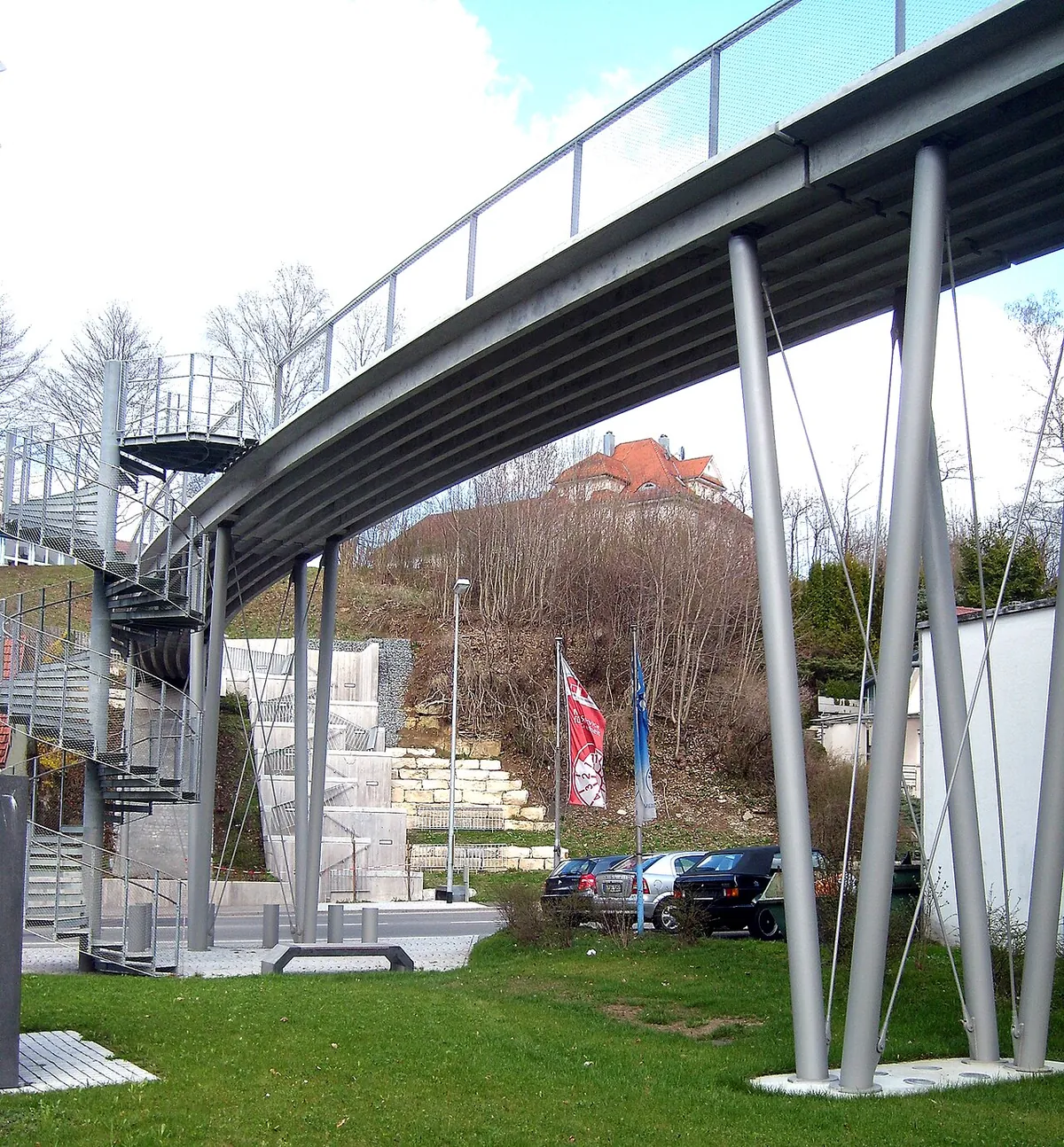
Photo: Harald Bischoff, Wikimedia Commons, CC BY-SA 3.0
Quick Answer
GFRC concrete (glass fiber reinforced concrete) is a thin, strong concrete made from cement, fine sand, water, an acrylic polymer, admixtures and alkali-resistant (AR) glass fibers, with no gravel and no steel. The glass fibers take the place of rebar or wire mesh, so GFRC can be cast or sprayed only 1/2 to 1 inch thick, which makes it roughly half to a quarter the weight of ordinary concrete pieces of the same size. It is used for countertops, sinks, fireplace surrounds, wall cladding panels, columns, cornices and decorative shapes. Most pieces are built in two layers: a thin face coat with no fibers, then a fiber-filled backer coat. GFRC concrete countertops typically cost about $80 to $150 per square foot installed.
Most concrete you see is thick, heavy and gray: slabs, walls, footings and driveways, held together with steel bars. GFRC concrete is the opposite. It is thin, light enough to hang on a building or set on kitchen cabinets, and smooth enough to look like stone. That is possible because the reinforcement is not a steel grid buried in the middle but millions of glass fibers spread through the whole piece.
In the UK and much of the world, the same material is called glass fibre reinforced concrete, or GRC. In the U.S., it is glass fiber reinforced concrete, or GFRC. People also simply call it glass reinforced concrete. This guide explains what GFRC is, how concrete glass fiber reinforcement works, the mix and the main ways it is made, its strength and weight, where it is used, what it costs, and what to know before you build or buy a GFRC countertop.
What Is GFRC Concrete?
GFRC concrete is a cement-based composite. In plain terms, it is a rich, fine mortar with glass fibers in it. Compared with ordinary concrete, it has:
- No coarse aggregate. Only fine sand, so it can be sprayed and pressed into thin, detailed molds.
- No steel. Alkali-resistant glass fibers do the job of rebar and mesh, so there is nothing to rust and no need for thick concrete cover.
- More cement and less water. A low water-cement ratio, typically around 0.30 to 0.35, made workable with a superplasticizer.
- A polymer. An acrylic polymer, often around 5 percent of the cement weight in solids, helps the thin piece cure without constant wet curing and improves toughness.
- Pozzolans in many mixes, such as metakaolin, to make the paste denser and less alkaline, which helps the glass last.
The result is a glass fiber reinforced concrete with high bending strength for its thickness. Typical GFRC concrete reaches compressive strengths of roughly 6,000 to 8,000 psi, and flexural (bending) strengths far above plain concrete, often 1,500 psi or more, depending on the mix, fiber content and production method.
How Concrete Glass Fiber Reinforcement Works
Concrete is strong when squeezed but weak when pulled or bent. In thick concrete, steel bars placed in the tension zone carry the pulling forces. In a piece only 3/4 inch thick, there is no room for a bar and the cover it needs. Concrete glass fiber reinforcement solves that by putting the tension-carrying material everywhere: short glass fibers, usually about 1/2 to 1-1/2 inches long, run in every direction through the whole thickness. When the thin piece bends, the fibers across the stressed zone carry the tension and hold small cracks together.
The glass in concrete glass fiber reinforcement has to be special. Ordinary glass, the kind used in fiberglass boats and insulation, slowly dissolves in the strongly alkaline paste of cement. GFRC uses alkali-resistant glass, which contains zirconia (typically at least 16 percent) to resist that attack. ASTM C1666 covers alkali-resistant glass fiber for GFRC. Fiber content is usually about 3 to 5 percent of the mix by weight for sprayed GFRC, and lower, around 1.5 to 3 percent, for premix.
How GFRC Concrete Is Made
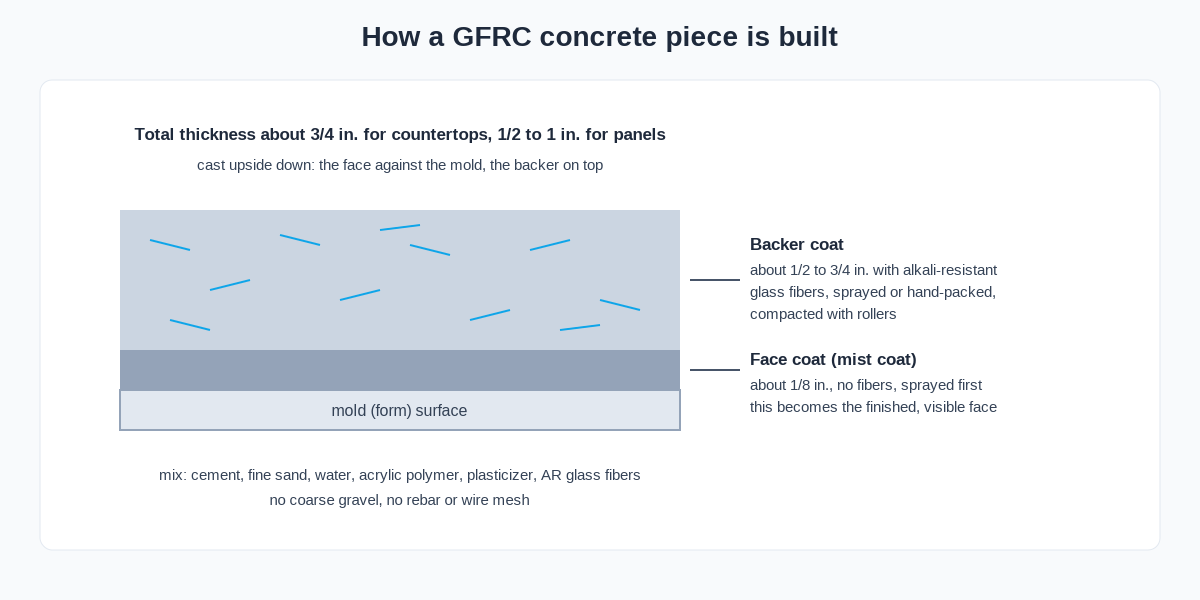
GFRC concrete is almost always cast upside down in a mold, with the finished face against the mold surface. There are three main production methods.
1. Spray-up
The original commercial method for glass fiber reinforced concrete, used for most architectural panels. A spray gun sprays the cement slurry while a chopper on the gun cuts continuous glass fiber roving into short lengths and blows them into the spray. Workers build the piece in thin layers, rolling each layer to compact it and embed the fibers. Spray-up allows the highest fiber content and strength, but the equipment is expensive and the process needs trained operators.
2. Premix (cast or vibration cast)
The fibers are mixed into the slurry in a mixer, then the mix is poured or pumped into molds and vibrated, or sprayed with a simpler gun. Premix uses less fiber and gives lower strength than spray-up, but needs simpler equipment and suits small pieces, sinks and repeated castings.
3. Hybrid: face coat and backer coat
The method most countertop makers and DIY builders use:
- Face coat (mist coat). A thin layer, about 1/8 inch, of GFRC mix without fibers is sprayed with a hopper gun onto the mold. Because it has no fibers, it gives a clean, smooth face with no fibers showing.
- Backer coat. Once the face coat stiffens enough to hold a thumbprint, a backer mix with glass fibers is hand-packed or troweled over it, then compacted with rollers, building up to the full thickness, typically 3/4 inch for a countertop.
- Reinforce edges and supports. Extra backer thickness or ribs are added around sink openings, over cabinets and at long overhangs. Some builders also embed alkali-resistant fiberglass mesh in the backer for extra strength.
- Cover and cure. The piece is covered with plastic and cured, usually for at least 16 to 24 hours before it is removed from the mold.
- Finish and seal. Pinholes are filled with slurry, the surface is lightly polished if needed, and the piece is sealed.
For more on mixing, see our guide to concrete cement mixers; GFRC is usually mixed with a high-shear paddle mixer, not a drum mixer, because the slurry is sticky and has no gravel.
Glass Fiber Reinforced Concrete vs Regular Concrete
| Feature | GFRC concrete | Regular reinforced concrete |
|---|---|---|
| Reinforcement | AR glass fibers throughout | Rebar or wire mesh at one depth |
| Aggregate | Fine sand only | Sand and gravel |
| Typical thickness | 1/2–1 in. (countertops about 3/4 in.) | 1-1/2–2 in. countertops; 4 in. + slabs |
| Weight | About 8–12 lb per sq ft for 3/4 in. | About 19–25 lb per sq ft for 1-1/2 to 2 in. |
| Rust risk | None from reinforcement | Steel can rust if cover is thin |
| Detail and shapes | Very fine detail, curves, thin edges | Limited by gravel size and steel |
| Material cost | Higher per pound | Lower per pound |
| Best use | Thin, light, decorative pieces and panels | Structural work, slabs, foundations |
Glass fiber reinforced concrete is not a replacement for normal concrete in a driveway, patio or foundation. Those need thickness, coarse aggregate for economy and strength, and steel or fibers sized for loads. See fiber concrete for the synthetic and steel fibers used in slabs, concrete rebar and concrete wire mesh.
Where Glass Reinforced Concrete Is Used
Countertops, sinks and furniture
GFRC concrete countertops are the most common home use. A 3/4-inch GFRC top weighs roughly half as much as a traditional 1-1/2-inch cast concrete top, so it can usually sit on standard cabinets without extra framing, and it is easier to carry and install. The same mix makes integral sinks, vanities, bathtubs, tables, benches and outdoor kitchen tops. See concrete countertops for design and finish options.
Fireplace surrounds and wall panels
Thin GFRC concrete panels and hearths give a stone or concrete look without the weight, and the material is not combustible. Panels can be cast with textures, reveals and integral color.
Building cladding and architectural shapes
On commercial buildings, glass fibre reinforced concrete panels are hung on steel stud frames as cladding, and the material is used for cornices, column covers, domes, window surrounds, soffits and screens. Because the panels are light, they put far less load on the building structure than precast concrete panels several inches thick. Restoration crews also use GFRC to replace heavy, damaged stone and terra cotta ornaments with light copies.
Landscape, art and artificial rock
Planters, fountains, garden sculptures, artificial rock walls for zoos and theme parks, and decorative boulders are often glass reinforced concrete. The material takes fine detail from a mold and holds up outdoors.
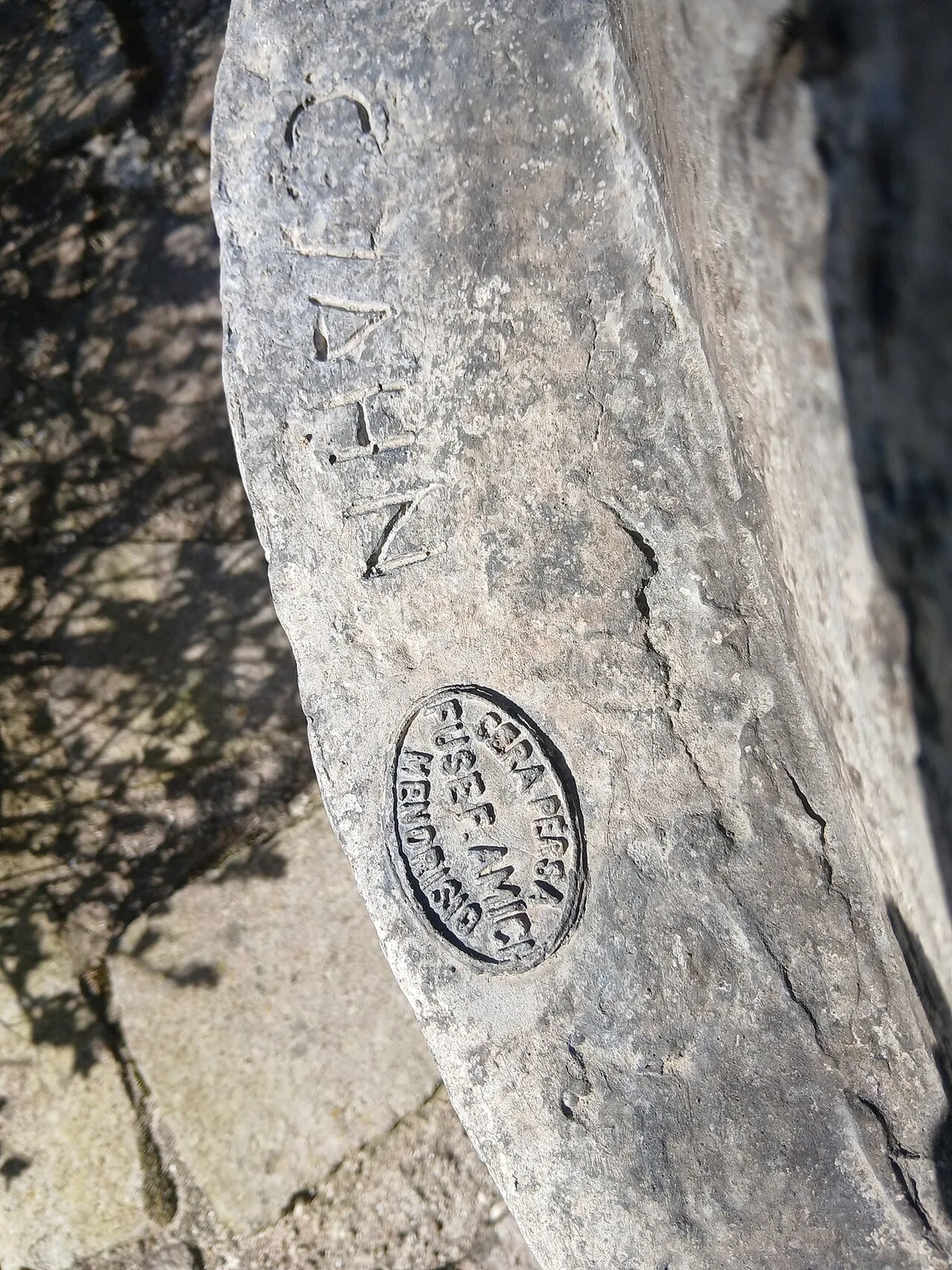
Photo: EinDao, Wikimedia Commons, CC BY-SA 4.0
The sculpture above, in a cemetery near Zurich, is cast in Glasfaserbeton, the German name for glass fiber reinforced concrete, and shows how the material holds fine lettering and a stamped maker's mark after decades outdoors.
Thin bridges and textile reinforced concrete
A close cousin of GFRC concrete is textile reinforced concrete, which uses woven grids or fabrics of alkali-resistant glass or carbon fiber instead of chopped fibers. It allows very thin structural elements. The footbridge in the photo at the top of this page, in Albstadt-Lautlingen, Germany, has a deck of glass textile reinforced concrete, one of the first bridges of its kind.
How Much Does GFRC Concrete Cost?
Prices depend on the piece, the finish and the region, but typical U.S. ranges are:
- GFRC concrete countertops: about $80 to $150 per square foot installed, more for integral sinks, complex edges and custom colors.
- GFRC sinks and vanities: about $400 to $1,500 or more each, depending on size and design.
- Fireplace surrounds: about $1,500 to $5,000 for a typical surround and hearth.
- Architectural cladding panels: highly project-specific; complex shapes cost much more than flat panels.
- DIY materials: GFRC mix ingredients (cement, sand, polymer, admixture, AR glass fiber) commonly run about $8 to $15 per square foot of 3/4-inch countertop, plus molds, a hopper gun and a high-shear mixer.
Compared with natural stone, GFRC concrete countertops are usually in the same range as mid- to high-end granite or quartz, with the advantage of custom shapes and integral sinks. For thick cast concrete prices, see concrete countertops.
GFRC Concrete Pros and Cons
Pros
- Light: GFRC concrete is about half the weight of traditional cast concrete countertops, and far lighter than precast panels.
- Strong in bending for its thickness, with no steel to rust.
- Takes fine detail, curves, thin edges and complex shapes from molds.
- Non-combustible, good for fireplaces.
- Can be colored, polished, textured or made to look like stone.
- Durable outdoors when made and sealed well.
Cons
- Materials cost more per pound than regular concrete.
- Needs careful mixing, fiber handling and compaction; mistakes show up as weak spots or cracks.
- Spray-up needs expensive equipment and training.
- Like all concrete surfaces, it can stain and etch without a good sealer.
- Older glass fiber reinforced concrete made with early mixes lost some toughness over many years, which is why modern mixes use polymers and pozzolans and why fiber quality matters.
Making GFRC Concrete Yourself: What to Know
GFRC concrete countertops and planters are popular DIY projects because the material is forgiving to cast and light to handle. Before you start:
- Use AR glass fiber only. Fiberglass from a boat or auto store is not alkali resistant and will lose strength in concrete.
- Weigh, don't scoop. GFRC mixes are designed by weight, including water. Small changes in water make a big difference in strength.
- Use a high-shear mixer or a heavy drill with a mixing paddle. Add the fibers last and mix just until they are spread, so they do not break up into fuzz.
- Build smooth molds from melamine board and silicone caulk for countertops. Any flaw in the mold shows in the face.
- Spray the face coat with a hopper gun, then pack the backer coat with a trowel and roller to about 3/4 inch.
- Add ribs or extra thickness at sink cutouts, overhangs and long spans. Some builders add a layer of AR fiberglass mesh in the backer.
- Cure under plastic for at least 16 to 24 hours before demolding, longer in cool shops.
- Seal it with a sealer made for concrete countertops. See how to seal concrete.
- Protect yourself. Wear gloves, eye protection and a dust mask or respirator when handling cement and glass fiber, and when sanding or polishing.
A Short History of Glass Fibre Reinforced Concrete
Builders tried putting ordinary glass fibers in cement in the 1940s and 1950s, but the fibers lost their strength within months as the alkaline paste attacked the glass. The breakthrough came in the late 1960s and early 1970s in Britain, where the Building Research Establishment and the glass maker Pilkington developed a zirconia-rich, alkali-resistant glass fiber. Glass fibre reinforced concrete went into commercial use in the 1970s for cladding panels, and the material spread to North America, the Middle East and Asia. Since then, polymers, pozzolans and better fibers have made modern GFRC concrete much more durable than the early mixes, and from the 1990s on, countertop makers adopted it for thin, light kitchen and bath tops.
GFRC Concrete Panels on Buildings
On commercial and high-rise buildings, glass fiber reinforced concrete panels are usually made as a thin skin, often about 1/2 to 5/8 inch thick, attached to a light steel stud frame on the back. The frame is connected to the skin with flexible steel anchors bonded into small pads of GFRC. These flex anchors let the thin skin expand and contract with temperature and moisture while the frame carries the weight back to the building. Gravity anchors and seismic connections tie the frame to the structure.
A single panel can be large, covering a full floor height and many feet wide, yet weigh a fraction of a precast concrete panel. That lighter weight can reduce the size of the building's frame and foundations and makes erection faster with smaller cranes. The Precast/Prestressed Concrete Institute's MNL-128 gives recommended practice for designing, making and installing GFRC panels, and its MNL-130 covers quality control in GFRC plants.
Testing and Quality Control for GFRC
Because glass reinforced concrete is so thin, small changes in fiber content or compaction make a big difference, so quality plants test it routinely:
- Flexural strength. Small test boards are sprayed alongside production, cut into strips and bent to failure (ASTM C947) to confirm the material's bending strength.
- Fiber content. A sample of fresh mix is washed out so the glass can be weighed (ASTM C1229), confirming the right amount of concrete glass fiber reinforcement.
- Density and absorption of hardened samples (ASTM C948).
- Slurry and spray rate checks during spray-up, so the ratio of fiber to slurry stays constant.
- Thickness checks with a pin gauge as each layer is built.
For a homeowner buying GFRC concrete countertops, the practical version is simpler: ask the fabricator which fiber and mix they use, how thick the top will be, how they reinforce sink openings and overhangs, and what sealer they apply.
GFRC Concrete Countertops vs Other Countertop Materials
| Material | Typical installed cost per sq ft | Weight | Notes |
|---|---|---|---|
| GFRC concrete | $80–$150 | Light for concrete (3/4 in.) | Custom shapes, integral sinks, needs sealing |
| Cast concrete (1-1/2–2 in.) | $65–$135 | Heavy | Rebar or mesh inside, may need extra cabinet support |
| Granite | $50–$150 | Heavy | Natural stone, needs sealing |
| Quartz | $60–$150 | Heavy | Engineered, low maintenance |
| Laminate | $20–$50 | Light | Cheapest, less heat resistant |
Prices are rough national ranges and vary widely by region, fabricator and design.
Common GFRC Concrete Problems and How to Avoid Them
- Pinholes in the face. Air trapped against the mold. Spray the face coat in thin passes, and fill pinholes with a cement slurry after demolding.
- Fibers showing on the face. The backer was applied before the face coat was firm enough, or the face coat was too thin. Wait until the face coat holds a thumbprint.
- Cracks at sink corners. Sharp inside corners concentrate stress. Round the corners of cutouts and add thickness or ribs around them.
- Curling or warping. Uneven drying. Cure the whole piece covered and flat, and do not demold too early.
- Face coat separating from the backer. The face coat dried out before the backer went on. Keep the timing tight and the shop humid.
- Weak, crumbly spots. Fiber clumps or poor compaction. Mix fibers in last, briefly, and roll each layer.
- White haze. Efflorescence from moisture moving through the piece; see efflorescence on concrete.
Is GFRC Concrete Right for Your Project?
GFRC concrete is a good fit when weight, thickness or shape matter more than the lowest material price. Good candidates:
- Kitchen and bath countertops where you want a concrete look, an integral sink or a waterfall edge without reinforcing the cabinets.
- Fireplace surrounds and hearths on existing walls and floors that cannot take heavy stone.
- Wall cladding, column covers and trim where thin, light panels save structure and installation time.
- Large planters, fountains and garden pieces that need to be moved or set on a deck or roof.
- Restoration of cornices and ornaments where the original heavy material has failed.
Glass fiber reinforced concrete is the wrong choice for slabs, footings, steps, driveways and other ground-supported or structural concrete. Those jobs use ordinary concrete with rebar, wire mesh or slab fibers, and they need thickness that GFRC is designed to avoid. If you are not sure which way to go on a countertop, ask a fabricator to show you a GFRC sample and a cast concrete sample with the same finish, and compare weight, edge detail and price side by side. Many shops make both and can explain where glass reinforced concrete is worth the extra cost for your layout.
Caring for GFRC Concrete Surfaces
A sealed GFRC concrete countertop or panel needs about the same care as any sealed concrete surface. Wipe up acids such as lemon juice, wine and vinegar quickly, since they can etch the cement paste. Use pH-neutral cleaners rather than bleach or harsh acids. Use trivets for hot pans and cutting boards for knives. Depending on the sealer, re-seal every few years or when water stops beading. Small chips on edges can be filled with a color-matched GFRC slurry or a countertop repair kit and then resealed, so minor damage does not mean replacing the whole top. For stains and cleaning, see how to clean concrete.
Frequently Asked Questions
What does GFRC stand for?
Glass fiber reinforced concrete. Outside the U.S. it is often called glass fibre reinforced concrete or GRC (glass reinforced concrete).
Is GFRC concrete stronger than regular concrete?
For its thickness, glass fiber reinforced concrete is stronger, especially in bending. GFRC has high compressive and flexural strength, but it is used thin, so it is not a replacement for thick structural concrete.
How thick is a GFRC countertop?
Usually about 3/4 inch, with thicker edges, ribs or a dropped front edge where needed for looks or strength.
Does GFRC need rebar or wire mesh?
No. In GFRC concrete, the alkali-resistant glass fibers replace steel. Some builders add AR fiberglass mesh in the backer coat for extra strength.
How much does GFRC concrete cost?
GFRC concrete countertops typically cost about $80 to $150 per square foot installed. DIY materials run about $8 to $15 per square foot.
Can GFRC be used outdoors?
Yes. It is widely used for cladding, planters, fountains, sculptures and outdoor kitchens. Seal outdoor pieces and protect them from deicing salts.
What is the difference between GFRC and fiber concrete?
GFRC is a thin, sand-only mix with a high dose of alkali-resistant glass fiber for decorative and architectural pieces. Fiber concrete for slabs is ordinary concrete with synthetic or steel fibers added for crack control.
How long does GFRC concrete last?
Well-made, sealed GFRC concrete pieces last for decades. Cladding panels from the 1970s and 1980s are still in service, and modern mixes with polymers and pozzolans hold their toughness better than early ones.
How heavy is a GFRC countertop?
A 3/4-inch GFRC concrete countertop weighs roughly 8 to 12 pounds per square foot, about half of a 1-1/2-inch cast concrete top.
Is glass fibre reinforced concrete the same as GRC?
Yes. GRC (glass reinforced concrete) is the common British and international name; GFRC is the usual U.S. name for the same material.
Can GFRC be colored?
Yes. Integral pigments are added to the face coat mix, and the surface can also be stained, polished, textured or cast against patterned molds.
Sources
- Precast/Prestressed Concrete Institute: MNL-128 Recommended Practice for Glass Fiber Reinforced Concrete Panels
- ASTM C1666: Alkali Resistant (AR) Glass Fiber for GFRC and Fiber-Reinforced Concrete and Cement
- Glassfibre Reinforced Concrete Association (GRCA)
- American Concrete Institute: Committee 544, Fiber-Reinforced Concrete
Related Guides
- Precast concrete walls vs cast in place — wall panels, tilt-up and costs
- Cement vs concrete — the difference explained
- Light concrete guide — lightweight aggregate, AAC and foam concrete
- Concrete dye and pigment — how to color concrete, white to black
- Shotcrete vs gunite — sprayed concrete for pools and walls
- Concrete fire pit — block, poured and fire pits on concrete
- Concrete coffee table — DIY, dining, outdoor and picnic concrete tables
- Concrete garden statues — painting, sealing and care
- Concrete bench — outdoor benches, DIY and costs
- Concrete tub — concrete bathtubs and bathrooms
- Concrete fountain — tiered fountains, pumps and care
- Concrete sink — vessel, integral and kitchen sinks
- Concrete cloth — rolled concrete for ditches and slopes
- Concrete flower pots — sizes, weights, prices and extra large planters for outside
- Concrete canoe — how a concrete boat floats and the ASCE competition
- Concrete slide — hillside and playground slides, plus concrete sliders (knee boards)